Can you grow a tomato plant indoors? Yes — but the more useful question is whether you can grow one indoors successfully, and that answer depends almost entirely on the variety you choose, the light you can provide, and whether you are prepared to hand-pollinate every flower yourself. Get those three things right and indoor tomatoes go from a frustrating failed experiment to a genuinely productive kitchen crop.
This guide gives you the honest picture first and the practical plan second. Most indoor tomato failures come from the same three mistakes: choosing standard outdoor varieties, expecting window light to be enough, and not knowing about hand pollination. Avoid those three and you are most of the way to your first indoor harvest.
Quick Answer
Yes, you can grow a tomato plant indoors. The best results come from compact varieties specifically bred for container growing such as Tumbling Tom, Tiny Tim, and Micro Tom. These need grow lights delivering 400 to 600 PPFD for 14 to 16 hours daily, consistent moisture, biweekly fertilizing with a phosphorus-forward formula, and daily hand pollination of every open flower. Standard full-sized garden varieties are not suitable for indoor growing in typical home conditions.
The Honest Assessment: What Indoor Tomatoes Can and Cannot Do
Before spending money on equipment, knowing what you are getting into prevents the disappointment that derails most first indoor tomato attempts.
What indoor tomatoes can genuinely deliver: Fresh cherry tomatoes year-round in any climate. The satisfaction of harvesting food you grew yourself regardless of outdoor growing season. A genuinely productive crop from a compact plant in a five-gallon container under appropriate grow lights. The continuous process of watching flowers develop, hand pollinating, watching fruit set, and harvesting that makes food growing more engaging than ornamental plant care.
What they cannot realistically deliver: The yield of an outdoor summer garden. Cost savings on tomatoes when grow light electricity is factored in. Large slicing tomatoes of the quality available from garden centers in summer. A set-it-and-forget-it growing experience that ornamental houseplants can provide.
The light problem with windows alone: The most common indoor tomato failure comes from placing a tomato plant in a south-facing window and expecting it to perform like an outdoor plant. A south-facing window in full summer delivers approximately 200 to 500 PPFD at best. Tomatoes need 400 to 600 PPFD minimum for productive fruiting, and outdoor summer sun delivers 1,500 to 2,000 PPFD. Even the best window is significantly below what tomatoes evolved to receive. The result is consistent: plants that grow vegetatively but produce few flowers and even fewer fruit. Grow lights are not optional for productive indoor tomatoes — they are the foundation.
Step 1: Choose the Right Variety
This is the most important decision and the one most commonly made incorrectly. Standard tomato varieties including beefsteak, Better Boy, Celebrity, and most heirlooms are outdoor garden plants that grow to four to eight feet and require the extended season and light intensity of an outdoor summer garden. Indoors they grow vigorously but unmanageably and produce fruit poorly.
The varieties that actually work indoors:
Tumbling Tom (red and yellow): One of the most consistently productive indoor varieties. Compact naturally cascading plants produce cherry tomatoes continuously in hanging baskets or containers. Both the red and yellow varieties perform well under grow lights.
Tiny Tim: Stays under twelve inches. Produces small cherry tomatoes reliably. One of the most compact true tomato varieties available for indoor growing.
Micro Tom: Six to eight inches tall. The smallest commercially available tomato variety. Specifically developed for container and indoor growing. Produces tiny but genuine tomatoes under adequate grow lights.
Red Robin: Compact cherry tomato variety bred specifically for indoor container growing. Consistent performer under artificial lighting.
Patio: Compact determinate variety reaching two to three feet. Produces cherry to small slicing tomatoes on manageable plants suited to five-gallon containers.
What to avoid: Any variety described as indeterminate without also being labeled compact or dwarf. Standard cherry tomato varieties like Sungold and Sweet Million that are excellent in outdoor gardens but grow too large for practical indoor management.
Step 2: Set Up Adequate Lighting
This is the step that determines whether you get tomatoes or just a leafy plant. Do not skip it or underinvest in it.
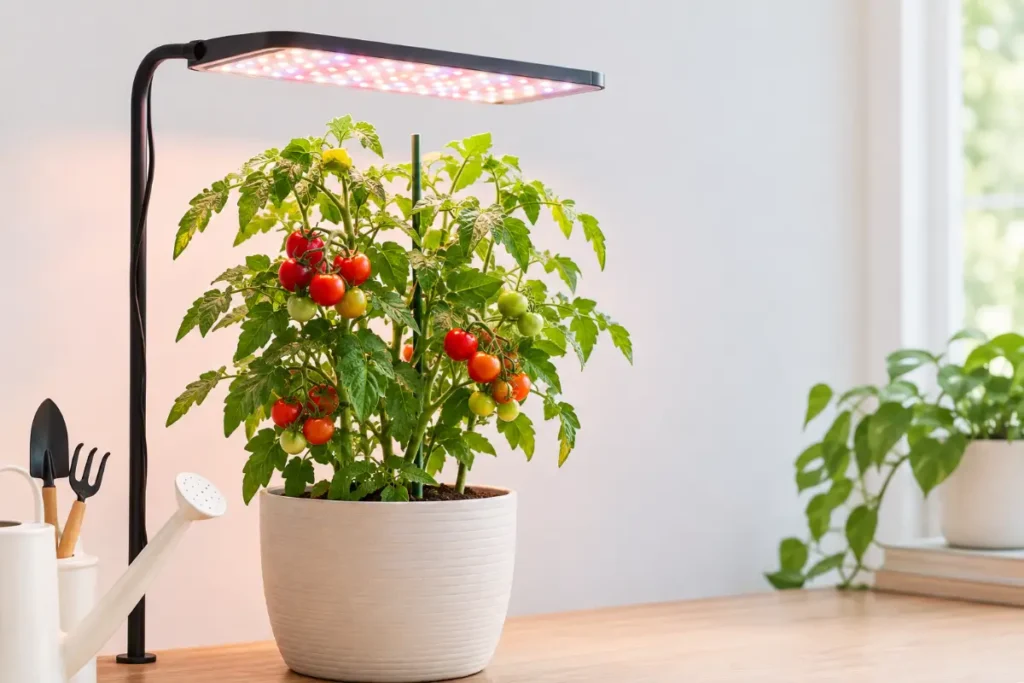
What you need: A full-spectrum LED grow light delivering 400 to 600 micromoles per square meter per second (PPFD) at the plant canopy level. For one to two compact tomato plants in a two-square-foot area, a quality LED grow light drawing 100 to 150 actual watts from the wall provides appropriate output at twelve to eighteen inch mounting height.
Running hours: 14 to 16 hours daily on an automatic timer. This is non-negotiable. Tomatoes in fewer hours of grow light grow slowly and produce little fruit regardless of all other care factors.
Adjustable mounting: Use rope ratchet hangers to mount the grow light at adjustable height so you can lower it for seedlings and raise it as plants grow taller. Maintaining twelve to eighteen inches between the light and the plant canopy keeps intensity at the productive range without heat stress.
The window supplement approach: If you have a bright south-facing window, positioning plants to receive whatever window light is available alongside grow lights is better than grow lights alone. Window light supplements the grow light during the daylight hours and reduces electricity costs compared to grow-light-only setups.
For the complete grow light selection guide covering PPFD specifications, spectrum considerations, and specific brand recommendations, grow lights for indoor tomato plants covers every detail of indoor tomato lighting in full.
Step 3: Start Seeds or Source Plants
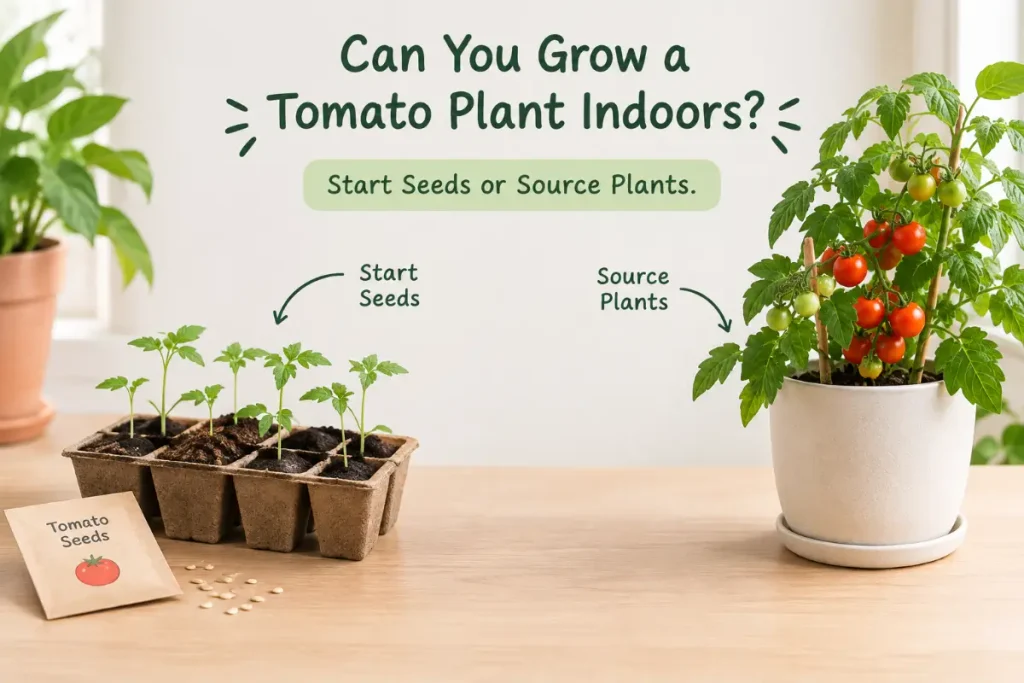
Starting from seed: Tomato seeds germinate readily in moist seed starting mix at temperatures between 70 and 80 degrees Fahrenheit. Plant seeds a quarter inch deep in small cells or pots. Germination occurs within five to ten days. Place under grow lights immediately after germination to prevent etiolation of the fragile seedlings.
Transplanting from nursery starts: Purchasing small tomato starts from a garden center in spring provides a head start of four to six weeks compared to starting from seed. Choose the smallest, most compact variety available. Transplant into a five-gallon container with well-draining potting mix mixed with 20% perlite.
Container size: Five gallons minimum for compact indoor tomato varieties. Smaller containers dry out too rapidly and restrict root development that limits fruit production. Fabric grow bags in five-gallon size are excellent for indoor tomatoes since they provide air pruning of roots, prevent overwatering through their permeable sides, and allow excellent drainage.
Step 4: Master Hand Pollination
This is the step that most indoor tomato guides mention in passing but that deserves significant emphasis because without it you get zero fruit regardless of how perfect everything else is.
Why it is essential: Outdoor tomatoes are pollinated by bees through sonication, the vibration of their flight muscles which shakes pollen loose from tomato anthers and deposits it on the stigma. No bees means no automatic pollination. Tomato flowers that open and close without being pollinated fall off without setting fruit.
How to do it: Every day, using an electric toothbrush or battery-powered plant pollinator tool, touch the vibrating head to the back of each open flower stem for one to two seconds. This mimics the vibration of a bee’s wings and releases pollen within the flower to land on the stigma. Alternatively use a small soft paintbrush to gently transfer pollen from the anther to the stigma of each open flower.
Frequency: Every day, every open flower, no exceptions. Flowers have a short receptive window of two to three days. Missing a day means that day’s flowers may not set fruit.
Success indicator: Within five to seven days of successful pollination, the base of the flower begins swelling into the tiny green tomato that will develop to full size over the following three to six weeks depending on variety.
Step 5: Water and Fertilize Correctly
Watering: Check soil moisture daily and water when the top inch feels dry. Tomatoes need consistent moisture. Drought stress causes blossom drop, fruit cracking, and the calcium deficiency that causes blossom end rot. Inconsistent moisture is one of the most common causes of poor indoor tomato performance.
Fertilizing stages: During vegetative growth use a balanced fertilizer. When flower buds appear, switch to a high-phosphorus, high-potassium formula such as a dedicated tomato fertilizer or bloom fertilizer. Apply every seven to ten days through the fruiting period since container tomatoes under grow lights leach nutrients more rapidly than garden-bed plants.
Calcium for blossom end rot prevention: The dark, sunken patches at the base of developing tomatoes that ruin fruit before it ripens are caused by calcium deficiency in the developing fruit, usually from inconsistent watering impairing calcium uptake. Apply a liquid calcium-magnesium supplement every two to three weeks. This is the most reliable prevention for the blossom end rot problem that discourages many first-time indoor tomato growers.
Step 6: Manage Temperature and Support Plants
Temperature: 65 to 80 degrees Fahrenheit for active growth and good fruit set. Above 85 degrees pollen becomes sterile and fruit set drops. The heat generated by grow lights can raise temperatures near the plant canopy above the room temperature, particularly in enclosed spaces. Monitor temperature at canopy level and ensure adequate ventilation.
Staking and support: Even compact varieties need light support as they begin carrying fruit. Small bamboo stakes pushed into the container alongside the main stem, tied loosely with soft plant ties, prevent the stem from bending under fruit weight. Cascade varieties like Tumbling Tom support themselves in hanging baskets but may need the occasional long stem guided back into the basket rather than trailing away.
Pruning: Remove suckers (the shoots emerging in the joint between main stem and leaf branch) on larger compact varieties to maintain airflow and direct energy toward existing fruit. On very compact varieties like Tiny Tim and Micro Tom, minimal pruning is needed since the growth habit naturally limits sucker production.
Step 7: Harvest and Keep Producing
When to harvest: Cherry tomatoes are ready when they are fully colored (red, yellow, or orange depending on variety) and slightly soft when gently pressed. Do not wait until they feel very soft since the plant continues ripening fruit after picking and soft fruit splits more readily.
Picking frequency: Check plants every one to two days when fruit is close to ripe. Regular picking encourages continuous fruit production as the plant’s energy is redirected from maintaining ripe fruit to developing the next set of fruit.
The continuous production cycle: Well-managed indoor tomato plants under adequate grow lights produce fruit continuously rather than in a single seasonal burst. As one cluster of fruit ripens and is harvested, the next set of flowers is developing and setting, creating an ongoing cycle that produces fresh tomatoes week after week through the year.
Replanting: Compact tomato varieties decline in vigor after one to two years of continuous production. Starting fresh plants from seed every twelve to eighteen months maintains a consistently productive indoor tomato operation rather than attempting to maintain aging, less productive plants indefinitely.
Common Indoor Tomato Problems and Solutions
Flowers falling without setting fruit: Not hand pollinating. Begin daily electric toothbrush pollination immediately. Also check temperature is below 85 degrees since heat above this causes pollen sterility.
Plants growing vigorously but producing no flowers: Insufficient light. Increase grow light hours to 16 daily. Lower grow light to twelve inches above the plant canopy. Add supplemental window light during daylight hours.
Dark patches on fruit base: Blossom end rot from calcium deficiency, usually triggered by inconsistent watering. Water more consistently. Apply calcium-magnesium liquid supplement every two to three weeks.
Fruit setting but staying green and not ripening: Insufficient light or temperature below 65 degrees. Improve light intensity and ensure temperatures stay between 65 and 80 degrees throughout the day.
Leaves yellowing from bottom up: Nitrogen deficiency from depleted container soil. Begin or resume fertilizing with a balanced formula and increase frequency to every seven to ten days.
Setting Up a Year-Round Indoor Tomato Operation
For growers who want continuous fresh tomatoes rather than a single growing season, thinking about indoor tomato growing as an ongoing operation rather than a single plant project changes the approach.
Succession planting: Start a new batch of seeds every four to six months. As one plant enters its second year and becomes less productive, the new plants started months earlier are entering their peak production period. This ensures the operation always has at least one plant in its most productive phase.
The two-plant system: Maintaining two plants at different stages simultaneously, one in early production and one at peak production, creates more consistent weekly harvest quantities than a single-plant approach where output peaks and declines with one plant’s cycle. Two five-gallon containers under a single adequately-sized grow light fit the typical indoor space constraint while providing this continuous production buffer.
Seedling management: Indoor tomato seedlings under grow lights require thinning (selecting the strongest seedling per cell when multiple germinate), transplanting to progressively larger containers as roots fill each size, and consistent watering of the small volumes that seedling cells hold. Seedling care is the most attention-intensive phase of indoor tomato growing and lasts approximately four weeks from germination to transplanting into the final five-gallon container.
Record keeping: Noting which varieties performed best, which had the best flavor, how long each harvest period lasted, and what problems arose provides the data that makes each successive growing cycle more productive than the last. Indoor tomato growing improves significantly with experience and the records from the first cycle prevent repeating the same mistakes in the second.
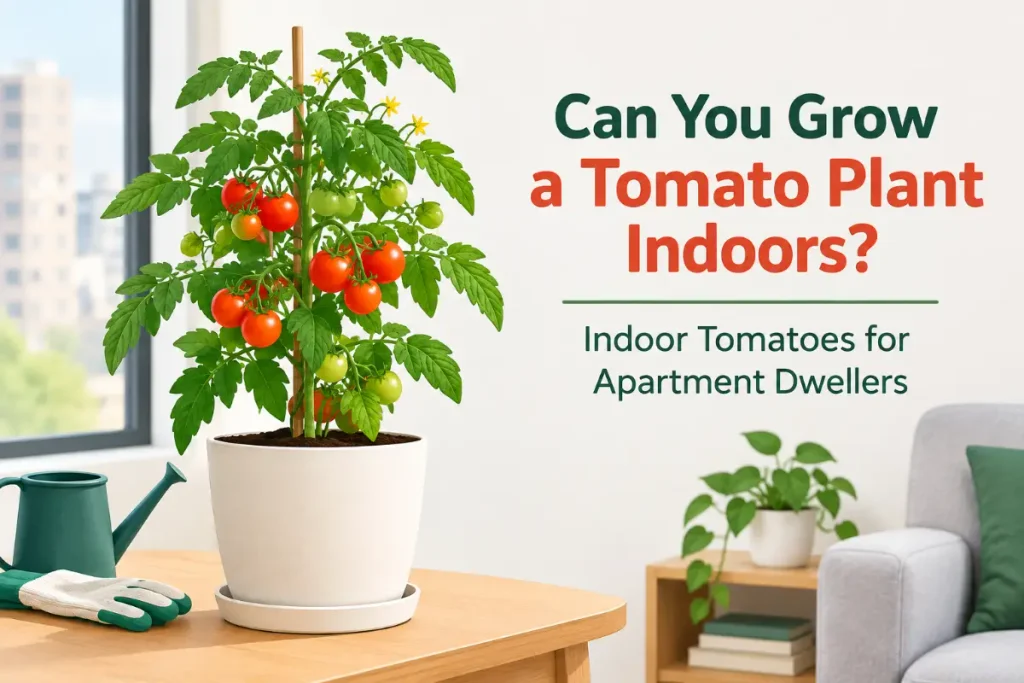
Indoor Tomatoes for Apartment Dwellers
Compact indoor tomato growing is particularly well-suited to apartment living where outdoor garden space is unavailable. A five-gallon container under a clip-on or shelf-mounted grow light on a kitchen counter, balcony table, or near a south-facing window represents a minimal footprint for a genuinely productive food plant.
Balcony growing with supplement: Apartment balconies that receive direct sun for four or more hours provide excellent growing conditions for compact tomato varieties during warm months, with grow light supplementation extending the productive season through cooler months when sun intensity and duration decline.
The odor consideration: Tomato plant foliage has a distinctive green, slightly earthy scent that is present in the room where the plant grows. For most people this is pleasant or neutral. For fragrance-sensitive people in small apartments, noting that the plant produces ambient fragrance throughout the growing space is worth considering before positioning near sleeping or working areas. Indoor cherry tomato plant covers the specific cherry tomato approach for apartment growing with variety recommendations and container sizing for limited spaces for the complete guide to choosing indoor food crops that suit apartment living alongside the light and space constraints specific to smaller living spaces.
Conclusion
Can you grow a tomato plant indoors? Absolutely — with compact varieties, adequate grow lighting, daily hand pollination, consistent moisture, and appropriate fertilizing. The answer is yes and the path to that yes is specific enough that following it precisely produces genuine results while skipping any part of it produces the frustrating failures that give indoor tomato growing an undeserved reputation for difficulty.
Start with Tumbling Tom or Tiny Tim. Get a quality grow light running 14 to 16 hours daily. Hand pollinate every open flower every single day. Water when the top inch dries out. Fertilize every seven to ten days with a tomato formula. Those five practices produce the indoor tomato harvest that most people assume is only possible in an outdoor summer garden.
Frequently Asked Questions
What is the easiest tomato to grow indoors?
Tumbling Tom and Tiny Tim are consistently the easiest indoor tomato varieties for first-time growers. Both stay compact, produce cherry tomatoes reliably under grow lights, and have more forgiving care requirements than larger compact varieties. Micro Tom is the most compact option and suits very limited indoor spaces but produces smaller individual tomatoes.
Do indoor tomatoes need a grow light?
Yes, for productive fruiting. Window light alone, even from a south-facing window, does not provide the light intensity tomatoes need for consistent fruit production. A quality LED grow light running 14 to 16 hours daily is the most important single piece of equipment for productive indoor tomato growing. Plants grown on window light alone typically grow healthy foliage but produce very little fruit.
How long does it take to grow tomatoes indoors?
From seed to first harvest takes approximately eight to twelve weeks for compact cherry tomato varieties under adequate grow lights. From a purchased transplant to first harvest takes approximately six to eight weeks. The harvest period continues for months or more than a year in well-managed plants, producing fruit continuously rather than in a single batch.
Can I grow tomatoes indoors without a grow light?
In a south-facing window with six or more hours of direct sun daily, some compact varieties produce modest amounts of fruit without a dedicated grow light. Results are significantly less productive than under grow lights. In any other window position or during winter when sun angle and duration decrease, grow lights are necessary for practical fruit production.
Do indoor tomatoes taste as good as outdoor tomatoes?
In terms of flavor, indoor tomatoes under good grow lights taste very similar to outdoor cherry tomatoes of the same variety. The main flavor differences between indoor and outdoor tomatoes come from variety selection and ripening conditions rather than the growing environment itself. Cherry tomatoes have higher sugar concentration than larger varieties, and compact indoor varieties specifically selected for flavor produce excellent-tasting fruit.
Why are my indoor tomato flowers dropping without producing fruit?
Flower drop without fruit set in indoor tomatoes is almost always caused by failure to hand pollinate. Tomatoes require the vibration that outdoor bees provide to release pollen. Indoors without bees, each flower must be manually vibrated using an electric toothbrush against the flower stem for one to two seconds daily. Temperature above 85 degrees causing pollen sterility is the second most common cause.