
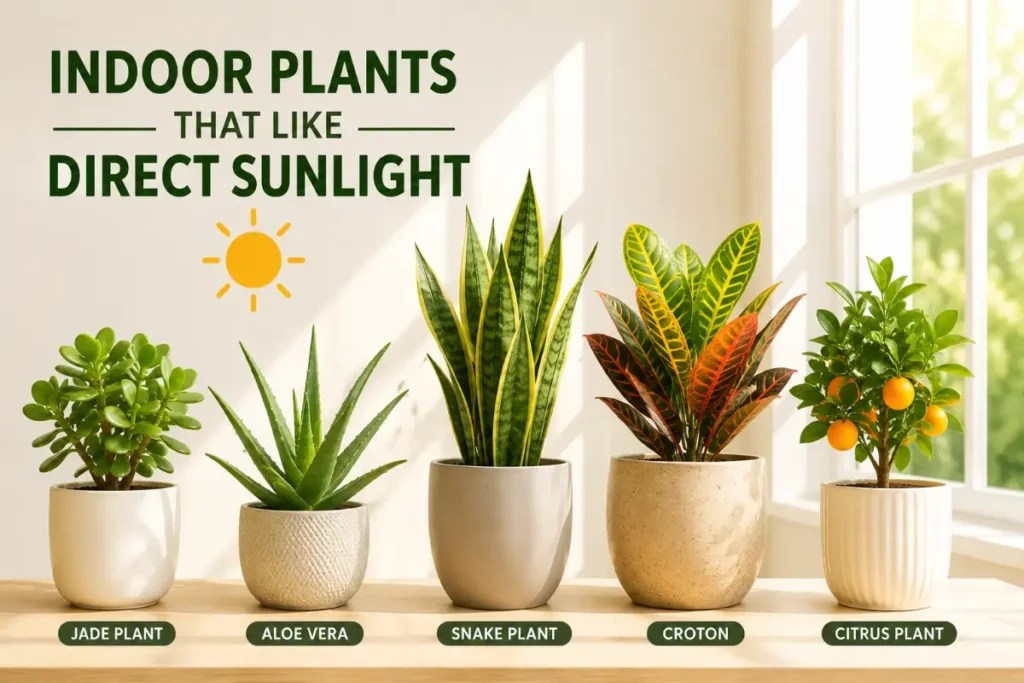
Finding indoor plants that like direct sunlight feels harder than it should be. Walk into any garden center and you will see shelf after shelf of shade-tolerant tropical plants ideal for the dimmer corners of homes. The sun-loving options are there but less prominently displayed, and the care information for direct-sun indoor plants is less commonly written about than the advice that dominates indoor plant content.
The plants in this guide are specifically chosen because they genuinely thrive with direct sunlight through a south or west-facing window for three to six hours or more daily rather than simply tolerating it. These are the plants that reward the grower with a sunny south-facing window rather than punishing them with the bleaching and scorching that affects most tropical houseplants placed in the same position.
Quick Answer
Indoor plants that like direct sunlight include cacti and succulents, aloe vera, jade plant, hibiscus, dwarf citrus trees, rosemary, lavender, geraniums, croton, Bird of Paradise (orange variety), and most herbs including basil and thyme. These plants evolved in high-light environments and produce their best growth, most vivid color, and most abundant bloom specifically in direct sun rather than the bright indirect light that most tropical houseplants require.
Understanding Direct Sunlight Indoors
Direct sunlight indoors is not the same as direct sunlight outdoors. Glass filters approximately 20 to 30% of incoming UV radiation and reduces overall light intensity compared to outdoor full-sun conditions. A south-facing window that receives direct sun for six hours provides roughly equivalent light to partial shade in an outdoor garden.
This distinction matters because plants described as needing full sun outdoors often perform well in direct indoor window light rather than being scorched by it as you might expect. The filtering effect of glass produces conditions closer to the bright, filtered light of a Mediterranean hillside or open savannah than the unfiltered tropical sun that scorches shade-adapted plants.
The plants in this guide are sun-tolerant enough to handle direct indoor window light for three to six hours daily and perform better in those conditions than in the bright indirect light that is the maximum most tropical houseplant guides recommend.
1. Cacti
Cacti are the quintessential direct-sunlight indoor plants. Native to desert environments where direct intense sun is the baseline condition, they evolved storing water to survive extended drought in environments where almost no other plant can persist.
A south-facing window with four to six or more hours of direct sun is the ideal indoor position for cacti. In insufficient light they etiolate, producing thin, pale growth that loses the compact, sculptural form that makes cacti attractive. In good direct sun they maintain their characteristic forms, produce vivid spination, and in some species bloom prolifically.
Care in direct sun: Water only when soil is completely dry two to three inches down. Fast-draining cactus mix with at least 50% perlite or coarse sand. No direct sun exposure through glass in extreme summer heat above 95 degrees since glass can concentrate heat enough to cause sunburn even on sun-adapted species.
2. Succulents
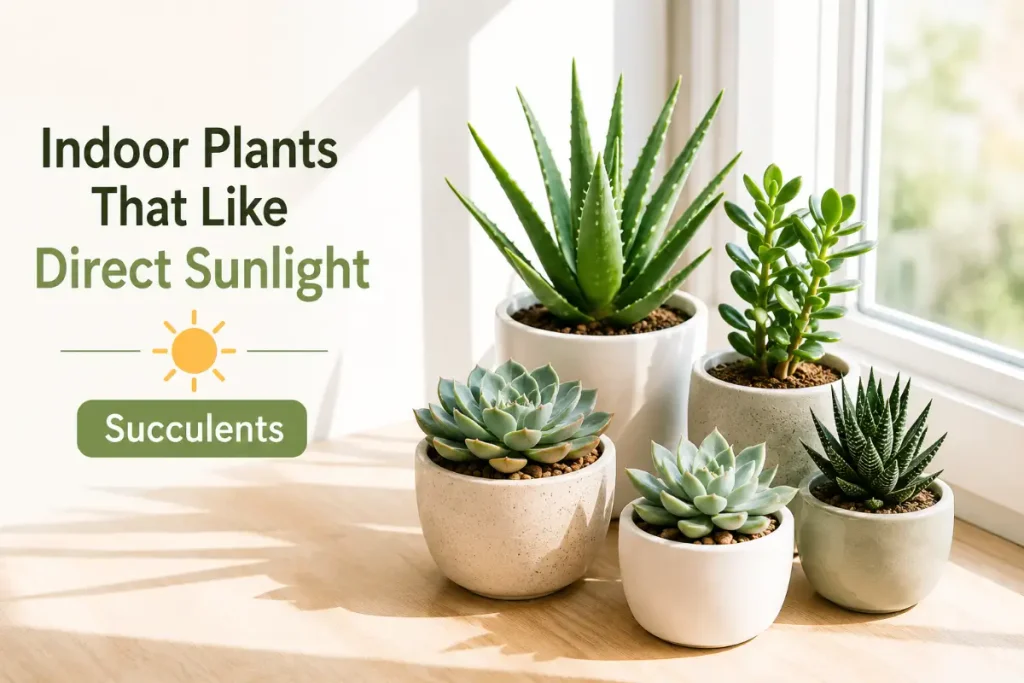
Succulent varieties including echeveria, sedum, sempervivum, and haworthia represent a wide range of sun requirements, with most performing best in bright to direct indoor light.
The rosette-forming echeverias produce their most vivid coloring, tightest rosette form, and most compact growth specifically in direct sun. In insufficient light they etiolate and lose their characteristic form. The sun-stress colors of pink, red, and purple at leaf margins appear most intensely after periods of direct sun exposure.
The exception: Haworthia and gasteria are the most shade-tolerant succulents and perform well in bright indirect light, making them appropriate for positions where other succulents would not receive enough direct sun.
Care: Same watering approach as cacti. Fast-draining soil. Rotate regularly for even growth since succulents lean noticeably toward light sources. For the complete soil mix guide for succulents and cacti in direct sun positions, soil mixture for indoor plants covers the exact ratios that produce the fast drainage these plants require.
3. Aloe Vera
Aloe vera is one of the most widely owned houseplants in the country and one of the most commonly kept in conditions too dim for its preferences. As a plant from the Arabian Peninsula and North Africa where it grows in full desert sun, aloe vera performs best in direct indoor sunlight rather than the low-light corners where it is often placed.
In good direct sun from a south-facing window, aloe vera produces compact, upright, thick-leaved growth that maintains the firm, succulent texture that indicates a healthy plant. In insufficient light the leaves become thin, floppy, and pale, losing the compact rosette form and the firm jelly-filled leaves that make aloe medicinally useful.
Care: Water only when soil is completely dry. Fast-draining cactus mix. Avoid overwatering which is far more common than underwatering for aloe kept in indoor conditions.
4. Jade Plant
Jade plant (Crassula ovata) is a South African succulent shrub that lives for decades in good indoor conditions and is one of the most rewarding direct-sun indoor plants for patient growers. A well-grown jade plant in a south-facing window develops a thick, tree-like trunk and dense, glossy, coin-shaped leaves that make it one of the most impressive large succulent specimens for indoor display.
In direct indoor sun, jade plant develops the reddish leaf margins that indicate sun stress in a healthy way and produces compact, dense growth. In insufficient light leaves become larger, thinner, and more widely spaced on weaker stems.
Care: Water when the top two inches of soil are dry. Fast-draining well-aerated soil. Jade plant in direct sun needs less frequent watering than in lower light since photosynthesis is more active. Repot every two to three years as the woody root system fills the container.
5. Hibiscus
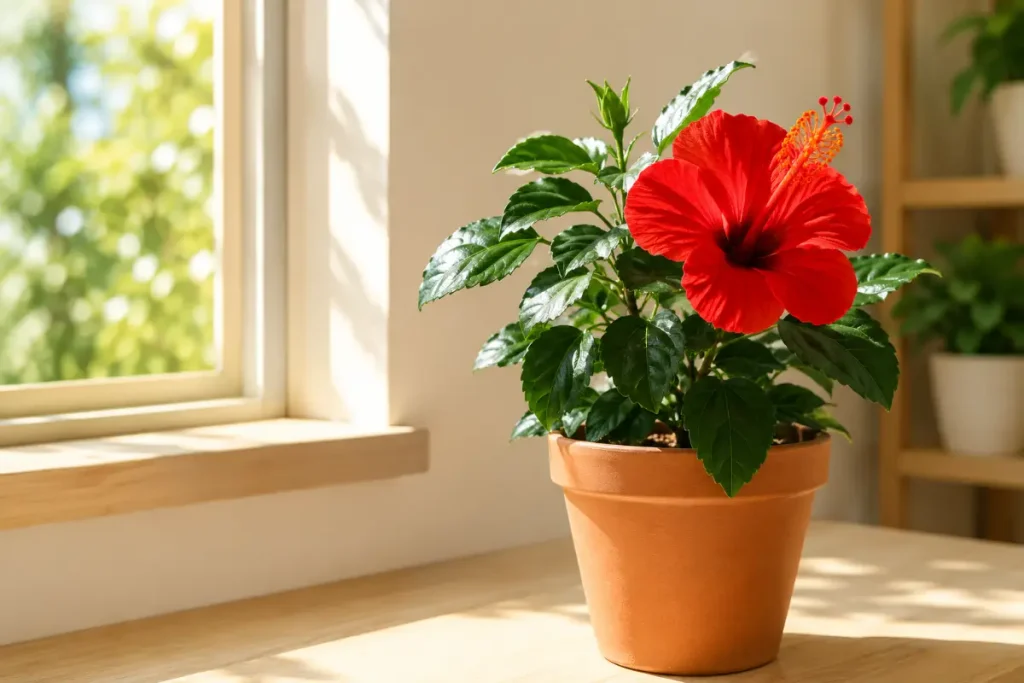
Indoor hibiscus (Hibiscus rosa-sinensis) is one of the most spectacular flowering plants you can grow on a sunny windowsill, producing large, tropical-looking flowers in red, orange, yellow, pink, and white throughout most of the year in adequate direct sun.
Hibiscus is the flowering plant in this guide with the highest light requirement. Without four to six hours of direct sun daily, flowering drops off dramatically and the plant produces only foliage. In a south-facing window with consistent direct sun, a well-cared-for hibiscus produces blooms continuously from spring through fall.
Care: Consistent moisture without waterlogging. Fertilize every two weeks through spring and summer with a high-phosphorus formula. Watch for spider mites, whiteflies, and aphids which are attracted to hibiscus in indoor conditions. Prune regularly to maintain compact bushy growth that produces more flowering stems.
6. Dwarf Citrus Trees
Dwarf citrus trees including Meyer lemon, Calamondin orange, and kumquat are among the most rewarding direct-sun indoor plants because they offer fragrant flowers, colorful fruit, and attractive evergreen foliage all from a single specimen.
Citrus needs the most direct sun of any fruiting plant commonly grown indoors. A minimum of six hours of direct sun daily through a south-facing window or a supplemental grow light is required for fruit production. In less light the trees grow healthy foliage but produce minimal or no fruit.
Care: Water when the top one to two inches of soil dry out. Fertilize with a citrus-specific fertilizer every two weeks through spring and summer. Humidity above 50% prevents the leaf drop that occurs in very dry heated indoor air. Watch for spider mites, scale, and mealybugs which specifically target citrus indoors.
7. Rosemary
Rosemary is the Mediterranean herb most demanding of direct indoor sun and the one that declines most rapidly in insufficient light. As covered in the Specific Plant Care cluster, rosemary needs six or more hours of direct sunlight through a south-facing window to maintain healthy, compact, fragrant growth.
In a south-facing sunny window, rosemary produces the essential oil concentration that gives it its distinctive fragrance and culinary value. In insufficient light it becomes leggy, pale, and fragrance-reduced before eventually developing the root rot that follows weakened resistance in low-light conditions.
Care: Fast-draining soil with 30 to 40% perlite. Water only when two inches deep feel completely dry. Excellent air circulation. For the complete rosemary care guide, how to care for a rosemary plant indoors covers every care step with the specific detail that Mediterranean herbs require indoors.
8. Lavender
Lavender shares rosemary’s Mediterranean origin and similarly high light requirement. In a south-facing window with direct sun, lavender maintains the compact, fragrant growth and reliable bloom that make it worth the care attention it requires indoors.
Care: Same approach as rosemary. Fast-draining lean soil. Minimal watering. Cool temperatures preferred. Regular pruning to prevent woody legginess. For the complete lavender indoor care guide, how to care for an indoor lavender plant covers every consideration including the honest assessment of indoor lavender’s challenges.
9. Geraniums
Geraniums (Pelargonium species) are among the most reliably blooming direct-sun houseplants available and one of the few flowering plants that consistently produces blooms in direct south-facing window light without the complex management that some other flowering plants require.
In four to six hours of direct sun, geraniums bloom prolifically through spring and summer, producing clusters of flowers in red, pink, salmon, white, and bicolor combinations. In insufficient light bloom production drops significantly and the plants produce mainly foliage.
Care: Water when the top inch of soil is dry. Standard potting mix with 20% perlite. Deadhead spent flower clusters to encourage continuous reblooming. Fertilize every two weeks through the bloom period with a balanced formula. Bring indoors before frost in areas where outdoor geraniums are grown for summer.
10. Croton
Croton (Codiaeum variegatum) is the most dramatically colored foliage plant commonly grown in direct indoor sun. Its leaves combine red, orange, yellow, pink, and green in patterns that become more vivid and more intensely colored in brighter light. In insufficient light, croton’s color fades toward plain green as the plant reduces non-photosynthetic pigments.
A south or west-facing window with direct afternoon sun produces the most vivid croton coloration available. This is one of the few houseplants that genuinely looks better in direct indoor sun than in bright indirect light.
Care: Consistent moisture without waterlogging. Temperatures above 60 degrees since croton is cold-sensitive despite being a sun lover. High humidity above 50% to prevent spider mite establishment and maintain leaf condition. Stabilize position once the plant has acclimated since croton drops leaves from environmental changes in the same way as ficus.
11. Culinary Herbs: Basil, Thyme, Oregano
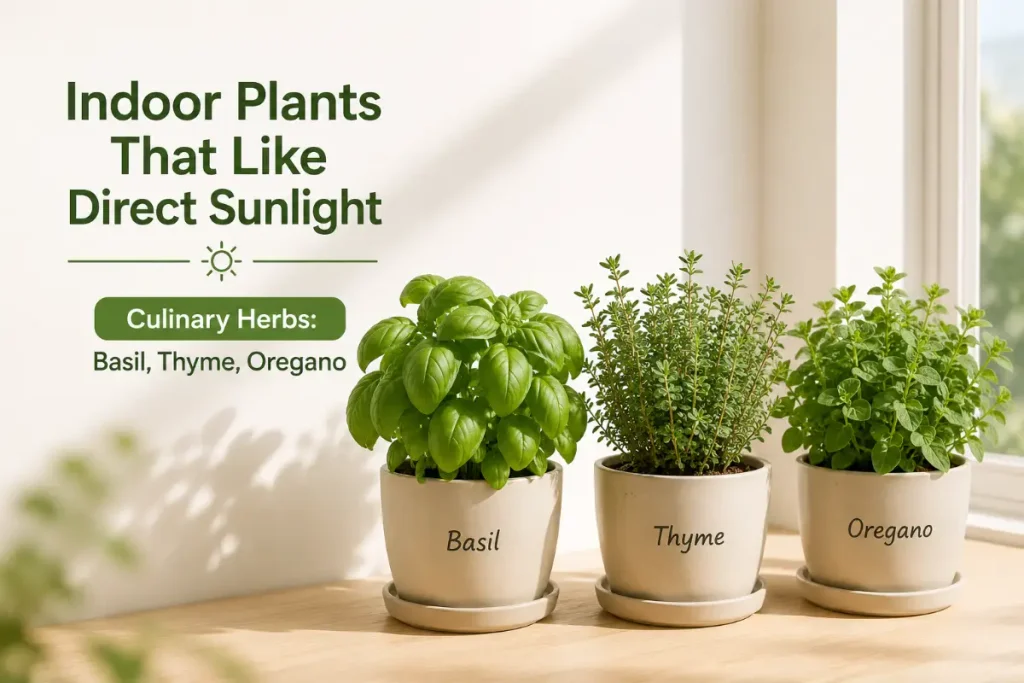
Most culinary herbs are Mediterranean in origin and require direct sun to produce the essential oils that give them their culinary value. A south-facing kitchen window with four to six hours of direct sun is the ideal herb garden position for basil, thyme, oregano, sage, and chives.
Basil specifically needs maximum available direct sun and warm temperatures. In insufficient light basil becomes leggy and flavorless. In good direct sun it produces the dense, aromatic growth that makes fresh basil worth growing.
Thyme and oregano share the Mediterranean direct-sun preference of rosemary and lavender and perform well in the same south-facing window positions.
Care for all culinary herbs in direct sun: Consistent moisture for basil. Drier conditions between waterings for thyme and oregano. Fast-draining soil for Mediterranean herbs. Regular harvesting from stem tips functions as pruning and encourages bushier, more productive growth.
Choosing the Right South-Facing Window
Not all south-facing windows provide equivalent direct sun for indoor plants. Several factors affect how much direct sun actually reaches the plant.
Window size: Larger windows provide more direct sun across a wider area. Plants positioned at the edge of a small south-facing window may receive direct sun for only one to two hours while the center of a large window receives four to six hours.
Obstructions: Trees, buildings, overhanging eaves, and other structures outside south-facing windows reduce direct sun access. A window that receives full afternoon sun in winter may be shaded by a large deciduous tree through summer, which reverses the seasonal light expectations that apply to most indoor situations.
Glass type: Double or triple-pane glass and low-emissivity glass coatings reduce UV transmission more than standard single-pane glass. Plants behind energy-efficient glass receive less photosynthetically active radiation than the visible light level suggests.
Window cleanliness: Dirty windows reduce light transmission by 15 to 25% in some cases. Clean south-facing windows every few months to maintain maximum light transmission for the sun-loving plants that depend on it.
What Happens When Direct-Sun Plants Are in Low Light
Understanding the characteristic decline patterns of direct-sun plants in insufficient light helps you diagnose problems correctly when they develop.
Etiolation: The stretching of stems toward any available light source, producing elongated internodes (the spacing between leaves on a stem) and often a physical lean toward the nearest window. This is the most reliable visible sign that a sun-loving plant needs more direct light.
Color loss: Plants with vivid colors including croton, succulents with colored margins, and sun-stressed cacti lose their distinctive coloration as non-photosynthetic pigments are reduced in favor of maximum chlorophyll production for light capture in dim conditions.
Reduced bloom: Flowering plants including geraniums, hibiscus, and herbs produce significantly fewer flowers in insufficient light since bloom production requires more light energy than vegetative growth.
Root rot susceptibility: Direct-sun plants placed in low light use less water and photosynthesize less actively, creating conditions where standard watering schedules overwater them and root rot develops even in plants that would handle the same watering frequency perfectly well in good light.
Seasonal Changes in Direct Indoor Sunlight
One important variable for sun-loving indoor plants that most care guides skip is how dramatically direct indoor sunlight changes through the seasons. Understanding these changes helps you adjust plant placement and care accordingly rather than being surprised when a plant that thrived in one season suddenly struggles in another.
Winter direct sun: The sun sits lower in the southern sky during winter, which means south-facing windows receive more direct sun penetrating deeper into the room than in summer. A plant that received only indirect light in summer may receive direct sun in winter from the same position. This lower angle also means direct sun reaches through south-facing windows for more hours of the day in winter than in summer.
Summer direct sun: The high summer sun angle means direct light through south-facing windows penetrates less deeply into the room and for fewer hours at any given position than in winter. West-facing windows become more important in summer since afternoon sun at a lower western angle provides the most intense direct sun of the day.
Practical adjustments: Move sun-loving plants closer to south-facing windows in summer to compensate for the higher sun angle. In winter they may receive adequate direct sun further back from the window than in summer. Monitor for the etiolation that indicates insufficient light regardless of season and adjust position accordingly.
For the complete guide to UV light and grow lights as supplements to natural direct sunlight for plants in all seasons, UV light for plants indoor covers the technology behind grow lights and how to use them alongside natural light for the most effective year-round direct-sun plant care.
Conclusion
Indoor plants that like direct sunlight fill the south and west-facing windows of homes with growth, color, and fragrance that shade-tolerant tropical plants in the same positions could never provide. Cacti and succulents maintain their sculptural forms in direct sun that would etiolate them in shade. Hibiscus and geraniums bloom prolifically in sunny windows where most flowering plants refuse to perform. Rosemary, lavender, and culinary herbs produce their best fragrance and flavor in the direct sun that reflects their Mediterranean origin. Croton achieves its most dramatic coloration in direct light that would damage more shade-adapted plants.
If your best window gets direct afternoon sun, choose plants from this list rather than fighting against the light conditions you have. The sunniest window in your home is an asset rather than a liability when matched with plants that genuinely need and thrive in exactly those conditions.
Frequently Asked Questions
Which indoor plants can handle direct afternoon sun?
Cacti, succulents, aloe vera, jade plant, croton, and most Mediterranean herbs including rosemary, lavender, and thyme handle direct afternoon sun through a west or south-facing window without bleaching or scorching. These plants evolved in high-light environments and treat direct indoor window sun as normal rather than extreme. Most tropical houseplants including pothos, ferns, and peace lily should not be placed in direct afternoon sun which bleaches and scorches their foliage.
Do any flowering plants like direct sunlight indoors?
Yes. Geraniums, hibiscus, dwarf citrus, and most culinary herbs bloom most abundantly in direct indoor sunlight. These are among the few flowering houseplants where moving to a sunnier position improves rather than reduces bloom production. Most cool-weather flowering plants like cyclamen and azalea do not tolerate direct sun but most warm-season flowering plants perform better with more direct light than typical indoor positions provide.
How many hours of direct sun do indoor sun-loving plants need?
Most sun-loving indoor plants perform best with three to six hours of direct sunlight daily. Cacti and succulents handle six or more hours comfortably. Mediterranean herbs need at least four to six hours for best growth and flavor. Flowering plants like geraniums and hibiscus need four to six hours for peak bloom production. Plants receiving less than three hours of direct sun daily benefit from positioning closer to the window or from supplemental grow lighting.
Can direct sunlight through a window burn indoor plants?
Direct indoor sunlight through glass is significantly filtered compared to outdoor direct sun, reducing the sunburn risk substantially for all but the most shade-adapted plants. Standard single-pane glass transmits approximately 70 to 80% of visible light and filters some UV radiation. Most cacti, succulents, and sun-tolerant plants handle this filtered direct sun without damage. The plants most at risk of glass-filtered sunburn are shade-adapted tropical plants placed suddenly in direct sun positions without gradual acclimation.
What is the best window for sun-loving indoor plants?
South-facing windows in the northern hemisphere provide the most direct sunlight across the longest daily period and are the best positions for sun-loving indoor plants. West-facing windows receive direct afternoon sun which is somewhat more intense than morning sun and suits most sun-loving plants well. East-facing windows receive morning sun which is gentler and suits plants that need some direct sun but not the intensity of afternoon exposure. North-facing windows receive no direct sun and are not suitable for sun-loving plants without grow light supplementation.
Can I use grow lights instead of direct sunlight for sun-loving plants?
Yes, with the right grow light equipment. High-output LED grow lights specifically designed for plant growth provide sufficient photosynthetically active radiation for cacti, succulents, herbs, and other sun-loving plants when positioned close to the plant (six to twelve inches) and run for fourteen to sixteen hours daily. Standard LED bulbs and most fluorescent fixtures do not provide sufficient light intensity for sun-loving plants but are adequate for shade-tolerant species.
Pingback: UV Light for Plants Indoor: 7 Benefits, Risks & Best Practices (2026) - Plant Quill