Indoor plants in the bedroom are one of the most debated topics in houseplant care, and the debate usually circles around two questions: do bedroom plants improve sleep and air quality, and are there any plants specifically beneficial in a sleeping space? The answers are more nuanced than either enthusiastic plant advocates or skeptical minimalists typically acknowledge.
This guide takes an evidence-grounded approach. It covers what bedroom plants can and cannot genuinely do, which plants are best suited to the specific conditions of bedrooms (which are often dimmer and more enclosed than other living spaces), and which plants have characteristics that specifically suit the bedroom environment rather than being generic houseplant recommendations repackaged for the bedroom context.
Quick Answer
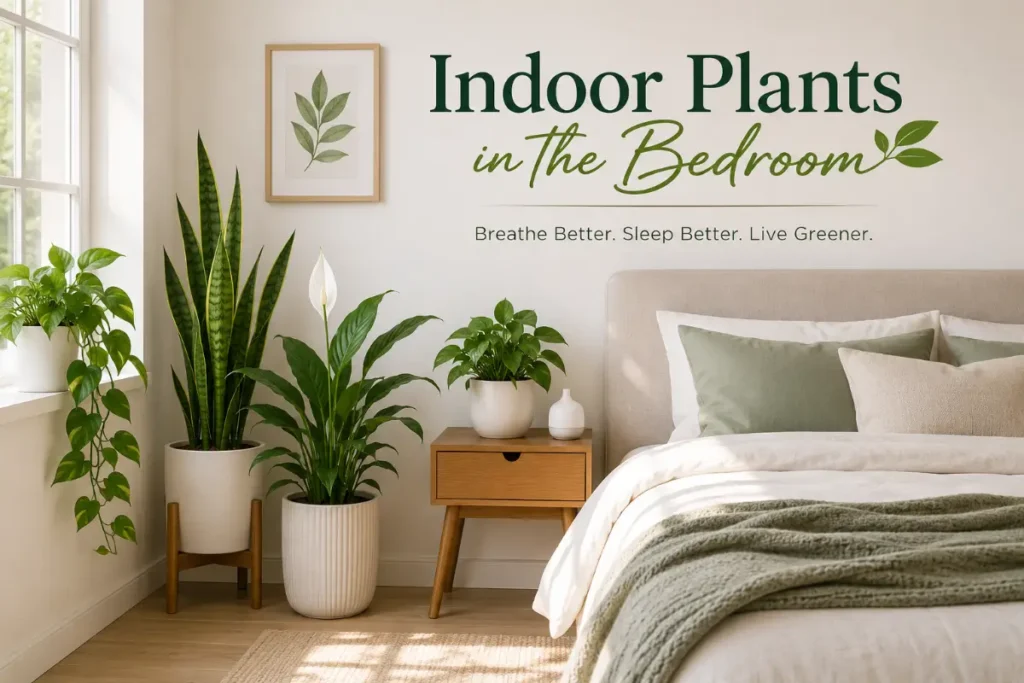
The best indoor plants for bedrooms include snake plant, pothos, peace lily, lavender, aloe vera, spider plant, heartleaf philodendron, ZZ plant, and English ivy. These plants suit the typically lower light of bedroom positions, are manageable in smaller spaces, have documented or plausible air quality or sleep benefits, and are generally safe for adults in enclosed sleeping spaces. Fragrance-free or mildly fragrant options are preferable for people sensitive to strong scents while sleeping.
What Bedroom Plants Can and Cannot Do
Setting realistic expectations prevents both over-reliance on plants for air quality and premature dismissal of genuinely beneficial effects.
What bedroom plants can genuinely do: Several well-known studies including NASA’s Clean Air Study documented the ability of certain plants to remove trace volatile organic compounds (VOCs) including formaldehyde, benzene, and xylene from sealed test chambers. This demonstrates a real biochemical capability. Plants also produce oxygen through photosynthesis during daylight hours and some species produce oxygen at night through CAM photosynthesis, which is specifically relevant in bedrooms where nighttime air quality matters most.
The honest caveat: The VOC removal rates measured in controlled chamber studies do not directly translate to typical bedroom conditions. A bedroom has air exchanges through ventilation, larger air volumes than the test chambers, and typically lower plant density than the studies used. For meaningful air quality impact, you would need many more plants per square foot than most bedrooms contain. The practical benefit is real but modest.
The sleep connection: Bedroom plants reduce psychological stress in most people simply through the presence of nature, a well-documented phenomenon called the biophilic response. Plants in a sleeping space also slightly increase ambient humidity through transpiration, which benefits respiratory comfort particularly in dry heated winter bedrooms. These indirect benefits are consistent and real even if not dramatic.
1. Snake Plant (Dracaena trifasciata)
Snake plant is the most commonly recommended bedroom plant and for good reasons that go beyond its tolerance of low light and irregular watering. It is one of the few plants that performs CAM photosynthesis, which means it absorbs carbon dioxide and releases oxygen at night rather than during the day. In a closed bedroom this nighttime oxygen release is specifically beneficial during the hours when you are actually sleeping.
The CAM advantage: Most plants release carbon dioxide at night as they respire without photosynthesizing. CAM plants including snake plant, aloe vera, and most succulents do the opposite, continuing to exchange gases in a direction that benefits air quality through the night. In a well-sealed bedroom with limited nighttime ventilation, a few snake plants make a small but measurable contribution to overnight CO2 levels.
Bedroom suitability: Snake plant tolerates the lower light of most bedroom positions, requires minimal maintenance that suits spaces you do not want cluttered with plant care equipment, and stays manageable in size for typical bedroom dimensions.
Care: Water when the top two to three inches of soil are dry. Monthly fertilizing through the growing season. Keep above 50 degrees.
2. Peace Lily (Spathiphyllum)
Peace lily is one of the most effective plants in NASA’s Clean Air Study for removing formaldehyde, benzene, and trichloroethylene from indoor air. Its documented VOC removal capability, combined with its genuine tolerance for the low-light conditions of bedrooms without south-facing windows, makes it one of the most practically appropriate bedroom plants in terms of the air quality benefits that motivate most people to add plants to sleeping spaces.
The bloom consideration: Peace lily flowers in low to medium indirect light, providing white spathe flowers that add visual interest to a bedroom without requiring the bright light that most flowering houseplants need. For bedrooms where aesthetic appeal matters alongside practical benefits, peace lily is one of the few plants that delivers both in low-light conditions.
The allergy caveat: Peace lily pollen can trigger allergic responses in sensitive individuals, and its proximity to a sleeping person for eight hours nightly means the exposure duration is higher than in other rooms. People with known plant allergies should assess their individual response before placing a blooming peace lily in their bedroom. Non-blooming specimens or removing flower stalks before they open avoids this concern. For the complete guide to peace lily benefits and care, peace lily indoor plant benefits covers every documented benefit alongside the care requirements.
3. Lavender
Lavender is the plant with the most directly documented sleep benefit of any plant commonly recommended for bedrooms. The linalool and linalyl acetate in lavender’s essential oil have been studied for their effect on the nervous system, with multiple controlled studies showing reduced anxiety, reduced heart rate, and improved sleep quality scores in participants exposed to lavender aromatherapy compared to controls.
The indoor lavender caveat: Growing lavender indoors is genuinely challenging as covered in detail in the Specific Plant Care cluster. It requires direct south-facing sun that many bedrooms, particularly those with east-facing or north-facing windows, cannot provide. The fragrance benefit is most significant from cut or dried lavender rather than a potted plant in typical bedroom conditions.
Practical alternatives: A small vase of fresh cut lavender, a sachet of dried lavender, or a small diffuser with lavender essential oil provides the documented sleep benefit without the care demands of growing potted lavender indoors. For bedrooms with south-facing windows and genuine direct sun access, a potted lavender plant does double duty as both care-demanding decor and an active fragrance source. For the complete guide, how to care for an indoor lavender plant covers every consideration for growing lavender indoors successfully.
4. Aloe Vera
Aloe vera shares the CAM photosynthesis characteristic of snake plant, releasing oxygen at night rather than carbon dioxide. Its tolerance of the lower light in many bedroom positions, combined with its minimal care requirements and the practical first-aid utility of its gel-filled leaves for minor burns and skin irritation, makes it one of the most multi-purpose bedroom plant choices.
The practical utility angle: Bedrooms are where you notice sunburn discomfort at night, where minor skin irritation is most annoying, and where the cooling gel of a fresh aloe leaf offers immediate accessible relief. A bedside table aloe plant is genuinely useful in a way that few other houseplants are.
Size management: Aloe vera in adequate light grows steadily and produces offset pups at the base. Keeping the plant to a manageable bedside table size requires periodically removing offsets and repotting the main plant to prevent it outgrowing a compact bedside position. The removed offsets can be potted separately and placed elsewhere or shared.
Care: Water when the top two to three inches are dry. Bright indirect to some direct sun for best growth. More forgiving of low-light bedroom conditions than Mediterranean herbs but performs best with a sunny bedroom window nearby.
5. Pothos (Epipremnum aureum)
Pothos is the most practically suited bedroom plant for low-light conditions. Its genuine tolerance for dim indirect light including north-facing bedroom windows and interior bedroom positions without direct window access makes it the most reliable choice when light is the primary constraint.
The trailing display advantage in bedrooms: Pothos trailing from a high shelf, winding along a headboard, or cascading from a hanging basket near a bedroom window creates one of the most visually appealing low-maintenance bedroom plant displays available. The long, trailing vines of a healthy pothos provide a lush, organic quality to a bedroom that compact upright plants cannot replicate at the same cost and care level.
Air quality in NASA research: Pothos appeared in NASA’s Clean Air Study as one of the most effective plants for VOC removal. While the practical bedroom air quality benefit is modest as discussed above, the documented removal capability alongside the plant’s exceptional low-light tolerance and low maintenance make it one of the most straightforward bedroom plant recommendations across multiple criteria simultaneously.
Care: Water when the top inch of soil dries out. Minimal fertilizing. Clean leaves periodically to maintain photosynthetic efficiency in lower-light bedroom conditions. The golden pothos and marble queen varieties show the best variegation in whatever light your bedroom provides. Neon pothos maintains its color most consistently in low-light positions.
6. Spider Plant (Chlorophytum comosum)
Spider plant combines genuine NASA-documented VOC removal capability with the easy care, pet safety, and forgiving light requirements that suit the bedroom environment particularly well. Its arching, variegated leaves and cascading runners of baby plantlets create a charming, living display that suits the personal, restful quality of a bedroom space.
The pet safety advantage: Many commonly recommended bedroom plants including peace lily, pothos, and snake plant are toxic to cats and dogs. For bedroom owners who share their sleeping space with pets that might access the plants, spider plant’s general non-toxicity to cats and dogs makes it one of the most appropriate choices. Always verify current toxicity information with the ASPCA database for specific situations.
Care: Water when the top inch of soil dries out. Remove brown tips with clean scissors angled to match the natural leaf shape. Place the hanging runner pups in water to root new plants freely and inexpensively.
7. Heartleaf Philodendron (Philodendron hederaceum)
Heartleaf philodendron is one of the most consistently forgiving plants for bedroom conditions, handling lower light, occasional missed waterings, and the reduced ventilation of enclosed bedrooms better than most other popular houseplants. Its glossy heart-shaped leaves trailing or climbing in a bedroom position create an appealing softness that suits sleeping spaces well.
The high shelf display: Heartleaf philodendron trailing from a high bedroom shelf creates a dramatic, lush effect as the long trailing vines cascade downward. This elevated display position keeps the plant out of reach of pets and small children while providing maximum visual impact at a height where its trailing form reads most effectively.
Care: Water when the top inch of soil feels dry. Wipe leaves every two to four weeks. Minimal fertilizing through the growing season. One of the lowest-maintenance trailing plants available for low-light bedroom positions.
8. ZZ Plant (Zamioculcas zamiifolia)
ZZ plant is the ideal bedroom plant for people who travel frequently, have irregular schedules, or simply want the lowest possible maintenance requirement from a bedroom plant. Its rhizomatous root system stores enough water and nutrients to sustain the plant for weeks between waterings, making it genuinely tolerant of the neglect that bedroom plants often experience when life becomes busy.
The contemporary aesthetic advantage: ZZ plant’s glossy, dark green pinnate leaves on arching stems create a clean, contemporary aesthetic that suits modern bedroom styles particularly well. Unlike the trailing, somewhat informal aesthetic of pothos and spider plant, ZZ plant has an architectural quality that suits more structured bedroom decor.
Care: Water only when the top two to three inches of soil are completely dry. In a low-light bedroom this may mean watering every two to three weeks or less. Monthly fertilizing through the growing season. Essentially pest-free in typical bedroom conditions.
9. English Ivy (Hedera helix)
English ivy was one of the top performers in NASA’s Clean Air Study for mold spore and airborne fecal particle reduction, specifically relevant in bedrooms where enclosed air circulation can accumulate these in carpeting and soft furnishings over time. For bedrooms with older carpeting or soft furnishings where air quality concerns are most relevant, ivy’s specific filtration capability is worth noting alongside its general VOC removal performance.
The trailing display: English ivy trails beautifully from elevated positions, producing the classic cascade of pointed, lobed leaves that creates an elegant, traditional bedroom display. It handles the medium indirect light of most bedroom positions well and prefers the slightly cooler temperatures that many bedrooms maintain at night.
Care: Water when the top inch of soil dries out. Ivy prefers slightly cooler conditions than most tropical houseplants. Watch for spider mites which specifically target ivy in warm, dry indoor conditions. Maintain humidity above 40% and good air circulation to prevent mite establishment. Fertilize lightly every four to six weeks through spring and summer.
Bedroom Plant Placement Considerations
Beyond species selection, where plants are positioned in a bedroom affects both their performance and their practical compatibility with a sleeping space.
Nightstand and bedside tables: Compact plants including small aloe, small ZZ plant, or a compact pothos in a small pot suit bedside positions where space is limited. These positions benefit most from the CAM oxygen-releasing plants since proximity to the sleeping person maximizes the nighttime air quality contribution.
Window positions: The bedroom window sill or floor position near the window maximizes light access for plants that need it. East-facing bedroom windows provide morning direct sun suitable for aloe vera and some succulents. North-facing bedroom windows provide medium indirect light suitable for pothos, ZZ plant, and heartleaf philodendron.
High shelves: Trailing plants including pothos, heartleaf philodendron, and spider plant display most effectively from elevated shelves where their trailing growth falls naturally rather than climbing upward against gravity. High shelf placement also keeps plants out of reach of pets and away from high-traffic floor areas.
Avoiding fragrance near the bed: For people sensitive to plant fragrance during sleep, fragrant plants including lavender, jasmine, and gardenia should be placed on the opposite side of the bedroom from the sleeping position rather than on bedside tables. The fragrance benefit of lavender is effective at a moderate distance without being concentrated at sleeping head height.
Conclusion
Indoor plants in the bedroom provide genuine but modest air quality benefits combined with the consistent psychological benefits of natural elements in a sleeping space. Snake plant and aloe vera for their nighttime CAM oxygen release. Peace lily, pothos, and spider plant for documented VOC removal capability in low-light conditions. Lavender for the most directly documented sleep-quality benefit of any commonly recommended bedroom plant. ZZ plant and heartleaf philodendron for the lowest maintenance suitable for the bedroom’s often-irregular care schedule.
Choose based on your bedroom’s specific light conditions first, then layer in the additional considerations of fragrance sensitivity, pet safety, and aesthetic preference. A bedroom plant that struggles in insufficient light and requires constant intervention is less beneficial than a simpler, more appropriate choice that thrives quietly and requires minimal attention in the same space.
Frequently Asked Questions
Is it safe to sleep with plants in your bedroom?
Yes. The common concern that plants consume oxygen at night is accurate for most plants but the quantity involved is far smaller than a sleeping person’s oxygen consumption and has no meaningful effect on bedroom air quality in a normally ventilated space. CAM plants including snake plant and aloe vera actually release oxygen at night rather than consuming it. Multiple health and environmental organizations including NASA have specifically recommended bedroom plants for their air quality benefits rather than warning against them.
Which plant is best for the bedroom for sleep?
Lavender has the most directly documented sleep benefit of any plant commonly recommended for bedrooms, with controlled studies showing reduced anxiety and improved sleep quality scores from lavender aromatherapy exposure. Snake plant and aloe vera are the most practical bedroom plants overall for their combination of CAM oxygen production, low-light tolerance, and minimal care requirements. For the easiest bedroom plant that also has documented air quality benefits, pothos is the most consistently recommended single choice.
Do bedroom plants increase humidity?
Yes, modestly. Plants release water vapor through transpiration at rates proportional to their leaf surface area and the ambient temperature and light intensity. A few medium-sized houseplants in a typical bedroom increase relative humidity by two to five percentage points under normal conditions. This modest increase is beneficial for respiratory comfort in dry heated winter bedrooms and is one of the genuine practical benefits of bedroom plants beyond aesthetics.
Are bedroom plants safe for cats and dogs that sleep in the bedroom?
Several popular bedroom plants are toxic to pets including pothos, peace lily, snake plant, English ivy, and aloe vera. For bedrooms shared with pets that interact with plants, spider plant and heartleaf philodendron are among the safer options. Always verify current toxicity information with the ASPCA animal poison control database since toxicity information updates as new research becomes available. Placing plants at heights inaccessible to the specific pet is the most practical management approach when the safest plants are not available.
How many plants do I need in my bedroom for air quality benefits?
NASA’s research used one plant per 100 square feet as a general guideline for meaningful air quality effects in sealed environments. A typical US bedroom of 120 to 200 square feet would need one to two plants at minimum and three to four for more significant effects according to this guideline. More plants provide greater benefit up to the point where maintaining them becomes impractical. The psychological and humidity benefits of even one or two plants are meaningful regardless of whether they reach the research-level air quality threshold.
Should I keep flowering plants in my bedroom?
Flowering plants are appropriate for bedrooms with adequate light for bloom production. Peace lily blooms in low light and is suitable for most bedroom light conditions. For fragrance-sensitive sleepers, non-fragrant flowering plants are preferable to highly fragrant ones like jasmine and gardenia that may disturb sleep with intense proximity fragrance. People with pollen allergies should consider either removing flower stalks before they open or choosing non-flowering plants for proximity to the sleeping position.