A tall indoor plant low light combination is one of the most requested and hardest-to-fill briefs in houseplant shopping. Most genuinely tall, impressive houseplants need at least bright indirect light to maintain their size and vigor. Most genuinely low-light plants stay compact and ground-level. The plants that do both, reaching substantial heights while tolerating dim conditions, form a small but valuable group that this guide covers in full.
The honest caveat is the same one that applies throughout this cluster: very low light means different things to different plants and all of them have a floor below which they cannot sustain themselves. The eight plants here genuinely tolerate medium to low indirect light while reaching heights of three feet or more. Some reach six to ten feet over time. None thrive in absolute darkness without supplemental lighting.
Quick Answer
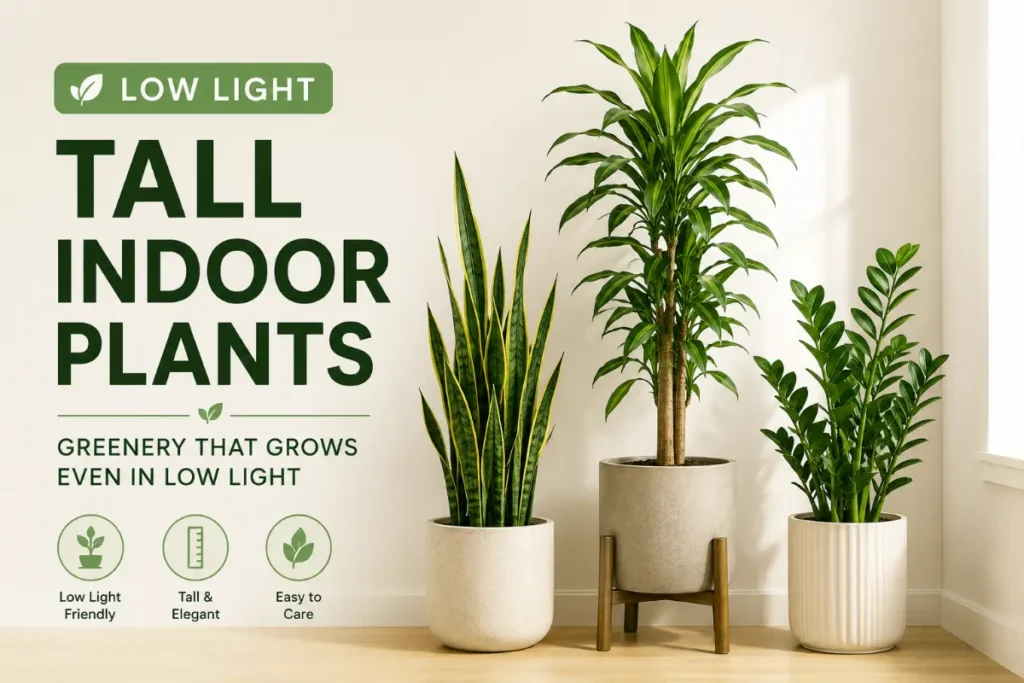
The best tall indoor plants for low light include mass cane (Dracaena fragrans), snake plant (large varieties), bamboo palm, Chinese evergreen (mature specimens), parlor palm, cast iron plant (in clusters), dracaena marginata, and pothos or heartleaf philodendron trained upward on tall moss poles. These plants reach three to ten feet in appropriate conditions while tolerating medium to low indirect light that would cause most large tropical plants to decline.
What Makes a Plant Both Tall and Low-Light Capable
Two characteristics tend to coexist in plants that reach significant heights in low-light conditions.
Efficient light capture: Low-light tall plants typically have dark green, broad, or elongated leaves that maximize the surface area available to capture whatever photons are available. Deep green coloration indicates high chlorophyll density, which extracts more energy from low-intensity light than the pale or variegated leaves of higher-light plants. The dark green leaves of cast iron plant, the broad paddle-shaped leaves of mass cane, and the dense fronds of parlor palm all represent this adaptation.
Slow, steady growth from stored energy: Low-light tall plants typically grow slowly and draw on stored root energy to sustain new growth during periods of reduced light. This stored-energy approach means the plants do not immediately decline when light is reduced but gradually slow their growth rate to match the available photosynthetic output, maintaining existing size while reducing the energy invested in new tissue.
Understanding these two characteristics helps you identify which plants genuinely qualify as low-light performers versus which are simply marketed as low-light despite needing significantly more.
1. Mass Cane (Dracaena fragrans ‘Massangeana’)
Mass cane is the most commonly seen tall low-light houseplant in commercial interiors for a specific reason: it genuinely tolerates the fluorescent lighting of offices, hotel lobbies, and shopping centers where most other large plants would decline within months.
In typical indoor conditions mass cane reaches six to ten feet over many years in pot culture, creating the tree-like form with a cluster of broad, yellow-striped leaves at the top of a woody cane that provides significant visual impact in dim spaces. Three-cane arrangements at staggered heights, the most common retail presentation, create a layered, substantial presence that fills large dim corners effectively.
Height in low light: Mass cane maintains its existing height well in low indirect light. New growth production slows but the established cane structure persists for years without the decline in height that would occur in plants less adapted to dim conditions. The yellow stripe in the leaves becomes less vivid in very low light but the plant does not lose its overall form.
Care: Water when the top two inches of soil dry out. Use filtered or distilled water to prevent fluoride-caused tip browning that is particularly noticeable on plants already somewhat stressed by low-light conditions. Monthly fertilizing through spring and summer. For the complete mass cane care guide, mass cane plant indoor covers every detail including the water quality issue that causes the brown tips most mass cane owners experience.
2. Snake Plant (Large Varieties — Dracaena trifasciata)
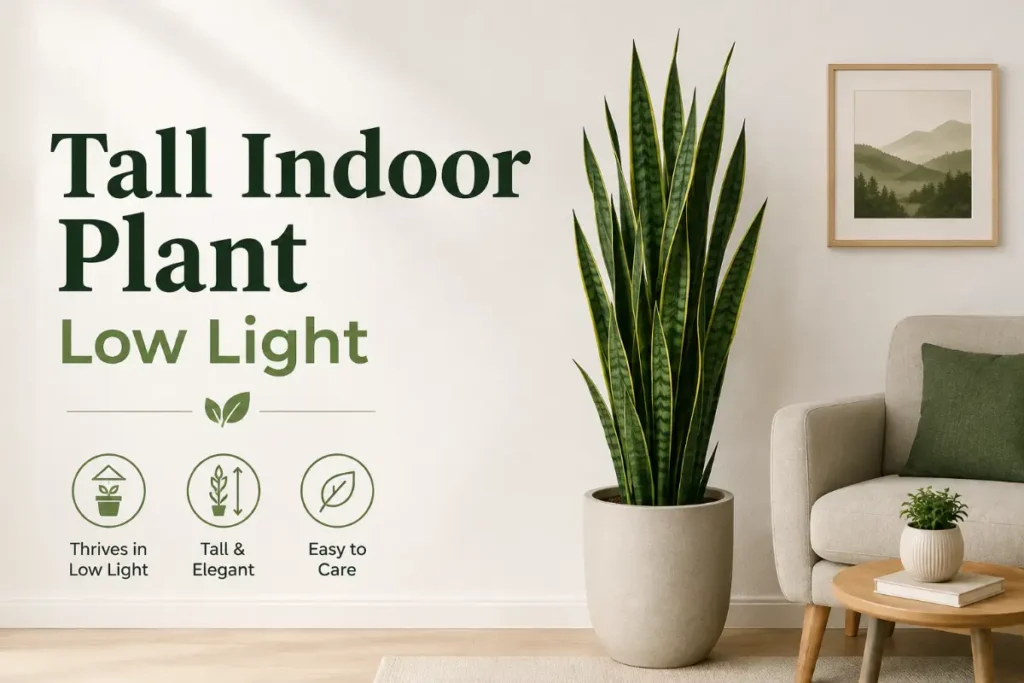
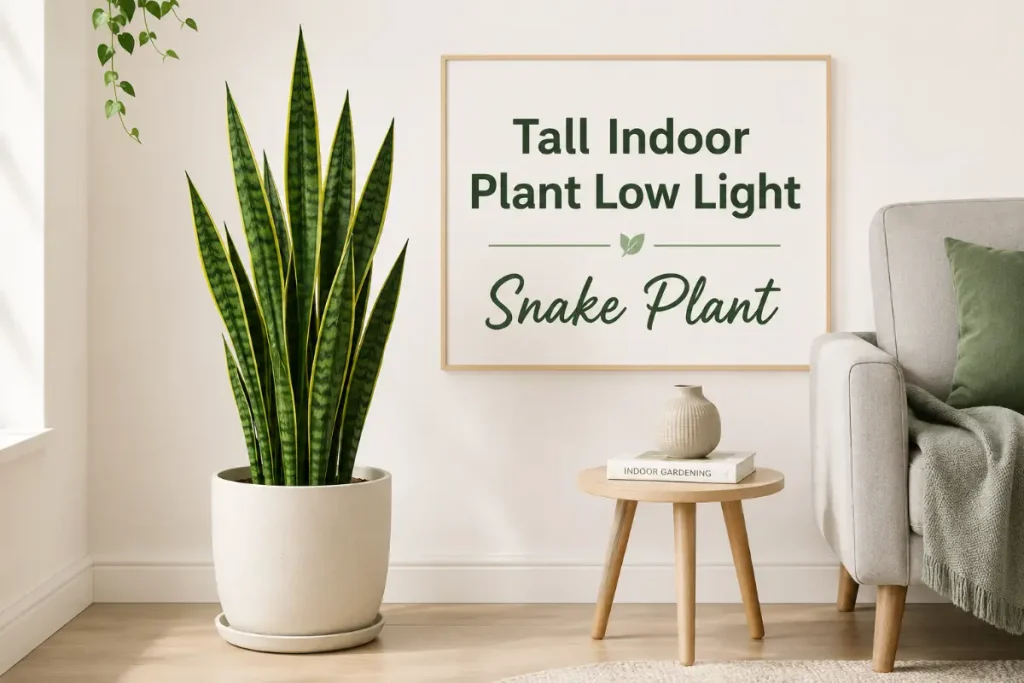
Large snake plant varieties including Dracaena trifasciata ‘Laurentii’ and the whale fin variety (Dracaena masoniana) reach four to six feet in typical indoor conditions, creating a strong architectural vertical presence in low-light positions that few other plants match.
The upright sword-shaped leaves in grey-green with yellow margins or solid dark green grow slowly but persistently in low to medium indirect light. In genuinely dim positions growth slows to near zero but the plant holds its established height and form for months or years on stored rhizome energy reserves, making it one of the most reliable choices for maintaining a tall display in challenging light conditions.
Why large varieties specifically: Smaller snake plant varieties in the six-inch to two-foot range are often recommended for low light but do not fill the tall display role that a four to six-foot specimen provides. When height is the requirement, specifically seek out the tallest available variety at purchase rather than assuming small plants will grow to impressive height in the low-light positions they are recommended for.
Care: Water only when the top two to three inches of soil feel completely dry. In low-light positions this interval extends significantly, potentially to every three to four weeks in winter. Overwatering is the primary cause of snake plant death and the risk is highest in low-light positions where reduced photosynthesis means reduced water uptake.
3. Bamboo Palm (Chamaedorea seifrizii)
Bamboo palm is distinct from the parlor palm covered in the low-light tall plant guide and provides an important variation: while parlor palm is typically a single-stemmed or small multi-stemmed specimen, bamboo palm produces multiple cane-like stems in a dense clump that collectively reaches five to seven feet with a full, bushy presence that single-stemmed palms cannot match.
The clustered cane structure creates a genuine bamboo-like appearance that suits contemporary interior designs particularly well. In medium indirect light bamboo palm maintains healthy growth with regular new cane production from the base. In low indirect light growth slows but the established cane cluster holds its height and density.
The indoor air quality benefit: Bamboo palm appeared in NASA’s Clean Air Study as one of the most effective plants for removing formaldehyde from indoor air, which is a practical benefit for the enclosed, dim interior spaces where this plant is most commonly placed. For the complete guide to indoor plant air purification research and which plants perform best, peace lily indoor plant benefits covers the NASA research and its practical implications alongside the peace lily’s own documented benefits.
Care: Water when the top inch of soil dries out. Maintain humidity above 40% to prevent spider mites which are the most common bamboo palm pest in dry indoor conditions. Monthly fertilizing through the growing season at half rate.
4. Chinese Evergreen — Mature Large Specimens (Aglaonema)
While Chinese evergreen is often sold as a compact table plant, mature specimens of larger-growing varieties including Aglaonema modestum and Aglaonema ‘Silver Bay’ reach three to four feet in height over several years, transitioning from table plants to substantial floor specimens that fill low-light corners effectively.
The key distinction for height in Chinese evergreen is choosing larger-growing varieties from the start and allowing them to reach their full potential rather than confusing the compact forms sold for desk use with the larger forms that eventually reach floor plant height. As the plant ages, lower leaves naturally drop, exposing a short stem structure that contributes to overall height while the crown of large, broadly elliptical leaves provides the visual presence.
The green variety advantage for low light: Green and silver Chinese evergreen varieties genuinely tolerate low indirect light. Red and pink varieties need bright indirect light that most low-light positions do not provide. For dim corners specifically, choosing the green or silver forms is essential for long-term health and appearance.
Care: Water when the top inch of soil feels dry. Keep above 60 degrees. Avoid cold drafts from windows even in indoor positions that might seem protected. Minimal fertilizing every four to six weeks through spring and summer.
5. Parlor Palm (Chamaedorea elegans)
Parlor palm reaches four to six feet over many years of indoor growth, producing fine-textured arching fronds that create the tropical presence most people associate with palms in a size and light requirement that makes it genuinely practical for low-light positions that other palms cannot tolerate.
In medium indirect light parlor palm grows steadily, producing new fronds regularly from the central growing point. In low indirect light growth slows significantly but the established frond structure maintains its attractive form for extended periods. The historical use of parlor palm in Victorian era interiors before electric lighting demonstrates its genuine tolerance for low-light conditions in a way that few other palm species can claim.
The long-term perspective: Parlor palm grows slowly even in ideal conditions. A six-inch potted parlor palm purchased today will reach two to three feet after three to five years of care. Purchasing the largest available specimen at the start provides immediate height impact rather than waiting for a small plant to grow to significant size in conditions where growth is already slower than ideal.
Care: Water when the top inch dries out. Maintain humidity above 40% for best appearance and spider mite prevention. Monthly fertilizing at half rate through spring and summer. For the complete comparison of parlor palm and areca palm, areca palm indoor plant care covers why areca palm needs significantly more light than parlor palm for appropriate indoor performance.
6. Dracaena Marginata (Dragon Tree)
Dracaena marginata is one of the most architecturally distinctive tall plants for low-light indoor positions. Its thin, spiky leaves in dark green with red-purple margins grow in rosettes at the tips of branching, increasingly tree-like stems that reach six to ten feet over many years. The branching stem pattern develops an unusual sculptural quality unlike any other commonly grown low-light plant.
In medium indirect light marginata grows noticeably faster than in low light and produces more vigorous foliage. In low indirect light growth is very slow but the plant maintains its established structure and the distinctive stem form develops increasingly interesting branching over time.
The sculptural advantage: Marginata develops its most impressive form in plants that have been allowed to grow for five or more years, when the multi-branching stems create a genuine sculptural tree-like structure. Purchasing larger, more mature specimens provides this impact immediately.
Varieties: The standard dark green with red margins. ‘Tricolor’ with green, red, and cream stripes. ‘Colorama’ with predominantly red leaves. All share the same care requirements, though the more colorful varieties perform better in medium indirect light than in very low light where color intensity fades toward plain green in insufficient light conditions.
Care: Water when the top two inches dry out. Filtered or distilled water prevents fluoride accumulation that causes tip browning. Monthly fertilizing through the growing season.
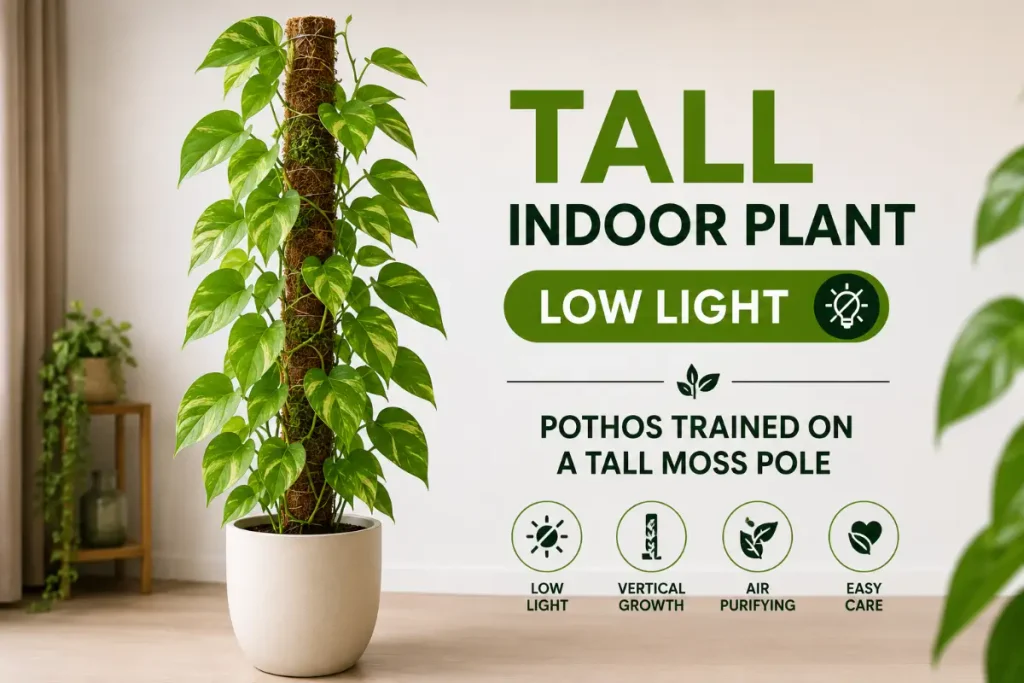
7. Pothos Trained on a Tall Moss Pole
Standard trailing pothos transforms into an impressive tall plant when trained upward on a moss pole or trellis, with mature leaves on climbing stems that are dramatically larger than those on trailing stems. A six-foot moss pole covered with mature pothos leaves creates a visual impact entirely different from the same plant trailing from a shelf.
The size difference between trailing and climbing pothos leaves is one of the most dramatic growth-form changes in any commonly grown houseplant. Trailing pothos in low light produces small, two to three inch leaves on thin stems. The same plant climbing a tall moss pole in comparable light conditions produces leaves that can reach eight to twelve inches with more deeply colored variegation.
Why this works for low light: Pothos is among the most genuinely low-light tolerant climbing plants available. While variegation fades in very low light as described in earlier posts in this cluster, the plant’s growth itself persists in conditions that would stop most other climbing plants.
Setup for tall display: Use the tallest available moss pole, typically four to six feet. Keep the moss pole moist to encourage aerial root attachment. Gently guide growing stems up the pole rather than away from it. Stems attached to the pole produce the largest leaves. Stems that trail away from the pole produce smaller leaves consistent with trailing pothos. For the complete guide to low-light positions and which plants fill them most effectively at different heights, low light tall indoor plants covers the full range from ground level to ceiling height with specific variety guidance for each.
8. Heartleaf Philodendron on a Tall Moss Pole
Heartleaf philodendron on a tall moss pole is the closest companion to climbing pothos in terms of low-light performance and ultimate height potential. Its heart-shaped leaves on climbing stems reach four to eight inches in good indirect light and maintain growth in medium to low indirect light conditions that would stop more demanding climbing plants.
The low-light tolerance of heartleaf philodendron specifically exceeds that of many other philodendron varieties that are marketed as low-light plants. While split-leaf philodendron and other large-leaved climbing philodendrons need at least medium bright indirect light, heartleaf philodendron maintains acceptably vigorous growth in genuinely low indirect light positions.
Combined displays: A pair of moss poles, one with climbing pothos and one with climbing heartleaf philodendron, placed together in a low-light corner creates a lush, layered tropical display where the slightly different leaf forms and coloration of the two plants complement each other. Both are trained upward and the resulting eight to twelve-foot combined height of two separate six-foot poles filled with climbing foliage creates an impressive living wall effect achievable in genuinely dim indoor conditions.
Care: Water when the top inch of soil feels dry. Keep moss poles moist. Monthly fertilizing through spring and summer at half rate. Wipe leaves every two to four weeks to remove dust accumulation that reduces photosynthetic efficiency in already-limited low-light conditions.
Making Tall Low-Light Plants Look Their Best
Choose the largest available specimen. In low-light conditions growth is slow. A tall plant purchased at four to five feet will reach five to six feet over several years in adequate care. A small plant purchased at one foot may take a decade to reach the same height in low-light conditions. Start with the largest practical specimen for immediate visual impact.
Use complementary lower plants. The gap between a tall plant’s bare lower stems and the floor can be filled with genuinely low-light tolerant ground-level plants including ZZ plant, cast iron plant, and peace lily. This layered approach creates a complete display at all heights rather than a tall plant floating above an empty floor.
Clean leaves consistently. Dust accumulation on the large leaf surfaces of tall low-light plants significantly reduces the already-limited photosynthetic capacity. In enclosed, still-air low-light positions dust builds faster than in better-ventilated spaces. Wiping leaves every two to four weeks makes a meaningful difference in plant health in genuinely dim conditions.
White walls maximize reflected light. Light-colored walls reflect ambient light throughout the room, increasing the effective light available to plants in dim positions. This is one of the cheapest and most effective ways to improve plant performance in rooms without adequate window light.
Add a supplemental grow light. Even a modest LED grow light running eight to ten hours daily positioned above a tall low-light plant significantly improves performance. For tall plants, a floor lamp style grow light that illuminates from above the canopy level rather than from the side provides the most useful light distribution.
Conclusion
Tall indoor plants for low light form a specific and genuinely useful category for the dim corners, north-facing rooms, and interior spaces that most home plant guides treat as unsolvable plant placement problems. Mass cane and dracaena marginata for tree-like architectural presence. Snake plant in large varieties for strong vertical structure. Parlor palm and bamboo palm for tropical fronds without sun requirements. Chinese evergreen in mature specimens for dense, leafy ground-level to mid-height coverage. Climbing pothos and heartleaf philodendron on tall moss poles for the most flexible, forgiving tall display in the most challenging light conditions.
Purchase the largest available specimen for immediate impact. Clean leaves regularly. Add supplemental lighting where natural light is truly inadequate. And choose the most deeply green varieties of each plant since variegation consistently reduces low-light performance across every species and size.
Frequently Asked Questions
What is the tallest houseplant that grows in low light?
Mass cane (Dracaena fragrans ‘Massangeana’) and dracaena marginata reach the greatest heights of genuinely low-light tolerant houseplants, with both capable of reaching six to ten feet over many years of indoor growth. Bamboo palm reaches five to seven feet and parlor palm four to six feet in typical indoor conditions. Among climbing plants, pothos and heartleaf philodendron on tall moss poles can reach six to eight feet in low-light conditions given enough time.
Can any tall plant survive in a room with no windows?
No plant survives permanently without any light. In windowless rooms, a LED grow light running eight to ten hours daily is necessary for any plant to maintain itself. Mass cane, snake plant, and ZZ plant need the least supplemental light intensity of any tall houseplants and are the best choices for supplemental-light-only growing. For genuinely windowless spaces, invest in a quality grow light before selecting the plant.
How do I make a low-light plant grow taller faster?
Move to the brightest available indirect light within the low-light range. Even moving from genuinely dim low light to medium indirect light significantly accelerates growth rate. Add supplemental LED grow lighting for eight to ten hours daily. Fertilize every two to four weeks through spring and summer. Increase pot size one to two inches when roots fill the current pot since root-bound plants slow their above-ground growth. All of these accelerate growth while remaining within the low-light category rather than moving to direct sun positions.
Why does my tall low-light plant keep getting taller on one side?
Uneven growth toward the primary light source is normal for plants in low-light positions. Regular rotation, a quarter turn every two weeks, distributes the available light across all sides of the plant and produces more symmetrical growth. Plants that have already developed significant lean can be staked upright while new growth in a rotated position gradually restores more symmetrical form over months.
Should I fertilize tall plants in low light?
Yes but less frequently than plants in bright light. Low-light plants grow more slowly and use nutrients at a reduced rate. Monthly fertilizing at half the standard rate through spring and summer provides adequate nutrition without the salt accumulation that full-rate fertilizing at monthly intervals causes in the small pot volumes typical of indoor plants. Stop fertilizing entirely in fall and winter when even slow growth effectively ceases in genuinely dim conditions.
How do I stop my tall low-light plant from becoming top-heavy?
Top-heavy tall plants need either a heavier pot to provide a stable base or a support stake to prevent tipping. Terracotta pots are significantly heavier than plastic for the same volume and provide better stability for tall plants. For very top-heavy plants including tall single-stemmed snake plants and mass cane, an inner heavy pot placed inside a decorative outer pot provides both the aesthetic of a lightweight decorative container and the stability of a heavy inner liner.