
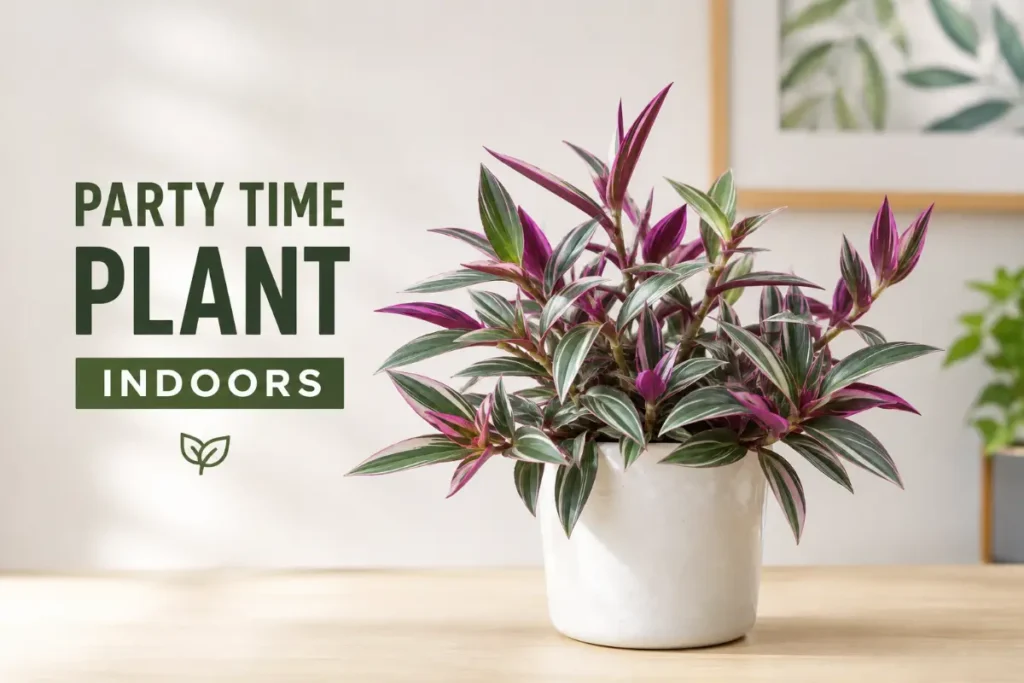
The mass cane plant indoor is one of the most widely sold and most durable large indoor plants available, which explains why it appears in offices, shopping malls, hotel lobbies, and homes across the country where it often outlives every other plant in the space by years. Mass cane (Dracaena fragrans ‘Massangeana’, also called corn plant) produces large, strap-like leaves with a central yellow-gold stripe running the length of each leaf, arranged in rosettes at the top of thick, woody canes that give the plant its distinctive tree-like appearance.
Despite its reputation for toughness, mass cane has one consistent complaint from its owners: brown leaf tips. Understanding why those tips brown and what actually causes it transforms mass cane care from guesswork to reliable, systematic management of a genuinely long-lived indoor plant.
Quick Answer
Mass cane plant indoor care requires bright to medium indirect light without direct harsh sun, watering when the top two inches of soil dry out using filtered water rather than tap water, temperatures between 60 and 80 degrees Fahrenheit, moderate humidity above 40%, fertilizing every two to four weeks through spring and summer, tolerance for the natural lower leaf drop that occurs as the plant ages, and protection from fluoride in tap water which is the primary cause of the brown tips that frustrate most mass cane owners.
Understanding Mass Cane Plant
Dracaena fragrans ‘Massangeana’ is one of the most commonly cultivated varieties of Dracaena, a genus of approximately 120 species native to tropical Africa and surrounding islands. Mass cane grows naturally in the tropical and subtropical forests of Africa where it reaches heights of 50 feet or more outdoors. Indoors in a pot, growth is significantly slower and the plant typically reaches six to fifteen feet over many years.
The thick, woody canes that characterize mass cane are a distinctive feature of the Dracaena genus. These canes store water and nutrients, giving the plant remarkable resilience in suboptimal conditions. The canes can be cut at any height to control plant size and new growth emerges from below the cut within weeks, making mass cane one of the easiest large houseplants to size-manage through pruning.
The Massangeana variety specifically features the central yellow-gold stripe on each leaf that distinguishes it from plain green Dracaena fragrans. This variegation requires adequate light to maintain its color intensity since the yellow stripe represents a reduced-chlorophyll area that needs surrounding green tissue to compensate for its lower photosynthetic capacity.
Step 1: Position in Bright to Medium Indirect Light
Mass cane is one of the more light-tolerant large houseplants available, which is a significant practical advantage for filling interior spaces where true low-light conditions would challenge most other large plants. However, medium light is the minimum for maintaining the yellow variegation and producing healthy new leaf growth. Very low light produces new leaves that are narrower and have reduced variegation.
What works: Bright indirect light from an east or north-facing window. A position two to four feet back from a south or west-facing window. Medium indirect light in a well-lit interior room with ambient window light from nearby windows.
What causes problems: Direct harsh afternoon sun bleaches the leaves and causes brown dry patches on the leaf surfaces. Very low light below standard office fluorescent lighting levels produces very slow growth and reduced variegation in new leaves.
The office light tolerance: Mass cane genuinely tolerates the fluorescent office lighting that kills most other large houseplants, which explains its prevalence in commercial interior spaces. Under adequate fluorescent lighting running eight or more hours daily it maintains acceptable health and growth, though natural indirect light produces better results.
Step 2: Water Correctly and Use Filtered Water
Watering is where most mass cane care mistakes occur, and the approach has two components that must both be right: correct frequency and correct water type.
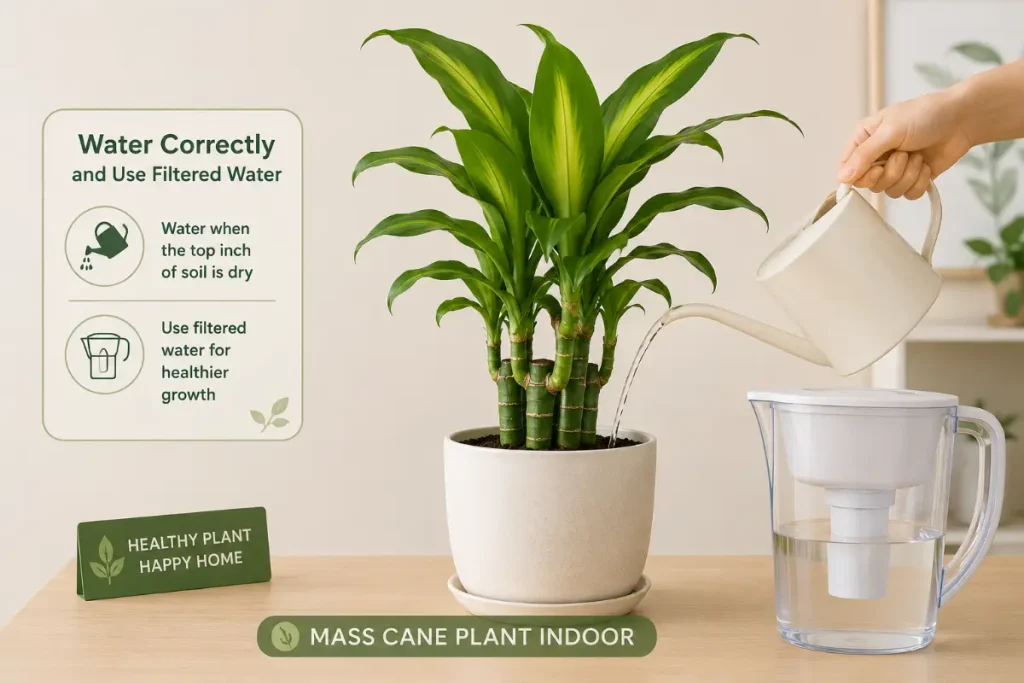
Watering frequency: Water when the top two inches of soil feel dry. In a bright position during summer this means every seven to ten days. In lower light or winter every fourteen to twenty-one days. Mass cane’s water-storing canes give it meaningful drought tolerance, but chronic overwatering causes the root rot that is the primary non-tip-related cause of mass cane decline.
Water type is critical: This is the most important single care insight for mass cane. Fluoride in tap water accumulates in the leaf tips of mass cane through a process where water is drawn up through the plant and evaporates at the leaf edges, leaving fluoride residue that burns the sensitive tip tissue. This fluoride burn is responsible for the vast majority of the brown tips on mass cane plants in indoor collections.
The solution: Use filtered water, distilled water, or collected rainwater consistently. The improvement in leaf tip condition typically appears within two to three new leaf generations (roughly four to eight months) of switching from tap water. Already-brown tips do not recover but new leaves emerge with clean, undamaged tips when fluoride exposure stops.
If tap water is the only option: Allow tap water to sit in an open container for 24 to 48 hours before use. This does not remove fluoride (which requires filtering) but does allow chlorine to off-gas, reducing one category of chemical that stresses mass cane. For a lasting solution, invest in an inexpensive water filter pitcher for plant watering.
Step 3: Maintain Comfortable Temperature
Mass cane is comfortable in the same temperature range most people maintain in their homes throughout the year.
Ideal range: 60 to 80 degrees Fahrenheit covers the temperatures where mass cane actively grows and maintains good health. This aligns with typical US home temperatures without special management.
Cold sensitivity: Below 55 degrees growth slows noticeably. Cold drafts from exterior doors and cold windowpanes in winter cause sudden brown streaking and spotting on leaves that appears within days of cold air exposure. This cold-related spotting is different from the gradual tip browning caused by fluoride and appears more suddenly and in a more random pattern across the leaf surface.
Heat tolerance: Mass cane handles the upper portion of its temperature range well as long as humidity is adequate. Very warm conditions above 85 degrees combined with low humidity increase the rate of fluoride accumulation in leaf tips and accelerate the tip-browning problem.
Step 4: Maintain Moderate Humidity
Mass cane is more humidity-tolerant than many other large indoor tropical plants, which contributes to its durability in typical home environments that may be drier than ideal.
Minimum acceptable: 40% relative humidity. Below this threshold, tip browning accelerates beyond the fluoride-driven baseline and the leaves develop the brown edges in addition to the tips that indicate general moisture stress.
Effective management: A pebble tray with water beneath the pot provides steady local humidity increase. A humidifier running nearby during winter heating season is particularly valuable for maintaining above 40% consistently in dry heated homes. Grouping with other tropical plants raises collective humidity.
The winter challenge: Winter heating drops indoor humidity to 20 to 35% in many US homes, which combined with fluoride from tap water creates the worst conditions for tip browning. Addressing both humidity and water quality simultaneously produces the best improvement in leaf condition.
Step 5: Fertilize Lightly Through the Growing Season
Mass cane is a moderate feeder that benefits from consistent nutrition through spring and summer but does not need the intensive fertilizing that heavy-feeding tropical plants require.
Through spring and summer: Feed every two to four weeks with a balanced liquid fertilizer at half the label rate. Less frequent than some other tropical plants but sufficient to support the moderate growth rate of mass cane in good conditions.
What to avoid: High-nitrogen fertilizers at full rate drive soft, weak new growth and increase salt accumulation in the potting mix. Mass cane is sensitive to excess fertilizer salts which contribute to tip browning alongside fluoride accumulation.
Flushing regularly: Every two to three months, water the pot thoroughly with two to three times the normal amount of water, allowing it to drain completely. This flushes accumulated fertilizer salts and any remaining fluoride from the soil, resetting the mineral balance in the root zone. This practice reduces tip browning noticeably in plants receiving regular fertilizer applications.
Fall and winter: Reduce to monthly feeding or stop entirely during the slow-growth period.
For the complete guide to natural fertilizer options that produce less salt accumulation than synthetic alternatives for sensitive plants like mass cane, natural fertilizer for indoor plants covers every effective organic approach alongside the salt accumulation differences that make organic options worth considering for long-lived indoor plants.
Step 6: Understand and Manage Natural Lower Leaf Drop
Mass cane naturally drops its older lower leaves as the plant grows taller and produces new growth at the top. This is one of the most frequently misinterpreted aspects of mass cane care since owners often assume yellowing lower leaves indicate a care problem when they may simply be the plant’s normal aging process.
What is normal: Lower leaves on the oldest portion of each cane gradually yellow and drop as the plant directs energy to newer leaves at the growing tip. A single lower leaf yellowing and dropping every two to four weeks in a healthy growing plant is natural aging. The plant naturally develops the tree-like form with bare lower canes and a leafy crown over time as a result of this ongoing lower leaf drop.
What indicates a problem: Multiple simultaneous yellowing of leaves throughout the plant rather than just at the base. Yellowing of young leaves that were recently produced. Yellow leaves combined with musty soil smell indicating root rot. Yellow leaves with green veins indicating iron or magnesium deficiency from pH imbalance.
Managing the appearance: As lower leaves drop and the bare cane becomes increasingly prominent, many owners cover the base with lower-growing companion plants that fill the visual gap. Pothos, philodendron, or spathiphyllum placed in separate pots around the base of a mass cane create a layered tropical display that uses the bare cane aesthetic as a structural element rather than trying to hide it.
Step 7: Pruning and Size Management
Mass cane grows slowly but persistently and eventually becomes too tall for most indoor spaces. The good news is that it responds well to dramatic pruning and the cut canes can themselves be propagated into new plants.
Cutting the cane: Using a clean sharp saw or large pruning shears, cut the main cane to the desired height. New growth emerges from buds just below the cut within four to eight weeks, producing a new cluster of leaves that restores the plant’s crown appearance at the new, lower height.
The cut section: The removed top section with its crown of leaves can be planted as a cutting if it has at least six inches of cane below the leaf base. Strip the lower leaves from the cane section, allow the cut end to dry for a day, and plant in moist potting mix with the lower cane buried several inches in the soil. Roots develop from the buried cane within four to eight weeks.
Multiple cane plants: Most mass cane plants sold at retail have three canes of different heights in the same pot, which creates a layered appearance as the crown of leaves sits at different levels. When pruning for height management, cut each cane at a different height to maintain the staggered appearance rather than cutting all canes to the same height.
After pruning: Wait four to six weeks before fertilizing after any major pruning. Provide the best available light to support the new growth development from below the cut. For the complete guide to post-repotting and post-pruning care timing, do you need nutrients after repotting a indoor plants covers the establishment period principles that apply equally to mass cane after major pruning events.

Why Mass Cane Is One of the Best Large Indoor Plants
Mass cane earns its place as one of the most recommended large indoor plants for several practical reasons that go beyond just being hard to kill.
NASA air purification: Mass cane (Dracaena fragrans) was one of the plants included in NASA’s Clean Air Study that documented its ability to remove formaldehyde, benzene, and trichloroethylene from indoor air. The large leaf surface area of a mature mass cane provides significant air purification capacity in the rooms where it grows. For the complete breakdown of indoor plant air purification research, peace lily indoor plant benefits covers the NASA research and practical implications for air-purifying houseplants across the category.
Longevity: Mass cane plants are routinely maintained for twenty or more years in appropriate conditions, making the initial purchase investment one of the best value propositions in indoor plants. The slow growth rate that can feel like a disadvantage in the early years becomes an advantage as the plant ages into an impressive, substantial specimen that smaller, faster-growing plants never achieve.
Reliable performance: Mass cane provides consistent, predictable behavior that makes it one of the most reliable plants for decorative indoor use in commercial and residential settings. Unlike more demanding plants that require specific conditions to look attractive, mass cane maintains its appearance across a wide range of indoor light and temperature conditions with only occasional attention.
Repotting Mass Cane
Mass cane grows slowly and needs repotting less frequently than faster-growing tropical plants. Most mass cane plants go two to three years between repots, and some mature specimens in large containers go even longer without declining from root crowding.
When to repot:
- When roots emerge visibly from drainage holes in quantity.
- When the plant dries out within three to four days of thorough watering indicating the root mass has displaced most soil.
- When growth has slowed significantly despite adequate light and fertilizing during the growing season.
Pot size: Choose a container two to three inches larger in diameter than the current one. Mass cane in an oversized pot with excess soil volume retains moisture longer than its roots use, which increases root rot risk in a plant already prone to overwatering problems. The thick canes make mass cane top-heavy in proportion to pot size, so a heavier terracotta or ceramic pot provides better stability than lightweight plastic for larger specimens.
Soil: Standard potting mix with 20% perlite provides the drainage and moisture retention balance appropriate for mass cane. The perlite improves drainage beyond standard mix alone, reducing the chronic moisture that contributes to root rot and fluoride accumulation problems.
After repotting: Wait four to six weeks before resuming fertilizing. Provide the best available light during the establishment period. Some temporary lower leaf yellowing after repotting is normal as the plant adjusts to new soil conditions.
Mass Cane Alongside Other Large Indoor Plants
Mass cane works particularly well as the structural anchor of large tropical plant groupings where its tree-like form and height create the visual hierarchy that makes a plant grouping look like an intentional composition rather than a collection of individual pots.
The bare lower canes of a mature mass cane create a natural elevated canopy effect when shorter plants are placed at its base. Peace lily, pothos, and arrowhead plant all work well as understory plants beneath a mass cane canopy, using the filtered light that passes through the mass cane crown and filling the visual space at ground level that the mass cane’s bare canes leave open.
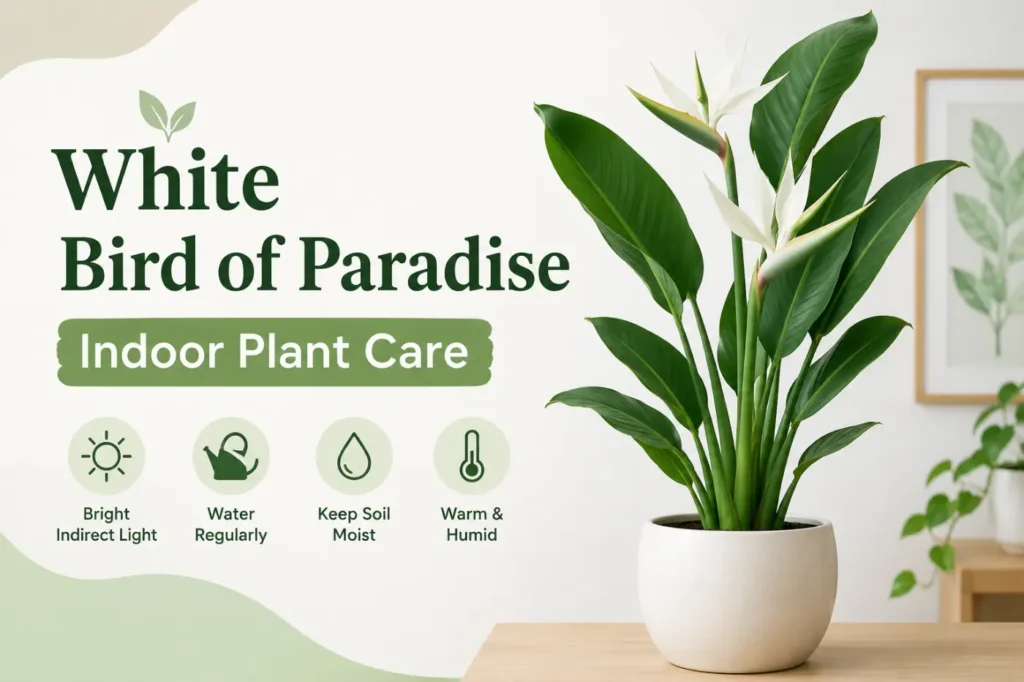
For very large indoor spaces including commercial lobbies, sunrooms, and open-plan living areas, grouping mass cane with other large statement plants including white bird of paradise and areca palm creates a genuinely impressive tropical display where the different growth forms and leaf textures of each plant complement each other without any single plant dominating the composition at the expense of the others.
For the complete guide to white bird of paradise care and how it pairs with mass cane in large tropical indoor displays, white bird of paradise indoor plant covers the care requirements and display considerations for the large-scale tropical statement plant that pairs most effectively with mass cane in ambitious indoor plant compositions.
Conclusion
Mass cane plant indoor care is fundamentally about two things: switching to filtered water and watering at the right frequency. The brown tips that frustrate most mass cane owners are almost entirely caused by fluoride in tap water, and switching to filtered or distilled water produces noticeable improvement in tip condition within several months. The root rot that occasionally kills mass cane results from overwatering, and checking soil moisture at two inches depth before every watering prevents this reliably.
Beyond those two fundamental adjustments, mass cane is genuinely one of the most forgiving and long-lived large indoor plants available. Adequate indirect light. Comfortable indoor temperatures. Moderate humidity. Light seasonal fertilizing with regular soil flushing. Acceptance of natural lower leaf drop as normal aging. And patience with a plant that grows slowly but persists impressively over decades. Those practices produce a mass cane that earns its place as a permanent, improving feature of the indoor space it occupies.
Frequently Asked Questions
Why does my mass cane have brown tips?
Brown tips on mass cane are almost always caused by fluoride accumulation from tap water. Fluoride is absorbed through roots and carried to leaf tips where it accumulates as water evaporates, burning the sensitive tip tissue. Switch to filtered, distilled, or rainwater immediately. The brown tips already present will not recover but new leaves will emerge with clean tips once fluoride exposure stops. Low humidity and fertilizer salt accumulation can also contribute to tip browning and are worth addressing simultaneously.
How often should I water a mass cane plant indoors?
Water when the top two inches of soil feel dry, typically every seven to ten days in a bright position during summer and every fourteen to twenty-one days in lower light or winter. Mass cane’s water-storing canes give it significant drought tolerance but root rot from chronic overwatering is the primary non-tip cause of mass cane decline. Always check two inches deep rather than watering on a fixed calendar schedule.
Why are the leaves on my mass cane turning yellow?
Yellow lower leaves that drop individually over time are normal aging as the plant produces new growth at the top and drops older lower leaves progressively. Multiple simultaneous yellowing throughout the plant indicates overwatering causing root rot. Yellow leaves with green veins indicate iron deficiency from pH imbalance. Yellow leaves combined with black or brown soft root tissue when the plant is removed from its pot confirm root rot that requires immediate intervention.
Can mass cane grow in low light?
Mass cane is one of the most low-light tolerant large houseplants available. It tolerates office fluorescent lighting and medium indirect light that would be insufficient for most other large tropical plants. However, very low light below medium indirect levels produces very slow growth, reduced yellow stripe variegation in new leaves, and increased susceptibility to the tip browning and root rot that adequate light helps moderate. Medium indirect light is the practical minimum for healthy, attractive growth.
How do I fix brown tips on mass cane already present?
Brown tips already present on mass cane leaves will not recover their color regardless of care improvements. Cosmetically, you can trim the brown tip area with clean sharp scissors cutting at an angle that mimics the natural leaf tip shape, removing the brown portion while leaving a natural-looking point rather than a straight cut line. Preventing new tip browning through filtered water use, adequate humidity, and regular soil flushing with excess water to leach mineral salts is the correct long-term approach.
Is mass cane toxic to pets?
Yes. Mass cane (Dracaena fragrans) is toxic to cats and dogs. Ingestion causes vomiting, drooling, weakness, and in cats specifically can cause dilated pupils. The saponins in mass cane tissue are the toxic component and are present throughout the plant including leaves, stems, and roots. Keep mass cane out of reach of pets that regularly chew on houseplants or choose non-toxic large houseplant alternatives for households with animals that cannot be kept away from plants.

Pingback: Low Light Tall Indoor Plants: 9 Statement Plants for Dim Spaces (2026) - Plant Quill
Pingback: Tall Indoor Plant Low Light: 8 Statement Picks That Actually Grow - Plant Quill