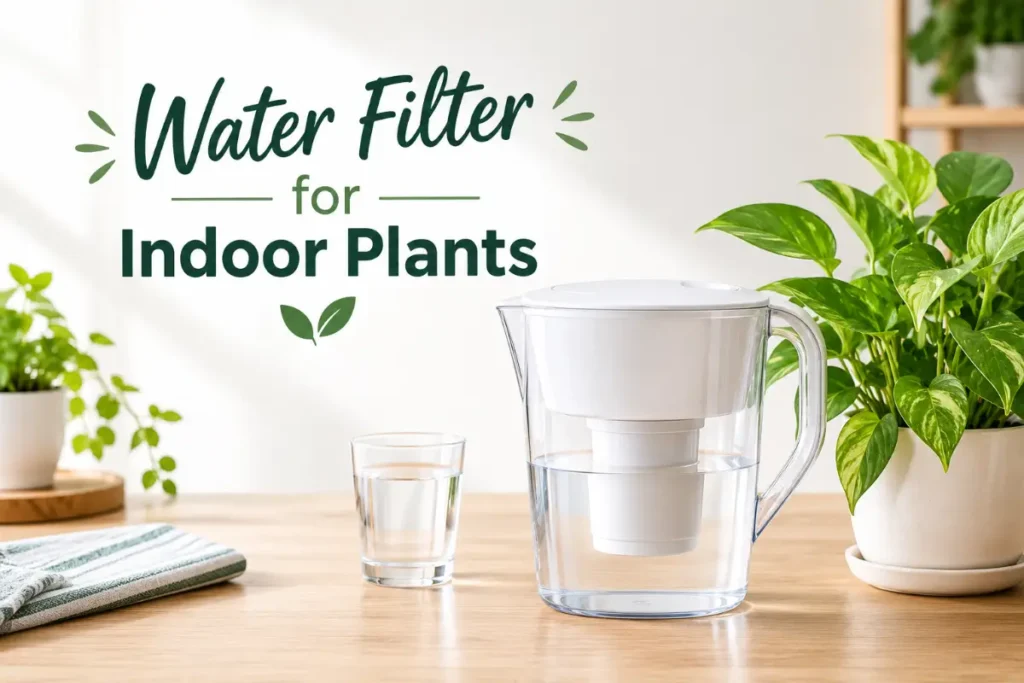
Type “water filter for indoor plants” into a search engine and you will find confident claims in both directions — that tap water is slowly poisoning your houseplants, and that filtered water is an expensive solution to a problem that does not exist. The truth, as usual, sits between those positions and depends on which plants you grow, where you live, and what your tap water actually contains.
This guide cuts through the noise: what is in UK tap water, which constituents genuinely affect indoor plants, which plants are sensitive enough to notice, and whether a dedicated water filter for indoor plants is worth the cost — or whether simpler alternatives achieve the same result.
What Is in UK Tap Water?
UK tap water is among the safest drinking water in the world, treated to strict standards before it reaches the tap. From a plant perspective, the relevant constituents are:
Chlorine and chloramine: Added to kill bacteria and pathogens during treatment. Chlorine is volatile — it dissipates into the air within 12–24 hours if water is left standing in an open container. Chloramine (increasingly used by UK water companies as a more stable disinfectant) does not dissipate with standing and requires active removal — activated carbon filtration or vitamin C neutralisation.
Calcium and magnesium (hardness): Dissolved minerals from chalk and limestone geology. UK water hardness varies significantly by region — London and the south-east are very hard (above 300 mg/litre CaCO₃ in some areas), while Scotland, Wales, and much of the north-west are soft to moderately hard (below 100 mg/litre). Hard water leaves white deposits on pot surfaces, accumulates in growing medium over time, and progressively raises soil pH.
Fluoride: Added in some UK regions (notably parts of the Midlands and Yorkshire) at up to 1 mg/litre. Most plants are unaffected at drinking water concentrations, but a small number of species — Dracaena (mass cane), spider plants, peace lily — can show brown leaf tips in response to fluoride accumulation over time.
Sodium (in softened water): Ion-exchange water softeners replace calcium and magnesium with sodium — and sodium is genuinely harmful to most plants at the concentrations in artificially softened water. Never use water from a household water softener for indoor plants. Softened water is the one common tap water variant that should be avoided entirely.
pH: UK tap water pH ranges from approximately 6.5 to 8.0 — alkaline in hard water areas, closer to neutral in soft water regions. Most houseplants prefer slightly acidic conditions (pH 6.0–6.5). Regular irrigation with alkaline hard water gradually raises the pH of the growing medium, eventually reducing the availability of iron and other micronutrients.
Which Plants Are Most Affected by Tap Water Quality?
Most hardy tropical houseplants — monstera, pothos, philodendron, peace lily, ZZ plant — are tolerant of standard UK tap water and show no meaningful difference in health between tap water and filtered water under normal conditions.
Plants genuinely sensitive to water quality:
Fluoride-sensitive species: Dracaena species (including the mass cane covered in the mass cane plant indoor guide), Chlorophytum (spider plant), and Spathiphyllum (peace lily) can develop brown leaf tips as a fluoride response — particularly in regions where fluoride is added to supply. The tips brown starting from the very end of the leaf blade, distinct from the marginal browning caused by low humidity.
Acid-loving plants: Gardenia, camellia, azalea, and ferns prefer acidic conditions (pH 5.5–6.5). Regular irrigation with hard, alkaline tap water progressively alkalinises the growing medium — leading to chlorosis (yellowing between leaf veins) as iron becomes unavailable. These plants benefit most from a water filter for indoor plants or from an alternative soft water source.
Carnivorous plants: Pitcher plants, sundews, and Venus flytraps are among the most water-sensitive of all indoor plants. They evolved in nutrient-poor, acidic conditions and are damaged by the dissolved minerals in tap water at any concentration. Distilled water, rainwater, or reverse osmosis water is genuinely necessary for carnivorous plant growing — not optional.
Orchids: Most orchid species tolerate standard UK tap water reasonably well, but in very hard water areas, mineral accumulation in bark growing medium becomes visible as white crust and can gradually affect root health. Rainwater or filtered water improves long-term orchid root health in hard water regions.

Filter Types and What They Actually Remove
Understanding which filter type removes what helps match the solution to the problem. If filtration is warranted, what each filter type removes helps match the solution to the problem.
Activated carbon filters (Brita-type jugs, inline carbon filters): Remove chlorine, chloramine, some heavy metals (lead, copper), and organic compounds that affect taste. Do not significantly reduce water hardness (calcium and magnesium). Do not remove fluoride at standard concentrations. Good solution for chlorine/chloramine removal; limited value for hard water concerns.
Reverse osmosis (RO) systems: Remove virtually all dissolved minerals, including calcium, magnesium, fluoride, sodium, and most heavy metals. Produce very pure water — essentially demineralised. For plants, this means pH-neutral, mineral-free water that eliminates both hardness accumulation and fluoride concerns. Higher upfront cost (£100–300 for an under-sink RO unit) and produces a significant volume of waste water (2–4 litres of waste per litre of filtered output in standard domestic units). RO water is the gold standard for sensitive plants and carnivorous plant growing.
Distillation: Boiling water and collecting the condensate produces distilled water equivalent to RO output — completely pure. Slow, energy-intensive, and impractical for large volumes. Useful for carnivorous plants or small collections of very sensitive specimens; not practical as the primary water source for a large collection.
Ion exchange water softeners: Remove hardness minerals (calcium and magnesium) but replace them with sodium — which is harmful to plants. As noted above, do not use softened water from a household ion exchange softener for indoor plants. This filter type makes water worse for plant use, not better.
Alternatives to Buying a Filter
For most UK growers, dedicated filtration is unnecessary. These alternatives address the same concerns at lower cost:
Standing tap water overnight: Eliminates chlorine (which dissipates in 12–24 hours in an open container). Does not remove chloramine, hardness, or fluoride. Simple, free, and effective for the most common concern.
Collected rainwater: Soft, slightly acidic (pH 5.5–6.5), free of chlorine, chloramine, fluoride, and the hardness minerals in most UK tap water. The ideal natural water source for acid-loving plants, carnivorous plants, and orchids. Collected in a clean water butt from a roof downpipe — available to most UK householders with access to an outdoor space.
The post on rainwater for indoor plants covers collection, storage, and how long stored rainwater remains safe to use — the most thorough treatment of this alternative in this series.
Aquarium water: Old aquarium water drained during water changes contains dissolved organic matter and trace nutrients that benefit plant growth — essentially a dilute liquid fertiliser. Soft in hardness terms if the aquarium uses soft water, slightly acidic. An excellent opportunistic water source that turns aquarium maintenance into a plant benefit.
Flushing the growing medium: If hard tap water is your only practical source, periodic flushing — pouring two to three pot volumes of plain water through the growing medium every 2–3 months — leaches accumulated calcium and mineral deposits out through the drainage holes, resetting the growing medium pH toward its original level. Not as effective as consistently using soft water, but significantly better than no intervention.
When a Water Filter for Indoor Plants Is Worth the Investment
Given the cost and complexity of filtration, it makes sense as a deliberate purchase in specific situations:
You grow carnivorous plants. There is no practical alternative for pitcher plants, sundews, and Venus flytraps — they require essentially mineral-free water. A small RO unit or regular purchase of distilled water is necessary rather than optional.
You live in a very hard water area and grow acid-loving plants. If your tap water is above 300 mg/litre CaCO₃ (London, Kent, Hertfordshire, parts of the Midlands) and you grow gardenias, camellias, azaleas, or a collection of ferns, hard water genuinely affects long-term plant health. An RO unit or consistent use of collected rainwater makes a measurable difference.
You have a large collection of Dracaena or spider plants in a fluoridated supply area. If fluoride brown-tipping is a recurring problem despite good humidity and watering practice, filtering out fluoride (requires RO — carbon filters do not remove fluoride effectively) addresses the root cause.
For most other growers: Standing water overnight, using collected rainwater for sensitive plants, and periodic growing medium flushing achieves the same result at no ongoing cost.
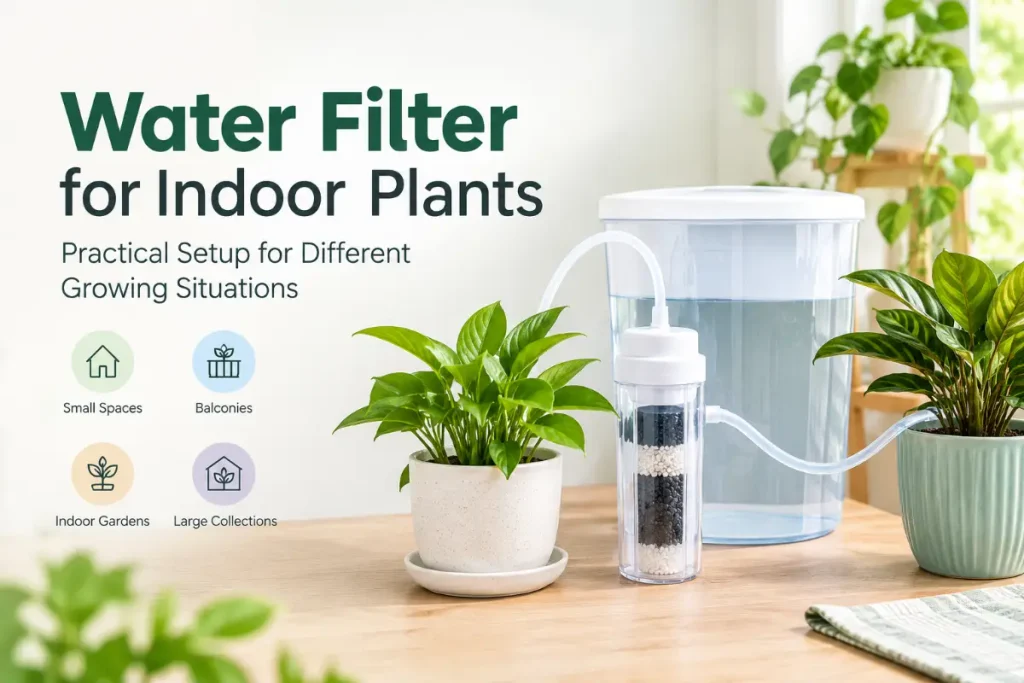
Practical Setup for Different Growing Situations
Small collection, standard tropical plants: No filter needed. Leave tap water to stand overnight in a watering can before use. Flush growing medium with plain water twice per year.
Mixed collection including acid-loving plants: Collect rainwater for the acid-lovers; tap water (stood overnight) for the tolerant majority. No filter purchase needed.
Carnivorous plant collection: RO water or purchased distilled water. A small countertop RO unit (£80–150) pays for itself within a year versus purchasing distilled water in bottles.
Large collection in a very hard water area: Either a gravity-fed outdoor rainwater butt feeding indoor watering, or an under-sink RO unit if outdoor water collection is not practical. At scale, the difference in plant health justifies the investment.
Automated drip system in a hard water area: Hard water in drip tubing causes progressive dripper blockage — more relevant to the system maintenance question than to direct plant health. Use citric acid flushes seasonally; consider a pre-filter on the inlet to the system to reduce mineral load.
Understanding Water Hardness by UK Region
One of the most useful pieces of information a UK indoor grower can have is the approximate hardness of their local water supply — it determines how much mineral management is needed and whether filtration or rainwater collection is genuinely worthwhile.
Very hard water regions (above 250 mg/litre CaCO₃): London, the south-east (Kent, Surrey, East Sussex), Hertfordshire, Bedfordshire, Cambridgeshire, Lincolnshire, and much of East Anglia. Growers in these areas will see white deposits on pots and compost surfaces within weeks of starting regular tap water irrigation. Acid-loving plants (gardenias, ferns, azaleas, camellias) will show chlorosis within a growing season without intervention.
Moderately hard water (100–250 mg/litre): The Midlands, Yorkshire, and parts of the south-west. Hard enough to cause gradual accumulation, but slower — flushing growing medium twice per year and using rainwater for acid-lovers is usually sufficient without filtration.
Soft water regions (below 100 mg/litre): Scotland, Wales, much of the north-west (Manchester, Liverpool), Devon, and Cornwall. Tap water in these regions is close to rainwater in hardness terms. Plants rarely show mineral accumulation symptoms and tap water is generally suitable without any treatment.
How to check your exact hardness: Your water supplier’s website publishes an annual water quality report searchable by postcode. The hardness figure is given as either mg/litre CaCO₃ (calcium carbonate) or degrees of hardness (°dH or °Clark). Above 200 mg/litre warrants attention for acid-loving plants.
Managing Mineral Accumulation Without a Filter
For growers in hard water areas who do not want to invest in filtration, active management of the growing medium prevents the gradual alkalinisation that hard water causes.
Flushing technique: Every 2–3 months, take each pot to a sink or outdoor space and pour water slowly through the growing medium — approximately twice the pot volume. Allow to drain fully between pourings. This leaches accumulated calcium carbonate and soluble salts out through the drainage holes, resetting the growing medium closer to its original pH. Use the same tap water for flushing — the volume of water passing through is what removes the deposits, not its softness.
Acidic fertilisers: Several liquid fertilisers sold for acid-loving plants (ericaceous feeds) are formulated with a slightly acidic pH — applying these regularly alongside hard tap water counteracts some of the alkalinising effect. Effective for gardenias, ferns, and azaleas; less necessary for tolerant tropical plants.
Peat-free ericaceous compost: If repotting acid-loving plants, using a peat-free ericaceous compost mix (available from most UK garden centres) provides a lower-pH growing medium that takes longer to alkalinise under hard water irrigation than standard multipurpose compost.
Vinegar acidification: A home remedy — adding a few drops of white vinegar to tap water to lower pH before watering. Technically functional (acetic acid neutralises some of the alkalinity) but imprecise and potentially variable in effect. Citric acid at a more controlled dose (a pinch of food-grade citric acid per litre) is more consistent if acidification is the goal.
Chloramine: The Tap Water Constituent Most Growers Overlook
Most discussion of tap water and indoor plants focuses on chlorine — which is genuinely easy to address by leaving water to stand overnight. Chloramine is less widely discussed but increasingly relevant.
Over the past decade, several UK water companies have shifted from chlorine to chloramine as their primary disinfectant — it is more stable, persists longer in the distribution system, and requires lower doses. Unlike chlorine, chloramine does not leave water simply by standing overnight in an open container. It requires either:
- Activated carbon filtration (a Brita-type jug, inline carbon filter, or countertop carbon filter) — removes chloramine effectively within minutes of contact
- Vitamin C neutralisation — adding a small amount of ascorbic acid (vitamin C powder, available cheaply from health food shops) to water neutralises chloramine immediately. Approximately 35 mg of vitamin C per litre of water neutralises typical UK chloramine concentrations
- Aeration — vigorous aeration (an aquarium air stone running for 1–2 hours) speeds the breakdown of chloramine compared to still standing
Most common houseplants tolerate chloramine at drinking water concentrations without visible problems. The concern is most relevant for growers using large volumes of water in automated systems where cumulative chloramine exposure is higher, and for sensitive aquatic-style setups (growing plants in water).
Water Temperature: The Overlooked Watering Variable
Whatever water source is used — tap, filtered, or collected — the temperature at point of delivery matters more than most growers appreciate.
Cold water (straight from the cold tap in winter, or from an outdoor water butt in January) causes temperature shock in the roots of tropical houseplants adapted to consistently warm conditions. The root cell membranes of tropical species lose flexibility in cold water, temporarily impairing water uptake — the plant may look under-watered for 24–48 hours after a cold-water irrigation even though the growing medium is moist.
Best practice: Fill a watering can the evening before watering and allow it to come to room temperature overnight. This addresses both chlorine dissipation and cold-water shock in a single step — with no filtration equipment required.
For outdoor rainwater collected in a butt through winter, bring the required volume indoors the day before use to allow it to warm before application. Cold stored rainwater in a shed provides many of the chemistry benefits of soft water while introducing the same temperature shock as cold tap water if used directly.
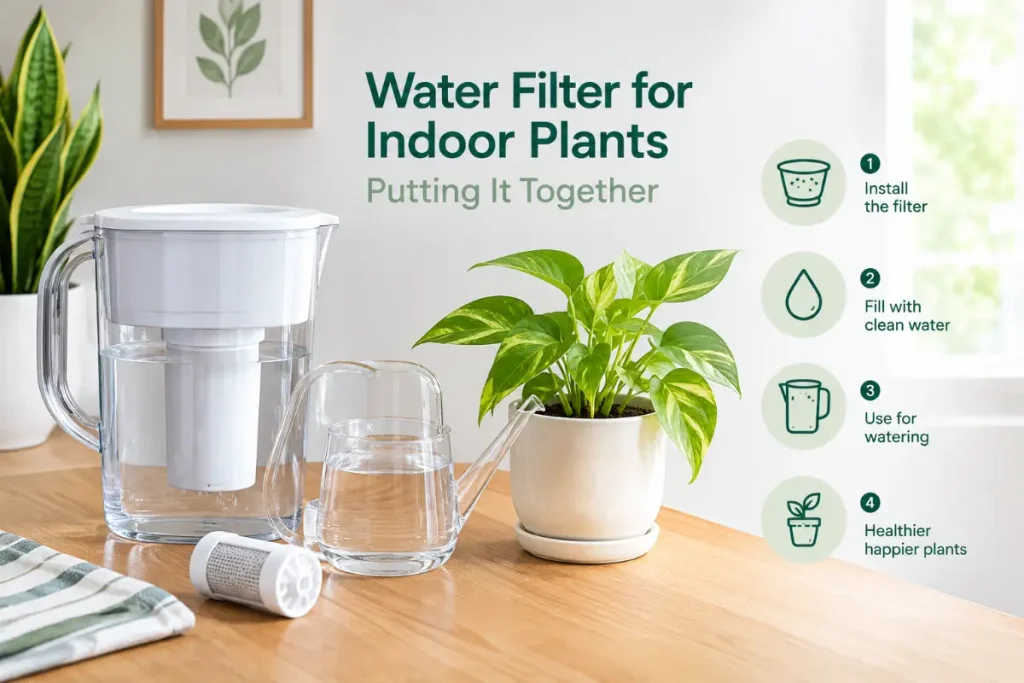
Putting It Together: A Water Management Plan by Collection Type
The minimal-effort approach (most standard collections): Fill watering cans the evening before watering and leave to stand overnight. Use the same tap water for all plants. Flush growing medium with plain water twice per year. No filter, no rainwater collection needed.
The targeted approach (mixed collection with some sensitive plants): As above for the tolerant majority. Collect rainwater for a small can used specifically on Dracaenas, spider plants, ferns, and any acid-loving plants. Costs nothing beyond a small outdoor collection point and an extra watering can.
The hard water area approach: Collect rainwater as the primary source for sensitive plants. Use tap water stood overnight for tolerant plants. Flush all growing medium every 2 months. Consider an ericaceous compost for acid-lovers. No filter needed unless you grow carnivorous plants.
The specialist collection approach (carnivorous plants, large orchid collection, full acid-loving collection in a hard water area): A small under-sink RO unit provides unlimited mineral-free water. One-time cost (£100–200) offset by the improvement in long-term plant health and the elimination of ongoing filter jug costs. This is where the investment is most justified — and most clearly repaid in plant results.
Conclusion
Whether a water filter for indoor plants is worth the investment depends entirely on what you grow and where you live. For most UK growers with standard collections of tropical houseplants, tap water stood overnight is entirely adequate — the claims about chlorine damaging houseplants are overstated, and the plants most affected by water quality are specific species that give clear visual signals when there is a problem. For carnivorous plants, acid-loving plants in hard water areas, and Dracaena collections in fluoridated supply regions, addressing water quality makes a genuine and measurable difference — and rainwater collection is usually the most practical and cost-effective solution before investing in filtration equipment.
For authoritative guidance on UK water quality and its effects on garden plants, the RHS advice on water and watering provides a useful reference point for indoor growers.
FAQs
Does tap water harm indoor plants?
Standard UK tap water is safe for most indoor plants. Chlorine dissipates within 24 hours of standing, and the mineral content of most tap water is well within the tolerance range of common houseplants. Exceptions are carnivorous plants, which require mineral-free water, and acid-loving plants in hard water areas, which benefit from softer water sources.
Should I filter water for my indoor plants?
Only if you grow plants that are genuinely sensitive to water quality — carnivorous plants, gardenias, camellias, or Dracaenas with persistent brown-tip problems in fluoridated supply areas. For most collections, standing tap water overnight or using collected rainwater for sensitive plants is equally effective without the cost of filtration.
What type of water is best for indoor plants?
Rainwater is the ideal natural water source — soft, slightly acidic, free of chlorine, chloramine, and hardness minerals. Collected and stored properly, it outperforms tap water for sensitive plants without requiring any filtration equipment.
Is softened water safe for indoor plants?
No. Ion exchange water softeners replace calcium and magnesium with sodium — and sodium at the concentrations in softened water is harmful to most plants. Never use water from a household water softener for indoor plants. Use the unsoftened cold supply (usually bypassed from the softener) instead.
Can I use a Brita filter for indoor plants?
A Brita-type carbon filter removes chlorine and chloramine effectively but does not reduce water hardness. It is a reasonable solution if chlorine or chloramine is your primary concern, but will not address the mineral accumulation that hard water causes in growing medium over time.
Why do my Dracaena plants get brown tips?
Brown tips on Dracaena (including mass cane) are commonly caused by fluoride sensitivity, low humidity, or salt accumulation in the growing medium. In fluoridated supply areas, switching to rainwater or RO water reduces the fluoride load. Flushing the growing medium thoroughly every 2–3 months removes accumulated salts regardless of source.
How do I know if my tap water is too hard for my plants?
Check your water supplier’s water quality report — most UK suppliers publish annual water quality data online including hardness in mg/litre CaCO₃. Above 200 mg/litre is considered hard; above 300 mg/litre is very hard. Visual signs in plants include white deposits on pot surfaces, progressive yellowing on acid-loving plants, and brown tips on fluoride-sensitive species.
Is it worth buying an RO system for indoor plants?
Only if you grow carnivorous plants (where mineral-free water is necessary) or have a large collection of acid-loving plants in a very hard water area. For most growers, rainwater collection is cheaper, simpler, and equally effective.