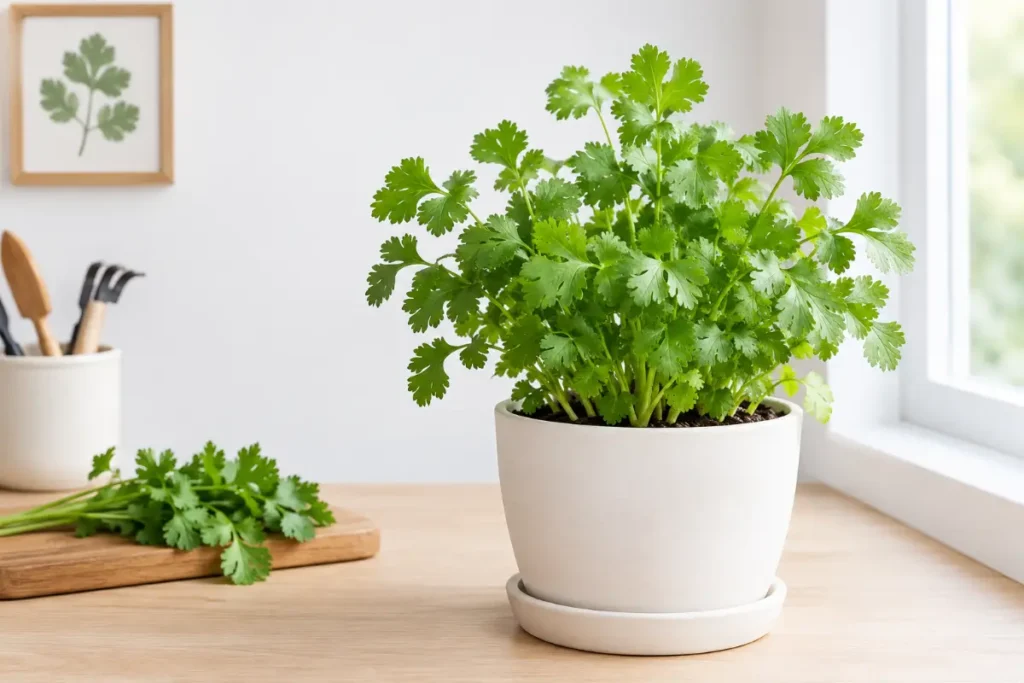
Growing cilantro indoors is one of the most frequently attempted and most frequently disappointing kitchen herb projects, not because cilantro is particularly difficult to grow but because most people do not understand what makes cilantro genuinely different from other kitchen herbs. Cilantro (Coriandrum sativum) is an annual that completes its life cycle faster than almost any other culinary herb, transitioning from seed to usable herb to flowering plant in as little as four to six weeks in warm conditions. No care approach prevents this cycle — the goal is to manage it through succession sowing that ensures a fresh crop is always entering production as the previous one finishes.
Once you understand that growing cilantro indoors is a rotation system rather than a single plant project, the disappointment of “my cilantro keeps dying” transforms into a manageable, productive fresh herb supply that delivers one of the most distinctive and most missed flavors in cooking when only dried cilantro is the alternative.
Quick Answer
Growing cilantro indoors successfully requires succession sowing a new small container every two to three weeks, providing cool temperatures between 60 and 70 degrees Fahrenheit that slow the bolting process, bright indirect to some direct morning light, consistent moisture, harvesting the outer leaves and stems before flowers appear, and immediately replacing each bolted container with the next succession sowing that is already in progress. One mature container, one mid-growth container, and one recently sown container maintained simultaneously provides continuous cilantro harvest without gaps.
Understanding Why Cilantro Behaves Differently From Other Herbs
Most people treat cilantro like mint, basil, or rosemary — as a plant that can be maintained indefinitely with appropriate care. Cilantro is fundamentally different from all of these.
Cilantro is an annual completing one life cycle: Unlike perennial herbs that continue growing indefinitely, cilantro is genetically programmed to germinate, grow, flower, set seed, and die within a single season. This cycle cannot be prevented through any care approach — it can only be slowed by maintaining cool temperatures and low light, and it can be managed through succession sowing that keeps a continuous rotation of fresh plants entering production.
Bolting is not a care failure: The most common indoor cilantro complaint is “my cilantro bolted.” This is always described as if something went wrong. In fact, bolting is cilantro completing exactly what it is genetically programmed to do. The grower’s job is not to prevent bolting but to have the next succession planting already growing when bolting occurs.
The flavor change at bolting: When cilantro transitions to flowering (bolting), the flavor of the leaves changes from the distinctive fresh herbal taste that makes cilantro culinarily valuable to a soapy, bitter flavor that many people find unpleasant. This flavor change happens quickly after flower stalks appear. Harvesting the cilantro before this flavor change preserves the culinary quality that justifies growing it indoors.
The useful cycle length: From sowing to first harvest in cool indoor conditions is approximately three to four weeks. The productive harvest window before bolting in cool conditions is three to four more weeks. Total useful life of one cilantro sowing in cool conditions is approximately six to eight weeks. In warm conditions above 75 degrees, this entire cycle compresses to three to four weeks total.
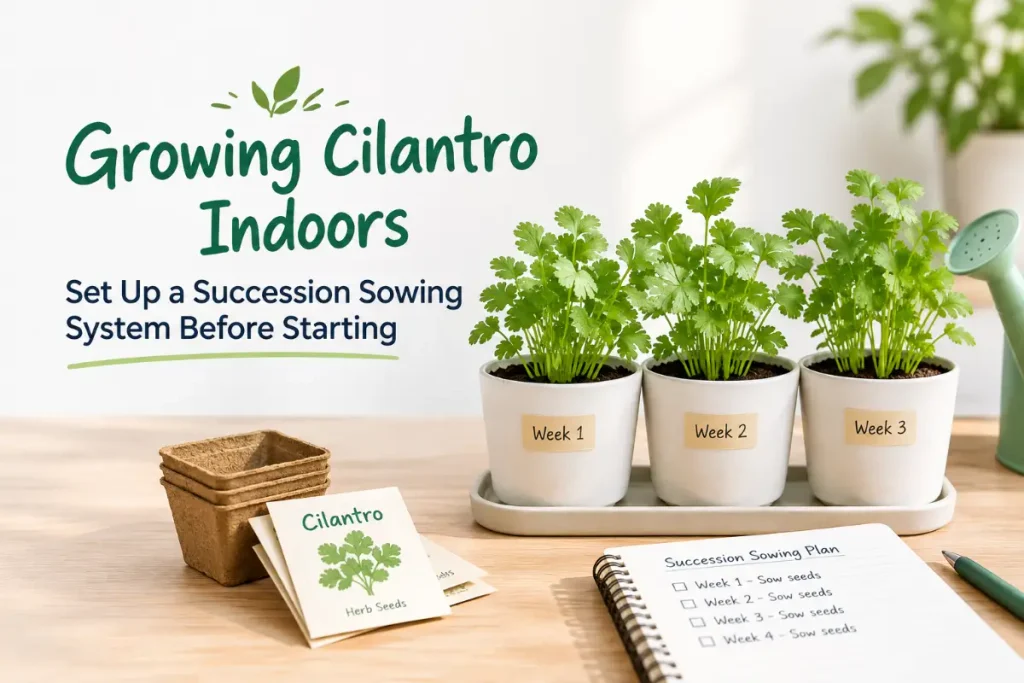
Step 1: Set Up a Succession Sowing System Before Starting
Before sowing a single seed, set up the succession system that makes indoor cilantro productive. Starting with this mental model prevents the frustration of a single cilantro plant that bolts before you have established the next sowing.
The three-container rotation: Maintain three small containers at staggered planting stages simultaneously. Container A is at the harvest stage (three to six weeks old). Container B is in the vegetative growth stage (one to three weeks old). Container C has just been sown or is germinating. When Container A bolts and is discarded, Container B enters the harvest stage and Container C is renamed Container B. A new sowing becomes the new Container C.
Sowing calendar: Sow a new container every two to three weeks without exception. Set a recurring reminder on your phone or calendar for every eighteen to twenty-one days as the trigger for the next sowing. This calendar-driven approach prevents the gap that occurs when you forget to sow the next batch while the current one is still looking productive.
Container size for rotation: Small four-to-six-inch pots or short window box sections rather than large containers suit the rotation system better than single large planters. A single twelve-inch pot of cilantro sowed all at once provides an abundance for two to three weeks and then bolts entirely. Three small four-inch pots at staggered stages provide steady continuous harvests over the same period with more manageable individual quantities.
Step 2: Sow Seeds Correctly
Cilantro seeds are actually a seed capsule containing two seeds. Gently crushing the capsule between your fingers or lightly rolling it against a hard surface before sowing increases germination rate by allowing both seeds better access to moisture.
Sowing method: Scatter seeds moderately across the moist soil surface and cover with one-quarter to one-half inch of growing medium. For cut-and-come-again harvest of leaves, dense sowing is appropriate. For growing individual plants to harvest whole stems, space seeds two to three inches apart.
Germination conditions: Cilantro germinates best at soil temperatures between 55 and 68 degrees Fahrenheit — cooler than most seed starting recommendations. At room temperature of 70 degrees germination occurs but is somewhat slower than at the ideal cooler range. In very warm conditions above 75 degrees germination rate drops and seedlings emerge unevenly.
Germination time: Seven to fourteen days in cool conditions. Five to ten days in moderate room temperature. Three to five days with a heat mat at 70 to 75 degrees (though this warm germination approach accelerates the bolting cycle that follows).
Direct sowing only: Cilantro has a taproot that does not transplant well. Sow directly into the container where the plant will grow rather than starting in small cells and transplanting. Any transplanting of cilantro causes significant root disturbance that accelerates bolting and reduces productive life.
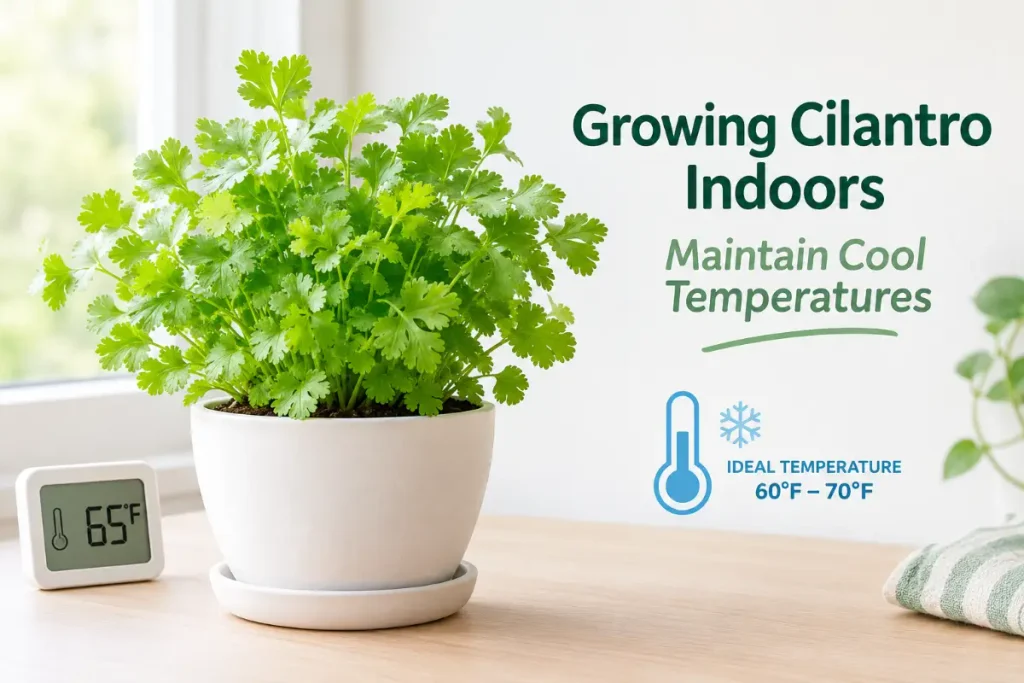
Step 3: Maintain Cool Temperatures
Temperature is the single most controllable factor in extending the productive life of each cilantro sowing. Every degree above 70 degrees accelerates the bolting cycle.
Ideal range: 60 to 70 degrees Fahrenheit. This is the range where cilantro grows actively but enters the reproductive (bolting) phase most slowly. Cilantro at 65 degrees typically provides four to five weeks of productive leaf harvest before bolting. Cilantro at 75 degrees provides two to three weeks. Cilantro at 80 degrees may bolt within one to two weeks of first harvest.
Where to find cool indoor positions: Away from ovens, cooking appliances, and heating vents. Near north-facing windows where temperatures are typically one to two degrees cooler than south-facing positions. In rooms that are kept slightly cooler than main living areas. On kitchen counters away from the stovetop area where cooking generates ambient heat.
Summer challenge: Summer in most US homes without aggressive air conditioning means indoor temperatures above the ideal cilantro range. In these conditions increase succession sowing frequency to every fourteen to sixteen days (rather than twenty-one days) to compensate for the compressed cycle that warm temperatures produce.
Step 4: Provide Appropriate Light
Cilantro’s light requirements are somewhat paradoxical: it needs adequate light for active vegetative growth and leaf production, but very intense light combined with warmth accelerates bolting.
The ideal position: Bright indirect light from an east or north-facing window. Four to six hours of morning direct sun from an east-facing window followed by indirect afternoon light. This provides adequate growth-supporting light without the heat-intensive direct afternoon sun that accelerates bolting.
What to avoid: Intense direct south-facing afternoon sun in warm rooms. This combination of maximum light intensity and maximum heat drives the fastest bolting cycle of any common indoor positioning. Cilantro that receives four to five hours of gentle morning east-facing sun consistently outproduces cilantro in direct south-facing afternoon sun in warm indoor environments.
Grow lights: A modest grow light running 10 to 12 hours daily (shorter than the 14 to 16 hours used for warm-season crops) produces good cilantro growth while the shorter photoperiod reduces the day-length bolting trigger that extended light hours contribute to. Set the timer to 10 to 12 hours specifically for cilantro rather than using the same 14-hour setting appropriate for tomatoes and peppers.
Step 5: Water and Fertilize the Cilantro Cycle
Watering: Water when the top half inch of soil feels dry. In cool conditions with moderate light this typically means every three to five days. The small pot volumes of the succession rotation system dry more quickly than large containers and need checking every two to three days.
The moisture-bolt connection: Drought stress accelerates bolting. Cilantro under water stress enters the reproductive phase faster than consistently moist cilantro in the same temperature and light conditions. Consistent moisture is one of the simplest and most effective bolt-slowing practices alongside cool temperature management.
Fertilizing: Light fertilizing every two to three weeks with a balanced formula at half rate. Cilantro in the rotation system is never in a container long enough to exhaust soil nutrients significantly, which reduces the fertilizing importance compared to long-lived perennial herbs. Starting each succession sowing in fresh potting mix provides adequate nutrition for most of the six-to-eight-week productive cycle without additional fertilizing in many cases.
What to avoid: High-nitrogen fertilizing that drives rapid vegetative growth. While more leaf material sounds appealing, high-nitrogen rapid growth also accelerates the transition to flowering in cilantro. The moderate growth supported by light fertilizing and cool temperatures produces more total harvestable leaf material over the full cycle than rapid nitrogen-driven growth that bolts faster.
Step 6: Harvest Before Flowers Appear
The timing and technique of cilantro harvesting significantly affects both the quantity of harvest and the productive life of each sowing.
What to harvest: Individual stems with multiple leaves rather than individual leaves. Cut entire stems at the base two to three inches above the soil surface using clean scissors. The plant regenerates new stems from the lower nodes over five to seven days.
How much to take: No more than one-third of the total plant at any single harvest. Removing more than one-third weakens the plant’s regrowth capacity and accelerates bolting.
The early harvest advantage: Harvesting frequently from young plants (as soon as stems reach four to six inches) provides more total yield over the productive cycle than waiting for plants to reach maximum size before each harvest. Frequent small harvests keep the plant in active vegetative growth longer than infrequent large harvests.
Flower bud monitoring: Check plants every two to three days for the appearance of flower stalks — thin, branching stems emerging from the center of the plant that look distinctly different from the flat, leaf-bearing vegetative stems. When flower stalks appear, harvest everything harvestable immediately. Once a cilantro plant begins flowering, leaf flavor deteriorates within days.
Using cilantro flowers: The small white cilantro flowers are edible and have a mild cilantro flavor. They can be used as garnish in dishes where delicate flavor is appropriate. The developing seed heads, if allowed to mature, are the coriander seeds used as a separate spice in cooking. Allowing one succession planting per season to complete its cycle and produce coriander seeds provides a useful spice harvest alongside the cilantro leaf rotation.
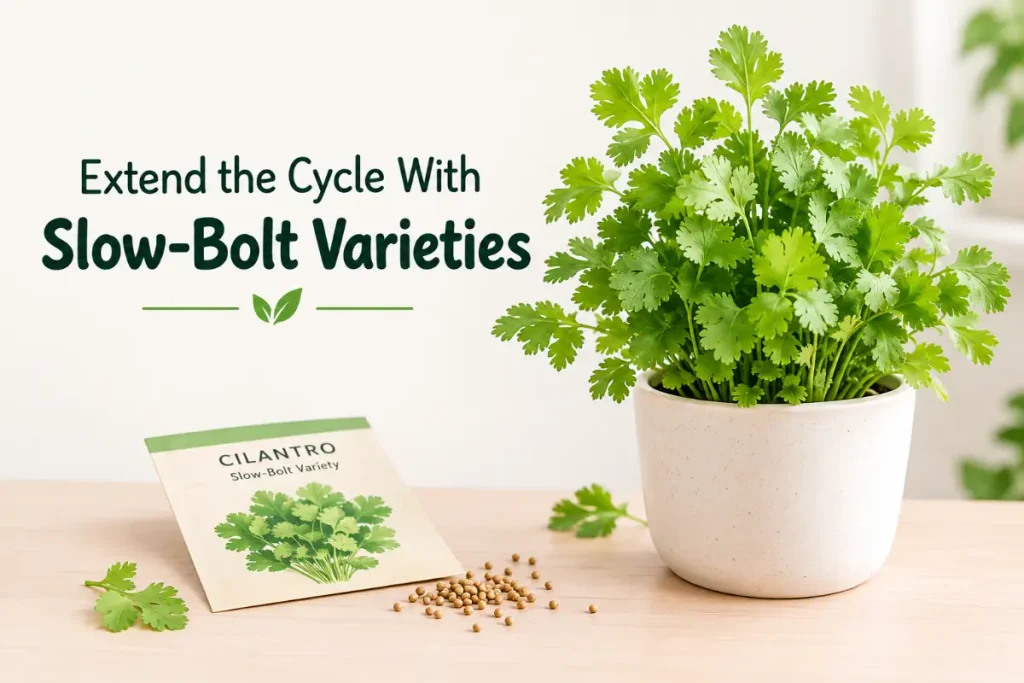
Step 7: Extend the Cycle With Slow-Bolt Varieties
Not all cilantro varieties bolt at the same rate. Choosing slow-bolt varieties specifically bred for extended leaf production in warm or long-day conditions provides measurably longer productive cycles compared to standard varieties.
Best slow-bolt varieties for indoors:
Calypso: One of the most commonly cited slow-bolt varieties. Produces abundant leaf growth and resists bolting noticeably longer than standard varieties in warm conditions. Excellent flavor.
Leisure: Bred specifically for warm-weather and indoor growing with slow-bolt characteristics. More compact growth habit than some standard varieties.
Santo: A standard variety with above-average bolt resistance compared to most generic “cilantro” seed packets. Widely available.
Confetti: Feathery, finely divided leaves with excellent flavor. Slower to bolt than most standard varieties and visually attractive in indoor displays.
What to avoid: Generic unlabeled “cilantro” seed from packets without variety information. These are often fast-bolting varieties bred for outdoor spring production where rapid completion of the life cycle is commercially desirable. Slow-bolt named varieties consistently provide one to two more weeks of productive harvest than generic seed in the same indoor conditions.
For companion guidance on building the complete indoor fresh herb and food garden that incorporates cilantro succession sowing alongside the perennial herbs that provide continuous production, indoor herb garden covers the full herb grouping, light matching, and management approach that makes cilantro rotation work alongside mint, basil, and Mediterranean herbs in a single cohesive kitchen growing operation.
The Coriander Bonus
Every indoor cilantro grower has access to a bonus harvest that most people never exploit: coriander seeds from the same plants grown for leaf production.
The coriander cycle: When one succession planting is allowed to complete its full cycle rather than being harvested out when it bolts, the plant produces seeds that are the coriander seeds used in Indian, Middle Eastern, Mexican, and Southeast Asian cooking.
Collecting seeds: Allow flower heads to dry completely on the plant. The seeds turn from green to tan-brown when mature. Cut the dried seed heads and place in a paper bag, then shake to release the seeds. Store in an airtight container.
Flavor of fresh home-grown coriander: Like cilantro leaves, freshly dried home-grown coriander seeds are more intensely aromatic than grocery store coriander that may have been on a shelf for months. The essential oil content of fresh seeds is noticeable in cooking applications.
One plant per rotation: Designating one plant per succession sowing to complete its full coriander seed cycle rather than being harvested at the leaf stage provides a continuous supply of fresh coriander seeds alongside the leaf harvest from the other rotation containers.
Common Indoor Cilantro Problems and Solutions
Bolting within two weeks of first harvest: Temperature above 75 degrees. Move to coolest available indoor position. Increase succession sowing frequency to every fourteen days. Switch to a slow-bolt variety.
Poor germination from grocery store cilantro seed: Grocery store cilantro seed (whole coriander seeds from the spice section) has variable germination rates. Use seed specifically labeled for planting from garden suppliers. Crack the seed capsule before sowing.
Weak, pale growth: Insufficient light. Move to brighter indirect light or add grow light hours (10 to 12 hours daily).
Wilting between waterings: Drought stress accelerating bolting cycle. Water more consistently — check every two days rather than every three to four. In small pots, the soil volume dries faster than many growers expect.
All containers bolting simultaneously: Not staggering succession sowings by the correct interval. Ensure each new container is sown exactly two to three weeks after the previous one, not all at the same time.
Conclusion
Growing cilantro indoors is the indoor food crop project that most directly rewards a system-level approach over a single-plant approach. The succession rotation of three containers at staggered stages, sown every two to three weeks on a calendar schedule, produces the continuous fresh cilantro supply that makes cooking with fresh rather than dried cilantro a genuine daily option rather than an occasional luxury.
Cool temperatures that slow the bolting cycle. Bright indirect morning light rather than intense direct sun. Consistent moisture to prevent drought-triggered early bolting. Slow-bolt varieties from named seed sources. Frequent small harvests before flowers appear. And the disciplined commitment to sowing a new container every two to three weeks regardless of how healthy the current one looks. Those practices together produce the indoor cilantro rotation that delivers on the promise of fresh herbs from your kitchen year-round.
Frequently Asked Questions
Why does my indoor cilantro keep bolting so fast?
Cilantro always bolts — it is an annual completing its biological life cycle. Bolting is accelerated by temperatures above 70 degrees, day length above 12 to 14 hours, and drought stress. Manage these factors to slow bolting and start a new succession sowing every two to three weeks so a fresh container is always entering production when the current one bolts.
How often should I sow new cilantro indoors?
Every two to three weeks without exception. Set a recurring calendar reminder. The succession rotation of three containers at staggered stages is the system that converts cilantro from a frustrating single-plant project into a productive continuous fresh herb supply. Without the regular new sowing, every indoor cilantro attempt eventually ends with a bolted plant and a gap before the next one is ready.
What temperature slows cilantro bolting indoors?
Between 60 and 70 degrees Fahrenheit. At 65 degrees cilantro typically provides four to five weeks of productive leaf harvest before bolting. At 75 degrees this compresses to two to three weeks. At 80 degrees, one to two weeks. Position cilantro in the coolest available indoor location, away from ovens, heating vents, and direct intense afternoon sun.
Can I grow cilantro indoors year-round?
Yes, through continuous succession sowing on a two-to-three-week schedule. Summer is the most challenging period when indoor temperatures may be consistently above the ideal 60 to 70 degree range, compressing each cycle to two to three weeks and requiring more frequent new sowings. In air-conditioned homes or in naturally cool rooms, year-round cilantro rotation is fully practical.
How do I harvest cilantro to get the most from each plant?
Cut entire stems at two to three inches above the soil surface, taking no more than one-third of the plant at once. The plant regenerates from the lower nodes within five to seven days. Harvest frequently (every five to seven days) rather than waiting for maximum growth before a large harvest. Check every two to three days for emerging flower stalks and harvest everything harvestable immediately when they appear.
What is the best cilantro variety for indoor growing?
Calypso, Leisure, and Confetti are slow-bolt varieties that provide noticeably longer productive windows than generic unlabeled cilantro seed. Slow-bolt characteristics are specifically bred to resist the bolting trigger that warm temperatures and long days create, which directly extends the useful indoor cycle by one to two weeks compared to fast-bolting standard varieties.