
How often to water indoor plants is the most searched indoor plant care question and the one with the most misleading answers. Searching for a watering schedule produces confident-sounding guides saying water every seven days, or every ten days, or twice a week. Every one of these answers is wrong in the same fundamental way: they substitute a fixed calendar for the actual information that tells you when a plant needs water.
The correct answer to how often to water indoor plants is: check the soil and water when the soil reaches the appropriate dryness level for the specific plant you are caring for. That principle, applied consistently, produces better plant care outcomes than any watering schedule regardless of how carefully the schedule was designed.
Quick Answer
How often to water indoor plants depends on the plant type, pot size, soil mix, light level, temperature, humidity, and season. Instead of following a fixed schedule, check soil moisture at the appropriate depth before every watering: one-half inch for moisture-loving plants like ferns and peace lily, one inch for most tropical houseplants, two inches for succulents and cacti. Water when that depth feels dry. This check-and-water approach automatically adjusts to all the variables that make fixed schedules unreliable.
Why Fixed Watering Schedules Fail
The intuitive appeal of a fixed watering schedule is understandable. “Water every seven days” is simple to remember and follow. The problem is that the interval between needed waterings is not fixed — it varies constantly based on factors that change independently of any calendar.
Light level changes the interval: A plant in direct south-facing sun uses significantly more water through active photosynthesis and transpiration than the same plant in a north-facing window. Water the same plant in both positions on the same seven-day schedule and you overwater the north-facing plant while the south-facing plant may need water every four to five days.
Season changes the interval: The same plant in the same position needs water every seven days in summer and every fourteen to twenty-one days in winter. Its growth slows, its transpiration decreases, and the same soil volume stays moist significantly longer in lower light and cooler winter temperatures. Maintaining summer watering frequency through winter overwatering is the single most common cause of winter plant decline.
Pot size and soil type change the interval: A plant in a six-inch terracotta pot with cactus mix may need water every ten days. The same plant in a twelve-inch glazed ceramic pot with standard potting mix may need water every twenty-one days because the larger soil volume retains moisture much longer. No schedule can account for this without becoming a different schedule for every plant.
Heating and air conditioning change the interval: Forced air heating in winter drops indoor humidity dramatically, increasing plant water loss through leaves and accelerating soil drying. Air conditioning in summer has a similar dehumidifying effect. The same plant in the same position may need water every six days in winter heating season and every eight days in summer air conditioning despite identical temperatures.
The Soil Check Method: The Only Reliable Watering Approach
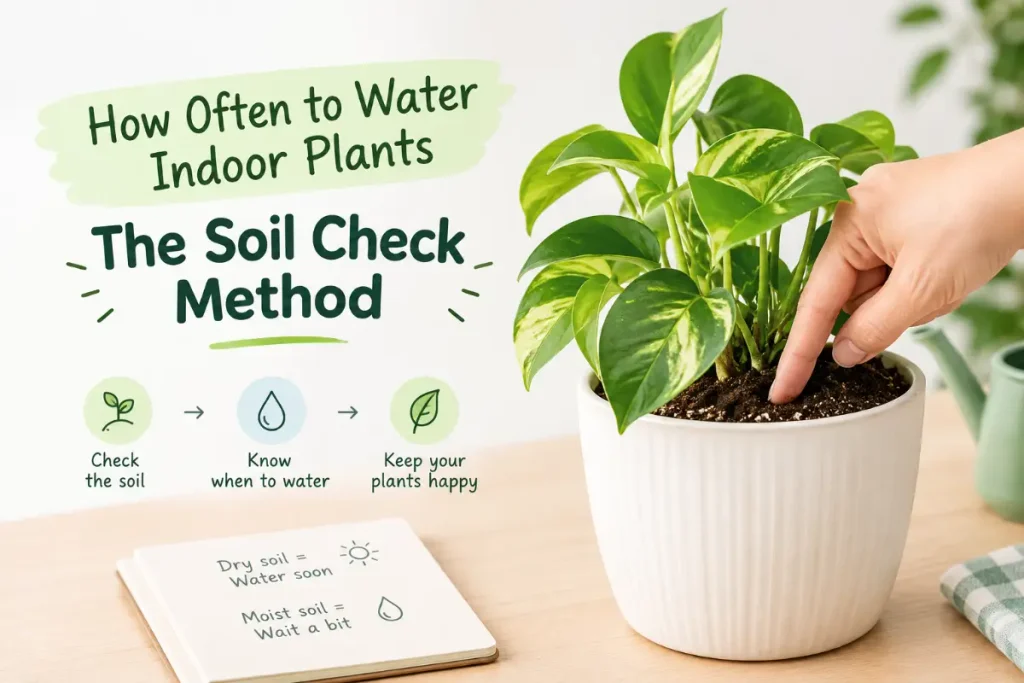
The soil check method replaces all fixed schedules with a single practice that automatically accounts for every variable affecting when a plant needs water.
How it works: Push your finger into the soil to a specific depth appropriate for the plant type. Assess whether the soil at that depth feels dry, moist, or wet. Water if dry. Wait if moist or wet.
The depth varies by plant type:
One-half inch for high-moisture plants: Ferns, peace lily, pothos, spider plant, calathea, begonia, and other tropical plants that prefer consistently moist soil. These plants need water before the soil dries out significantly. Check the top half inch and water as soon as that dries.
One inch for most common tropical houseplants: Monstera, philodendron, snake plant, ZZ plant, rubber plant, dracaena, Chinese evergreen. These prefer to dry slightly between waterings but not deeply. Check the top inch and water when that feels dry.
Two inches for drought-tolerant plants: Succulents, cacti, aloe vera, jade plant, and other plants with significant water storage capability. These need the top two inches to be completely dry before watering. In some seasons this means waiting three or more weeks between waterings.
Two to three inches for Mediterranean herbs: Rosemary, lavender, thyme, and other herbs from dry Mediterranean climates. These need soil to be very dry before watering — more drought-tolerant than most people assume.
Watering by Plant Category
Understanding the general water needs of different plant categories provides a practical baseline before the soil check fine-tunes each individual situation.
Moisture-loving tropical plants: Peace lily, fern, calathea, pothos, heartleaf philodendron. These plants originated in consistently moist tropical forest conditions and prefer the soil to stay consistently moist. They are the most sensitive to drought among common houseplants and show stress within hours of the soil becoming too dry. Check the top half inch every three to four days.
Moderate-moisture tropical plants: Monstera, rubber plant, snake plant, Chinese evergreen, spider plant. These tolerate some drying between waterings but perform best with consistent moderate moisture. Allow the top inch to dry before watering. Check every five to seven days initially and adjust based on what you find.
Drought-tolerant plants: Succulents, cacti, aloe vera, jade plant, sansevieria (snake plant also falls here), ZZ plant. These plants store water in leaves, stems, or rhizomes and need extended drying between waterings. Watering before they are adequately dry causes the root rot that kills most plants in this category. Allow two to three inches to dry completely before watering.
Mediterranean herbs: Rosemary, lavender, thyme, oregano, sage. These evolved in the rocky, fast-draining soils of dry Mediterranean hillsides. They need soil that dries completely to two or more inches between waterings. Overwatering in standard potting mix is the primary cause of Mediterranean herb death indoors.
Seasonal flowering plants: Cyclamen, azalea, orchid. These have specific watering requirements tied to their blooming cycle. Most need consistent moisture during active bloom, reduced moisture during post-bloom rest periods, and specific changes at transition points. Each has individual requirements covered in Cluster 3.
Seasonal Watering Adjustments
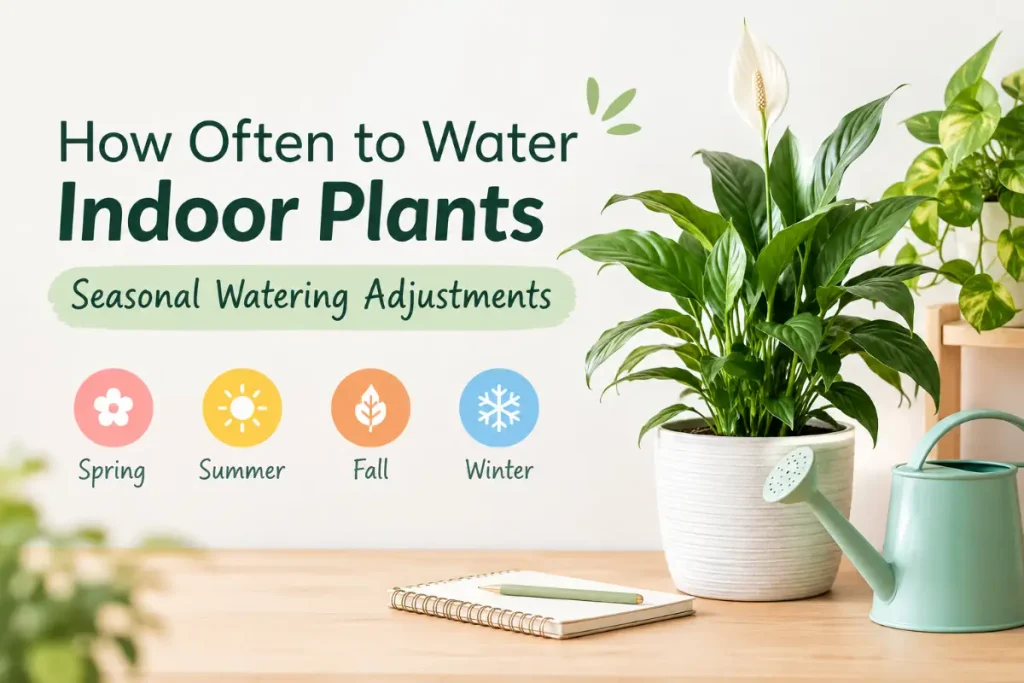
Even the soil check method benefits from understanding the seasonal patterns that shift when plants need water, helping you check at the right frequency rather than either checking too rarely (missing a plant that dries faster than expected) or too frequently (wasting time checking plants that need water far less often).
Spring: Watering frequency increases as day length grows and growth accelerates. Begin checking plants more frequently as March progresses. Plants that needed water every fourteen days in February may need water every eight to ten days by April.
Summer: Peak water demand for most indoor plants. Active growth, high transpiration in warm conditions, and often lower humidity from air conditioning all increase watering frequency. Many plants need water twice as often as in winter. The soil check remains essential since summer frequency varies by plant position — a plant near an air conditioning vent dries faster than the same plant in a still, warm room corner.
Fall: One of the highest-risk periods for overwatering. Growth slows as day length decreases but most plant owners maintain summer watering frequency. Extend intervals gradually as growth visibly slows. By November most indoor plants need significantly less water than in August despite looking essentially the same.
Winter: Minimum water demand for most plants. Some plants need water only monthly or less. The soil check remains essential since winter heating affects different positions differently — plants near radiators or forced-air vents dry faster than plants in still, cool corners of the same room despite nominally similar temperatures.
Reading Your Plants: Signs of Incorrect Watering
The soil check prevents most watering mistakes, but recognizing the signs of past watering errors helps diagnose existing problems and adjust.
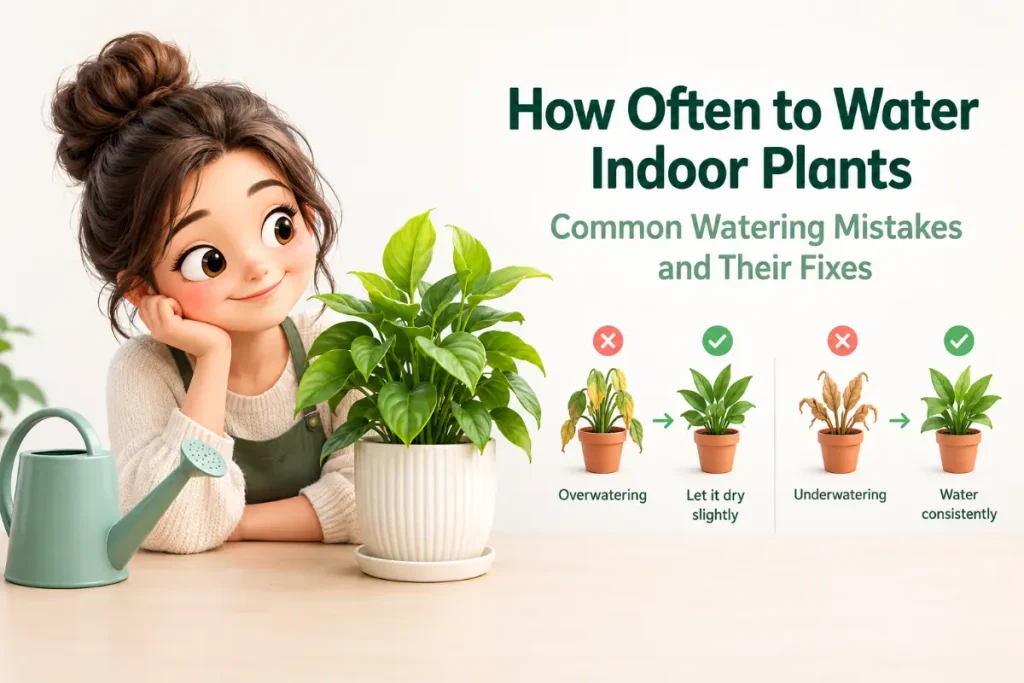
Signs of underwatering: Soil that has pulled away from the sides of the pot, leaving a visible gap. Leaves that droop and wilt. Curled leaf edges. Brown, crispy leaf tips and edges (though this also has other causes). In succulents and cacti, leaves that become slightly wrinkled or soft. Most plants recover quickly from mild underwatering after thorough watering.
Signs of overwatering: Yellow leaves starting from the oldest growth. Leaves that fall while still green. Soft, dark stem bases near the soil. Musty smell from the soil. The soil staying wet for more than a week after thorough watering (indicating compaction or poor drainage rather than the plant using water). Root rot, visible as dark, mushy roots when the plant is removed from its pot.
The diagnosis test: When you are unsure whether wilting or yellowing indicates under or overwatering, check the soil at two inches depth. If dry, the problem is underwatering. If moist, the problem is overwatering or root damage from prior overwatering. These two conditions produce overlapping symptoms but require opposite responses — watering more or watering less — so getting the diagnosis right prevents the common mistake of watering a plant that is already suffering from too much moisture.
The Impact of Pot Type and Size on Watering Frequency
Understanding how pot material and size affect drying rate helps set realistic expectations for how often different containers will need checking and watering.
Terracotta pots: Dry fastest due to moisture evaporating through porous clay walls. A plant in terracotta may need water 30 to 50% more frequently than the same plant in a plastic pot of identical size. This makes terracotta ideal for drought-tolerant plants and Mediterranean herbs that need rapid drying, and less appropriate for moisture-loving plants that benefit from slower-drying conditions.
Plastic pots: Hold moisture significantly longer than terracotta. Water evaporates only from the soil surface and drainage holes rather than through the pot walls. Appropriate for moisture-loving tropical plants. Can create overwatering risk for drought-tolerant plants if the watering interval is not adjusted to match the longer drying time.
Glazed ceramic: Intermediate between terracotta and plastic. The glaze coating reduces wall porosity compared to unglazed terracotta but some moisture still evaporates through the walls. Most decorative display pots are glazed ceramic.
Pot size and soil volume: Larger pots hold more soil which retains moisture longer. A six-inch pot with standard potting mix may dry to one inch within five days. The same plant in a twelve-inch pot with the same mix may take fourteen or more days to reach the same dryness level at one inch because the larger surrounding soil volume maintains moisture in the root zone longer. Always check rather than assuming the same interval applies across different pot sizes.
For the complete guide to watering tools including self-watering pots, moisture meters, and watering cans with appropriate spout types for different plant positions, the next posts in this cluster cover every watering tool with the specific situations each one suits best.
Common Watering Mistakes and Their Fixes
Watering on a fixed schedule regardless of soil moisture: The primary cause of overwatering in most households. Fix: adopt the soil check method described in this guide. Check before every watering. Water only when the appropriate depth is dry.
Watering a little every day: Frequent light watering moistens only the top inch of soil, leaving the deeper root zone chronically dry. Roots grow toward moisture and stay shallow when only the top is consistently moist. Fix: water less frequently but thoroughly, until water flows from drainage holes, ensuring the entire root zone is moistened.
Not emptying saucers after watering: Standing water in saucers creates permanently wet soil at the pot base, causing root rot at the root tips while the upper soil appears appropriately dry at the check depth. Fix: empty all saucers within thirty minutes of watering.
Watering from a tap without checking temperature: Cold tap water causes root stress in many tropical plants, producing wilting symptoms identical to drought. Fix: use room temperature water, or allow tap water to sit for thirty minutes before use.
Watering all plants on the same schedule: Different plants have completely different watering needs. A monthly schedule that suits the aloe vera kills the peace lily from drought while a weekly schedule appropriate for the peace lily rots the aloe. Fix: each plant gets a check at its appropriate depth. Water each when its check indicates dryness.
Building a Sustainable Watering Practice
The most practical watering system for a collection of indoor plants combines the soil check method with a weekly or twice-weekly plant-checking routine.
The weekly walk-through: Set aside fifteen minutes once or twice per week to walk through all indoor plants and check the soil at the appropriate depth for each. Make a mental or written note of which plants need water now and which can wait. Water those that are dry. Leave those that are moist.
The grouping advantage: Grouping plants with similar watering needs together reduces the mental load of individual assessment. All drought-tolerant plants in one area checked on a long interval. All moisture-loving tropical plants in another area checked on a shorter interval. This spatial organization makes the checking routine faster and more systematic.
Seasonal recalibration: At the transition into each new season, intentionally extend or shorten checking frequency based on the seasonal patterns described earlier. Making this a conscious seasonal adjustment prevents the gradual drift into seasonal overwatering that occurs when growers don’t actively recalibrate their checking habits.
Water Quality and Its Effect on Watering Frequency Perceptions
Water quality is one of the least discussed but most practically significant factors in indoor plant watering, affecting both how frequently plants need water and what problems develop from the accumulated effects of repeated watering with inappropriate water.
Hard water and mineral accumulation: Tap water in many US cities contains dissolved minerals including calcium, magnesium, fluoride, and chlorine at concentrations that accumulate in potting soil over weeks and months of repeated watering. This mineral accumulation raises soil pH and creates the salt concentrations that damage roots, cause leaf tip browning, and create the conditions that make plants look like they need more water even when adequately moist.
The salt flush: Every two to three months, water pots with two to three times the normal water volume, allowing the excess to drain completely. This flushes accumulated minerals from the soil and resets the root zone chemistry that regular watering has progressively altered. Plants that are regularly flushed show consistently better health and more accurate responses to the soil check than plants in accumulated-salt conditions where stressed roots give misleading signals about moisture needs.
Fluoride sensitivity: Several common houseplants including spider plant, peace lily, dracaena, and mass cane are specifically sensitive to fluoride accumulation. Their characteristic brown leaf tips improve dramatically when switched to filtered, distilled, or collected rainwater. This is not primarily a watering frequency issue but affects the perceived “need” for water since stressed plants sometimes show thirst-like symptoms from fluoride toxicity rather than actual drought.
Chlorine and chloramine: Standard municipal tap water contains chlorine or chloramine as disinfectants. Chlorine dissipates when tap water sits in an open container for twenty-four hours. Chloramine does not dissipate and requires filtration to remove. Most houseplants tolerate standard chlorine levels in tap water without significant problems, making the twenty-four-hour sit a useful but optional step rather than a strict requirement for most plants. For the complete guide to water quality considerations for specific sensitive plant types, best water for indoor plants covers every water type and its specific effects on the plants most sensitive to water quality differences.
Conclusion
How often to water indoor plants is not a question with a single correct answer. It is a question that resolves into a practice: check soil moisture at the appropriate depth for your specific plant and water when that depth is dry. This approach automatically adjusts to every variable that makes fixed schedules unreliable — plant type, pot material, soil mix, light level, season, temperature, and humidity.
The soil check takes five seconds per plant and eliminates the guesswork that causes the vast majority of indoor plant problems. Start checking instead of scheduling. The plants will tell you when they need water through the soil, reliably and accurately, every time.
Frequently Asked Questions
How do I know when to water my indoor plants?
Push your finger into the soil to the appropriate depth for your plant type — one-half inch for moisture-loving plants, one inch for most tropical houseplants, two inches for succulents and cacti. Water when that depth feels completely dry. This soil check is more reliable than any fixed schedule because it automatically adjusts to all the variables affecting how quickly the soil dries.
Is it better to overwater or underwater indoor plants?
For most common indoor plants, mild underwatering is less harmful than overwatering. Most tropical plants recover fully from brief drought stress after watering. Root rot from overwatering is often irreversible once established because it destroys the root system before above-ground symptoms appear. The only plants that handle overwatering better than underwatering are aquatic plants and bog plants which are not common houseplants.
How do I know if I’m overwatering my indoor plant?
Yellow leaves starting from the oldest growth, leaves falling while still green, soft dark stem bases near the soil, musty smell from the pot, and soil that stays wet for more than a week after watering all indicate overwatering. Confirm by checking the soil at two inches — if consistently moist, reduce watering frequency. Remove from pot to check roots if symptoms are severe — dark mushy roots confirm root rot from overwatering.
Should I water indoor plants from the top or bottom?
Both methods work for most plants. Top watering is faster and flushes accumulated mineral salts from the soil over time. Bottom watering (placing the pot in a tray of water and allowing it to absorb from below) moistens the entire soil volume evenly and is particularly good for plants with crowns sensitive to wet foliage. Empty any remaining tray water after thirty minutes with either method to prevent root rot.
How does the season affect how often I should water indoor plants?
Most indoor plants need significantly less water in fall and winter as growth slows and light intensity drops. The same plant that needs water every seven days in summer may need water every fourteen to twenty-one days in winter. Maintaining summer watering frequency through winter is one of the most common causes of houseplant decline. Adjust by following the soil check method rather than a fixed calendar, extending intervals naturally as the soil takes longer to dry between waterings.
Do indoor plants need less water in winter?
Yes, for almost all commonly grown indoor plants. Reduced light intensity, slower growth, and lower transpiration in winter significantly reduce water demand. Plants that needed water every five to seven days in summer often need water every ten to twenty-one days in winter. Succulents and cacti may need water only monthly or less through the coldest and darkest months. The soil check method automatically reflects this seasonal reduction without requiring a separate winter schedule.
Pingback: Moisture Meter for Indoor Plants: Are They Worth It in 2026? - Plant Quill
Pingback: Drainage for Indoor Plants: Why It Matters in 2026 - Plant Quill