
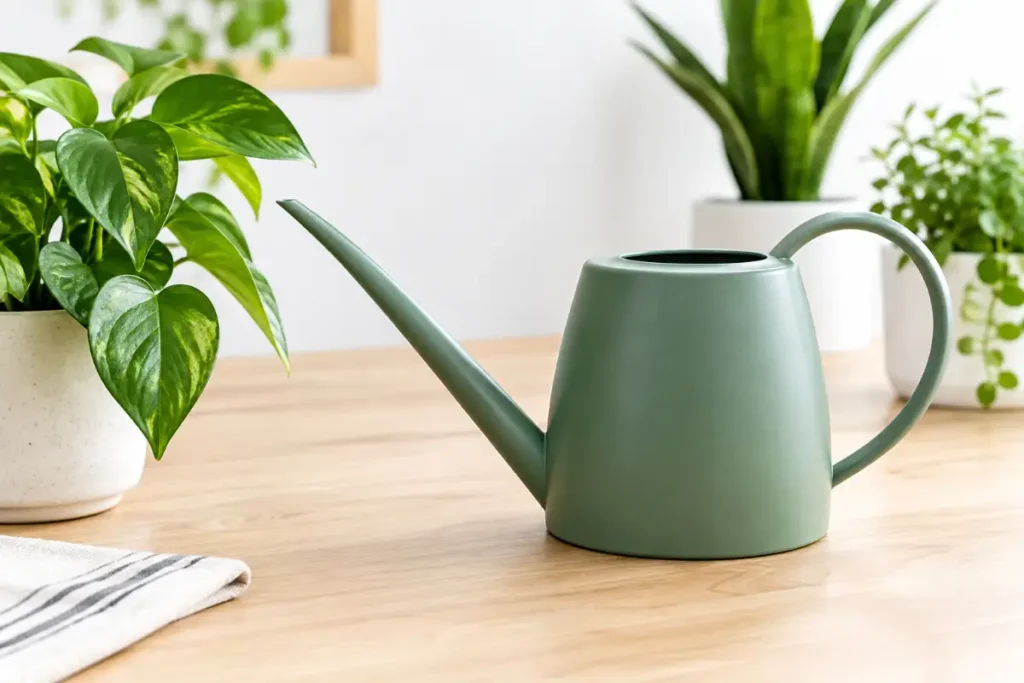
The best watering can for indoor plants is not the largest or the most decorative one — it is the one with the right combination of spout length, spout diameter, capacity, and pour control for the specific plants and positions in your collection. Most people buy whatever watering can is on the shelf at the hardware store without considering these factors, then wonder why they struggle to water hanging plants without spilling, reach plants at the back of shelves, or water small pots without flooding them.
This guide covers the seven specific features that determine whether a watering can actually makes indoor plant care easier and more precise, alongside recommendations for different collection types and positions.
Quick Answer
The best watering can for most indoor plant collections has a long, narrow spout for precision and reach, a capacity of one to two liters for manageable weight, a comfortable handle positioned for balance when full, a rose attachment (removable fine spray head) for delicate seedlings and surface-sown plants, and material that suits the aesthetic of the spaces where it is stored and used. Brass and copper watering cans are durable and attractive. Plastic is lightweight. Stainless steel is corrosion-resistant and professional-looking.
Why Watering Can Design Matters More Than Most People Realize
A watering can seems like a simple object where quality differences are minimal. In practice, the difference between a well-designed indoor watering can and a poorly designed one affects every watering session in ways that accumulate into significant practical outcomes over time.
A can with a short, wide spout delivers water in a broad, uncontrollable pour that splashes soil and foliage, floods small pots, and cannot reach plants positioned behind other plants or on high shelves. A can with a long, narrow spout delivers water precisely to the soil surface of each plant without wetting foliage, can thread between neighboring plants, and reaches difficult positions accurately.
A watering can that is too large becomes too heavy to lift and maneuver comfortably when full, leading to uneven pouring and tired arms during larger watering sessions. A can that is too small requires multiple refilling trips for collections with more than a few plants.
A can without a rose attachment cannot water seedlings or freshly sown seeds without displacing the growing medium. A watering can with a fixed non-removable rose cannot water most established plants without the slow spray that makes each plant’s watering take longer than necessary.
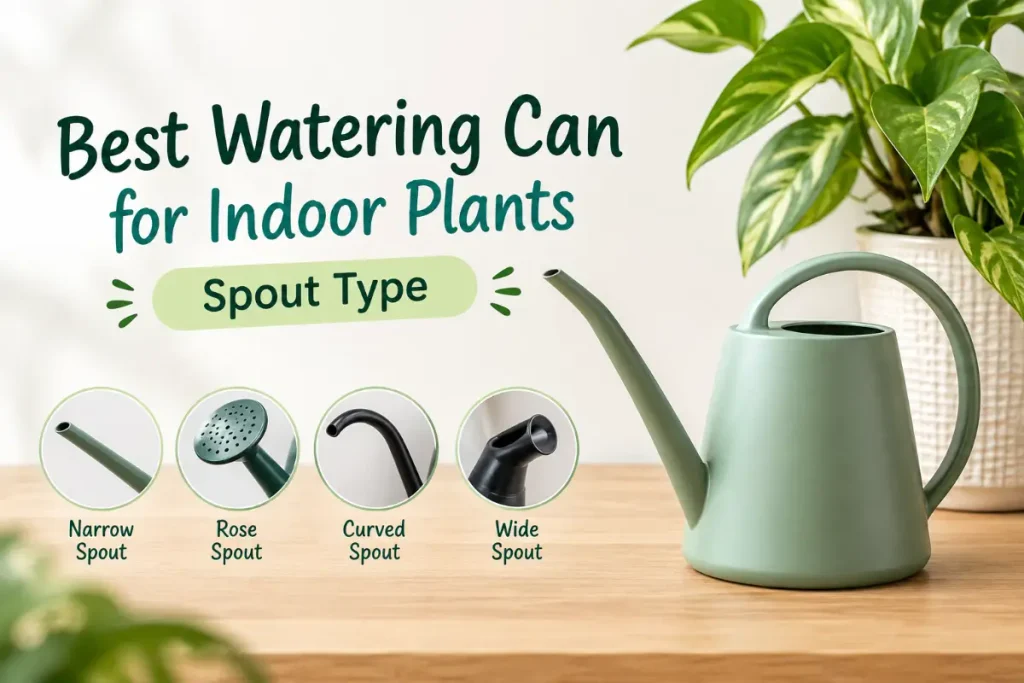
Feature 1: Spout Type — The Most Important Decision
The spout is the most consequential feature of any indoor watering can because it determines how accurately and how flexibly you can deliver water to plants in varied positions and sizes.
Long, narrow spout: The defining feature of a quality indoor watering can. A spout of twelve inches or more in length allows you to reach plants at the back of shelves without disturbing plants in front. A narrow diameter of one-half inch or less delivers a controlled, precise stream rather than a broad splash. This combination produces the most useful all-purpose indoor watering spout for collections with varied plant sizes and positions.
Curved gooseneck spout: A specific style of long narrow spout that curves elegantly downward like the neck of a goose. The downward curve allows you to hold the can level while the spout points downward at the correct angle for watering soil rather than holding the can at an awkward tilted angle. This makes precision watering significantly more comfortable for large collections.
Short, wide spout: Appropriate for outdoor garden watering where precision is less important and volume matters more. Not appropriate as the primary indoor watering tool for most collections. However, short spout cans with roses are appropriate for watering seedlings and germinating seeds where a gentle broad spray is needed.
Rose attachment (removable fine spray head): A removable rose that screws or clips onto the spout end converts any watering can from a precision stream to a fine spray for delicate applications. Removable is critical — a fixed rose limits the can to spray-only application which is too slow for most established plant watering. A rose that removes easily converts one can between two modes.
Feature 2: Capacity — Balance Between Convenience and Weight
The right range: One to two liters (approximately one-third to two-thirds of a US gallon) is the most practical capacity range for indoor watering cans serving collections of up to fifteen to twenty plants.
One liter: Ideal for small collections of ten or fewer plants, for collections with only small pots, or for people who find heavier weights uncomfortable. Requires more refilling trips for larger collections but is very maneuverable and light even when full.
Two liters: The most versatile size for medium collections of ten to twenty-five plants. Full weight of approximately four and a half pounds is manageable for most adults for watering sessions of fifteen to twenty minutes. Reduces refilling trips compared to smaller cans.
Three liters and above: Only appropriate if your collection is very large (more than thirty plants) and most plants are in large containers requiring substantial water volume per plant. Three-liter cans full weigh over six and a half pounds and become tiring quickly during extended watering sessions. The weight also makes precision pouring more difficult as arm fatigue develops.
The weight calculation: Water weighs approximately 2.2 pounds per liter. A two-liter can that itself weighs one pound holds a total of 5.4 pounds when full. A three-liter can that weighs one and a half pounds holds 8.1 pounds when full. Testing the full weight before purchase in a store, or checking specifications carefully for online purchases, prevents the common disappointment of a can that is comfortable empty but exhausting when full.
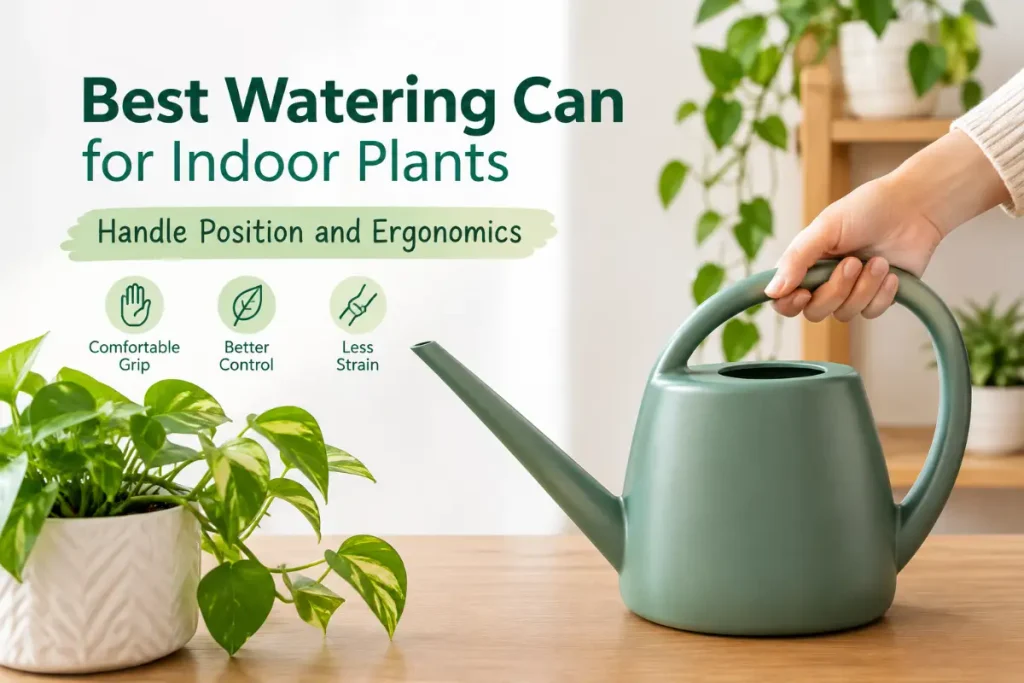
Feature 3: Handle Position and Ergonomics
Single top handle: The most common handle style. Positioned above the center of the can for stable carrying. Works well for cans up to two liters. Above two liters, the weight of a full can makes a single top handle increasingly tiring since the wrist bears the full load without additional support.
Double handle (rear grip plus top handle): A rear handle at the back of the can alongside a top carrying handle provides additional control during pouring by allowing one hand on the top handle and one on the rear grip. Significantly improves control and reduces spillage for larger cans. Recommended for any can above two liters.
Rear handle only: Some minimalist-design cans use only a rear handle without a top carrying handle. These look elegant but are less practical for collections where you carry the can between refilling and watering positions.
Handle height relative to the can: The handle should be tall enough that your knuckles clear the top of the can when gripping without scraping. Short handles on wider cans create knuckle clearance problems that make controlled pouring uncomfortable.
Feature 4: Material — Durability, Aesthetics, and Weight
Galvanized steel: The traditional watering can material. Durable, affordable, and attractively rustic in appearance. The zinc coating of galvanized steel prevents rust for many years but will eventually corrode if the coating is scratched and moisture reaches the underlying steel. Heavy compared to plastic alternatives.
Stainless steel: More corrosion-resistant than galvanized steel and maintains a clean, modern appearance without the weathered look that develops on galvanized steel over time. More expensive than galvanized. Appropriate for contemporary interior styles where the watering can is stored in visible positions.
Copper: The most premium traditional material for decorative watering cans. Develops an attractive patina over time. Naturally antimicrobial, which is not functionally significant for plant watering but is a marketing characteristic. Expensive and heavy. Most appropriate as a display object in design-forward interiors.
Plastic: The lightest material option and the least expensive. Does not corrode. Available in a wide range of colors and styles. The functional performance of a well-designed plastic watering can is equivalent to metal alternatives. Appropriate for collections where the watering can is stored out of sight and aesthetics are secondary to function.
Ceramic: Decorative small ceramic watering cans are appropriate for watering single small plants with very precise water volume delivery. Not practical for collections of more than a few plants due to small capacity and heavy weight per volume. Primarily decorative.
Feature 5: Pour Control and Spill Prevention
A well-designed watering can delivers exactly the amount of water you intend with precise starting and stopping of flow. A poorly designed one dribbles when you don’t intend it to, spills when tilted, and delivers inconsistent flow that is difficult to control.
Spout elevation: The spout outlet should be at or above the waterline level of a full can when the can is level. If the spout outlet is below the full waterline, water dribbles out constantly when the can is full, requiring awkward tilted carrying to prevent spills. Check the spout height relative to the waterline carefully when assessing any can.
Spout profile: A spout that tapers consistently from wide at the base to narrow at the tip produces progressively more controlled flow as the water travels through the narrowing passage. Straight-walled spouts with abrupt openings at the end produce less controlled, more splashy flow.
Lid security: Indoor watering cans that are carried around the home risk tipping and spilling. A secure lid that clicks closed or screws on prevents this. Open-top cans without lids are fine for outdoor use but create spill risk when carrying indoors.
Feature 6: Cleaning and Maintenance
Wide fill opening: A fill opening wide enough to reach inside for cleaning and scrubbing prevents the mineral and algae buildup that develops in cans with narrow necks that cannot be cleaned effectively. Check that your hand, or at minimum a bottle brush, can access the interior.
Smooth interior: Interior surfaces without ridges, seams, or corners where mineral deposits and biofilm accumulate are easier to keep clean. Stainless steel interiors are the easiest to maintain. Plastic interiors with internal seams accumulate deposits that are difficult to remove completely.
Detachable components: Removable spouts, roses, and other attachments that can be detached for thorough cleaning prevent the buildup of deposits and biological growth in components that touch water repeatedly without adequate cleaning access.
Algae management: Any watering can that stores water between uses will eventually develop algae growth, particularly in transparent or light-colored containers exposed to light. Opaque cans reduce algae growth. Rinsing completely empty and allowing to dry between uses prevents algae establishment. A diluted white vinegar rinse every few months removes mineral deposits and algae simultaneously.
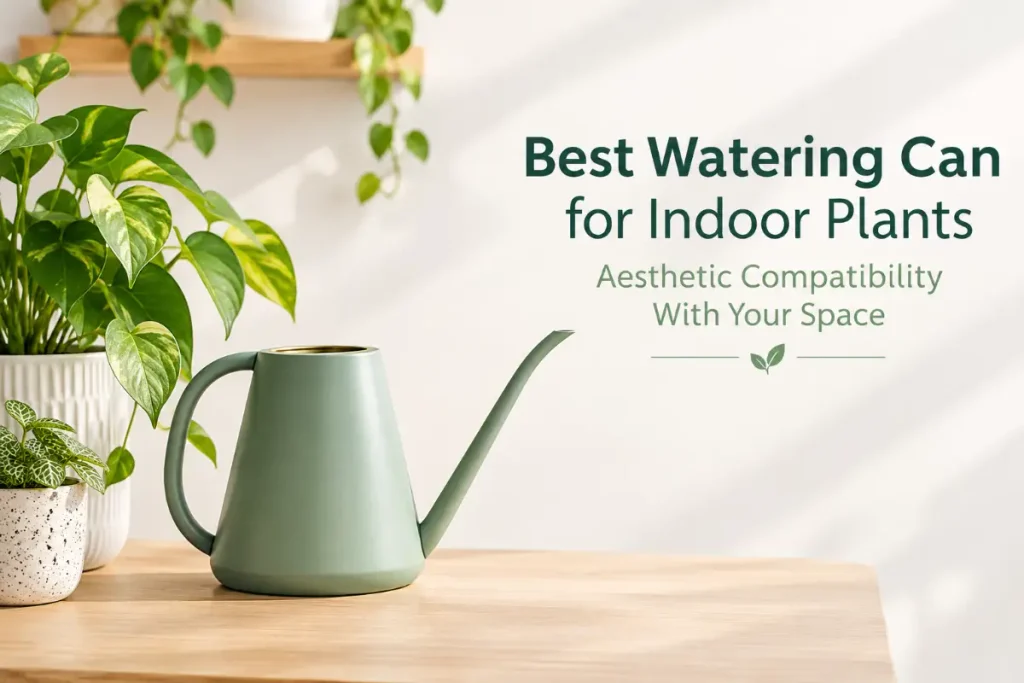
Feature 7: Aesthetic Compatibility With Your Space
Unlike garden tools stored in sheds, indoor watering cans are typically stored in living spaces where they are visible between uses. This makes aesthetic compatibility more relevant for indoor watering cans than for most other plant care tools.
Style matching: A copper gooseneck watering can suits traditional and farmhouse interior styles. A matte black or brushed steel can suits contemporary minimalist spaces. A brightly colored plastic can suits eclectic, playful interiors where color is a deliberate design choice.
Scale appropriateness: A three-liter industrial watering can looks incongruous on a kitchen windowsill beside small herb pots. A one-liter elegantly designed can suits the scale and aesthetic of that same context.
Storage considerations: Consider where the can lives between uses. If it hangs on a hook near the sink, its visual profile matters significantly. If it lives in a utility cupboard out of sight, aesthetics matter much less than functional features.
Recommended Types for Different Collections
For small collections of ten or fewer plants, mostly small pots: A one-liter long-spout gooseneck can with a removable rose. Lightweight, maneuverable, and precise. Stainless steel or copper for visible storage positions, plastic for hidden storage.
For medium collections of ten to twenty-five plants with varied sizes: A two-liter long-spout gooseneck can with a removable rose. The most versatile size for mixed collections. Two-handle design preferred for control during extended watering sessions.
For collections with many hanging plants and high-shelf plants: Maximum spout length is the priority. A sixteen-to-twenty-inch gooseneck spout reaches overhead baskets and high shelves without requiring the can to be raised dangerously overhead. A one-to-one-and-a-half-liter capacity suits the frequent repositioning that hanging plant watering requires.
For collections with many seedlings and fragile small plants: A can with a fine rose attachment for gentle spray application. Size less important than gentle delivery.
For collections with mostly succulents and cacti: A squeeze bottle or a can with a very narrow spout for precise watering between tightly spaced plants and directly into the base without wetting spines or pads. Succulents need infrequent but precise watering that rewards the accuracy of a very narrow spout over the broad stream of a standard indoor watering can.
For the complete guide to other essential watering tools including moisture meters, self-watering pots, and misting bottles that complement the watering can in a complete indoor plant care toolkit, watering tools for indoor plants covers every watering accessory with the specific situations each one addresses most effectively alongside the foundational watering can covered in this guide.
Conclusion
The best watering can for indoor plants is the one designed around the specific realities of your plant collection: the positions where plants sit, the sizes of the pots, the precision needed, and the physical comfort requirements of your watering routine. A long gooseneck spout with a removable rose in a one-to-two-liter capacity covers the needs of the majority of indoor plant collections with maximum precision and minimum physical effort.
Start with the spout — long and narrow with a removable rose covers most indoor scenarios. Then choose capacity based on collection size and your comfortable carrying weight. Let material and aesthetics follow from the practical decisions rather than leading them. The right watering can makes every watering session faster, more precise, and more enjoyable, which directly contributes to better plant care outcomes through the regular, attentive watering practice that healthy indoor plants require.
Frequently Asked Questions
What size watering can is best for indoor plants?
One to two liters is the most practical range for most indoor plant collections. A one-liter can suits small collections of up to ten plants and is very lightweight and maneuverable. A two-liter can suits medium collections of ten to twenty-five plants and reduces refilling trips. Cans above two liters become heavy when full and make precision pouring more difficult.
What is a gooseneck watering can and why is it good for indoor plants?
A gooseneck watering can has a long, curved spout that resembles the neck of a goose, directing water downward at the correct angle while you hold the can level. The long length provides reach for plants on high shelves or behind other plants. The narrow diameter delivers a precise, controlled stream. The downward curve makes controlled pouring comfortable without awkward tilting. These features make gooseneck cans the most versatile and most commonly recommended style for indoor plant collections.
Should I use a watering can with a rose for indoor plants?
A removable rose attachment is useful for watering seedlings, germinating seeds, and surface-sown plants where a gentle spray prevents displacing the growing medium. For established plants in pots, the rose slows watering unnecessarily since these plants benefit from a direct, thorough pour rather than a slow spray. A removable rose that can be attached or removed as needed gives one can both capabilities.
How often should I clean my indoor watering can?
Rinse completely empty and allow to dry between uses to prevent algae and bacterial growth. Clean thoroughly with a bottle brush and mild soap every two to four weeks for cans in regular use. Remove mineral deposit buildup with a white vinegar rinse every two to three months. Rinse thoroughly after any cleaning product use before watering plants.
Can I use any container to water indoor plants?
Yes, functionally any container that holds water works for watering indoor plants. A measuring cup, a reused plastic bottle, or a pitcher all deliver water to soil. The advantage of a purpose-designed watering can is the control that a long spout provides, making precision delivery easier and reducing the chance of overwatering, flooding pots, or wetting foliage inadvertently. For small collections of a few plants, improvised containers work adequately. For larger collections or plants in difficult positions, a proper indoor watering can significantly improves the experience.
What is the difference between indoor and outdoor watering cans?
Indoor watering cans prioritize precision, spout length for reach, and manageable weight in one to two liter capacities. Outdoor watering cans prioritize volume capacity (five to ten liters or more) and durability for garden use where carrying large amounts of water to multiple plants is the primary requirement. An outdoor watering can used indoors is typically too large and heavy for comfortable maneuvering in interior spaces, and its short wide spout delivers water less precisely than a long narrow indoor spout.
Pingback: Self-Watering Pots for Indoor Plants: Do They Actually Work in 2026? - Plant Quill