
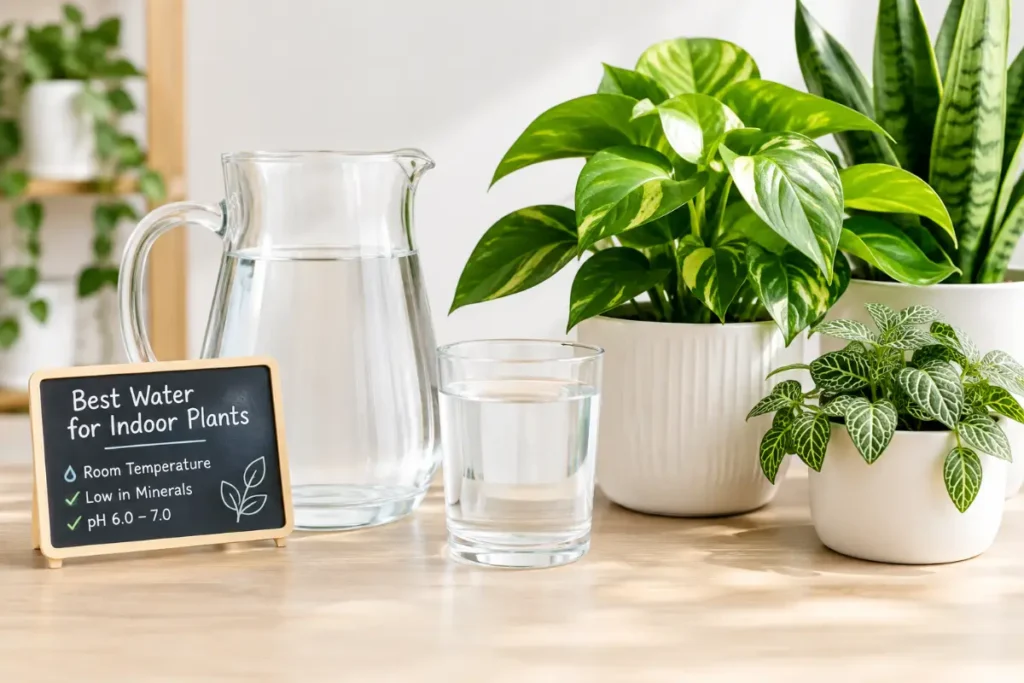
The best water for indoor plants is a topic that generates more debate than it deserves in casual plant communities, with some sources claiming that tap water will kill your plants and others insisting it makes no difference at all. The truth is more nuanced: water quality matters significantly for specific plants and is largely irrelevant for others. Understanding which category your plants fall into saves both unnecessary expense on filtration and unnecessary plant losses from water chemistry you did not realize was causing problems.
This guide covers the specific water types available to most US households, what each one does and does not affect in terms of plant health, and which plants are most sensitive to water quality differences.
Quick Answer
For most common indoor houseplants, tap water is adequate. The plants most sensitive to water quality are fluoride-sensitive species including spider plant, peace lily, dracaena, mass cane, and Boston fern, which show brown leaf tips from fluoride accumulation over time. For these plants, filtered water, distilled water, or collected rainwater produces significantly better leaf tip condition. Chlorinated tap water affects only the most sensitive plants and can be partially addressed by allowing water to sit in an open container for twenty-four hours. Hard water mineral accumulation affects all plants over time and is managed through regular soil flushing.
Understanding What Is in Tap Water
Municipal tap water in the US contains several components that affect plants differently. Understanding each one clarifies which water quality concerns are genuine and which are overstated.
Chlorine: Added to municipal water as a disinfectant. Chlorine is a gas that dissipates naturally when tap water sits in an open container for twenty-four hours. Most houseplants tolerate standard chlorine levels in tap water without visible problems. The occasional claim that chlorine kills beneficial soil bacteria has some research support but the practical effect on typical potting mix (which has less soil biology than garden soil) is minimal.
Chloramine: Used by some municipalities as a more stable alternative to chlorine. Unlike chlorine, chloramine does not dissipate when water sits. It requires activated carbon filtration to remove. If your municipality uses chloramine (check your water utility’s annual report) and your most sensitive plants show persistent problems despite using sat water, chloramine may be a contributing factor.
Fluoride: Added to most US municipal water supplies for public dental health. Fluoride is a significant concern for indoor plants because it accumulates in soil and plant tissue over time and causes the characteristic leaf tip burn on sensitive species. Fluoride is not removed by sitting water and requires filtration or switching to a non-fluoride source. This is the most practically important water quality issue for indoor plant owners.
Mineral hardness (calcium and magnesium): Hard water contains dissolved calcium and magnesium that leave the white deposits visible on pot rims, soil surfaces, and leaf surfaces when water evaporates. These minerals accumulate in soil over time and gradually raise soil pH. High pH reduces the availability of iron and other micronutrients to plants even when those nutrients are present in the soil. This is a slow-developing problem that manifests as progressive yellowing and decline over months of hard water use without regular soil flushing.
pH: Tap water in the US typically has pH between 6.5 and 8.5 depending on the municipality. Most houseplants tolerate pH within this range. The notable exception is acid-loving plants including azaleas, camellias, blueberries, and some orchids that prefer pH between 4.5 and 6.0. Consistently watering these plants with alkaline tap water raises soil pH above their tolerance range over months.
Water Types and Their Practical Effects
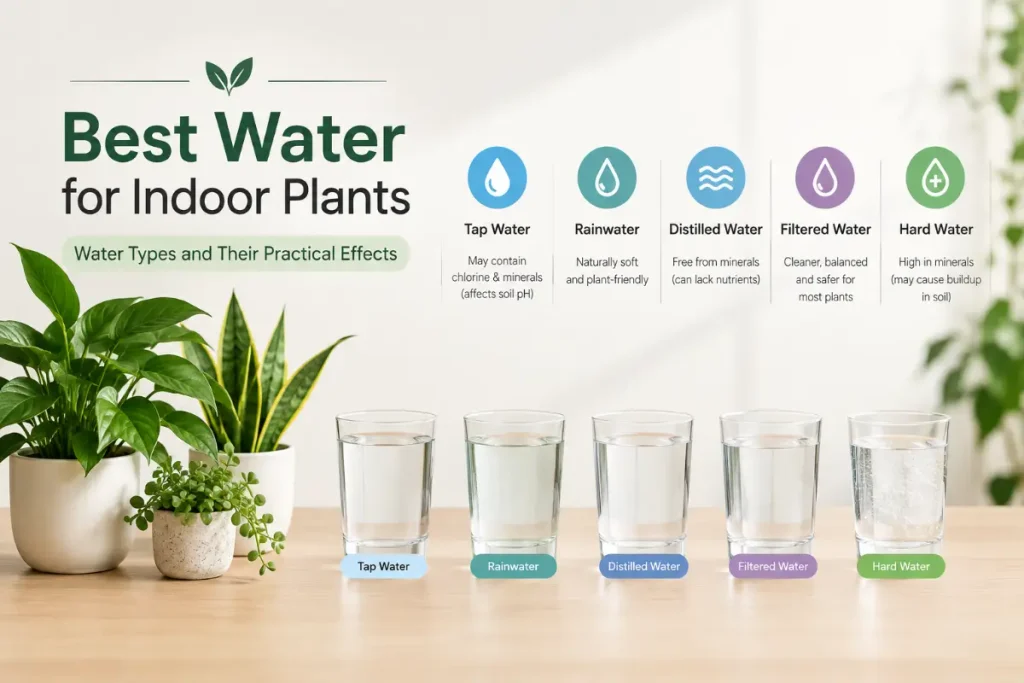
Tap water: Appropriate for most common houseplants without any modification. Issues arise for fluoride-sensitive plants over months of use, and hard water mineral accumulation is managed through regular soil flushing every two to three months. The most convenient and most economical watering option for the majority of indoor plant owners.
Sat tap water (sitting twenty-four hours): Chlorine dissipates from sat water, making it marginally better than immediate tap water for the most chlorine-sensitive plants. No effect on fluoride or mineral hardness. Worth doing for the most delicate plants at no additional cost. Not necessary for the majority of common houseplants.
Filtered water (activated carbon filter): Removes chlorine and chloramine effectively. Does not remove fluoride in most pitcher-style filters unless specifically labeled as fluoride-removing. Reduces some mineral content depending on filter type. A filtered water pitcher is the most economical step up from tap water for indoor plant owners concerned about chlorine and chloramine.
Reverse osmosis water: Removes virtually all dissolved solids including fluoride, minerals, chlorine, and chloramine. Produces very pure water that is excellent for sensitive plants. May be slightly too pure for some plants that benefit from the dissolved minerals in tap water — adding a small amount of balanced fertilizer occasionally compensates for any mineral stripping. Available as under-sink systems ($200 to $500) or from grocery store reverse osmosis dispensers at low per-gallon cost.
Distilled water: All dissolved solids removed through evaporation and condensation. Similar to reverse osmosis water in purity. Available at grocery stores at low cost per gallon. Excellent for the most sensitive plants or those with specific pH requirements. The per-gallon cost makes it practical for small collections but expensive for large collections where volume use is significant.
Collected rainwater: Naturally slightly acidic (pH 5.5 to 6.5), free of fluoride and most treatment chemicals, and rich in dissolved nitrogen from atmospheric fixation. The best all-purpose natural water source for indoor plants. Collection requires outdoor space and appropriate containers. Quality varies depending on local air pollution — urban rainwater may carry pollutants that rural rainwater does not. If collection is practical, rainwater is the best free water source for all indoor plants including the most sensitive species.
Well water: Variable quality depending on location. May contain high mineral content, iron, sulfur, or other naturally occurring compounds that affect plants differently than municipal additives. Testing well water for pH, mineral content, and specific contaminants provides the specific information needed to assess its suitability for plant use without generalizing from municipal water guidance.
Plants Most Sensitive to Water Quality
Fluoride-sensitive plants — switch to filtered or rainwater:
Spider plant (Chlorophytum comosum): One of the most fluoride-sensitive common houseplants. Brown leaf tips that worsen progressively despite adequate humidity are almost always fluoride accumulation. Switching to filtered water or rainwater and flushing the soil with non-fluoride water several times stops the progression and new growth emerges with clean tips.
Peace lily (Spathiphyllum): Shows fluoride sensitivity as brown leaf tips similar to spider plant. Also sensitive to hard water mineral accumulation. Filtered or distilled water produces significantly better leaf condition than tap water in fluoride-added municipal systems.
Dracaena species (including mass cane, marginata, Janet Craig): All dracaena varieties are fluoride-sensitive and show the characteristic brown leaf tips from fluoride accumulation. Filtered, distilled, or rainwater dramatically improves leaf tip condition. For the complete guide to mass cane care covering water quality as a primary management consideration, mass cane plant indoor covers every detail of this care relationship.
Boston fern and other delicate ferns: Sensitive to both fluoride and the hard water minerals that accumulate on their delicate fronds. Rainwater or distilled water produces noticeably better frond condition than tap water in hard water areas.
Calathea and prayer plants: Among the most water-sensitive of common tropical houseplants. Fluoride, chloramine, and hard water minerals all cause the browning and curling that makes calathea one of the most complained-about houseplants. Using distilled or filtered water eliminates one of the most common causes of calathea decline.
Acid-loving plants (azalea, gardenia, blueberry) — use acidified or rainwater:
These plants need pH between 4.5 and 6.0 in their soil and root zone. Consistent watering with alkaline tap water (pH 7.0 to 8.5) progressively raises soil pH above this range. Use rainwater (naturally acidic), add one to two milliliters of white vinegar per gallon to tap water to reduce pH, or use water tested to confirm appropriate pH before application to these plants.
Plants Not Particularly Sensitive to Water Quality
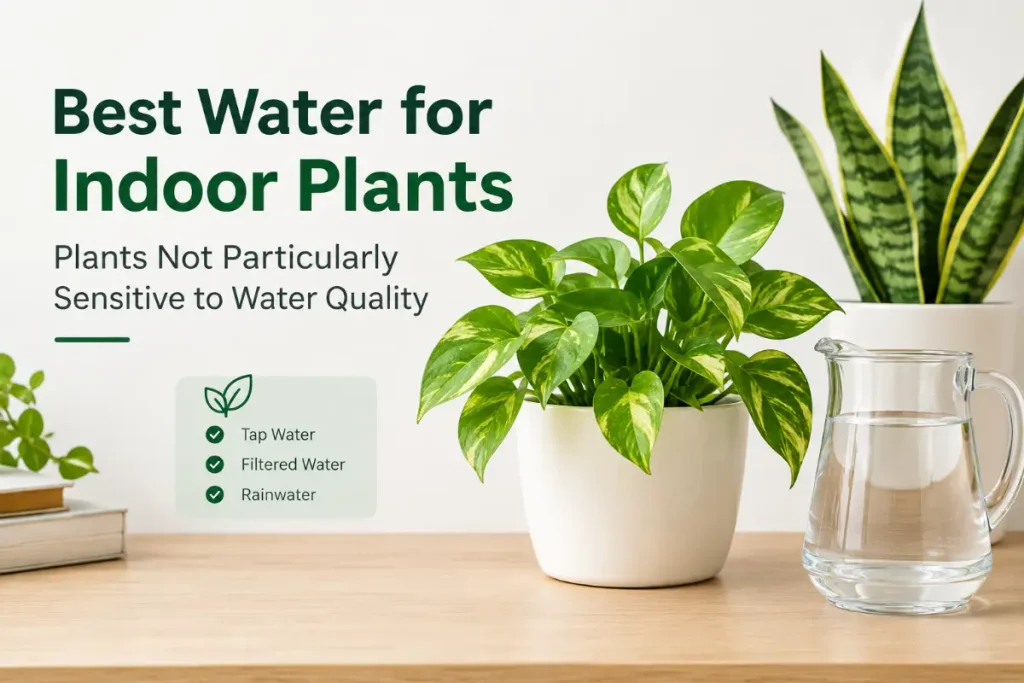
Pothos, philodendron, monstera: Handle standard tap water including fluoride levels without significant visible problems in most municipal water systems. Some minor leaf tip browning is common from multiple causes and is not specifically attributable to water quality in most cases.
Cacti and succulents: Relatively tolerant of water quality variations. Hard water mineral accumulation on the soil surface is cosmetically noticeable but does not harm these plants significantly if soil is occasionally flushed. Fluoride sensitivity is lower than in tropical houseplants.
Rubber plant, snake plant, ZZ plant: Handle standard tap water without significant problems. These vigorous, resilient plants are not in the sensitive category for most water quality concerns.
The Soil Flushing Practice
Regardless of which water type you use, regular soil flushing is the most universally beneficial water quality management practice for all potted indoor plants.
What it does: Running two to three times the normal water volume through the pot in a single flushing session forces accumulated mineral salts, fluoride residue, and fertilizer byproducts out of the soil through the drainage holes. This resets the soil chemistry that months of regular watering has progressively altered.
How often: Every two to three months for plants watered with tap water. Every four to six months for plants watered with filtered or distilled water which contributes less accumulation.
The process: Take the plant to a sink or bathtub. Water thoroughly and allow to drain completely. Repeat three times in succession, allowing complete drainage between each watering. The third flush should run through clear rather than discolored water, indicating the accumulated minerals have been flushed out.
The visible benefit: Plants flushed regularly show better leaf color, more vigorous growth, and less progressive tip browning than plants in soil that has never been flushed. The benefit is most dramatic in plants watered with hard tap water that has deposited significant mineral content over six to twelve months. For the complete guide to soil flushing in the context of fertilizer management and overall soil health for indoor plants, soil mixture for indoor plants covers the relationship between soil health, water quality, and the drainage properties that make flushing effective without waterlogging.
Practical Water Quality Decisions for Different Situations
Small collection, no particularly sensitive plants, budget-conscious: Use tap water. Sit it for twenty-four hours in an open container before use. Flush soil every two to three months. This approach is free and adequate for most common houseplants.
Small to medium collection with fluoride-sensitive plants (dracaena, spider plant, peace lily): Purchase a pitcher water filter (Brita or similar with carbon filter, approximately $30 to $50) for plant watering. This removes chlorine and reduces some minerals. For fluoride specifically, purchase distilled water from the grocery store for your most sensitive plants at approximately $1 per gallon.
Medium to large collection with mix of sensitive and tolerant plants: Consider an under-sink reverse osmosis filter ($150 to $300 installed) that provides unlimited high-quality water at low per-gallon cost over time. Most economical for collections of more than fifteen to twenty plants where the per-gallon cost of purchased distilled water adds up quickly.
Outdoor rainwater collection: If you have outdoor space, a clean food-grade barrel or container placed under a downspout collects rainwater for free. Filter through a fine mesh before use to remove debris. Store in a cool, dark location to prevent algae growth.
Testing Your Water Quality at Home
For indoor plant owners who want precise information about their specific tap water rather than general municipal averages, several accessible home testing approaches provide actionable data.
pH test strips: Inexpensive strips available at aquarium shops, pool supply stores, and garden centers that give immediate pH readings when dipped in water. Adequate for confirming whether tap water pH is in the appropriate range for acid-loving plants or standard houseplants. Less precise than digital meters but sufficient for most practical decisions.
Digital pH meter: A digital pH meter ($15 to $40 at garden centers or online) provides more precise readings than strips. Requires calibration with buffer solution before use. Worth the investment for owners of acid-loving plants (azalea, blueberry, gardenia) where pH precision matters more than for general houseplant collections.
TDS (Total Dissolved Solids) meter: Measures the concentration of dissolved solids in water in parts per million. A useful proxy for mineral hardness. Readings above 300 to 400 ppm indicate hard water that will accumulate noticeably in potting soil. Readings below 100 ppm indicate soft to moderate water. TDS meters cost $10 to $20 and provide immediate results.
Home water test kits: More comprehensive kits that test for multiple parameters including pH, hardness, chlorine, iron, and sometimes fluoride. Available at hardware stores and online. Appropriate for owners who want a complete picture of their water quality rather than individual parameter testing.
Utility water quality report: Your municipality provides an annual water quality report that includes all parameters measured in the treated water supply including fluoride concentration, hardness, pH, chlorine or chloramine levels, and dozens of other measurements. This is the most comprehensive and most authoritative source of information about your specific tap water quality and is available free from your water utility’s website.
The Seasonal Water Temperature Consideration
Water temperature affects plant health in ways that most care guides do not address specifically but that make a practical difference particularly in cold climates where tap water temperature varies significantly through the year.
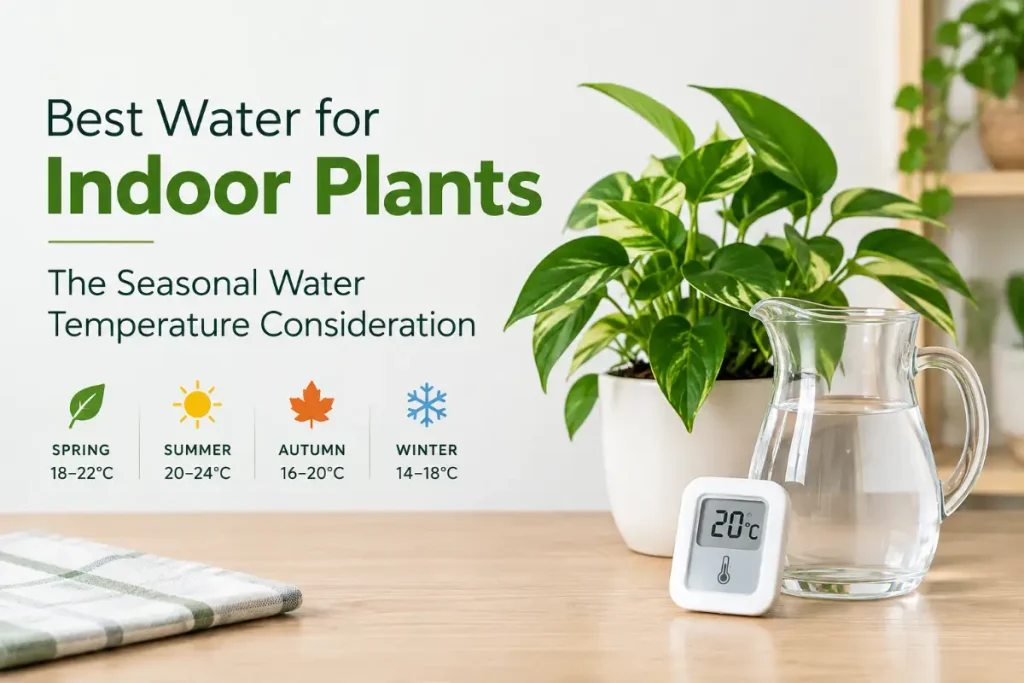
Winter cold water shock: In cold climates, tap water in winter may emerge from the faucet at 45 to 55 degrees Fahrenheit as the supply pipes run through cold ground. Applying this cold water directly to the root systems of tropical houseplants causes a temperature shock response similar to mild drought stress — the roots temporarily restrict water uptake in response to the cold, causing brief wilting even when the soil is adequately moist.
The solution: Fill the watering can the evening before watering so the water reaches room temperature overnight. Alternatively, mix cold tap water with a measured amount of hot water to reach room temperature before use. The target temperature is approximately 65 to 70 degrees Fahrenheit for tropical plants.
Summer warm water consideration: In homes where pipes run near heat sources or in attic spaces, summer tap water may emerge warmer than room temperature. Very warm water above 80 degrees can stress root systems in a different direction. Allow tap water drawn in summer to cool to room temperature before use if it feels significantly warm from the faucet.
The most temperature-sensitive plants: Orchids, calathea, African violets, and other tropical plants from naturally warm, consistent climates show the most pronounced response to water temperature. Standard robust tropical houseplants like pothos, philodendron, and monstera handle moderate temperature variation in watering water without significant response.
For the complete guide to how watering frequency, water quality, and soil type interact to produce the plant health outcomes that most indoor plant owners are working toward, how often to water indoor plants covers the foundational watering practice that makes water quality decisions most meaningful — because even the best water applied at the wrong frequency produces poor outcomes, while adequate water at the right frequency produces excellent results for the majority of common indoor plants.
Conclusion
The best water for indoor plants is filtered, distilled, or collected rainwater for the subset of plants genuinely sensitive to fluoride and mineral accumulation — primarily spider plant, peace lily, dracaena, calathea, and Boston fern. For the majority of common houseplants, standard tap water is adequate with the simple practice of regular soil flushing every two to three months.
The most important water quality practice for any indoor plant owner regardless of which water type they use is regular soil flushing to prevent the mineral accumulation that all potted plants eventually experience from repeated watering. This practice alone produces more visible improvement in plant health than switching from tap to filtered water without flushing.
Frequently Asked Questions
Is tap water bad for indoor plants?
Tap water is adequate for most common indoor houseplants. It is a problem specifically for fluoride-sensitive plants including spider plant, peace lily, dracaena, and calathea, where fluoride accumulation over months causes progressive brown leaf tips. Hard tap water causes gradual soil pH rise and mineral accumulation in any plant, managed through regular soil flushing. For the majority of houseplants in the average collection, tap water with periodic soil flushing is a fully functional long-term watering approach.
Why do my plant leaves have brown tips even though I water correctly?
In fluoride-sensitive plants, brown leaf tips from fluoride accumulation look identical to brown tips from underwatering or low humidity and are often misdiagnosed. If watering frequency and humidity are adequate and brown tips persist or worsen, switch to filtered or distilled water and flush the soil thoroughly with non-fluoride water. New growth after switching should emerge with clean tips if fluoride was the cause.
Is rainwater better than tap water for indoor plants?
Yes, for most indoor plants. Rainwater is naturally slightly acidic (suitable for most houseplants), free of fluoride and treatment chemicals, and contains some dissolved nitrogen from atmospheric deposition. It is the best overall water source for indoor plants where collection is practical. Urban rainwater in heavily polluted areas may contain pollutants that reduce its quality advantage over tap water.
Can I use distilled water for all my indoor plants?
Yes. Distilled water is appropriate for all indoor plants. Its very low mineral content means it contributes no fluoride or mineral accumulation. The only consideration is that very pure water like distilled contributes none of the trace minerals that some plants might otherwise absorb from tap water. Since most plants get their mineral nutrition from fertilizer and potting mix rather than water, this is not a practical concern for most collections.
How do I know if my tap water is hard or soft?
Your municipality’s annual water quality report (available on the utility website or by request) includes hardness measurements in grains per gallon or milligrams per liter. Water above 7 grains per gallon (120 mg/L) is considered hard. Alternatively, white mineral deposits on pot rims and soil surfaces after water evaporates are a visible indicator of hard water. Many US cities in the Midwest and Southwest have notably hard tap water.
Does the temperature of water matter for indoor plants?
Yes, for sensitive tropical plants. Cold tap water applied directly to tropical plant roots causes a temperature shock that can produce wilting symptoms similar to drought and occasional root damage. Use room temperature water by allowing tap water to sit for thirty minutes before use, or by mixing cold tap water with a small amount of hot water to reach room temperature. This is particularly important for orchids, calathea, and other tropical plants from warm, consistent climates.
Pingback: Misting Indoor Plants: What Actually Works and What Doesn't 2026 - Plant Quill