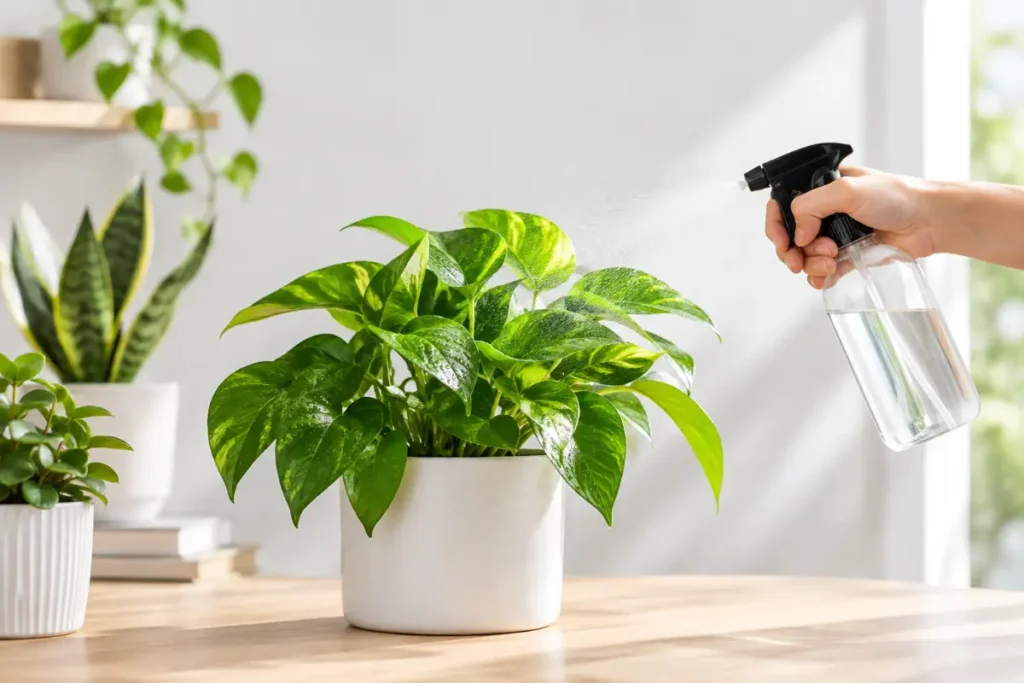
Misting indoor plants is one of the most debated practices in houseplant care. Plant communities are divided between enthusiastic misters who spray their plants daily and skeptics who insist misting does nothing useful and actively encourages disease. Both positions contain some truth, and the right answer depends on which plants you are misting, how you are misting them, and what you are actually trying to achieve.
This guide cuts through the debate with a straightforward assessment of what misting does and does not accomplish, which plants genuinely benefit, which plants are harmed, and what alternatives work better when misting is not the right solution.
Quick Answer
Misting temporarily raises humidity around plant leaves for approximately thirty to sixty minutes, which is too brief to provide meaningful humidity benefit to most tropical plants. However, misting is genuinely beneficial for specific purposes: cleaning dust from large smooth leaves, applying foliar fertilizers or pest treatments, maintaining humidity around cuttings during propagation, and keeping the growing environment of air plants moist. For plants that need consistently high humidity, a humidifier, pebble tray, or grouping of plants provides far more effective and sustained moisture than misting.
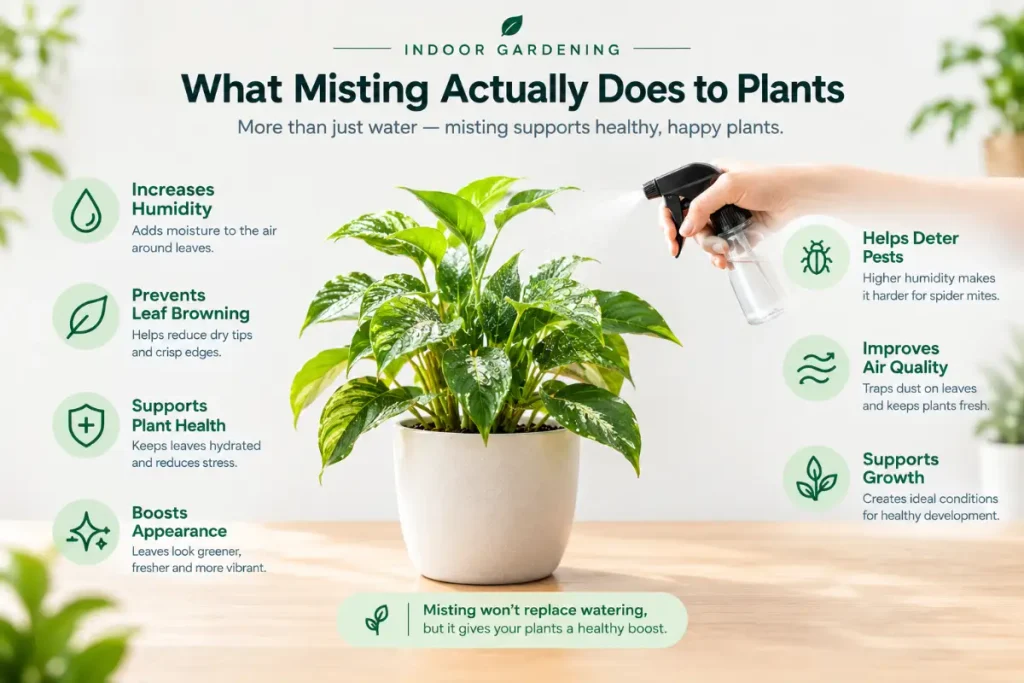
What Misting Actually Does to Plants
Understanding the mechanism of misting clarifies why it works for some purposes and fails for others.
Temporary surface moisture: A fine mist applied to plant leaves covers the surface with tiny water droplets. These droplets begin evaporating immediately. In typical indoor conditions with ambient air circulation, mist droplets on most plants evaporate within twenty to sixty minutes. The relative humidity in the immediate vicinity of the leaf surface rises modestly during this evaporation period and returns to the ambient room level once evaporation is complete.
The humidity math: For misting to meaningfully raise the humidity a tropical plant experiences, it would need to be applied frequently enough to maintain elevated humidity continuously. Studies on misting and plant humidity suggest that increasing ambient relative humidity from 40% to 60% — a commonly desired improvement for humidity-loving tropicals — would require misting every thirty to sixty minutes continuously. This is obviously impractical and suggests that daily or even twice-daily misting provides minimal humidity benefit for most plants.
Leaf cooling: When water evaporates from leaf surfaces, it removes heat energy in the process (the same evaporative cooling that makes sweating work). In very warm, dry conditions, misting provides brief cooling relief that may reduce heat stress on plants near hot south-facing windows in summer. This cooling effect is temporary but genuine for the period of evaporation.
Leaf cleaning: Water droplets on leaves loosen and carry away dust particles as they evaporate or run off. Regular misting (or occasional wiping with a damp cloth) keeps large smooth leaves cleaner, which improves photosynthetic efficiency by maintaining clear stomata and maximizing light absorption through dust-free surfaces.
Plants That Benefit From Misting
Air plants (Tillandsia): These epiphytes that grow without soil absorb all their moisture through their leaf surfaces, making misting a primary method of hydration alongside submersion soaking. Misting two to three times weekly (more in dry conditions) provides genuine moisture benefit to air plants since leaf absorption rather than humidity is the mechanism.
Orchids in bark medium: Regular misting of orchid roots and growing medium provides moisture to the aerial root system between deeper watering events. Orchid roots that are light grey-silver are dry and benefit from misting. Green roots are adequately hydrated. Misting the bark medium prevents it from drying completely between waterings without creating the overwatered conditions that standing water in the medium would cause.
Cuttings during propagation: Cuttings without roots cannot absorb water from soil and maintain their moisture through leaf surface hydration. Misting cuttings several times daily or enclosing them in a plastic bag maintains the surface moisture that prevents desiccation before roots develop. This is one of the most genuinely effective applications of misting in indoor plant care.
Tropical plants during heat waves: In unusually hot, dry conditions (above 90 degrees with low humidity), misting tropical plants several times daily provides temporary cooling and brief humidity increases that reduce heat stress. This is a situational benefit for extreme conditions rather than a routine practice.
Asparagus fern: With thousands of tiny cladode surfaces that lose moisture rapidly in dry air, asparagus fern benefits from misting more than most plants because the high surface-area-to-volume ratio of its cladodes means more evaporative surface is affected by brief humidity increases. Regular misting every one to two days extends the time between significant humidity drops for this plant.
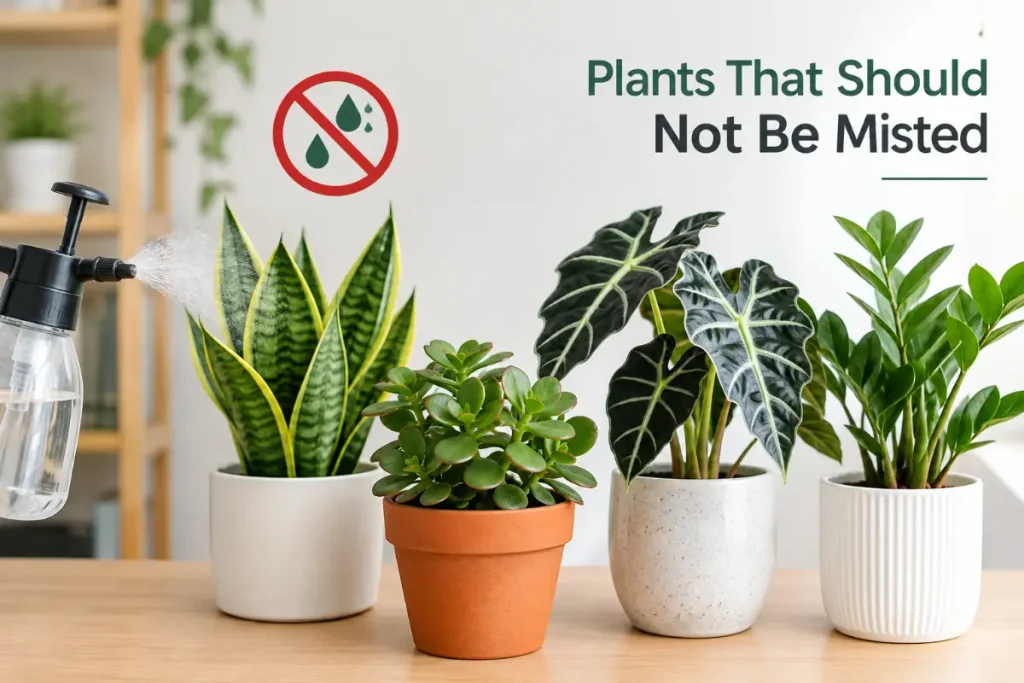
Plants That Should Not Be Misted
African violets: Water droplets on African violet leaves cause permanent brown spots where the water contacts the leaf surface due to the way the water interacts with the leaf’s delicate surface cells. Keep water off African violet leaves entirely — water from the base or very carefully at soil level only.
Cacti and succulents: These plants are adapted to dry air and do not need or benefit from surface moisture. More importantly, water that accumulates in the tight angles between cactus ribs or in the center of succulent rosettes creates the ideal conditions for rot and fungal problems. Never mist cacti or succulents.
Plants with fuzzy or hairy leaves: Geraniums, begonias, and other plants with pubescent (hairy) leaf surfaces trap water droplets in the hairs rather than shedding them quickly. This retained moisture creates ideal conditions for fungal diseases including botrytis and powdery mildew. Avoid misting hairy-leaved plants.
Rosemary, lavender, and Mediterranean herbs: These plants evolved in dry, breezy Mediterranean conditions and are susceptible to the fungal problems that moist, still leaf surfaces create. Misting Mediterranean herbs encourages the powdery mildew that is already their primary indoor disease risk. Never mist these herbs indoors.
Any plant already showing signs of fungal disease: Misting spreads fungal spores across leaf surfaces. A plant with any visible powdery mildew, leaf spots, or other fungal disease should have all misting stopped immediately until the disease is fully treated.
What Works Better Than Misting for Humidity
For plants that genuinely need higher humidity than typical indoor air provides — calathea, maidenhair fern, bird of paradise, and other tropical plants from consistently humid environments — alternatives to misting provide far more sustained and meaningful humidity increases.
Humidifier: The most effective solution for consistently raising ambient humidity around indoor plants. A cool-mist humidifier positioned within three to four feet of humidity-loving plants raises the local relative humidity meaningfully and continuously rather than the brief spikes misting provides. For collections of multiple humidity-loving plants, a larger room humidifier provides area-wide humidity improvement. This is the most direct investment for growers whose primary concern is plant humidity.
Pebble tray: A shallow tray filled with pebbles and water, with the plant pot sitting above the water level on the pebbles, provides continuous local humidity through evaporation from the water surface below. The plant sits above and does not contact the water directly. As the water surface area evaporates, it raises the relative humidity in the air directly around the plant. Less effective than a humidifier but free if you have the materials, and provides continuous rather than intermittent humidity increase.
Plant grouping: Plants transpire water vapor through their leaves continuously during daylight hours. Grouping multiple plants together creates a shared air space where the collective transpiration raises ambient humidity noticeably compared to individual plants in separate parts of a room. The more plants in the group and the more actively they are growing, the more significant the collective humidity contribution.
Bathroom placement: Bathrooms naturally maintain higher humidity than other rooms in most homes due to shower and bath use. High-humidity plants placed near a bathroom window or in a bathroom with adequate light benefit from this ambient humidity without any additional active management.
How to Mist Effectively When You Choose to Do It
For the situations where misting is genuinely beneficial — air plants, orchid roots, propagation cuttings, cleaning large leaves — doing it correctly maximizes the benefit and minimizes any negative effects.
Use a fine mist setting: A fine spray creates small droplets that distribute evenly across leaf surfaces and evaporate more quickly than large droplets from a coarser spray. Coarse sprays leave large water pools on leaves that take longer to evaporate, increasing disease risk.
Mist in the morning: Misting in the morning rather than evening allows misted leaves to dry during the day. Leaves that remain wet overnight in still indoor air create the conditions for fungal problems. Morning misting is the standard recommendation because daylight hours and any ambient air movement accelerate drying before night.
Use room temperature or slightly warm water: Cold mist on warm leaves causes the same temperature shock as cold water on warm roots. Room temperature or slightly warm water minimizes this stress. This also prevents the white mineral spotting that cold tap water sometimes leaves on plant leaves as the water evaporates and leaves mineral residue.
Do not mist in direct sun: Water droplets act as tiny lenses that concentrate sunlight, potentially causing localized leaf scorching where each droplet focuses light onto the leaf surface. Mist in indirect light or shade rather than in direct sun exposure.
Use filtered or distilled water for misting: Tap water leaves white mineral deposits on leaves as it evaporates. These deposits reduce the aesthetic appeal of large-leaved plants and can slightly reduce photosynthetic efficiency by coating stomata. Filtered or distilled water evaporates without leaving mineral residue, keeping leaves clean and clear. For the complete guide to water quality and its effects on indoor plants, best water for indoor plants covers every water type with specific guidance for plants sensitive to mineral accumulation.
Misting as a Pest Management Tool
One genuinely underappreciated application of misting is its role in pest prevention, specifically for spider mites.
Spider mites thrive in warm, dry, still indoor air — conditions common in heated winter homes and air-conditioned summer spaces. They struggle to establish and reproduce in consistently humid conditions. Regular misting of spider-mite-susceptible plants including areca palm, parlor palm, rosemary (with the caveat about fungal risk for Mediterranean herbs specifically), and Boston fern provides some deterrent effect by maintaining the leaf surface moisture that spider mites find inhospitable.
This pest prevention effect is not a substitute for the genuine humidity management that a humidifier provides, but as a supplemental practice it contributes to the overall environmental conditions that reduce spider mite pressure. For the complete guide to spider mite prevention and treatment, how to get rid of spider mites on indoor plants covers every effective approach from environmental management through treatment escalation.
The Misting Ritual: Psychological Value Alongside Plant Value
An honest assessment of misting indoor plants includes acknowledging that for many plant owners, the daily misting routine provides psychological benefit alongside whatever modest plant benefit it delivers. The act of moving through a plant collection, attending to each plant, noticing their condition, and providing visible care creates the attentive relationship with plants that experienced plant owners identify as important to their enjoyment of the hobby.
This attention is genuinely valuable for plant health in an indirect way — regular close-up contact with plants is the most effective early pest detection and early disease detection practice available. Growers who mist their plants daily often notice spider mite webbing, aphid colonies, and early signs of leaf disease before they become serious infestations, simply because the daily misting routine requires close visual contact with every plant in the collection.
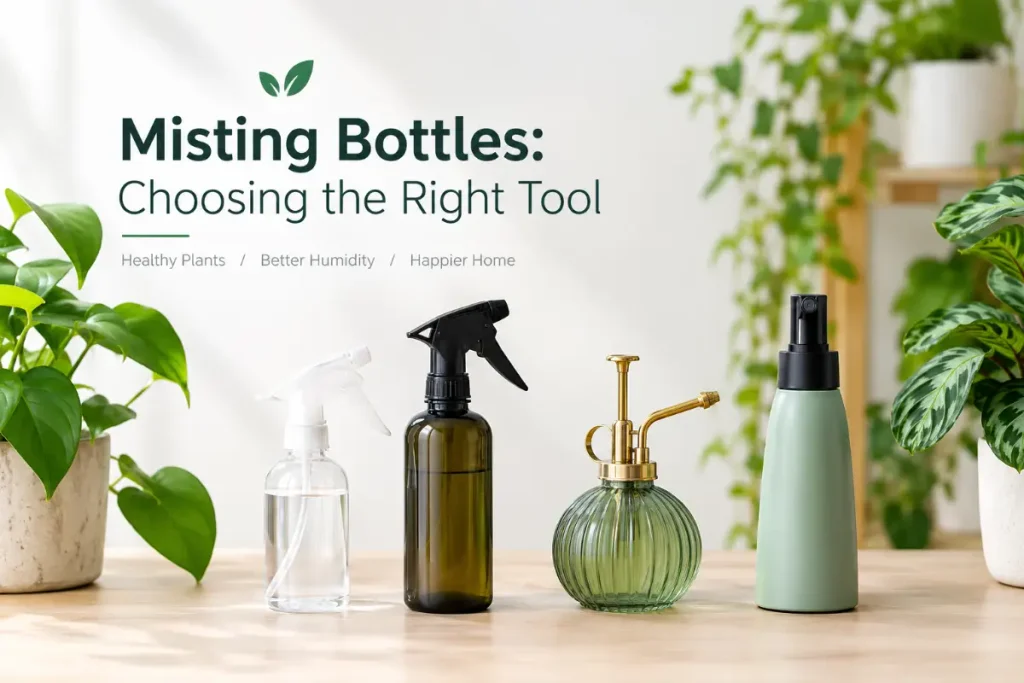
Misting Bottles: Choosing the Right Tool
If you choose to mist your plants, the misting bottle you use affects the quality and effectiveness of the misting.
Fine mist versus stream: A bottle that produces only a coarse stream is not a misting bottle — it is a squirt bottle. Look for bottles with adjustable nozzles that produce a genuine fine mist when turned to the mist setting. The finest mist settings produce the smallest droplets that distribute most evenly and evaporate most quickly with minimal disease risk.
Capacity: A 500ml to one-liter bottle suits most indoor plant misting needs. Smaller bottles require frequent refilling if you have multiple plants or air plants that need regular misting. Larger bottles become heavy and tiring to squeeze for extended misting sessions.
Material: Glass misting bottles are more durable than plastic, do not absorb odors from cleaning products, and look more attractive on display. Plastic bottles are lighter and less breakable. Both functional equivalents for plant care purposes.
Compression pump sprayers: A hand-pump compression sprayer (the type used for garden spraying) builds pressure with a few pumps and then delivers continuous fine mist without repeated squeezing. These are significantly more comfortable for large collections or frequent misting routines than standard trigger-pump bottles.
Cleaning and maintenance: Rinse misting bottles thoroughly with clean water after each use. Residue from fertilizers, neem oil, or other additives left in a bottle can clog the nozzle or contaminate subsequent plain water misting. Disassemble the nozzle periodically and rinse all parts to maintain consistent mist quality.
Integrating Misting Into a Complete Plant Care Routine
For plant owners who find misting genuinely useful for specific plants in their collection, integrating it efficiently into a regular care routine prevents it from becoming a time-consuming obligation.
Designate specific plants for misting: Rather than misting all plants by default, identify the specific plants in your collection that genuinely benefit (air plants, orchids, propagation trays, large-leaved tropical plants for cleaning). Create a mental or written list of these plants. Mist only those plants rather than applying a default practice across the entire collection.
Combine misting with inspection: The close attention that misting requires is an ideal time for the pest and disease inspection that should be part of regular plant care. While misting each plant, look at the leaf undersides for spider mites and aphids, check stem bases for soft spots, and assess the overall vigor and appearance. This inspection-misting combination makes the routine more valuable than either activity alone.
Group misting by plant type: Mist air plants and orchids in one session. Clean large tropical leaves in another session. Mist propagation cuttings on their own schedule. Grouping by purpose and frequency makes the routine more organized than attempting to mist every plant on the same schedule for the same reason.
For the complete guide to how misting fits alongside the other humidity management tools in a comprehensive approach to indoor plant moisture needs, self-watering pots for indoor plants covers the complementary moisture delivery tools that work alongside misting in a complete indoor plant moisture management system.
Conclusion
Misting indoor plants provides genuine benefit for air plants absorbing moisture through their leaves, orchid roots between waterings, propagation cuttings maintaining surface moisture, and large smooth-leaved plants that benefit from cleaning. It provides minimal humidity benefit for most tropical houseplants because the humidity effect is too brief to matter.
For plants that genuinely need high humidity, a humidifier is the correct investment — more effective, less time-intensive, and more consistent than any misting routine. For plants that should not be misted (African violets, cacti, succulents, Mediterranean herbs, hairy-leaved plants), misting actively causes problems.
Match your misting practice to these realities and it becomes a targeted, genuinely useful tool rather than a daily ritual of uncertain benefit. Use it where it works, avoid it where it harms, and invest in a humidifier for the plants that need real, sustained humidity improvement.
Frequently Asked Questions
Does misting actually help indoor plants?
Misting provides genuine benefit for specific situations: air plant hydration, orchid root moisture, propagation cuttings, and leaf cleaning. For raising humidity around tropical houseplants, the effect is too brief (twenty to sixty minutes) to provide meaningful benefit compared to alternatives. A humidifier, pebble tray, or plant grouping provides far more sustained humidity improvement for plants that genuinely need higher humidity.
How often should I mist my indoor plants?
For air plants, two to three times weekly. For orchid roots between waterings, once to twice weekly. For propagation cuttings, several times daily or use a plastic bag enclosure instead. Once or twice monthly or when visible dust accumulates for leaf cleaning. For general ambient humidity purposes in most indoor collections, misting is not the appropriate tool regardless of frequency.
Can misting cause fungal disease on indoor plants?
Yes, in specific conditions. Plants with hairy leaves, plants in poor air circulation, Mediterranean herbs susceptible to powdery mildew, and plants already showing fungal symptoms are all at increased disease risk from misting. Misting in the morning rather than evening, ensuring good air circulation, and using a fine mist that dries quickly reduces disease risk for the plants where misting is appropriate.
Which plants should never be misted?
African violets (brown leaf spots from water contact), cacti and succulents (rot risk), Mediterranean herbs including rosemary and lavender (powdery mildew risk), plants with fuzzy or hairy leaves (trapped moisture causing fungal problems), and any plant currently showing signs of fungal disease. For these plants, misting should be permanently avoided rather than reduced.
Is a humidifier better than misting for tropical plants?
Yes, significantly. A cool-mist humidifier positioned near humidity-loving plants provides continuous, meaningful humidity increases of ten to twenty percentage points or more, sustained throughout the day. Misting provides a brief spike of perhaps five to ten percentage points that dissipates within thirty to sixty minutes. For calathea, maidenhair fern, and other genuinely humidity-demanding plants, a humidifier is the appropriate tool. Misting alone is inadequate for plants with serious humidity requirements.
What water should I use for misting?
Filtered or distilled water prevents the white mineral deposits that tap water leaves on leaves when it evaporates. These deposits are cosmetically unappealing and can slightly reduce photosynthetic efficiency over time. If using tap water for misting, wipe leaves periodically with a damp cloth to remove accumulated mineral residue.