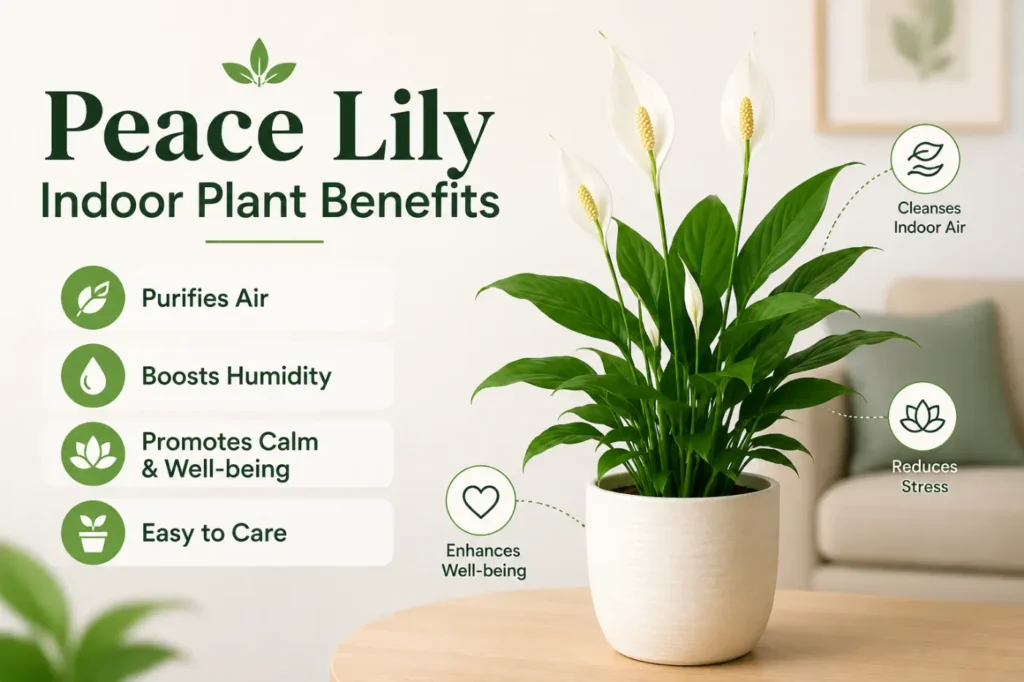
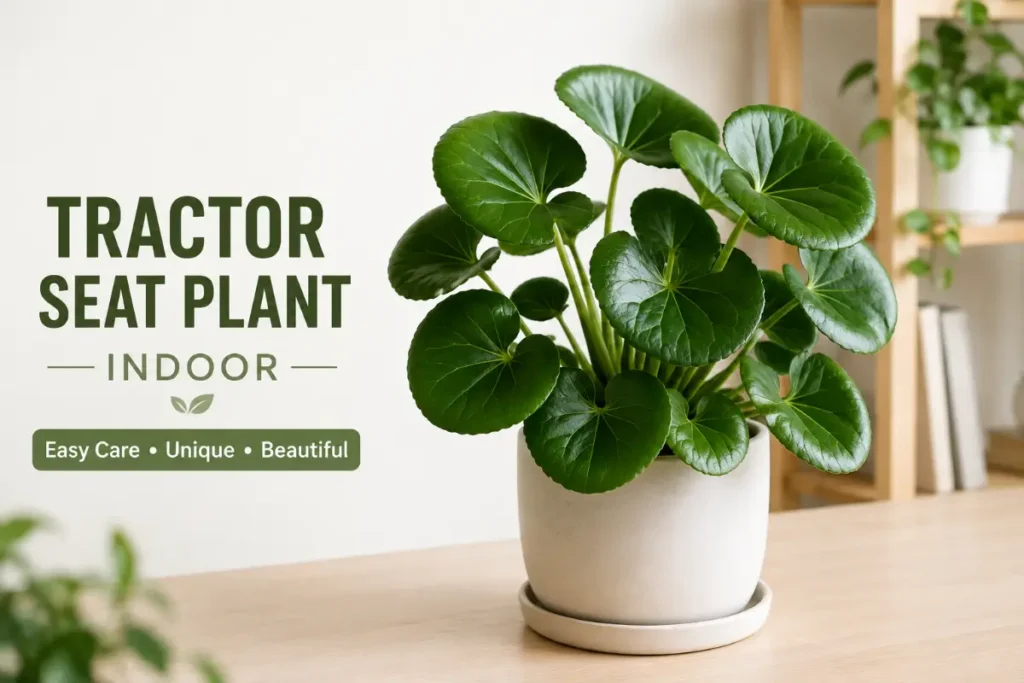
The tractor seat plant indoor is one of those genuinely unusual choices that immediately signals a plant enthusiast who knows more than the standard houseplant canon. Ligularia reniformis (syn. Farfugium japonicum), commonly called tractor seat plant or leopard plant, produces large, rounded, kidney-shaped leaves that can reach twelve to eighteen inches across on long petioles, creating a bold, architectural presence that most tropical foliage plants cannot match at the same leaf scale.
What makes tractor seat plant distinctive as an indoor choice is its preference for conditions that differ meaningfully from the tropical houseplant mainstream: it is a cool-loving, moisture-demanding plant from the moist woodland margins of eastern Asia that performs best in cool, consistently moist, partially shaded conditions rather than the warm, bright environments that suit most popular indoor plants.
Quick Answer
Tractor seat plant indoor care requires cool temperatures between 50 and 70 degrees Fahrenheit rather than the warmth most tropical plants prefer, consistently moist soil that never dries out, medium to bright indirect light without any direct sun, high humidity above 60%, minimal fertilizing every four to six weeks through spring and summer, protection from heat and drafts which cause the dramatic wilting this plant is known for, and a cool indoor position that most other houseplants would find uncomfortably cold.
Understanding Tractor Seat Plant
Ligularia reniformis (Farfugium japonicum) is native to the coastal cliffs, stream banks, and moist woodland margins of Japan, Korea, China, and Taiwan where it grows in consistently cool, moist, partially shaded conditions. In its natural habitat it never experiences the heat or drought of tropical conditions. It grows as a robust, clump-forming perennial in cool, moist environments where it produces its large basal leaves from a crown-forming root system similar to that of a hosta.
The common name tractor seat derives from the large, rounded, slightly concave leaf shape that resembles the seat of an old tractor. The alternative name leopard plant refers to the spotted varieties (Farfugium japonicum ‘Aureomaculatum’) where yellow spots are scattered across the large dark green leaves, though plain-leaved varieties are also widely grown.
Indoors, tractor seat plant performs best in the cool conditions of enclosed porches, sunrooms, cool spare bedrooms, and other spaces that stay below 70 degrees during warm months. In these environments it produces the large, glossy, dramatically scaled leaves that make it one of the most visually impressive foliage plants available.
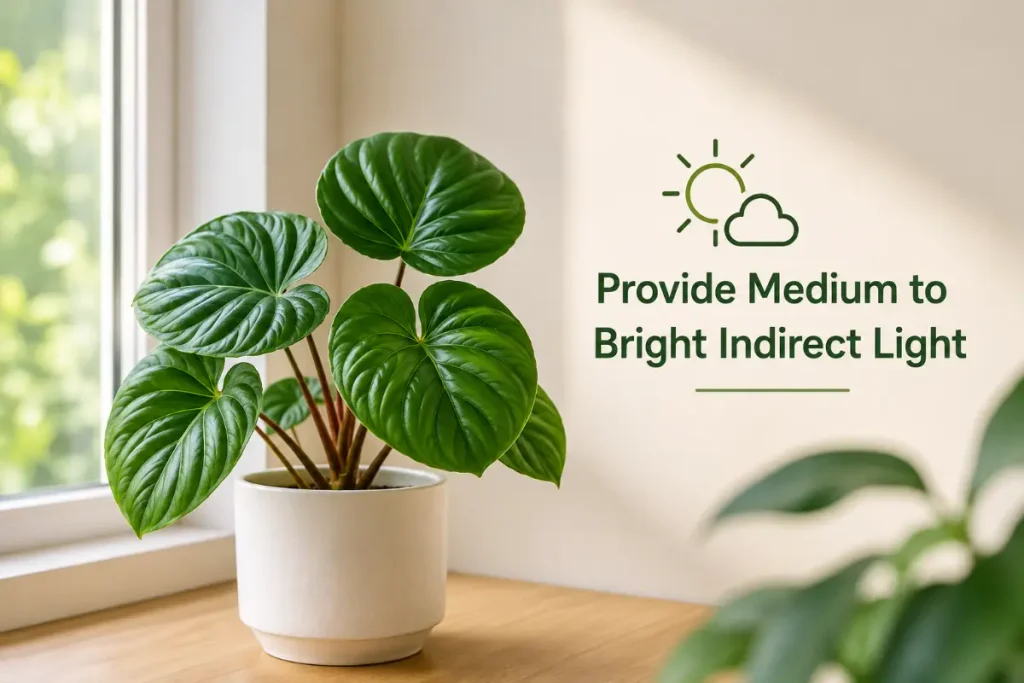
Step 1: Provide Medium to Bright Indirect Light
Tractor seat plant originates in the partially shaded conditions of coastal cliffs and woodland margins where it receives dappled or diffused light rather than direct sun. It performs well across the medium to bright indirect light range but is damaged by any significant direct sun exposure.
What works: Medium to bright indirect light from a north or east-facing window. A position several feet back from a south or west-facing window where direct sun rays do not reach the leaves. A well-lit interior room with ambient light from nearby windows even without direct window access for the plant itself.
What causes problems: Direct sun exposure, even morning sun from an east-facing window for extended periods, causes the large leaf surfaces to bleach and develop brown scorched patches that are permanent once they appear. The large leaf surface area of tractor seat plant makes it more vulnerable to direct sun damage than plants with smaller leaves.
Low light tolerance: Tractor seat plant is more shade-tolerant than most flowering or colorful foliage plants, which makes it useful in interior positions with moderate ambient light. It maintains acceptable growth in north-facing windows and interior positions that would be too dim for most other large-leaved plants.
Step 2: Keep It Cool
This is the most important and most unusual care requirement for tractor seat plant relative to the tropical plants that dominate indoor collections. Tractor seat plant is not a tropical plant. It is a temperate Asian perennial that prefers cool conditions and actually declines in warm temperatures that most tropical houseplants thrive in.
Ideal temperature range: 50 to 70 degrees Fahrenheit. The plant grows most actively and maintains best leaf condition within this cool range. Above 75 degrees the plant shows signs of heat stress including drooping and increased wilting frequency even when soil moisture is adequate.
Below the ideal range: Tractor seat plant is cold-hardy outdoors to approximately 0 degrees Fahrenheit and tolerates much colder conditions than typical indoor plants. Cool indoor positions between 50 and 60 degrees are actually comfortable for this plant.
Heat stress response: The large leaves transpire significant moisture in warm conditions, creating a demand for water that roots cannot always supply quickly enough, causing the dramatic wilting that is the most distinctive stress response of tractor seat plant. Wilted tractor seat plant in warm conditions often recovers overnight when temperatures drop rather than requiring immediate watering.
Practical placement: Cool sunrooms, enclosed porches, cool spare bedrooms near north-facing windows, and other indoor positions that stay below 70 degrees through the year provide the most appropriate conditions. The warm living rooms and heated bedrooms that suit tropical houseplants are genuinely too warm for tractor seat plant to perform at its best.
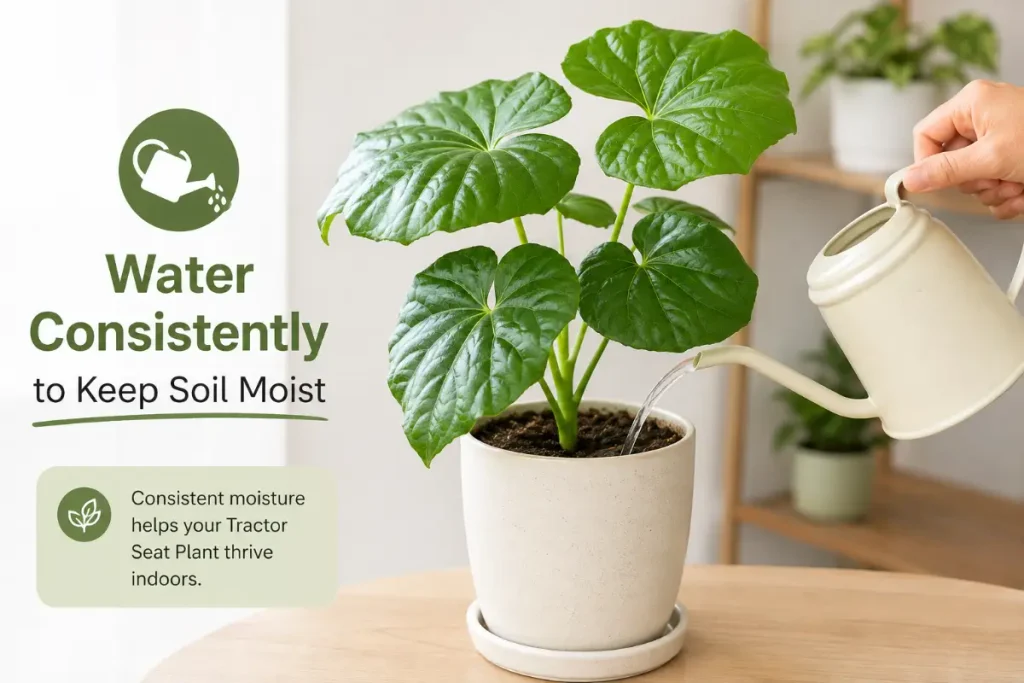
Step 3: Water Consistently to Keep Soil Moist
Tractor seat plant originates in consistently moist coastal and riparian environments. It does not have the drought tolerance of tropical plants with water-storing roots or succulent tissue. The large leaves transpire moisture continuously and the plant requires consistent soil moisture to maintain them in good condition.
The correct approach: Water when the top half inch of soil feels dry. This is shallower than the one or two inch check appropriate for drought-tolerant plants. In a cool position during spring and summer this typically means watering every four to six days. In winter or very cool positions every six to eight days.
The wilting response: Tractor seat plant wilts dramatically and visibly when underwatered. The large leaves droop completely and the entire plant looks collapsed within hours of becoming dry. In cool conditions wilting typically recovers overnight as the plant rehydrates from soil moisture it was unable to access fast enough during the day. In warm conditions, water immediately when wilting is observed.
Signs of overwatering: Yellow leaves starting from older growth. Soft, mushy crown tissue at soil level. Musty soil smell. Root rot in tractor seat plant is less common than in tropical plants since the cool conditions it prefers slow microbial decomposition, but it does occur in genuinely waterlogged conditions.
Step 4: Maintain High Humidity
As a plant from the moist coastal environments of eastern Asia, tractor seat plant prefers consistently high humidity. Its large leaf surfaces lose moisture to the air rapidly and low indoor humidity causes the brown leaf edges and reduced turgidity that make the plant look stressed.
Target humidity: Above 60% for best leaf condition. This is higher than what most US homes maintain naturally and requires active management in most situations.
Effective solutions: A humidifier running nearby provides the most effective sustained humidity for a plant with the large moisture-demanding leaf surfaces of tractor seat plant. A large pebble tray with water beneath the pot. Regular misting every one to two days.
The cool-humidity combination: Because tractor seat plant prefers cool conditions, a cool-mist humidifier suits it better than a warm-mist humidifier and aligns better with the cool environment it prefers overall.
Step 5: Fertilize Sparingly
Tractor seat plant is a moderate feeder that benefits from light seasonal fertilizing but does not need the intensive feeding regimen appropriate for fast-growing tropical foliage plants.
Through spring and summer: A balanced liquid fertilizer at half the label rate every four to six weeks through the active growing season. Less frequent than the biweekly schedule for heavier-feeding tropicals and reflecting tractor seat plant’s more modest growth rate in cool conditions.
What to avoid: High-nitrogen fertilizers that drive soft, weak leaf tissue more prone to wilting and disease. Fertilizing in fall and winter when growth slows significantly.
Organic options: Worm castings top-dressed every six to eight weeks provide gentle, burn-safe nutrition appropriate for the sensitive root systems of this cool-adapted plant. For the complete organic fertilizer guide, worm castings for indoor plants covers every application method with timing guidance for plants with modest nutritional requirements.
Step 6: Protect From Heat Sources and Drafts
Both heat and sudden temperature changes cause the dramatic wilting response that is tractor seat plant’s most visible stress signal. Understanding the specific heat and draft sources in typical indoor environments helps prevent this.
Heat sources to avoid: Forced air heating vents. Radiators and baseboard heaters. South and west-facing windows that receive afternoon sun and radiate heat into the room. The top of refrigerators and other heat-generating appliances.
Draft sources to watch for: Cold drafts from exterior doors and cold windows in winter. Cold air from air conditioning vents in summer. Both temperature extremes stress tractor seat plant, not just warm temperatures. The plant prefers stable, consistently cool conditions rather than temperature variation in either direction.
The wilting diagnostic: When tractor seat plant wilts, check the temperature of its position before automatically watering. If the position is warm, the wilting is likely heat-induced transpiration stress rather than drought stress. Moving to a cooler position or waiting for nighttime temperature drop often resolves heat wilting without additional watering that could lead to overwatering if the soil is still adequately moist.
Step 7: Manage Dormancy Through Winter
Tractor seat plant, as a temperate perennial rather than a tropical plant, has a genuine winter dormancy period where growth slows significantly and the plant’s above-ground appearance may decline.
What happens in winter: Outdoor tractor seat plants die back to the ground in winter in most climates, retreating to the crown root system that overwinters underground. Indoor tractor seat plants in cool positions maintain their leaves through winter but grow very slowly and may drop some older leaves as growth activity decreases.
How to manage it: Reduce watering frequency to every eight to twelve days as growth slows. Stop fertilizing from October through February. Maintain cool, bright conditions. Do not mistake the reduced vigor of winter growth for a care problem since this is the plant’s natural seasonal state.
The spring revival: As day length increases and temperatures remain in the cool preferred range, tractor seat plant resumes active growth producing new leaves from the crown. This spring growth flush produces the largest and most impressive leaves of the year in a well-maintained plant.
The outdoor option: In USDA zones 7 through 10, tractor seat plant grows outdoors as a reliable perennial in shade gardens where it naturalizes and produces increasingly impressive clumps of large leaves year after year. Moving indoor tractor seat plants outdoors for summer in a shaded position provides ideal growing conditions and the plant can be brought back inside before hard frost in fall.
For the complete care guide to cyclamen, which shares tractor seat plant’s preference for cool temperatures and many of the specific indoor placement considerations that distinguish cool-preferring plants from warm-preferring tropical plants, care for cyclamen plant indoors covers the cool-position indoor care approach in full detail.
Tractor Seat Plant Varieties
Farfugium japonicum (plain green) is the most common form with large, glossy, deep green kidney-shaped leaves. The most vigorous and most cold-hardy of the available varieties.
Farfugium japonicum ‘Aureomaculatum’ (leopard plant) produces the same large green leaves marked with irregular yellow spots distributed across the leaf surface. The spotting pattern is most vivid in good light and may fade in very low light.
Farfugium japonicum ‘Argenteum’ has silver-white leaf margins that create a variegated appearance. Less vigorous than the plain green form and slightly more sensitive to light and temperature extremes.
Farfugium japonicum ‘Giganteum’ produces leaves significantly larger than the standard form, reaching up to two feet across in good conditions. Most impressive as a specimen plant but requires more space than standard varieties.
For most indoor growing situations, the plain green species form or the leopard plant spotted variety provides the most reliable performance alongside the distinctive appearance that makes tractor seat plant worth seeking out.
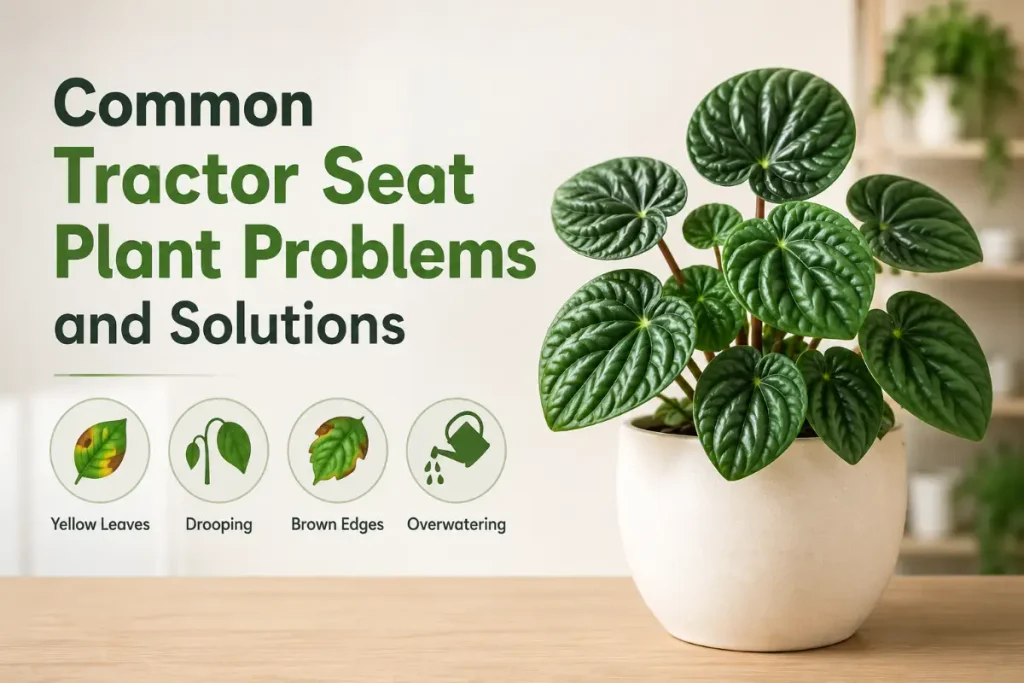
Common Tractor Seat Plant Problems and Solutions
Dramatic wilting despite moist soil: Heat stress from warm temperatures. Move to a cooler position. Check that heating vents are not blowing warm air toward the plant. Wait for nighttime temperature drop which often resolves heat wilting without additional watering.
Brown leaf edges: Low humidity combined with warm temperatures. Increase humidity immediately with a humidifier or large pebble tray. Move to a cooler position.
Yellow lower leaves: Overwatering or natural aging. Check soil moisture and adjust watering if chronic overwatering is suspected. Natural aging of oldest leaves is normal.
Small new leaves: Insufficient light or nutritional deficiency. Improve light conditions and begin or resume fertilizing if the growing season is active.
Faded spotting in leopard plant variety: Insufficient light. Move to brighter indirect light. The yellow spots are most vivid in medium to bright indirect light and fade in very low light conditions.
Tractor Seat Plant Alongside Other Cool-Position Plants
Tractor seat plant’s cool temperature preference creates natural companion planting opportunities with other cool-preferring plants that share its indoor placement needs. Building a cool-position plant grouping around tractor seat plant as the anchor specimen creates a cohesive display that can be maintained with a single care approach rather than managing plants with conflicting temperature requirements.
Ferns: Many temperate fern varieties including maidenhair fern and Japanese painted fern share tractor seat plant’s preference for cool, consistently moist, partially shaded conditions. The fine, feathery texture of ferns creates dramatic visual contrast with the large, smooth, rounded leaves of tractor seat plant.
Hostas: Hostas are natural companions for tractor seat plant in outdoor shade gardens and can be grown indoors in cool, bright indirect light with consistent moisture. Their similarly scaled, rounded to strap-shaped leaves in green and variegated forms complement tractor seat plant without competing visually.
Cyclamen: Sharing the cool temperature preference that distinguishes tractor seat plant from tropical plants, cyclamen provides flowering color alongside tractor seat plant’s bold foliage in cool position displays. The combination of cyclamen’s delicate flowers and tractor seat plant’s dramatic oversized leaves creates one of the most visually sophisticated cool-position indoor plant compositions available.
Oxalis: Several oxalis species including the purple shamrock (Oxalis triangularis) prefer cool, bright conditions and produce fine-textured, richly colored foliage that contrasts with tractor seat plant’s large, smooth leaves. Both benefit from cool bright indirect light and consistent moisture in a display that can be managed as a unified cool-position grouping.
Soil and Repotting for Tractor Seat Plant
Tractor seat plant grows from a crown root system that expands gradually rather than the vigorous root systems of fast-growing tropical plants. It needs repotting less frequently than most other commonly grown indoor plants.
When to repot: Every two to three years when roots begin emerging from drainage holes or when the crown has visibly expanded to fill the pot. Spring is the ideal repotting time when the plant is entering its most active growth phase.
Soil: A rich, slightly moisture-retentive potting mix suits tractor seat plant better than the fast-draining mixes appropriate for drought-tolerant plants. Standard potting mix without significant perlite addition, or with no more than 10 to 15% perlite, provides the moisture retention that complements this plant’s consistent moisture requirement. Adding 20% worm castings to the mix provides the organic richness appropriate for a plant from humus-rich woodland margin soils.
After repotting: Allow four to six weeks before resuming fertilizing. Maintain cool temperatures and consistent moisture throughout the establishment period. For guidance on post-repotting care timing and nutrition resumption, do you need nutrients after repotting a indoor plants covers the establishment principles that apply to cool-adapted perennial plants like tractor seat plant as fully as to tropical houseplants.
Conclusion
Tractor seat plant indoor care rewards the plant owner who accepts and accommodates its distinctly non-tropical preferences. Cool temperatures that most houseplant owners consider uncomfortably cold for their plants. Consistently moist soil that never dries out. High humidity above 60%. Medium to bright indirect light without any direct sun. And the seasonal rhythm of active spring and summer growth followed by slower winter maintenance.
In the cool, bright, moist conditions it prefers, tractor seat plant produces some of the largest and most dramatically scaled leaves of any commonly available indoor plant. That visual impact, combined with the distinctiveness of growing a plant that most indoor gardeners have never encountered, makes tractor seat plant one of the most rewarding unusual choices for plant owners ready to move beyond the standard tropical houseplant collection.
Frequently Asked Questions
Why does my tractor seat plant keep wilting?
Tractor seat plant wilts from two distinct causes that require different responses. Heat-induced wilting occurs when temperatures above 70 to 75 degrees cause transpiration demand to exceed the rate at which roots can supply water. This wilting recovers overnight when temperatures drop without additional watering. Drought-induced wilting occurs when soil moisture is genuinely depleted. Check soil moisture before watering a wilted plant: if the top inch is still moist, the cause is heat rather than drought and the solution is moving to a cooler position rather than watering.
What temperature does tractor seat plant prefer indoors?
Between 50 and 70 degrees Fahrenheit is the ideal indoor temperature range. The plant grows most actively and maintains the best leaf condition within this cool range. Above 75 degrees the plant shows heat stress through increased wilting frequency. Below 50 degrees growth slows but the plant is not harmed since it is cold-hardy to approximately 0 degrees Fahrenheit outdoors. Cool sunrooms, enclosed porches, and cool spare bedrooms provide the most appropriate indoor temperature conditions.
How often should I water tractor seat plant indoors?
Water when the top half inch of soil feels dry, typically every four to six days in active growing season and every six to eight days in cooler slower-growth periods. Tractor seat plant does not have the drought tolerance of tropical plants and the large leaves transpire moisture continuously. Consistent moisture maintenance is more important for this plant than for drought-tolerant plants that withstand complete drying between waterings.
Can tractor seat plant survive in warm indoor conditions?
It survives but does not thrive in warm conditions above 75 degrees. Frequent heat-induced wilting occurs even when soil moisture is adequate. Leaf quality declines. Growth slows compared to cool-position performance. For growers who can only provide warm indoor conditions, accepting reduced performance and ensuring maximum humidity and consistent moisture helps but does not fully compensate for the temperature mismatch.
Is tractor seat plant safe for pets?
Ligularia/Farfugium species are not listed among the most commonly toxic houseplants to cats and dogs. However, any plant material ingested in quantity can cause gastrointestinal upset. Consult the ASPCA database for the most current toxicity information. The large leaf size and ground-level growth habit of tractor seat plant make it physically accessible to pets that interact with floor-level plants.
Can I grow tractor seat plant outdoors in summer?
Yes, in a shaded outdoor position. Tractor seat plant thrives in partial to full shade outdoors in consistently moist soil where it grows much more vigorously than indoors, producing larger leaves and eventually forming impressive clumps. Move outdoors after last frost in a shaded position away from afternoon sun. Bring back indoors before hard frost in fall. In USDA zones 7 through 10 it can be planted permanently in outdoor shade gardens where it naturalizes reliably.