
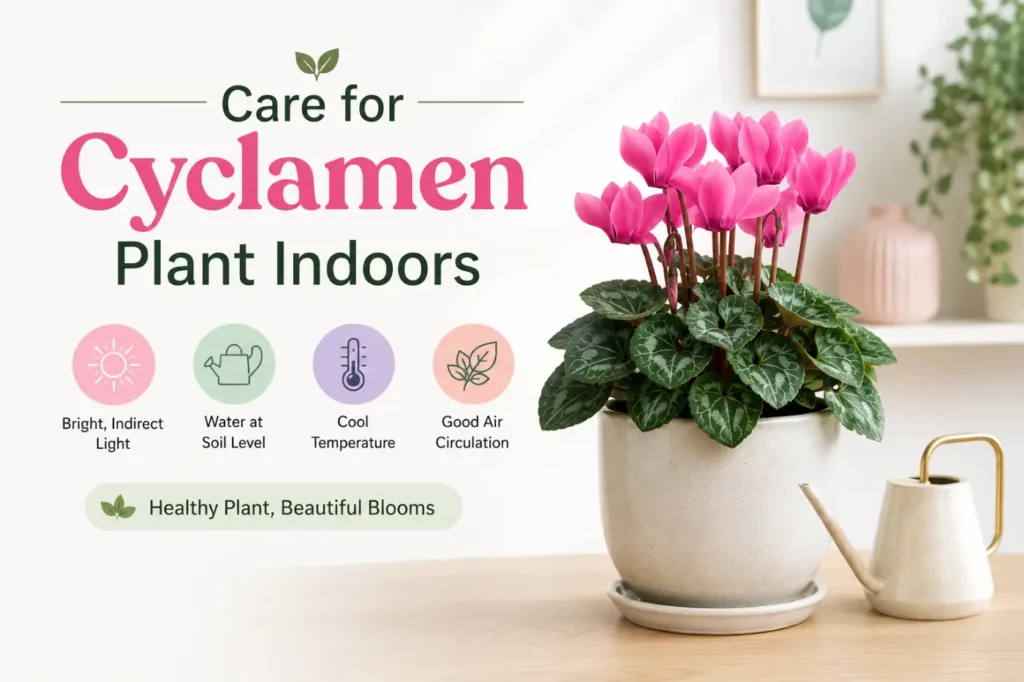
Care for cyclamen plant indoors is genuinely different from most other flowering houseplants, and that difference is what trips up most people who buy one at a grocery store or garden center in fall or winter. Cyclamen is a cool-weather bloomer that wants almost the opposite conditions from the tropical houseplants most of us are used to caring for. It prefers cool temperatures, moderate watering from the bottom rather than the top, bright indirect light, and a summer dormancy period where it looks completely dead but is very much alive underground.
Understanding those specific requirements is what separates the plant owner who keeps a cyclamen blooming for four to six months from the one who watches it collapse within three weeks of purchase.
Quick Answer
Care for cyclamen plant indoors requires cool temperatures between 50 and 65 degrees Fahrenheit, bright indirect light away from heat sources, bottom watering when the soil surface feels dry, high humidity without misting the foliage or crown, fertilizing every two weeks through the bloom period, and a summer dormancy where the plant is kept dry and cool until it regrows in late summer or fall. The most common mistakes are warm temperatures shortening the bloom period and overwatering the crown which causes rot.
Understanding What Cyclamen Actually Is
Cyclamen persicum, the most common florist cyclamen, is native to the rocky hillsides and forest margins of the Mediterranean and Middle East. In its natural habitat it grows in cool, wet winters and hot, dry summers. The corm (a thickened underground stem similar to a bulb) survives the dry summer heat underground in dormancy, then sends up new growth when fall rains and cooler temperatures arrive.
This seasonal rhythm is fundamental to cyclamen care indoors. The plant is not a year-round bloomer. It has a genuine seasonal cycle that indoor care should work with rather than against.
The florist cyclamen sold at grocery stores and garden centers in fall and winter is at the beginning of its natural bloom cycle. With the right care it blooms for four to six months. With warm indoor temperatures and inconsistent watering it collapses in weeks. The difference between those outcomes is entirely about matching care to the plant’s natural preferences.
Step 1: Temperature Is the Most Important Factor
If there is one thing to understand about cyclamen care, it is this: warm temperatures shorten the bloom period more reliably than any other factor. This is a cool-weather plant that actively performs better in conditions that feel uncomfortably chilly to most people.
Ideal temperature range: 50 to 65 degrees Fahrenheit. The lower end of this range produces the longest blooms and most vibrant flower color. The higher end is the maximum before bloom quality deteriorates noticeably.
What warm temperatures do: Above 68 degrees consistently, cyclamen flowers fade faster, new buds develop and open more quickly before the previous flowers have finished, and the overall bloom period shortens significantly. Above 75 degrees the plant struggles to maintain bloom at all and begins declining.
Practical placement: A cool north-facing windowsill, a cool room that does not receive direct heating, a bright spot in an unheated sunroom or enclosed porch in mild climates. The coldest room in the house that still receives adequate light is almost always the right location for cyclamen.
What most people do wrong: Place cyclamen in a warm living room near a heating vent or radiator where temperatures stay 70 to 75 degrees. The blooms last two to three weeks instead of four to six months.
Step 2: Provide Bright Indirect Light
Cyclamen needs good light to continue producing new buds through its bloom period but is damaged by direct intense sun, particularly the warm afternoon sun of south and west-facing windows.
What works: Bright indirect light from a north or east-facing window. A few feet back from a south or west-facing window where direct sun does not hit the leaves or flowers. A cool, bright room with ambient light from multiple windows.
What causes problems: Direct afternoon sun wilts flowers rapidly and scorches leaves. Very low light stops new bud production even when temperature and watering are correct, causing the plant to use its existing buds without replacement.
The light-temperature balance: The cool north-facing windowsill that provides the ideal temperature for cyclamen often provides less light than ideal. This trade-off is real. Prioritize temperature over light when choosing a position since temperature has a bigger impact on bloom duration than light does within the reasonable range for both.
Step 3: Water From the Bottom, Never the Top
Cyclamen corms rot easily when water contacts the crown (the top of the corm where leaves and flower stems emerge). This makes bottom watering the correct technique for cyclamen, not top watering as for most other houseplants.
How to bottom water: Place the cyclamen pot in a shallow dish or saucer filled with water. Allow the plant to absorb water through the drainage holes for 20 to 30 minutes until the soil surface feels moist. Remove the pot from the water and allow it to drain completely before returning it to its position.
How often: Water when the soil surface feels dry to the touch, typically every five to seven days in typical indoor conditions during the bloom period. Cyclamen prefers to stay on the drier side of moist rather than consistently wet.
What happens with top watering: Water pooling at the crown creates the constantly moist conditions where the corm rot that kills cyclamen most commonly develops. Even careful top watering that avoids the crown leaves the surrounding soil too wet for too long in most cases.
Signs of overwatering: Yellow leaves that collapse suddenly. Soft, mushy stems at the base near the soil. The corm feeling soft rather than firm when gently pressed.
Signs of underwatering: Leaves and flowers wilting together. The soil pulling away from pot sides. The plant recovering quickly after bottom watering confirms underwatering rather than disease.
Step 4: Manage Humidity Without Wetting the Foliage
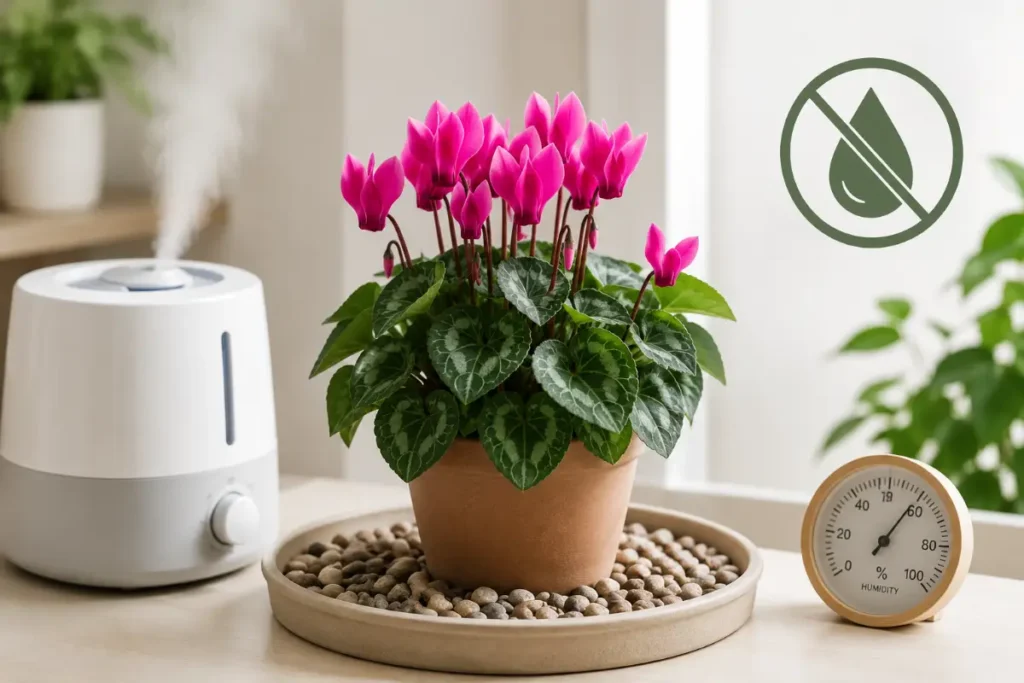
Cyclamen appreciates moderate humidity above 40% but its dense, velvety leaves and the rot-prone crown make misting genuinely harmful rather than helpful. Water droplets sitting on cyclamen leaves and crown create conditions for botrytis (grey mold) which spreads rapidly in the cool, moist conditions cyclamen otherwise prefers.
Effective humidity solutions: A pebble tray with water beneath the pot raises local humidity through evaporation without any water contacting the plant directly. Grouping cyclamen with other plants raises collective humidity through combined transpiration. A humidifier running nearby provides sustained humidity benefit without any direct plant contact.
What to avoid: Misting the leaves or flowers. Placing the plant where condensation from windows drips onto it. Placing it in a bathroom where shower steam regularly wets the foliage.
Step 5: Remove Spent Flowers and Yellow Leaves Correctly
Deadheading spent flowers and removing yellow leaves is standard cyclamen maintenance but the method matters as much as the action. Leaving the base of cut stems attached to the plant creates entry points for rot that spreads into the crown.
Correct technique: Grasp the flower stem or leaf petiole at its base where it connects to the crown and twist gently while pulling upward with a slight pulling motion. The stem should separate cleanly from the corm without leaving a stub. Do not cut with scissors since cut stubs left attached to the corm invite rot.
How often: Deadhead spent flowers as soon as petals begin to drop. Remove yellow leaves as soon as they appear. Keeping the crown clean of dead material significantly reduces disease risk.
Why this matters: Cyclamen in cool, humid conditions is susceptible to botrytis if dead plant material accumulates at the crown. Regular deadheading and leaf removal is disease prevention as much as aesthetics.
Step 6: Fertilize Through the Bloom Period
Cyclamen benefits from light, regular fertilizing through its bloom period to support continuous bud production and maintain the foliage health that keeps the plant looking attractive for months.
What works: A balanced liquid fertilizer at half the label rate every two weeks through the bloom period. A low-nitrogen, higher-potassium and phosphorus formula suits flowering plants better than nitrogen-forward formulas that drive leaf growth at the expense of flower production.
Organic options: Banana peel water applied every two to three weeks provides the potassium that supports flower development gently and without burn risk. For the complete guide to potassium-supporting natural fertilizer options for flowering houseplants, natural fertilizer for indoor plants covers banana peel water and every other effective organic approach for bloom-stage plants.
When to stop: Stop fertilizing when flowering ends and the plant enters dormancy. Resume when new growth appears in late summer or early fall.
Step 7: Manage Summer Dormancy Successfully
This is the step most cyclamen owners get wrong because the plant looks completely dead in summer and the natural response is to assume it has failed and throw it away. A cyclamen in summer dormancy is not dead. The corm is alive and dormant underground, waiting for cooler temperatures and reduced light to trigger a new growth cycle.
What to do when flowering ends: Stop watering gradually as the leaves yellow and die back. Eventually stop watering entirely. Store the pot in a cool, dry location with moderate light, not complete darkness, through summer. A cool basement, an unheated garage in mild climates, or a shaded outdoor spot (in USDA zones 7 and above) are appropriate storage locations.
When to resume watering: In late summer or early fall, typically August or September, begin watering very lightly. New growth will emerge from the corm within two to four weeks as the plant senses the change in conditions. Resume normal bottom watering, fertilizing, and cool placement as the new growth develops and buds begin to form.
What happens if you keep watering: A cyclamen kept in warm conditions and watered through summer often rots from the corm outward during the heat. The rest period in dry conditions is genuinely necessary for corm health and the next season’s performance.
Common Cyclamen Problems and Solutions
Flowers collapsing within two to three weeks of purchase: Almost always caused by warm temperatures above 68 degrees. Move immediately to the coolest bright location available.
Leaves yellowing without wilting: Normal as older leaves age and are replaced by new growth. Remove yellowed leaves by twisting rather than cutting and monitor for new growth production.
All leaves wilting simultaneously: Either severe underwatering or corm rot from overwatering. Bottom water immediately and assess the corm firmness. A firm corm indicates underwatering. A soft, mushy corm indicates rot.
Grey fuzzy mold on leaves, stems, or flowers: Botrytis from insufficient air circulation combined with moisture on plant surfaces. Remove affected material immediately, improve air circulation, and ensure no water contacts foliage during watering.
No new buds appearing despite healthy foliage: Usually insufficient light or temperatures too warm to support continued bud production. Improve light or reduce temperature.
Buying Cyclamen: What to Look for at the Store
Most cyclamen problems begin at the point of purchase when the wrong plant is chosen. Selecting a healthy specimen from the start gives you the best chance of the long bloom period cyclamen is capable of delivering with correct care.
What to look for: Choose a plant with more buds than open flowers. The buds are the ones still tucked down close to the foliage or just beginning to emerge from the leaf canopy on short stems. A plant with many open flowers and few visible buds is closer to the end of its bloom cycle than the beginning, regardless of how spectacular it looks in the store.
Look for firm, healthy foliage with no yellowing, no visible botrytis mold, and no soft spots at the crown. Check the soil moisture: cyclamen sitting in wet soil at the store has already been watered incorrectly and may have crown rot beginning before you bring it home.
Avoid: Plants near heating vents at the store entrance, which are common placements that stress the plant before purchase. Plants with more open flowers than buds. Any sign of grey fuzzy mold. Soft or mushy areas at the crown when gently pressed.
Transport carefully: Cyclamen in transit from a heated store to a cold car experiences temperature shock that can cause flower drop if the temperature differential is severe. A bag or paper wrapping during the walk to the car reduces cold shock for plants purchased in winter.
Cyclamen and Pets
Cyclamen contains saponin compounds concentrated primarily in the corm and roots rather than the foliage. While the above-ground parts contain lower concentrations, the entire plant is considered toxic to dogs and cats according to the ASPCA.
Symptoms of cyclamen ingestion in pets include drooling, vomiting, and gastrointestinal irritation from small amounts of foliage. Consumption of the corm in larger quantities causes more serious symptoms including cardiac issues that require immediate veterinary attention.
In typical indoor placements where pets might chew on foliage but are unlikely to dig up and consume the corm, the risk from cyclamen is real but lower than for plants with uniformly high toxicity throughout their tissue. Still, households with pets that regularly chew houseplants are better served by non-toxic flowering alternatives rather than cyclamen on accessible surfaces.
Cyclamen as a Gift Plant: Setting the Recipient Up for Success
Cyclamen is one of the most popular gift plants during the fall and holiday season, and it is also one of the most frequently killed by recipients who do not know its specific care requirements. If you are giving cyclamen as a gift or have received one, including or seeking out care information specific to this plant’s unusual preferences makes a meaningful difference in outcome.
The key information to pass along: keep it cool (the coolest bright spot available), water from the bottom only, do not mist, and expect a summer dormancy where it appears dead before regrowing in fall. Those four points cover the most common care mistakes and give a recipient cyclamen the best chance of performing for the full four to six month bloom period it is capable of delivering with correct care.
For broader context on the range of houseplants that benefit from cool temperatures and specific seasonal care routines that differ from standard tropical plant care, polka dot plant care indoor and care for cyclamen plant indoors together cover the seasonal and temperature-specific care approaches that make cool-weather flowering plants successful over multiple bloom periods rather than as single-season purchases.
Conclusion
Care for cyclamen plant indoors is fundamentally about respecting a cool-season Mediterranean plant’s specific seasonal preferences rather than applying the tropical houseplant care approach that works for most other flowering plants. Cool temperatures between 50 and 65 degrees are the single most important factor. Bottom watering that protects the rot-prone crown is the correct technique. Bright indirect light without direct sun. Moderate humidity without any water contacting leaves or crown. Light fertilizing through the bloom period. And a dry summer dormancy that lets the corm rest and recharge for the next season.
Follow those steps and a single cyclamen plant purchased in fall can reliably bloom for four to six months and be successfully brought through dormancy to bloom again the following season. That multi-season longevity is what makes cyclamen worth learning rather than treating as a disposable seasonal decoration.
Frequently Asked Questions
How long do cyclamen plants bloom indoors?
With proper cool-temperature care between 50 and 65 degrees Fahrenheit, cyclamen blooms for four to six months indoors. In warm indoor environments above 68 to 70 degrees the bloom period shortens to two to four weeks. Temperature is the single biggest factor determining how long a cyclamen blooms indoors, which is why placement in the coolest bright location available is the most important care decision.
Why did my cyclamen die so quickly?
Most cyclamen that die quickly indoors are kept too warm. The warm living rooms and heated spaces where most houseplants thrive are too hot for cyclamen to bloom long. The plant uses its existing buds rapidly in warm temperatures without producing replacements and collapses within weeks. Overwatering the crown causing corm rot is the second most common cause of rapid cyclamen decline. Both are entirely preventable with correct placement and bottom watering technique.
Can I save a cyclamen after it stops blooming?
Yes. Allow the plant to go dormant naturally by stopping watering as leaves yellow and die back. Store the pot dry and cool through summer. Resume light watering in late summer and the plant will produce new growth and bloom again in fall. Many cyclamen enthusiasts keep the same plants for five or more years through this annual dormancy-and-regrowth cycle.
Should I mist my cyclamen?
No. Misting cyclamen creates conditions for botrytis grey mold on the dense foliage and at the rot-prone crown. Increase humidity through a pebble tray with water beneath the pot or a nearby humidifier instead. Neither method risks the fungal disease that misting encourages in cool, humid cyclamen conditions.
What temperature is too warm for cyclamen indoors?
Consistently above 68 degrees Fahrenheit reduces bloom quality and duration noticeably. Above 72 to 75 degrees the plant struggles to maintain bloom at all and begins declining. Cyclamen performs best in the 50 to 65 degree range that most people consider uncomfortably cool for living spaces, which is why a cool spare room, north-facing windowsill away from heat sources, or cool sunroom is a better environment than a warm living room.
Can cyclamen be grown outdoors in the US?
Yes, in USDA hardiness zones 7 through 9 where winter temperatures do not drop below approximately 10 to 15 degrees Fahrenheit. In these zones cyclamen can be planted outdoors as a perennial ground cover in shaded garden beds. In colder zones it is strictly an indoor or protected plant. The summer dormancy period is naturally managed outdoors by dry summer conditions in Mediterranean climates.
Pingback: Watering Indoor Plants From the Bottom: When It Works (2026 Guide) - Plant Quill