White bird of paradise indoor plant care is one of those topics where the gap between what nurseries tell you and what actually keeps the plant thriving is wider than for most houseplants. The white bird of paradise (Strelitzia nicolai) is sold as a bold, architectural statement plant that brings tropical drama to any interior. What the plant tag often does not mention is that it is genuinely one of the most light-hungry common houseplants available, and the bright, tropical look that draws people to it in the store is difficult to maintain in the average home without understanding exactly what this plant needs.
The good news is that when its needs are met, white bird of paradise is a genuinely spectacular plant that grows fast, stays healthy with minimal fuss, and makes an impact that few other houseplants can match. This guide covers everything you need to know to keep yours thriving.
Quick Answer
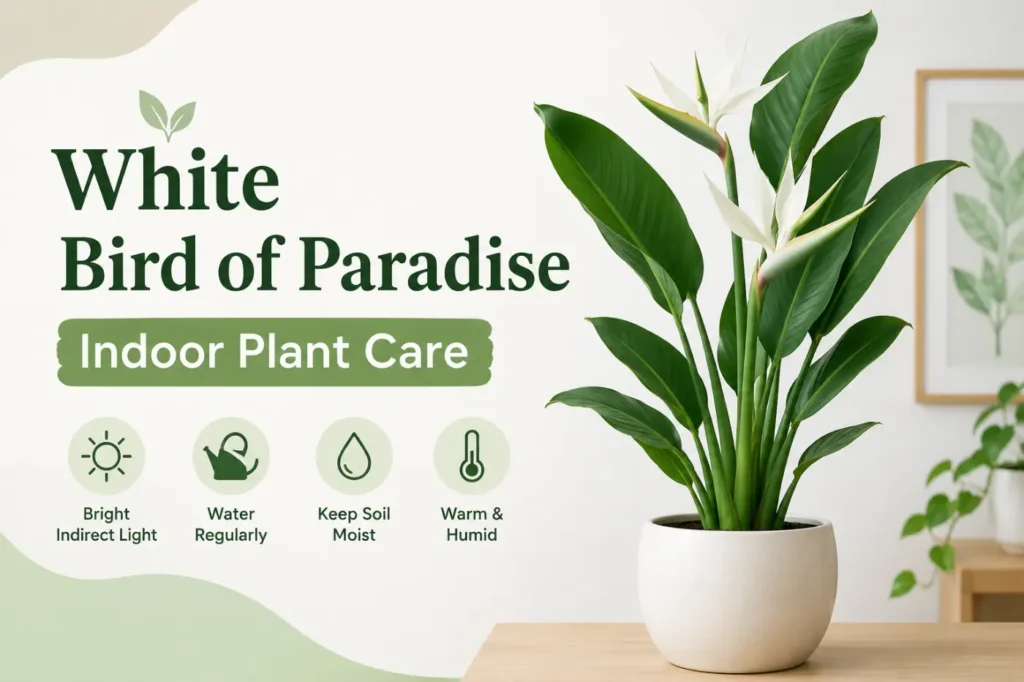
White bird of paradise indoor plant care requires the brightest light you can provide (ideally direct sun through a south or west-facing window for at least four to six hours daily), watering when the top two inches of soil dry out, well-draining soil with 20 to 30% perlite added, temperatures above 60 degrees Fahrenheit, high humidity when possible, and fertilizing every two weeks through spring and summer. Leaf splitting is normal outdoors but can indicate insufficient light or low humidity indoors. Repot every one to two years as roots become pot-bound.
Understanding What White Bird of Paradise Actually Is
Before getting into care specifics, understanding the plant’s natural origin explains every care requirement.
Strelitzia nicolai grows naturally in the coastal regions of South Africa and KwaZulu-Natal, where it reaches 20 to 30 feet tall in dense thickets in warm, humid, subtropical conditions. In its natural habitat it receives intense direct tropical sunlight for most of the day, warm temperatures year-round, high humidity from coastal air, and nutrient-rich soil from decomposing organic matter in subtropical forests.
Every care requirement for white bird of paradise indoors traces back to this origin. The intense light requirement exists because this is a plant that evolved in full tropical sun. The sensitivity to cold exists because its native habitat never experiences frost. The humidity preference exists because it is a subtropical coastal plant. The fast growth when conditions are right exists because in South Africa it competes aggressively with surrounding vegetation for resources.
Knowing this explains why putting a white bird of paradise in a north-facing room and watering it weekly produces a struggling, declining plant, while putting it in the sunniest window in the house and giving it what its biology expects produces the dramatic, fast-growing specimen that makes plant owners genuinely excited.
Light: The Make or Break Factor
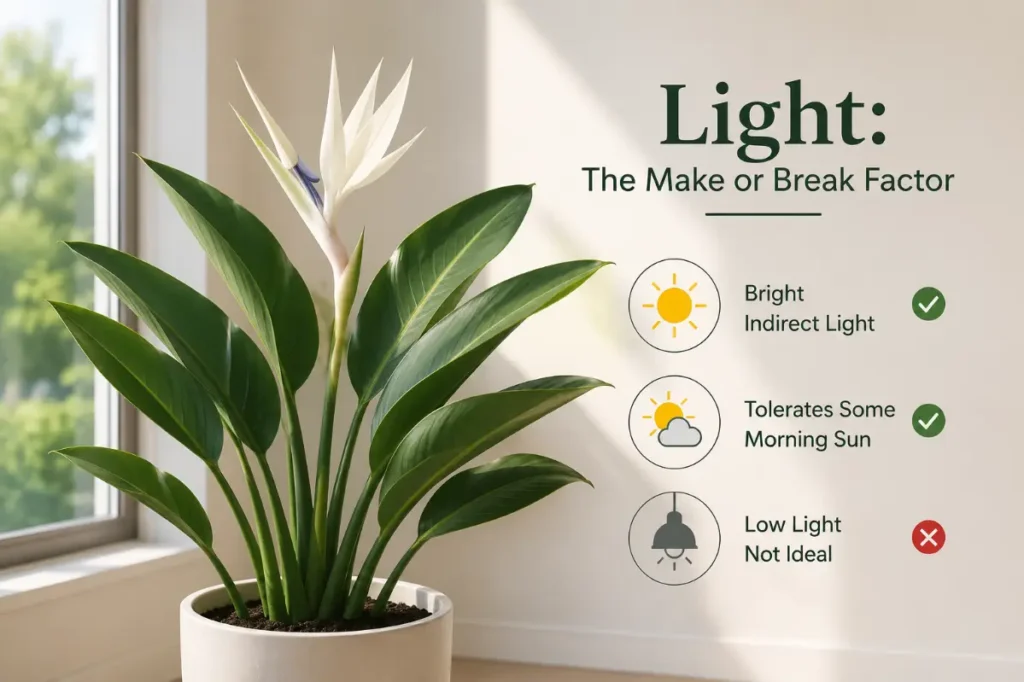
Light is the single most important care factor for white bird of paradise indoors, and most plants sold in the US are placed in conditions far dimmer than they need to truly thrive.
What the plant actually needs: Direct sunlight for at least four to six hours daily, with the remainder of the day in bright indirect light. A south or west-facing window is ideal. A space that receives afternoon sun through a large window or a sunroom or conservatory is the best indoor environment this plant can have.
What happens in insufficient light: Slow growth or no growth. Leaves that are smaller and more narrow than the characteristic large paddle shapes the plant produces in good light. Pale green rather than rich deep green leaf color. Failure to produce new leaves despite looking otherwise healthy. Long petioles (leaf stems) that stretch toward the nearest light source.
What happens in good light: Rapid growth of one to two new leaves per month through the growing season. Large, broad, dramatic leaf blades on strong upright petioles. Rich green color. An overall sense of vigor that makes the plant look alive rather than just surviving.
Grow lights as a supplement: In homes where no window provides adequate natural light, a high-output LED grow light positioned within two feet of the plant and running for twelve to fourteen hours daily can supplement natural light. This is a significant investment of equipment and electricity cost, which is worth considering before purchasing a white bird of paradise for a dimly lit space.
Watering: Finding the Balance Between Too Much and Too Little
White bird of paradise has substantial roots that store water, giving it reasonable drought tolerance in its native habitat. Indoors, this translates to a plant that prefers to dry out somewhat between waterings rather than staying consistently moist.
How to know when to water: Push your finger two inches into the soil. When that depth feels dry, the plant is ready for water. In a bright sunny spot during summer, this might mean watering every seven to ten days. In lower light or during winter, it might be every fourteen to twenty-one days. Following a calendar rather than the soil moisture level is one of the most common care mistakes.
How to water: Water thoroughly until it flows from the drainage holes, ensuring the entire root zone receives moisture. Empty the saucer beneath the pot after thirty minutes to prevent the roots from sitting in standing water which promotes root rot.
Signs of overwatering: Yellow leaves starting from the lower sections of the plant. Soil that stays wet for more than ten to fourteen days. A musty smell from the pot. Soft, mushy areas at the base of the plant near the soil. Root rot is the most common cause of white bird of paradise death in indoor settings.
Signs of underwatering: Leaves that curl or roll inward along their length. Brown, dry leaf edges. Soil that pulls away from the sides of the pot as it dries and shrinks. The plant leaning away from its normal upright position.
Soil: Drainage Is Everything
White bird of paradise roots are large, fleshy, and prone to rot when kept in poorly draining soil. The standard commercial potting mix holds too much moisture for this plant’s preferences and benefits significantly from amendment.
The right soil mix: Combine 60 to 70% standard potting mix with 20 to 30% perlite and optionally 10% coarse sand. This combination drains freely after watering while retaining enough moisture for the large root system to access between waterings. The perlite and sand components create the drainage channels that prevent the waterlogging that causes root rot.
What not to use: Garden soil, which compacts and drains poorly in pots. Standard potting mix without drainage amendment, which stays wet too long for white bird of paradise roots. Any mix marketed as moisture-retaining since this plant needs the opposite.
For a complete guide to building the right soil mix for tropical plants like white bird of paradise, soil mixture for indoor plants covers every component with exact ratios and the role each ingredient plays in creating the drainage and aeration this plant’s root system requires.
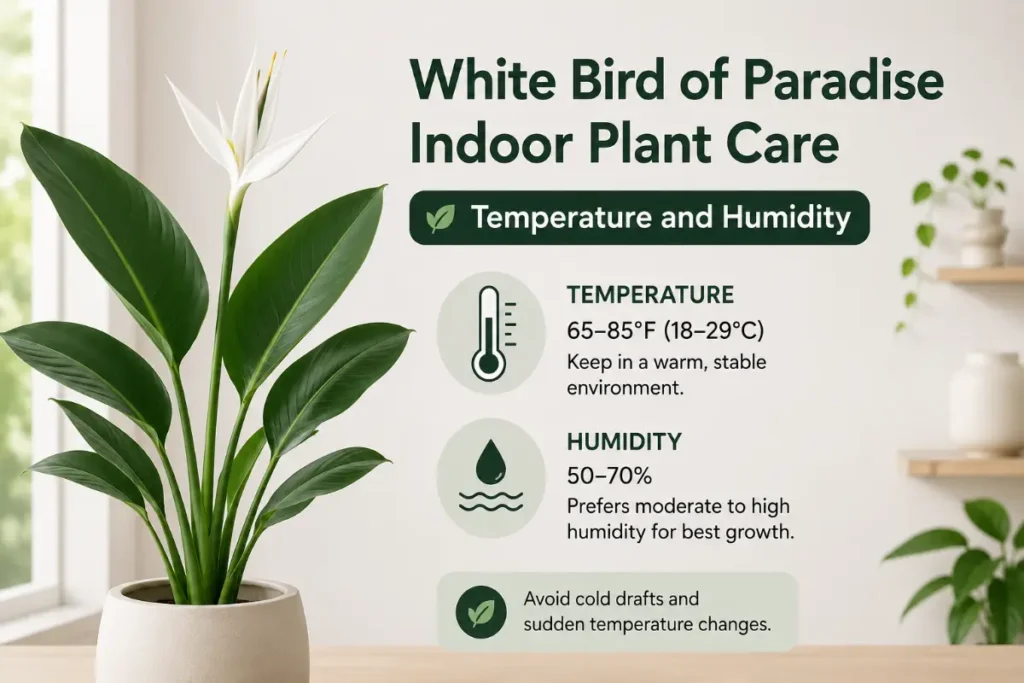
Temperature and Humidity
Temperature: White bird of paradise prefers temperatures between 65 and 85 degrees Fahrenheit and declines noticeably below 60 degrees. Keep it away from cold windowpanes in winter, exterior doors that let in cold drafts, and air conditioning vents that blow cold air directly onto the foliage. Cold temperature stress manifests as yellowing, darkening leaves and halted growth that can persist for weeks after the cold exposure ends.
Humidity: The plant prefers humidity above 50% but tolerates the lower humidity of heated indoor environments better than many tropical plants. In very dry indoor air during winter heating season, brown tips develop on the leaf edges. A pebble tray with water beneath the pot raises local humidity around the plant. A nearby humidifier running during the driest months prevents the tissue damage that very low humidity causes on the large leaf surfaces.
Fertilizing for Fast, Healthy Growth
White bird of paradise is a hungry feeder during its active growth period. In its native subtropical habitat it grows rapidly with access to the nutrients in rich decomposing organic matter. Indoors it depends on what you provide.
During spring and summer: Feed every two weeks with a balanced liquid fertilizer at the label-recommended rate or slightly above since this is a vigorous feeder. A fertilizer with a slightly higher nitrogen content supports the fast leaf production that makes this plant so impressive in good growing conditions.
During fall and winter: Reduce to monthly feeding or stop entirely during the darkest months when growth slows.
Organic vs synthetic: Both work for white bird of paradise. Organic options including worm castings top dressed every six to eight weeks and fish emulsion liquid fertilizer every two weeks through summer provide nutrition alongside the soil biology benefits that support long-term root health. Synthetic slow release granules applied at the start of the growing season provide convenient sustained nutrition through spring and into summer without biweekly applications. For the complete comparison of fertilizer options for large tropical houseplants, best liquid fertilizer for indoor plants covers every product with guidance on which suits vigorous tropical feeders best.
Why White Bird of Paradise Leaves Split Indoors
Leaf splitting is one of the most frequently asked questions about this plant. Outdoors, the large leaves develop natural splits along their lateral veins, which allows wind to pass through without tearing the entire leaf. This splitting is a natural adaptive feature of the species in windy outdoor conditions.
Indoors, white bird of paradise leaves often do not develop these splits because indoor air is still rather than moving. The splits develop in response to wind stress, which plants indoors rarely experience.
Leaves can also split from physical damage if bumped or caught on door frames during handling, from low humidity that makes leaf tissue brittle and prone to tearing, and from insufficient light that produces thinner, more fragile leaf tissue than good light conditions create.
If your indoor plant is not splitting and you want the characteristic split-leaf look, running a small fan nearby and increasing light intensity encourages the splitting response. If your plant is splitting and you would prefer it did not, removing the air movement and maintaining good humidity reduces but does not eliminate the tendency.
Repotting: When and How
White bird of paradise grows a large, dense root system that fills pots quickly. Knowing when and how to repot keeps the plant growing vigorously rather than becoming stressed by being pot-bound.
When to repot: When roots emerge from the drainage holes, when the root ball is visibly pressing against the pot sides when you gently squeeze a plastic pot, or when the plant dries out within two to three days of watering despite being watered thoroughly (indicating the root mass is so large it has displaced most of the soil).
How to repot: Choose a pot one to two inches larger in diameter than the current one. Larger jumps in pot size create too much soil volume relative to root mass, which stays wet too long and encourages root rot. Use the amended potting mix described above. Position the plant at the same depth it was in the previous pot.
Frequency: Every one to two years for young, actively growing plants. Mature specimens can go two to three years between repots as growth slows with size.
After repotting: Wait four to six weeks before fertilizing. Fresh potting mix contains starter nutrients and the disturbed roots need the establishment period before additional fertilizer is introduced. For the complete guide to post-repotting plant care including nutrition timing, do you need nutrients after repotting a indoor plants covers exactly when to start and what rate to use.
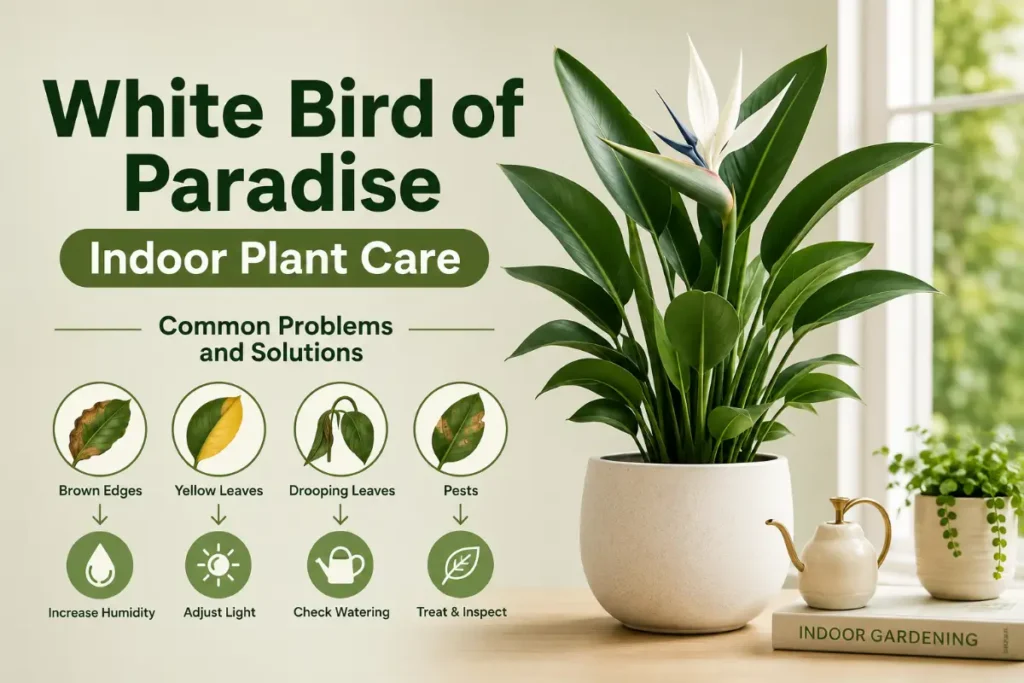
Common Problems and Solutions
Brown leaf tips: Almost always low humidity in dry indoor air or fluoride accumulation from tap water. Switch to filtered water and increase humidity with a pebble tray or humidifier.
Yellow lower leaves: Overwatering is the most common cause. Allow soil to dry more thoroughly between waterings and check drainage holes are not blocked.
No new growth: Insufficient light is the primary cause. Move to brighter light or add a grow light. Also check that you are fertilizing during the growing season since this plant needs consistent nutrition to maintain its growth rate.
Pale, washed-out leaf color: Too much direct sun causing bleaching, or insufficient light causing pale rather than rich green color. Assess which is more likely based on the plant’s current position and adjust accordingly.
Leaves not unfurling properly: New leaves on white bird of paradise emerge tightly rolled and unfurl over several days. If a new leaf stays rolled for more than two weeks, low humidity is the most likely cause. The leaf tissue dries before it can unfurl fully. Increase humidity immediately around the affected leaf.
Cleaning White Bird of Paradise Leaves
The large leaf surfaces of white bird of paradise accumulate dust quickly, and dusty leaves photosynthesize less efficiently than clean ones. Regular leaf cleaning is a practical care task rather than just an aesthetic one for this light-hungry plant.
Wipe leaves with a damp soft cloth every two to four weeks, supporting the leaf from beneath with one hand while wiping the top surface with the other to avoid tearing the leaf from its petiole. Work from the base of the leaf toward the tip in smooth strokes. Do not use commercial leaf shine products on white bird of paradise since these coat the stomata and reduce gas exchange, which directly impairs photosynthesis in a plant that already needs maximum light efficiency.
For plants in positions where leaf cleaning is awkward, taking the plant to a shower and rinsing leaves with a gentle warm spray every month accomplishes the same cleaning goal efficiently. Allow the plant to dry before returning it to its usual position if it receives direct sunlight, since water droplets on leaves in direct sun can act as magnifying lenses and create burn spots on the leaf surface.
White Bird of Paradise vs Banana Plant: Telling Them Apart
White bird of paradise is frequently confused with banana plants (Musa species) in garden centers since both produce large paddle-shaped leaves on similar-looking stems. If you have ever bought what you thought was one and discovered it was the other, the care requirements differ enough that knowing which you have matters.
The easiest visual distinction is the leaf midrib. White bird of paradise leaves have a pale to white central midrib running the length of the leaf with lateral veins branching from it at roughly 45-degree angles. Banana plant leaves have a similar midrib but lateral veins that run more horizontally and parallel to each other.
The stem base is another reliable difference. White bird of paradise develops layered boat-shaped sheaths at its base where petioles overlap. Banana plants develop a pseudostem made of tightly packed overlapping leaf bases that looks more like a true trunk.
Care-wise, banana plants are even hungrier for light and water than white bird of paradise and grow faster but are also less tolerant of indoor conditions over time. White bird of paradise tends to be the longer-lived indoor specimen of the two in typical home conditions.
Conclusion
White bird of paradise indoor plant care comes down to one overriding principle: give this plant as much light as your home can provide. Every other care element, watering frequency, soil drainage, fertilizing schedule, comes into better alignment when the light is right. A plant in excellent light that is slightly underwatered is dramatically healthier than the same plant in poor light with perfect watering.
Put it in your sunniest window. Water when the top two inches of soil dry out. Feed every two weeks through spring and summer. Maintain humidity above 40%. Repot every year or two into well-draining amended soil. Those five practices cover the full care profile of this plant and produce the dramatic, fast-growing specimen that makes interior designers and houseplant collectors alike consistently choose white bird of paradise when they want to make a real impact with a single plant.
Frequently Asked Questions
How much light does a white bird of paradise need indoors?
White bird of paradise needs the brightest light available indoors, ideally four to six hours of direct sun through a south or west-facing window daily. This is one of the most light-hungry common houseplants and performs poorly in anything less than bright indirect light. It thrives in sunrooms and conservatories with consistent direct sun access. In dimmer conditions it survives but grows slowly, produces smaller leaves, and loses the dramatic appearance that makes it worth growing.
How often should I water a white bird of paradise indoors?
Water when the top two inches of soil feel dry, which typically means every seven to fourteen days depending on light levels, pot size, and seasonal temperatures. In a bright sunny spot during summer, watering every seven days may be needed. In lower light or winter, every fourteen to twenty-one days is more appropriate. Always check the soil rather than following a fixed calendar schedule since this plant prefers to dry out somewhat between waterings.
Why are the leaves on my white bird of paradise turning yellow?
Yellow leaves on white bird of paradise most commonly indicate overwatering where roots are sitting in wet soil long enough to begin rotting. Check that the pot has adequate drainage holes and that the soil is drying out appropriately between waterings. Less commonly, yellow leaves indicate cold temperature stress from drafts, insufficient fertilizing during the growing season, or natural aging of the oldest lower leaves which yellow and drop as the plant directs energy to new growth.
How fast does white bird of paradise grow indoors?
In optimal conditions with excellent light, consistent watering, and regular fertilizing, white bird of paradise grows one to two new leaves per month through the spring and summer growing season. In lower light or without fertilizing, growth slows to a few leaves per season. Indoor specimens eventually reach six to eight feet tall over many years. The dramatic growth rate in good light is one of the most satisfying aspects of growing this plant indoors.
Why are the leaves on my white bird of paradise not splitting?
Indoor white bird of paradise leaves often do not develop the characteristic splits seen on outdoor specimens because splitting is an adaptive response to wind stress that indoor plants rarely experience. Running a small fan nearby, increasing light intensity, and maintaining good humidity encourages splitting in indoor plants. The absence of splits does not indicate a problem with plant health and is completely normal for indoor specimens.
Can white bird of paradise grow in low light?
White bird of paradise survives in low light but does not truly thrive. In low light it produces small, narrow leaves rather than the large dramatic paddle shapes it is known for, grows very slowly or not at all, and may gradually decline over one to two years as it depletes its energy reserves without adequate light for photosynthesis. For a bold tropical plant that genuinely tolerates low light and still looks impressive, peace lily or cast iron plant are more appropriate choices for dimly lit spaces.