
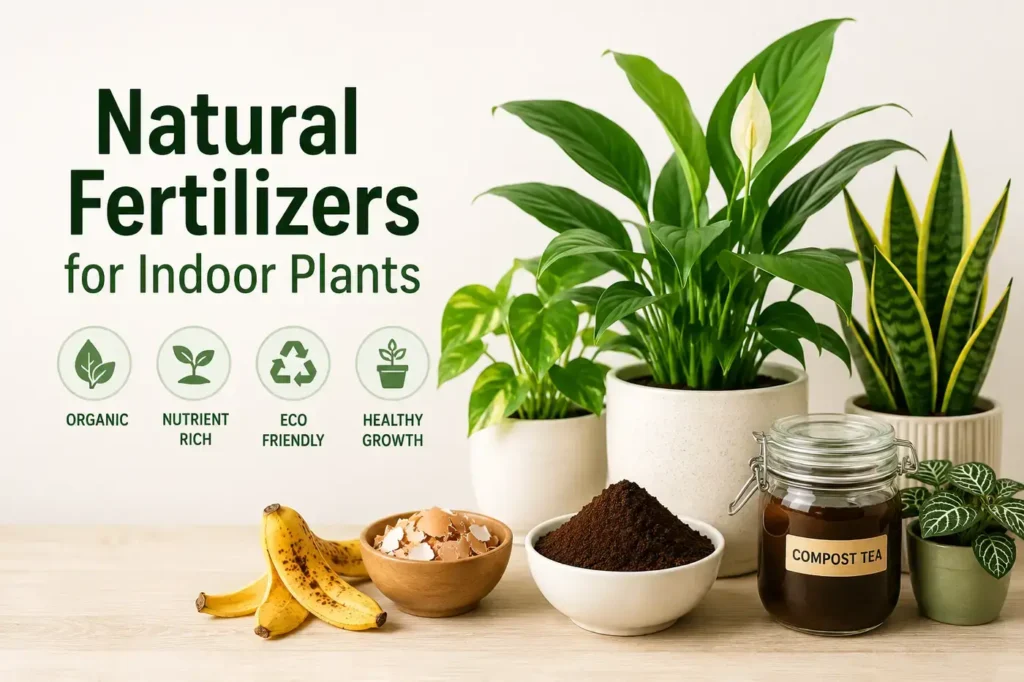
Natural fertilizer for indoor plants is one of those topics where the advice ranges from genuinely useful to completely ineffective depending on where you look. Some natural feeding options deliver real, measurable nutrition that houseplants respond to within weeks. Others are more gardening folklore than effective plant food, producing results too minimal to justify the effort involved. After years of feeding houseplants through both approaches, the difference between the natural fertilizers that work and the ones that disappoint comes down to whether the nutrient content is actually available to plant roots in potting soil conditions, not just whether the ingredient sounds beneficial.
This guide covers the 9 best natural fertilizers for indoor plants that are genuinely effective in potting mix, how to prepare and apply each one correctly, and which plants respond best to each type. Every option on this list is safe to use indoors, affordable, and produces visible results in healthy houseplants within a reasonable timeframe.
Quick Answer
The best natural fertilizers for indoor plants are worm castings, compost tea, diluted fish emulsion, banana peel water, diluted liquid kelp, coffee grounds used carefully, eggshell water, wood ash used sparingly, and diluted aquarium water. Worm castings and compost tea are the most broadly effective across all houseplant types. Apply most liquid natural fertilizers every two to four weeks during the growing season (spring through summer) and reduce or stop fertilizing during fall and winter when most houseplants slow their growth significantly.
Why Natural Fertilizers Work Differently From Synthetic Ones
Understanding how natural fertilizers work in potting soil helps you set realistic expectations and apply them correctly.
Synthetic fertilizers deliver nutrients in a form that dissolves immediately in water and becomes available to plant roots within days of application. The results are fast and visible but carry risks: overapplication causes fertilizer burn, and the salt buildup from repeated synthetic fertilizer use damages soil structure over time and can harm the beneficial microorganisms that support plant root health.
Natural fertilizers work more slowly but more sustainably. Most release nutrients gradually through microbial breakdown in the soil, which means the nutrients become available as the plant needs them rather than all at once. This slow-release mechanism makes it nearly impossible to burn plants with natural fertilizers at reasonable application rates, and the organic matter in most natural fertilizers actively improves soil structure and supports the beneficial microorganism populations that make potting mix a living, healthy growing medium rather than a sterile substrate.
The trade-off is that natural fertilizers take longer to show visible results than synthetic ones and require consistent application through the growing season rather than a single treatment. For most indoor plants where long-term soil health matters more than instant results, this trade-off is genuinely worthwhile.
9 Best Natural Fertilizers for Indoor Plants
1. Worm Castings — Best Overall Natural Fertilizer
Worm castings, the digested organic matter produced by earthworms, are the most broadly effective and most versatile natural fertilizer available for indoor plants. They contain a balanced range of macro and micronutrients in a form that is immediately available to plant roots, beneficial microorganisms that improve soil biology, and plant growth hormones that stimulate root development and healthy above-ground growth.
What makes worm castings particularly valuable for indoor use is that they are virtually impossible to overapply. Unlike synthetic fertilizers or even concentrated organic liquid feeds, worm castings in excessive quantities simply provide extra organic matter to the soil without burning roots or damaging plants. This makes them ideal for indoor gardeners who are not comfortable measuring precise fertilizer concentrations.
How to use them: Mix worm castings into potting soil at a ratio of approximately 20% castings to 80% potting mix when repotting. For established plants already in pots, top-dress by adding a half-inch layer of worm castings to the soil surface and watering it in. Alternatively, make a liquid worm casting tea by soaking one cup of castings in one gallon of water for 24 hours, straining, and applying the resulting liquid as a regular watering.
How often: Top-dress every 6 to 8 weeks through the growing season. Liquid worm casting tea every two weeks through spring and summer.
Best for: All houseplant types including tropical foliage plants, succulents (at lower rates), flowering houseplants, and herbs. Worm castings are one of the few natural fertilizers appropriate for nearly every indoor plant species without adjustment.
Where to buy: Garden centers, home improvement stores, and Amazon carry worm castings widely. Wiggle Worm Soil Builder and Unco Industries are two of the most consistently available brands.
2. Compost Tea — Best for Soil Biology
Compost tea is made by steeping finished compost in water, which extracts the soluble nutrients and, when aerated, produces a liquid teeming with beneficial microorganisms that improve soil health alongside the nutritional content.
The microbial component is what distinguishes compost tea from simply adding diluted liquid fertilizer. The beneficial bacteria and fungi in actively aerated compost tea colonize potting soil and improve nutrient cycling, suppress harmful soil pathogens, and increase the efficiency with which plant roots access nutrients already present in the soil.
How to make it: Fill a mesh bag or old pillowcase with one cup of finished compost and place it in a gallon of dechlorinated water. Add a simple aquarium air pump and airstone to aerate the water throughout the steeping process. Steep for 24 to 48 hours. Use the resulting liquid immediately since the beneficial microorganism populations decline rapidly after the aeration stops.
How to use it: Apply as a soil drench at the base of plants every two to three weeks through the growing season. Use the full gallon of tea on multiple plants rather than attempting to store it since the microbial content degrades quickly without continued aeration.
Best for: Plants in older potting mix that has been in use for more than a year and has lost some of its biological activity. Tropical foliage plants and flowering houseplants that benefit from improved soil biology and consistent nutrient availability.
3. Diluted Fish Emulsion — Best Fast-Acting Natural Option
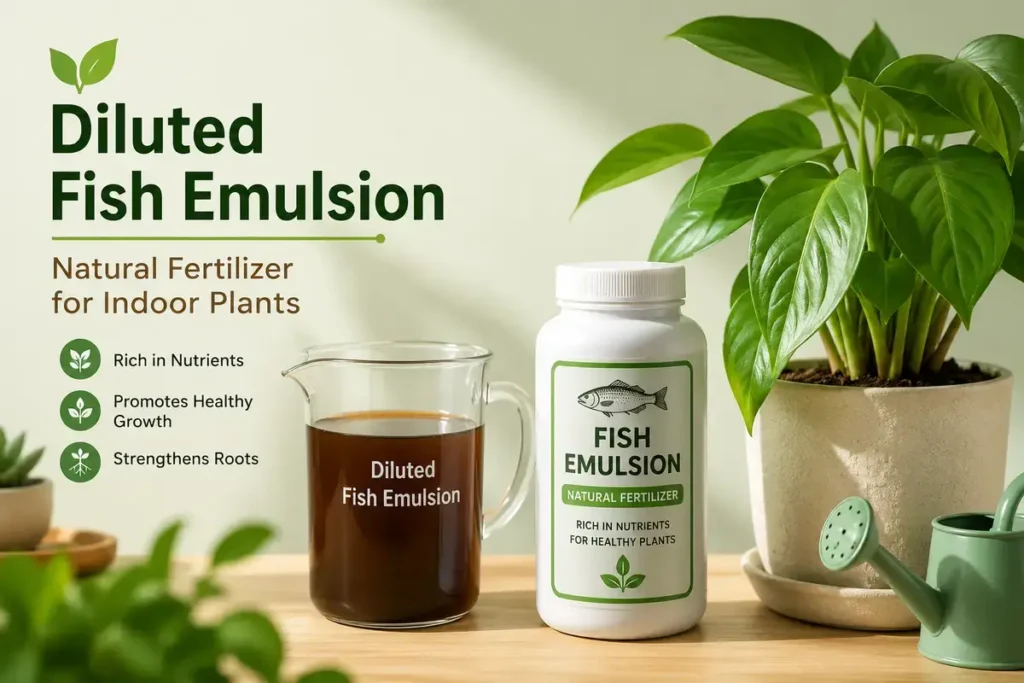
Fish emulsion is a concentrated liquid fertilizer made from processed fish byproducts that provides a relatively fast-acting source of nitrogen alongside phosphorus and trace minerals. It is the closest natural fertilizer in terms of response speed to synthetic liquid feeds, typically showing visible growth response within two to three weeks of the first application.
The practical limitation for indoor use is the smell. Fish emulsion has a strong, distinctive odor that dissipates within a day or two of application but is noticeable in enclosed indoor spaces during and immediately after watering. Apply near an open window or in a well-ventilated space and the smell becomes manageable. Several commercially available fish emulsions are deodorized to reduce this issue significantly.
How to use it: Dilute fish emulsion to half the label-recommended rate for outdoor use since indoor potting mix has less drainage and nutrients accumulate more readily than in garden beds. A typical dilution is one tablespoon per gallon of water, though check your specific product label since concentrations vary between brands.
How often: Every two to four weeks through the growing season. Stop in fall and winter when most houseplants reduce their growth rate and nutrient demand.
Best for: Foliage plants that need a nitrogen boost for healthy leaf production. Plants showing pale yellowing leaves that suggest nitrogen deficiency. Fast-growing tropical plants during their peak spring and summer growth period.
Where to buy: Neptune’s Harvest Fish and Seaweed Fertilizer is one of the most widely available and consistently effective options at garden centers and on Amazon. Alaska Fish Fertilizer is another widely available option at Home Depot and Lowe’s.
4. Banana Peel Water — Best for Potassium Boost
Banana peels contain potassium, phosphorus, and trace minerals that leach into water when soaked, making banana peel water a genuinely useful natural fertilizer for flowering and fruiting indoor plants that have elevated potassium requirements compared to purely foliage plants.
Potassium supports flower production, fruit development, and overall plant immune function. Indoor plants like orchids, African violets, peace lilies, and indoor citrus trees respond noticeably to regular potassium supplementation during their blooming periods.
How to make it: Place two or three banana peels in a quart jar and cover completely with water. Let soak for 24 to 48 hours. Remove the peels, which can go directly into your compost or outdoor garden. Use the resulting water to water your plants directly without further dilution.
How often: Every two to three weeks during the active growing and flowering season. This is a supplemental fertilizer rather than a complete plant food, best used alongside a more comprehensive natural feed like worm castings or fish emulsion rather than as the sole nutritional source.
Best for: Flowering houseplants during and leading up to their blooming period. Fruiting indoor plants like citrus trees and indoor tomatoes. Plants showing early signs of potassium deficiency including yellowing leaf margins and weak stems.
5. Diluted Liquid Kelp — Best for Micronutrients and Growth Stimulation
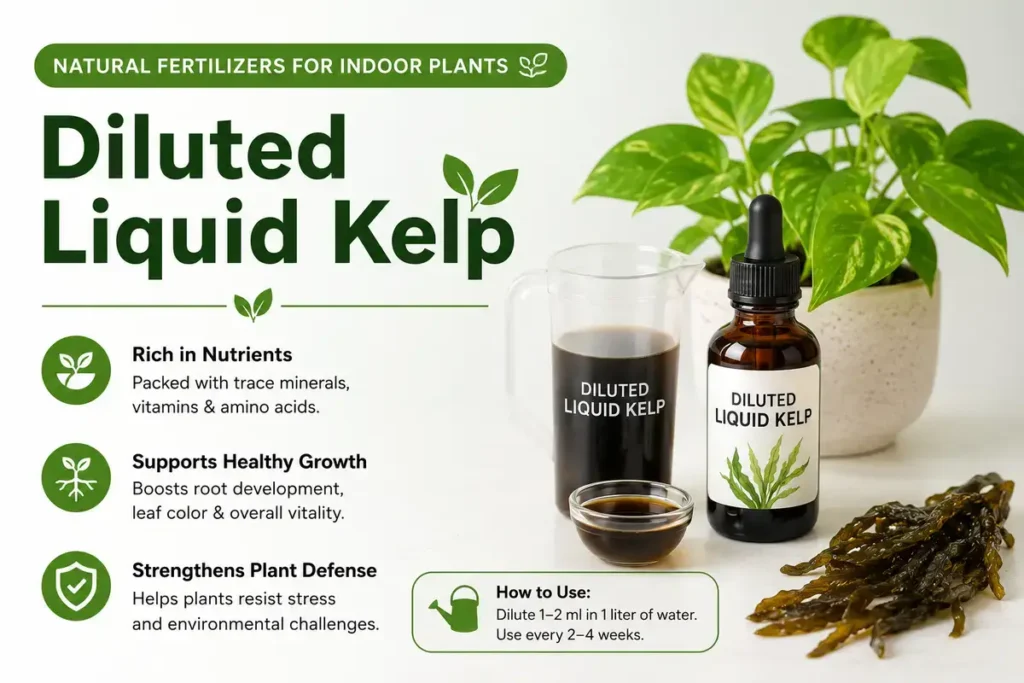
Liquid kelp extract is pressed from dried seaweed and provides a broad spectrum of trace minerals and micronutrients that are often missing from standard potting mix after several months of plant growth has depleted them. It also contains natural plant hormones including auxins and cytokinins that stimulate root development and healthy cell division even at very low concentrations.
Liquid kelp is particularly valuable as a complement to other natural fertilizers rather than as a standalone plant food since its nitrogen, phosphorus, and potassium content is relatively low compared to the trace mineral and growth hormone content.
How to use it: Dilute liquid kelp concentrate to the label-recommended rate, typically one to two tablespoons per gallon of water. Apply as a soil drench or as a foliar spray directly to leaf surfaces where the trace minerals and growth hormones are absorbed directly through leaf stomata.
How often: Every three to four weeks through the growing season as a supplement to your primary fertilizer rather than as a replacement for it.
Best for: All houseplant types as a micronutrient supplement. Plants that have been in the same potting mix for more than a year and may be depleted of trace minerals. New cuttings and seedlings where the cytokinin content supports early root development.
Where to buy: Maxicrop Liquid Seaweed and Espoma Organic Kelp Tone are two widely available options at garden centers and online retailers.
6. Coffee Grounds — Best Used Carefully and Sparingly
Coffee grounds contain nitrogen, potassium, and magnesium alongside a range of trace minerals, making them a genuinely nutritious natural fertilizer when used correctly. The reason they appear in both the effective and ineffective categories of natural fertilizer advice is that the application method matters enormously.
Adding coffee grounds directly to the surface of indoor plant soil in significant quantities is the approach most likely to cause problems. The fine texture of coffee grounds compacts on soil surfaces and creates a water-repellent layer that blocks drainage and oxygen exchange. Grounds piled thickly on soil also encourage mold growth and can raise soil acidity to levels that damage plants not specifically adapted to acidic conditions.
Used correctly in small quantities and properly diluted, coffee grounds are a useful natural nitrogen source for acid-loving plants specifically.
How to use them correctly: Add used coffee grounds to water at a ratio of one tablespoon per quart of water. Let the grounds settle and use the resulting lightly colored water to irrigate acid-loving plants. Alternatively, add dried used grounds to worm castings or compost at a ratio of no more than 20% grounds to 80% other material before applying the mixture to soil. This dilution prevents the compaction and mold issues that direct application causes.
Best for: Acid-loving plants including gardenias, azaleas, ferns, blueberry plants grown indoors, and peace lilies. Not appropriate as a regular fertilizer for plants that prefer neutral to alkaline soil conditions.
How often: Every three to four weeks through the growing season at the diluted rates above.
For a detailed breakdown of which specific indoor plants respond best to coffee grounds and which are harmed by the acidity, what indoor plants like coffee grounds covers every plant type with specific guidance on safe application rates.
7. Eggshell Water — Best for Calcium Supplementation
Eggshells are composed primarily of calcium carbonate, which dissolves slowly into water when soaked and provides a gentle calcium supplement that benefits plants with elevated calcium requirements. Calcium strengthens cell walls, supports healthy root growth, and is particularly important for flowering and fruiting plants that need strong cell development for flower and fruit production.
How to make it: Crush clean, dry eggshells from 6 to 8 eggs and place them in a quart of water. Let soak for 24 to 48 hours. The water takes on a slightly milky appearance as calcium carbonate leaches out. Use this water directly on plants without further dilution.
Important consideration: Eggshell water raises soil pH slightly over time due to the alkaline nature of calcium carbonate. This is beneficial for plants that prefer slightly alkaline or neutral soil but can be problematic for acid-loving plants. Monitor your most acid-sensitive plants when using eggshell water regularly.
Best for: Flowering houseplants, tomatoes grown indoors, pepper plants, and other fruiting indoor plants that have elevated calcium requirements. Plants showing symptoms of calcium deficiency including distorted new growth, brown leaf edges, and blossom end rot on fruiting species.
How often: Every three to four weeks through the growing season as a supplemental feed alongside a more complete natural fertilizer.
8. Wood Ash — Best Used Very Sparingly
Wood ash from burning untreated wood provides potassium and calcium carbonate alongside trace minerals, making it a potential natural fertilizer for indoor plants. The reason for the strong caution around indoor use is that wood ash is highly alkaline and raises soil pH significantly even in small quantities. Potting mix pH above 7.5 makes iron, manganese, and other trace minerals chemically unavailable to plant roots, causing deficiency symptoms in plants that were previously healthy.
Used in very small quantities on plants specifically adapted to neutral or alkaline soil conditions, wood ash provides useful potassium and calcium supplementation. Used carelessly or on acid-loving plants, it causes more harm than benefit.
How to use it safely indoors: Dissolve a teaspoon of clean wood ash in a gallon of water and use this solution to water plants that prefer neutral to slightly alkaline soil conditions every six to eight weeks. Never apply dry ash directly to the soil surface of potted plants since the concentrated alkalinity damages root tissue on contact.
Best for: Plants that prefer neutral to alkaline soil including lavender, rosemary, and some succulent species. Not appropriate for ferns, orchids, gardenias, azaleas, or any plant that prefers acidic conditions.
9. Aquarium Water — Best Zero-Effort Natural Fertilizer
Aquarium water from a freshwater fish tank contains dissolved fish waste, uneaten food particles, and the nitrogen compounds that beneficial aquarium bacteria produce during the nitrogen cycle. This makes it a genuinely effective natural fertilizer that many indoor gardeners overlook entirely because it seems too simple to be useful.
The nutrient content of aquarium water is relatively low compared to concentrated fertilizers but its advantage is that it is available for free every time you perform a partial water change on a freshwater aquarium and requires no preparation, mixing, or effort beyond not pouring the old water down the drain.
How to use it: Use the water removed during regular partial water changes (typically 20 to 25% of tank volume every one to two weeks) to water your indoor plants directly. No dilution is needed since aquarium water is already appropriately diluted by its nature as a fish tank environment.
Important: Use only freshwater aquarium water. Saltwater aquarium water damages plant roots and is not appropriate for any houseplant use.
Best for: All houseplant types since the nutrient profile of aquarium water is balanced and gentle enough for any species. Particularly convenient for indoor gardeners who keep both fish and houseplants since it converts routine aquarium maintenance into a free fertilizing session.
How to Apply Natural Fertilizers Effectively
Feed during the growing season only. Most houseplants slow their growth significantly from late fall through winter and need significantly less nutrition during this period. Feeding with any fertilizer, natural or synthetic, during a plant’s dormant or slow-growth period pushes growth that the plant cannot support well under low-light winter conditions. Apply natural fertilizers consistently from early spring through late summer and reduce frequency or stop entirely from October through February for most common houseplant species.
Water before fertilizing. Never apply any fertilizer to bone-dry soil. Dry soil roots absorb fertilizer solution too rapidly and in too concentrated a form, which can cause root burn even with gentle natural fertilizers. Water the plant normally the day before fertilizing and apply the fertilizer to moist, receptive soil.
Start with less than the recommended rate. For new plants or plants you have not fertilized before, start with half the recommended application rate and observe the plant’s response over two to three weeks before increasing to the full rate. This cautious approach prevents the nutrient accumulation that can develop in potted plants with limited soil volume and drainage.
Watch for signs of overfeeding. Even natural fertilizers applied too frequently or at too high a rate can cause problems. Signs of overfeeding include brown leaf tips, white crust forming on the soil surface (mineral salt buildup), wilting despite adequate watering, and unusually soft or leggy new growth. If any of these appear, flush the soil by watering heavily with plain water several times to leach excess nutrients, then reduce fertilizer frequency going forward.
The Connection Between Fertilization and Pest Resistance
Well-nourished plants are significantly more resistant to the pest species that most commonly affect indoor plant collections. Aphids, spider mites, and other sap-feeding insects specifically target plants under nutritional stress because stressed plants produce higher concentrations of the amino acids these insects feed on. A plant growing in nutritionally depleted old potting mix with no supplemental feeding is an easier target than one regularly fed with a balanced natural fertilizer that supports strong cell wall development.
This connection between plant nutrition and pest resistance is one of the most practical reasons to maintain a consistent natural fertilizer routine through the growing season rather than treating fertilization as optional. The pest management benefits of keeping plants well-nourished complement every other pest prevention practice in your indoor plant care routine.
Conclusion
Natural fertilizer for indoor plants works best when matched to what your specific plants need and applied consistently through the growing season rather than sporadically when plants show obvious deficiency symptoms. Worm castings are the most broadly effective option for virtually every houseplant type. Compost tea improves soil biology alongside nutrient delivery. Fish emulsion provides the fastest visible response of any natural option. Banana peel water and eggshell water address potassium and calcium needs specifically for flowering and fruiting plants. Coffee grounds serve acid-loving plants well at correct dilution. Liquid kelp fills the trace mineral gaps that other fertilizers leave.
Start with worm castings as a soil amendment when repotting and liquid worm casting tea every two weeks through spring and summer. Add fish emulsion monthly if faster results are needed. Supplement with banana peel water for flowering plants and eggshell water for fruiting ones. That combination covers the nutritional needs of most common houseplant collections through the growing season without any synthetic chemistry and with a level of overfeed risk that is genuinely difficult to reach with natural sources at reasonable application rates.
Frequently Asked Questions
How often should I use natural fertilizer on indoor plants?
Most liquid natural fertilizers including worm casting tea, diluted fish emulsion, and banana peel water work best applied every two to four weeks through the spring and summer growing season. Solid amendments like worm castings top-dressed onto the soil surface work on a six to eight week schedule since they release nutrients more slowly through soil microbial activity. Reduce all fertilizer frequency to monthly or stop entirely from October through February when most houseplants are not actively growing and cannot utilize the nutrients effectively.
Can I use natural fertilizer on all types of indoor plants?
Most natural fertilizers are suitable for the majority of common houseplant types with a few important exceptions. Coffee grounds and their water should be reserved for acid-loving plants since they increase soil acidity over time. Wood ash should only be used on plants tolerant of neutral to alkaline soil conditions. Worm castings, compost tea, fish emulsion at correct dilution, and aquarium water are safe for virtually every common houseplant species including tropical foliage plants, succulents at reduced rates, orchids, ferns, and herbs.
Do natural fertilizers work as fast as synthetic ones?
No, and this is an expected trade-off rather than a shortcoming. Most natural fertilizers release nutrients gradually through microbial breakdown over weeks rather than immediately through water solubility like synthetic options. Fish emulsion is the fastest-acting natural fertilizer and may show visible growth response within two to three weeks. Worm castings and compost tea show effects over four to six weeks of consistent use. The slower release is actually an advantage for long-term soil health since it eliminates the feast-and-famine nutrient cycle that synthetic fertilizer application creates.
Can I make my own natural fertilizer for indoor plants?
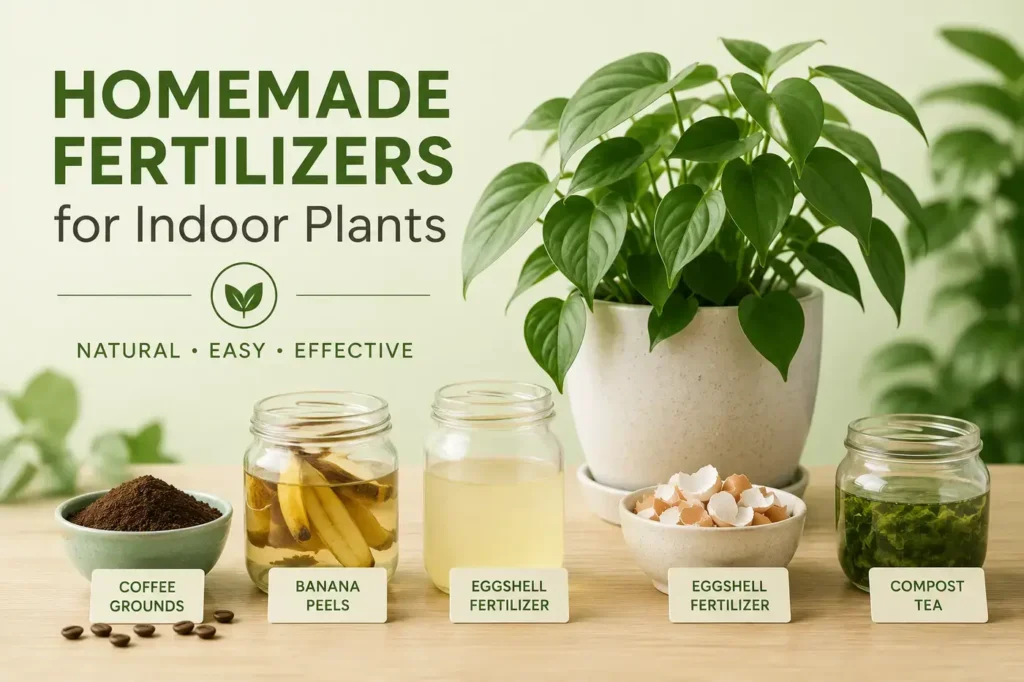
Yes. Worm casting tea, banana peel water, eggshell water, compost tea, and diluted coffee ground water are all homemade natural fertilizers that require only common household ingredients and minimal preparation time. Vermicomposting (home worm farming) produces continuous worm castings from kitchen vegetable scraps and is one of the most cost-effective and sustainable natural fertilizer sources available for consistent indoor plant feeding throughout the growing season.
Is natural fertilizer safe around pets and children?
Yes, when used as directed. Natural fertilizers derived from plant and animal matter are significantly safer around children and pets than synthetic chemical fertilizers. Fish emulsion has a strong smell that pets may find attractive, so water it in thoroughly and keep pets away from recently fertilized plants until the smell dissipates. Worm castings, banana peel water, eggshell water, and aquarium water are completely non-toxic to children and pets at any realistic exposure level.
Why are the leaves on my indoor plant still yellow even after natural fertilizing?
Yellowing that persists despite fertilizing usually indicates one of three issues: the fertilizer has not been applied long enough for slow-release nutrients to take effect (allow four to six weeks of consistent feeding before expecting visible results), the yellowing is caused by something other than nutrient deficiency such as overwatering, underwatering, or insufficient light that no fertilizer can correct, or the yellowing is specifically caused by iron or manganese deficiency from a soil pH that is too high or too low, making these minerals chemically unavailable to roots regardless of how much fertilizer is applied. Checking soil pH and the basic care conditions before increasing fertilizer rate is always worthwhile when expected results are not appearing.
Pingback: Norfolk Island Pine Indoor Plant: 8 Care Tips to Keep It Thriving - Plant Quill
Pingback: Goldfish Plant Care Indoors: 7 Steps to Abundant Blooms All Year - Plant Quill
Pingback: Care for Rosemary Plant Indoors: 8 Proven Tips to Keep It Thriving - Plant Quill
Pingback: Care for Cyclamen Plant Indoors: 7 Steps to Keep It Blooming - Plant Quill
Pingback: Mass Cane Plant Indoor: 7 Steps to Keep It Thriving for Decades - Plant Quill
Pingback: Flowering Maple Indoor Plant: 7 Steps to Continuous Colorful Blooms - Plant Quill