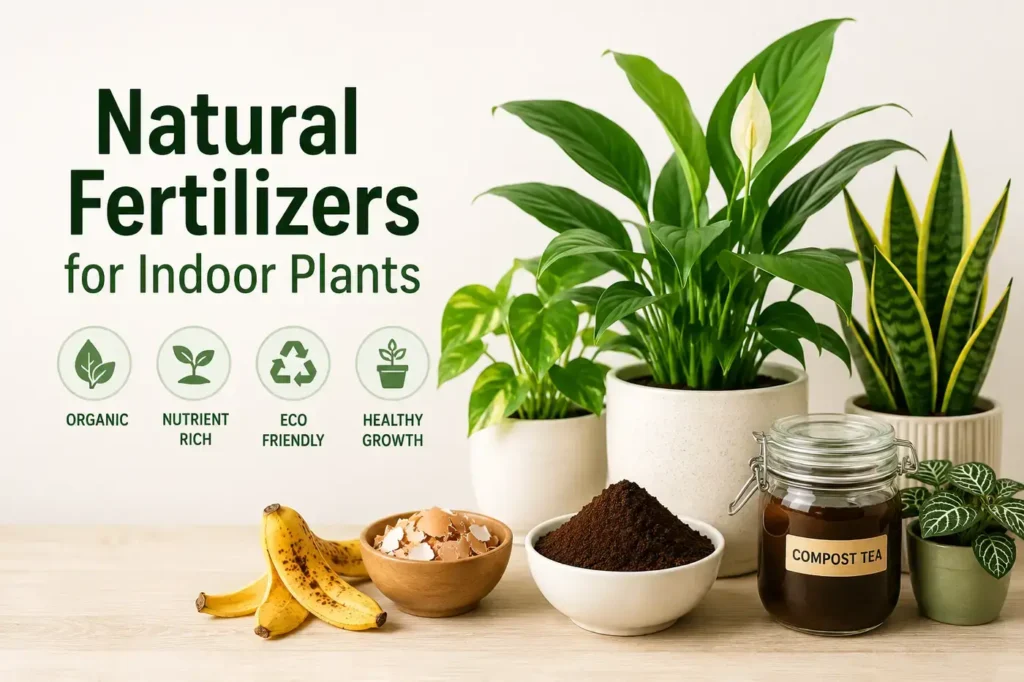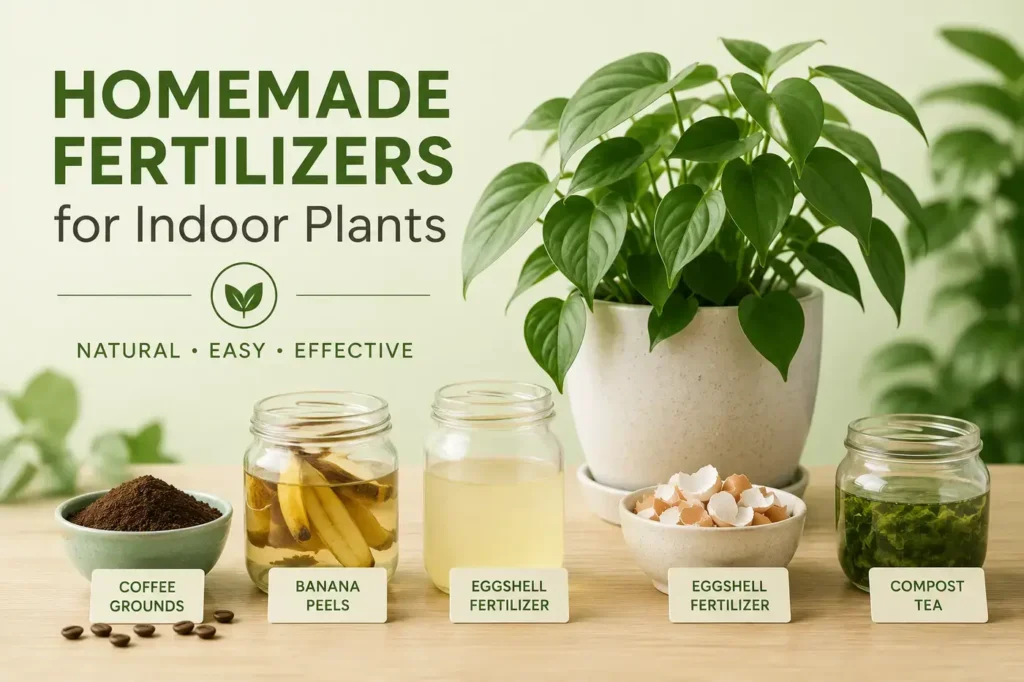

Coffee grounds for indoor plants occupy an unusual space in houseplant care advice: they are one of the most widely recommended natural fertilizers online and simultaneously one of the most commonly misapplied ones. The result is that some plant owners swear by them while others report that their plants declined noticeably after application. Both experiences are accurate, and the difference between them almost always comes down to which plant received the grounds, how the grounds were applied, and in what quantity.
Coffee grounds for indoor plants can genuinely improve growth and soil health for certain plant types when used correctly. They can also cause real problems including soil compaction, mold growth, pH shifts, and root damage when applied the wrong way or to plants that do not benefit from their chemistry. This guide cuts through the conflicting advice and tells you exactly what coffee grounds do to soil and plant roots, which plants benefit and which do not, how to apply them in ways that work, and the specific mistakes to avoid.
Quick Answer
Coffee grounds benefit acid-loving indoor plants including ferns, gardenias, azaleas, and peace lilies when applied correctly in small quantities diluted in water or composted before soil addition. They provide nitrogen, potassium, and magnesium while gradually lowering soil pH. They harm plants that prefer neutral to alkaline soil, cause problems when piled directly on soil surfaces, and attract fungus gnats when fresh grounds sit moist on potting mix. Use diluted coffee ground water every three to four weeks for acid-loving species rather than adding dry grounds directly to indoor potting soil.
What Coffee Grounds Actually Contain
Understanding the chemistry of coffee grounds explains both why they benefit certain plants and why they harm others.
Nitrogen: Used coffee grounds contain approximately 2% nitrogen by weight, comparable to many commercial organic fertilizers. Nitrogen supports leafy green growth and is one of the primary reasons plants respond positively to coffee ground applications when used correctly.
Potassium: Coffee grounds contain approximately 0.6% potassium, which supports overall plant health, disease resistance, and water regulation. Potassium is the nutrient that makes coffee grounds useful for a wider range of plants than just acid-lovers, though the pH effects often outweigh the potassium benefits for non-acid-tolerant species.
Magnesium: Approximately 0.2% magnesium content supports chlorophyll production and the enzymatic processes involved in photosynthesis. Plants deficient in magnesium show distinctive interveinal yellowing (yellowing between leaf veins while veins remain green) that coffee grounds can address in susceptible species.
Acidity: This is the most significant and most misunderstood chemical property of coffee grounds for plant use. Used coffee grounds are slightly acidic with a pH typically between 6.0 and 6.8, which is actually close to neutral rather than highly acidic. However, the water-soluble acidic compounds that leach out of grounds into soil during decomposition do lower soil pH over time with repeated application, which benefits acid-loving plants and harms those that prefer neutral to alkaline conditions.
Allelopathic compounds: Coffee grounds contain caffeine and other allelopathic compounds that inhibit the germination and growth of certain plant species. This is relevant primarily for seed starting and propagation rather than established houseplants, but it is worth knowing if you plan to use coffee grounds in potting mix for cuttings or seedlings.
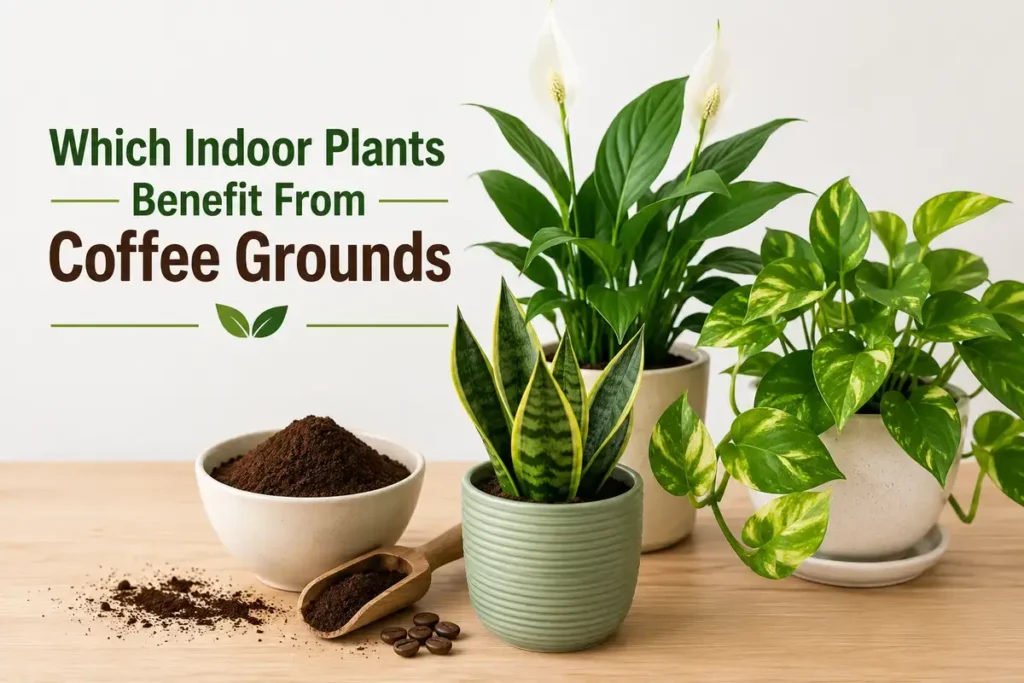
Which Indoor Plants Benefit From Coffee Grounds
The plants that genuinely benefit from coffee ground applications are those adapted to naturally acidic soil conditions, typically species that evolved in forest understory environments where decomposing organic matter keeps soil pH between 5.5 and 6.5.
Ferns: Most indoor fern varieties including Boston ferns, maidenhair ferns, and bird’s nest ferns prefer slightly acidic soil and respond well to the gradual pH adjustment and nitrogen content of diluted coffee ground water. Ferns also benefit from the improved moisture retention that coffee grounds contribute when added in small quantities to the soil mixture.
Peace lilies: Peace lilies perform well in slightly acidic soil conditions and the nitrogen content of coffee grounds supports the healthy, dark green foliage they are grown for. They are one of the most forgiving plants for coffee ground experimentation since they tolerate a relatively wide pH range without showing obvious stress.
Gardenias: Gardenias are among the most pH-sensitive commonly grown indoor plants. They require consistently acidic soil between pH 5.0 and 6.0 to absorb iron effectively and produce their characteristic dark green leaves and intensely fragrant flowers. Without sufficient acidity, gardenias develop iron chlorosis (yellowing leaves with green veins) even when iron is present in the soil. Regular diluted coffee ground water applications maintain the acidity gardenias need more gently than acidifying fertilizer products.
Azaleas grown indoors: Like gardenias, azaleas are ericaceous plants that require acidic soil conditions and develop yellowing and decline when grown in neutral or alkaline potting mix. Coffee ground water every three to four weeks through the growing season helps maintain the pH range azaleas need for healthy growth.
African violets: African violets prefer slightly acidic soil around pH 6.0 to 6.5 and the gentle nitrogen and trace mineral content of coffee ground water supports the healthy leaf production and consistent flowering they are cultivated for.
Blueberry plants grown indoors: Blueberries require among the most acidic soil conditions of any commonly grown fruit, between pH 4.5 and 5.5. Coffee ground water applications contribute to maintaining the high acidity blueberries need alongside acidifying fertilizers specifically formulated for ericaceous plants.
Rubber plants and pothos: These popular foliage plants tolerate a wider pH range than the acid specialists above but respond positively to the nitrogen boost from coffee grounds since nitrogen drives the healthy leaf production they are grown for. Use very conservatively since these plants do not require the same degree of acidity as ferns and gardenias.
Which Indoor Plants Are Harmed by Coffee Grounds
Plants adapted to neutral, alkaline, or well-draining low-organic soil conditions are harmed by coffee ground applications because the pH shift and moisture retention effects work against their natural growing requirements.
Succulents and cacti: Desert plants adapted to alkaline, well-draining soils experience the opposite of what they need from coffee grounds. The pH-lowering effect shifts soil toward acidity they cannot tolerate. The organic matter in grounds increases moisture retention in ways that encourage the root rot these drought-adapted species are most susceptible to.
Lavender and rosemary: Mediterranean herbs prefer alkaline to neutral, sharply draining soil. Coffee ground additions lower the pH toward acidity these plants dislike and improve moisture retention in ways that increase root rot risk in plants that require excellent drainage above all else.
Orchids: Most orchid species grow epiphytically in nature, meaning they grow on tree bark rather than in soil. Their roots require excellent aeration and fast drainage with a bark-based medium rather than the moisture-retaining organic environment coffee grounds create. Coffee grounds added to orchid growing medium clog the drainage and aeration channels the roots depend on.
Snake plants (Sansevieria): Snake plants are among the most drought-tolerant common houseplants and perform best in relatively nutrient-poor, well-draining soil. The nitrogen boost from coffee grounds often pushes these plants toward soft, leggy growth rather than the compact, structured form they maintain in lower-nutrient conditions.
Spider plants: Spider plants prefer neutral soil and the gradual acidification from coffee ground use puts them outside their optimal pH range, leading to yellowing and reduced vigor over time with regular application.
How to Apply Coffee Grounds to Indoor Plants Correctly
The application method matters as much as which plant receives the grounds. Most of the negative outcomes people report from using coffee grounds on houseplants result from direct application of dry grounds to the soil surface rather than from the coffee grounds themselves.

Method 1: Diluted Coffee Ground Water (Recommended)
This is the most effective and safest method for using coffee grounds as a liquid fertilizer for indoor plants. It delivers the nutritional benefits while avoiding the compaction, mold, and fungus gnat problems associated with direct soil application.
How to make it: Add one tablespoon of used coffee grounds to one quart of room temperature water. Stir briefly and allow to sit for 24 hours so the soluble nutrients leach into the water. Strain out all coffee grounds using a fine mesh strainer or cheesecloth before use since grounds left in the liquid will settle and clog the soil if applied. The resulting water should be very lightly colored, almost clear with a slight tan tinge. Dark coffee-colored water indicates too high a concentration that needs further dilution with plain water.
How to apply it: Water the plant with the strained coffee ground water in place of a regular watering rather than in addition to one. Apply at the base of the plant directly to the soil surface. Do not apply to leaf surfaces since the acid compounds in coffee can cause spotting on some sensitive species.
How often: Every three to four weeks for acid-loving plants throughout the growing season. No more than once every six weeks for plants with neutral soil preferences where you want the nitrogen benefit without significant pH adjustment.
Method 2: Composted Coffee Grounds Mixed Into Potting Soil
Composting coffee grounds before adding them to potting mix allows the acidic compounds to mellow and the nitrogen to convert to more stable plant-available forms through microbial processing.
How to do it: Add used coffee grounds to a compost bin or small compost container at a ratio of no more than 20% grounds to 80% other organic material including dried leaves, cardboard, or vegetable scraps. Allow to compost for at least 60 days before using in potting mix. At this point the finished compost containing coffee material can be mixed into potting soil at a 15 to 20% ratio for acid-loving plants.
Why composting first matters: Fresh coffee grounds contain compounds that inhibit soil microorganism activity in ways that composted grounds do not. Composting breaks down these inhibitory compounds and converts the nitrogen into a form that soil microorganisms and plant roots access more effectively.
Method 3: Very Thin Mulch Layer (Use With Extreme Caution)
Some gardening resources recommend spreading a thin layer of coffee grounds on the soil surface of indoor plants as a slow-release fertilizer mulch. This approach requires far more caution for indoor pot use than for outdoor garden beds where the grounds can be incorporated into a larger soil volume.
If you choose this method, apply a layer no more than a quarter-inch thick and mix it gently into the top half-inch of soil rather than leaving it on the surface. Monitor for mold growth, which develops readily when coffee grounds sit moist on the surface of potting mix in enclosed indoor conditions. If any white or grey mold appears on the soil surface within a week of application, remove the grounds completely and switch to the liquid extraction method instead.
Common Mistakes When Using Coffee Grounds on Indoor Plants
Using fresh unused coffee grounds. Fresh coffee grounds are significantly more acidic and contain higher concentrations of allelopathic compounds than used grounds. Always use grounds that have already been brewed through at least once since the brewing process extracts most of the harsh compounds while leaving the nutrients that benefit plants.
Piling grounds thickly on the soil surface. This is the most common and most damaging mistake. Thick layers of coffee grounds on the surface of indoor potting mix compact into an impermeable mat that blocks water penetration and oxygen exchange, encourages mold growth, and creates the wet conditions that attract fungus gnats. If you discover a thick coffee ground layer on a plant’s soil, remove it completely and switch to the diluted water method. For guidance on dealing with the fungus gnat infestations that coffee ground misuse often triggers, bugs in indoor plant soil covers the full identification and treatment approach for every soil-dwelling pest.
Applying to plants that do not benefit from acidity. Succulents, orchids, snake plants, lavender, and rosemary are among the most commonly damaged plants from coffee ground applications. The pH shift toward acidity and the increased moisture retention work against the natural requirements of these species even in small quantities over time.
Not monitoring soil pH. If you use coffee grounds regularly for acid-loving plants, check the soil pH every two to three months with an inexpensive pH test kit available at garden centers. Even acid-loving plants have a lower tolerance limit and soil pH that drops below 5.0 through excessive coffee ground application causes the same kind of nutrient lockout that overly alkaline soil produces.
Applying to the same plant every watering. Coffee grounds applied too frequently push pH changes faster than the plant can adjust and can cause nutrient lockout even in acid-loving species. Three to four weeks between applications gives the soil ecosystem time to process the nutrients and pH adjustments from each application before the next one adds more.
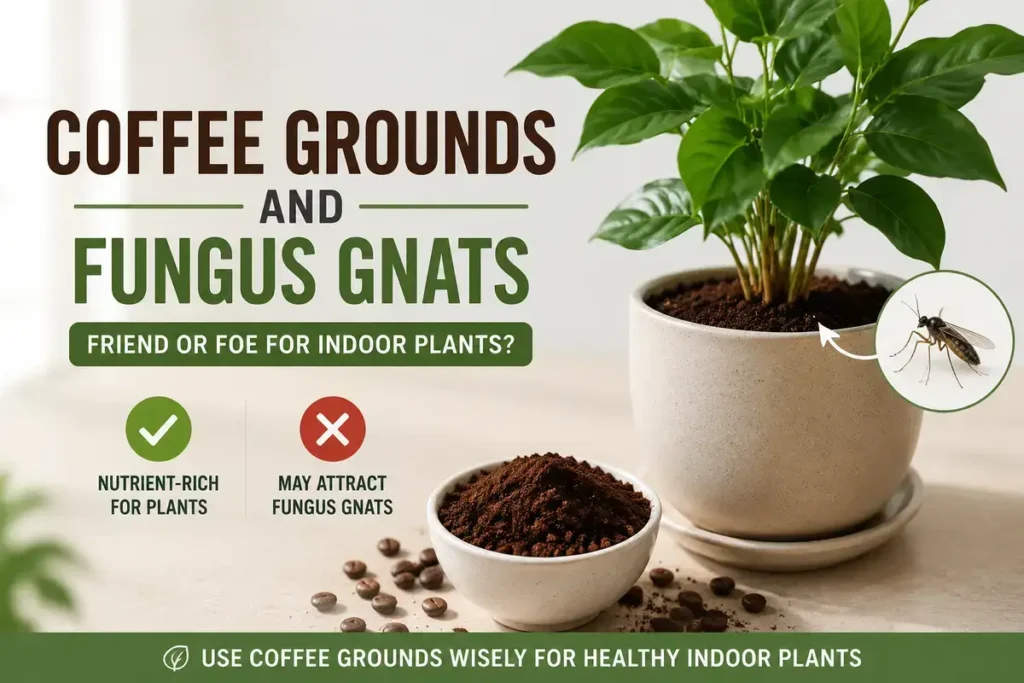
Coffee Grounds and Fungus Gnats: What You Need to Know
One of the most consistent reports from indoor gardeners who have used coffee grounds directly on their houseplant soil is an increase in fungus gnat activity. This connection makes biological sense: fresh coffee grounds sitting moist on the surface of indoor potting mix create exactly the warm, moist, organic environment that fungus gnat adults seek for egg laying and that larvae require to develop.
The diluted coffee ground water method eliminates this risk almost entirely since no solid grounds remain on the soil surface after watering. If you prefer solid application methods, incorporating the grounds into the top layer of soil rather than leaving them on the surface reduces but does not fully eliminate the fungus gnat attraction risk.
If you notice increased fungus gnat activity after adding coffee grounds to your houseplant soil, remove any surface grounds immediately, allow the soil to dry more thoroughly between waterings, and use yellow sticky traps to catch adults while the larval population in the soil dies off from moisture reduction. For a complete guide to eliminating fungus gnats and other small flies from indoor plants when coffee ground use or overwatering has created ideal conditions for them, how to get rid of flies in indoor plants covers every treatment method in order of effectiveness.
How Coffee Grounds Compare to Other Natural Fertilizers
Coffee grounds are one useful tool in a broader natural fertilization approach rather than a complete fertilizer on their own. Compared to other natural options:
Worm castings provide more complete balanced nutrition with less pH impact, making them the more versatile natural fertilizer for mixed plant collections. Banana peel water provides potassium that coffee grounds are relatively low in. Fish emulsion provides a faster nitrogen response than coffee grounds decomposing in soil. Compost tea improves soil biology more significantly than coffee grounds alone.
The best approach for indoor plant collections that include acid-loving species is using coffee ground water as one component of a rotating natural fertilizer schedule rather than as the primary feeding method. Alternate coffee ground water every three to four weeks with worm casting tea or diluted fish emulsion for the acid-loving plants in your collection, and use only the non-acidifying options for neutral-soil species growing alongside them. For a complete comparison of every effective natural fertilizer option for indoor plants and how to build a rotation schedule that covers the full nutritional needs of a diverse plant collection, natural fertilizer for indoor plants covers every option with side-by-side effectiveness comparisons and plant-specific guidance.
Conclusion
Coffee grounds for indoor plants work well for acid-loving species including ferns, gardenias, azaleas, peace lilies, and African violets when applied as a diluted water extraction every three to four weeks through the growing season. They cause problems for succulents, cacti, orchids, snake plants, and any plant that prefers neutral to alkaline soil conditions. The application method matters as much as the plant type: diluted coffee ground water avoids all the compaction, mold, and fungus gnat problems associated with direct soil surface application of dry grounds.
Use brewed used grounds rather than fresh ones. Always dilute heavily in water and strain out all solid material before application. Monitor soil pH every few months if using regularly. Reserve coffee grounds exclusively for plants that genuinely benefit from gradually acidified soil conditions. Combined with the other natural fertilizer options that cover the nutritional needs these grounds alone cannot meet, they are a genuinely useful and completely free addition to an organic indoor plant feeding routine for the right plant types.
Frequently Asked Questions
Do coffee grounds make good fertilizer for indoor plants?
Coffee grounds make a useful partial fertilizer for acid-loving indoor plants specifically. They provide nitrogen, potassium, and magnesium while gradually lowering soil pH toward the acidic conditions that ferns, gardenias, peace lilies, and azaleas prefer. They are not a complete fertilizer and should be used as one component of a broader feeding routine rather than as the sole nutritional source for any plant.
Can coffee grounds hurt indoor plants?
Yes, in two specific situations. First, plants that prefer neutral to alkaline soil conditions including succulents, cacti, orchids, lavender, and rosemary are harmed by the pH-lowering effect of coffee grounds over time. Second, any plant is harmed by coffee grounds applied in excessive quantities or piled directly on the soil surface where they compact, block drainage, encourage mold, and attract fungus gnats regardless of whether the plant is otherwise acid-tolerant.
How often should I put coffee grounds on my indoor plants?
No more than every three to four weeks for acid-loving plants and no more than every six weeks for plants with neutral soil preferences where you want only the nitrogen benefit. More frequent application acidifies soil faster than most plants can adjust to and can cause the nutrient lockout effects of overly acidic conditions even in plants that prefer acidity.
Should I put coffee grounds on top of indoor plant soil?
No, not as a significant layer. If you add any dry grounds to the soil surface, incorporate them into the top half-inch of soil rather than leaving them on the surface and use a very thin layer no more than a quarter-inch deep. Better still, use the diluted coffee ground water method that delivers the nutritional benefits without any solid grounds touching the soil surface.
Can I use coffee grounds in my plant’s potting mix when repotting?
Yes, when composted first. Fresh coffee grounds added directly to potting mix contain allelopathic compounds that inhibit soil microorganism activity and can suppress root development. Composted grounds that have been processed through a compost bin for at least 60 days can be added to potting mix at a 10 to 15% ratio for acid-loving plants without these concerns.
Why are my plant’s leaves turning yellow after I added coffee grounds?
Yellowing after coffee ground application suggests one of two issues. If the yellowing appears as an overall pale color in new growth, the soil pH may have dropped too low for the plant’s tolerance, locking out nutrient absorption even when nutrients are present. If the yellowing shows the interveinal pattern (yellow between veins, green veins) in older leaves, the grounds may have shifted pH in the wrong direction for the specific plant type. Test soil pH and compare to the plant’s optimal range. Flush the soil with plain water to leach excess acidic compounds and discontinue coffee ground applications if the pH has dropped below the plant’s tolerance level.