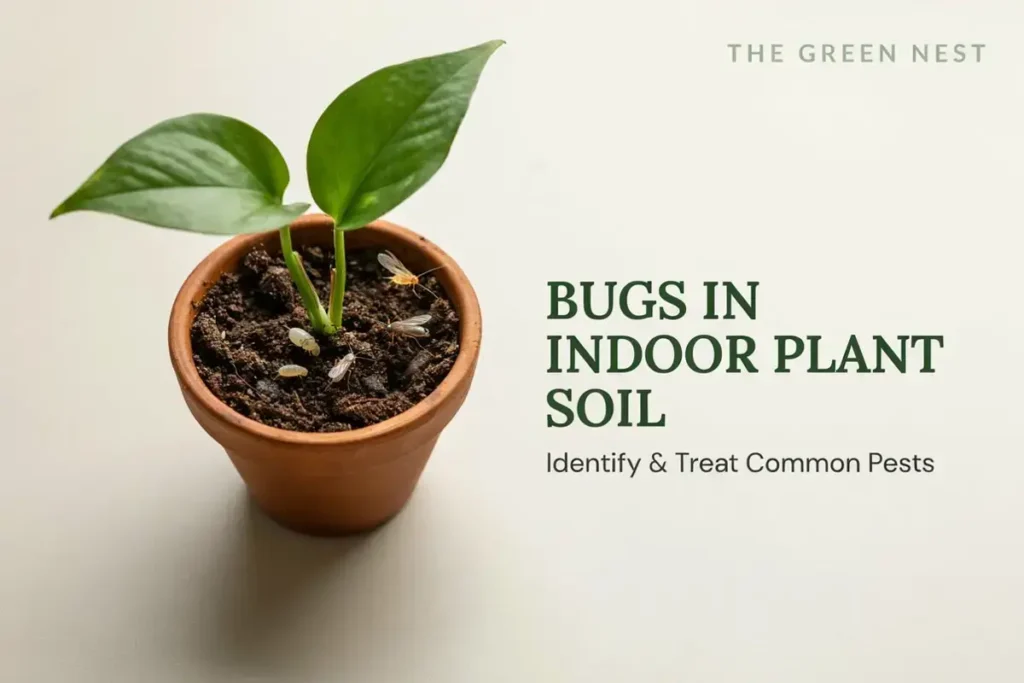
Finding bugs in indoor plant soil is one of the most unsettling discoveries you can make as a houseplant owner. One day your plants look fine, and the next you lift a pot or disturb the soil surface and find tiny creatures crawling, jumping, or flying up around your hands. The immediate question most people ask is whether these bugs are dangerous to the plant, to their home, or to their family. The honest answer depends entirely on which bug you are dealing with, because the soil of a typical indoor plant can harbor more than a dozen different species, and they range from completely harmless to genuinely destructive.
Bugs in indoor plant soil fall into two broad categories: those that actively damage your plant by feeding on roots or spreading disease, and those that are simply living in the moist organic environment of your potting mix without causing any real harm. Telling them apart before reaching for any treatment saves you time, money, and the risk of applying unnecessary chemicals in your home.
This guide covers every common bug you are likely to find in indoor plant soil, how to identify each one, which ones need treatment, and exactly how to eliminate the harmful ones without disrupting the beneficial soil ecology that keeps your plants healthy.
Quick Answer
The most common bugs found in indoor plant soil are fungus gnats, shore flies, springtails, root aphids, soil mites, and fungus beetles. Of these, fungus gnats and root aphids cause the most damage. Fungus gnat larvae feed on plant roots while root aphids drain root sap directly. Springtails and most soil mites are harmless decomposers. To treat harmful soil bugs, let soil dry out between waterings, apply a hydrogen peroxide soil drench, and use yellow sticky traps for flying adults.
Why Bugs Appear in Indoor Plant Soil
Before identifying specific bugs, it helps to understand why soil bugs appear in indoor plants in the first place. The answer almost always comes back to moisture.
Moist potting soil is an ideal environment for a wide range of small insects and mites. It provides food in the form of decomposing organic matter, fungi, and plant roots. It provides shelter from predators. And indoors, it provides a warm, stable temperature year-round with none of the seasonal cold that kills off soil insect populations in outdoor gardens.
The three conditions that most reliably create a soil bug problem indoors:
Overwatering. Consistently wet soil is the single biggest contributor to fungus gnat and shore fly infestations. These insects specifically seek out moist soil to lay their eggs, and they avoid dry soil entirely. A plant that dries out adequately between waterings is dramatically less attractive to soil-dwelling pests than one that sits in constantly damp potting mix.
Contaminated potting mix. Some bags of potting soil already contain fungus gnat eggs or larvae when you buy them, particularly bags that have been sitting in outdoor garden center conditions for an extended period. This is how a brand new plant in fresh soil can develop a gnat problem within days of being potted.
New plants from outside or from garden centers. Plants moved indoors from outdoor summer positions frequently bring hitchhiking soil insects with them. A thorough inspection before bringing any plant indoors, and ideally a period of isolation, catches most of these before they spread.
The 7 Most Common Bugs Found in Indoor Plant Soil
1. Fungus Gnat Larvae
Fungus gnats are the most frequently encountered soil bug in indoor plants across the country, and their larvae are the damaging stage of the life cycle. The adult fungus gnat is a small, dark-bodied fly about 2 to 3 millimeters long that you will see hovering around the soil surface or flying up when you water the plant. The adults are annoying but harmless. The larvae living in the soil are the actual problem.
Fungus gnat larvae are tiny, white, thread-like creatures with a distinctive shiny black head capsule. They live in the top 2 to 3 inches of soil and feed on fungi, decaying organic matter, and, critically, plant roots. Light root feeding on a healthy established plant causes minimal visible damage. Heavy infestations in young plants or seedlings cause wilting, yellowing, and growth stunting as the larvae destroy the fine root hairs the plant depends on for water and nutrient uptake.
How to confirm it is fungus gnats: Push a cut piece of raw potato into the top inch of soil and leave it for 24 hours. Fungus gnat larvae are attracted to potato starch and will gather beneath it. Pull it up and check the underside. If you see tiny white worms, you have confirmed a larval infestation.
Treatment: The most effective approach combines two methods targeting different life stages simultaneously.
For larvae in the soil, water the plant with a hydrogen peroxide drench: mix 1 part 3% hydrogen peroxide (standard drugstore variety) with 4 parts water and apply it as you would a normal watering. The hydrogen peroxide releases oxygen on contact with the soil, killing larvae on contact without harming plant roots. The bubbling you see when it hits the soil is the oxidation process working. Apply once a week for three weeks.
For adult gnats, place yellow sticky traps directly at soil level near affected plants. Adults are strongly attracted to yellow and will land on the traps. This reduces the adult population actively laying new eggs in the soil while the hydrogen peroxide drench addresses the larvae below.
Letting the soil dry out more thoroughly between waterings is the single most effective preventive measure. Fungus gnat larvae cannot survive in dry soil and adults will not lay eggs in it.
2. Springtails
Springtails are among the most commonly misidentified indoor plant bugs because they appear suddenly in large numbers and jump when disturbed, which understandably alarms most plant owners. They are tiny, usually 1 to 2 millimeters long, white, grey, or dark in color, and move by snapping a forked appendage under their body that launches them into the air.
Despite their alarming appearance and jumping behavior, springtails are completely harmless to plants. They are decomposers that feed exclusively on fungi, algae, and decaying organic matter in the soil. They do not feed on plant roots, stems, or leaves at any life stage. Their presence in large numbers is actually an indicator of healthy organic soil activity rather than a pest problem.
Do you need to treat them? No, if the only concern is plant health. Springtails cause zero plant damage.
If their presence indoors is bothering you personally, the fix is simple: let the soil dry out more between waterings. Springtails require moisture to survive and populations collapse rapidly when soil dries adequately. No chemical treatment is needed or recommended.
3. Soil Mites
Soil mites are microscopic to barely visible creatures that live in virtually every organic soil environment on earth. In indoor potting mix, they appear as tiny white, brown, or translucent specks moving slowly across the soil surface or on pot drainage holes.
Like springtails, the majority of soil mite species found in indoor plant soil are beneficial decomposers that feed on fungi, bacteria, and decaying plant material. They are a normal part of healthy soil ecology and their presence is not a sign of a problem.
The exception is a small number of mite species that do feed on plant roots and lower stem tissue. These root-feeding mites cause similar symptoms to root aphids: wilting, yellowing, and growth decline without obvious above-ground pests. If your plant shows these symptoms and you cannot find surface insects, gently remove the plant from its pot and inspect the root ball and lower stem for clusters of tiny mites.
Treatment for harmful root-feeding mites: Repot into fresh sterile potting mix, rinse the root ball thoroughly with water before repotting, and treat the new soil with a neem oil drench (2 tablespoons neem oil, 1 teaspoon dish soap, 1 quart water applied to the soil) once a week for three weeks.
For the majority of harmless soil mites, no treatment is needed.
4. Root Aphids
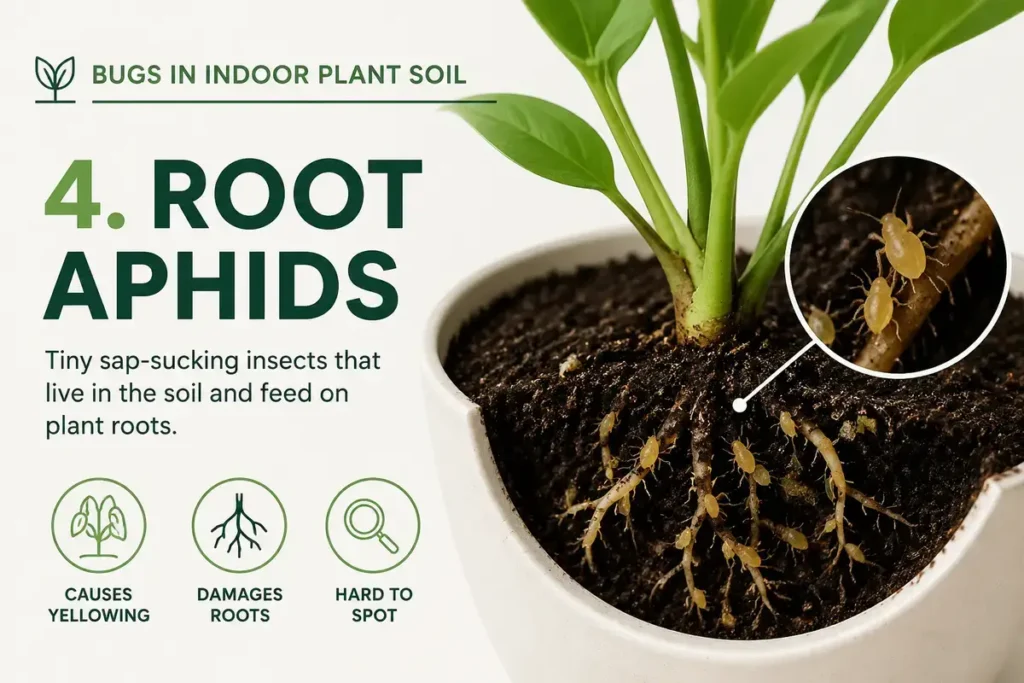
Root aphids are one of the most damaging soil bugs you can find in indoor plant soil and one of the most difficult to identify because they live entirely underground where they are not visible during routine plant care. They look similar to regular aphids but are typically white or cream-colored, rounder in shape, and lack the distinctive cornicles (tail pipes) visible on above-ground aphid species.
Root aphids feed by piercing root tissue and extracting sap directly, which causes progressive wilting, yellowing, and growth stalling that looks identical to symptoms of overwatering or underwatering. This diagnostic confusion is why root aphid infestations frequently go unidentified until they are severe.
How to confirm root aphids: If your plant shows wilting and decline and you cannot identify the cause above ground, carefully remove the plant from its pot and examine the root ball. Root aphids appear as small white or cream-colored clusters on roots, sometimes accompanied by a white waxy powder they secrete.
Treatment: Root aphids are significantly harder to treat than above-ground aphid species because most contact sprays cannot reach them in the soil.
The most effective approach is repotting into completely fresh sterile potting mix after rinsing the root ball thoroughly under running water to remove as many aphids as possible. Treat the new potting mix with a neem oil soil drench before repotting. Apply the drench weekly for one month after repotting to eliminate any aphids that survived the rinse and the move.
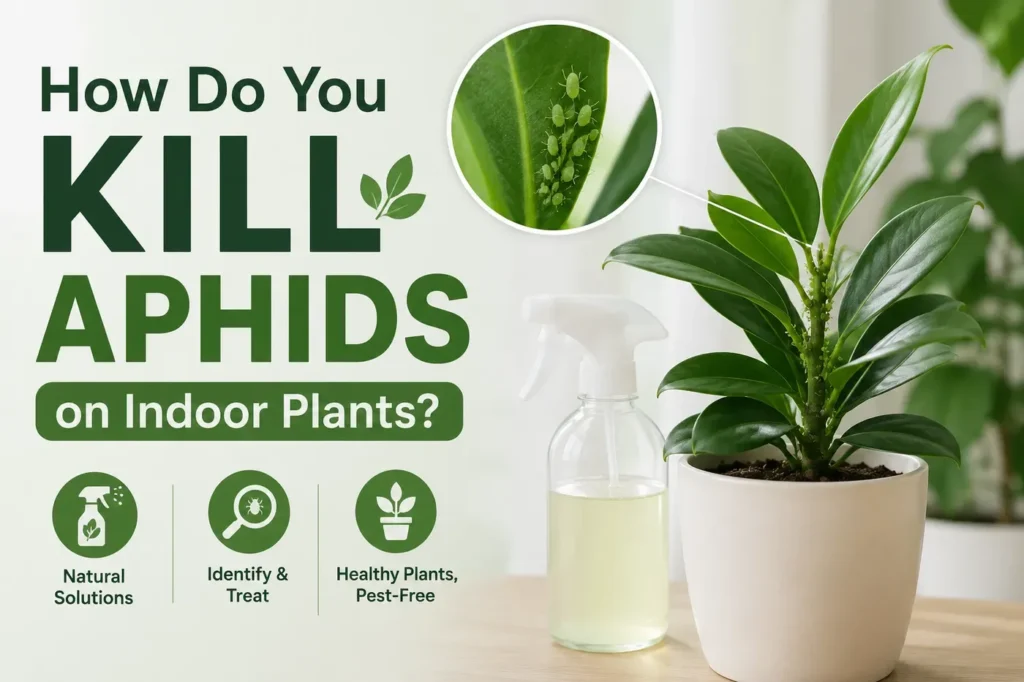
For a broader understanding of aphid identification and treatment across both above-ground and soil-dwelling species, how to get rid of aphids on indoor plants covers every method from manual removal through to systemic treatment in full detail.
5. Shore Flies
Shore flies are frequently confused with fungus gnats because they are similar in size and also hover around indoor plants. The key visual difference is that shore flies are stockier, darker, and have five distinctive white spots on their wings that fungus gnats lack. Shore flies also tend to run across the soil surface rather than hovering above it.
Shore flies feed on algae growing on the soil surface rather than on plant roots or decaying matter, which means they cause less direct plant damage than fungus gnats. However, they can carry and spread plant pathogens between pots as they move through a plant collection, making them worth treating in homes with multiple plants.
Treatment: The same approach used for fungus gnats works effectively for shore flies. Let soil dry out between waterings to eliminate the moist algae-covered surface they feed on. Yellow sticky traps catch adults. Improving air circulation around plants reduces the algae growth on soil surfaces that shore flies depend on.
6. Fungus Beetle Larvae
Several small beetle species lay their eggs in moist organic potting mix, and the larvae develop in the soil feeding on fungi and decaying matter before pupating and emerging as adults. The larvae are typically small, pale, and worm-like in appearance.
Most fungus beetle species cause minimal plant damage in typical indoor plant situations. However, very high populations in small pots can occasionally damage young roots when larvae run out of their preferred fungal food source.
Treatment: Improving drainage and allowing soil to dry adequately between waterings disrupts the breeding cycle. Replacing old, heavily decomposed potting mix with fresh sterile mix removes both the larval food source and any eggs already in the soil.
7. Millipedes and Centipedes
Finding a millipede or centipede in your indoor plant soil is startling but generally not cause for alarm. Millipedes are slow-moving, cylindrical, dark-colored, and have two pairs of legs per body segment. They are decomposers that feed on decaying organic matter and cause no plant damage whatsoever.
Centipedes are fast-moving predators with one pair of legs per body segment. Their presence in your potting soil actually indicates a healthy soil ecosystem with enough prey organisms to support a predator. They do not feed on plants and are generally beneficial in a gardening context.
Both typically enter indoor plant soil through contaminated potting mix or by hitchhiking on plants moved indoors from outside.
Treatment: Neither requires chemical treatment. If their presence is unwanted, repotting into fresh sterile potting mix removes them. Keeping soil drier reduces the decomposing matter environment they prefer.
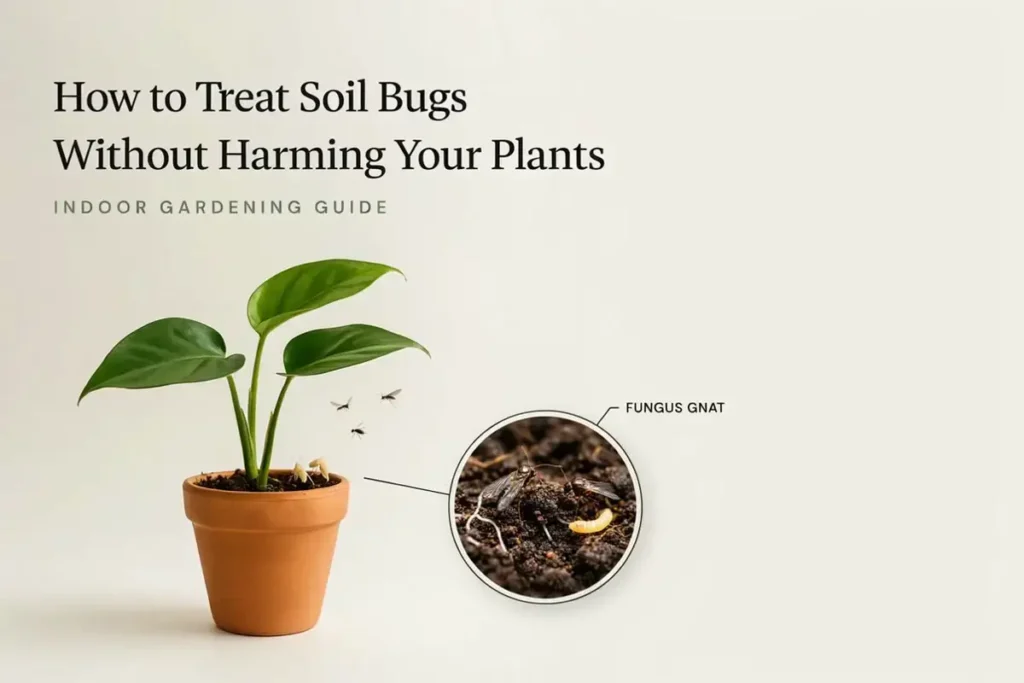
How to Treat Soil Bugs Without Harming Your Plants
Once you have identified which bug you are dealing with, here are the four most effective treatment approaches ranked by how broadly applicable they are.
Let the Soil Dry Out
This single step addresses the majority of soil bug problems indoors. Fungus gnats, shore flies, springtails, and most soil-dwelling mites require consistent moisture to survive and reproduce. A soil that dries out to at least 2 inches depth between waterings becomes inhospitable to most of these species within one to two weeks.
Stick your finger 2 inches into the soil before every watering. If it feels damp, wait. This change alone resolves mild fungus gnat infestations without any additional treatment in many cases.
Hydrogen Peroxide Soil Drench
The 1 part 3% hydrogen peroxide to 4 parts water drench is the most effective immediate treatment for larvae and eggs living in the soil. It kills on contact through oxidation, leaves no harmful residue, and does not harm plant roots at this dilution. Apply as a regular watering once weekly for three weeks for complete control of most larval soil infestations.
Neem Oil Soil Drench
A neem oil solution applied directly to the soil treats root aphids, soil-dwelling mites, and larvae of various soil insects. Mix 2 tablespoons of neem oil with 1 teaspoon dish soap and 1 quart of warm water and apply as a regular watering. The neem is absorbed through the roots and provides systemic protection against soil-dwelling pests.
For a detailed breakdown of how neem oil works as part of a broader indoor pest management approach, insecticidal soap for indoor plants covers how soap and neem combine for the strongest organic treatment results on both above-ground and soil pests.
Repotting Into Fresh Sterile Mix
For severe or persistent soil infestations, repotting is the most complete solution because it removes the infested medium entirely. Use a fresh, sterile potting mix from a sealed bag, clean the pot thoroughly with diluted bleach solution before reusing it, and rinse the root ball under running water before repotting to remove as many soil-dwelling insects as possible.
Preventing Soil Bugs in Indoor Plants
Water correctly. Allow soil to dry adequately between waterings based on each plant’s specific needs. Overwatering is the root cause of most soil bug infestations in indoor plants.
Inspect new plants before they join your collection. Check soil surfaces, root balls when repotting, and drainage holes of any new plant before placing it near existing plants. A one-week isolation period for new acquisitions catches soil bug hitchhikers before they spread.
Use quality sterile potting mix. Avoid using garden soil or homemade compost mixes indoors without sterilization. Bagged sterile potting mixes from reputable brands start bug-free in ways that outdoor soils never do.
Improve drainage. Pots with adequate drainage holes and a well-structured potting mix that drains freely rather than holding excessive moisture create conditions that are significantly less hospitable to most soil bug species.
Keep the soil surface clean. Remove fallen leaves and dead plant material from the soil surface promptly. Decaying matter on the soil surface is a primary food source and breeding site for fungus gnats, shore flies, and fungus beetles.
Keeping your plants healthy and well-nourished is also one of the most effective defenses against all types of indoor plant pests. A strong plant with a healthy root system is significantly more resilient to root-feeding bugs than a stressed, malnourished one. For guidance on the right fertilizer approach, natural fertilizer for indoor plants covers the organic feeding options that support long-term root health without the chemical overload that can damage the beneficial soil organisms your plants depend on.
Conclusion
Not every bug in your indoor plant soil is a problem worth treating. Springtails and most soil mites are harmless decomposers doing useful work in your potting mix. Millipedes and centipedes are rarely harmful and often beneficial. The bugs genuinely worth your attention are fungus gnat larvae, root aphids, and shore flies, all of which can cause real damage to roots and spread pathogens through a plant collection if left unchecked.
The most effective response in almost every case starts with the same step: let the soil dry out more thoroughly between waterings. This single change makes your indoor plant soil dramatically less attractive to every harmful soil bug species covered in this guide. Add a hydrogen peroxide drench for active larval infestations, yellow sticky traps for flying adults, and repot into fresh sterile mix for severe cases, and the overwhelming majority of soil bug problems resolve completely within three to four weeks.
Identify before you treat, address moisture before you reach for chemicals, and your plants and their soil ecosystem will be better for it.
Frequently Asked Questions
Are bugs in indoor plant soil harmful to humans?
The vast majority of bugs found in indoor plant soil pose no health risk to humans. They do not bite, sting, or transmit disease to people. Fungus gnat adults are the most noticeable nuisance since they fly around the home, but even these are harmless beyond the annoyance factor. Centipedes found in plant soil can technically bite if handled roughly but rarely do so and their venom causes only mild, localized irritation at worst.
How do I know if my indoor plant soil bugs are harmful or harmless?
The most reliable diagnostic is plant health. If your plant is growing normally with no wilting, yellowing, or growth stalling, any bugs in the soil are almost certainly harmless decomposers. If the plant is declining despite appropriate watering and light, and you cannot find above-ground pests, suspect root aphids or a heavy fungus gnat larval infestation and investigate the root zone more closely.
Can I use cinnamon to get rid of bugs in indoor plant soil?
Cinnamon has mild antifungal properties and is sometimes recommended as a deterrent for fungus gnats because it suppresses the fungi that larvae feed on. Sprinkling cinnamon on the soil surface does reduce the fungal food source available to larvae and may help as a preventive measure in conjunction with proper watering practices. It is not strong enough to eliminate an established infestation on its own and should not replace hydrogen peroxide drenching or proper moisture management for active infestations.
Why do I keep getting fungus gnats even after treatment?
Recurring fungus gnat infestations after treatment almost always come down to one of three causes: the soil is still staying too wet between waterings and providing ideal egg-laying conditions for adults, treatment stopped before the full three-week cycle needed to catch newly hatched larvae from surviving eggs, or a neighboring untreated plant is acting as a reservoir from which adults continuously reinfest treated pots. Addressing all three simultaneously rather than just the most visible symptom resolves persistent infestations in the majority of cases.
Should I repot my plant if I find bugs in the soil?
Repotting is the most complete solution for severe infestations but is not always necessary for mild ones. For fungus gnats, adjusting watering and applying a hydrogen peroxide drench usually resolves the problem without repotting. For root aphids, repotting into fresh sterile mix is genuinely the most reliable treatment because contact treatments cannot reach root-dwelling aphids effectively in situ. When in doubt about severity, check the root ball by gently removing the plant from its pot before deciding whether repotting is warranted.
Is it normal to have bugs in potting soil?
Yes, to a degree. No potting mix stays completely free of all micro-organisms and small invertebrates indefinitely in a moist indoor environment. A small population of springtails or harmless soil mites in established potting mix is entirely normal and not a cause for concern. What is not normal, and worth addressing, is a visible population of fungus gnat larvae, a large number of flying adult gnats, signs of root damage, or plant decline that correlates with soil-dwelling pest activity.