
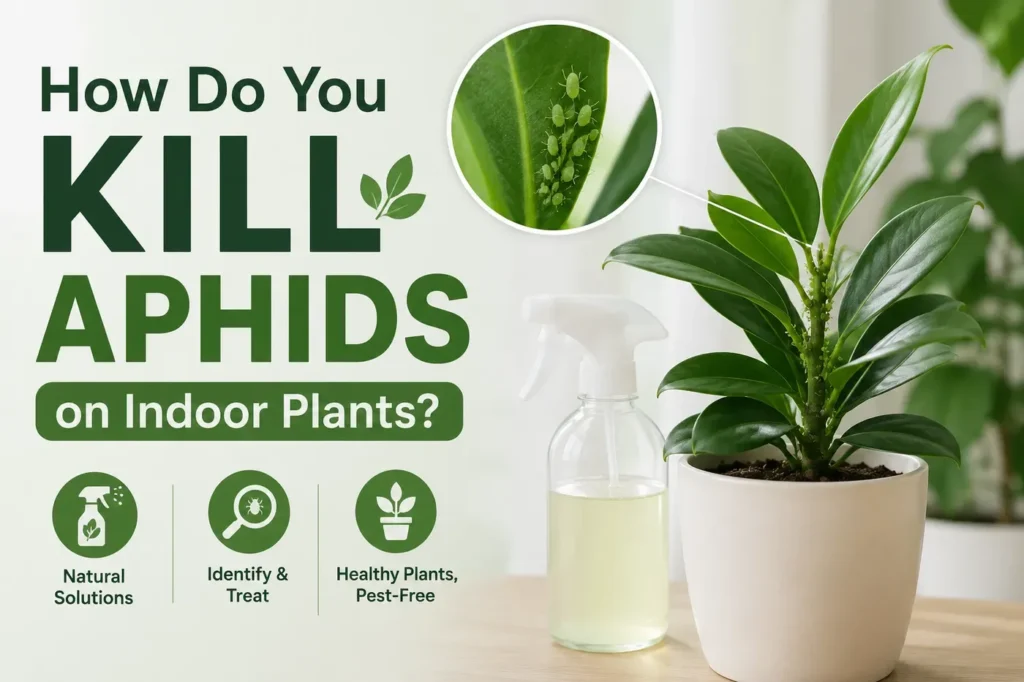
Two weeks ago I noticed the leaves on my pothos looked wrong. They were curling slightly at the edges and had a faint sticky residue on them that was not there before. I turned a leaf over and found exactly what I was hoping not to find: a cluster of tiny, soft-bodied green insects packed together along the stem like rush-hour commuters.
Aphids.
If you have found this page, you are probably looking at something similar right now and wondering how bad the situation actually is. Here is the honest answer: aphids on indoor plants are a serious problem, but they are also one of the most solvable pest problems you will face as an indoor gardener. With the right approach applied consistently, most infestations are completely cleared within two to three weeks. Some respond within days.
This guide covers 10 methods for killing aphids on indoor plants, ranked from the gentlest and most immediate to the more heavy-duty options for stubborn or large infestations. You will also learn why aphids keep coming back even after you think you have dealt with them, which plants are most vulnerable, and what to do the moment you spot the first one to stop a small problem from becoming a large one.
Quick Answer
To kill aphids on indoor plants, start by spraying the plant thoroughly with a mixture of water and a few drops of dish soap, making sure to coat the undersides of leaves where aphids cluster. For larger infestations, neem oil spray is the most effective organic treatment available. Repeat every 3 to 4 days for two weeks to break the aphid reproductive cycle completely. Manual removal with a damp cloth or a strong blast of water works well for immediate control between spray applications.
What Are Aphids and Why Are They Such a Problem Indoors
Aphids are tiny soft-bodied insects, usually between 1 and 3 millimeters long, that feed by piercing plant tissue and sucking out the nutrient-rich sap inside. They come in several colors including green, black, yellow, brown, and red depending on the species, but they all cause the same damage.
The reason aphids are particularly destructive indoors compared to outside is the absence of natural predators. In a garden, ladybugs, lacewings, and parasitic wasps keep aphid populations in check naturally. Inside your home, none of those predators exist, which means an aphid population can grow completely unchecked.
And they grow fast. A single aphid can produce up to 80 offspring per week without mating, through a process called parthenogenesis where females give birth to live young that are already pregnant. Within two weeks, a small cluster of aphids becomes a colony. Within a month, a colony becomes an infestation serious enough to cause significant visible damage to your plants.
The damage shows up as:
- Leaves curling, puckering, or distorting
- Yellowing leaves that drop prematurely
- Sticky residue called honeydew coating leaves and nearby surfaces
- Black sooty mold growing on top of that honeydew
- Stunted new growth or shoots that fail to develop properly
Catching aphids early makes every treatment on this list faster and more effective. The moment you see any of these signs, check the undersides of leaves immediately.
How to Check Your Plants for Aphids
Aphids rarely sit on the top surface of leaves where they are easy to spot. They prefer the undersides of leaves and the soft new growth at stem tips, which is where sap concentration is highest.
To check properly, turn leaves over and look along the central vein where aphids cluster most densely. Check where leaves attach to stems. Look at any new shoots or buds. If you see small soft-bodied insects in clusters, sticky residue, or ants moving up and down the stem (ants farm aphids for their honeydew and will actually protect them from predators), you have aphids.
Check every plant nearby at the same time. Aphids spread to neighboring plants quickly, and treating one plant while leaving an infested neighbor untouched means the problem returns within days.
10 Methods to Kill Aphids on Indoor Plants
Method 1: Manual Removal
The fastest way to get immediate control of an aphid problem is to physically remove the insects before applying any spray treatment. This sounds basic but it is genuinely effective and an important first step before any of the methods below.
Put on a pair of disposable gloves and wipe aphid clusters off stems and leaf undersides using a damp cloth or paper towel. For heavily infested leaves that cannot be cleaned easily, remove and bag them completely. Drop all collected material directly into a sealed bag and into the trash rather than your compost bin.
Manual removal will not eliminate an infestation on its own because it misses eggs and the aphids hidden deep in curled leaves, but it reduces the population immediately and makes every follow-up treatment more effective by lowering the numbers the spray has to deal with.
Method 2: Water Spray
A strong spray of water dislodges aphids from plant tissue and kills a significant portion of them through the physical force of impact. This is the most immediate zero-cost method available and works well for mild infestations on plants sturdy enough to handle it.
Take your plant to a sink or shower and spray the foliage with a firm stream of water, working methodically across every leaf surface and paying particular attention to undersides. The water pressure physically knocks aphids off the plant and they cannot climb back up.
The limitation of water spray alone is that it does not kill aphid eggs or the aphids hidden in tightly curled leaves. It needs to be combined with one of the spray treatments below for complete control. Use it every two to three days as a knockdown measure between spray applications. For a deeper look at what else might be living in your plant environment, bugs in indoor plant soil covers the soil-dwelling pests that sometimes accompany aphid infestations.
Method 3: Dish Soap Spray
Dish soap spray is the most widely used home remedy for aphids, and unlike many home remedies, it actually works. The soap breaks down the waxy coating on the aphid’s body, causing it to dehydrate and die. It also suffocates soft-bodied insects by blocking their breathing pores.
How to make it:
Mix 1 teaspoon of plain dish soap with 1 quart of water in a spray bottle. Use plain dish soap without added moisturizers, bleach, or antibacterial agents. Dawn Original is the most commonly recommended brand in the US and consistently performs well.
Spray the solution thoroughly across the entire plant, covering all leaf surfaces including undersides, stems, and new growth. Leave it on for a few hours, then rinse the plant with plain water to prevent any potential leaf burn.
Apply every 3 to 4 days for two full weeks. The two-week timeline is important because it covers the aphid reproductive cycle and catches newly hatched eggs that the first application missed.
Important: Test on a single leaf first and wait 24 hours before treating the whole plant. Some sensitive plants like ferns and succulents can react badly to soap spray even at low concentrations.
Method 4: Neem Oil Spray
Neem oil is extracted from the seeds of the neem tree and is the most effective organic aphid treatment available for indoor use. Its active compound, azadirachtin, works differently from soap spray. Rather than killing on contact, it disrupts the hormonal system of insects, preventing them from feeding, molting, and reproducing. It also has residual effectiveness that lasts several days after application, unlike soap spray which only works while wet.
Neem oil is the treatment to reach for when a dish soap spray alone is not fully clearing the infestation after the first week.
How to use it:
Mix 2 tablespoons of neem oil with 1 teaspoon of dish soap and 1 quart of warm water. The soap acts as an emulsifier that keeps the oil suspended in water. Shake the bottle thoroughly before each use as the mixture separates quickly.
Spray the entire plant thoroughly, covering leaf undersides and all stem surfaces. Apply in the evening rather than during bright daylight to avoid any potential leaf burn from the oil concentrating under intense light.
Use every 5 to 7 days for two to three weeks. Neem oil is safe for humans and pets once dry, breaks down naturally in the environment, and does not harm beneficial insects like bees when applied indoors where bees are not present.
Pure cold-pressed neem oil is available at most US garden centers and on Amazon. The Garden Safe and Bonide brands are both widely available and consistently effective.
Method 5: Rubbing Alcohol Spray
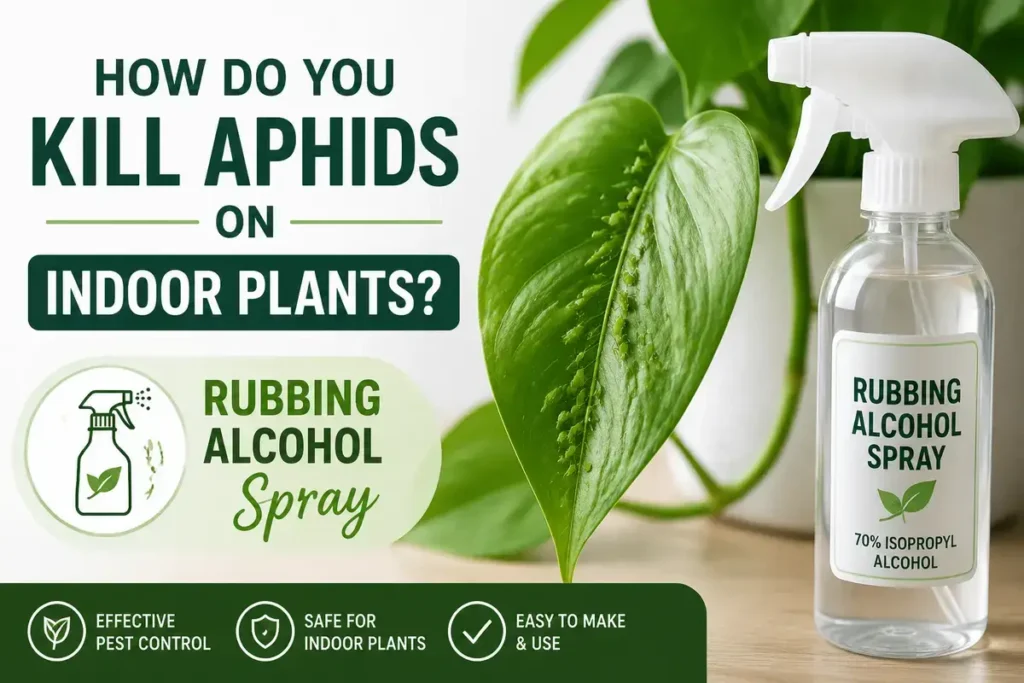
Rubbing alcohol dissolves the waxy protective coating on aphids on contact, killing them quickly. It is particularly useful for spot-treating dense clusters on stems where a spray might not penetrate as effectively.
How to use it:
Mix 1 part 70% isopropyl rubbing alcohol with 1 part water. Dip a cotton ball or cotton swab in the solution and apply directly to aphid clusters on stems and tight spots that a spray bottle cannot reach. For broader coverage, put the solution in a spray bottle and treat the whole plant.
Rinse the plant with plain water after 30 minutes. Like soap spray, test on a single leaf first and wait 24 hours before treating the entire plant.
Rubbing alcohol is particularly effective for mealybugs and scale in addition to aphids, so if your plant has a mixed pest problem it handles more than one issue at once.
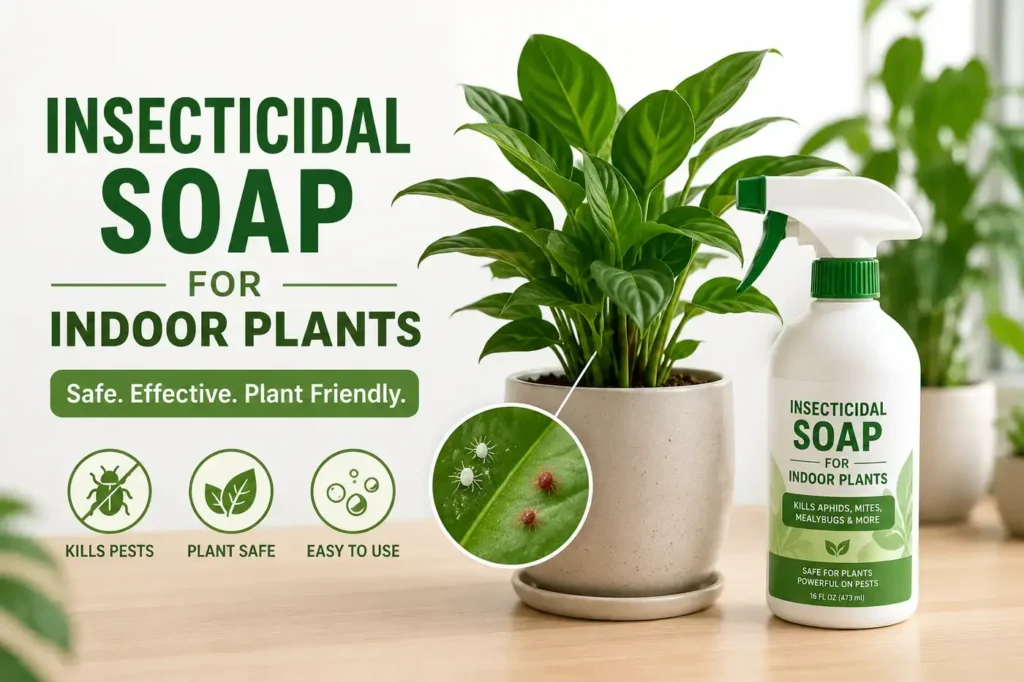
Method 6: Insecticidal Soap
Commercial insecticidal soap products work on the same principle as dish soap spray but are specifically formulated for plant use, which means they are safer for sensitive plants and more consistently effective across a wider range of species.
Brands like Safer Brand Insect Killing Soap and Bonide Insecticidal Soap are widely available at Home Depot, Lowe’s, and on Amazon across the US. They come ready to use or as concentrates you dilute with water.
For anyone who has had dish soap spray cause leaf damage on a sensitive plant, switching to a dedicated insecticidal soap product usually solves that problem while maintaining the same aphid-killing effectiveness. For a full comparison of available products and how to apply them correctly, insecticidal soap for indoor plants covers everything you need to know before buying.
Apply according to the product label instructions, which typically means every 4 to 7 days for two weeks. Coat all leaf surfaces thoroughly including undersides.
Method 7: Diatomaceous Earth
Diatomaceous earth is a fine powder made from fossilized algae that kills insects through physical rather than chemical means. The microscopic sharp edges of the powder pierce the waxy coating of soft-bodied insects like aphids, causing them to dehydrate and die. It has zero toxicity to humans, pets, or plants.
How to use it indoors:
Dust a light layer of food-grade diatomaceous earth across the soil surface of affected plants and around the base of stems. It works as a barrier that aphids and other crawling insects must cross, and it remains effective as long as it stays dry.
The limitation indoors is that it loses effectiveness when wet and does not work on flying aphids. Use it as a supplementary barrier treatment alongside one of the spray methods above rather than as a standalone solution.
Food-grade diatomaceous earth is available at most US hardware stores and garden centers. Harris is one of the most widely available brands and comes in sizes suitable for indoor use.
Method 8: Yellow Sticky Traps
Yellow sticky traps do not kill aphids already living on your plants, but they are one of the most effective tools for monitoring infestation levels and catching winged aphids before they spread to new plants.
Aphids are strongly attracted to the color yellow. Place sticky traps near affected plants and check them every few days. A high catch rate tells you the infestation is still active and spreading. A declining catch rate tells you your spray treatments are working.
In a room with multiple plants, sticky traps placed between plants catch winged aphids mid-flight before they land and start new colonies on previously clean plants. This containment function is often more valuable than the direct killing effect.
Yellow sticky traps are available at virtually every US garden center and on Amazon in multipacks for under ten dollars.
Method 9: Introduce Beneficial Insects
Indoors this option sounds unusual, but it is genuinely effective for persistent or large infestations in enclosed spaces like greenhouses, sunrooms, or large indoor plant collections.
Ladybugs are the most well-known aphid predator and a single ladybug can consume up to 50 aphids per day. Lacewing larvae are even more aggressive, consuming up to 200 aphids per week each. Both can be ordered online and released near infested plants.
The practical limitation for a standard apartment or home is that introduced beneficial insects will eventually leave or die once the aphid food source is depleted, which means this approach works best as a one-time population knockdown for severe infestations rather than an ongoing prevention strategy.
If you are interested in which insects help your plants rather than harm them, beneficial bugs for indoor plants covers the full range of predatory and helpful insects that work in an indoor gardening environment.
Method 10: Systemic Insecticides
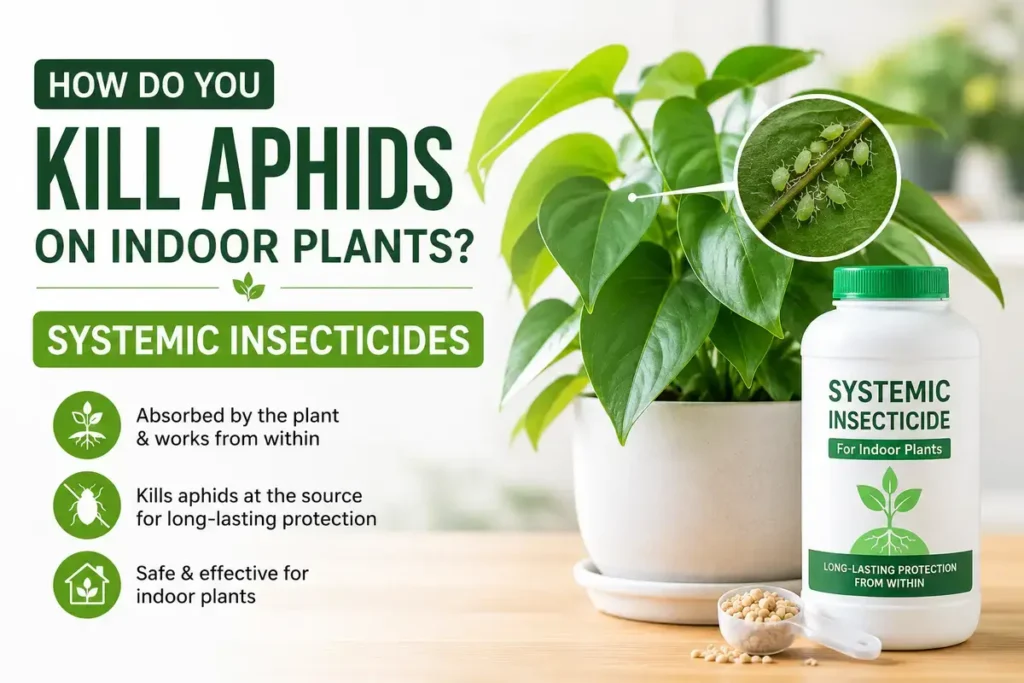
When every organic method has been tried for three or more weeks and the infestation persists, a systemic insecticide is the most effective remaining option. Systemic insecticides are absorbed into the plant tissue itself, which means aphids ingest the insecticide when they feed and die as a result. They cannot develop resistance to it the way they can with surface sprays.
Bonide Systemic Houseplant Insect Control is one of the most widely available products in the US for indoor use. It is applied to the soil as granules and absorbed through the roots over several weeks.
The important limitation to understand with systemic insecticides is that they are not suitable for food-producing plants like herbs or indoor vegetables. Use them only on ornamental houseplants. Read the product label carefully before application.
This is the nuclear option and should genuinely be a last resort. Most indoor aphid infestations respond fully to neem oil and insecticidal soap treatments before reaching this point.
Why Aphids Keep Coming Back
This is the question most people ask after dealing with aphids for the first time. You treat the plant, the aphids seem to disappear, and then two weeks later they are back. Here is why that happens and how to stop it.
Eggs survive treatment. Most spray treatments kill adult aphids and nymphs but do not penetrate aphid eggs, which are laid in sheltered spots along stems and in soil. Those eggs hatch after treatment stops and the cycle restarts. The solution is to continue treating for a full two weeks even after visible aphids are gone, to catch newly hatched nymphs before they mature and reproduce.
Ants are protecting them. If you have ants in or near your indoor plant area, they may be actively farming your aphids for honeydew and moving them to new plants. Treating the aphids without addressing the ants means the ants simply relocate surviving aphids to new feeding spots. A ring of diatomaceous earth around the pot base stops ants from reaching the plant.
An infested neighbor plant was not treated. Aphids spread between plants quickly. Treating one plant while leaving a neighboring infested plant untreated means reinfection happens within days. Always check and treat every plant in the immediate area at the same time.
The plant is stressed. Aphids target weakened plants preferentially because stressed plants produce higher concentrations of free amino acids in their sap, which is exactly what aphids feed on. Overwatered, underlit, or underfed plants attract aphids more reliably than healthy ones. Addressing the underlying stress factor makes your plants significantly more resistant to future infestations. Keeping your plants well-nourished with the right products makes a real difference, and best liquid fertilizer for indoor plants covers which options keep houseplants strong and pest-resistant long term.
Which Indoor Plants Are Most Vulnerable to Aphids
Aphids are not equally attracted to all plants. Soft, fast-growing plants with high sap content are the most common targets. In a typical US indoor plant collection, the most vulnerable are:
Herbs: Basil, mint, and cilantro are among the most aphid-prone indoor plants, partly because they grow fast and produce a lot of soft new growth that aphids prefer.
Roses: Indoor roses attract aphids reliably, particularly in spring when new growth is most tender.
Hibiscus: One of the most aphid-prone houseplants in the US, particularly during warm months.
Pothos and Philodendrons: Less common targets but frequently affected in large collections where aphids spread from more vulnerable plants.
Citrus trees: Aphids love the soft new growth on indoor citrus trees and can cause significant damage to new shoots.
Knowing which of your plants are most vulnerable tells you where to focus your checking routine. A weekly inspection of your herbs and hibiscus catches problems in the early stage when a single spray treatment is usually enough to clear them completely.
How to Prevent Aphids From Coming Back
Treating an infestation clears the immediate problem. Preventing it from returning requires a few straightforward habits that do not take much time once they are built in.
Inspect new plants before bringing them home. Aphids hitch rides on new plants purchased from garden centers. Before any new plant enters your home, inspect it thoroughly for aphids, eggs, and sticky residue. A one-week quarantine period for new plants in a separate room catches any pests that were not visible at purchase.
Check plants weekly. A two-minute check of the undersides of leaves on your most vulnerable plants every week catches infestations at the single-cluster stage when a single manual removal or one soap spray application handles them completely.
Keep plants healthy. Stressed plants attract aphids. Adequate light, appropriate watering, and regular fertilization keep your plants producing strong cell walls that are harder for aphids to pierce. A plant growing in the right conditions is genuinely more resistant to aphid attack than a stressed one.
Use preventive neem oil applications. A monthly neem oil spray applied as a preventive measure disrupts the hormonal system of any aphids that land on your plant before they establish a colony. Many experienced indoor gardeners treat their entire plant collection with a diluted neem spray once a month through spring and summer as standard maintenance rather than waiting for a visible problem.
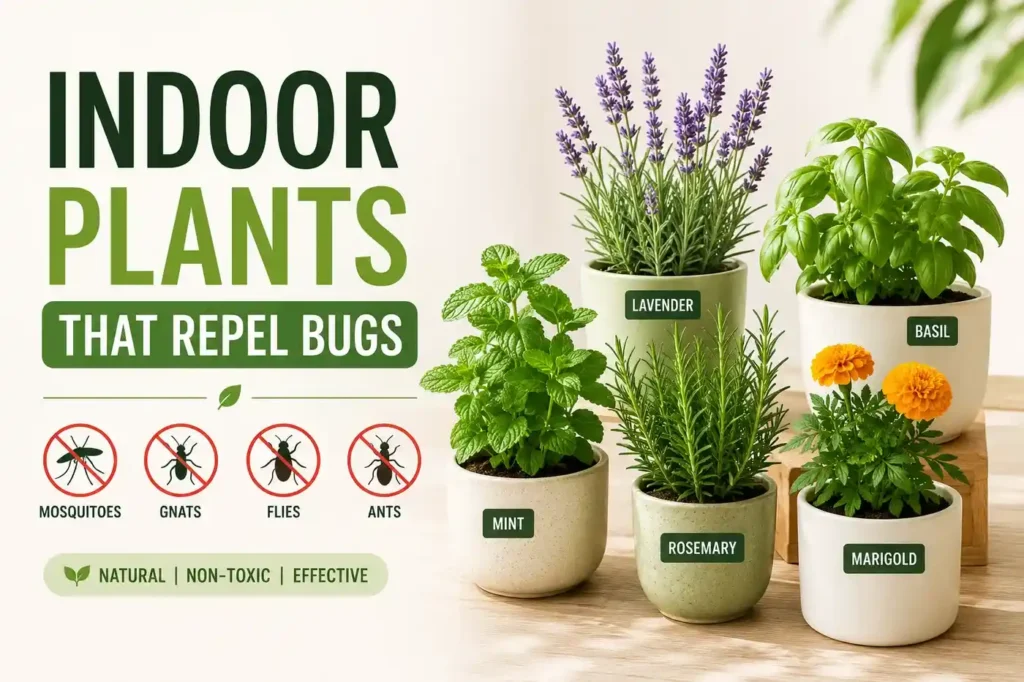
Keep plants that repel aphids nearby. Certain plants produce compounds that aphids actively avoid. Growing these near your most vulnerable plants reduces infestation frequency noticeably over time. The full list of indoor plants that repel bugs covers which plants work best for this purpose and where to position them for maximum effect.
Conclusion
Aphids on indoor plants are genuinely one of the most manageable pest problems you will face as an indoor gardener, as long as you act quickly and treat consistently. The moment you spot curling leaves, sticky residue, or the insects themselves, start with a manual wipe-down followed by a dish soap or neem oil spray applied every three to four days for two full weeks.
The two-week treatment window is the part most people cut short, and that is exactly why aphids keep coming back. Visible aphids disappearing after the first or second spray does not mean the infestation is gone. It means the adults are dead and the eggs are about to hatch. Keep treating through the full cycle and you break the reproductive chain completely.
Check your other plants at the same time. Keep new plants quarantined before introducing them to your collection. Feed your plants well so they grow strong rather than stressed. Those three habits, combined with a monthly preventive neem oil spray, make aphid infestations a rare exception rather than a recurring problem in your indoor garden.
Frequently Asked Questions
What kills aphids on indoor plants instantly?
Rubbing alcohol applied directly to aphid clusters with a cotton swab kills them on contact. A strong blast of water also knocks them off and kills a significant portion immediately. For broader instant control, a thoroughly applied dish soap spray kills adult aphids within minutes of contact. No treatment kills eggs instantly, which is why consistent follow-up applications over two weeks are always necessary.
Can aphids kill an indoor plant?
Yes, a severe untreated aphid infestation can eventually kill a plant, particularly smaller or younger ones. Aphids drain sap at a rate that outpaces the plant’s ability to replace it, causing progressive wilting, leaf drop, and eventually plant death. More commonly, heavily infested plants survive but show significant growth stunting and aesthetic damage. Early treatment prevents serious harm in almost every case.
Is dish soap safe for all indoor plants?
Most indoor plants tolerate diluted dish soap spray without damage. Sensitive plants including ferns, succulents, cacti, and some orchids can develop leaf burn or spotting from soap application. Always test on a single leaf and wait 24 hours before treating the whole plant. If soap causes damage, switch to a commercial insecticidal soap product formulated specifically for plant use.
How long does it take to get rid of aphids completely?
Most infestations are fully cleared within two to three weeks of consistent treatment. Mild infestations caught early sometimes clear within one week. Severe or entrenched infestations may take three to four weeks. The key variable is consistency: treating every three to four days throughout the cycle rather than stopping when visible insects disappear.
Do aphids live in the soil of indoor plants?
Aphids primarily live and feed on the above-ground parts of plants, particularly leaf undersides and stem tips. However, some aphid species do target roots and live in soil, causing wilting and decline without visible above-ground insects. If your plant shows aphid damage symptoms but you cannot find insects on the foliage, check the roots when repotting.
Why do my indoor plants keep getting aphids?
Recurring aphid infestations usually come down to one of four causes: treatment stopped before eggs hatched, an infested neighboring plant was not treated, ants are protecting and relocating aphids, or the plant is under stress and producing the high amino acid sap that aphids specifically target. Addressing the root cause of stress through proper light, watering, and nutrition is the most effective long-term prevention.
Are aphids harmful to humans?
Aphids pose no direct harm to humans. They do not bite, sting, or carry diseases transmissible to people. The honeydew they produce can attract other pests like ants and fungus gnats, and the sooty mold that grows on honeydew can affect air quality in a small enclosed room if the infestation is extremely large and prolonged, but this is an uncommon scenario in typical indoor plant settings.
Pingback: Insecticidal Soap for Indoor Plants 6 Ways to Make It and Get Results - Plant Quill
Pingback: 9 Beneficial Bugs for Indoor Plants That Fight Pests Naturally - Plant Quill