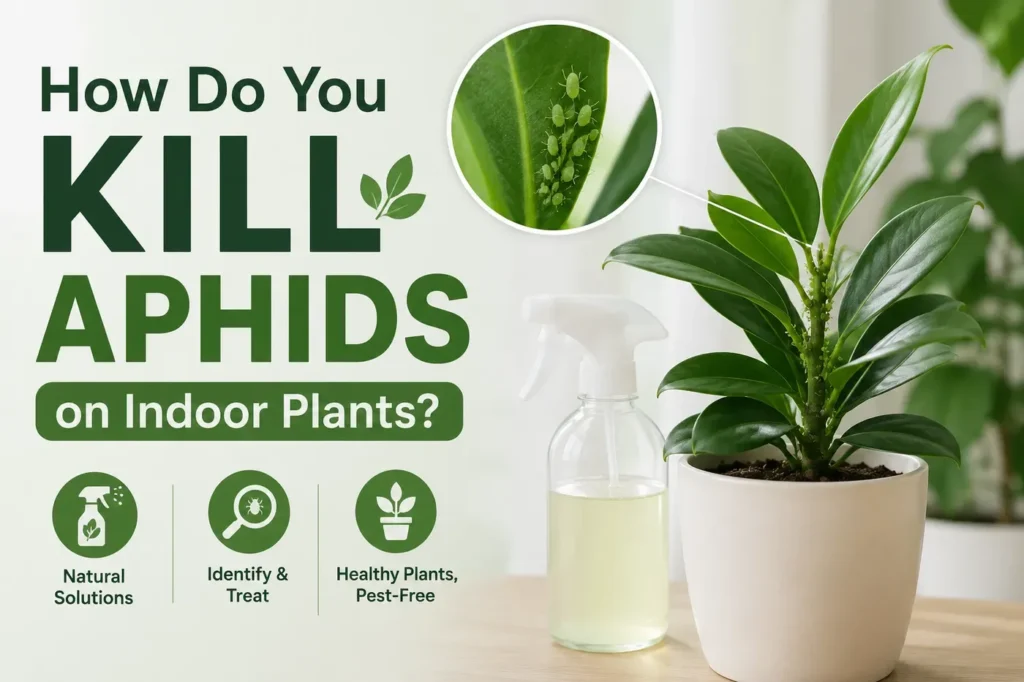
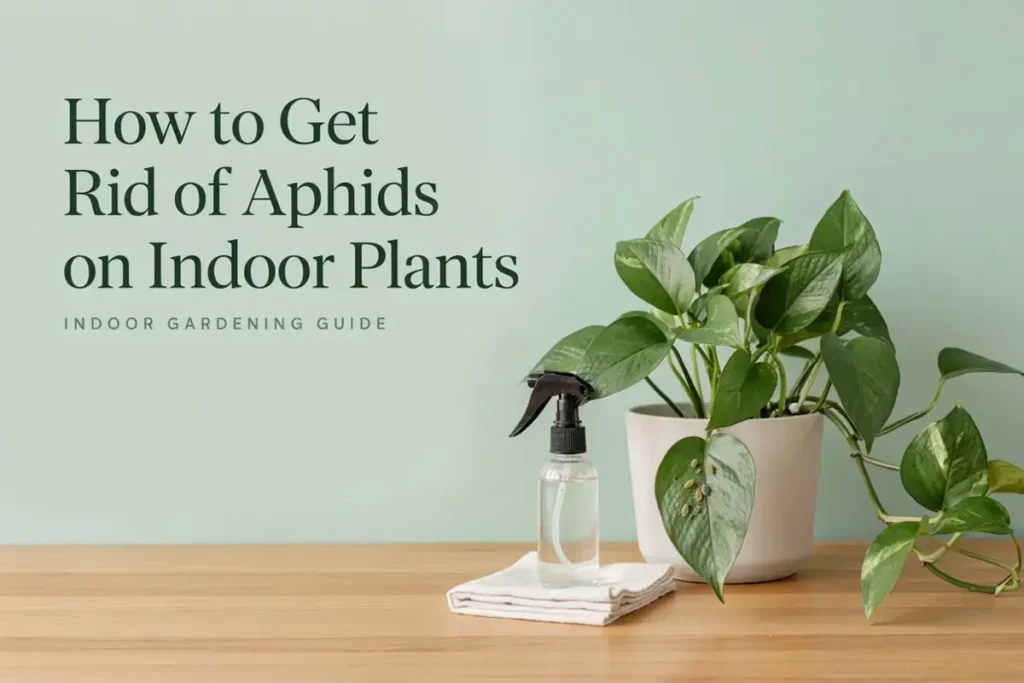
Finding aphids on your indoor plants is frustrating, but knowing how to get rid of aphids on indoor plants quickly and completely is simpler than most people expect. These tiny soft-bodied insects multiply fast, drain your plants of nutrients, and spread between pots before you realize what is happening. Left untreated for even two weeks, a small cluster of aphids becomes a full infestation capable of stunting growth, deforming new leaves, and eventually killing a vulnerable plant entirely. The good news is that with the right combination of methods applied consistently, most indoor aphid problems are fully resolved within two to three weeks, often less when caught early.
This guide walks you through every step of the process: identifying aphids correctly, understanding why they showed up in the first place, and working through nine proven removal methods in order from the most immediate to the most heavy-duty. By the end, you will know exactly what to do today, what to do over the next two weeks, and how to make sure aphids do not come back once you have cleared them.
Quick Answer
To get rid of aphids on indoor plants, start by wiping visible clusters off stems and leaf undersides with a damp cloth. Follow immediately with a spray of 1 teaspoon dish soap mixed in 1 quart of water, covering every leaf surface including undersides. Repeat every 3 to 4 days for two full weeks. For stubborn infestations, switch to neem oil spray applied every 5 to 7 days. Always treat every plant in the immediate area at the same time to prevent reinfection.
How to Identify Aphids on Indoor Plants
Before treating anything, confirm you are actually dealing with aphids rather than another pest. Misidentifying the pest means applying the wrong treatment and losing time while the problem grows.
Aphids are tiny, usually between 1 and 3 millimeters long, and appear in clusters rather than as isolated individuals. They come in several colors including green, yellow, black, brown, and pink depending on the species, but the clustering behavior is consistent across all of them. You will typically find them packed together along stems, at the base of new leaves, and particularly on the undersides of foliage where sap concentration is highest and they are sheltered from light.
Signs that confirm an aphid infestation:
- Sticky residue on leaves or surrounding surfaces called honeydew, which aphids excrete as a byproduct of feeding
- Black sooty mold growing on top of that honeydew residue
- Leaves curling, puckering, or distorting at the edges
- New growth that looks stunted, deformed, or fails to develop properly
- Ants moving up and down plant stems, which indicates aphids since ants farm aphids for their honeydew and actively protect them
If you see small clusters of soft-bodied insects matching this description, you have aphids. Check every other plant in the room immediately because by the time you notice aphids on one plant, neighboring plants are often already affected.
Why Aphids Appear on Indoor Plants
Understanding why aphids showed up in the first place helps you prevent them from returning after treatment. Aphids do not appear randomly. There are consistent reasons they target specific plants.
Stressed or weakened plants. A plant under stress produces higher concentrations of free amino acids in its sap, which is exactly what aphids seek out. Overwatering, underwatering, insufficient light, and poor nutrition all create stress that makes plants significantly more attractive to aphids than healthy specimens growing in ideal conditions.
New plants brought indoors. This is the most common entry point for aphids in a home that did not have them before. Plants purchased from garden centers, received as gifts, or moved indoors from outside frequently carry aphids or aphid eggs that were not visible at the time of purchase.
Open windows and doors. Winged aphids can fly short distances and enter homes through open windows during spring and summer. Once inside, they locate plants and establish colonies without the natural predators that would control them outdoors.
Warm, dry indoor conditions. Aphids thrive in warm temperatures with low humidity, which describes the indoor environment in most US homes during winter when heating systems run continuously. This is why indoor aphid problems often peak in late winter and early spring.
Step-by-Step: How to Get Rid of Aphids on Indoor Plants
Work through these methods in order. Start with steps 1 and 2 immediately, then continue with the spray treatment that best fits your infestation level.
Step 1: Isolate the Affected Plant
The moment you confirm aphids, move the affected plant away from all other plants in your home. Aphids spread through direct plant-to-plant contact and through winged adults that fly between pots. Isolation stops the spread while you treat the problem.
Move the plant at least 3 feet away from its neighbors, or ideally into a separate room while treatment is ongoing. Check every plant it was previously near for signs of infestation and treat them simultaneously even if they appear clean.
Step 2: Manual Removal
Physical removal before any spray treatment is applied reduces the aphid population immediately and makes every subsequent treatment more effective by giving it a smaller number of insects to deal with.
Put on disposable gloves and wipe aphid clusters off stems and leaf undersides using a damp cloth or paper towel. Work systematically across every stem and leaf, paying particular attention to the growing tips and the undersides of young leaves where clusters are densest. For leaves that are too damaged or heavily infested to clean, remove them completely and seal them in a plastic bag before disposing in the trash rather than compost.
Follow manual removal immediately with one of the spray treatments below while the remaining aphid population is at its lowest point.
Step 3: Water Spray Knockdown
Before applying any soap or oil treatment, take the plant to a sink or shower and spray every leaf surface with a firm stream of water. This dislodges remaining aphids that manual wiping missed and kills a significant portion of them through the physical force of impact.
Pay particular attention to leaf undersides, stem joints, and any curled or folded leaves where aphids shelter. Work slowly and methodically across the entire plant rather than giving it a quick rinse.
Water spray alone does not eliminate an infestation but used immediately before a soap or oil spray, it gives the chemical treatment a significantly reduced population to deal with, which improves results from the very first application.
Step 4: Dish Soap Spray Treatment
For most indoor aphid infestations caught at a mild to moderate stage, dish soap spray is the first treatment to reach for. It is effective, inexpensive, safe for use indoors around people and pets, and available in every US home already.
How to make it: Mix 1 teaspoon of plain liquid dish soap with 1 quart of room temperature water in a clean spray bottle. Use Dawn Original or another plain dish soap without moisturizers, antibacterial agents, or bleach. Shake gently to combine without creating excessive foam.
How to apply it: Spray the entire plant from top to bottom, working slowly to ensure complete coverage of every leaf surface. Undersides of leaves are the most critical area since this is where aphids feed and where eggs are laid. Spray until the solution drips freely from the leaves. Leave it on for 2 to 3 hours, then rinse with plain water to prevent any potential leaf spotting on sensitive species.
How often: Every 3 to 4 days for a minimum of two full weeks. The two-week schedule is not optional. Soap kills on contact and has zero residual effect, meaning eggs that survive the first application will hatch within days. Catching those newly hatched nymphs with a second and third application before they mature and reproduce is what breaks the cycle completely.
Test on a single leaf 24 hours before treating the whole plant if you are working with a sensitive species. Ferns, succulents, orchids, and African violets occasionally show leaf burn from soap spray even at low concentrations.
Step 5: Neem Oil Spray
If the dish soap treatment is not producing clear results after the first week, or if you are dealing with a large, established infestation from the start, neem oil is the most effective organic upgrade available.
Neem oil works differently from soap spray. Its active compound, azadirachtin, disrupts the hormonal system of insects, preventing them from feeding, molting, and reproducing normally. It also has residual effectiveness lasting several days after application, which soap spray does not. For stubborn aphid problems, the combination of immediate contact killing from the soap and the hormonal disruption from neem oil is the most reliable organic approach available for indoor use.
How to make it: Mix 2 tablespoons of pure cold-pressed neem oil with 1 teaspoon of plain dish soap and 1 quart of warm water. Add the soap to the water first, stir briefly, then add the neem oil. The soap keeps the oil suspended in the water. Shake the bottle thoroughly before each use as the mixture separates quickly.
How to apply it: Spray every surface of the plant thoroughly in the evening rather than during bright daylight. Neem oil can concentrate under intense light and cause leaf burn on some species. Coat every leaf surface including undersides, all stem surfaces, and the top layer of soil since neem oil applied to soil is absorbed by roots and provides systemic protection.
How often: Every 5 to 7 days for two to three weeks. Pure cold-pressed neem oil is available at Home Depot, Lowe’s, and on Amazon. Garden Safe and Bonide are two of the most widely available brands at US retailers.
For a detailed breakdown of how insecticidal soap works and which commercial products perform best for each plant type, insecticidal soap for indoor plants covers the full comparison of homemade versus commercial options with specific product recommendations.
Step 6: Rubbing Alcohol Spot Treatment
For dense aphid clusters on stems and tight spots that a spray bottle cannot penetrate effectively, rubbing alcohol applied directly with a cotton swab kills on contact and works faster than any spray treatment for localized populations.
Mix 1 part 70% isopropyl rubbing alcohol with 1 part water. Dip a cotton swab in the solution and apply it directly to each visible aphid cluster. For broader application, put the diluted solution in a spray bottle and treat the whole plant. Rinse with plain water after 30 minutes.
Test on a single leaf first and wait 24 hours before treating the whole plant. Most common houseplants tolerate diluted rubbing alcohol without damage.
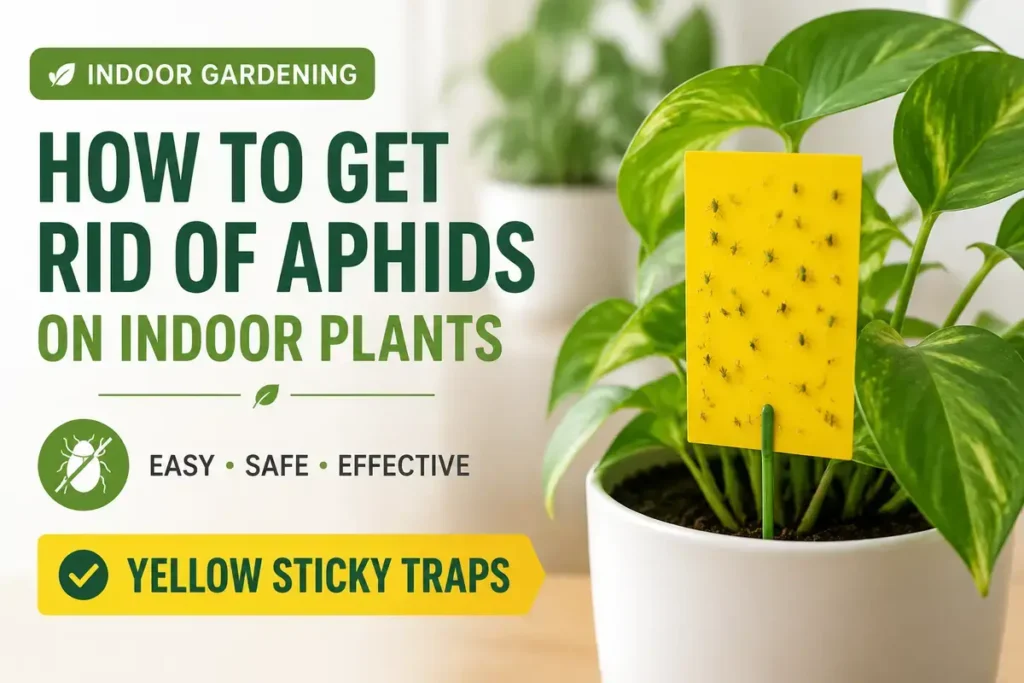
Step 7: Yellow Sticky Traps
Yellow sticky traps do not eliminate aphids living on your plant, but they serve two critical functions that make them worth using alongside your spray treatment throughout the full two-week treatment period.
First, they catch winged adult aphids mid-flight before those adults land on neighboring plants and start new colonies. Second, the catch rate on your sticky traps tells you whether your spray treatment is working. A high catch rate after two weeks of consistent spraying indicates the infestation is still active. A declining and eventually empty trap tells you the population is collapsing.
Place traps directly near affected plants and replace them every week. Yellow sticky traps are available at virtually every US garden center and on Amazon in multipacks for under ten dollars.
Step 8: Introduce Beneficial Insects
For severe, persistent infestations that have not responded fully to two or more weeks of consistent spray treatment, introducing natural aphid predators is the most direct escalation available without moving to systemic insecticides.
Ladybugs consume up to 50 aphids per day each. Lacewing larvae consume up to 200 aphids per week each. Both can be ordered from online suppliers and released near infested plants. Green Lacewings from Planet Natural and ladybugs from various Amazon suppliers are two widely used options in the US.
The practical limitation is that introduced beneficial insects will eventually leave or die once the food source is depleted. Use this as a one-time population knockdown for severe cases rather than an ongoing strategy. If you want to understand the full range of insects that help rather than harm your indoor plants, beneficial bugs for indoor plants covers every useful species worth knowing about.
Step 9: Systemic Insecticide as a Last Resort
When every organic method has been applied consistently for three or more weeks and the infestation persists, a systemic insecticide is the most effective remaining option. Systemic products are absorbed into the plant tissue itself, which means aphids ingest the active ingredient when they feed and die as a result. They cannot avoid it by hiding on leaf undersides or in furled leaves.
Bonide Systemic Houseplant Insect Control granules are one of the most widely available products for this purpose at US garden centers. They are applied to the soil and absorbed through the roots over several weeks. Read the label carefully and note that systemic insecticides are not suitable for use on food-producing plants including herbs and indoor vegetables.
This is the last resort option. The overwhelming majority of indoor aphid infestations are fully cleared by consistent dish soap or neem oil treatment long before reaching this point.
Why Aphids Keep Coming Back After Treatment
This is the single most common frustration people face with aphid control, and it almost always comes down to one of four specific causes.
Treatment stopped too early. Soap and neem oil kill adult aphids and nymphs but do not penetrate eggs. Stopping treatment the moment visible insects disappear leaves a fresh generation of eggs about to hatch with nothing waiting for them. Always complete the full two-week treatment window even when the plant looks clean.
A neighboring plant was not treated. Aphids on one plant in a collection almost always means aphids on nearby plants even if they are not yet visible. Treating one plant while leaving infested neighbors untouched means reinfection happens within days of treatment ending.
Ants are protecting and relocating the aphids. Ants farm aphids for their honeydew secretion and actively move aphids to new plants when their current location is threatened. If you have ants near your indoor plants, they may be undoing your treatment by relocating surviving aphids. A ring of diatomaceous earth around the pot base prevents ants from reaching the plant.
The plant is stressed and attracting pests. Stressed plants produce higher concentrations of the amino acids aphids feed on. If your plant is underlit, overwatered, or malnourished, aphids will keep targeting it preferentially over healthier neighbors. Addressing the root cause of stress is as important as the pest treatment itself. Keeping plants well-nourished is one of the most effective long-term deterrents, and best liquid fertilizer for indoor plants covers the products that keep houseplants strong and genuinely resistant to repeat infestations.
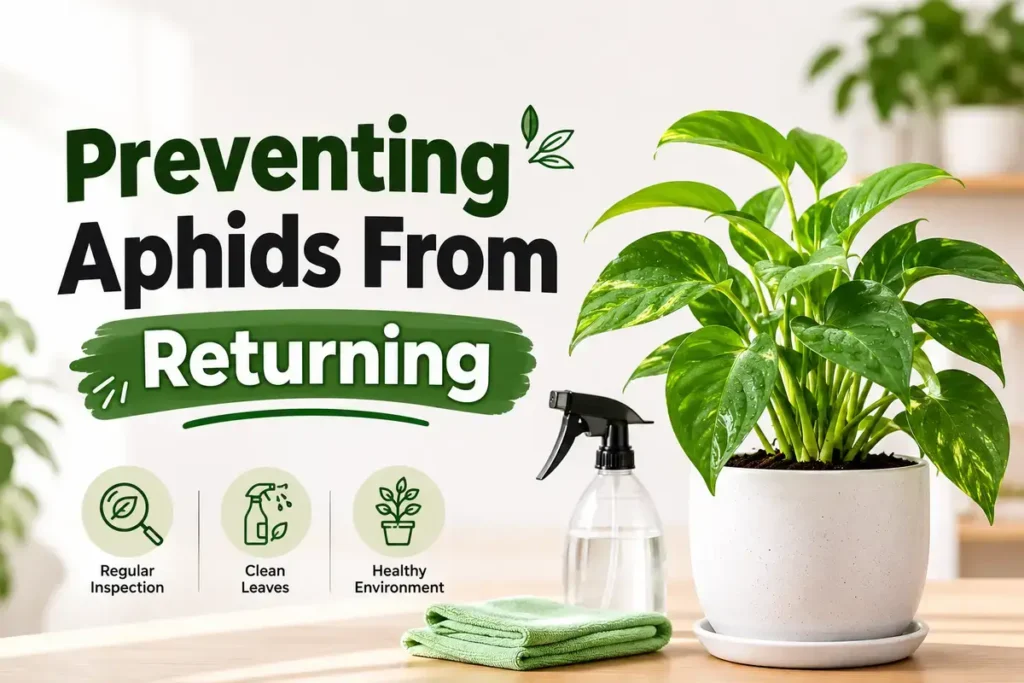
Preventing Aphids From Returning
Clearing an infestation solves the immediate problem. Preventing it from recurring requires a few consistent habits that take very little time once they become routine.
Quarantine new plants. Every new plant entering your home should spend at least one week in a separate room before joining your collection. Aphids and aphid eggs on new plants from garden centers are the most common way a previously aphid-free home develops its first infestation.
Inspect weekly. A two-minute check of leaf undersides on your most vulnerable plants every week catches infestations at the single-cluster stage when one soap spray application is usually enough to clear them.
Apply preventive neem oil monthly. Many experienced indoor gardeners apply a diluted neem oil spray across their entire plant collection once a month through spring and summer as standard maintenance. This disrupts aphid hormones before a colony establishes rather than waiting for a visible infestation to develop.
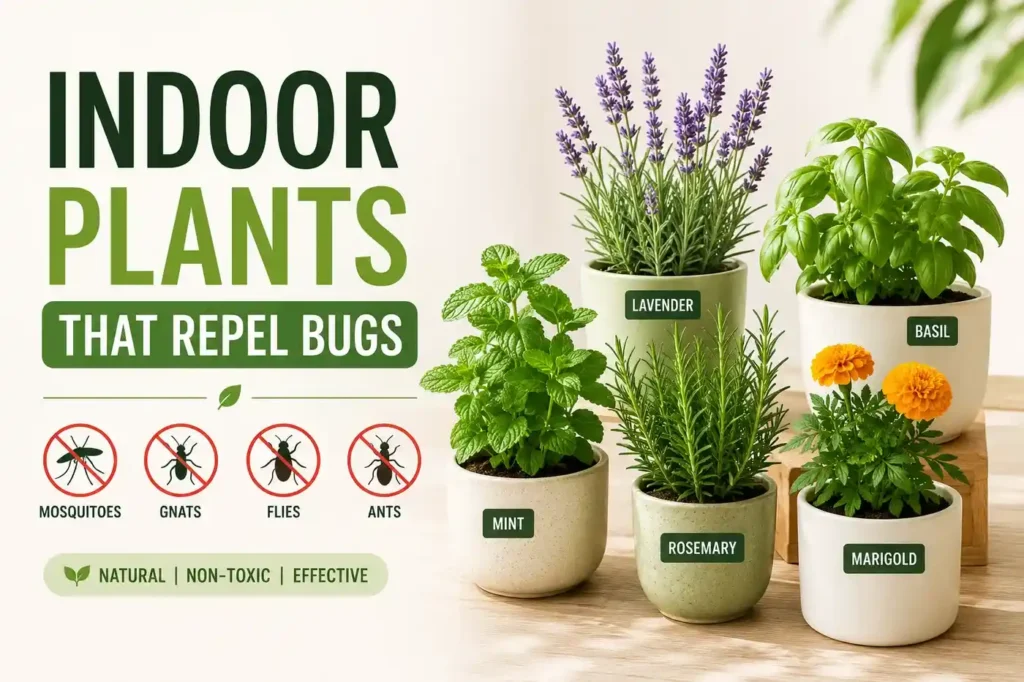
Grow bug-repelling companion plants. Certain plants produce volatile compounds that aphids actively avoid. Placing these near your most vulnerable plants reduces infestation frequency over time. The complete list of indoor plants that repel bugs covers which companion plants work best and where to position them for maximum effect alongside your existing collection.
Keep plants healthy. A plant growing in appropriate light with proper watering and regular nutrition produces stronger cell walls that are physically harder for aphids to pierce. The single most effective long-term pest prevention strategy for indoor plants is simply keeping them in conditions where they thrive.
Conclusion
Getting rid of aphids on indoor plants comes down to three things done consistently: act immediately the moment you spot them, apply your chosen treatment every 3 to 4 days for a full two weeks without stopping early, and treat every plant in the area at the same time rather than just the one showing visible insects.
Start with manual removal and a dish soap spray today. Add neem oil if the infestation is large or if the soap spray alone is not producing clear improvement after the first week. Use yellow sticky traps throughout the treatment period to monitor progress. Complete the full two-week schedule even when the plant looks clean.
For most US home gardeners, those steps resolve the problem completely. The infestations that keep coming back are almost always the ones where treatment stopped too early or where a neighboring infested plant was left untreated. Catch them early, treat them thoroughly, and keep your plants healthy between infestations, and aphids become a manageable occasional problem rather than a recurring nightmare.
Frequently Asked Questions
How long does it take to get rid of aphids on indoor plants completely?
Most indoor aphid infestations are fully cleared within two to three weeks of consistent treatment applied every 3 to 4 days. Mild infestations caught at the single-cluster stage sometimes clear within one week of two or three soap spray applications. Severe, established infestations may take three to four weeks, particularly if neem oil or a combination approach is needed. The key variable in every case is consistency rather than the specific product used.
What kills aphids on indoor plants instantly?
Rubbing alcohol applied directly to aphid clusters with a cotton swab kills on contact within seconds. A direct spray of dish soap solution also kills adult aphids and nymphs within minutes of contact. Nothing kills aphid eggs instantly, which is why consistent follow-up treatment over two weeks is always necessary regardless of how fast the initial application works on visible insects.
Can aphids on indoor plants spread to humans or pets?
Aphids do not bite, sting, or transmit any disease to humans or pets. They are exclusively plant feeders and pose no direct health risk to people or animals. The honeydew they produce can attract secondary pests like ants and fungus gnats, and heavy infestations in a small enclosed room can occasionally contribute to air quality issues through sooty mold growth, but direct harm to humans or pets from aphids themselves is not a concern.
Should I throw away a plant with aphids?
In almost every case, no. Aphids are treatable and most plants recover fully from even heavy infestations once treatment is applied consistently. The only situation where discarding a plant makes practical sense is if the infestation is so severe and the plant so small or weakened that the cost of treatment and recovery time outweighs starting fresh. Even then, isolate the plant from the rest of your collection rather than discarding immediately and give treatment one to two weeks to show results before making a final decision.
Do aphids live in indoor plant soil?
Most aphid species live and feed on the above-ground portions of plants, particularly leaf undersides and new stem growth. However, root aphids do exist and target plant roots while living in the soil. If your plant shows yellowing, wilting, and decline without visible above-ground insects, check the root system during repotting. Root aphids are less common on typical indoor houseplants but more frequently seen on cannabis plants grown indoors and some herbs.
Is neem oil or dish soap better for killing aphids indoors?
Both are effective but work differently and suit different situations. Dish soap spray kills on contact immediately and is the best starting point for mild to moderate infestations. Neem oil works more slowly but has residual effectiveness lasting several days after application and disrupts the reproductive cycle of surviving insects rather than just killing adults. For the fastest results on an established infestation, combining both in a single spray solution as described in Step 5 of this guide outperforms either product used alone.
How do I know if my aphid treatment is working?
Three signs indicate treatment is working: visible aphid clusters are shrinking or disappearing between spray applications, new plant growth is coming in undistorted and healthy rather than curled or puckered, and the catch rate on yellow sticky traps is declining week over week. If none of these signs appear after two full weeks of consistent treatment, escalate to neem oil if you have been using soap alone, or consider introducing beneficial insects for severe cases.