
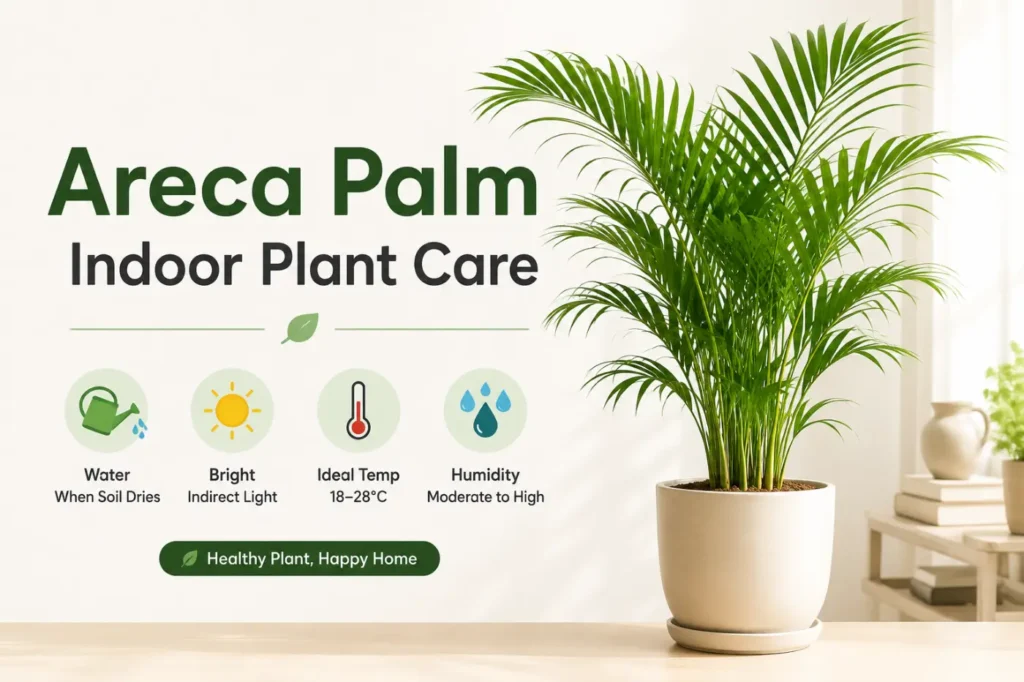
Areca palm indoor plant care is more straightforward than the plant’s exotic appearance suggests, but there are a few specific requirements that trip up even experienced plant owners. The areca palm (Dypsis lutescens) is one of the most popular indoor palms in the country because it brings unmistakable tropical energy to any space, tolerates indoor conditions better than most palms, and actively purifies the air around it. What it does not tolerate well is neglect of its specific light, water, and humidity needs.
Get those three things right and an areca palm rewards you with fast, lush growth and the kind of statement presence that most houseplants cannot achieve. Get them wrong and you spend months troubleshooting the yellowing fronds and brown tips that are the most common areca palm complaints.
This guide covers everything you need to keep an areca palm genuinely thriving indoors rather than just surviving.
Quick Answer
Areca palm indoor care requires bright indirect light from a south or east-facing window without direct harsh sun, watering when the top inch of soil dries out using filtered water when possible, well-draining potting mix with added perlite, humidity above 50% ideally achieved with a humidifier or pebble tray, temperatures between 65 and 85 degrees Fahrenheit, fertilizing every two weeks through spring and summer, and avoiding repotting unless absolutely necessary since areca palms are sensitive to root disturbance.
Understanding What Areca Palm Wants
The areca palm is native to Madagascar and thrives naturally in warm, humid, subtropical conditions with bright but filtered light under the forest canopy. It never experiences frost, rarely experiences drought, and grows in the consistently warm, humid environment of a tropical island.
This origin explains every care requirement. The high humidity preference exists because Madagascar’s coastal environment maintains high ambient moisture year-round. The sensitivity to direct harsh sun exists because the plant evolved filtering light through canopy above it rather than receiving unfiltered tropical sun directly. The watering frequency preference for consistent moisture without waterlogging reflects Madagascar’s regular rainfall on well-draining tropical soil.
When you understand the plant’s origin, its care requirements stop feeling like arbitrary demands and start feeling like a reasonable translation of tropical conditions into an indoor setting.
Step 1: Find the Right Light Position
Areca palms need bright indirect light for the best growth and the deepest, most vibrant frond color. The specific position that works best in most US homes is a few feet back from a south or east-facing window where the plant receives very bright light without the direct afternoon sun that scorches frond tips.
What works well: Positioned three to five feet from a large south-facing window. Directly in front of an east-facing window that receives morning sun but not harsh afternoon rays. In a bright room with large windows even without direct light reaching the plant.
What causes problems: Direct afternoon sun through south or west-facing windows bleaches fronds and causes brown tip burn that is unsightly and irreversible. Very low light slows growth dramatically and causes fronds to turn pale yellow-green rather than rich green.
The north-facing window reality: Areca palms survive in north-facing windows but they do not thrive. Growth is very slow, fronds remain smaller than the plant’s potential, and the pale color is a permanent feature rather than a temporary stress response. If a north-facing window is your only option, a grow light supplementing natural light for eight to ten hours daily produces significantly better results.
Step 2: Water Correctly for Consistent Moisture
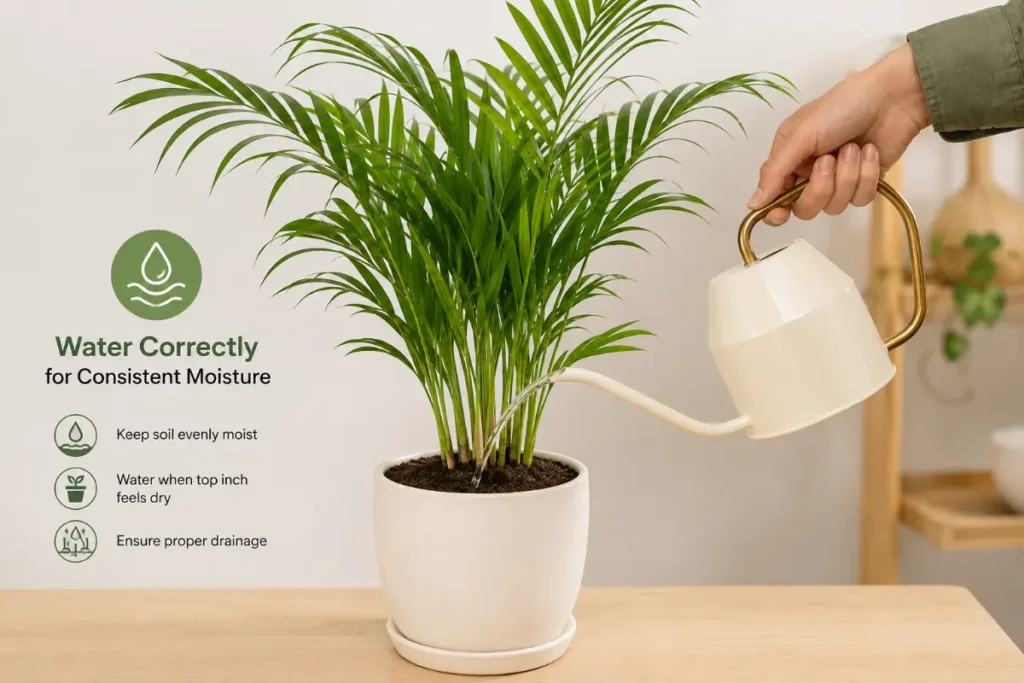
Unlike Mediterranean herbs that want to dry out completely, areca palms prefer consistent moisture without waterlogging. Think consistently moist rather than wet or dry as the target state.
The correct approach: Water when the top one inch of soil feels dry. This is shallower than the two-inch check recommended for drought-tolerant plants. In a bright position during summer, this typically means watering every five to seven days. In lower light or winter, every ten to fourteen days is more appropriate.
Water quality matters: Areca palms are more sensitive to fluoride and salt accumulation in tap water than most houseplants. Brown tips are one of the most common areca palm complaints and tap water fluoride is one of the most common causes. Using filtered water, distilled water, or rainwater reduces brown tip development significantly compared to regular tap water in areas with heavily treated municipal water.
If filtered water is not practical, leaving tap water to sit overnight in an open container allows some chlorine to off-gas, which helps with chlorine sensitivity though not with fluoride. Flushing the soil thoroughly every month by watering until water flows freely from drainage holes for several minutes helps leach accumulated fluoride and mineral salts that cause tip browning.
Signs of overwatering: Yellow fronds particularly on the lower sections of the plant. Soil staying wet for more than ten days. Musty smell from the pot. Root rot develops faster in palms kept consistently wet than in most other indoor plants.
Signs of underwatering: Fronds that droop, curl, or look less upright than usual. Very dry, pulling-away-from-pot-sides soil. Brown tips that appear suddenly rather than gradually.
Step 3: Provide High Humidity
This is the care requirement that most indoor environments fail to meet for areca palms, and it is the primary driver of the brown tips and dull frond appearance that make plant owners think something is seriously wrong.
Areca palms prefer humidity above 50%. Most heated homes in winter drop to 20 to 35% relative humidity, which is far below what this plant considers comfortable.
Effective humidity solutions:
A humidifier running nearby is the most effective solution. A small ultrasonic humidifier positioned within a few feet of the plant raises the local humidity meaningfully and prevents the constant moisture loss from large frond surfaces that causes browning.
A pebble tray with water beneath the pot creates a modest local humidity increase as the water evaporates around the plant. Less effective than a humidifier but requires no electricity and provides some benefit.
Grouping plants together raises the collective humidity of the immediate plant group area through combined transpiration. Areca palms grouped with other large-leaved tropical plants create a microclimate with slightly higher humidity than the surrounding room.
What does not work: Misting the fronds. Despite being widely recommended, misting provides humidity for only a few minutes before the water evaporates and fronds return to the same dry air as before. Regular misting can also create conditions for fungal problems on frond surfaces without providing the sustained humidity benefit the plant needs.
Step 4: Use Well-Draining Soil
Areca palm roots need moisture but cannot tolerate sitting in wet, poorly draining soil. The combination of needing consistent moisture and needing good drainage is achieved through the right soil mix rather than through any particular watering schedule.
The right soil: A mix of 60 to 70% quality potting mix with 20 to 30% perlite creates the drainage channels that prevent waterlogging while retaining enough moisture for the palm’s consistent moisture preference. Coarse sand can substitute for some or all of the perlite if needed.
What to avoid: Dense, moisture-retaining potting mixes without amendment. Pure peat-based mixes that compact over time and create poor drainage. Garden soil, which is entirely inappropriate for indoor pot use.
For the complete guide to building soil mixes for tropical plants with specific drainage and moisture balance requirements, soil mixture for indoor plants covers every component and ratio with explanations of what each ingredient contributes.
Step 5: Maintain the Right Temperature
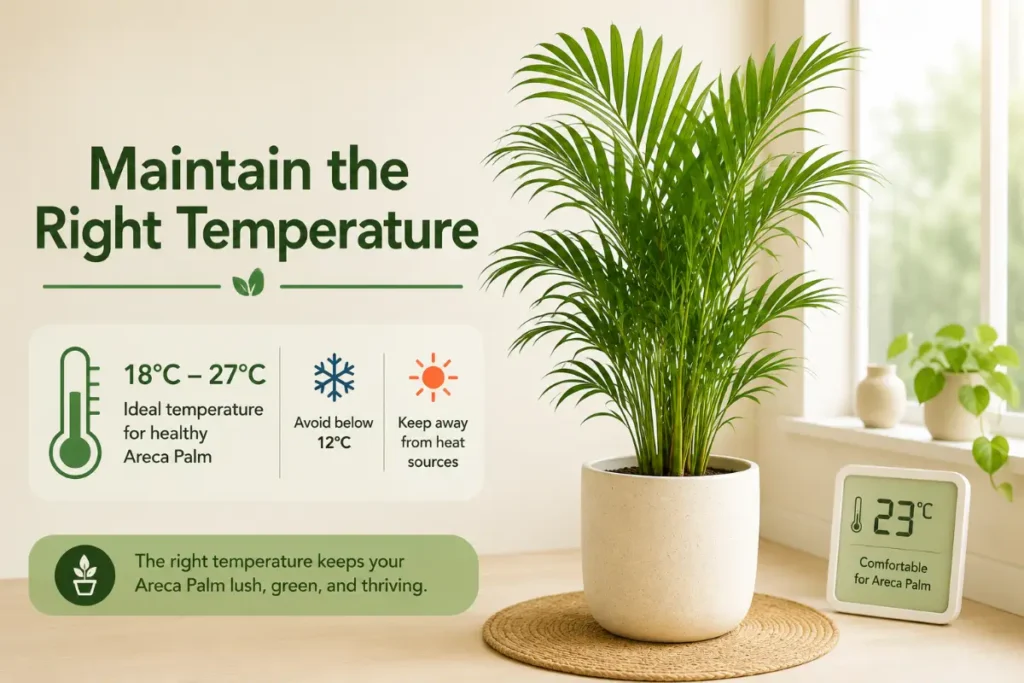
Areca palms are warmth-loving plants that decline noticeably when temperatures drop below 60 degrees Fahrenheit and suffer permanent damage in frost.
Ideal range: 65 to 85 degrees Fahrenheit covers the temperatures where areca palms actively grow and stay healthy indoors. This aligns well with typical US home temperatures making temperature management relatively easy in most households.
Cold sensitivity: Cold drafts from exterior doors and windows in winter cause rapid browning and frond damage. Keep areca palms away from exterior doors that let in cold air when opened and from windowpanes that radiate cold at night during winter. Moving the plant a foot or two away from cold glass in December through February prevents the cold-stress browning that appears overnight after cold exposure.
Air conditioning vents: Cold air blowing directly onto an areca palm from an air conditioning vent during summer causes the same damage as cold winter drafts. Position the plant where air conditioning airflow does not blow directly on the fronds.
Step 6: Fertilize Through the Growing Season
Areca palms are moderate to heavy feeders during their active growing season and produce noticeably better growth with consistent fertilizing than without it.
Through spring and summer: Feed every two weeks with a balanced liquid fertilizer. A formulation that includes micronutrients, particularly magnesium and iron, produces richer green color and prevents the yellowing that sometimes appears on areca palms as mineral deficiency rather than watering problems.
Palm-specific fertilizer: Products marketed specifically for palms including Jobe’s Palm Fertilizer and Miracle-Gro Shake and Feed for Palms contain the elevated potassium and magnesium that palms need in higher quantities than general houseplant fertilizers provide. Using a palm-specific formula every six to eight weeks through the growing season alongside a general liquid fertilizer every two weeks produces the best results for long-term palm health.
Fall and winter: Reduce to monthly feeding and stop entirely if growth has clearly stopped. Areca palms in the warmth of heated homes often continue slow growth through winter, particularly in good light positions, and monthly light feeding through this period prevents the nutritional gaps that cause frond yellowing during the shortest days.
For a full comparison of fertilizer options suited to large tropical houseplants, best liquid fertilizer for indoor plants covers every product with specific guidance on which suits high-demand tropical plants like areca palms.
Step 7: Leave the Roots Alone
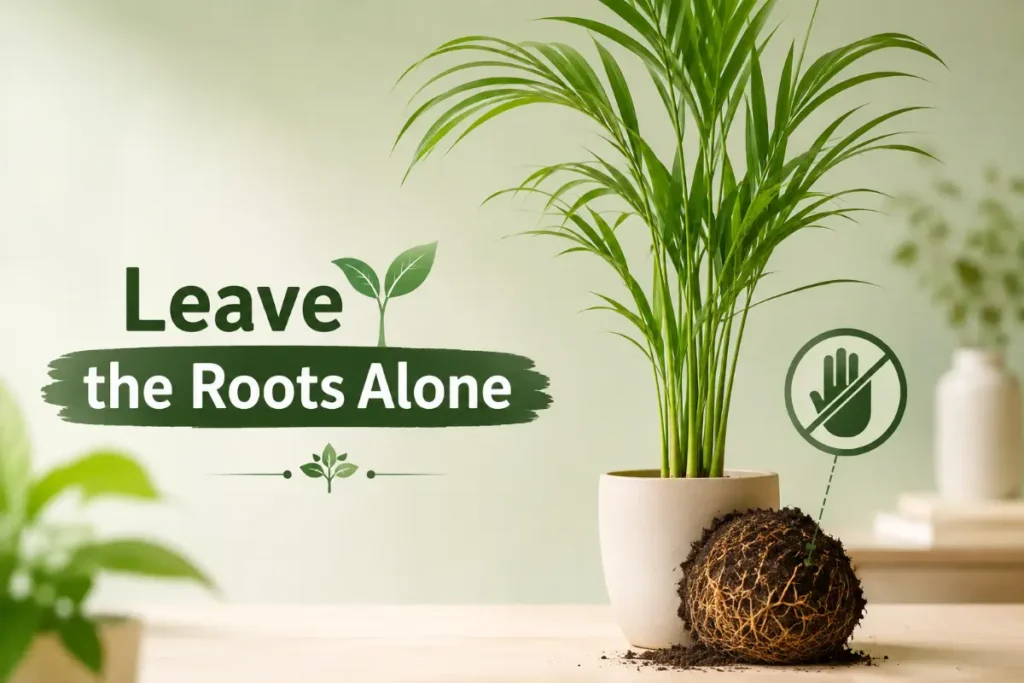
Areca palms are more sensitive to root disturbance than most other common houseplants. Repotting stresses them significantly and recovery takes longer than for most tropical plants. The general indoor plant advice to repot frequently for fresh soil does more harm than good for areca palms.
When to repot: Only when roots are visibly emerging from drainage holes in quantity or when the plant has stopped growing despite adequate light, water, and fertilizer and the root ball is visibly cramped against pot sides. Areca palms perform well when slightly root-bound and do not need the frequent repotting that encourages growth in other plants.
How to repot with minimal stress: Choose a pot only two inches larger than the current one. Disturb the root ball as little as possible, ideally sliding the entire root ball intact into the new, larger pot rather than loosening roots or breaking up the existing structure. Water thoroughly after repotting and do not fertilize for six weeks.
After repotting: Expect some frond yellowing or browning as a short-term stress response. This is normal and resolves as the root system re-establishes contact with the new soil over three to four weeks. Provide the best light and humidity possible during the recovery period and resist the urge to adjust other care variables while the plant adjusts to its new container.
For the specific timing and approach to nutrition after repotting tropical plants, do you need nutrients after repotting a indoor plants covers the exact waiting period and initial rates that suit sensitive plants like areca palms.
Why Areca Palm Fronds Turn Yellow: The Complete Diagnostic
Yellow fronds on areca palms are the most frequent care problem and have several distinct causes that require different responses.
Lower frond yellowing that progresses upward: This is natural aging of the oldest fronds at the base of the plant. Areca palms naturally shed older fronds as they produce new ones from the top. Removing yellowed lower fronds cleanly at their base is maintenance rather than treatment.
Overall pale yellow fronds: Insufficient light turning the foliage pale rather than deep green. Improve the plant’s light position before anything else.
Yellow fronds with green veins (interveinal chlorosis): Iron or magnesium deficiency from soil pH imbalance or nutrient depletion. A palm-specific fertilizer with chelated iron and magnesium addresses this. Alternatively, a dose of Epsom salt (one tablespoon per gallon) provides the magnesium boost that resolves this specific yellowing pattern.
Rapid yellowing of multiple fronds simultaneously: Overwatering causing root rot. Check soil moisture and drainage immediately.
Brown tips with otherwise green fronds: Low humidity, fluoride accumulation from tap water, or cold air exposure from vents or windows. Address all three simultaneously since they frequently occur together in US homes during winter.
Cleaning Areca Palm Fronds
The feathery, multi-leaflet fronds of areca palms accumulate dust on their surfaces, which reduces photosynthetic efficiency in a plant that already needs maximum light. Regular cleaning is practical care rather than just aesthetics.
The delicate nature of the individual leaflets means a soft damp cloth works better than wiping with significant pressure. Support each frond stem gently with one hand while wiping leaflet surfaces with a barely damp soft cloth in the other. Work from the base of each frond outward toward the tips rather than in the opposite direction, which can tear leaflets from their attachment points.
For large specimens where individual leaflet cleaning is impractical, taking the plant to a shower and rinsing with a gentle lukewarm spray every three to four weeks accomplishes the same cleaning goal more efficiently. Allow the plant to drain completely and avoid returning it directly to bright direct sun immediately after wetting since water droplets on leaflets in strong direct light can create localized burn spots.
Avoid commercial leaf shine products on areca palms since these coat the stomata on leaflet surfaces, reducing gas exchange and photosynthetic efficiency in a plant that needs maximum light-gathering capacity.
Common Pests on Indoor Areca Palms
Areca palms are susceptible to a few specific pest species that take advantage of the indoor environment where natural predators are absent.
Spider mites are the most common indoor areca palm pest. They thrive in the warm, dry conditions of heated homes, especially when humidity falls below the palm’s preferred range. Fine webbing between frond stems and stippled, bronzy discoloration on leaflet surfaces indicate spider mite activity. A neem oil spray applied every seven days for three weeks addresses active infestations. Maintaining humidity above 50% is the most effective prevention since spider mites specifically struggle in consistently humid conditions.
Scale insects appear as small brown or tan bumps along frond stems and leaflet midribs. They feed by piercing tissue and extracting sap, causing yellowing and frond decline. Remove visible scale with a cotton swab dipped in rubbing alcohol, then follow with neem oil spray weekly for three weeks to address any remaining crawlers not reached by manual removal.
Mealybugs occasionally appear in the tight joints where frond stems meet the main stem. The white cottony clusters they produce are distinctive and easy to identify. Treat with diluted rubbing alcohol applied directly with a cotton swab followed by neem oil spray across the entire plant. For the complete guide to identifying and treating every soft-bodied pest on indoor plants including the species that most commonly affect tropical palms, how to get rid of aphids on indoor plants covers the treatment escalation from manual removal through biological controls that applies to all soft-bodied indoor plant pests.
Conclusion
Areca palm indoor plant care rewards consistency more than any special technique. Bright indirect light without direct harsh sun. Consistent moisture using filtered water when possible. Humidity above 50% maintained with a humidifier rather than misting. Well-draining soil that never stays wet. Temperatures above 65 degrees away from cold drafts. Fertilizing every two weeks through the growing season. And leaving the roots alone rather than repotting on a schedule.
The plants that struggle are almost always in one of three situations: too much direct afternoon sun bleaching fronds, too little humidity drying out tips despite adequate watering, or overwatering in poorly draining soil causing root rot that mimics drought stress symptoms. Fix whichever of those three applies to your plant and the rest of areca palm care falls into place easily.
Frequently Asked Questions
Why are my areca palm fronds turning brown at the tips?
Brown tips on areca palm fronds are most commonly caused by low humidity in dry indoor air, fluoride or salt accumulation from tap water, cold air from vents or windows, or inconsistent watering. In US homes during winter when heating lowers indoor humidity to 20 to 35%, brown tips develop on areca palms even with otherwise good care. A humidifier nearby is the most effective solution. Switching to filtered water and flushing the soil monthly with excess water to leach accumulated minerals addresses tap water-related browning.
How often should I water an areca palm indoors?
Water when the top one inch of soil feels dry, which typically means every five to seven days in a bright position during summer and every ten to fourteen days in lower light or winter. Areca palms prefer consistent moisture rather than the complete drying between waterings that suits Mediterranean plants. They are more sensitive to overwatering than to underwatering, so when in doubt wait one more day before watering.
How much light does an areca palm need indoors?
Bright indirect light for best growth and deepest frond color. Direct morning sun from an east-facing window is tolerated well. Direct afternoon sun from south or west-facing windows without any filtering causes frond bleaching and tip burn. Areca palms survive in lower light but grow slowly and develop pale coloring. A position several feet back from a large south-facing window that provides very bright indirect light without direct sun rays hitting the fronds is the ideal indoor location.
Can areca palms grow in low light?
They survive but do not thrive. In low light areca palms grow very slowly, produce smaller fronds than their potential, and develop pale yellow-green coloring rather than the rich green of well-lit specimens. If a low-light position is the only option, supplementing with a grow light for eight to ten hours daily produces significantly better results than natural low light alone.
Why is my areca palm not growing?
Insufficient light is the primary cause of growth stalling in areca palms with otherwise appropriate care. The second most common cause is low temperatures or cold drafts that put the plant into stress rather than active growth. Third is overwatering causing root damage that limits the plant’s ability to take up nutrients even when they are present. Assess light first, then temperature, then check the root system for signs of rot if the first two seem appropriate.
How tall do areca palms grow indoors?
Areca palms grow six to eight feet tall as indoor plants over several years in good conditions, occasionally reaching ten feet in very large, well-lit indoor spaces. Growth rate is approximately one to two feet per year in optimal indoor conditions and significantly slower in lower light or without consistent fertilizing. Their eventual indoor size depends more on the light and care they receive than on any inherent size limitation.
Pingback: Norfolk Island Pine Indoor Plant: 8 Care Tips to Keep It Thriving - Plant Quill