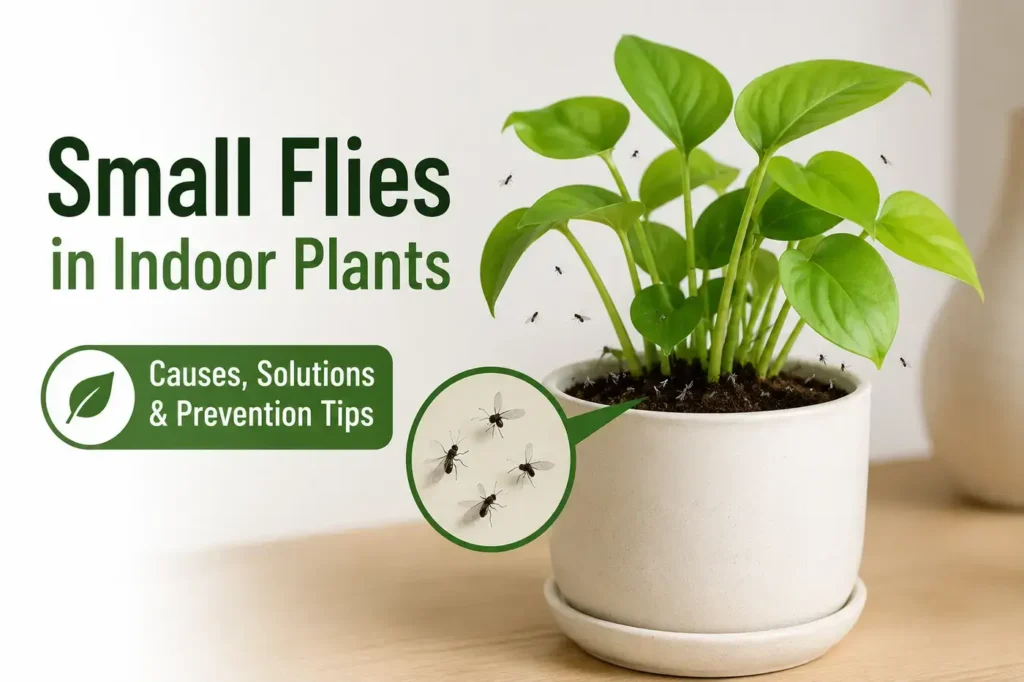
Small flies in indoor plants are one of the most common and most misunderstood houseplant pest problems people face. The moment you see tiny flies hovering near your plants or flying up when you water, the instinct is to treat immediately, but treating without identifying which fly species you are dealing with almost always leads to wasted effort. Small flies in indoor plants fall into several distinct species with different breeding sites, different food sources, and different treatment requirements. A treatment that eliminates one species completely does nothing for another, which is why so many people find themselves fighting the same fly problem repeatedly despite consistent effort.
This guide covers 7 types of small flies found in indoor plants, how to identify each one accurately, which ones actually damage your plants, and the most effective treatment for every species so you can stop guessing and start solving the actual problem.
Quick Answer
The most common small flies found in indoor plants are fungus gnats, fruit flies, shore flies, drain flies, whiteflies, moth flies, and winged aphids. Of these, fungus gnat larvae cause the most plant damage by feeding on roots. Shore flies and drain flies are nuisances but cause minimal plant damage. Fruit flies breed in fermenting food rather than plant soil. Whiteflies and winged aphids feed directly on plant foliage. Each requires a different primary treatment approach based on where it breeds and what it feeds on.
Why Identifying the Fly Matters Before Treating
Every small fly found near indoor plants has a different biology. Fungus gnats breed in moist potting soil. Fruit flies breed in fermenting food and organic matter. Shore flies feed on algae at the soil surface. Drain flies breed in organic buildup inside drainpipes. Whiteflies live and feed on leaf undersides. Winged aphids fly between plants to start new colonies.
Treating fungus gnats with apple cider vinegar traps (the standard fruit fly remedy) has no effect on the soil-dwelling larvae driving the infestation. Drenching soil with hydrogen peroxide to treat what you think are fungus gnats does nothing if the flies are actually coming from your kitchen drain. Getting the identification right before doing anything else determines whether your treatment resolves the problem or just moves it around.
7 Types of Small Flies in Indoor Plants
Type 1: Fungus Gnats
Fungus gnats are the most commonly encountered small fly near indoor plants and the species most likely to cause genuine plant damage. Adults are tiny, dark, slender, and mosquito-like with long legs, measuring approximately 2 to 3 millimeters long. They hover directly above soil surfaces and fly upward in small groups when you water the plant or disturb the pot.
The adult fungus gnat is completely harmless to plants. The larvae living in the top 2 to 3 inches of potting soil are the actual problem. Larvae are tiny, white, and thread-like with a distinctive shiny black head capsule. They feed on fungi, decaying organic matter, and plant roots. Light root feeding on a healthy established plant causes minimal visible harm. Heavy larval populations in young plants and seedlings cause wilting, yellowing, and growth stunting as root damage accumulates.
How to confirm it is fungus gnats: Press a piece of raw potato cut-side down into the top inch of soil and leave for 24 hours. Fungus gnat larvae are strongly attracted to potato starch. Pull it up and check the underside for tiny white worms with black head capsules.
What drives them: Consistently wet soil is the primary driver. Larvae cannot survive in dry soil and adults will not lay eggs in it. Overwatering is the root cause of the majority of fungus gnat infestations in indoor plant collections.
Treatment: Let soil dry completely between waterings as the first and most important step. Apply a hydrogen peroxide drench (1 part 3% hydrogen peroxide to 4 parts water) weekly for three weeks to kill larvae in the soil on contact. Place yellow sticky traps at soil level to catch and monitor adults. For severe infestations, apply beneficial nematodes (Steinernema feltiae) as a soil drench for biological larval control that persists as long as larvae remain present.
For a complete treatment guide covering every stage of the fungus gnat life cycle with specific product recommendations at each step, fruit flies indoor plants covers the full overlap between fungus gnat and fruit fly treatment approaches including the methods that work for both simultaneously.
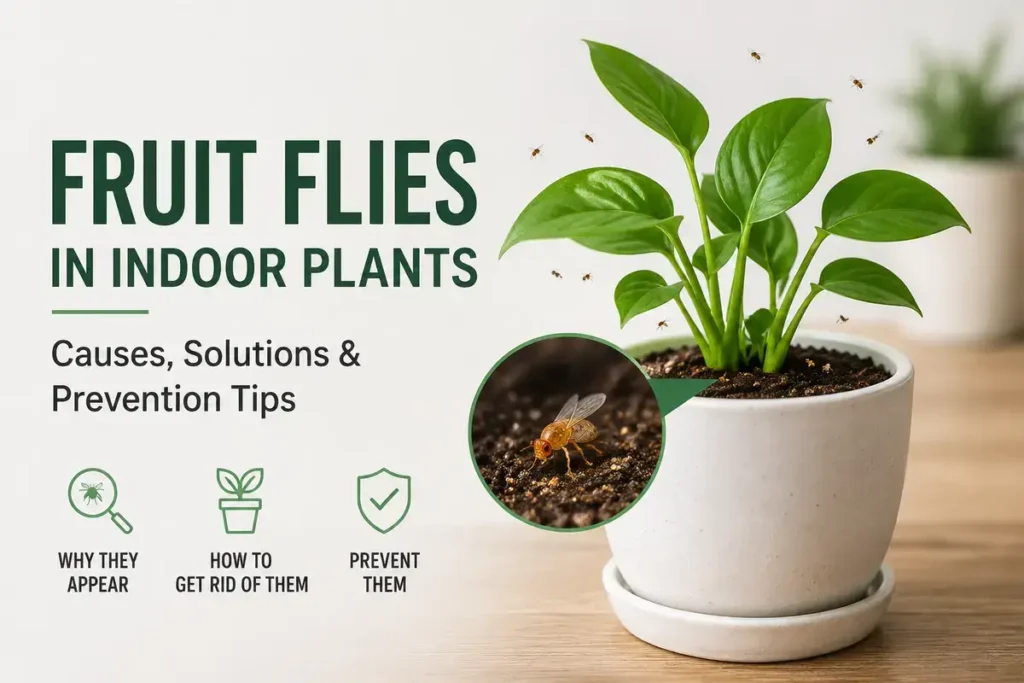
Type 2: Fruit Flies
Fruit flies (Drosophila species) are slightly larger and stockier than fungus gnats, measuring 3 to 4 millimeters long, with distinctive red eyes and a tan or brownish body color. They are strongly attracted to fermenting organic matter including overripe fruit, spilled juice, open wine or vinegar bottles, kitchen drains with organic buildup, and the fermenting surface of moist potting soil.
The critical distinction between fruit flies and fungus gnats is their primary breeding site. Fungus gnat larvae breed specifically in moist potting soil and plant roots. True fruit fly larvae breed primarily in fermenting food and organic matter, which is often located in the kitchen rather than in plant soil at all. This is why treating plant soil for weeks without results sometimes means you are actually dealing with fruit flies whose primary source is the kitchen drain or fruit bowl rather than your houseplants.
How to distinguish from fungus gnats: Fruit flies concentrate near fermenting food sources throughout the kitchen as much as or more than near plants. Fungus gnats concentrate specifically around plant soil and fly upward when the plant is disturbed. Fruit flies have visible red eyes when observed closely. Fungus gnats have a more slender, mosquito-like profile without the stocky body shape of fruit flies.
Treatment: Find and eliminate any fermenting food sources first since this is almost always the primary breeding site for true fruit flies. Clean kitchen drains with boiling water followed by enzyme drain cleaner weekly. Remove or refrigerate overripe fruit. Place apple cider vinegar traps (a small amount of apple cider vinegar with one drop of dish soap in a glass covered with punctured plastic wrap) near affected areas. Apply hydrogen peroxide soil drench if plant soil is confirmed as a secondary breeding site.
Type 3: Shore Flies
Shore flies are frequently confused with fungus gnats because they are similar in size and color. The reliable visual distinction is that shore flies are stockier and darker than fungus gnats with five distinctive white spots on their wings that fungus gnats lack entirely. Shore flies also run quickly across soil surfaces rather than hovering above them the way fungus gnats do.
Shore flies feed on algae growing on moist soil surfaces and pot edges rather than on plant roots or decaying matter. They cause less direct plant damage than fungus gnats since their larvae feed on algae rather than roots. However, adults moving between pots mechanically spread plant pathogens through contact, making them worth treating in homes with multiple plants even without direct root damage to show for it.
What drives them: Moist soil with algae growth on the surface and around pot edges. Poor air circulation that allows algae to establish and persist on soil surfaces. The same overwatering conditions that drive fungus gnat infestations also drive shore fly problems since both require consistently wet soil.
Treatment: Let soil dry more thoroughly between waterings to eliminate the moist algae-covered surface they feed on. Improve air circulation around plants by spacing them further apart or running a small fan. Yellow sticky traps at soil level catch adults. The hydrogen peroxide drench used for fungus gnat larvae also addresses shore fly larvae in the top soil layer since their larvae concentrate near the surface where the oxidation reaction is strongest.
Type 4: Drain Flies
Drain flies, also called moth flies or sewer flies, are small fuzzy-looking flies about 2 millimeters long with distinctively moth-like wings covered in tiny hairs that give them a powdery appearance. They breed exclusively in the organic film that builds up inside drainpipes, not in plant soil, which means they appear near plants only because of proximity to kitchen or bathroom drains rather than any direct relationship with the plants themselves.
If you see small fuzzy flies near your indoor plants that appear near bathroom or kitchen drains rather than hovering specifically over plant soil, you are almost certainly dealing with drain flies rather than any plant-specific pest species.
Treatment: Drain flies require treating the drain rather than the plant. Pour boiling water down affected drains. Follow with an enzyme-based drain cleaner like Bio-Clean that breaks down the organic biofilm drain flies breed in. Repeat weekly for three weeks. Mechanical cleaning of the drain trap and pipe interior with a drain brush removes the breeding medium more thoroughly than chemical treatment alone.
Plant treatment needed? No. Drain flies are not plant pests and do not require any plant or soil treatment. Treating the drain resolves the problem completely.
Type 5: Whiteflies
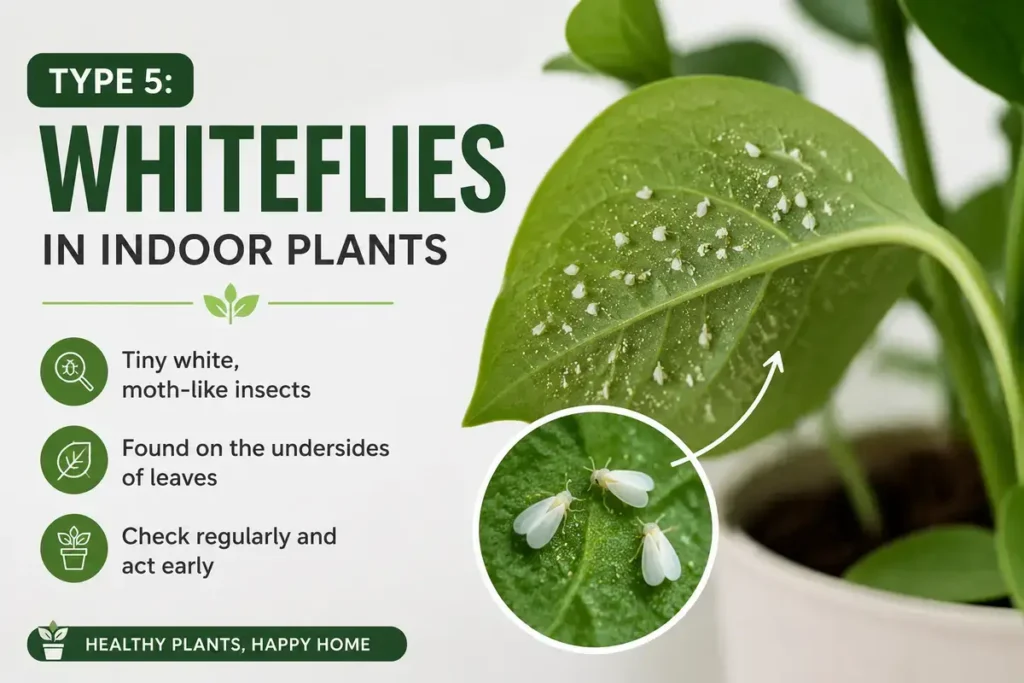
Whiteflies are tiny white flying insects about 1 to 2 millimeters long that look like miniature moths and fly up in a small white cloud when an affected plant is disturbed. Unlike fungus gnats that breed in soil, whiteflies live and feed on the undersides of plant leaves where they suck sap and lay eggs directly on leaf tissue.
Whiteflies are most commonly found on hibiscus, poinsettia, fuchsia, tomatoes, and other soft-leaved plants with high sap content. They cause direct plant damage through sap feeding and excrete honeydew that leads to sooty mold growth on affected leaves.
How to distinguish from fungus gnats: Whiteflies are pure white rather than dark. They fly up from leaf surfaces and settle back on leaf undersides rather than hovering above soil. They are found on the plant foliage rather than emerging from the soil.
Treatment: Yellow sticky traps catch flying adults between spray applications and are essential for monitoring whitefly populations. Commercial insecticidal soap applied every 4 to 7 days targets nymphs and adults on leaf surfaces. For whitefly populations that have not responded to soap spray after two weeks, spinosad-based products are significantly more effective. For a full guide to spray options matched to whitefly severity levels and the products that handle resistant populations, plant bug spray indoor covers every treatment option with specific product recommendations.
Type 6: Moth Flies
Moth flies are sometimes listed separately from drain flies even though they are the same species (Psychodidae family) because their appearance near houseplants rather than drains confuses the identification. They are small, fuzzy, and hold their wings roof-like over their bodies when resting, giving them a distinctively moth-like profile at first glance.
Like drain flies, moth flies breed in the organic biofilm of drains and wet decomposing matter. They appear near plants because indoor plants are sometimes located near kitchens and bathrooms, not because the plants themselves are the source.
Treatment: Same as drain flies: treat the drain rather than the plant. Enzyme drain cleaners, boiling water, and mechanical drain cleaning address the breeding site. No plant or soil treatment is needed or beneficial since the breeding source is the drain, not the potting mix.
Type 7: Winged Aphids
Most aphid species are wingless and spread only through direct plant-to-plant contact or transfer on hands and tools. When an aphid colony becomes overcrowded or the host plant becomes stressed, the colony produces a winged generation of adults that fly to new plants and establish fresh colonies. These winged aphids are sometimes mistaken for a different flying pest species entirely since most people associate aphids with the wingless clusters they are most familiar with.
Winged aphids are slightly larger than wingless ones with two pairs of clear wings held flat against their body when resting. They fly in a slow, wandering pattern rather than the more purposeful direct flight of fungus gnats. They land on leaf surfaces and undersides rather than soil.
How to confirm they are winged aphids: Check the plant they land on for the sticky honeydew residue and distorted new growth characteristic of aphid feeding. Look for the soft-bodied pear-shaped body typical of aphids even in the winged form.
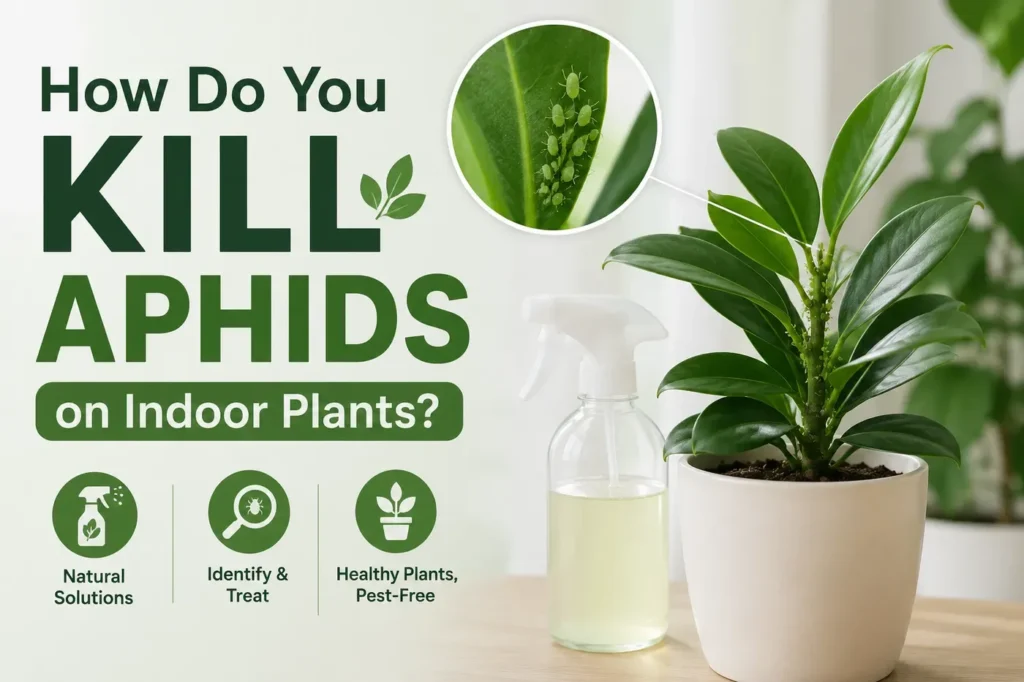
Treatment: Yellow sticky traps catch winged aphids mid-flight and are the most effective tool for interrupting their spread between plants. Neem oil spray applied to every plant in the collection disrupts the reproductive cycle of any winged aphids that have already landed and begun feeding. For the complete treatment approach for aphid infestations at every stage from winged adults through to established colonies, how to remove aphids from indoor plants covers every removal method ranked by effectiveness with specific guidance for each infestation level.
How to Identify Which Small Fly You Are Dealing With
Use this quick identification guide before choosing any treatment:
Where are the flies concentrated? Near plant soil and flying up when watered: fungus gnats or shore flies. Near fermenting food throughout the kitchen: fruit flies. Near bathroom or kitchen drains: drain flies or moth flies. On leaf surfaces and undersides: whiteflies or winged aphids.
What do they look like up close? Dark, slender, mosquito-like body: fungus gnats. Stocky dark body with white wing spots: shore flies. Stocky tan body with red eyes: fruit flies. Small and pure white: whiteflies. Fuzzy moth-like wings: drain flies or moth flies. Soft-bodied with clear wings held flat: winged aphids.
What time of day are they most active? Fungus gnats and shore flies are active throughout the day near plants. Fruit flies are most active in warm conditions near fermenting food. Drain flies are most active in the evening near drains. Whiteflies are active during the day on plant foliage. Winged aphids fly during warm daylight hours.
Does the plant show damage? Root damage, wilting, yellowing without obvious cause: suspect fungus gnat larvae in the soil. Leaf distortion, sticky residue, sooty mold on foliage: whiteflies or winged aphids. No plant damage beyond the annoyance of flying adults: shore flies, fruit flies, or drain flies.
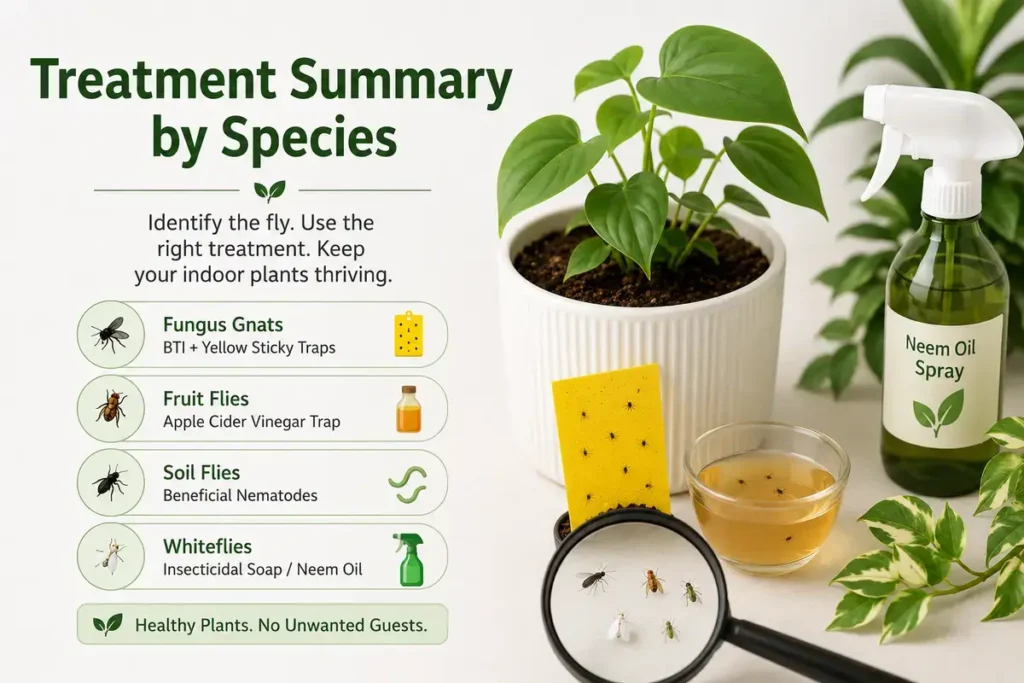
Treatment Summary by Species
| Fly Type | Primary Treatment | Secondary Treatment |
|---|---|---|
| Fungus gnats | Hydrogen peroxide soil drench | Yellow sticky traps, let soil dry |
| Fruit flies | Eliminate fermenting food sources | Apple cider vinegar traps |
| Shore flies | Let soil dry, improve air circulation | Yellow sticky traps |
| Drain flies | Enzyme drain cleaner | Mechanical drain cleaning |
| Whiteflies | Insecticidal soap spray | Spinosad spray |
| Moth flies | Enzyme drain cleaner | Boiling water flush |
| Winged aphids | Yellow sticky traps | Neem oil spray on all plants |
Preventing Small Flies From Returning to Indoor Plants
Water correctly. Letting soil dry adequately between waterings eliminates the primary condition that attracts fungus gnats and shore flies, which are the two species most directly driven by indoor plant care practices. A plant that dries out appropriately between waterings is dramatically less attractive to soil-breeding fly species than one kept consistently moist.
Clean kitchen drains weekly. Pour boiling water down kitchen and bathroom drains once a week through warm months when fly activity peaks. This prevents the organic biofilm buildup that drain flies and moth flies need to breed, cutting off a source that appears near plants simply because of proximity to the kitchen.
Store fruit in the refrigerator during warm months. Refrigerating fruit during spring through early fall removes the primary attractant for true fruit flies during the months when their populations peak and fermentation speeds up in warm ambient temperatures.
Use yellow sticky traps as an early warning system. Placing a yellow sticky trap near each plant group catches flying adults before visible populations establish on plants and gives you early warning to start treatment when numbers are still small enough for a single spray application to resolve.
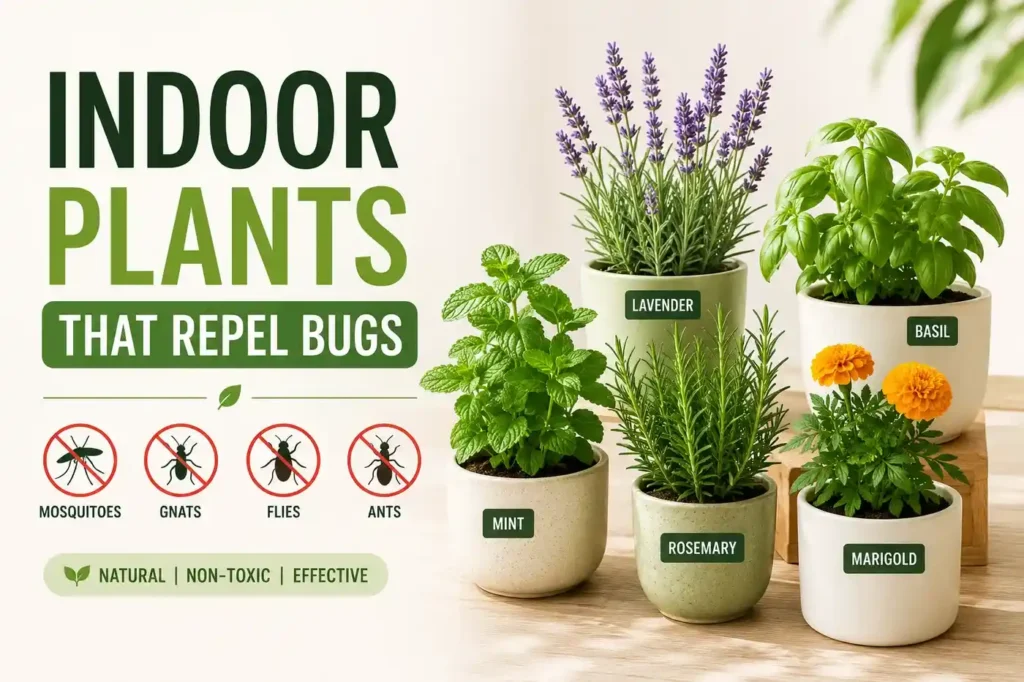
Grow plants that repel flying insects naturally. Lavender, mint, basil, and citronella near entry points and kitchen areas reduce how many flies enter your home in the first place. The complete guide to which plants work best as natural repellents for every flying insect species is covered in indoor plants that repel bugs with specific placement guidance for maximum deterrent effect throughout your home.
Conclusion
Small flies in indoor plants cover a range of species with genuinely different biologies, breeding sites, and treatment requirements. Fungus gnats and their root-feeding larvae are the most plant-damaging and most soil-treatment-responsive. Fruit flies, drain flies, and moth flies are primarily food and drain problems that appear near plants incidentally rather than because of the plants themselves. Whiteflies and winged aphids are foliar feeders that require leaf-surface spray treatment rather than soil intervention.
Getting the identification right takes five minutes and determines whether your treatment resolves the problem in two weeks or cycles ineffectively for months. Use the behavioral and visual clues in this guide to identify accurately, match the treatment to the species, and apply it consistently at the right location: soil for fungus gnats and shore flies, drain for drain flies and moth flies, leaf surfaces for whiteflies and winged aphids, and plant-wide plus neighboring plants for winged aphids spreading through a collection.
Frequently Asked Questions
How do I tell the difference between fungus gnats and fruit flies near my indoor plants?
Fungus gnats are dark, slender, and mosquito-like and hover specifically above plant soil, flying upward when the pot is disturbed. Fruit flies are slightly larger, stockier, tan or brownish in color with distinctive red eyes, and concentrate near fermenting food throughout the kitchen as much as or more than near plants. If the flies are drawn specifically to your plants and soil, fungus gnats are more likely. If they appear wherever fermenting food or liquid is present, fruit flies are more likely. Both can occur simultaneously since overwatered plant soil can attract both species at once.
Are small flies near indoor plants harmful to humans?
No. Every small fly species commonly found near indoor plants, including fungus gnats, fruit flies, shore flies, drain flies, whiteflies, and winged aphids, is harmless to humans. None of them bite, sting, or transmit diseases to people. Fungus gnat adults are the most common nuisance since they fly near faces and are attracted to eyes and nostrils for moisture, but this is an annoyance rather than a health risk. The only human health consideration with indoor plant flies is the sprays used to treat them rather than the flies themselves.
Why do I keep getting small flies near my indoor plants even after treating them?
Recurring small fly problems after treatment typically mean the primary breeding source was not correctly identified and eliminated, treatment stopped before the full reproductive cycle was broken, the soil is still staying too wet between waterings and continues providing ideal breeding conditions, or a different fly species is causing the problem than the one being treated. Confirming which species you are dealing with, addressing the moisture conditions driving soil-breeding species, and completing the full two to three week treatment schedule simultaneously resolves the majority of persistent small fly problems in indoor plant collections.
Do small flies near indoor plants damage the plants themselves?
It depends on the species. Fungus gnat larvae cause genuine root damage particularly in seedlings and young plants, causing wilting, yellowing, and growth stunting proportional to the infestation size. Whiteflies and winged aphids cause direct foliar damage through sap feeding. Shore fly adults spread plant pathogens between pots but cause minimal direct damage. Fruit flies, drain flies, and moth flies cause no direct plant damage whatsoever since they do not feed on plant tissue at any life stage.
Can I use the same treatment for all types of small flies near indoor plants?
No. The treatments required differ significantly by species because the breeding sites and food sources differ. Hydrogen peroxide soil drench works for fungus gnat and shore fly larvae in soil but does nothing for drain flies breeding in pipes or fruit flies breeding in fermenting food. Apple cider vinegar traps attract fruit flies effectively but have minimal effect on fungus gnats. Insecticidal soap applied to leaf surfaces treats whiteflies but does nothing for soil-breeding species. Identifying the species first and then matching the treatment to the breeding site and feeding behavior produces results. Applying the same treatment to every fly problem regardless of species is why so many people find themselves in extended unsuccessful treatment cycles.
How long does it take to get rid of small flies near indoor plants?
The timeline depends on which species and how severe the infestation is. Fungus gnat infestations with larval soil populations typically resolve within two to three weeks of consistent hydrogen peroxide drenching combined with correct watering. Fruit fly problems resolve within one to two weeks of eliminating the primary fermenting food source and using apple cider vinegar traps. Drain fly infestations typically resolve within two to three weeks of consistent enzyme drain treatment. Whitefly and winged aphid infestations require two to three weeks of consistent spray treatment. Getting the identification right at the start of treatment is the single biggest factor in how quickly each type resolves.