Plants that keep bugs away indoors work through a principle that most people understand in reverse. We know bugs are attracted to certain smells, lights, and environments. What fewer people think about is that plants have spent millions of years developing chemical compounds specifically to make themselves unattractive or toxic to insects that would otherwise eat them. When you bring these plants indoors and place them strategically, that same chemistry works in your living space, making your home progressively less hospitable to the insects and spiders you do not want there.
This guide covers 14 plants that keep bugs away indoors, which specific insects each one targets, the science behind how each one works, and exactly where to place them for maximum deterrent effect in a real home rather than a controlled laboratory setting.
Quick Answer
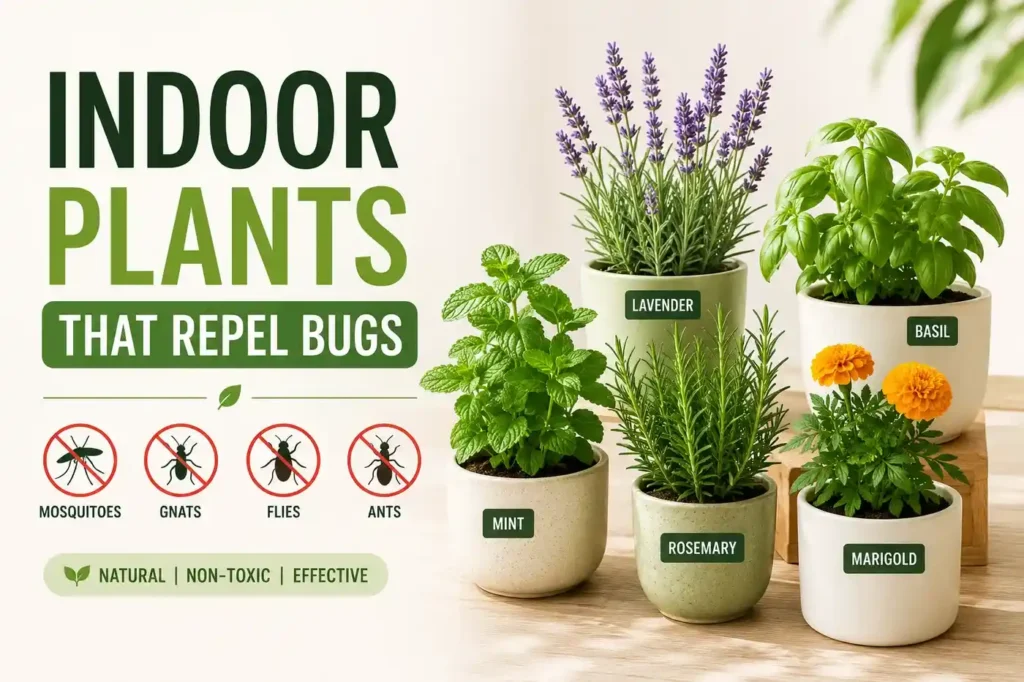
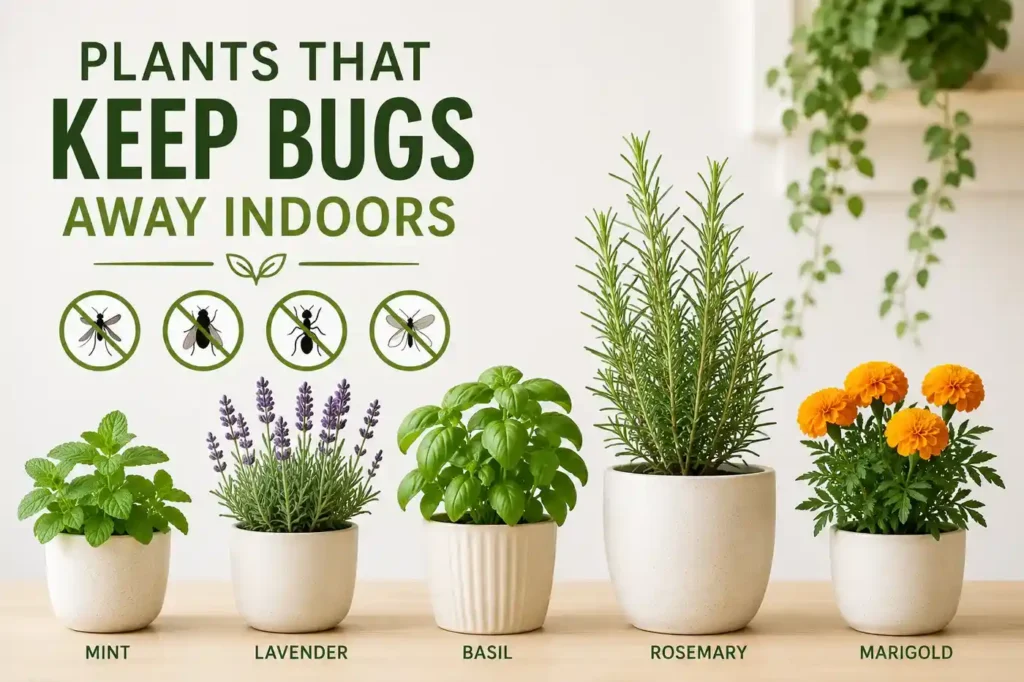
The best plants that keep bugs away indoors are peppermint, lavender, basil, rosemary, citronella, lemongrass, catnip, chrysanthemums, eucalyptus, marigolds, lemon balm, pennyroyal, pitcher plants, and rue. Each targets different pest species through natural compounds including menthol, linalool, pyrethrin, citronellal, and nepetalactone. Place them near entry points, windowsills, and kitchen areas for the most effective coverage of the primary zones where indoor bugs concentrate.
How Plants Keep Bugs Away: The Science Behind It
Every plant on this list works through volatile organic compounds (VOCs), which are chemical molecules that evaporate from plant tissue into the surrounding air at room temperature. These compounds evolved as plant defense mechanisms over millions of years of insect pressure, which is why they are so effective: they are not synthetic approximations of insect deterrents. They are the original deterrents that insects have been genetically programmed to avoid.
Different compounds work through different mechanisms. Some, like menthol from mint, overwhelm insect sensory receptors making it impossible for the insect to navigate or detect food and mates in the saturated area. Others, like pyrethrin from chrysanthemums, directly interfere with insect nervous systems causing paralysis and death. Linalool from lavender binds to insect olfactory receptors in ways that trigger avoidance behavior. Citronellal from citronella and lemon balm masks the carbon dioxide and lactic acid signals that mosquitoes use to locate humans.
Understanding these mechanisms explains why placement matters as much as plant selection. A plant releasing deterrent compounds in a confined space near an entry point is dramatically more effective than the same plant sitting in an open room where the compounds disperse before reaching the insects you want to deter.
14 Plants That Keep Bugs Away Indoors
1. Peppermint
Peppermint is the most broadly effective bug-deterring plant available for indoor use. Its menthol and menthone content affects more pest species than any other single plant on this list, deterring mosquitoes, ants, flies, aphids, spiders, and even mice through the same overwhelming sensory mechanism. A peppermint plant on a kitchen windowsill addresses the three most common indoor pest entry and activity points simultaneously: the window itself, the flies attracted to the kitchen, and the ants traveling along walls and countertops below.
Bugs it deters: Mosquitoes, ants, flies, aphids, spiders, mice
Where to place it: Kitchen windowsill, beside entry doors, near ant trails along baseboards, and in any room where multiple pest types are a consistent problem. Grow in its own pot since it spreads aggressively into shared containers.
Boosting effectiveness: Crush a few leaves every few days to release a burst of fresh menthol significantly more intense than the passive ambient release. This is particularly useful near entry points where you want maximum deterrent concentration.
2. Lavender
Lavender’s linalool content makes it effective against mosquitoes, flies, fleas, moths, and silverfish through olfactory avoidance. The continuous passive release from a healthy, well-lit lavender plant builds ambient linalool concentrations in its immediate area that insects find overwhelming without any active involvement from you.
Beyond its direct deterrent effect, lavender reduces moth and fly populations near entry points, and fewer prey insects means fewer spiders following them indoors. This indirect effect on spider populations is one of lavender’s most valuable but least discussed contributions to indoor pest management.
Bugs it deters: Mosquitoes, flies, fleas, moths, silverfish, spiders (indirectly)
Where to place it: Near entry doors, frequently opened windows, and in bedrooms where moths target clothing. Lavender in a south-facing window gets the 6 or more hours of direct sun it needs to stay vigorous and fragrant at full deterrent potency.
Care: Well-draining gritty soil in a terracotta pot, deep infrequent watering, and full direct sun. Root rot from consistently wet soil is the most common way to lose lavender indoors.
3. Basil
Basil’s combination of linalool, estragole, and eugenol makes it one of the most effective fly and aphid deterrents available for kitchen use specifically. The same aromatic compounds that make basil exceptional in food repel house flies, mosquitoes, whiteflies, and aphids through direct olfactory avoidance. A basil plant beside the fruit bowl, near the trash, or on a kitchen windowsill reduces fly activity in that area noticeably within days of placement.
Bugs it deters: House flies, mosquitoes, aphids, whiteflies
Where to place it: Kitchen windowsill, beside the fruit bowl, near kitchen waste areas, and anywhere fly activity is most consistent. Basil needs 6 to 8 hours of direct sun so a south-facing kitchen window is the most productive placement.
Care: Consistently moist soil and pinching of flower buds as soon as they appear. A flowering basil plant loses its leaf essential oil concentration rapidly and becomes significantly less effective as a bug deterrent once it bolts.
4. Rosemary
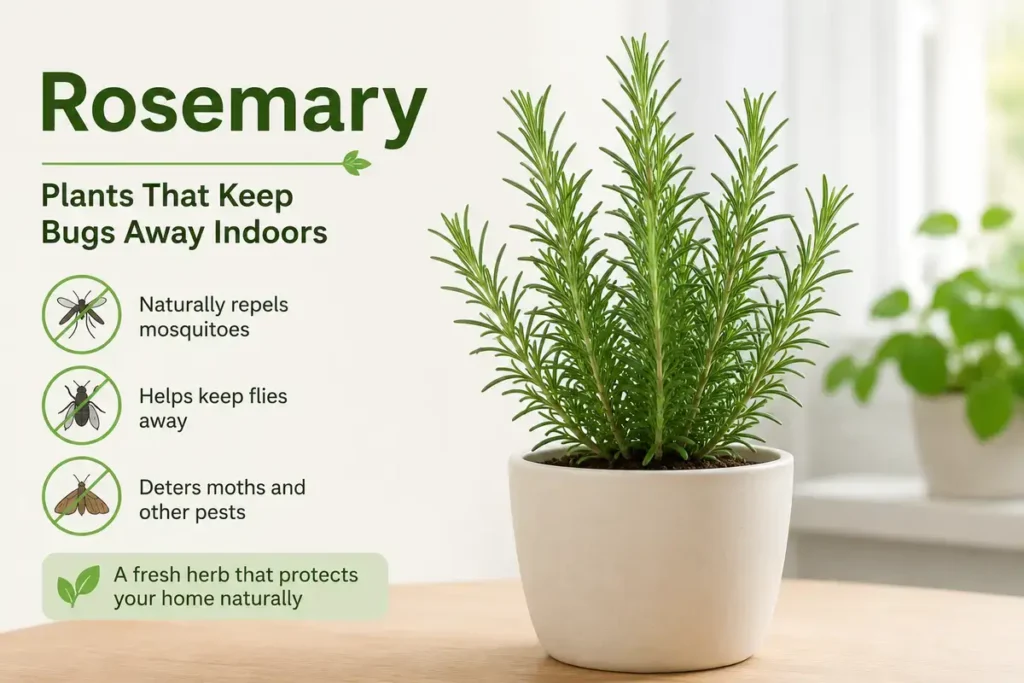
Rosemary’s camphor and borneol content deters mosquitoes, flies, and cabbage moths while its strong resinous scent reduces the prey insect availability that draws spiders into the same areas. Unlike softer herbs that lose potency quickly, rosemary maintains high essential oil concentration with minimal care, making it one of the most reliable long-term bug deterrents for indoor placement.
Bugs it deters: Mosquitoes, flies, moths, bean beetles
Where to place it: Near patio doors and frequently opened windows where mosquitoes enter during warm months. Rosemary tolerates the bright, dry conditions of a south-facing windowsill better than most plants, making it one of the best options for entry point placement where other plants might struggle.
Care: Full sun, well-draining soil, and infrequent deep watering with complete drying of the top soil inch between waterings. Rosemary handles the dry indoor conditions of heated homes better than most herbs.
5. Citronella
The living citronella plant releases citronellal and geraniol continuously into surrounding air, providing ongoing mosquito deterrence without burning anything or reapplying any product. It is significantly more effective as a passive ambient deterrent than citronella candles that only work while burning and in the immediate vicinity of the flame.
Bugs it deters: Mosquitoes, some flies and gnats
Where to place it: Near windows you open regularly, beside bedroom windows where mosquitoes enter at night, and close to patio or balcony doors during warm months. Citronella grows large indoors reaching up to 2 feet tall so plan for a sturdy, roomy pot from the start.
Care: Full sun, well-draining soil, and regular watering once the top inch dries. It handles standard indoor temperatures well and only struggles near cold drafts or air conditioning vents in winter.
6. Lemongrass
Lemongrass contains the same citronellal compound as the citronella plant but often at higher concentrations and is significantly more widely available at garden centers and grocery stores across the country. It doubles as a culinary herb used in many Asian dishes, which makes it one of the most practically useful bug-deterring plants you can grow indoors.
Bugs it deters: Mosquitoes, flies, gnats, ticks
Where to place it: Large sunny corners and floor-level positions near patio doors. Lemongrass grows tall indoors reaching 3 to 4 feet in good light and is better suited as a floor plant than a windowsill herb.
Care: Consistent watering, large pot with good drainage, and monthly fertilization during the growing season to maintain the vigorous growth that produces the highest essential oil concentrations.
7. Catnip
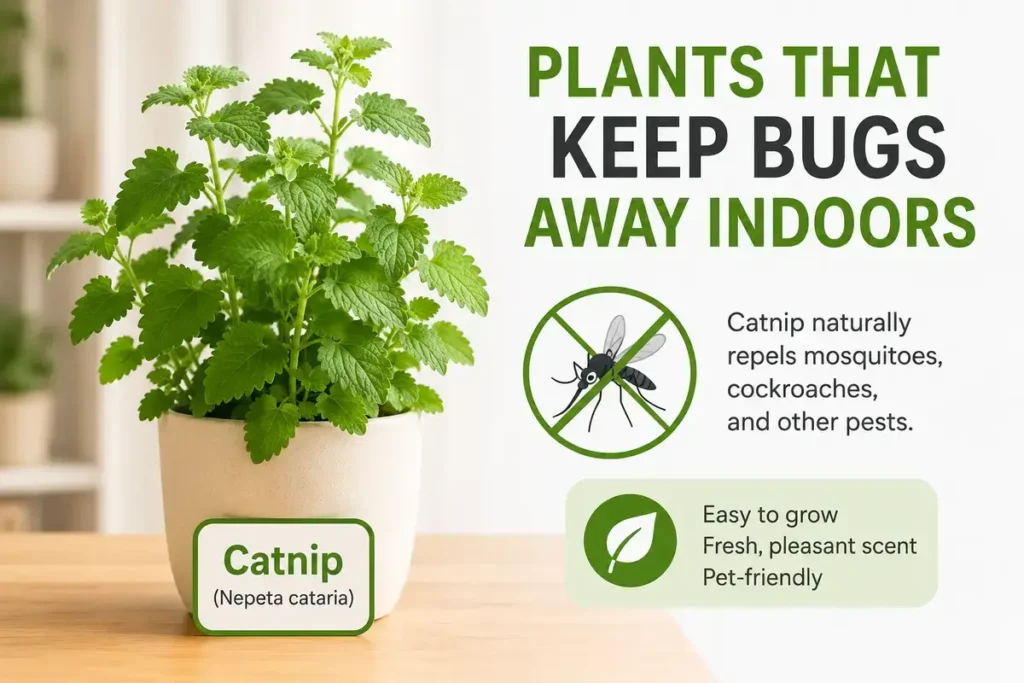
Catnip’s nepetalactone content is one of the most potent natural insect deterrents available in plant form. Research comparing nepetalactone directly to DEET for mosquito deterrence consistently shows performance comparable to or exceeding the synthetic chemical. For spiders, cockroaches, and termites, nepetalactone shows similarly strong avoidance responses in controlled studies.
Bugs it deters: Mosquitoes, flies, cockroaches, termites, spiders, flea beetles
Where to place it: Near windows and entry doors where mosquitoes enter. In any room where cockroach activity has been observed since nepetalactone shows particularly strong cockroach avoidance responses.
Important note: If you have cats, catnip indoors is not practical. The plant will be destroyed within hours. In a cat-free home, it is one of the two or three most powerful bug-deterring plants available.
Care: Well-draining soil, moderate watering, and at least 4 to 6 hours of light daily. Regular leaf harvesting encourages bushier growth and maintains higher nepetalactone concentration in the remaining foliage. For a detailed comparison of how catnip performs against other natural deterrent options, indoor plants that repel bugs covers the full chemistry and effectiveness of every major bug-repelling plant side by side.
8. Chrysanthemums
Chrysanthemums are in a separate category from every other plant on this list because their active compound, pyrethrin, does not merely deter insects through scent. It is a genuine insecticide that kills a broad spectrum of insects and arthropods through nervous system disruption. The same compound is synthesized commercially for use in countless household insect sprays and pet flea treatments.
Bugs it kills and deters: Cockroaches, ants, ticks, fleas, spider mites, silverfish, lice, bedbugs, spiders
Where to place it: Any room where cockroach or ant activity has been observed. Near baseboards and entry points where ground-level insects travel. Chrysanthemums in full bloom are the most potent since pyrethrin concentrations are highest in the flower heads.
Important: Pyrethrin is toxic to cats even in plant form. Skip chrysanthemums entirely if you have cats and use peppermint or lavender as your primary deterrent plants instead.
Care: Bright indirect to direct light, consistent moisture, and cooler indoor temperatures. Cut back after each blooming cycle to encourage new flower production.
9. Eucalyptus
Eucalyptus releases cineole continuously without being touched or disturbed, which makes it one of the most passive and maintenance-free bug-deterring plants available. You do not need to crush leaves, position it in a breeze, or do anything other than keep it healthy and in good light for it to work continuously around the clock.
Bugs it deters: Mosquitoes, flies, cockroaches, dust mites, spiders
Where to place it: Rooms where mosquito or cockroach activity is most consistent. A large south-facing window or sunroom provides the light eucalyptus needs to grow vigorously and maintain high cineole production.
Care: Full sun, well-draining soil, and deep watering followed by allowing the top 2 inches to dry completely. Eucalyptus grows fast indoors and will likely need annual repotting.
10. Marigolds
Marigolds contain pyrethrum alongside alpha-terthienyl, a compound particularly effective against whiteflies and soil nematodes. Their strong, distinctive scent from leaves and stems rather than flowers means they retain significant deterrent value even when not in bloom.
Bugs they deter: Whiteflies, aphids, gnats, mosquitoes, thrips, some spider species
Where to place them: Bright sunny windowsills, kitchen windows where gnats and flies are most active, and near other houseplants to protect them from the aphids and whiteflies that marigolds deter.
Care: At least 6 hours of direct sun, moderate watering with slight drying between waterings, and regular deadheading to encourage continuous blooming and highest essential oil production.
11. Lemon Balm
Lemon balm combines citronellal with linalool and eugenol, giving it a broader spectrum of bug deterrence than either citronella or lavender alone. It is particularly effective in kitchens and bathrooms where multiple pest species are drawn to moisture and organic matter.
Bugs it deters: Mosquitoes, flies, gnats, ants, spiders
Where to place it: Kitchens and bathrooms where multiple pest species concentrate. Lemon balm tolerates partial shade better than most herbs on this list, which gives it more placement flexibility in rooms with limited natural light.
Care: Consistently moist soil and regular harvesting to maintain high essential oil production. Like mint, grow in its own pot to prevent spreading into neighboring containers. For understanding how lemon balm and other compounds affect spider behavior specifically, indoor plants that repel spiders covers the full range of spider-deterring plant options and placement strategies.
12. Pennyroyal
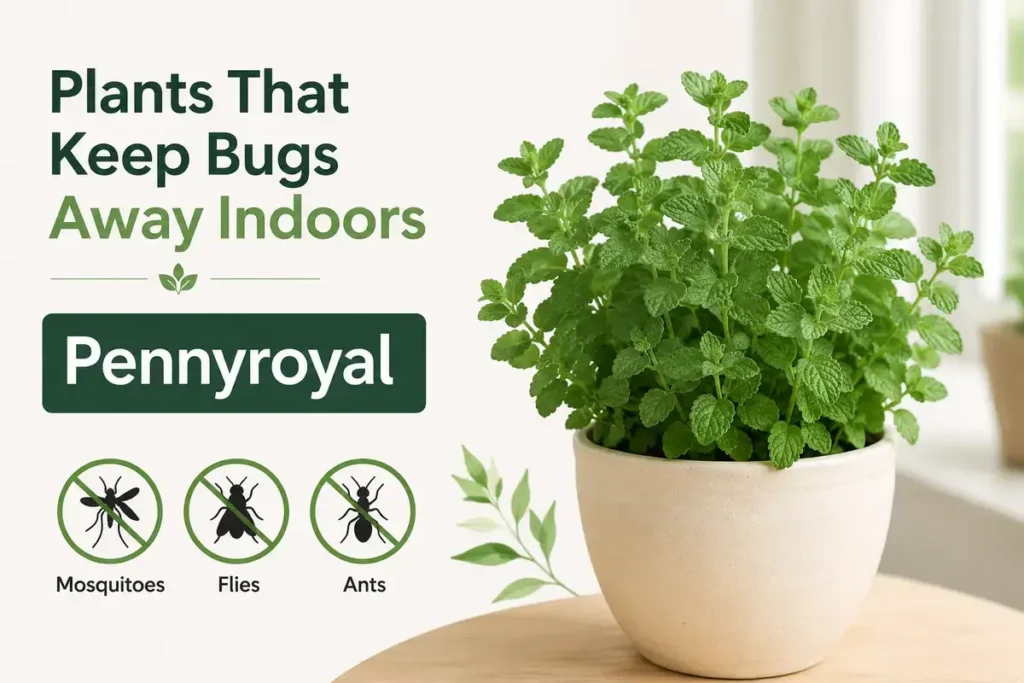
Pennyroyal is a mint family member whose concentrated menthol formula is particularly toxic to ants and fleas in ways that regular mint is not. It has been used as a natural flea deterrent in working households across the American South for generations and holds up well in indoor settings for the same purpose.
Bugs it deters: Fleas, ants, mosquitoes, gnats
Where to place it: Near floor-level entry points, beside pet resting areas with the plant kept out of reach, and along baseboards where ant trails run.
Important: Pennyroyal essential oil is toxic if ingested by humans or pets. The living plant in a ventilated indoor space is safe at normal concentrations but do not allow children or pets to chew the leaves directly.
Care: Moist soil, partial to full sun, and its own dedicated pot since it spreads aggressively through any shared container.
13. Pitcher Plants
Pitcher plants take a fundamentally different approach from every other plant on this list. Rather than releasing compounds that deter bugs from an area, they actively attract and consume them. If you are dealing with a serious fungus gnat or fruit fly infestation, a pitcher plant placed at the point of highest activity eliminates bugs rather than simply moving them elsewhere.
Bugs they catch: Fungus gnats, fruit flies, small flies, ants, any small insect attracted to their fluid
Where to place them: Wherever your bug problem is most concentrated. Near the soil of infested houseplants for fungus gnats and fruit flies. In kitchens near drains and waste areas for fruit flies.
Care: Distilled or rainwater only since tap water minerals damage their digestive fluid. Peat moss and perlite growing mix. Never fertilize the soil. They get their nutrients from the insects they catch. For the complete guide to how pitcher plants and other methods combine for comprehensive fruit fly and fungus gnat control, fruit flies indoor plants covers every treatment layer from traps through soil drenches in full detail.
14. Rue
Rue is one of the most potent and broadly effective bug-deterring herbs available for indoor use but also one of the least commonly grown, which means it is genuinely underused as an indoor pest deterrent. Its rutin and alkaloid content makes it effective against flies, mosquitoes, beetles, and ants, and it has a long history of use as a natural insect repellent across European folk medicine traditions.
Bugs it deters: Flies, mosquitoes, beetles, ants, Japanese beetles
Where to place it: Near entry doors and windows, in kitchens where flies and ants are most active, and alongside more vulnerable houseplants that attract beetles.
Important: Rue sap can cause skin irritation in some people when exposed to sunlight. Wear gloves when handling the plant and wash hands thoroughly afterward. The plant itself in a pot is safe in a normal indoor setting as long as you avoid touching it with bare hands and then going into direct sunlight.
Care: Full sun, well-draining soil, and moderate watering with good drying between waterings. Rue is drought-tolerant once established and handles the dry conditions of heated indoor spaces well.
How to Build a Complete Indoor Bug Deterrence Strategy With Plants
Using multiple plants from this list in combination creates overlapping zones of deterrence that are significantly more effective than any single plant used alone. Here is how to think about building that coverage:
Layer 1: Entry points. Place peppermint, lavender, or citronella directly beside every door and frequently opened window. These are your first line of defense, deterring bugs before they enter rather than after.
Layer 2: Kitchen and food areas. Basil and marigolds on kitchen windowsills address the flies, gnats, and aphids most attracted to food, moisture, and organic matter. Lemon balm in bathrooms handles the same species drawn to water sources there.
Layer 3: Living and sleeping areas. Lavender in bedrooms deters mosquitoes and moths. Eucalyptus in main living areas provides broad passive deterrence against flies, mosquitoes, and cockroaches without any active management.
Layer 4: Targeted problem spots. Chrysanthemums near cockroach or ant activity areas. Pennyroyal near pet resting areas with flea pressure. Pitcher plants at the soil surface of infested houseplant pots. Catnip near doors in cat-free homes for maximum mosquito and cockroach deterrence.
This four-layer approach places the right chemistry at the right points throughout your home so bugs encounter deterrence at every stage of their potential entry and movement rather than at only one or two points. For a practical guide to which specific pest each plant handles best and how to use spray treatments alongside plants for maximum effectiveness, bug spray for indoor plants covers the complete integration of plant-based and spray-based pest management approaches. And for understanding which flying pest species are most likely to be drawn to your indoor plants in the first place, how to get rid of flies in indoor plants covers identification and treatment for every common fly species found near houseplants.
Conclusion
Plants that keep bugs away indoors work through genuine, well-documented chemistry that pest insects have been avoiding for millions of years. Peppermint and catnip overwhelm sensory systems. Lavender and citronella mask the signals insects use to locate food and mates. Chrysanthemums and marigolds produce compounds toxic to a broad range of arthropods. Pitcher plants eliminate bugs entirely rather than just deterring them.
The key to making this approach work in a real home rather than a controlled study is strategic placement and plant health. A struggling peppermint in low light produces a fraction of the menthol that a vigorous one in full sun releases. A lavender plant behind furniture in a corner does a fraction of what the same plant does on the windowsill beside your entry door.
Start with three plants that address your specific problem insects. Place them where bugs actually enter and concentrate rather than where they would look nice. Keep them healthy so their essential oil production stays at full strength. Give them 4 to 6 weeks to build ambient compound concentrations in their placement areas. The reduction in bug activity that follows is real, sustainable, and does not require a single chemical application.
Frequently Asked Questions
Which single plant keeps the most types of bugs away indoors?
Peppermint keeps away the broadest range of bug species of any single plant on this list, deterring mosquitoes, ants, flies, aphids, spiders, cockroaches, and even mice through its menthol content. Chrysanthemums are the strongest option against insects specifically since their pyrethrin content kills rather than merely deters, covering roaches, ants, ticks, fleas, mites, and more. For maximum coverage, combining peppermint for scent-based deterrence with a chrysanthemum for direct insecticidal action covers nearly every indoor pest species effectively.
How long do indoor bug-deterring plants take to show results?
Plants working through passive scent release typically take 2 to 4 weeks to build ambient compound concentrations in their placement area to levels that consistently deter bug activity. Plants positioned in small enclosed spaces near entry points show faster results than those in open rooms where compounds disperse more quickly. Boosting the effect by gently crushing leaves every few days significantly accelerates the buildup of deterrent compounds in the immediate area during the initial establishment period.
Do bug-deterring plants work in winter when windows are closed?
Yes, and they can actually be more effective in winter in enclosed spaces because the deterrent compounds released by the plants accumulate to higher concentrations in the sealed indoor air rather than dispersing through open windows. The main consideration in winter is light: many of the plants on this list need direct sun to maintain essential oil production, and shorter winter days may require supplementing with a grow light to keep plants producing at full strength.
Can I use multiple bug-deterring plants together in one room?
Absolutely, and combining multiple plants from different compound families creates broader and more complete coverage than any single plant provides. Peppermint alongside lavender covers more pest species than either alone. Adding a chrysanthemum to that combination adds direct insecticidal action to the scent-based deterrence the other two provide. The compounds from different plants do not interfere with each other and the combined scent profile is generally pleasant in most home environments.
Are bug-deterring indoor plants safe around children?
Most plants on this list are safe around children when grown in pots and not ingested. Chrysanthemums, pennyroyal, and rue require more caution: chrysanthemums cause skin irritation and are toxic if ingested, pennyroyal leaves should not be chewed, and rue sap can cause photosensitivity reactions on skin. Peppermint, lavender, basil, rosemary, citronella, lemongrass, marigolds, lemon balm, and eucalyptus are safe around children in normal household concentrations.
Do I need to replace bug-deterring plants regularly?
Healthy, well-maintained plants maintain their essential oil production and bug-deterring effectiveness for months or years without replacement. The plants that lose effectiveness indoors typically do so because they are declining from incorrect care rather than exhausting their chemical production capacity. A leggy, underlit lavender or a flowering basil that has not been pinched back produces significantly less deterrent compound than a vigorous, well-maintained specimen. Focus on keeping plants healthy rather than replacing them regularly.