
UV light for plants indoor is one of the most misunderstood topics in indoor gardening, partly because the term UV light gets used loosely to mean everything from grow lights to blacklights to the specific ultraviolet wavelengths that affect plant biology in distinct ways. Sorting out what UV light actually does to plants, whether it is necessary, and which products actually make a difference saves a lot of money spent on equipment that sounds scientific but does not deliver results.
This guide cuts through the confusion with a straightforward explanation of plant light requirements, where UV fits into that picture, and which lighting approaches genuinely help indoor plants perform better.
Quick Answer
Plants primarily need red and blue wavelengths of visible light for photosynthesis, not UV light specifically. However, low levels of UV-A light do benefit plants by triggering the production of protective compounds including anthocyanins and essential oils that increase color intensity, flavor, and pest resistance. Full-spectrum LED grow lights that include some UV-A output produce better results than purely red-blue LED panels for most indoor plant collections. Standard UV-B blacklights used for other purposes do not provide the right light spectrum for plant growth.
Understanding Plant Light Requirements
Plants use light through two primary mechanisms that require different types of light to function.
Photosynthesis is the process of converting light energy into sugars the plant uses for growth. This process primarily uses red wavelengths (620 to 700 nanometers) and blue wavelengths (400 to 500 nanometers). These are in the visible light spectrum, not UV. A plant can photosynthesize effectively with only red and blue light and no UV at all.
Photomorphogenesis is how light signals affect plant development, including stem elongation, leaf expansion, flower initiation, and the production of secondary compounds like pigments, essential oils, and defensive chemicals. This process involves a wider range of wavelengths including some UV-A.
The confusion arises because people see “full spectrum” on grow light packaging and assume this means UV is included and necessary. In reality, full spectrum for plant growth means a light that covers the red and blue wavelengths plants need for photosynthesis, often with green and white wavelengths added for human viewing comfort. UV-A wavelengths are an additional enhancement rather than a fundamental requirement.
The UV Spectrum and Plants
UV light occupies wavelengths from 100 to 400 nanometers, below the visible spectrum. It is divided into three categories with very different effects on plant biology.
UV-C (100 to 280 nm): Highly energetic radiation that kills cells including plant cells. Used in sterilization equipment. Has no beneficial role in plant growth and causes damage at any intensity. Not present in sunlight reaching the earth’s surface due to atmospheric absorption.
UV-B (280 to 315 nm): Causes the photodamage associated with sunburn in both humans and plants. In very low doses it triggers some protective responses in plants but the margin between beneficial dose and damaging dose is very narrow. Filtered significantly by standard glass, which is why plants behind windows receive far less UV-B than outdoor plants. Not a component of recommended indoor plant lighting approaches.
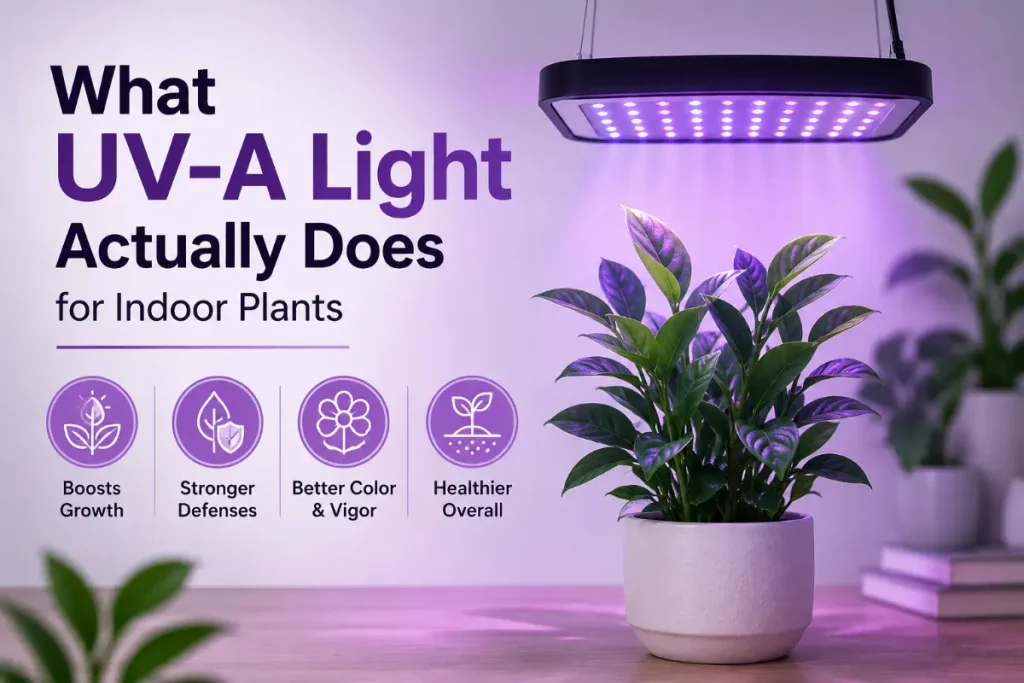
UV-A (315 to 400 nm): The most beneficial category for plants and the one that produces measurable positive effects at practical indoor lighting levels. UV-A triggers the production of anthocyanins (the red, purple, and pink pigments in colored foliage plants), increases essential oil production in herbs, enhances stress resistance, and has been shown in research to reduce the feeding activity of some pest insects that prefer low-UV environments.
When grow light manufacturers or indoor gardening discussions reference UV benefits for plants, UV-A is the relevant wavelength category.
What UV-A Light Actually Does for Indoor Plants
The documented effects of UV-A light on indoor plants at practical lighting intensities fall into several distinct categories.
Color enhancement in foliage plants: The anthocyanins responsible for the red, pink, purple, and orange coloration in plants including croton, Hawaiian ti plant, purple heart wandering jew, and coleus are produced in greater quantities under UV-A exposure. Plants grown under full-spectrum lighting with UV-A component show more vivid coloration than the same plants under red-blue only LEDs. This is a genuine and visually significant effect observable within weeks of changing lighting.
Essential oil concentration in herbs: Herbs including basil, rosemary, lavender, thyme, and mint produce higher concentrations of essential oils under UV-A exposure. This means more intense fragrance and flavor in culinary herbs grown under full-spectrum lighting compared to those grown under standard red-blue grow lights.
Compacter, stronger growth: UV-A exposure contributes to the denser, more compact growth form that distinguishes outdoor plants from their often-leggy indoor counterparts. The photomorphogenic signals from UV-A produce shorter internodes (tighter spacing between leaves) and stronger stems that can support the plant’s weight without staking.
Pest deterrence: Some research suggests that UV-A exposure increases the production of defensive compounds in plant leaves that reduce the feeding preference of certain soft-bodied pests including spider mites and aphids. Outdoor plants have natural UV-A exposure that indoor plants behind glass typically do not receive in equivalent amounts.
Why Glass Filters UV from Your Plants
Standard window glass, including double and triple-pane glass, filters the majority of UV-A wavelengths and essentially all UV-B and UV-C. A plant sitting behind a south-facing window receives primarily visible light, not the UV component that outdoor plants in direct sunlight receive.
This is one of the meaningful differences between outdoor and indoor growing conditions that explains why plants often perform better outdoors during summer than in indoor windows even when the visible light levels appear similar. The UV component that outdoor direct sun includes but window-filtered light does not contributes to the coloration intensity, compact growth, and essential oil concentration differences between outdoor and indoor specimens of the same plant.
It is also why the UV-A component in full-spectrum grow lights is worth having for plants that specifically benefit from it, rather than a marketing addition with no practical effect.
Grow Lights and UV: What to Look For
The indoor grow light market has become enormous and confusing, with products ranging from genuinely effective full-spectrum LEDs to marketing-heavy products that produce inadequate light for plant growth. Understanding what to look for prevents wasting money on equipment that does not deliver results.
Red-blue LED panels (blurple lights): The original wave of consumer LED grow lights used only red and blue diodes, producing the characteristic purple-pink glow. These lights support photosynthesis adequately but miss the white, green, and UV-A wavelengths that contribute to the full range of plant light response. They work for basic plant growth but produce less natural-looking plants and do not provide the UV-A benefits described above.
Full-spectrum white LED grow lights: The current standard for quality indoor plant lighting. These lights use white LED diodes that emit a spectrum covering visible light from approximately 380 to 700 nanometers, including some UV-A at the near-UV end of the spectrum. Plants grow under these lights with more natural color and form than under red-blue panels. They are also visually neutral in a living space rather than the disruptive pink-purple glow of traditional grow lights.
What UV-A specification to look for: Quality full-spectrum grow lights specify their spectral output. Look for a light with coverage through the 380 to 400 nanometer range in the near-UV spectrum. Not all full-spectrum lights include meaningful UV-A output, and those that do not will not provide the color enhancement and oil production benefits described above.
Dedicated UV-A supplemental lights: Some specialty grow light suppliers offer UV-A supplemental bars or strips designed to add UV-A output to an existing lighting setup without UV-B or UV-C. These make sense for serious herb growers and collectors of colorful foliage plants who want maximum color intensity and essential oil production. For most indoor plant owners, a quality full-spectrum LED that includes some UV-A is sufficient without dedicated supplemental UV lighting.
Recommended Grow Light Approaches for Different Situations
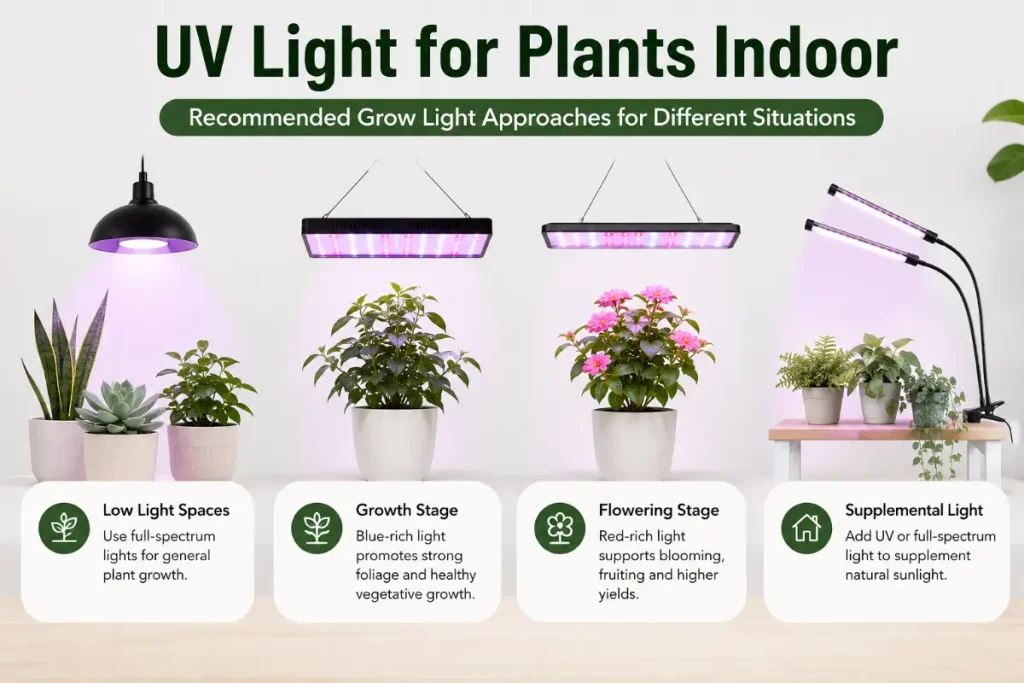
For a collection of mixed tropical houseplants: A quality full-spectrum white LED panel or strip light positioned above the plants and running twelve to fourteen hours daily provides the combination of photosynthetically active radiation and UV-A that supports healthy growth, good coloration, and compact form. Brands including Soltech, Sansi, and Spider Farmer produce consumer full-spectrum grow lights widely available in the US with good spectral coverage.
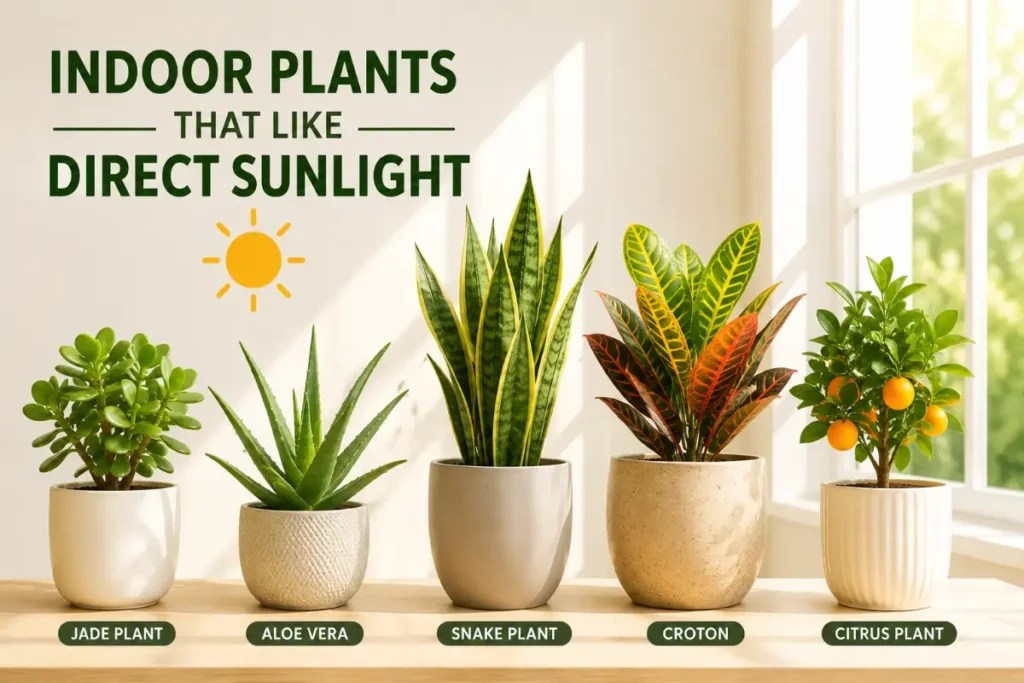
For herb gardens: Herbs benefit most from the UV-A component given its effect on essential oil production. Full-spectrum grow lights with near-UV output positioned six to twelve inches above the herb containers and running fourteen to sixteen hours daily produce the most flavorful, aromatic herbs. For the complete guide to grow light requirements for herbs that prefer direct sun indoors, indoor plants that like direct sunlight covers rosemary, lavender, basil, and thyme with specific light intensity requirements for each.
For colorful foliage plants: Croton, Hawaiian ti plant, coleus, and party time plant all benefit from UV-A for maximum color intensity. Full-spectrum grow lights with UV-A coverage maintain and enhance the vivid colors that these plants are grown for, which commonly fade in standard window light or basic grow lighting.
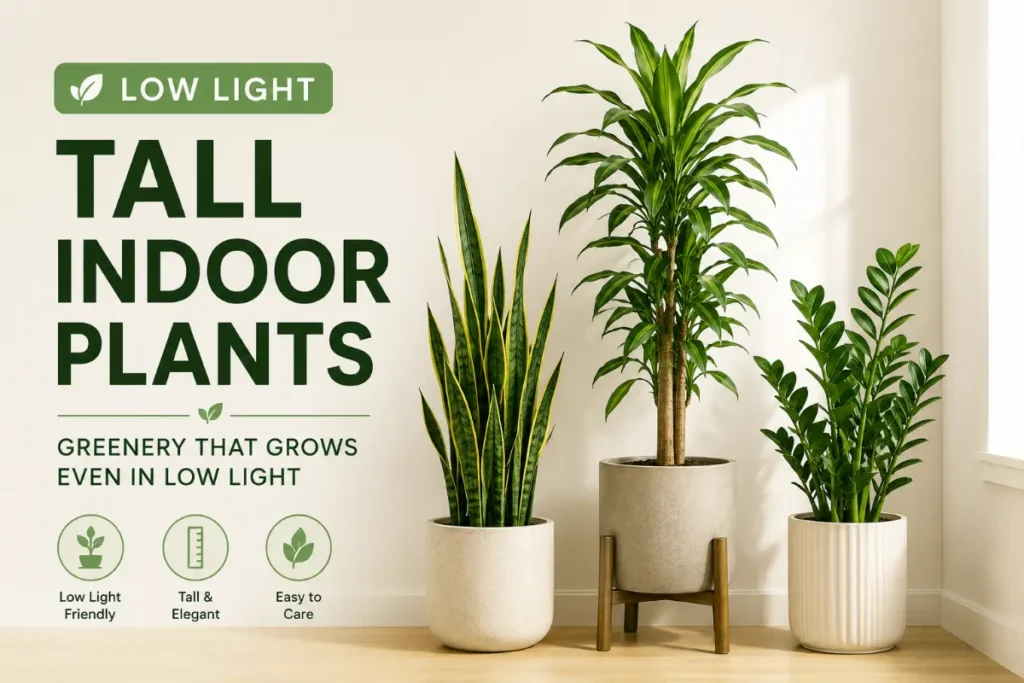
For low-light plants in dark spaces: The most shade-tolerant plants including cast iron plant, ZZ plant, and snake plant do not need UV-A supplementation for health or survival. A basic grow light providing eight to ten hours of white LED output daily is sufficient for maintaining these plants in genuinely dark positions without natural light access. For the complete guide to which plants handle dark spaces best, indoor plants for dark spaces covers every option with care guidance for each.
What Does Not Work: Common UV Light Misconceptions
Blacklights (UV-B fluorescent tubes): Standard blacklight bulbs used for party decoration or scorpion detection emit primarily UV-A and UV-B in ranges that do not correspond to the wavelengths that benefit plant biology most and can cause plant tissue damage at extended exposure. They also do not provide red and blue visible light needed for photosynthesis. Blacklights do not work as grow lights and should not be used for plants.
UV sterilization lamps: UV-C germicidal lamps designed for water and surface sterilization emit highly energetic UV-C radiation that kills plant cells. These should never be used near plants.
Standard LED bulbs marketed as full spectrum: Many consumer LED bulbs marketed as full spectrum for photography or general use do not include significant UV-A output and do not provide adequate photosynthetically active radiation intensity for plant growth. Full spectrum in this context means visually full spectrum for human eyes, not botanically full spectrum for plants. Purpose-built grow lights with specified spectral output and PAR (photosynthetically active radiation) values are the reliable choice for plant lighting.
Cheap grow lights with unclear specifications: The grow light market includes many products with vague spectral claims and no measurable PAR data. For any grow light purchase intended for serious plant growing, look for products that specify their PAR output in micromoles per square meter per second at the intended mounting distance. This number tells you whether the light actually delivers enough photons for plant growth rather than just producing light that looks bright to human eyes.
Setting Up UV-Inclusive Grow Lighting
Distance from plants: Full-spectrum grow lights should be positioned according to the manufacturer’s specifications for your target light intensity. Most quality consumer grow lights work at six to eighteen inches above the plant canopy for typical tropical houseplants. Distance significantly affects intensity: moving a light from twelve inches to twenty-four inches reduces intensity by approximately 75%.
Duration: Most tropical houseplants benefit from twelve to sixteen hours of grow light exposure daily. Automatic timers make consistent scheduling practical without daily manual operation.
Seasonal adjustment: In winter when natural light levels drop, adding or extending grow light hours compensates for the reduction in natural light that causes the etiolation and reduced coloration many indoor plants show through the darkest months.
Heat management: Quality LED grow lights produce minimal heat compared to older HID and fluorescent grow lights. Positioning remains the primary management consideration rather than heat dissipation for modern LED grow lighting.
Measuring Light for Indoor Plants
Understanding how to measure light intensity helps you make better decisions about grow light placement and diagnose why plants in apparently bright positions still show symptoms of insufficient light.
Foot-candles: The traditional measurement of light intensity visible to humans. Most indoor spaces with adequate ambient lighting measure 50 to 200 foot-candles. Most tropical houseplants need 200 to 800 foot-candles for active growth. South-facing windows in direct sun reach 2,000 to 5,000 foot-candles on clear days. Inexpensive light meter apps on smartphones measure foot-candles and provide a useful baseline assessment of any indoor position.
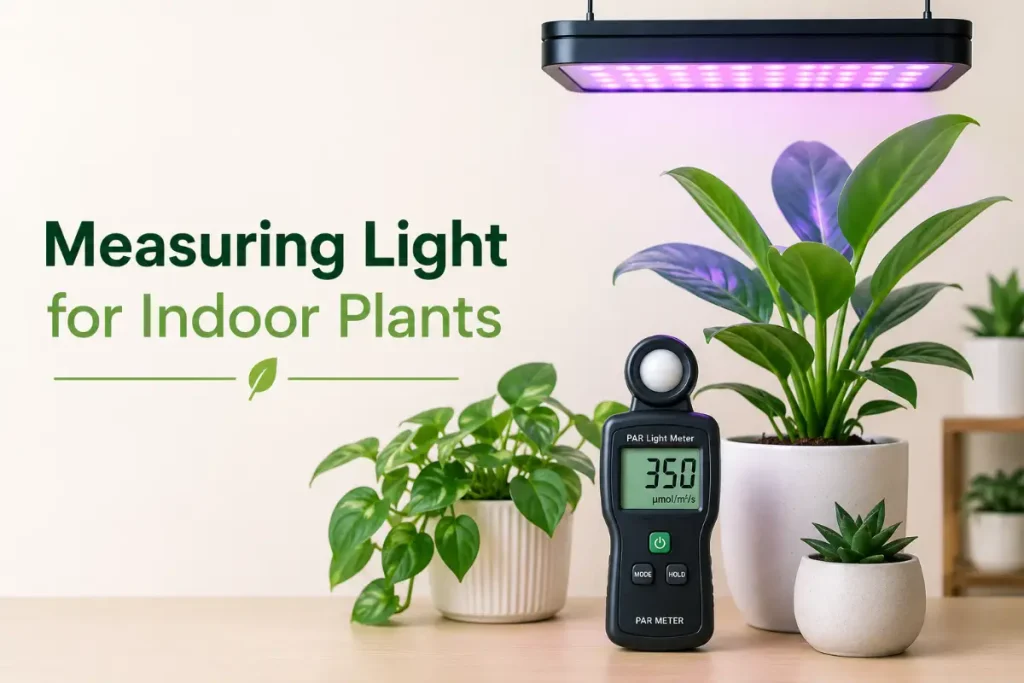
PAR and PPFD: Photosynthetically Active Radiation (PAR) refers to the wavelengths from 400 to 700 nanometers that drive photosynthesis. Photosynthetic Photon Flux Density (PPFD) measures how many photons in the PAR range reach a surface per second per square meter, expressed in micromoles per square meter per second (μmol/m²/s). This is the most accurate way to compare grow light output for plant growing purposes. Most tropical houseplants need 100 to 300 μmol/m²/s for active growth. Herbs and flowering plants prefer 300 to 600 μmol/m²/s.
Why this matters for UV assessment: PAR measurements do not include UV-A since UV-A is below the standard 400 to 700 nanometer PAR range. A light with excellent PAR values may or may not include meaningful UV-A output. When specifically evaluating UV-A from a grow light, look for spectral distribution charts showing output in the 380 to 400 nanometer range, which most quality grow light manufacturers provide on their product specifications pages.
Practical measurement for typical plant owners: For most indoor plant owners, a simple smartphone light meter app combined with the manufacturer’s PPFD charts for a specific grow light at its intended mounting distance provides enough information to make good placement decisions without requiring specialized measurement equipment.
For the complete guide to using grow lights specifically for tomatoes and food crops where PPFD requirements are higher than for typical houseplants, grow lights for indoor tomato plants covers the specific intensity requirements, duration schedules, and grow light selection criteria that apply to food-producing plants where light intensity significantly affects both yield and flavor.
Conclusion
UV light for plants indoor matters most in the UV-A range, where it enhances color production in foliage plants, increases essential oil concentration in herbs, and contributes to the compact, strong growth form that distinguishes well-lit indoor plants from their leggy window-grown counterparts. It is not the foundation of plant growth, which rests on red and blue photosynthetically active radiation, but it is a meaningful enhancement for plants where color intensity and essential oil production are priorities.
The practical path forward is a quality full-spectrum LED grow light that specifies UV-A coverage in its spectral output, positioned at the appropriate distance, and running on a timer for consistent daily duration. This covers both the photosynthetic requirements that all plants need and the UV-A enhancement that benefits colorful foliage plants and culinary herbs most visibly.
Skip blacklights, skip UV sterilization lamps, and skip cheap grow lights with vague spectral claims. The investment in a quality full-spectrum LED grow light pays for itself quickly in plants that perform better, look more vibrant, and taste more flavorful than those grown under inadequate lighting.
Frequently Asked Questions
Does UV light help indoor plants grow?
UV-A light (315 to 400 nanometers) benefits indoor plants by triggering anthocyanin production for more vivid coloration, increasing essential oil concentration in herbs, and contributing to compact, strong growth. UV light is not the foundation of plant growth, which relies primarily on red and blue visible wavelengths, but it is a meaningful enhancement. Most standard window glass filters UV significantly, which is one reason plants often perform better outdoors in direct sun than in equivalent-seeming window light.
What is the difference between UV light and grow lights?
Grow lights are lighting systems designed to provide the full range of wavelengths plants need for photosynthesis and healthy development, primarily red and blue visible light with quality full-spectrum models also including some UV-A. UV light is a component of the electromagnetic spectrum below visible light. Quality grow lights include UV-A as part of a full-spectrum output. Standard UV blacklights are not grow lights and do not provide the wavelengths plants need for photosynthesis.
Can I use a UV blacklight for my plants?
No. Standard UV blacklights emit UV-A and UV-B wavelengths that do not match what plants need for growth and can damage plant tissue at extended exposure. More importantly, blacklights do not provide the red and blue visible light that drives photosynthesis. Plants under blacklights alone cannot photosynthesize and will decline rapidly.
How many hours of grow light do indoor plants need?
Most tropical houseplants benefit from twelve to fourteen hours of grow light daily. Herbs and flowering plants benefit from fourteen to sixteen hours. Low-light shade-adapted plants need eight to ten hours. Automatic outlet timers maintain consistent schedules without manual operation and are a worthwhile investment for any indoor grow light setup.
Do indoor plants need UV light if they are near a window?
Plants near windows receive primarily visible light since standard glass filters most UV wavelengths. They do not need supplemental UV-A if they are otherwise growing healthy and showing good color in adequate window light. Plants that show fading coloration, reduced essential oil fragrance, or etiolated growth may benefit from full-spectrum grow light supplementation including UV-A, particularly in winter when natural light intensity drops.
What is the best grow light that includes UV for indoor plants?
Look for full-spectrum LED grow lights that specify UV-A coverage in their spectral output and provide measurable PAR (photosynthetically active radiation) values at the intended mounting distance. Brands including Soltech Solutions, Sansi, Spider Farmer, and Mars Hydro produce consumer-grade full-spectrum LED grow lights with good spectral coverage widely available in the US. For serious herb or colorful foliage plant growing, look for lights that specify coverage through the 380 to 400 nanometer near-UV range in addition to the standard visible spectrum.
Pingback: Indoor Plants Direct Sunlight: Best Choices for Sunny Rooms (2026) - Plant Quill