Indoor plants direct sunlight compatibility is one of the most misunderstood placement topics in houseplant care. Most people know that some plants scorch in direct sun while others thrive in it, but the practical question of which plants belong in which sunny window position and how to manage the transition is less clearly covered.
This guide takes a placement-first approach to direct sunlight indoor plants. Rather than repeating a list of sun-tolerant species, it covers how to evaluate your specific direct sunlight situation, how to introduce plants to direct sun without damage, how to read the signals that tell you a plant is getting too much or too little, and which positions work best for different sun-loving plant types.
Quick Answer
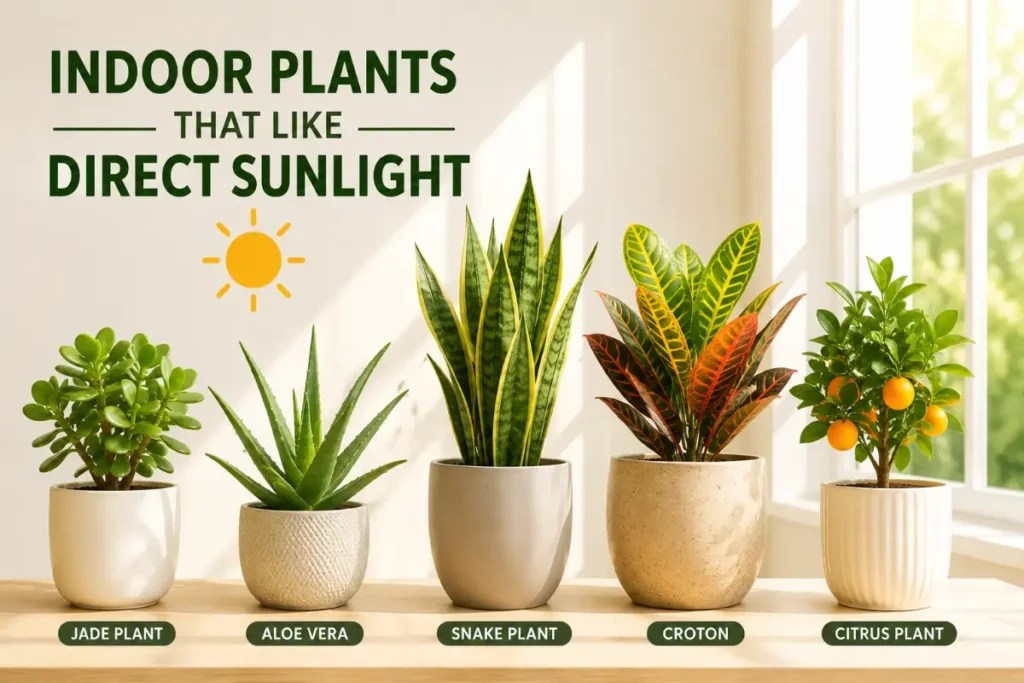
Indoor plants that benefit from direct sunlight include cacti, succulents, aloe vera, jade plant, croton, hibiscus, geraniums, rosemary, lavender, thyme, basil, dwarf citrus, and bird of paradise. Plants to keep away from direct indoor sun include ferns, pothos, peace lily, calathea, orchids, heartleaf philodendron, and most other tropical shade-adapted houseplants. The key variable is not just which window but how many hours of direct sun a specific position receives and at what intensity.
Evaluating Your Direct Sunlight Situation
Before placing any plant in a direct sun position, understanding what your specific window actually provides is more useful than general directional guidance.
Track the sun movement: Sit next to the window at different times of day on a clear day and note when direct sun rays enter the room and touch the plant position. A south-facing window might provide direct sun from 10am to 4pm in winter but only from 11am to 2pm in summer due to the higher sun angle. The actual hours of direct sun exposure matter more than the compass direction of the window.
Assess obstructions: Trees, buildings, overhangs, and awnings outside windows significantly reduce direct sun access. A south-facing window with a large tree outside may provide less direct sun than an unobstructed west-facing window. Check each season since deciduous trees that shade windows in summer provide little obstruction in winter.
Measure intensity: A smartphone light meter app provides a reasonable estimate of light intensity in foot-candles at any position. A position receiving 3,000 foot-candles of direct sun on a clear summer afternoon is genuinely high intensity. A position receiving 800 foot-candles through a tree-filtered south-facing window in winter is much lower despite being direct sun.
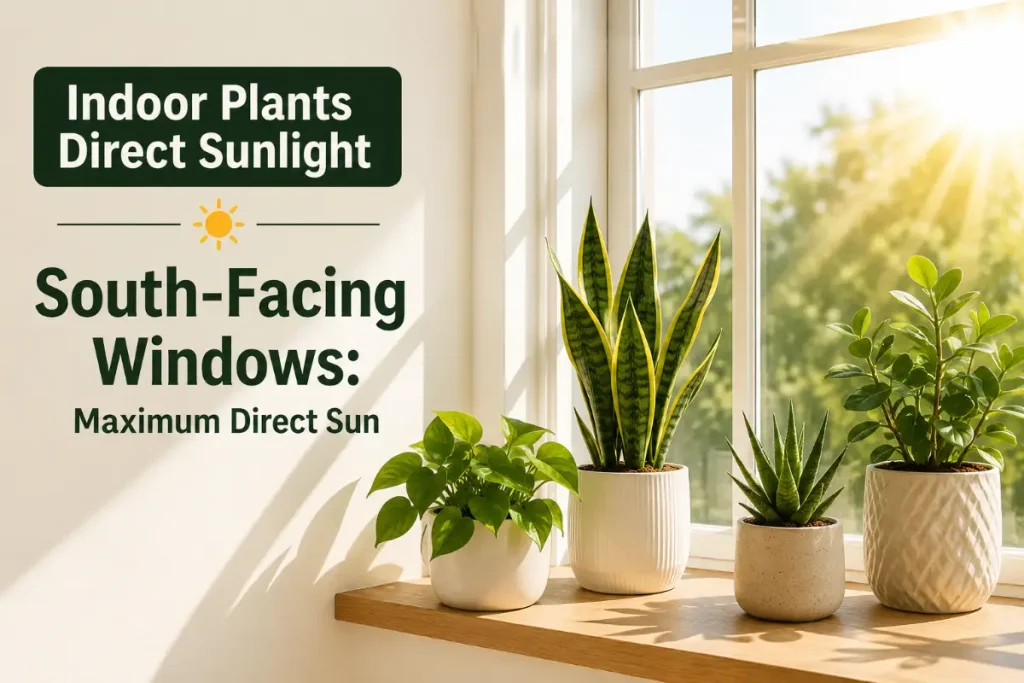
South-Facing Windows: Maximum Direct Sun
South-facing windows in the northern hemisphere receive direct sun across the widest daily arc and for the most total hours. They are the best position for plants that need maximum direct sun exposure.
Morning: Low-angle morning sun enters from the east-southeast, providing moderate intensity direct light that increases through midday.
Midday to afternoon: The highest-intensity direct sun of the day, with the most photosynthetically active radiation and the most UV-A that benefits sun-loving plants.
Late afternoon: Direct sun begins shifting west and intensity decreases toward evening.
Best plants for south-facing direct sun: Cacti and succulents in their full range. Jade plant. Aloe vera. Mediterranean herbs including rosemary, lavender, thyme, and oregano. Dwarf citrus trees. Hibiscus for maximum bloom production. Geraniums for continuous flowering.
Placement depth: In summer when the sun angle is high, direct sun through a south-facing window penetrates only a few feet into the room. Plants must be within one to three feet of the glass to receive several hours of direct sun. In winter when the sun angle is lower, direct sun penetrates significantly deeper into the room and plants further from the window receive direct exposure that they do not receive in summer.
West-Facing Windows: Direct Afternoon Sun
West-facing windows receive direct afternoon and early evening sun, which is the most intense natural direct light of the day in many US locations, particularly in summer when afternoon heat combines with the lower western sun angle to produce sustained high-intensity direct light.
Temperature consideration: West-facing windows in summer can become hot enough that the area immediately in front of the glass reaches temperatures above 90 degrees during peak afternoon sun, which stresses even sun-adapted plants. Plants positioned directly against west-facing glass in summer may show heat stress symptoms even if they are appropriate direct-sun species. Positioning two to three inches away from the glass and ensuring good air circulation manages this.
Best plants for west-facing direct sun: The same sun-loving species as south-facing windows perform well. Some succulents and Mediterranean herbs that show slight heat stress at south-facing summer temperatures do better in west-facing positions where the sun duration is somewhat shorter.
Season advantage: West-facing windows often outperform south-facing windows in fall when the lower sun angle produces direct light through western glass for longer periods as the sun sets further south and west than in summer.
East-Facing Windows: Morning Direct Sun
East-facing windows provide morning direct sun, which is cooler and less intense than afternoon direct sun, for approximately two to four hours before the sun angle moves past the window. This softer morning direct sun is the gentlest form of direct indoor sunlight and suits plants that need some direct sun but cannot tolerate the intensity of south or west afternoon exposure.
The morning sun advantage: Some plants that scorch in intense afternoon direct sun through south or west-facing windows perform well in the cooler, less intense morning direct sun of an east-facing window. Certain orchid types, some bromeliads, and the more light-sensitive tropical plants occasionally benefit from east-facing direct morning sun that would be damaged by afternoon exposure.
For true sun-lovers: Plants that need maximum direct sun including cacti, succulents, and Mediterranean herbs in east-facing positions typically do not receive enough total direct sun hours for their best performance. Supplemental grow lighting extending the light period compensates for the shorter direct sun window.
How to Introduce Plants to Direct Sun Without Damage
Even genuinely sun-loving plants can experience sun stress when moved abruptly from lower-light indoor positions to direct sunlight. The process of acclimation is important particularly for plants that have been growing in lower light for an extended period.
The two-week transition: Begin with one to two hours of morning direct sun daily for the first week. Increase to two to four hours for the second week. Move to the full direct sun position in the third week. This gradual increase allows the plant to develop the protective pigments and structural adaptations that make direct sun comfortable.
Signs of too much sun too fast: Bleached pale patches on sun-exposed leaf surfaces. White or tan dry patches that feel papery. The affected side of the plant showing damage while the shaded side remains normal. These symptoms appear within days of overexposure and affected leaf tissue does not recover, though the plant continues producing new leaves that are acclimated to the new light level.
Why acclimation matters: Plants grown in lower light have lower concentrations of UV-protective pigments and different leaf structure than sun-acclimated plants. Moving them directly to intense direct sun before these adaptations develop causes the same bleaching and cell damage that direct sun causes in shade-adapted plants.
Reading Your Plant’s Direct Sun Response
Once plants are positioned in direct sun, their growth and appearance provide clear feedback on whether the placement is appropriate.
Signs of correct direct sun placement in sun-loving plants: Compact, tight growth with closely spaced leaves. Vivid color including sun-stress coloring in succulents and croton. Upright, strong stem structure that does not need staking. Regular new leaf and growth production through the growing season. Abundant blooming in flowering plants without the sparse, sporadic production that indicates insufficient light.
Signs of insufficient direct sun: Etiolation: stems stretching toward the window with increasing distance between leaves. Pale, washed-out color even in normally vivid species. Floppy, weak stems that cannot support their own weight. Very slow or stopped growth despite the growing season. Loss of variegation in previously colorful varieties.
Signs of too much direct sun (overexposure): Bleached, pale patches on sun-exposed leaf surfaces, typically directional and concentrated on the side facing the window. Crispy brown dry patches. The plant as a whole looks healthy except for the sun-facing side. This is more common during the transition period and rare once acclimated plants are established in appropriate direct sun positions.
Seasonal Management of Direct Sun Positions
The amount of direct sun a specific indoor position receives changes significantly through the year, which requires seasonal plant management that most care guides do not address specifically.
Winter direct sun: Lower sun angle means direct light penetrates deeper into rooms through south-facing windows and for more hours at positions further from the glass. Plants that received indirect light in summer may receive direct winter sun from the same position. Watch for unexpected sun exposure reaching shade-sensitive plants near south-facing windows in winter.
Summer direct sun: Higher sun angle reduces penetration depth and total direct sun hours for south-facing positions. This is typically the period when sun-loving plants need to be positioned closest to the glass to receive adequate direct exposure. South-facing window glass can concentrate heat to uncomfortable levels in summer for plants positioned immediately against it.
Managing the transition: In spring as sun angle increases and intensity rises, monitor sun-loving plants for heat stress symptoms near south-facing glass that might have been fine in the same position through winter. Moving slightly back from the glass in early summer, two to three inches, prevents the heat stress that the intensified summer sun through south-facing glass can produce even in sun-tolerant species.
For the complete guide to using supplemental grow lights to extend and enhance direct sun positions year-round, including how UV content from grow lights complements natural direct sunlight, UV light for plants indoor covers the full spectrum of what natural and artificial light provide and how to combine them effectively.
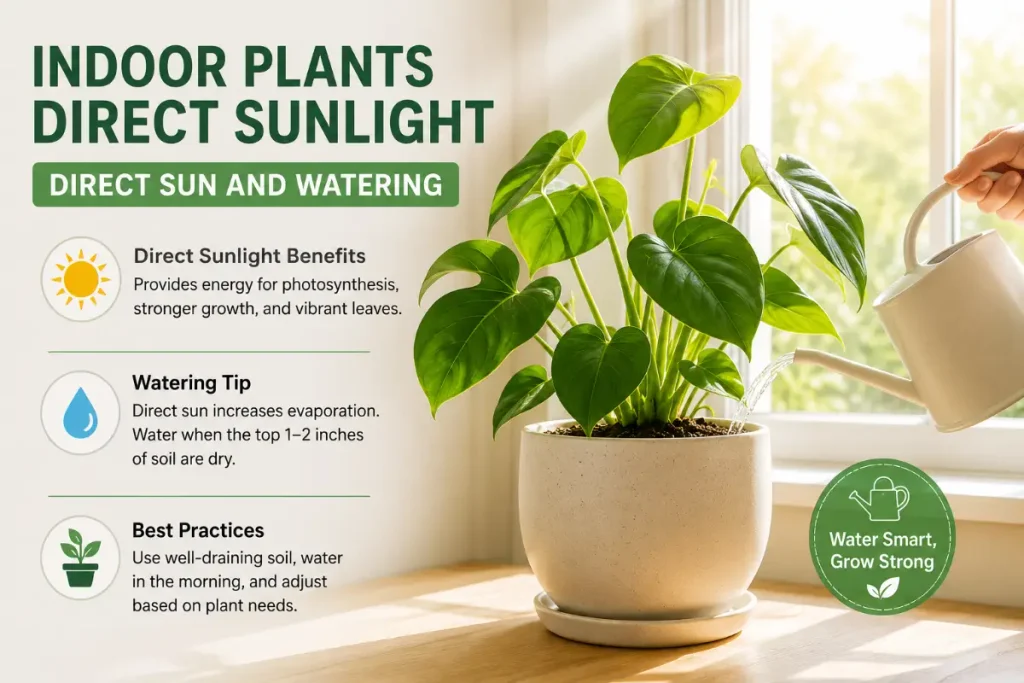
Direct Sun and Watering: The Connection Most Guides Miss
The relationship between direct sun and watering frequency is one of the most practical aspects of sun-plant management that gets overlooked in standard care guides.
Plants in direct sun photosynthesize more actively, grow faster, and transpire more water through their leaves than the same plants in indirect light. This means watering frequency in a direct sun position is often significantly higher than care guides written for standard indirect light positions suggest.
The practical adjustment: A jade plant described as needing water every two to three weeks in indirect light may need water every ten to twelve days in a direct south-facing window during summer. A rosemary plant needing water every fourteen to sixteen days in a north-facing position might need water every eight to ten days in a south-facing window during the same period.
The seasonal flip: In winter when direct sun intensity drops and growth slows, even the sunniest indoor position receives less intense light. Watering frequency should decrease from summer schedules even for plants remaining in the same direct sun position.
Always check actual soil moisture before watering rather than following fixed schedules. Direct sun positions change their watering requirements significantly through the seasons and between plants that have different root and leaf mass proportions.
Common Direct Sun Placement Mistakes and How to Fix Them
Even experienced plant owners make predictable placement mistakes with direct sun positions. Understanding what these look like and how to correct them saves plants that would otherwise be written off as unsuitable for a space.
Mistake 1: Placing a shade plant in direct sun and blaming the plant when it fails. Pothos, peace lily, ferns, and calathea are consistently placed in south-facing windows by owners who assume more light is always better. These plants bleach and decline rapidly in direct afternoon sun. The fix is moving them to bright indirect light, not changing the watering or fertilizing approach. The light is the issue.
Mistake 2: Placing a sun-loving plant in inadequate direct sun and concluding it cannot grow indoors. A rosemary in an east-facing window receiving only two hours of morning sun will become leggy and decline over months. The grower may conclude rosemary cannot be grown indoors when the issue is specifically insufficient direct sun duration. Moving to a south-facing window or adding grow light hours often transforms the same plant from declining to thriving.
Mistake 3: Not adjusting plant distance from south-facing windows seasonally. In summer, plants need to be closer to south-facing glass than in winter to receive the same hours of direct sun because the higher summer sun angle reduces how deeply direct light penetrates into the room. Owners who positioned plants correctly for winter often find those same plants etiolating in summer from insufficient direct sun at the same position.
Mistake 4: Forgetting to rotate direct-sun plants. Sun-loving plants in a fixed window position grow toward the light with one side receiving significantly more sun than the other. This creates a lopsided, one-directional growth form that becomes increasingly pronounced without intervention. Rotating a quarter turn every two weeks prevents this and distributes the direct sun benefit evenly across the plant’s growth.
Mistake 5: Using the same watering schedule year-round for direct-sun plants. A cactus in a south-facing window that needed water every three weeks in winter may need water every ten to twelve days in summer as active growth increases water demand significantly. Maintaining the winter watering schedule through summer keeps the plant underwatered during its most active period. Always assess soil moisture directly rather than following a fixed calendar schedule regardless of season. For the complete guide to plants that thrive in the direct sun conditions of a south-facing window alongside the bedroom placement considerations that often bring these two topics together, indoor plants in the bedroom covers how to choose and position plants in bedroom spaces that may include south or east-facing windows, balancing the direct sun needs of sun-loving plants with the air quality and humidity considerations specific to sleeping spaces.
Conclusion
Indoor plants direct sunlight placement is most effective when approached as a matching problem: understanding what your specific windows provide in terms of intensity, duration, and seasonal variation, then matching that profile to plants whose requirements align.
South-facing windows for maximum daily sun. West-facing for intense afternoon sun with moderate duration. East-facing for gentle morning sun with protected afternoon. And careful acclimation whenever moving any plant from lower to higher light to prevent the bleaching and tissue damage that rapid transitions cause even in sun-adapted species.
Read the plant’s response continuously. Compact, vivid, actively growing plants are correctly placed. Etiolated, pale, leggy plants need more direct sun. Bleached patches on sun-facing leaves need shade or acclimation time. These signals make direct sun placement a responsive, adjustable process rather than a single positioning decision.
Frequently Asked Questions
Which indoor plants can be in direct sunlight all day?
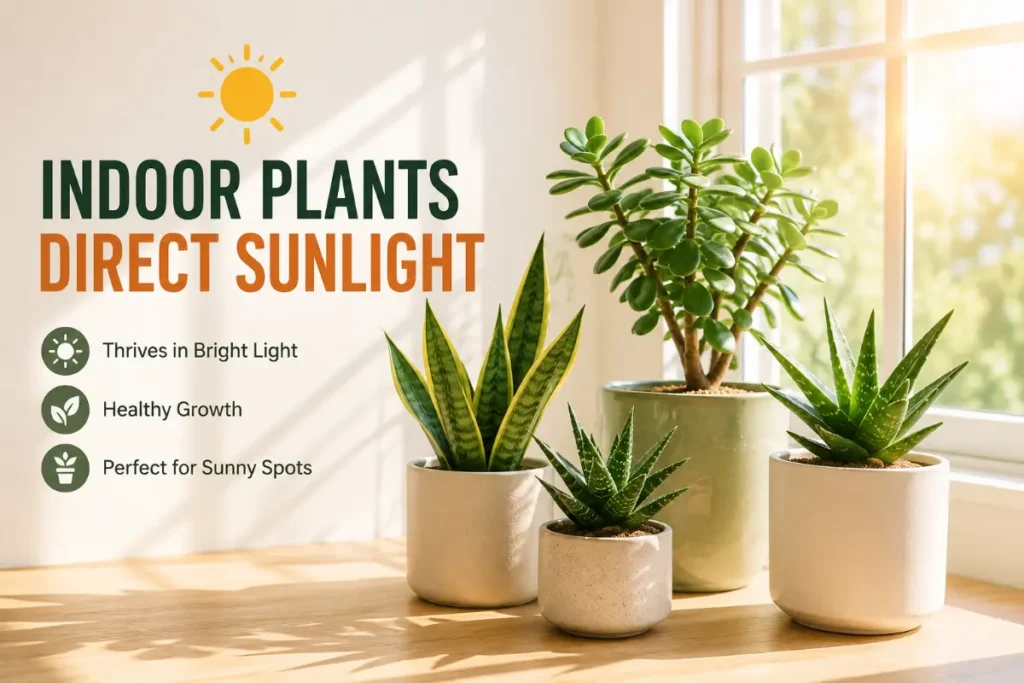
Cacti, most succulents, aloe vera, jade plant, and Mediterranean herbs including rosemary and lavender handle all-day direct indoor sunlight through a south-facing window without damage once acclimated. These plants evolved in high-intensity sun environments and treat glass-filtered indoor direct sun as a comfortable light level rather than an extreme. Most other commonly grown houseplants cannot tolerate all-day direct sun even through glass.
How do I know if direct sun is burning my indoor plant?
Bleached pale patches on the sun-exposed side of leaves, typically with a papery dry texture, indicate sun damage. The damage is directional, concentrated on the side of the plant facing the window. Already-damaged tissue does not recover but new growth develops acclimated to the light level if the exposure is appropriate for the species. If the species is genuinely sun-sensitive, move to a position with indirect light and allow the plant to grow out the damaged leaves.
Can I put tropical plants in direct indoor sunlight?
Most tropical houseplants including pothos, peace lily, ferns, calathea, and heartleaf philodendron evolved in the dappled shade of tropical forest understories and are damaged by direct indoor sun. Their thin, broad leaves are optimized to capture as much diffuse forest light as possible and bleach rapidly in direct sun that exceeds their photosynthetic capacity. Keep tropical shade-adapted plants in bright to medium indirect light rather than any direct sun position.
Does direct sunlight through a window count as full sun for plants?
Direct sunlight through standard glass is somewhat reduced in intensity (approximately 20 to 30% lower than outdoor direct sun) and significantly filtered in UV content. For plants described as needing full sun outdoors, glass-filtered indoor direct sun provides close to but not quite equivalent conditions. Most full-sun outdoor plants perform well in direct indoor sunlight even if it is not quite as intense as outdoor exposure. For the most light-demanding species, supplemental grow lighting alongside direct window sun makes up the difference. For a full list of plants that match well with direct indoor sun positions, indoor plants that like direct sunlight covers every species with specific placement guidance.
How long does it take to acclimate a plant to direct sun?
Most plants need two to four weeks of gradual transition from indirect to direct sun before being placed in a full direct sun position. Start with one to two hours of morning direct sun daily in the first week. Increase to three to four hours in the second week. Transition to the full direct sun position in the third to fourth week. Plants that show bleaching or stress during transition should have the acclimation period extended rather than accelerated.
Do all south-facing windows provide the same direct sun?
No. South-facing window quality varies based on window size, external obstructions including trees and buildings, window glass type (energy-efficient coatings reduce UV and light transmission), and seasonal sun angle changes. A large unobstructed south-facing window provides dramatically more direct sun than a small south-facing window behind a large tree. Measuring actual light intensity with a smartphone meter app is more reliable than assuming any south-facing window provides equivalent direct sun.