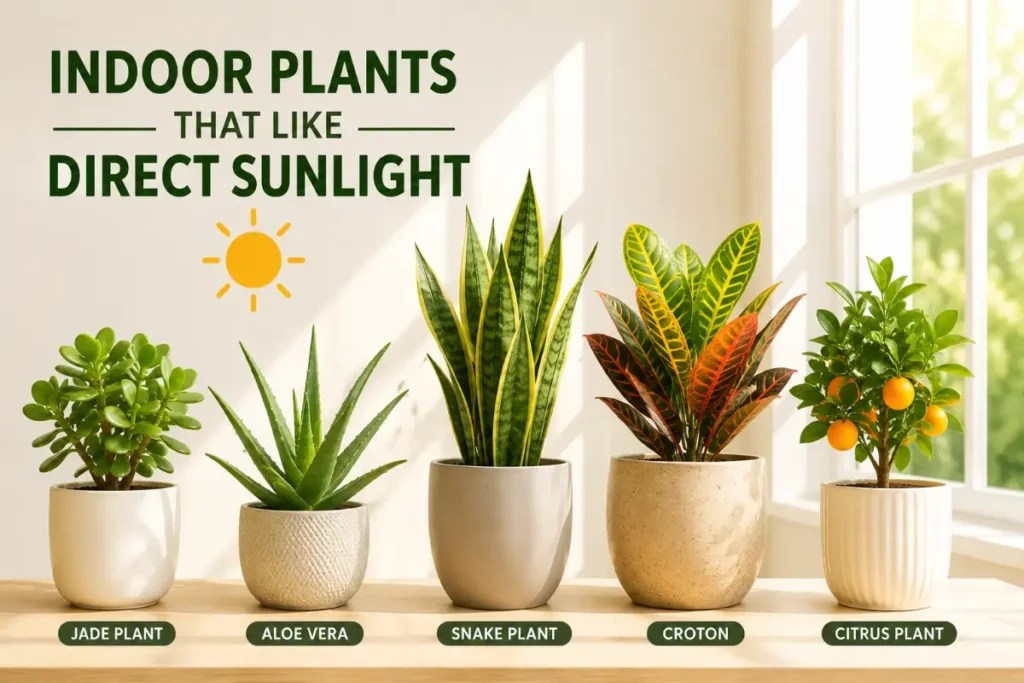
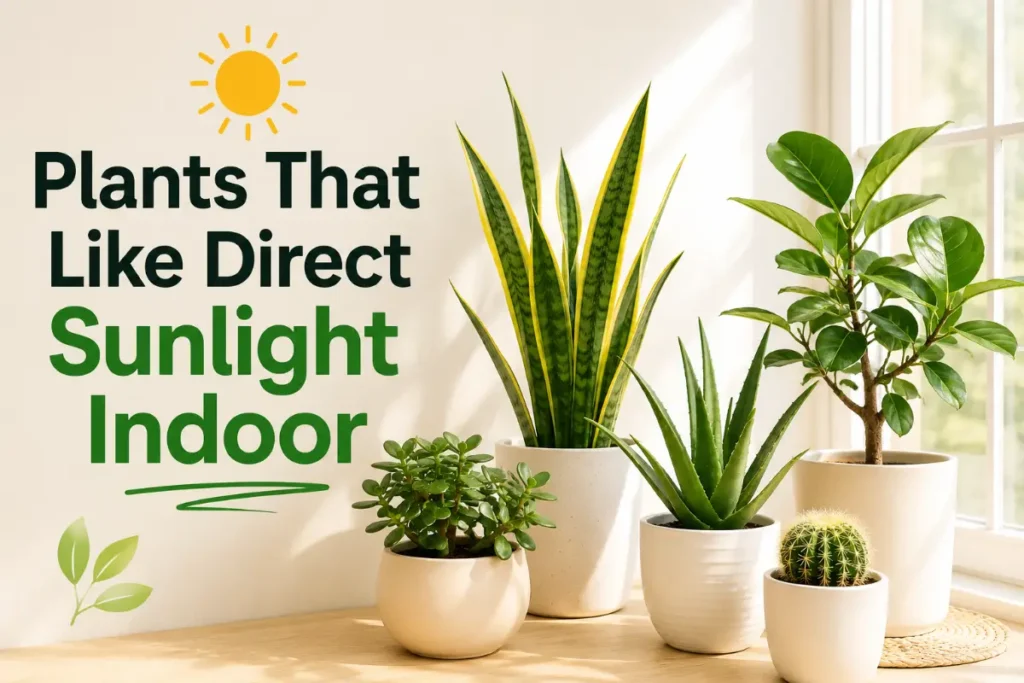
Plants that like direct sunlight indoor are not just about choosing sun-tolerant species but about matching the right plant to the right window. A cactus thrives on direct south-facing sun. A geranium produces its best blooms in direct west-facing afternoon light. Even within the direct sunlight category, different plants perform better in different sun intensities and durations. This guide organizes recommendations by window direction so you can match the plant to your specific situation rather than choosing from a generic list.
Quick Answer
Plants that like direct sunlight indoor include cacti and succulents for maximum south-facing sun, geraniums and hibiscus for south and west-facing bloom production, Mediterranean herbs for any south-facing position, jade plant and aloe vera for sustained direct sun tolerance, croton for color intensity in direct light, and dwarf citrus for fruit production in south-facing windows. The right match depends on which direction your window faces and how many hours of direct sun it provides.
Why Window Direction Matters More Than Species Alone
The same plant in a south-facing window versus a west-facing window versus an east-facing window has meaningfully different experiences even though all three are described as direct sun positions. Understanding these differences prevents the mismatches that lead to underperforming plants in positions that should suit them.
South-facing direct sun is the most sustained and most consistent. Direct light enters for the longest daily period from the widest arc across the sky. The sun angle rises and falls gradually rather than suddenly, which means intensity builds and diminishes predictably through the day. Plants in south-facing direct sun experience the most total photons per day of any indoor position.
West-facing direct sun is intense and concentrated in the afternoon. The late afternoon sun at a lower angle can be more intense per hour than midday south-facing sun in some seasons. West-facing positions also accumulate heat through the afternoon as the room warms, meaning plants there may experience both high light intensity and higher temperatures simultaneously.
East-facing direct sun is the gentlest of the three direct-sun directions. Morning sun is cooler than afternoon sun at any time of year and the east-facing window receives direct light only for the morning hours before the sun angle moves past. This creates an interesting middle category: direct sun without the heat stress that south and west-facing afternoon positions can produce.
For South-Facing Windows: Maximum Performance Plants
1. Cacti and Succulents
South-facing direct sun is the ideal indoor position for cacti and succulents. These plants evolved in desert environments where direct intense sun is the constant baseline and they use south-facing window light most efficiently of any plant group.
Why south-facing is best: The sustained multi-hour direct sun from a south-facing window provides the energy these plants need to maintain their compact form, develop their characteristic coloration, and occasionally bloom indoors. In east-facing morning sun only, many cacti and succulents receive insufficient total light hours for their best performance.
Standout picks for south-facing: Echeveria in all its rosette forms for maximum sun-stress coloration. Notocactus and mammillaria globular cacti for compact form and occasional spring bloom. Haworthia for the rare succulent that performs well even in indirect light but reaches its best in south-facing direct sun. Sedum varieties for trailing or mounding forms with year-round interest.
Care: Fast-draining cactus mix. Water only when soil is completely dry two to three inches down. No saucers left with standing water. For the complete soil mix guide, soil mixture for indoor plants covers cactus and succulent mix ratios in detail.
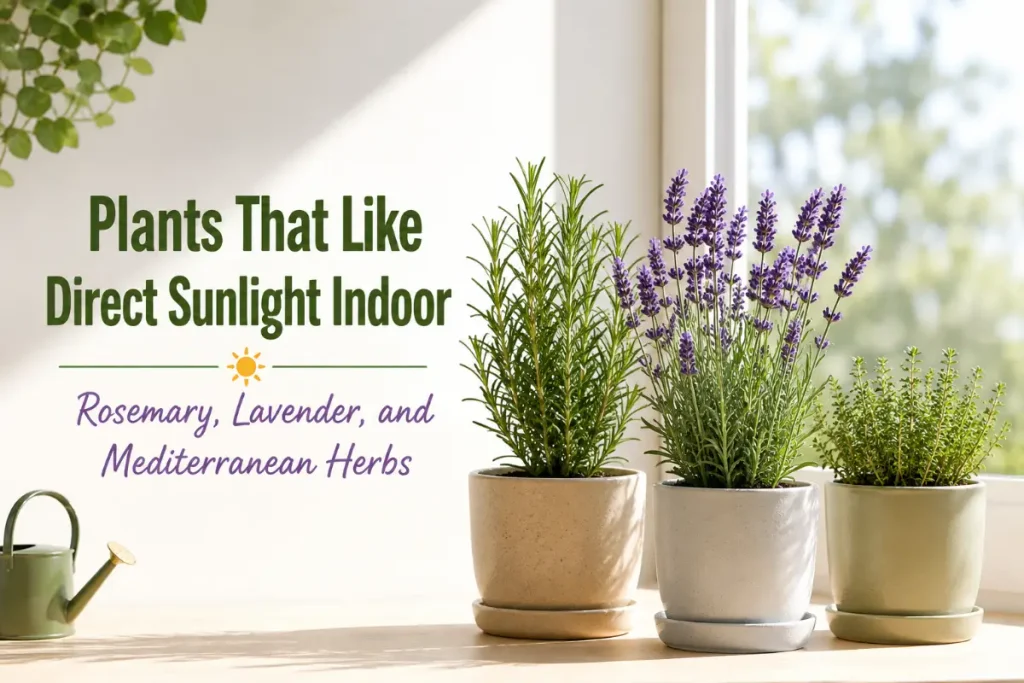
2. Rosemary, Lavender, and Mediterranean Herbs
Mediterranean herbs collectively represent the most useful group of south-facing direct sun plants for home kitchens and indoor herb gardens. Their shared origin on sun-drenched Mediterranean hillsides makes them natural partners in the same south-facing windowsill position where their identical care requirements simplify management.
Why they belong together: The south-facing direct sun, fast-draining lean soil, infrequent deep watering, and excellent air circulation that each Mediterranean herb needs individually is more efficiently managed as a group where one care routine serves all plants simultaneously.
Positioning in a south-facing windowsill: Place in terracotta pots with coarse perlite-amended soil. Space several inches apart for air circulation between plants. The herbs at the ends of the windowsill may receive slightly different light duration depending on room geometry, so rotate positions occasionally to even out the exposure.
The culinary and aromatic dividend: Mediterranean herbs in direct south-facing sun produce the essential oil concentrations that give them their culinary value and fragrance. The difference between herbs grown in appropriate direct sun versus insufficient indirect light is detectable in cooking, making the placement investment directly worthwhile for kitchen gardeners.
3. Dwarf Citrus
Dwarf citrus represents the pinnacle of the south-facing window plant collection in terms of multi-dimensional reward. Fragrant flowers, ornamental colorful fruit, attractive evergreen foliage, and a tree-like form that develops impressively over years all combine in a single plant that uses south-facing direct sun to produce all of these simultaneously.
The six-hour minimum: Dwarf citrus needs at least six hours of direct south-facing sun daily for reliable fruit production. In less direct sun the trees grow healthy foliage but produce minimal fruit. The south-facing window is the only indoor position that consistently provides this requirement without supplemental grow lighting.
Meyer lemon as the best starter: Meyer lemon is the most reliable and most commonly available dwarf citrus for indoor growing. It produces fragrant flowers and round, slightly sweet lemons throughout most of the year in good direct sun, making it the most continuously rewarding citrus option for south-facing window positions.
For West-Facing Windows: Afternoon Bloom Producers
4. Hibiscus
Hibiscus performs exceptionally well in west-facing direct afternoon sun, where the combination of heat and light intensity that west-facing windows provide through summer afternoons suits its tropical origin. The afternoon sun timing also allows the large, dramatic flowers to open fully during the warmest and brightest part of the day.
The afternoon advantage for hibiscus: Hibiscus flowers open in the morning and last approximately one day each before dropping. In a west-facing position the afternoon light that coincides with the fully open flowers creates an ideal viewing experience. The intense afternoon light also drives the continuous bud development that produces the next day’s blooms.
Care in west-facing afternoon sun: West-facing positions accumulate heat through summer afternoons. Maintain consistent moisture since high temperatures increase water demand. Watch for spider mites which proliferate in warm, dry west-facing conditions. Biweekly high-phosphorus fertilizing through the bloom period.
5. Geraniums
Geraniums produce their most abundant and most colorful bloom in the direct afternoon sun of a west-facing window. The flower clusters in red, pink, salmon, white, and bicolor combinations reach maximum size and color intensity in the heat and light that west-facing afternoon sun provides.
Why west-facing suits geraniums: Geraniums in direct afternoon sun produce the compact, bushy growth form with closely spaced flower clusters that makes them most attractive as windowsill plants. In morning-only east-facing sun they grow well but with somewhat more elongated growth between flower clusters.
The seasonal bloom cycle: Geraniums bloom most abundantly in spring and summer and reduce flowering through winter in lower light. Moving to the brightest available south-facing position in winter maintains more continuous bloom than a west-facing position that receives less total direct sun in the short winter days.
6. Jade Plant
Jade plant performs well in west-facing direct sun and sometimes better than in south-facing positions because the afternoon sun in a west-facing window, while intense, includes less of the sustained midday heat that south-facing windows can accumulate in summer. The slightly shorter daily direct sun period suits jade plant’s preference for high light without extreme sustained heat.
The reddening leaf margins: In direct west-facing afternoon sun, jade plant develops the distinctive reddish tinge at leaf margins that indicates optimal growing conditions. This sun-stress response is one of the visual signals that the plant is genuinely thriving in its position rather than just surviving.
Long-term growth in west-facing positions: Over years of growth in direct west-facing sun, jade plant develops the thick, tree-like trunk and dense branching that makes mature specimens so visually impressive. The sustained high light of a west-facing window drives better long-term development than medium indirect light positions where many jade plants are kept.
For East-Facing Windows: Gentle Morning Direct Sun Plants
7. Aloe Vera
Aloe vera is one of the best matches for east-facing morning direct sun. The gentle morning sun provides the direct light that aloe needs for compact, firm-leaved growth without the heat stress that intense afternoon sun can produce in the enclosed conditions near south or west-facing glass in summer.
The morning sun benefit for aloe: Morning sun through an east-facing window is cooler and less intense than afternoon south or west sun. For aloe in enclosed indoor spaces where afternoon temperatures can climb significantly behind south-facing glass, the cooler morning sun of an east-facing window may produce better results with less heat stress risk.
What to watch for: Aloe in east-facing morning sun typically receives only two to three hours of direct light before the sun angle moves past the window. If the aloe shows etiolation over months with stems becoming weak and leaves floppy and thin, supplemental grow lighting through the afternoon hours makes up the direct sun deficit.
8. Scented Geraniums
Scented geraniums (Pelargonium graveolens and related species) grown primarily for their fragrant foliage rather than flower display perform particularly well in east-facing morning direct sun. The morning sun drives essential oil production in the fragrant leaves without the afternoon heat that can stress more delicate scented varieties.
Rose, lemon, and mint scented varieties all perform well with morning direct sun combined with bright indirect light through the afternoon. The fragrance release is most noticeable during the warmest part of the day when the essential oils volatilize most actively from the leaf surfaces.
9. Croton (in milder climates or well-ventilated rooms)
Croton with its spectacular multicolored foliage benefits from direct sun for maximum color intensity. East-facing morning direct sun provides enough UV-A and intensity to enhance color while avoiding the extreme afternoon heat of south and west-facing positions that can stress croton in sealed, poorly ventilated rooms.
The color-light connection in east-facing croton: Even the gentler morning direct sun of an east-facing window produces noticeably more vivid color in croton leaves than bright indirect light from the same direction. The anthocyanin pigments that create red, orange, and pink coloration respond to any direct sun exposure, not just the most intense south-facing sun.
Stability advantage: Croton’s notorious leaf-dropping response to position changes means that once it adapts to an east-facing position, keeping it there rather than moving it to capture more sun is often the right choice. The stress of moving causes more leaf loss than the modest coloration benefit of a sunnier position justifies.
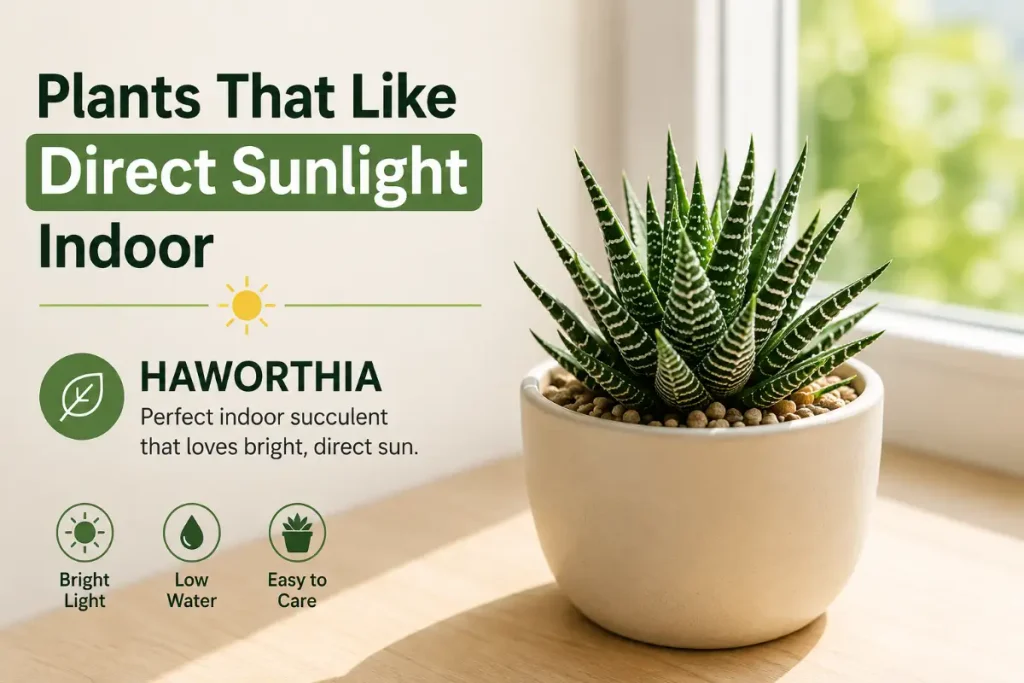
10. Haworthia (for east-facing low-intensity direct sun)
Haworthia occupies a unique position in the direct sun category: it is a succulent that performs well in direct morning sun but bleaches in intense south-facing afternoon sun. This makes it one of the few succulents specifically suited to east-facing morning direct sun rather than the maximum south-facing sun that most succulent care guides recommend.
Why haworthia differs from other succulents: Haworthia evolved in the partial shade of rocky outcroppings in South African grasslands rather than in the open desert sun that echeveria and sedum inhabit. It is more shade-tolerant than most succulents and responds to intense afternoon sun with bleaching and browning rather than the attractive sun-stress coloring that tolerant species produce.
Best east-facing performance: In two to three hours of gentle morning direct sun followed by bright indirect light through the afternoon, haworthia grows its most compact, most deeply colored, most attractive form. The distinctive translucent windows in the leaf tips that are one of haworthia’s most appealing features show most clearly in this quality of light.
Mixing Direct-Sun Plants Across Window Directions
For homes with windows in multiple directions, distributing different sun-loving plants across different windows rather than concentrating all sun-loving plants at a single window maximizes the effective use of all available direct sun positions.
A practical arrangement for a home with south, west, and east-facing windows: place the most light-demanding plants (cacti, succulents, Mediterranean herbs) at the south-facing window. Position the bloom-focused plants (hibiscus, geraniums) at the west-facing window where afternoon heat supports their tropical preferences. Use the east-facing window for aloe, haworthia, and scented geraniums that benefit from morning sun without afternoon heat stress.
This distributed approach also reduces competition for the best south-facing positions and ensures that different areas of the home benefit from living plant presence rather than concentrating all plants at a single window that may become crowded.
For the complete guide to bedroom plant placement including east-facing window positions that are common in bedrooms and the specific considerations for choosing plants that provide both appropriate light conditions and bedroom-suitable air quality benefits, indoor plants in the bedroom covers every placement and plant selection consideration for bedroom direct and indirect sun positions.
Conclusion
Plants that like direct sunlight indoor perform their best when matched to the specific direction, intensity, and duration of direct sun that their individual requirements favor. South-facing windows for the most light-demanding species including cacti, Mediterranean herbs, and dwarf citrus that need maximum daily sun hours. West-facing positions for heat-loving bloomers including hibiscus and geraniums that thrive in intense afternoon exposure. East-facing windows for plants that need direct sun without afternoon heat stress, including aloe vera, haworthia, and scented geraniums.
The organizing principle is not just sun tolerance but sun optimization: placing each sun-loving plant in the window type where its specific light preferences are most precisely met produces plants that perform at their maximum potential rather than merely surviving in any available sunny position.
Frequently Asked Questions
What plants grow best in a south-facing window with direct sun?
Cacti, succulents including echeveria and sedum, aloe vera, jade plant, Mediterranean herbs including rosemary and lavender, dwarf citrus trees, hibiscus, and geraniums all perform their best in south-facing windows with sustained direct sun. These plants evolved in high-light environments and use the maximum direct sun duration of south-facing windows more effectively than any other indoor position provides.
Can any houseplants handle direct west-facing afternoon sun?
Yes. Hibiscus, geraniums, jade plant, cacti, and Mediterranean herbs handle the intense direct afternoon sun of west-facing windows well once acclimated. The primary management consideration for west-facing positions in summer is heat accumulation near the glass, which can stress even sun-tolerant plants when combined with poor ventilation. Positioning several inches from the glass and ensuring good air movement addresses this.
Is morning direct sun enough for sun-loving plants?
Morning east-facing direct sun provides two to three hours of gentle direct exposure, which is sufficient for plants with moderate direct sun needs including aloe vera, haworthia, and scented geraniums. Plants with higher direct sun requirements including cacti, Mediterranean herbs, and dwarf citrus typically need more total direct sun hours than east-facing morning sun provides alone. Supplemental grow lighting through the afternoon or moving to a south-facing window is necessary for these more light-demanding species.
How do I stop direct sun from scorching my plants?
Gradual acclimation is the most effective prevention. Introduce plants to direct sun progressively over two to four weeks rather than placing them immediately in a full direct sun position. Even sun-tolerant plants that have been growing in lower indoor light need time to develop the protective adaptations for direct sun exposure. For plants already showing scorching, move to bright indirect light, allow new growth to develop acclimated to indoor conditions, and reintroduce direct sun more gradually.
Do succulents need direct sunlight indoors to survive?
Most succulents need at least bright indirect light to survive but perform significantly better in some direct sun. Without any direct sun access, many popular succulents including echeveria etiolate over weeks to months, losing their compact rosette form and characteristic coloration. For the most compact, most colorful succulent growth, south-facing direct sun is ideal. In positions with only bright indirect light, choosing the most shade-tolerant succulent genera including haworthia and gasteria produces better results than attempting to grow echeveria and sedum in indirect light. For the complete comparison of plants suited to direct versus indirect positions, indirect light plants indoor covers the full indirect-light category with specific guidance on which plants perform best at each light level.
Which direct sun plant is easiest to care for?
Snake plant, ZZ plant, and pothos are often listed as easy care but are actually indirect light plants. Among genuine direct sun plants, jade plant and most cacti are the lowest-maintenance options. Both need only infrequent watering, minimal fertilizing, and stable positioning without the pest management that flowering plants like hibiscus and geraniums require. A jade plant in a south-facing window can go weeks between care interactions and reward that benign neglect with steady, impressive long-term growth.
Direct Sun Plants Through the Seasons: What Changes and What to Watch
Indoor direct sun is not a static condition. The quality, intensity, and duration of direct sun through any given window changes meaningfully through the year, and the plants in these positions need corresponding seasonal adjustments to continue performing at their best.
Spring transitions: As day length increases through March and April, plants that were receiving limited direct sun through winter begin receiving more. Sun-loving plants may need to be moved slightly away from the glass if they were positioned very close for maximum winter sun, since increasing intensity can cause the heat stress that was not a concern in the lower-intensity winter sun. Begin the spring fertilizing schedule as growth accelerates in response to the improving light conditions.
Summer peak: Maximum direct sun intensity for south and west-facing positions. Watering frequency increases significantly for most direct-sun plants as active growth and transpiration demand increases. Check for heat buildup near south and west-facing glass, particularly in rooms with poor ventilation. Position plants several inches from the glass rather than directly against it to prevent the convective heat stress that builds immediately behind south-facing glass on the hottest summer days.
Fall transition: Light intensity begins decreasing as days shorten and the sun angle drops. For plants that produce their best color or bloom in maximum summer sun, fall is when color intensity begins reducing and bloom production slows in response to declining light quantity. This is natural seasonal behavior rather than a care problem. Move sun-loving plants as close to the glass as practical to capture maximum light from the increasingly low-angle autumn sun.
Winter minimum: The lowest natural light intensity of the year despite the lower sun angle that allows direct light to penetrate deeper into rooms through south-facing windows. Growth slows significantly for most direct-sun plants. Reduce watering frequency substantially to match the reduced growth rate. Mediterranean herbs in south-facing winter sun need water every sixteen to twenty-one days rather than the eight to ten day interval that summer sun conditions required. Grow light supplementation extending the daily light period is most beneficial during this period for plants that need maximum light year-round.
For the complete guide on using grow lights to extend and supplement natural direct sun through winter, UV light for plants indoor covers the spectrum and intensity specifications that make grow lights effective at supplementing natural direct sun rather than merely adding light that plants cannot efficiently use.