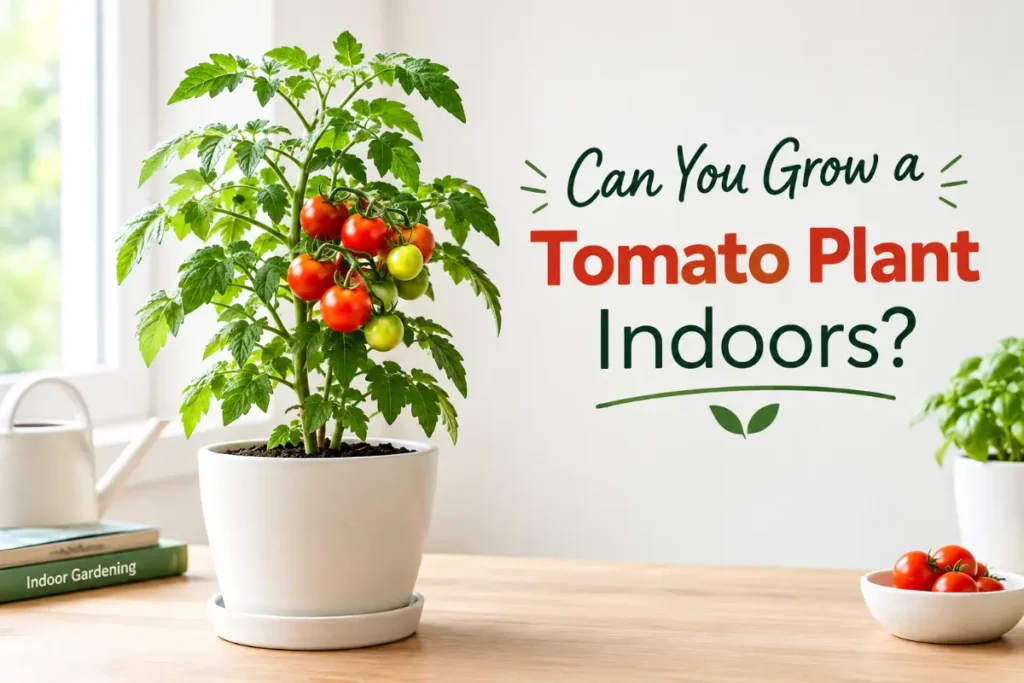
Mastering how to grow tomatoes indoors year round is fully possible if you respect the plant’s high energy demands. Unlike leafy greens, tomatoes need intense, consistent light to set fruit. Skimp on lighting, and you’ll end up with a tall, leafy green plant that never yields a single tomato. Get the light right and pick a compact, indoor-friendly variety, and you can reliably enjoy fresh, vine-ripened tomatoes every month of the year.
This guide gives you the honest answer — what works, what doesn’t, and the exact steps to grow tomatoes indoors successfully.
The Honest Answer: Yes, With the Right Setup
Tomatoes can grow indoors, and many people do it successfully. But they’re not beginner-friendly the way herbs or leafy greens are. Three factors determine whether your indoor tomatoes fruit or simply vegetate:
1. Light intensity and duration
Tomatoes need 8+ hours of direct sunlight or 14–16 hours of full-spectrum grow light to fruit reliably. This rules out most north-, east-, or west-facing windows for fruiting production. A south-facing window in summer can work for compact varieties. A dedicated LED grow light works year-round for all varieties.
2. Variety selection
Full-size beefsteak tomatoes grow 4–6 feet tall and are impractical indoors. Compact cherry tomato varieties stay 12–36 inches, produce faster (55–70 days to fruit), and handle the slightly imperfect conditions of indoor growing far better.
3. Pollination
Outdoors, bees and wind transfer pollen. Indoors, you do it manually. This is simple — a daily shake or an electric toothbrush against each open flower — but it must happen or flowers drop without setting fruit.
Get these three things right and indoor tomato growing is genuinely achievable.
What You Can Realistically Expect
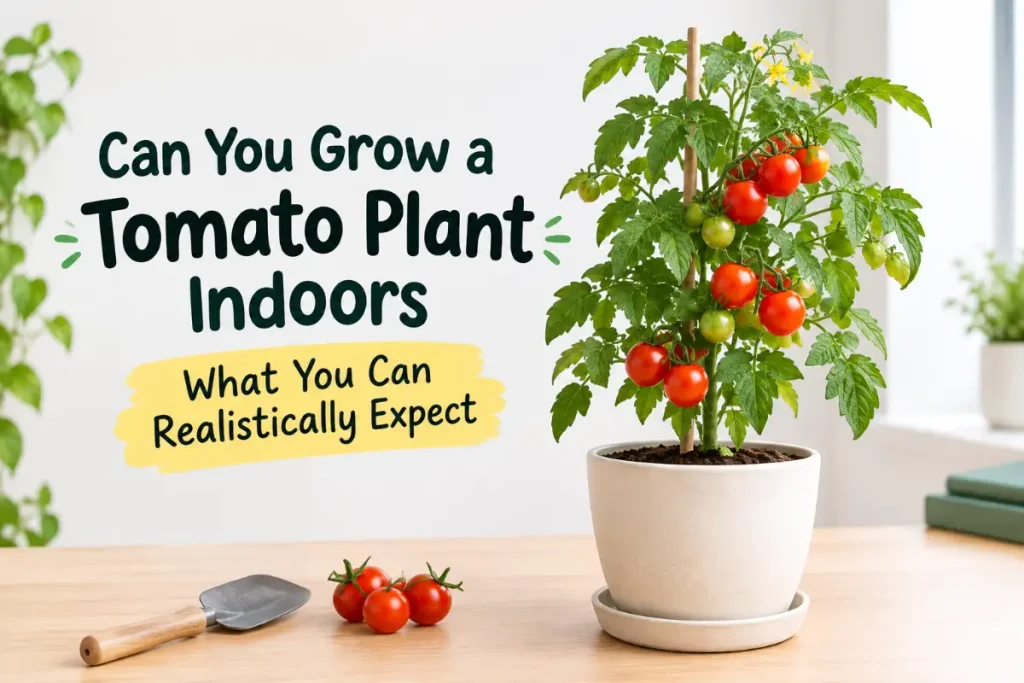
Good outcomes with the right setup:
- Continuous cherry tomato harvest for 3–6 months from a single plant
- Fresh tomatoes year-round regardless of outdoor season
- Compact plants that fit a grow light shelf or bright south window
Realistic challenges:
- Grow lights are a real cost ($40–150 for a good setup)
- Daily attention to watering — containers dry faster than garden beds
- Manual pollination every day flowers are open
- Fruit size and yield will be lower than outdoor-grown plants
What won’t work indoors:
- Large-fruited beefsteak or heirloom tomatoes (impractical size, long growing season)
- Any tomato on a north-facing or shaded windowsill (not enough light to fruit)
- Tomatoes without a heat source in rooms below 60°F at night
Best Varieties for Growing Tomatoes Indoors
Variety selection is the most impactful single decision you make. Prioritize compact, fast-maturing, container-friendly varieties.
Tiny Tim — 12–18 inches tall, genuinely windowsill-scale, produces clusters of ½-inch red fruits. The most compact fruiting tomato for indoor growing. Determinate.
Tumbling Tom (Red or Yellow) — Bred for hanging baskets, cascades attractively, very compact, prolific producer. Excellent for containers and shelves. Determinate.
Micro Tom — Under 8 inches tall. Fits on a desk or shelf under a small grow light. Fruits are small but flavorful. The most space-efficient option available.
Sungold — Indeterminate, grows larger (3–4 feet with support), but produces the best-tasting cherry tomatoes of any variety. Intensely sweet, orange, crack-resistant fruit. The top choice for growers with adequate grow light infrastructure.
Sweet 100 — Massive trusses of small red fruits, very high-yielding, indeterminate. Requires staking and regular sucker pruning indoors.
Step-by-Step Guide to Growing Tomatoes Indoors
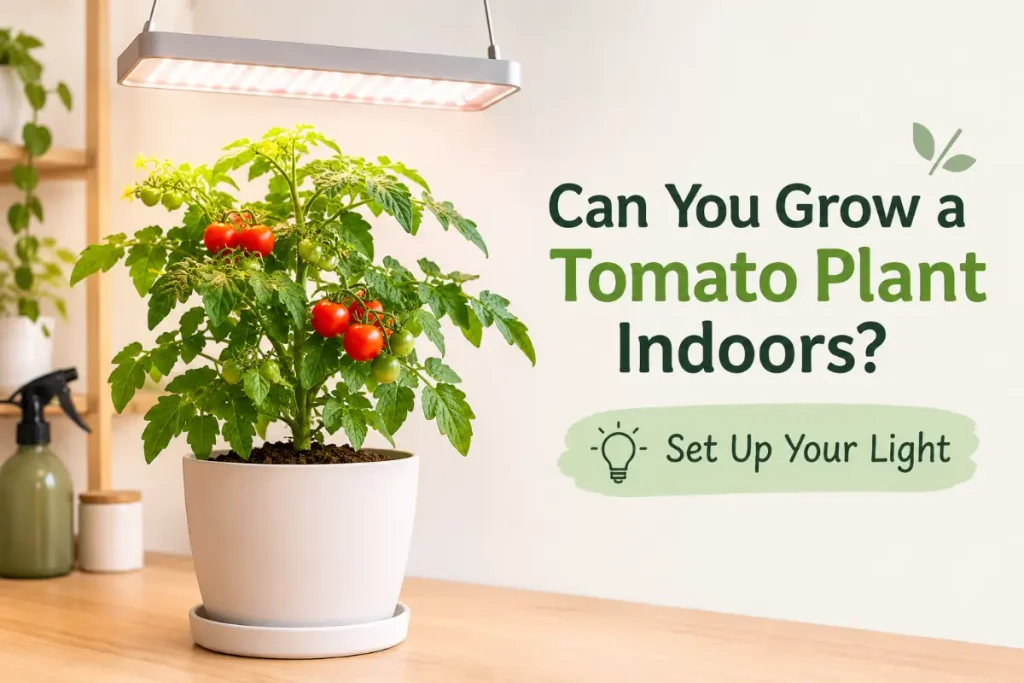
Step 1: Set Up Your Light
This is the most important step. Do it before you buy a plant.
Option A — South-facing window: Only viable in summer with 8+ hours of direct sun. Add a grow light supplement for morning or evening hours to reach 14+ hours total. In winter, a window alone is insufficient for fruiting.
Option B — Full-spectrum LED grow light: The reliable choice year-round. A 100-watt equivalent LED panel running 14–16 hours per day on a timer, mounted 12–18 inches above the plant canopy, handles most compact cherry tomato varieties. Run it on a timer — consistency matters more than intensity.
Set up a wire shelving unit with adjustable light hangers so you can raise the light as the plant grows. A small oscillating fan nearby (not blowing directly at the plant) improves airflow and aids passive pollination.
Step 2: Choose Your Container
Container size directly affects yield. Match container to variety:
- Tiny Tim, Micro Tom: 3-gallon containers
- Tumbling Tom, most other cherry tomatoes: 5-gallon containers
- Sungold and indeterminate varieties grown long-term: 7–10 gallons
Always use containers with drainage holes. Fill with quality potting mix (not garden soil) mixed with 10–15% perlite for drainage. Tomatoes prefer a slightly acidic pH of 6.0–6.8.
Step 3: Start from Seed or Transplant
From transplant: The fastest path. Look for compact, stocky transplants with thick stems and dark green leaves. Inspect undersides of leaves for pests before bringing any plant indoors.
Planting tip: Bury the stem deep — up to the lowest leaves. Tomatoes grow roots from buried stem tissue, producing a stronger root system.
From seed: Sow seeds ¼ inch deep in seed-starting mix, at 70–80°F for germination (5–10 days). Transplant to the final container 6–8 weeks after sowing, once the seedling has 3–4 sets of true leaves.
Step 4: Water Consistently
Check soil moisture daily. Water when the top inch is dry — deeply, until water flows from drainage holes. Let the pot drain fully. Never let it sit in standing water.
In warm grow-light conditions, this may mean watering every 1–2 days. Inconsistent watering is the primary cause of blossom end rot and fruit cracking in container tomatoes.
Step 5: Fertilize Through the Growth Stages
- Vegetative stage: Balanced fertilizer (10-10-10) every 7–10 days at half strength
- After flowers appear: Switch to low-nitrogen, high-phosphorus formula (5-10-10 or tomato-specific). Excess nitrogen after flowering produces foliage at the expense of fruit
- Calcium: Supplement every 2–3 weeks to prevent blossom end rot. Many tomato fertilizers include calcium; if yours doesn’t, add a calcium-magnesium product
Step 6: Pollinate Manually
Every day that flowers are open, pollinate using one of these methods:
- Electric toothbrush: Press the back of a battery-powered toothbrush against the stem behind each open flower. The vibration mimics a bee’s buzz and shakes pollen within the flower. Most effective method.
- Hand flick: Gently tap each flower cluster with your finger. Less precise but simple.
- Fan: An oscillating fan running 2–4 hours daily provides passive pollination support
Flowers that open and drop without setting fruit are the clearest sign that pollination is failing.
Step 7: Prune and Support
Determinate varieties (Tiny Tim, Tumbling Tom): Minimal pruning needed. Remove dead or diseased leaves. Do not remove suckers.
Indeterminate varieties (Sungold, Sweet 100): Train to 1–2 main stems by removing suckers (shoots from the crotch between stem and branch) when small. Install a stake or tomato cage early — before the plant needs it, not after.
Step 8: Harvest at the Right Time
Harvest cherry tomatoes when they’ve reached full color and feel slightly soft when gently squeezed. They should detach from the vine with almost no resistance. Harvest every 2–3 days during peak production — leaving overripe fruit on the plant attracts pests and slows continued production.
Store at room temperature, not refrigerated. Refrigeration degrades flavor and texture.
Light: The Full Picture
Because light is the most common failure point, it’s worth examining in detail.
Why most windows aren’t enough:
Even a south-facing window in winter may deliver only 4–6 hours of usable light on cloudy days — far below the 8+ hours cherry tomatoes need for fruiting. In summer, the same window might provide 8–10 hours of direct sun, which is marginal for fruiting. Light also drops sharply as you move away from the window — a plant even a few feet back from the glass may receive only 20–30% of the light intensity at the glass surface.
Why grow lights work:
A good full-spectrum LED panel delivers consistent, predictable light at a known intensity. You control the duration via a timer. The plant gets the same light on a cloudy December day as on a sunny June day. This consistency is what makes year-round indoor tomato growing reliable.
PPFD and your tomatoes:
Tomatoes fruit best at a photosynthetic photon flux density (PPFD) of 400–600 µmol/m²/s at the canopy. Most quality LED grow lights marketed for fruiting plants meet or exceed this at 12–18 inches distance. If your lights came with a PPFD map (most good brands include one), use it to position your plant in the optimal zone.
Common Problems and Fixes
No fruit despite flowers: Insufficient light or failed pollination. Increase light duration and pollinate every open flower daily with an electric toothbrush.
Blossom end rot (dark, sunken spots on fruit base): Calcium deficiency from inconsistent watering. Keep moisture consistent and add calcium supplement.
Fruit cracking: Watering too much after dry periods. Maintain even soil moisture.
Leggy growth: Insufficient light. Move closer to grow light.
Yellowing lower leaves: Normal aging of lower leaves as the plant matures, or overwatering. Check soil moisture before assuming a deficiency.
Fungus gnats around soil: Allow soil to dry more between waterings. Yellow sticky traps catch adults while reduced watering eliminates larvae habitat.
Growing Tomatoes Indoors vs. Outdoors: What Changes
Understanding what’s different about indoor growing helps you adapt your expectations and management approach.
Temperature control works in your favor
Outdoor tomatoes are subject to late frosts, heat waves, and temperature extremes that cause blossom drop and fruit set problems. Indoor tomatoes experience far more stable conditions. If your home stays between 65–80°F consistently — which most do — you’ve removed one of the biggest sources of outdoor tomato failure.
Soil stays where you put it
Container soil doesn’t get compacted by rain, eroded, or depleted by weeds competing for nutrients. You control exactly what goes in, which makes fertilizing more predictable and effective than it is in a garden bed.
Pests are fewer but different
Outdoor tomatoes face a wide range of pests — hornworms, flea beetles, cutworms, various caterpillars. Indoor plants almost never see these. What you do encounter are aphids (usually arriving on new plants you bring in), spider mites (thriving in low humidity), and fungus gnats (from overwatering). All are manageable with less effort than outdoor pest control.
Yields are lower
An outdoor tomato plant with full sun, deep soil, and root space can produce 10–20 pounds of cherry tomatoes in a season. An indoor plant in a 5-gallon container under grow lights will produce significantly less — 2–5 pounds is a realistic expectation for a well-managed compact variety. For many growers, this is more than enough. For anyone expecting garden-scale production, indoor growing is a supplement, not a replacement.
Setting Up for Multiple Plants
Once you’ve successfully grown one indoor tomato plant, scaling to two or three is straightforward and efficient.
A two-plant setup:
Two 5-gallon containers on a wire shelving unit, with a 200-watt equivalent LED panel above, gives you enough light for two compact cherry tomato plants. One determinate variety (for predictable production windows) and one indeterminate (for continuous harvest) is a practical combination that gives both a reliable harvest pulse and ongoing production between bursts.
Staggered planting:
Start new plants from seed 6–8 weeks before you want them in the final container. If your current plant is 3 months into its productive life and showing signs of slowing, having a new plant 2 months into vegetative growth means minimal gap in production when you retire the older plant.
Managing multiple plants under one light:
Maintain even canopy height by raising or lowering individual pots on platforms (books, bricks, or purpose-built plant risers work well). An uneven canopy means the lowest plants get less light and underperform. Keep all plant tops within 6 inches of each other to maximize light efficiency.
Seasonal Adjustments for Year-Round Success
Winter management:
Natural light is minimal. Grow lights carry the full load — increase run time to 16 hours per day. Move plants away from cold windows; surface temperatures on glass can drop below 50°F on cold nights even when room air temperature is 68°F. If central heating is running, watch for low humidity — below 40% stresses tomatoes. A pebble tray with water under (not in contact with) the pot helps maintain ambient humidity around the plant.
Summer management:
Natural light supplements grow lights — you may be able to reduce grow light run time to 12–14 hours and let morning or evening sun handle the rest. Watch for overheating: room temperatures above 85°F cause blossom drop. East-facing windows that catch morning but not intense afternoon sun often outperform south-facing windows in summer heat.
Spring transition:
As natural light improves, monitor plants that have been growing under lights all winter for light-shock symptoms if moving to a sunnier position. Transition gradually over 1–2 weeks.
Fall planning:
Late summer is an ideal time to start seeds for a new plant that will be in full production through winter. A plant started in September or October, under grow lights from the start, hits peak production around December–January — exactly when fresh garden tomatoes are otherwise unavailable.
The Real Cost of Indoor Tomato Growing
Being honest about costs helps you decide if indoor tomato growing makes sense for your situation.
One-time costs:
- LED grow light: $40–150 for a quality panel suitable for 1–4 plants
- Wire shelving unit or grow tent: $30–80
- 5-gallon containers (2): $10–20
- Moisture meter: $10–15
- Electric toothbrush for pollination: $5–10 (a cheap one works perfectly)
Total setup cost: $95–275, depending on quality of light and how much you already have.
Ongoing costs:
- Electricity: A 100-watt LED running 15 hours/day costs approximately $4–6/month depending on your electricity rate
- Potting mix and perlite: $15–25 per season
- Fertilizer: $15–30 per season for a quality liquid fertilizer
Total ongoing cost: roughly $35–60 per season
Against these costs, a productive indoor tomato plant can yield $15–30 worth of cherry tomatoes at grocery store prices per month during peak production. Over a full growing season, a single well-managed plant can return its running costs. The setup cost is the real investment — once the infrastructure is in place, ongoing costs are modest.
For many indoor tomato growers, the value isn’t primarily financial. The convenience of stepping 10 feet to pick fresh tomatoes in January, the variety access that grocery stores can’t match, and the genuine satisfaction of a productive indoor edible garden account for most of the motivation.
Conclusion
Once you understand how to grow tomatoes indoors year round, keeping fresh fruit on your table becomes second nature. A good LED grow light on a timer solves the hardest requirement; from there, it’s just about choosing an easy variety like ‘Tiny Tim’ or ‘Tumbling Tom’ and spending two minutes a day on manual pollination. The reward of picking juicy cherry tomatoes in the dead of winter, grown steps away from your kitchen, makes the setup 100% worth it.
For specific grow light recommendations that apply directly to indoor tomatoes, see the guide on grow lights for indoor tomato plants. If you’re also interested in growing strawberries alongside your tomatoes, the guide on how to grow a strawberry plant indoors covers the same light and container setup principles. For further reading on indoor food gardening, the University of Minnesota Extension guide on growing tomatoes is a well-respected reference.
FAQs
Can you really grow tomatoes indoors year-round?
Yes, with grow lights. Natural light in most homes is insufficient for year-round fruiting. A full-spectrum LED grow light running 14–16 hours per day provides the consistent light intensity tomatoes need regardless of season or weather outside.
What is the easiest tomato to grow indoors?
‘Tiny Tim’ is the most forgiving — it stays under 18 inches, needs no staking or sucker pruning, and produces reliable fruit in smaller containers. ‘Tumbling Tom’ is a close second and works beautifully in hanging baskets.
How long does it take for an indoor tomato plant to produce fruit?
From transplant, compact cherry tomato varieties typically produce first ripe fruit in 55–70 days. From seed, add another 6–8 weeks for the seedling stage.
Do indoor tomato plants need direct sunlight?
They need high-intensity light — either direct sun (8+ hours from a south-facing window) or a full-spectrum grow light. Low-light conditions produce vegetative growth without fruit.
How big of a pot do I need for an indoor tomato plant?
Compact determinate varieties (Tiny Tim, Micro Tom) grow well in 3-gallon containers. Most cherry tomato varieties do best in 5-gallon containers. Larger indeterminate varieties benefit from 7–10 gallons.
Why are my indoor tomato flowers falling off?
The two most common causes are insufficient light and lack of pollination. Ensure 14–16 hours of bright light per day and manually pollinate every open flower using an electric toothbrush pressed against the stem behind each bloom.
Can tomatoes grow in a north-facing window?
No — north-facing windows don’t provide sufficient light intensity for fruiting. Even with supplemental grow lights, the baseline light from a north window adds little. Use a south-facing window or grow lights alone.
How often should I fertilize an indoor tomato plant?
Every 7–10 days with a balanced fertilizer during vegetative growth, switching to a low-nitrogen, high-phosphorus formula after flowers appear. Supplement calcium every 2–3 weeks to prevent blossom end rot.