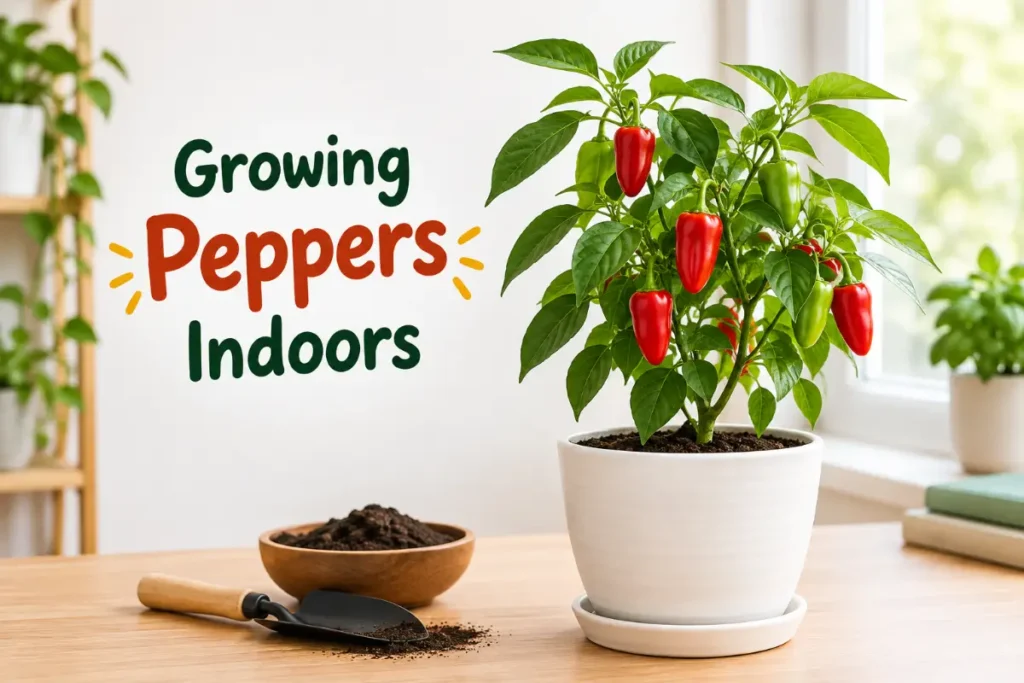
Growing peppers indoors is one of the most rewarding food growing projects available for a kitchen windowsill or grow-light setup. Peppers stay compact enough for container growing, produce over a long season once established, handle the warm temperatures that most homes maintain, and deliver fresh harvests in flavors and colors that grocery store peppers rarely match. A well-established indoor pepper plant in good light can produce dozens of peppers across a single growing season.
The approach to indoor pepper growing shares several key principles with indoor tomato growing but differs in important ways: peppers are more heat-tolerant, tolerate slightly lower light than tomatoes, and once established as perennials in warm indoor conditions, can produce for multiple years rather than requiring annual replanting.
Quick Answer
Growing peppers indoors requires bright light from a south-facing window or grow lights delivering 300 to 500 PPFD for 14 to 16 hours daily, warm temperatures consistently above 65 degrees Fahrenheit, consistent moisture without waterlogging, biweekly fertilizing with a phosphorus and potassium-forward formula at flowering, hand pollination of every open flower, compact varieties suited to container growing, and patience since peppers take longer from seed to first harvest than most indoor food crops.
Choosing the Right Pepper Variety for Indoors
Variety selection determines manageability, light requirements, and how quickly you get from planting to harvest. Unlike tomatoes where standard garden varieties are genuinely unsuitable for indoors, a wider range of pepper types perform acceptably in indoor conditions.
Compact ornamental and culinary pepper varieties:
NuMex Twilight: A compact ornamental pepper that produces small, fiery fruits that transition through purple, yellow, orange, and red as they ripen. Spectacular visual display alongside genuine culinary heat. One of the most commonly recommended indoor pepper varieties.
Chenzo: A compact sweet pepper variety reaching twelve to eighteen inches. Produces small, thick-walled sweet peppers in green ripening to red. One of the most productive compact sweet pepper options for indoor growing.
Loco: A very compact ornamental pepper staying under twelve inches. Produces upward-pointing colorful fruits that transition through multiple colors simultaneously on the same plant.
Bolivian Rainbow: Produces small, brilliantly colored fruits in purple, yellow, orange, and red. Medium heat. Visually striking plant for indoor display that also produces genuinely edible fruits.
Thai chili varieties: Naturally compact plants producing small, intensely hot fruits that suit indoor container growing well. The intense heat means a single plant provides significant culinary yield even from modest fruit production.
What to avoid: Standard large-fruited bell pepper varieties that grow to three to four feet and require high light intensity and a long season. These work in outdoor gardens but become unmanageable and underproductive indoors.
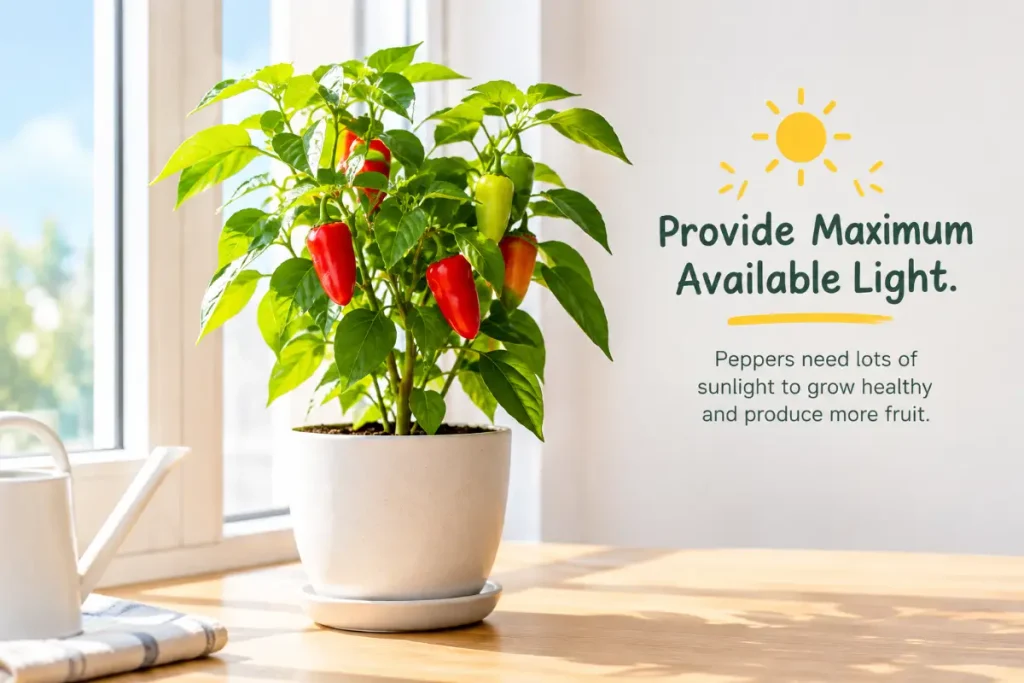
Step 1: Provide Maximum Available Light
Peppers need bright light for productive fruiting, though they are slightly less demanding than tomatoes. A south-facing window with four to six hours of direct sun provides adequate conditions for modest indoor pepper production. Grow lights delivering 300 to 500 PPFD for 14 to 16 hours daily produce significantly better results.
The light-production relationship: Like tomatoes, peppers produce more flowers and more fruit with more light, up to the intensity of full outdoor summer sun. Indoor light levels consistently limit production below outdoor potential, but adequate light levels produce genuinely useful harvests from compact plants.
Ornamental varieties in lower light: Ornamental pepper varieties like NuMex Twilight and Bolivian Rainbow tolerate somewhat lower light than sweet pepper varieties and produce acceptable fruit displays in east-facing windows with three to four hours of morning direct sun. They are the most practical choice for homes without south-facing windows or grow light investment.
Step 2: Start Seeds or Source Plants
From seed: Pepper seeds need warm soil between 75 and 85 degrees for reliable germination, which is warmer than most home temperatures. A seed-starting heat mat under the germination tray maintains the soil temperature that produces germination within ten to fourteen days. Without supplemental heat, germination is erratic and often fails.
Transplanting timing: Start seeds eight to ten weeks before you want established plants. Peppers are slow from seed to transplant size compared to tomatoes. Patience through the seedling phase produces the strong plants that fruit productively.
Purchasing plants: A more practical starting point for most indoor growers is purchasing established pepper plants from a garden center in spring. Even a four-inch pot starter produces fruit within four to six weeks of transplanting into a final container with adequate light.
Container size: A three to five-gallon container suits most compact indoor pepper varieties. Larger varieties need five gallons. Ensure drainage holes throughout.
Step 3: Maintain Warm Temperatures
Peppers are among the most heat-tolerant food crops you can grow indoors, which is a significant advantage in homes that stay warm year-round.
Ideal range: 70 to 85 degrees Fahrenheit for active growth and fruit set. Peppers actively prefer the warm conditions that many homes maintain through summer and that heated interiors provide in winter.
Cold sensitivity: Below 60 degrees growth slows significantly. Below 50 degrees peppers show stress and may drop leaves. The warm indoor environment of most US homes is actually close to ideal for pepper growing rather than being a compromise as it is for cool-season crops.
The perennial advantage: In outdoor gardens, peppers are grown as annuals because frost kills them at the end of each season. Indoors away from frost, peppers are genuinely perennial and can be maintained for multiple years. An established two-year-old indoor pepper plant with a developed root system produces more abundantly than a first-year plant and justifies the investment in consistent care across seasons.
Step 4: Water Consistently
Peppers prefer consistently moist soil but are somewhat more drought-tolerant than tomatoes, making them slightly more forgiving of missed waterings.
The correct approach: Water when the top inch of soil feels dry. In a warm, bright indoor position this typically means every five to seven days. In lower light or cooler conditions every seven to ten days.
Drought tolerance vs preference: While peppers survive brief drought better than tomatoes, consistent drought stress causes flower and fruit drop and reduces the overall production of the plant significantly. Consistent moisture produces more fruit than allowing the plant to dry significantly between waterings.
Signs of overwatering: Yellow lower leaves. Soft stem sections at soil level. Musty soil smell. Root rot develops in chronically wet conditions and is more damaging than brief drought.
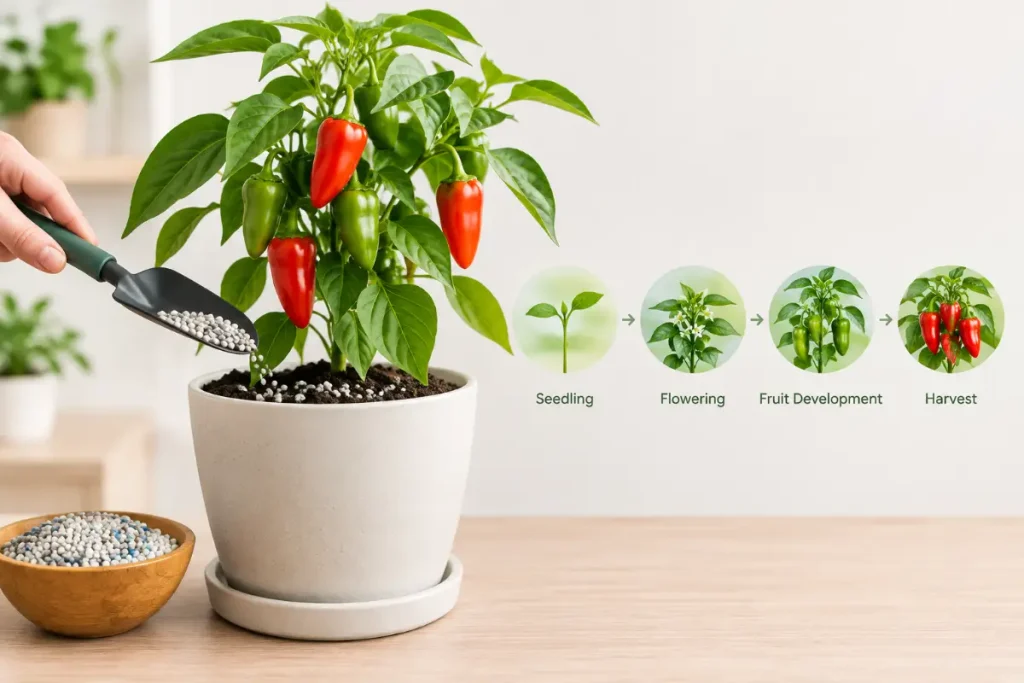
Step 5: Fertilize Through the Production Cycle
Vegetative phase: Balanced fertilizer every two weeks through the first four to six weeks after transplanting. This supports the root establishment and leaf production that precedes flowering.
Flowering and fruiting: Switch to a lower-nitrogen, higher-phosphorus and potassium formula when flower buds appear. A dedicated pepper or tomato fertilizer with NPK ratios like 5-10-10 or similar supports flower development and fruit production better than a nitrogen-heavy general fertilizer that drives vegetative growth at the expense of fruiting.
Calcium: Like tomatoes, peppers benefit from calcium supplementation to prevent blossom end rot in developing fruits. Apply a liquid calcium-magnesium supplement every three to four weeks through the fruiting period.
Organic approaches: Worm castings top-dressed every six to eight weeks alongside liquid fertilizing provide the slow-release organic nutrition that supports healthy root development in the multi-year container growing that indoor peppers allow. For the complete organic fertilizer guide, natural fertilizer for indoor plants covers every approach with specific guidance for fruiting crops.
Step 6: Hand Pollinate Every Flower
Like tomatoes and strawberries, indoor peppers have no bee access and require manual pollination for fruit set.
How pepper pollination differs from tomatoes: Pepper flowers are smaller than tomato flowers and hang downward rather than outward. They are self-fertile but benefit from the same vibration technique that tomato flowers need.
The technique: Using an electric toothbrush held against the flower stem for one to two seconds, or a small paintbrush gently touching the center of each open flower, releases and deposits pollen within each flower. Do this daily for every open flower.
Signs of successful pollination: Within five to seven days of successful pollination, the base of the flower begins swelling into the tiny pepper fruit that develops to full size over the following three to eight weeks depending on variety and temperature.
Step 7: Harvest at the Right Stage and Prune for Continuous Production
Harvest timing: Most peppers can be harvested green (before full color develops) or allowed to ripen to their final color (red, yellow, orange, or purple depending on variety). Green peppers from any variety are edible and have a sharper, less sweet flavor than fully ripe peppers. Fully ripe colored peppers have higher sugar content and more complex flavor.
The production trade-off: Leaving peppers on the plant to ripen fully to color takes three to six additional weeks beyond the harvestable green stage. During this time the plant produces fewer new flowers since its energy is directed toward ripening existing fruit. For maximum total fruit production, harvesting some peppers at the green stage while allowing others to fully ripen balances production volume with flavor variety.
Pruning for continued production: After the main flush of fruit has been harvested, cutting the plant back by one-third stimulates a fresh flush of new vegetative growth that eventually produces the next round of flowers and fruit. This pruning approach maintains productive indoor peppers for multiple years rather than a single production cycle.
Overwintering: Peppers pruned back in fall can be maintained through winter with reduced watering and fertilizing, then resume active production in spring with the established root system that first-year plants lack. This multi-year approach produces increasingly productive indoor pepper plants that a new seedling cannot match.
For companion guidance on hand pollination technique that applies equally to indoor peppers and tomatoes, can you grow a tomato plant indoors covers the electric toothbrush pollination method in detail alongside the shared care principles between these two indoor fruiting crops.
Common Indoor Pepper Problems and Solutions
Flowers dropping without fruit set: Most commonly inadequate pollination. Begin or improve daily hand pollination. Also check temperature is above 65 degrees since cool conditions cause flower drop in peppers specifically.
Peppers staying green and not coloring: Insufficient light is the most common cause. Improve grow light coverage or hours. Also requires time — green-to-red color transition takes three to six weeks even in good conditions.
Leaves curling inward: Underwatering is the primary cause. Water immediately and maintain more consistent moisture. Also check for spider mites which cause similar leaf curling through feeding damage on leaf undersides.
Pale, weak growth: Nitrogen deficiency or insufficient light. Check fertilizing schedule and improve light conditions. Both problems produce similar symptoms in peppers.
Aphids on new growth: Particularly common in indoor pepper plants. A firm spray of water dislodges colonies. Follow with neem oil spray every seven days for three weeks for persistent infestations. For the complete aphid treatment approach, how to get rid of aphids on indoor plants covers every treatment step.
The Multi-Year Indoor Pepper Plant Strategy
The most experienced indoor pepper growers take a fundamentally different approach from annual-replanting thinking: they maintain established pepper plants as long-lived perennials and manage them for progressively better production across multiple years rather than starting fresh from seed each season.
Year one establishment: The first year focuses on establishing a robust root system and learning the specific plant’s preferences. Production is often modest as the plant puts energy into vegetative establishment alongside its first fruiting cycles. Patience through this year creates the foundation for genuinely impressive production in subsequent years.
Year two productivity: An established second-year indoor pepper plant with a developed root system and woody stem structure produces significantly more flowers and fruit per growth period than a first-year seedling. The plant’s established photosynthetic capacity and nutrient uptake capability drive more robust production from the same light and fertilizer inputs.
Pruning for rejuvenation: Each pruning back by one-third after a major production period rejuvenates the plant by stimulating new growth from lower stem nodes. This continuous renewal maintains plant vigor without requiring complete replacement. Over two to three years, the main stem thickens into a small woody trunk that resembles the pepper’s natural growth habit as a tropical perennial shrub.
Overwintering management: In fall, reduce watering to every ten to fourteen days and stop fertilizing entirely. Allow the plant to rest through the shortest days of winter with minimal intervention. Resume watering and fertilizing in late winter as day length increases and new growth emerges. This seasonal rhythm, even in a controlled indoor environment, aligns with the plant’s biological cycles and produces the spring flush of vigorous new growth that leads to the most productive fruiting period of each year.
Companion Growing: Peppers Alongside Indoor Herbs
Indoor pepper plants pair well with Mediterranean herbs in a south-facing window arrangement where their shared preferences for warm temperatures, direct sun, and well-draining soil create a cohesive care group manageable with a single routine.
Rosemary and thyme alongside a compact pepper plant in separate terracotta pots create a kitchen herb and food garden in a south-facing windowsill that requires one watering and fertilizing approach for all plants simultaneously. The herbs provide continuous aromatic and culinary yield while the pepper provides the punctuated excitement of flower development, fruit set, and harvest.
Basil alongside indoor peppers is the classic pairing since their culinary compatibility (both core ingredients in many of the same dishes) is matched by their shared preference for warm temperatures and bright light. Basil needs more consistent moisture than Mediterranean herbs but shares the warm temperature preference that peppers need, making them practical companions in a grow-light setup where temperature and light are controlled. For the complete guide to growing basil indoors which covers the specific care approach that makes basil the most practical indoor culinary herb alongside peppers, growing basil indoors covers every step from seed to harvest with the variety selection and light management that produces the most flavorful indoor basil.
Harvesting and Using Indoor Peppers
The transition from ornamental appreciation to culinary use of indoor peppers is one of the most satisfying aspects of growing food indoors. Understanding how to harvest and use the range of pepper types that suit indoor growing makes the harvest more enjoyable and more efficient.
Handling hot varieties safely: Hot varieties like Thai chili and NuMex Twilight contain capsaicin that causes burning on skin contact during harvesting and preparation. Wear disposable gloves when harvesting large quantities of hot peppers. Wash hands thoroughly after any pepper handling. The enjoyment of growing and eating fresh hot peppers is worth this simple precaution.
Drying excess harvest: When compact indoor plants produce more peppers than can be used fresh immediately, drying extends the harvest. String harvested peppers through their stems using a needle and thread and hang in a warm, dry location. Small hot peppers dry completely in two to three weeks. Dried peppers are used whole in cooking, ground into powder, or reconstituted in liquid for sauces. The drying process concentrates flavor and heat, making dried indoor hot peppers particularly useful for spice-forward cooking.
Saving seeds for next plantings: The seeds from fully ripe indoor pepper fruits are viable for starting the next generation of plants. Remove seeds from fully red or orange ripe fruits, rinse in water to remove fruit pulp, and allow to dry completely on a paper towel before storing in a labeled envelope in a cool, dry location. Viability remains high for two to three years from harvest. This self-sustaining approach eliminates the annual seed purchase for established indoor pepper growers.
Conclusion
Growing peppers indoors rewards the grower who provides adequate warm temperatures, consistent light, regular hand pollination, and the patience to work through the slow seedling phase to the productive fruiting stage that follows. Compact ornamental-culinary varieties like NuMex Twilight and Bolivian Rainbow provide both visual display and genuine culinary yield from plants that stay manageable in three to five-gallon containers. Multi-year maintenance of established plants produces increasingly productive results as the root system develops beyond what annual replanting allows.
Fresh homegrown peppers from a kitchen countertop plant, harvested at full ripeness rather than the shipping-tolerant green stage of supermarket peppers, deliver the flavor experience that makes indoor food growing genuinely worthwhile.
Frequently Asked Questions
What type of pepper grows best indoors?
Compact ornamental-culinary varieties including NuMex Twilight, Bolivian Rainbow, and Loco produce both visual interest and edible fruit from plants that stay under eighteen inches. Thai chili varieties are compact and produce intense culinary yield from modest plant size. Avoid standard large-fruited bell pepper varieties that grow too large and require too much light for practical indoor management.
Do indoor peppers need a grow light?
A south-facing window with four to six hours of direct sun produces modest indoor pepper fruit. Grow lights delivering 300 to 500 PPFD for 14 to 16 hours daily produce significantly better results. Ornamental pepper varieties tolerate lower light than sweet peppers and are the most practical option for homes without grow light investment or south-facing windows.
How long does it take to grow peppers indoors from seed?
From seed to first fruit harvest takes approximately four to five months for most compact pepper varieties under adequate grow lights. The seedling phase is the slowest part of indoor pepper growing and is why purchasing established transplants from a garden center, which reduces time to first harvest to six to eight weeks, is more practical for most indoor growers.
Can I keep an indoor pepper plant alive for more than one year?
Yes. This is one of the most significant advantages of indoor pepper growing over outdoor growing where frost ends each season. In warm indoor conditions, peppers are genuinely perennial. Pruning back by one-third after each main production period and maintaining with reduced watering and fertilizing through slower periods produces established plants that become more productive in their second and third year.
Why are my indoor pepper flowers falling off?
Flower drop in indoor peppers is most commonly caused by inadequate pollination, temperatures below 65 degrees, or inconsistent watering causing drought stress. Begin daily hand pollination of every open flower using an electric toothbrush or small paintbrush. Ensure temperatures stay consistently above 65 degrees. Water when the top inch of soil dries to maintain the consistent moisture that prevents the drought stress that triggers flower drop.
Are hot peppers harder to grow indoors than sweet peppers?
Hot pepper varieties including Thai chilis and ornamental types are often easier to grow indoors than sweet peppers because they are naturally more compact, require slightly less light for fruiting, and are more tolerant of the temperature and light variability of indoor conditions. The intense heat of hot varieties also means that modest fruit production from a compact plant provides significant culinary yield per fruit compared to sweet peppers where larger fruit production per plant matters more for useful harvest quantities.