
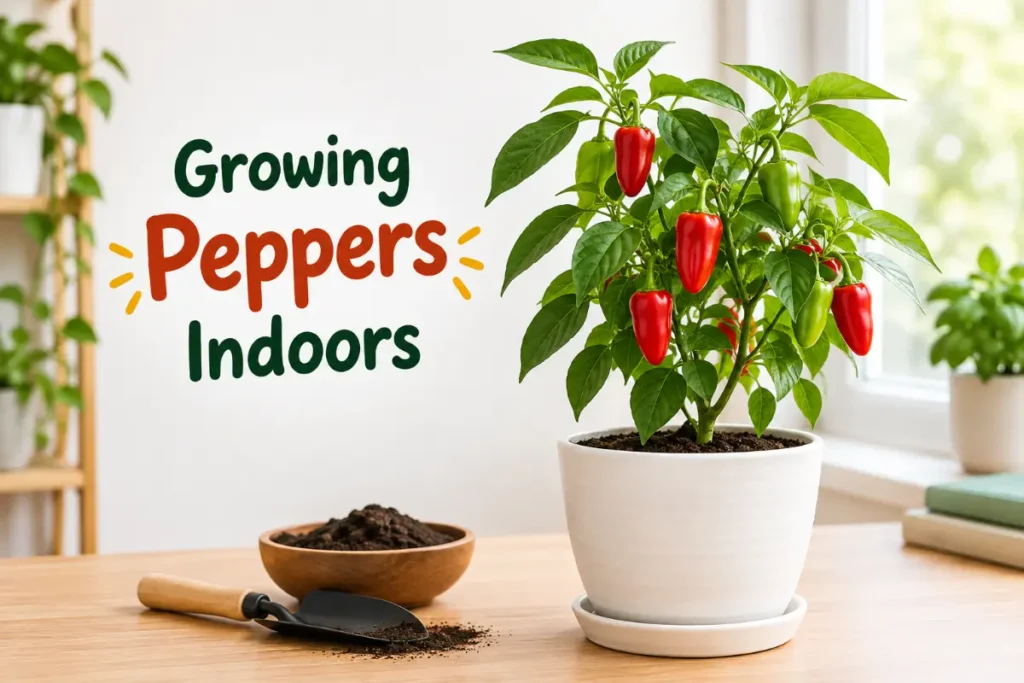
Growing chilli plants indoors gives you a continuous supply of fresh hot peppers regardless of the season outside. If you’ve ever wanted to grow your own chillis but thought you needed a garden or a warm climate, indoor growing changes that entirely. Chilli plants are surprisingly well-suited to container life — they stay compact, fruit for months, and reward you with a harvest that far outpaces what a single grocery store visit delivers.
This guide covers everything from choosing the right variety for your windowsill or grow light setup, to sowing seeds, managing the growing conditions that determine fruit quality, and harvesting at peak heat. Whether you’re after mild poblanos or face-melting superhots, the fundamentals are the same.
Why Grow Chilli Plants Indoors?
Year-round production. Outdoor chilli growing is season-dependent — most climates give you one short summer window. Indoors with supplemental lighting, you can start a plant in January and be harvesting by June, then keep that same plant producing through winter.
The plant lives longer. In their native tropical climate, chilli plants are perennials — they live for years. Outdoors in temperate zones, frost kills them. Indoors, a chilli plant can fruit for 3–5 years with proper care. A well-established second-year plant often outproduces its first-year yields.
Variety access. Grocery stores carry a narrow range of chilli varieties. Growing indoors opens up hundreds: Aji Amarillo, Bishop’s Crown, Fish Pepper, Lemon Drop, and countless regional landraces unavailable in most markets.
Better pest control. Outdoor chillis face aphids, spider mites, flea beetles, and soil-borne diseases. Indoor plants, managed well, avoid most of these entirely.
Choosing the Right Chilli Variety for Indoors
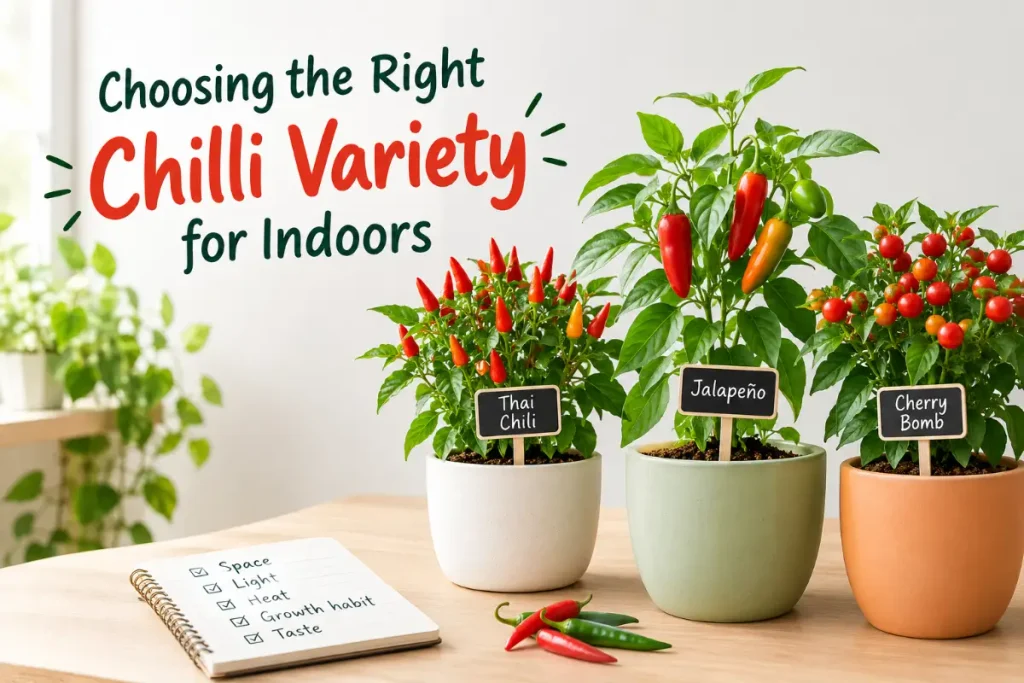
Not all chilli varieties are equally suited to indoor container growing. The best indoor varieties balance compact size, container adaptability, and generous yields.
Lemon Drop (Aji Amarillo) — Medium heat (30,000–50,000 SHU), fruity citrus flavor, prolific producer, grows 18–24 inches in a container. One of the best all-around indoor varieties.
Bishop’s Crown — Mild to medium heat, distinctive flattened bell-shaped fruit, compact plant, heavy producer. Great for beginners.
Prairie Fire — Very hot, upright compact plant under 12 inches, extremely prolific. Works perfectly on a windowsill.
Thai Hot — Small, fiery, very productive. Grows well in 3-gallon containers. Heat level around 50,000–100,000 SHU.
Jalapeño — Classic medium-heat pepper (2,500–8,000 SHU), reliable indoor producer, compact enough for 3–5 gallon containers. A popular starting point.
Cayenne — Prolific, heat-forward, dries well. Grows somewhat larger than jalapeños but manageable in 5-gallon containers.
Habanero — High heat (100,000–350,000 SHU), fruity flavor, produces well indoors with adequate heat and light. Slightly slower to mature than jalapeño types.
Varieties to approach with caution:
Superhot varieties like Carolina Reaper and Trinidad Moruga Scorpion tend to grow large, have very long growing seasons (150+ days to ripe fruit), and demand intense light and heat to produce well. They’re doable indoors but require significant infrastructure and patience.
What You Need to Get Started
Containers: Most compact varieties (Prairie Fire, Thai Hot, Bishop’s Crown) do well in 3-gallon containers. Jalapeños, cayenne, and habaneros prefer 5 gallons. Always choose containers with drainage holes — waterlogged roots kill chilli plants quickly.
Soil: Use quality potting mix with 15–20% perlite added for drainage. Chilli roots are sensitive to water retention. A pH between 6.0 and 6.8 is ideal.
Light: Chilli plants need 8–10 hours of direct bright light for vegetative growth and 12–16 hours to fruit reliably. South-facing windows may suffice in summer; supplemental LED grow lights are necessary in winter or for superhot varieties.
Temperature: Chilli plants grow best at 70–85°F during the day. Below 60°F at night causes leaves to drop and stresses the plant permanently.
Humidity: Moderate humidity of 50–60% is ideal. Most homes fall within this range.
Starting from Seed
Step 1: Soak seeds (optional)
Soaking seeds in warm water for 8–12 hours before sowing softens the seed coat and speeds germination.
Step 2: Germination method
The paper towel method works well: dampen a paper towel, place seeds 1 inch apart, fold over, and seal in a zip-lock bag. Place somewhere warm at 80–90°F — a seedling heat mat is the most reliable option. Check every 2–3 days.
Step 3: Maintain germination temperature
This is where most first-timers fail. Chilli seeds germinate best at 80–90°F. At 70°F, germination is slow and erratic. At 65°F, many seeds fail entirely. A seedling heat mat is genuinely worth the investment.
Step 4: Transplant to individual pots
Once seedlings have their first true leaves, transplant to 2–3 inch pots. Handle by the leaf, not the stem — a damaged stem is fatal; a damaged leaf recovers.
Step 5: Move to final container
When the plant has 4–6 sets of true leaves and roots emerge from drainage holes, transplant to the final growing container. Bury the stem slightly deeper than it was in the seedling pot.
Care After Establishment
Watering
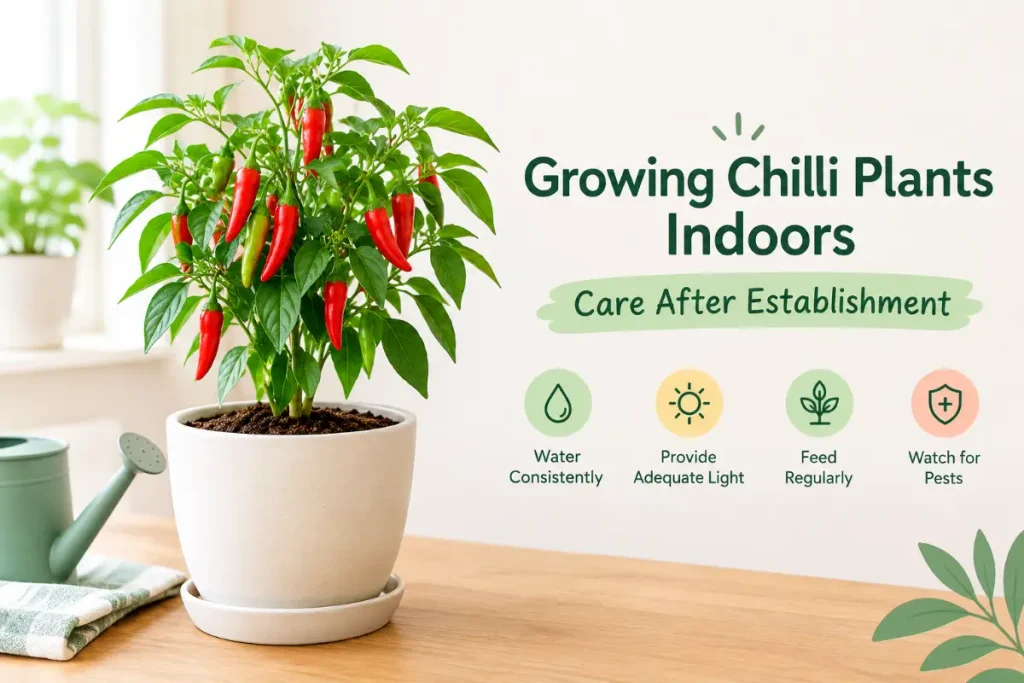
Chilli plants like to dry out slightly between waterings. Water when the top inch of soil is dry to the touch. Always water deeply until water flows from drainage holes, then let the pot drain fully. Never let the plant sit in standing water.
Signs of overwatering: yellowing lower leaves, wilting despite moist soil, mushy stem base. Signs of underwatering: drooping leaves, dry soil pulling away from pot edges, crispy leaf margins.
Fertilizing
Fertilizing strategy shifts with growth stage:
- Vegetative growth: Feed weekly with balanced fertilizer (10-10-10) diluted to half strength.
- Pre-flowering: Reduce nitrogen, increase phosphorus and potassium. Switch to a pepper-specific fertilizer (5-10-10 or similar).
- Fruiting stage: Continue low-nitrogen, high-potassium feeding every 7–10 days.
Calcium is particularly important — deficiency causes blossom end rot (sunken dark spots on fruit bottoms). Supplement with calcium-magnesium product every 2–4 weeks if your fertilizer doesn’t include calcium.
Pruning and pinching
When your plant reaches 6–8 inches tall, pinch out the growing tip above the third or fourth leaf node. This encourages lateral branching and produces a bushier plant with more fruiting sites.
As the plant matures, remove branches crossing through the center to improve airflow and reduce fungal disease risk.
Pollination
Chilli flowers are self-fertile but need physical movement to transfer pollen indoors. Options:
- Run a small oscillating fan near the plant for 2–4 hours daily
- Gently shake flowering branches by hand when flowers are open
- Use an electric toothbrush pressed against the base of each flower
Poor pollination causes flowers to drop without setting fruit — the most frustrating indoor chilli problem.
Light Requirements in Detail
Chilli plants are among the most light-hungry of all common indoor food plants.
Natural light minimums:
- Vegetative growth only: 6 hours of direct sun
- Light fruiting: 8 hours of direct south-facing sun
- Reliable fruiting: 10+ hours (rarely achievable indoors without supplementation)
Grow light setup:
For a single chilli plant in a 3–5 gallon container, a 45-watt full-spectrum LED panel mounted 12–18 inches above the canopy, running 14–16 hours per day, is sufficient for fruiting most compact varieties. For multiple plants or larger varieties, scale up proportionally.
The key metric is light intensity: chilli plants fruit best with 20,000–40,000 lux at the canopy. A grow light lux meter ($15–25) removes the guesswork from placement.
Signs of insufficient light:
- Long gaps between leaf nodes
- Flowers dropping without setting fruit
- Very dark green leaves
- Slow, weak growth
If you’re already growing tomatoes indoors, the setup for chillis is nearly identical. The guide on grow lights for indoor tomato plants covers light selection in detail and applies directly to chilli growing.
Overwintering and Multi-Year Growing
One of the greatest advantages of indoor chilli growing is keeping plants alive year after year. A second-year plant with a substantial root system and woody stem often fruits earlier and more heavily than a first-year plant.
How to overwinter:
- In late autumn, cut the plant back hard — to within 4–6 inches of the main stem, leaving a few leaf nodes
- Reduce watering significantly
- Move to a cool (55–60°F), low-light location for semi-dormancy
- In late winter/early spring, move back under grow lights and resume regular watering and fertilizing
- New growth appears within 2–4 weeks
Container growing year-round:
If keeping the plant actively growing rather than overwintering, main winter adjustments are: increase grow light to 16 hours, move away from cold windows, and reduce watering frequency as evaporation slows.
Harvesting Chillis
Unripe (green) harvest: Chillis picked before color change are fully edible. Green jalapeños, cayennes, and habaneros are standard culinary products — slightly less sweet, more vegetal, and in most varieties slightly less hot.
Ripe harvest: Color change signals ripeness — red, orange, yellow, purple, or brown depending on variety. Ripe chillis are sweeter, more complex, and typically higher in heat.
How to harvest: Use scissors or a sharp knife to cut the stem above the fruit, leaving a short stub. Pulling by hand risks damaging the branch.
Continuous production: Remove fruit regularly. Leaving fully ripe fruit on the plant signals it to slow production. Regular harvesting — even of green fruit — keeps the plant in active production mode.
Storing the harvest:
- Fresh: 1–2 weeks refrigerated
- Dried: hang in bunches or use a dehydrator
- Frozen: halve, remove seeds, spread on a sheet tray to freeze before bagging
- Preserved: hot sauce or chilli oil
Common Problems and Solutions
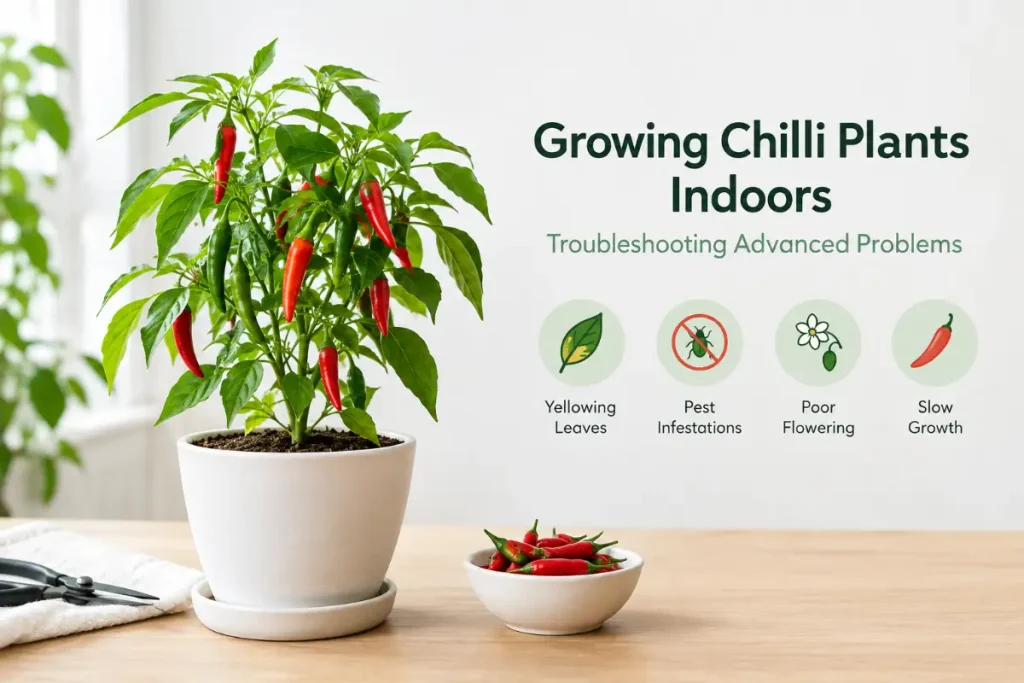
Flower drop without fruit Most common indoor chilli issue. Causes: insufficient light, temperatures above 90°F or below 60°F, low humidity, lack of pollination, or excess nitrogen. Investigate each systematically.
Aphids Clusters on new growth and leaf undersides. Treat with insecticidal soap (1 tablespoon dish soap per liter of water). Repeat every 5–7 days for 3–4 weeks.
Spider mites Fine webbing on leaves with stippled damage pattern. Thrive in hot, dry conditions. Increase humidity, spray leaves with water, treat with insecticidal soap or neem oil.
Blossom end rot Sunken dark spots on fruit bottoms. Calcium deficiency or inconsistent watering. Maintain even soil moisture and supplement calcium.
Wilting despite moist soil Root rot. Usually caused by consistently overwatered soil without adequate drainage. Cut your losses — take cuttings from healthy stem tissue and start fresh.
Leggy growth Insufficient light. Increase grow light intensity or duration.
Building a Multi-Variety Indoor Chilli Collection
Once you’ve successfully grown one chilli variety indoors, building a small collection is the natural next step. Different heat levels cover different cooking applications; different flavors add variety; staggered harvests keep fresh chillis coming for months.
A practical three-plant collection:
- One mild to medium variety (Bishop’s Crown, jalapeño, or Lemon Drop) for everyday cooking
- One medium-hot variety (cayenne or Thai Hot) for hot sauces and adding heat
- One specialty or heirloom variety for something unique — a Aji Amarillo for Peruvian-inspired dishes, a Fish Pepper for historical interest, a Chocolate Habanero for deep, smoky heat
Space requirements:
Three 3–5 gallon containers occupy roughly 3–4 square feet. A 200-watt LED panel or two smaller panels on a wire shelving rack handles light for the whole collection. Label each plant with variety name and germination date from the start — plants look identical in vegetative growth.
Succession planting:
Start new seeds every 6 months. By the time older plants begin declining, newer plants are well into their productive phase. This maintains supply without any gaps.
Saving seeds:
Select the best-tasting, most productive fruit from each variety at full ripeness. Scrape seeds onto a paper plate, air-dry for 7–14 days, and store in labeled envelopes in a cool, dark location. Properly stored chilli seeds remain viable for 3–5 years.
Companion Planting Indoors
Chilli plants share growing requirements with several other indoor edibles, making thoughtful pairing efficient.
Good companions under the same grow light:
Basil thrives under the same 14–16 hour grow light schedule as chillis, prefers the same warm temperatures, and its volatile oils may repel some pest insects. Keep it in a separate pot alongside chilli containers.
Cherry tomatoes and chillis share nearly identical growing needs — warmth, long light periods, high phosphorus during fruiting, similar watering cadence. A single grow station can support both. Keep them in separate containers for root management.
Sweet peppers and chillis are the same species (Capsicum annuum) in most cases and can share grow light space with identical care schedules. Growing sweet and hot peppers side by side does not affect heat levels — the cross-pollination myth about affecting the same season’s fruit is incorrect.
What to avoid pairing:
Herbs preferring drier conditions (rosemary, thyme, lavender) have conflicting watering needs. Low-light houseplants won’t appreciate the intense light chillis need.
Overwintering: Getting More from a Mature Plant
A chilli plant that has survived its first season is worth keeping. The woody root system and established vascular structure of a second-year plant allows it to resume production faster after the winter rest and often yields more heavily than a first-year seedling.
The overwintering process in detail:
Cut the plant back to a skeletal framework of 4–6 inches in late autumn — leave several leaf nodes on each remaining branch. Remove all remaining fruit and flowers. Water thoroughly one last time, then move to a cool (55–60°F), low-light location.
During dormancy, water only when the plant shows the first signs of stress — slight wilting, beginning to droop. The plant is essentially resting; it doesn’t need feeding and barely needs water. Check every 2–3 weeks.
In late winter, move back under full grow lights and resume normal watering. Start fertilizing lightly once new growth appears — a few green shoots from the cut stems. Within 4–6 weeks, the plant is in full growth again and moving toward fruiting faster than any seed-started plant would.
Pot-up when resuming:
If the plant has been in the same container for a full season, consider repotting into a container 1–2 sizes larger when you bring it back out of dormancy. Fresh potting mix and more root space gives the revived plant the best possible start on its second season.
Troubleshooting Advanced Problems
Catfacing and misshapen fruit
Caused by temperature fluctuations during flower development — usually cold nights or hot days during the 2-week window when flowers are forming. Affected fruit is edible but cosmetically irregular. Maintain more consistent temperatures, particularly at night.
Root-bound plants
Signs include rapid wilting despite regular watering and roots emerging from drainage holes. Repot into a container 2–4 inches larger, or divide and restart with fresh cuttings from a vigorous branch.
Sooty mold
A black powdery coating on leaves following aphid or whitefly infestations. The mold grows on honeydew pests excrete. Treat the underlying pest problem first, then wipe mold from leaves with a damp cloth.
Slow germination of superhot varieties
Superhots often need 2–4 weeks at sustained 85–90°F and have notoriously low germination rates even under ideal conditions. Fresh seed from a reputable supplier, a quality heat mat, and patience are the best remedies. Expect 30–50% germination even in good conditions.
Bitterness in ripe fruit
Usually caused by heat stress during fruit development or harvest at overripe stage. Harvest when fruit reaches full color but before it begins to wrinkle. Ensure consistent watering during the fruiting period.
Conclusion
Growing chilli plants indoors is genuinely accessible once you’ve resolved the two variables that matter most: light and temperature. Get those right — a good LED grow light on a timer, a warm spot away from cold windows — and chilli plants largely take care of themselves. They’re drought-tolerant, long-lived, and remarkably productive in containers. The variety access alone makes indoor growing worthwhile; you’ll grow chillis with flavors and heat profiles that simply don’t exist in any grocery store. Start with something compact and forgiving like a jalapeño or Bishop’s Crown, establish the rhythm of care, then work your way toward the more demanding varieties as your confidence builds.
For broader context on growing fruiting plants indoors, the guide on can you grow a tomato plant indoors covers the same light and container fundamentals that apply to chilli growing. For detailed variety information and growing guidance, the Royal Horticultural Society guide to growing chillies is an excellent reference.
FAQs
How long does it take to grow chilli plants indoors from seed to harvest?
Most varieties take 90–150 days from seed to first ripe fruit. Jalapeños and cayenne take 90–120 days. Superhots like Carolina Reaper can take 150–200 days. Growing from nursery transplants cuts this time roughly in half.
Can chilli plants fruit indoors without a grow light?
In a south-facing window with 8–10 hours of direct sun daily, some compact varieties will fruit, though yields will be lower. In rooms with less light, fruiting is unreliable without supplemental lighting.
How hot will my indoor chillis be?
Capsaicin production is influenced by growing conditions. Heat stress and mild water stress during ripening can increase heat. Indoor-grown chillis in stable conditions tend to be consistent in heat, often slightly milder than the same variety grown outdoors under stress.
Can I grow chilli plants from grocery store chilli seeds?
Yes, though inconsistently. Commercial chillis may be treated to inhibit germination, and hybrid varieties won’t grow true from seed. Best results come from seeds saved from ripe, untreated chillis or purchased from a seed company.
How often should I water my indoor chilli plant?
Check the soil every 1–2 days. Water when the top inch is dry. In summer under grow lights, this may be every 2 days; in winter, every 5–7 days.
Do indoor chilli plants need a dormant period?
Not required, but overwintering through semi-dormancy often results in more vigorous spring growth. Plants kept growing year-round can remain continuously productive but may eventually show fatigue.
Why are my chilli leaves turning yellow?
Most commonly overwatering, nitrogen deficiency, or natural aging of lower leaves. Check soil moisture first. If consistently moist, reduce watering. If dry and yellowing persists, feed with balanced fertilizer.
Can I grow multiple chilli plants in one large container?
Two small plants (Prairie Fire, Thai Hot) can share a 7–10 gallon container. Larger varieties need individual pots to avoid root competition. Shared containers look full but often produce lower yields per plant.
Pingback: Planting Marigold Seeds Indoors: A Step-by-Step Guide (2026) - Plant Quill