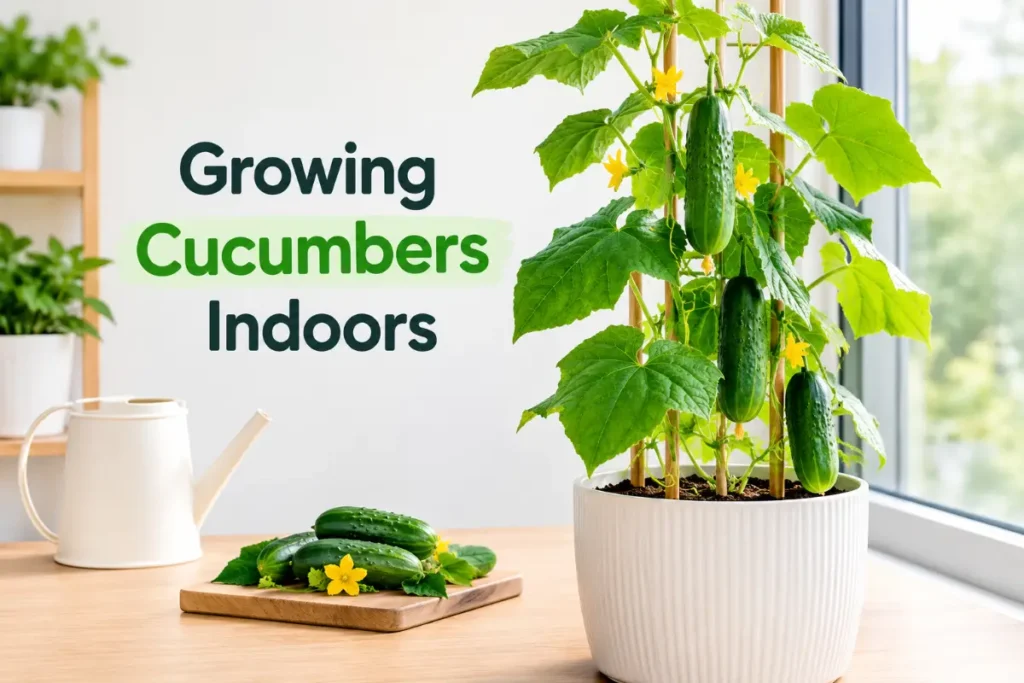
Growing cucumbers indoors surprises most people because cucumbers are associated with sprawling outdoor vines that take over garden beds. The compact, bush, and mini varieties bred specifically for container growing change this picture entirely. A bushing or compact climbing cucumber variety in a five-gallon container under grow lights or near a sunny south-facing window produces fresh cucumbers in a space no larger than a kitchen corner.
Indoor cucumbers require more management than lettuce or herbs but less than tomatoes in most respects. The primary considerations are supporting the climbing growth habit, managing the distinction between male and female flowers for pollination, and providing the consistent warmth that cucumbers need throughout their growing cycle.
Quick Answer
Growing cucumbers indoors requires a compact or bush variety such as Bush Pickle, Spacemaster, or Patio Snacker, a five-gallon container with a trellis or stake for support, bright light from a south-facing window or grow lights delivering 400 to 500 PPFD for 14 to 16 hours daily, warm temperatures consistently above 65 degrees, consistent moisture, biweekly fertilizing, and understanding the difference between male and female flowers for successful hand pollination. First harvest is typically eight to ten weeks from sowing.
Understanding Cucumber Flower Types for Pollination
Cucumbers are different from tomatoes, peppers, and strawberries in their pollination requirements because they produce separate male and female flowers on the same plant rather than flowers with both male and female parts.
Male flowers: Appear first, typically one to two weeks before female flowers. They have a simple straight stem with a central stamen covered in pollen. Male flowers do not produce fruit regardless of pollination.
Female flowers: Have a small, immature cucumber visible at the base of the flower behind the petals. This miniature cucumber is the fruit that develops if the flower is successfully pollinated.
Parthenocarpic varieties: A category of cucumber varieties bred to set fruit without pollination, producing seedless cucumbers through a process that does not require male flowers or bee activity. These are the most practical varieties for indoor growing since they eliminate the pollination management that standard cucumber varieties require. English cucumbers and many mini cucumber varieties sold as parthenocarpic produce fruit reliably indoors without manual pollination.
Hand pollination for standard varieties: Using a small paintbrush, transfer pollen from a male flower’s stamen to the center of a female flower’s stigma. Do this when both male and female flowers are open simultaneously, which requires timing since male flowers open first and fade before most female flowers are receptive.
Step 1: Choose the Right Variety
Variety selection is even more critical for indoor cucumbers than for indoor tomatoes because the growth habit difference between standard vining varieties and compact container-appropriate varieties is more extreme.
Parthenocarpic compact varieties (best for indoors):
Patio Snacker: A compact parthenocarpic variety producing small, crisp snacking cucumbers on bush-type plants suited to five-gallon containers. One of the most consistently recommended indoor cucumber varieties.
Bush Pickle: A compact bushing variety reaching two to three feet. Produces small pickling cucumbers that also make excellent fresh eating. Does not require staking.
Spacemaster: A semi-vining compact variety reaching two to three feet. One of the most productive compact cucumber varieties for container growing.
Miniature White: A compact variety producing small, mild white cucumbers with thin skin. Good for indoor conditions.
What to avoid: Standard slicing cucumber varieties like Straight Eight and Marketmore that grow vigorously to six or more feet and produce fruit most productively in outdoor conditions with full summer sun. These become unmanageable indoors and underperform significantly in artificial light conditions.
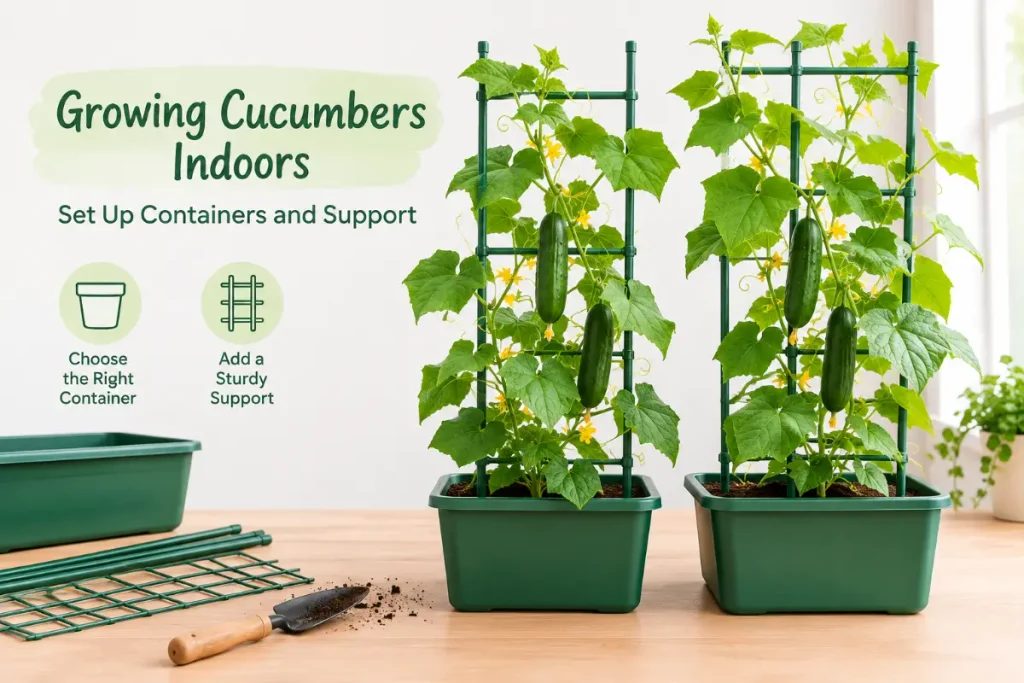
Step 2: Set Up Containers and Support
Container size: Five gallons minimum. Cucumbers develop more extensive root systems than lettuce and strawberries and need the soil volume that five-gallon containers provide for adequate moisture retention and nutrient access.
Support structures: Even compact and bush cucumber varieties benefit from a stake or small trellis in the container to support the vining growth. A single bamboo stake tied loosely to the main vine prevents the plant from sprawling across adjacent surfaces. A small tomato cage sized for container plants works well for bushier varieties.
Fabric grow bags: Five-gallon fabric grow bags provide excellent air pruning of roots that prevents the root circling that causes premature decline in standard plastic pots. The improved drainage and root health of fabric bags produces noticeably better cucumber plant vigor compared to solid plastic containers.
Soil: Standard potting mix with 20% perlite. Cucumbers need consistent moisture but are susceptible to root rot in waterlogged conditions. The perlite addition improves drainage while the standard potting mix base retains adequate moisture for the cucumber’s consistent moisture preference.
Step 3: Start Seeds and Establish Plants
Seed starting: Cucumber seeds germinate readily at soil temperatures between 70 and 85 degrees Fahrenheit, germinating in five to seven days at the warm end of this range. Use a heat mat under the seed starting tray for reliable germination. Plant seeds one-half inch deep.
Direct sowing: Sow directly into the final five-gallon container rather than starting in small cells and transplanting. Cucumbers have sensitive taproots that do not transplant well and direct sowing into the final container avoids the transplant shock that can set back cucumber development significantly.
Sowing depth and spacing: Plant two to three seeds in the center of the five-gallon container one-half inch deep. Once germinated and seedlings reach two inches, thin to the single strongest seedling by snipping the unwanted seedlings at soil level rather than pulling.
Time to first harvest: Eight to ten weeks from sowing to first cucumber harvest under adequate grow lights. In window-light-only conditions, add two to four weeks to this timeline.
Step 4: Provide Adequate Light and Warmth
Light requirement: Cucumbers need bright light approaching what fruiting crops like tomatoes require. A full-spectrum LED grow light delivering 400 to 500 PPFD at the plant canopy for 14 to 16 hours daily produces the most reliable indoor cucumber harvest.
Window light: A south-facing window with direct sun for five or more hours provides marginal conditions for cucumber fruiting. Bush varieties and parthenocarpic types that fruit with less photosynthetic energy production are the most practical in window-light-only setups.
Temperature is non-negotiable: Cucumbers are among the most cold-sensitive food crops covered in this cluster. Below 60 degrees growth stops entirely. Below 50 degrees the plant sustains cold damage. Consistently warm indoor conditions between 70 and 80 degrees produce the fastest cucumber development. The warm temperatures that most homes maintain through summer are ideal for cucumber growing.
Cold windowpane avoidance: Even in warm rooms, the glass surface of windows in winter radiates cold that damages cucumber plants positioned too close. Keep cucumbers at least three to four inches from window glass when temperatures outside drop below freezing.
Step 5: Water Consistently for Maximum Production
Cucumbers are approximately 95% water by composition and require consistent moisture throughout their growth and fruiting cycle. They are less drought-tolerant than tomatoes and peppers and show fruit quality problems from inconsistent watering faster than any other indoor fruiting crop.
The correct approach: Check soil moisture daily. Water when the top inch of soil feels dry. In warm conditions under grow lights this may mean watering every two to three days. Cucumbers in full fruiting production with multiple cucumbers developing simultaneously need the most consistent moisture of any stage.
Fruit quality and watering: Bitter cucumbers are the most common result of inconsistent watering. The cucurbitacins responsible for cucumber bitterness are produced at higher levels when the plant experiences water stress during fruit development. Consistent moisture throughout the fruiting period produces the mildest, most palatable cucumbers from any indoor variety.
Calcium for tip blossom rot: Like tomatoes and peppers, cucumbers occasionally develop blossom end rot from calcium deficiency triggered by inconsistent watering impairing calcium uptake. Apply liquid calcium-magnesium supplement every three to four weeks through the fruiting period alongside consistent watering.
Step 6: Fertilize Through Vegetative and Fruiting Stages
Vegetative stage: Balanced fertilizer every two weeks from germination through the appearance of first flowers. This supports the rapid early growth that establishes the plant’s photosynthetic capacity before fruiting begins.
At flowering: Switch to a lower-nitrogen, higher-potassium formula. Potassium specifically improves cucumber fruit quality, flavor, and firmness. High-nitrogen fertilizing at the fruiting stage drives excessive leaf production that shades developing cucumbers from grow light access.
Fertilizing frequency: Every seven to ten days through active fruit production since the high water and nutrient demands of multiple simultaneously developing cucumbers deplete container soil more rapidly than the same plant in a garden bed.
Organic support: Worm castings top-dressed every six to eight weeks provide slow-release organic nutrition alongside the liquid fertilizer program. The beneficial soil biology that worm castings support improves nutrient uptake efficiency in the container soil environment. For the complete organic fertilizer guide for indoor food crops, worm castings for indoor plants covers every application method with timing guidance for fruiting crops.
Step 7: Harvest at the Right Size and Manage Ongoing Production
When to harvest: Indoor cucumbers harvested at the optimal size produce the best flavor and encourage the plant to continue producing. For snacking varieties, harvest when cucumbers reach three to five inches long. For larger varieties, harvest before the cucumber yellows at the blossom end which indicates over-maturity.
The daily check: Cucumbers grow quickly — a cucumber that is appropriately sized today may be over-mature in two days in warm indoor conditions. Checking plants daily during active fruiting prevents the over-mature cucumbers that drain plant energy and signal the plant to slow new fruit production.
Harvesting technique: Cut cucumbers from the vine with clean scissors or a sharp knife rather than twisting or pulling. Twisting can damage the vine at the attachment point and create entry points for disease.
Removing over-mature cucumbers immediately: Any cucumber left on the plant past optimal harvest size diverts significant plant energy toward seed development rather than new fruit production. Remove any yellowing or oversized cucumbers immediately even if not planning to use them, since their removal encourages the plant to set and develop new fruit.
Plant lifespan: Indoor cucumber plants in good conditions produce fruit for six to ten weeks before declining. Unlike peppers that can be maintained as multi-year perennials, cucumbers are annual crops even indoors and benefit from fresh sowing every two to three months for continuous production rather than attempting to maintain aging plants past their productive peak.
For the complete guide to building an integrated indoor kitchen garden combining cucumbers with the other fruiting and leafy crops covered in this cluster, how to grow lettuce indoors covers the complementary cool-season leafy crop that pairs most practically with warm-season cucumber growing since their different temperature and light preferences allow both crops to occupy the same growing space efficiently across different seasons.
Managing Common Indoor Cucumber Problems
Bitter cucumbers: Inconsistent watering causing water stress during fruit development. Improve watering consistency and ensure temperatures stay within the 70 to 80 degree optimal range since temperature stress also increases cucurbitacin production.
Flowers but no fruit (standard non-parthenocarpic varieties): Only female flowers being pollinated, or male and female flowers not open simultaneously. Transfer pollen from open male flowers to female flowers as soon as both are open. Consider switching to parthenocarpic varieties that eliminate this problem entirely.
Pale, stretching plants: Insufficient light. Improve grow light output or hours. Move closer to south-facing window. Consider parthenocarpic varieties that fruit with somewhat less light than standard types.
Powdery mildew on leaves: The most common disease problem in indoor cucumbers. Appears as white powdery coating on leaves. Improve air circulation around the plant. Apply diluted neem oil spray every seven days for three weeks. Remove heavily affected leaves.
Yellow lower leaves: Normal aging of oldest leaves as the plant puts energy into upper growth and fruiting. Remove cleanly to maintain airflow. If yellowing progresses through the entire plant rather than just the oldest lower leaves, check for nutrient deficiency or root rot.
Seasonal Considerations for Indoor Cucumbers
Even in a temperature-controlled indoor environment, cucumbers respond to seasonal light changes in ways that affect their production cycle.
Spring and summer peak: The combination of longer natural days supplementing grow light hours and warmer ambient temperatures produces the most vigorous cucumber growth and fastest fruit development of the year. Starting cucumber seeds in late winter for spring establishment positions plants to enter their peak production period during the naturally high-light months when even window supplementation of grow lights is most effective.
Fall and winter production: Cucumbers under grow lights continue producing through fall and winter in warm indoor conditions, but growth slows noticeably as ambient light quality declines even with consistent grow light hours. Increasing grow light hours from 14 to 16 daily through the shortest months compensates partially for the reduction in natural light supplementation.
The warm-season advantage: Cucumbers thrive in the indoor conditions of air-conditioned summer homes where temperatures stay between 70 and 78 degrees. Unlike cool-season crops such as lettuce that struggle in summer indoor heat, cucumbers and peppers are the most productive summer indoor crops because their temperature preferences align with the warm conditions that summer indoor environments naturally provide.
Cucumber Companion Growing Indoors
Indoor cucumbers pair particularly well with other warm-season crops that share their temperature preferences and can coexist under the same grow light setup without competing for resources.
Basil: Cucumbers and basil share the warm temperature preference and bright light requirement that makes them natural companions in a grow light setup. The basil grows in smaller pots between or alongside the cucumber container, using the same grow light and requiring compatible watering and temperature conditions. The pairing is also culinarily natural since cucumber and basil appear together in salads, cold soups, and summer dishes.
Cherry tomatoes: A grow light setup large enough for a cucumber can accommodate a compact cherry tomato variety simultaneously. Both crops need similar temperatures, light intensity, and fertilizing schedules. The cucumber and tomato can be positioned to share a grow light panel efficiently, with the cucumber trained up a stake and the cherry tomato in its own adjacent container under the same light footprint.
Peppers: Like basil and tomatoes, compact pepper varieties share the warm temperature preference and light requirements of indoor cucumbers. A south-facing window or grow light setup supporting one cucumber plant can support two to three compact pepper plants in smaller containers alongside it with no increase in light or temperature management complexity. For the complete guide to indoor pepper growing that complements the indoor cucumber approach, growing peppers indoors covers the specific pepper care that makes these two crops the most natural warm-season indoor food garden pairing.
Conclusion
Growing cucumbers indoors delivers one of the most satisfying harvests of any indoor food crop — crisp, fresh cucumbers available from a compact container plant throughout the year regardless of outdoor growing season. The key decisions are choosing compact or parthenocarpic varieties that suit indoor conditions, providing adequate warmth and light, watering consistently for mild fruit quality, and harvesting regularly to encourage continuous production.
Parthenocarpic varieties eliminate the most complex aspect of indoor cucumber growing by removing the need to manage male-female flower timing for successful pollination, making them the most straightforward starting point for first-time indoor cucumber growers who want reliable results without the learning curve of standard variety pollination management.
Frequently Asked Questions
What is the easiest cucumber to grow indoors?
Parthenocarpic compact varieties including Patio Snacker and Bush Pickle are the easiest indoor cucumbers because they set fruit without pollination management and stay compact enough for five-gallon container growing. Standard full-sized varieties require male-female flower timing for pollination and grow too large for practical indoor management.
Do indoor cucumbers need a grow light?
A south-facing window with five or more hours of direct sun provides marginal conditions for modest indoor cucumber production with compact varieties. A full-spectrum grow light delivering 400 to 500 PPFD for 14 to 16 hours daily produces significantly better results. Cucumbers require more light for fruiting than lettuce or herbs and benefit more from grow light investment than those crops.
How long do indoor cucumber plants produce?
A well-managed indoor cucumber plant produces fruit for six to ten weeks before declining in vigor and productivity. Unlike peppers that can be maintained as multi-year perennials indoors, cucumbers are annual crops that benefit from fresh sowing every two to three months for continuous production. Succession sowing one new plant as the previous plant approaches the end of its productive life maintains a continuous harvest cycle.
Why are my indoor cucumbers bitter?
Bitterness in cucumbers is caused by cucurbitacin compounds produced in higher quantities during water stress or temperature stress. Maintain consistent moisture by watering when the top inch of soil dries and keep temperatures between 65 and 80 degrees. Harvesting at the optimal size before over-maturity also reduces bitterness since cucurbitacin concentration increases in over-mature cucumbers.
How do I tell male from female cucumber flowers?
Male flowers have a straight stem without any swelling at the base. Female flowers have a small, miniature cucumber visible behind the petals at the flower base. Male flowers open first, typically appearing one to two weeks before female flowers on the same plant. Parthenocarpic varieties set fruit from female flowers without needing male flowers and are the simplest choice for indoor growing.
Can cucumbers grow in a small apartment?
Yes, with compact varieties in five-gallon containers under a grow light. Bush Pickle, Spacemaster, and Patio Snacker all stay under three feet in height and produce in containers that fit comfortably on a kitchen counter or in a corner with a floor-standing grow light positioned above. The plant plus container occupies approximately two square feet of floor space, making indoor cucumbers achievable in most apartment kitchen or living area footprints.