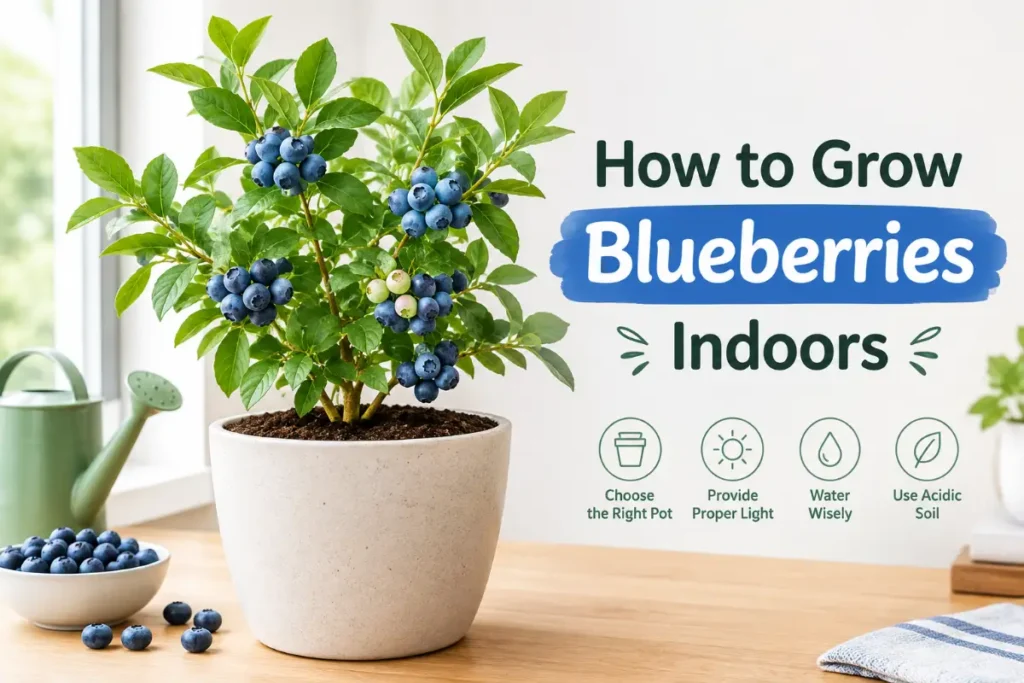
Learning how to grow blueberries indoors is a project with a higher technical barrier than most other indoor food crops in this cluster, but one where the barrier is specifically about two things: soil pH and cold requirements. Get those two factors right, and blueberries in containers are surprisingly manageable plants that produce fresh berries in an indoor setting. Get either wrong and the plant grows but does not fruit, or declines over months regardless of other care.
Indoor blueberry growing has become more practical as compact and half-high blueberry varieties have become widely available. These varieties stay under three feet in a container, need less cold treatment than standard full-sized blueberries, and produce genuine blueberries from a kitchen-friendly plant size that makes the project achievable without a dedicated indoor growing space.
Quick Answer
To grow blueberries indoors: choose a compact or half-high variety such as Sunshine Blue, Top Hat, or Northblue. Plant in a well-draining, highly acidic potting mix with pH between 4.5 and 5.5. Provide maximum direct south-facing sun or a grow light delivering 400 to 500 PPFD for 14 to 16 hours. Give the plant eight to twelve weeks of cold treatment (35 to 45 degrees Fahrenheit) each winter to satisfy the chilling requirement for fruiting. Fertilize with acid-specific fertilizer every two to four weeks through spring and summer. Expect first significant harvest in the second or third year after planting.
The Two Non-Negotiable Requirements for Indoor Blueberries
Before covering the full care approach, two specific requirements distinguish blueberry growing from every other indoor food crop in this cluster. Both must be met for fruiting.
Requirement 1: Acidic Soil pH
Blueberries are among the most pH-specific food plants available. They require soil pH between 4.5 and 5.5 for healthy growth and fruiting. At pH 6.0 and above, the iron and other micronutrients that blueberries need become chemically unavailable regardless of fertilizer application, causing iron chlorosis (yellowing between veins) and progressive decline. Standard potting mix typically has pH between 6.0 and 7.0, which is too alkaline for blueberries.
How to achieve the right pH: Use a dedicated blueberry or acid-plant potting mix. Alternatively, mix standard potting mix 50/50 with peat moss or coco coir and add elemental sulfur to lower pH further. Test pH with an inexpensive soil pH meter or pH test strips available at garden centers. Adjust downward with elemental sulfur or acidic amendments if the initial mix tests above 5.5.
Requirement 2: Cold Chilling Hours
Blueberry plants require a period of cold temperatures to complete their dormancy cycle and initiate the flowering and fruiting response that produces berries. This cold requirement, measured in chilling hours (hours below 45 degrees Fahrenheit), varies by variety from as few as 150 hours for low-chill varieties to 800 or more hours for standard highbush varieties.
Indoors: Most indoor environments do not drop to chilling temperatures consistently enough to satisfy this requirement without deliberate cold management. The solution is to move the plant to a cold location (garage, unheated basement, cold porch) where temperatures stay between 35 and 45 degrees for eight to twelve weeks each winter. Alternatively, low-chill varieties bred for warm climates need only 150 to 300 chilling hours and may be satisfied by cool indoor conditions during the shortest winter months.
Choosing the Right Indoor Blueberry Variety
Variety selection for indoor blueberries is primarily about chilling hour requirement and plant size.
Sunshine Blue: A semi-evergreen southern highbush variety with low chilling requirement (150 hours). One of the most commonly recommended container and indoor varieties. Self-fertile, meaning it produces fruit without a second plant for cross-pollination. Stays under four feet. Produces sweet, standard-sized blueberries. Excellent flavor.
Top Hat: A compact dwarf variety developed specifically for container growing. Stays under two feet. Moderate chilling requirement (approximately 500 hours). Self-fertile. Produces small but genuine blueberries. The most compact standard blueberry variety for indoor growing.
Northblue: A half-high variety reaching two to three feet. Low to moderate chilling requirement. Cold-hardy and adaptable to container growing. Good fruit flavor with medium-sized berries.
Peach Sorbet: A very compact ornamental blueberry with attractive foliage color alongside edible fruit. Stays under two feet. Low chilling requirement. Limited availability but excellent for indoor growing in small spaces.
What to avoid: Standard northern highbush blueberries (Bluecrop, Jersey, Patriot) that require 800 or more chilling hours, grow to five to six feet, and are not suited to the abbreviated cold treatment practical for indoor growing management.
Step 1: Prepare the Correct Soil
Soil preparation is more critical for blueberries than for any other food crop in this cluster. Standard potting mix used without modification is not suitable.
The right mix recipe: 50% peat moss or coco coir (both are acidic and improve drainage). 30% standard potting mix or bark-based growing medium. 20% coarse perlite for drainage. Mix thoroughly and test pH. The target is 4.5 to 5.5. Most peat-based mixes test in this range without further amendment.
Purchased alternatives: Commercial potting mixes specifically formulated for blueberries, azaleas, or acid-loving plants provide a convenient pre-mixed starting point that is pH-appropriate without requiring individual component mixing. Read the label to confirm the pH range.
Ongoing pH management: Soil pH drifts upward over time, particularly when watered with alkaline tap water. Retest pH annually and add elemental sulfur if pH has risen above 5.5. Watering with collected rainwater (naturally slightly acidic) or acidified water (a few drops of white vinegar per gallon) slows alkalinity drift.
Step 2: Choose the Right Container
Container size: Five to seven gallons for most compact blueberry varieties. Sunshine Blue and Top Hat perform well in five-gallon containers. Slightly larger varieties like Northblue benefit from seven gallons. Starting in an appropriately sized container rather than a very large one prevents the excess wet soil that causes root problems in slow-to-establish blueberry plants.
Drainage: Blueberry roots need excellent drainage. While the plant prefers consistently moist soil, anaerobic waterlogged conditions cause the root rot that kills blueberries faster than almost any other care problem. Multiple drainage holes, a slightly raised container position for free drainage, and coarse perlite in the growing mix all contribute to the drainage profile blueberries need.
Container material: Light-colored or white containers reflect heat away from root zones in summer, which suits blueberries better than dark-colored containers that absorb heat. Blueberries prefer cool root temperatures even when tops are in warm, sunny conditions.
Two-container approach: Blueberries produce the most fruit with cross-pollination from a second plant of a different variety. Two five-gallon containers with compatible varieties placed near each other (Sunshine Blue and Top Hat for example) produce more and larger berries than either plant alone. This requires more space but significantly improves harvest.
Step 3: Provide Maximum Light
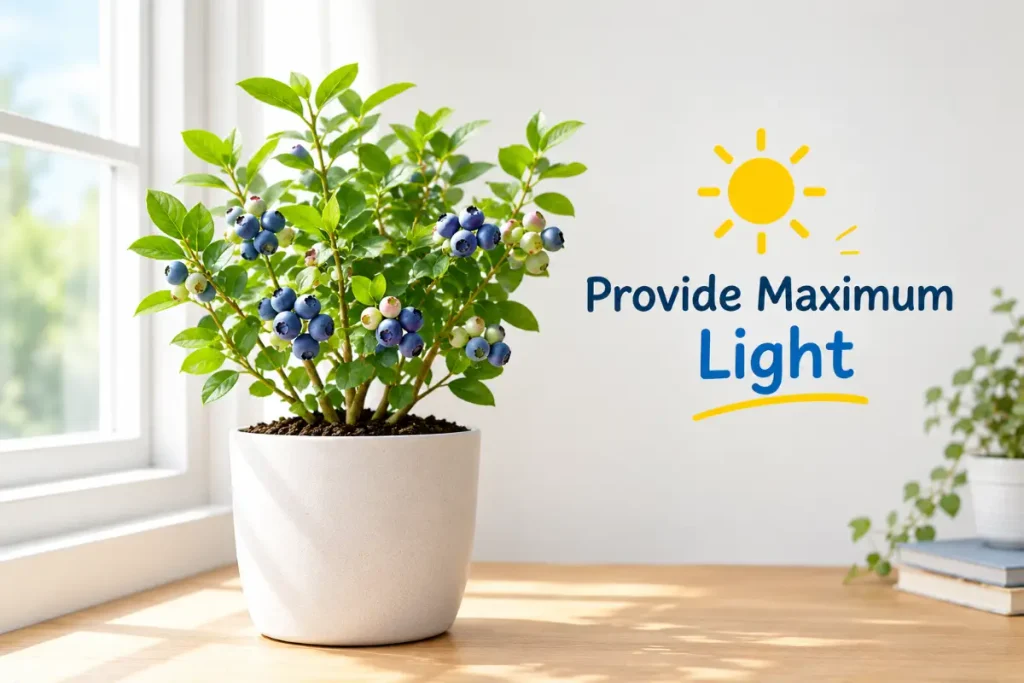
Blueberries are sun-loving fruit shrubs that produce their best fruit set in high light intensity. Inadequate light produces healthy foliage but minimal fruiting.
Natural light: Six or more hours of direct south-facing window sun daily. The more the better for fruiting performance. In full outdoor summer sun, blueberries produce abundantly. The glass-filtered direct indoor sun of a south-facing window provides adequate but not maximum fruiting conditions.
Grow lights: A full-spectrum LED grow light delivering 400 to 500 PPFD at the plant canopy for 14 to 16 hours daily supplements natural light effectively. Position lights as close to effective distance as heat allows, typically twelve to eighteen inches above the plant.
Outdoor summer placement: Like lemon trees and other fruit-producing plants discussed in this cluster, blueberries benefit enormously from outdoor summer placement in full sun where natural light intensity produces the most abundant flowering and fruiting of any growing condition. Move indoors before fall frost and provide cold treatment through winter.
Step 4: Manage the Chilling Period
This step is unique to blueberries (and other temperate fruit plants) among the food crops in this cluster and is the most commonly mismanaged aspect of indoor blueberry care.
When to start cold treatment: When leaves begin dropping in fall (blueberries are deciduous) and outdoor temperatures consistently drop, typically October through November in most US climates.
Where to provide cold treatment: An unheated but frost-free garage, an unheated basement, an enclosed porch, or a cold mudroom where temperatures stay between 35 and 45 degrees Fahrenheit consistently. The goal is cold without freezing.
Duration: Eight to twelve weeks for most container varieties. Low-chill varieties like Sunshine Blue need less (eight weeks may be sufficient). Standard varieties need the full twelve weeks or more.
Care during cold treatment: Minimal watering (every two to three weeks as soil approaches dryness). No fertilizing. The plant is dormant and requires only enough moisture to prevent the root desiccation that kills dormant blueberries in containers.
Breaking dormancy: When the cold treatment period is complete and the plant shows emerging buds, move to the bright south-facing indoor position and resume regular care. New growth and flower buds develop rapidly in response to the warmth and light after the cold period.
Step 5: Water With Appropriate Water
Water quality is more important for blueberries than for any other indoor food crop in this cluster because of the pH sensitivity described earlier.
Alkaline tap water problem: Hard tap water in many US cities has pH of 7.0 to 8.5. Watering blueberries with this water repeatedly raises soil pH above the 5.5 maximum over weeks to months, even if the initial potting mix was correctly acidic. Iron deficiency symptoms (yellowing between green veins) appearing on a blueberry plant that was planted correctly almost always trace to alkaline water use raising soil pH.
The best water sources: Collected rainwater is naturally slightly acidic and ideal for blueberries. Filtered water that removes mineral content reduces alkalinity. Reverse osmosis water has near-neutral pH and is suitable.
Acidifying tap water: Adding one to two milliliters of white vinegar per gallon of tap water reduces pH to approximately 5.5 to 6.0, making alkaline tap water more appropriate for blueberry irrigation. A more precise approach uses citric acid powder (one-eighth teaspoon per gallon) to achieve consistent acidification.
Watering frequency: Water when the top inch of soil feels dry. Blueberries prefer consistently moist but never waterlogged soil throughout the growing season. Reduce to every two to three weeks during the dormancy cold treatment period.
Step 6: Fertilize With Acid-Specific Formula
Standard balanced fertilizers produce mixed results in blueberries because they do not address the specific nutritional needs of an acid-loving plant or the pH maintenance that appropriate fertilizing can support.
The right fertilizer: A fertilizer formulated specifically for acid-loving plants or for blueberries specifically. These formulas use ammonium-based nitrogen sources (ammonium sulfate, ammonium nitrate) rather than nitrate-based sources. Ammonium nitrogen acidifies soil slightly as it is taken up by roots, which helps maintain the acidic conditions blueberries need. Nitrate-based fertilizers in standard formulas have no acidifying effect.
How often: Every two to four weeks through spring and summer during active growth. Stop fertilizing in late summer (August) to allow the plant to harden its new growth before dormancy. No fertilizing through the cold treatment period.
Signs of iron deficiency: Yellowing between veins on new leaves while veins remain green. This interveinal chlorosis indicates pH has drifted too high and iron is unavailable. Apply chelated iron as a foliar spray and drench, and simultaneously address soil pH with elemental sulfur application.
Step 7: Pollinate and Be Patient
Cross-pollination: Blueberries produce more and larger berries with cross-pollination from a second compatible variety. For indoor growing with a single plant, hand pollination using a small paintbrush to transfer pollen between flowers on the same plant improves fruit set compared to no intervention. A second plant of a different variety in an adjacent container provides the most improvement in berry size and quantity.
Patience through establishment: Unlike cherry tomatoes that produce significantly in the first season, blueberries are long-term plants that invest in root and structural establishment during their first one to two years before producing significant fruit. A blueberry plant in its first year produces few or no berries. The second year produces a modest first harvest. The third and subsequent years produce increasingly abundant crops as the root system matures.
The long-term view: Blueberry plants properly established in appropriate acidic soil produce for twenty or more years. The patience required through the establishment years yields decades of increasingly productive harvests. This long-term perspective distinguishes blueberry growing from the faster-cycling crops covered earlier in this cluster and makes it the most commitment-intensive but potentially most long-lived indoor food growing project available. For a companion fruit-growing project that shares the south-facing window requirement and produces on a faster timeline alongside blueberries, how to grow a lemon tree indoors covers the lemon tree care approach that suits the same sunny, patient grower profile that successful indoor blueberry growing requires.
Common Indoor Blueberry Problems and Solutions
Yellow leaves with green veins (iron chlorosis): Soil pH has risen above 5.5. Test pH immediately. Apply chelated iron foliar spray for immediate symptom relief. Lower soil pH with elemental sulfur and acidified water going forward.
No flowers or fruit despite healthy plant: Insufficient cold treatment hours. Provide a longer or colder cold treatment period next winter. Also verify the variety’s chilling requirement aligns with what you can realistically provide.
Fruit not setting after flowers: Insufficient pollination. Add a second compatible blueberry variety nearby. Hand pollinate between flowers daily during bloom. Check that temperatures during bloom are between 55 and 75 degrees since extreme temperatures in either direction impair pollination.
Leaf drop without the cold treatment period: Normal fall dormancy behavior in deciduous blueberry varieties. Do not mistake this for disease. Provide the cold treatment described in Step 4 and the plant resumes growth when returned to warmth and light.
Pruning Indoor Blueberries for Long-Term Productivity
Pruning is an important but often overlooked aspect of indoor blueberry management that directly affects fruit production quality and plant longevity over the multi-year productive life of an established container plant.
Why pruning matters: Blueberries produce their best fruit on two to three-year-old wood. Older wood beyond three years becomes progressively less productive. Annual pruning that removes the oldest wood and stimulates new productive cane growth maintains the plant’s berry production at a high level year after year rather than allowing the slow decline that unpruned plants experience as their proportion of old unproductive wood increases.
When to prune: Late winter or early spring before new growth emerges from dormancy. This is typically when you are transitioning the plant from its cold treatment back to the warm indoor growing position.
How to prune: In the first two years, minimal pruning. Remove only damaged, crossing, or obviously dead stems. Allow the plant to build its cane structure during this establishment period. From the third year onward, remove the oldest and least productive canes (those with minimal young sideshots, typically three or more years old) by cutting them to the soil level. Keep the most productive two to three-year-old canes and encourage new young canes from the base by leaving two to three new shoots per plant.
Proportion guideline: Remove no more than one-third of total cane volume per annual pruning. More aggressive pruning reduces the current year’s fruit production significantly since fruit is borne on established canes rather than new growth.
Compact variety exception: Very compact varieties like Top Hat require minimal pruning compared to full-sized varieties since their naturally limited growth habit restricts cane proliferation. Remove only damaged or crossing stems and any stems that have become unproductive through age, typically four or more years without meaningful young sideshot development.
Blueberry Companions in an Indoor Fruit Garden
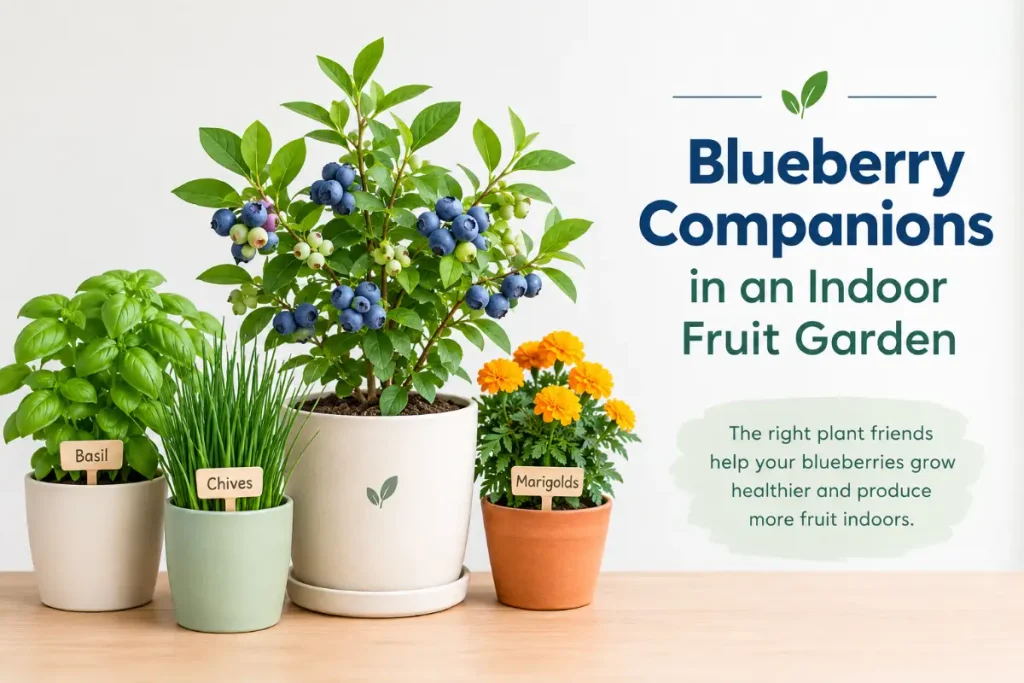
Indoor blueberries share their requirement for acidic soil conditions with several other acid-loving plants that can coexist in the same indoor growing space without the constant pH management adjustment that mixing acid-loving and standard plants would require.
Lingonberries (Vaccinium vitis-idaea): A compact cousin of the blueberry with similar soil pH requirements and lower chilling needs than most blueberries. Produces small, intensely flavored red berries with a tart cranberry-like taste. More compact than any blueberry variety and extremely cold-hardy. A two-pot combination of Sunshine Blue blueberry and lingonberry on a south-facing windowsill creates a productive compact indoor berry garden from compatible plants with identical soil management.
Cranberries: Technically possible in containers with very moist, highly acidic conditions but require more active moisture management than most indoor gardeners can sustain. Not recommended for most indoor growers.
Azaleas and camellias: While not food plants, these flowering acid-lovers share blueberry’s soil pH requirements and can be potted in compatible mixes and managed with the same acidic water and fertilizer routine. A grouping of blueberry with acid-loving flowering companions creates a cohesive indoor display that requires a single care approach for all plants.
For the complete guide to the strawberry growing approach that produces fruit on a much faster timeline than blueberries while sharing the container and indoor care context, how to grow a strawberry plant indoors covers the most practical alternative berry for indoor growers who want fresh berries without the patience and technical requirements that indoor blueberry success demands.
Conclusion
How to grow blueberries indoors requires meeting two specific requirements that distinguish this project from every other indoor food crop: correct acidic soil pH between 4.5 and 5.5, and adequate chilling hours through winter dormancy. Get those right and blueberries in compact container varieties are manageable, rewarding plants that produce genuine blueberries from a container that fits in any sunny indoor space.
The patience requirement is real: two to three years to significant harvest. But the long lifespan of a correctly established blueberry plant means that patience invested once produces decades of fresh blueberry harvests from a plant that starts the size of a grocery store purchase and grows into an increasingly productive indoor fruit shrub.
Frequently Asked Questions
What blueberry variety grows best indoors?
Sunshine Blue is the most commonly recommended indoor blueberry for its low chilling requirement (150 hours), compact size under four feet, self-fertility, and excellent sweet flavor. Top Hat is the most compact option at under two feet, ideal for limited spaces. Northblue suits growers who can provide moderate chilling hours and want a slightly more vigorous producer.
Why is my indoor blueberry not producing fruit?
The two most common causes are insufficient chilling hours (the plant needs eight to twelve weeks of temperatures between 35 and 45 degrees annually) and soil pH above 5.5 preventing nutrient uptake. Check both. Provide a more extended cold treatment period and test soil pH. Young plants in their first one to two years also produce little or no fruit as they establish.
What soil pH do blueberries need indoors?
Between 4.5 and 5.5. This is significantly more acidic than standard potting mix. Use a blueberry or acid-plant potting mix, or mix standard potting mix 50/50 with peat moss and test pH before planting. Water with collected rainwater or slightly acidified water to maintain pH over time.
Do indoor blueberries need a cold period?
Yes. Blueberry plants require a period of cold temperatures (35 to 45 degrees Fahrenheit) for eight to twelve weeks each winter to initiate the dormancy completion that triggers spring flowering and fruiting. Without this cold period the plant grows foliage but does not flower or fruit. Move the plant to an unheated garage, cold basement, or enclosed porch through the winter months to provide this cold treatment.
How long does it take to get blueberries from an indoor plant?
First significant harvest is typically in the second or third year after planting as the plant’s root system and structure establish. A one-year-old plant produces few or no berries. A two-year-old plant in appropriate conditions produces a modest first harvest. A three-year-old and older plant produces increasingly abundant harvests annually as it matures.
Do I need two blueberry plants indoors?
One self-fertile variety like Sunshine Blue produces fruit without a second plant but cross-pollination with a second compatible variety significantly improves berry size and total yield. Two five-gallon containers with compatible varieties placed near each other during bloom season is the optimal setup for indoor blueberry growing if space allows. A single self-fertile plant produces acceptable results but noticeably less than two cross-pollinating plants.