
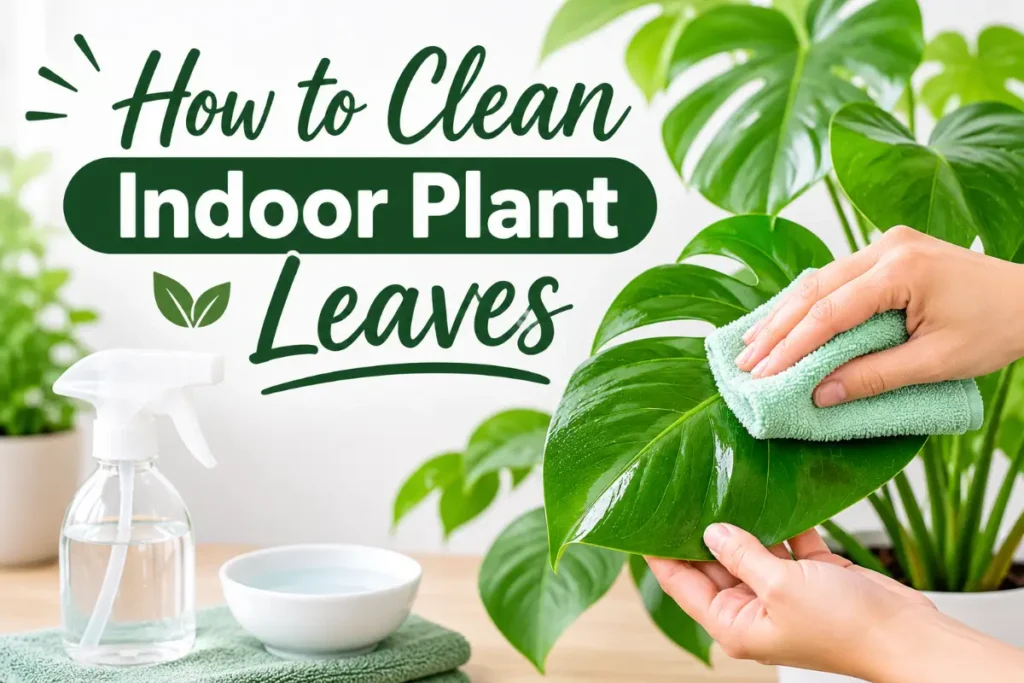
Knowing how to clean indoor plant leaves is one of the most overlooked aspects of houseplant care — and one of the most impactful. A layer of household dust on plant leaves is more than cosmetic: it blocks the light that reaches the leaf surface, reducing the plant’s ability to photosynthesize, and it clogs the tiny pores (stomata) the plant uses to exchange gases and regulate moisture. Clean leaves are genuinely healthier leaves, not just prettier ones.
This guide covers seven practical cleaning methods matched to different plant types — from broad-leafed tropical foliage that tolerates a damp cloth, to hairy-leafed plants that need an entirely different approach, to hanging plants that can’t easily be moved. It also covers the common mistakes that damage leaves rather than help them, and how often different plants actually need cleaning.
Why Cleaning Leaves Matters
Indoor plants don’t get rained on, and they don’t experience the wind that naturally keeps outdoor plant leaves relatively clean. Every surface in your home accumulates dust from HVAC systems, pet dander, cooking particles, and general household activity — and your plants collect all of it.
What dust does to plant leaves:
- Reduces photosynthesis by blocking light from reaching chlorophyll-containing cells
- Clogs stomata — the microscopic pores through which plants take in CO2 and release oxygen and water vapor
- Creates a hospitable surface for spider mites and other pests, which prefer dusty, dry conditions
- Makes plants look dull and unhealthy, masking the natural gloss of tropical foliage species
Regular leaf cleaning — every 2–4 weeks for most houseplants — keeps plants functioning efficiently and looking their best. Plants near air vents, in high-traffic rooms, or in dusty climates benefit from more frequent cleaning.
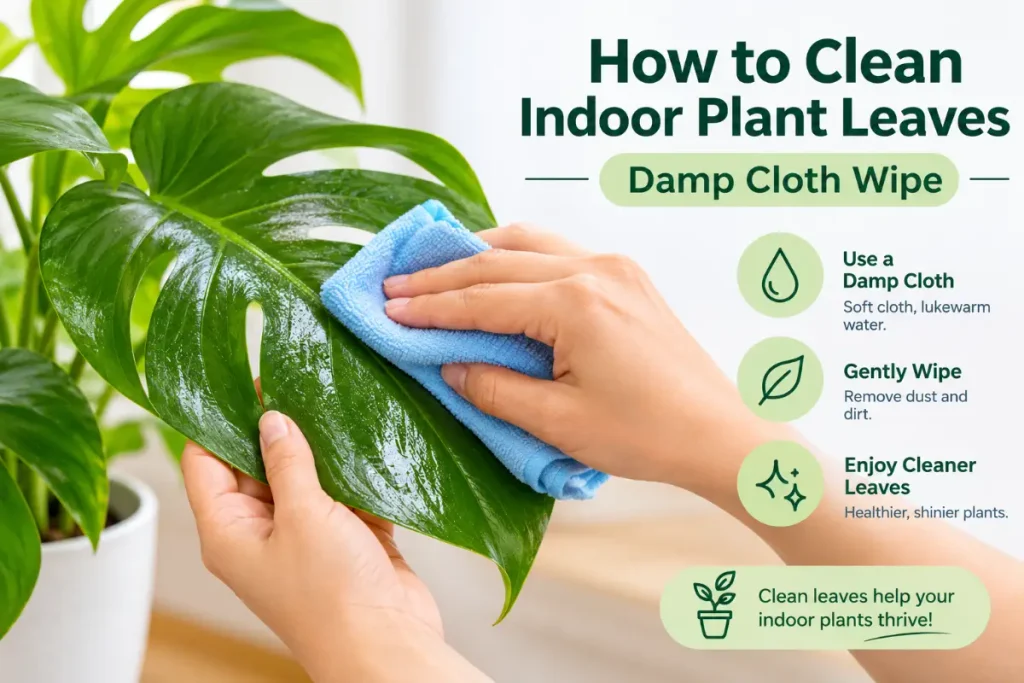
Method 1: Damp Cloth Wipe (Best for Large, Smooth Leaves)
The most effective method for broad-leafed tropical houseplants: monstera, rubber plant, fiddle-leaf fig, philodendrons, peace lily, pothos, and similar species with large, smooth leaf surfaces.
What you need: A soft cloth (microfiber works well — it picks up dust rather than spreading it), a bowl of room-temperature water, and optionally a drop of mild liquid dish soap for greasy or sticky deposits.
How to do it:
- Dampen the cloth with room-temperature water — not cold, which can shock tropical plants
- Support each leaf from underneath with one hand to prevent it from tearing at the stem junction
- Wipe from the base of the leaf toward the tip in a single smooth stroke — don’t scrub
- Rinse the cloth between leaves if it’s picking up significant dust to avoid redistributing it
- Allow leaves to air-dry at room temperature — don’t place plants in direct sun while leaves are still wet, as water droplets can act as magnifying glasses and scorch leaf surfaces
For very dirty leaves with sticky residue (from pests, cooking oils in kitchen environments, or mineral deposits from hard water), add one drop of mild dish soap to the water and wipe gently, then follow with a plain-water wipe to remove any soap residue.
Method 2: Shower Rinse (Best for Multi-Stemmed Plants)
For plants too large to wipe leaf by leaf, or heavily-branched plants where individual wiping is impractical, a lukewarm shower rinse is the most efficient cleaning method.
Best for: Pothos, tradescantia, ferns, spider plants, calatheas, small to medium monsteras, and any multi-stemmed plant whose pot is light enough to carry.
How to do it:
- Move the plant to a shower or bathtub
- Rinse with lukewarm water (not cold — tropical plants can be damaged by cold water shock) — use a gentle spray setting rather than a direct blast
- Allow the foliage to drain — leave the plant in the shower or tub for 15–20 minutes after rinsing
- Move back to its usual location once most surface water has drained from the foliage
The shower method also flushes accumulated salts from the potting mix and provides a humidity boost that many tropical plants appreciate. Don’t shower plants more often than every 3–4 weeks — frequent overwatering of the root zone is a risk if drainage isn’t complete.
Method 3: Soft Brush or Paintbrush (Best for Hairy and Textured Leaves)
Never wipe hairy-leafed plants with a damp cloth — the moisture gets trapped in the leaf hairs and promotes fungal rot, and the wiping motion mats the hairs and can damage the leaf surface. These plants need a dry cleaning approach.
Plants requiring the brush method: African violets, begonias, echeveria and other fuzzy succulents, gloxinia, streptocarpus, stachys, and any plant with velvety or hairy leaf surfaces.
What you need: A soft natural-bristle brush — a clean, dry watercolor paintbrush (size 10–16 works well) or a soft makeup brush.
How to do it:
- Hold the leaf gently with one hand, supporting from underneath
- Use light, sweeping strokes from the base toward the tip of the leaf to brush dust off the surface
- Work in good light so you can see the dust being removed
- Tap the brush on the edge of a trash can periodically to knock accumulated dust off the bristles
A can of compressed air (available at office supply stores and electronics retailers) is an alternative for very delicate hairy-leafed plants — a brief blast from several inches away dislodges dust without any contact.
Method 4: Misting (Best for Ferns and High-Humidity Plants)
Ferns, maidenhair plants, and other high-humidity plants benefit from regular misting, which both cleans leaf surfaces and provides the humidity they require. Unlike wiping, misting works by suspending dust particles in water droplets that fall off as the mist settles.
Best for: Boston ferns, maidenhair ferns, asparagus ferns, bird’s nest ferns, nerve plants (fittonia), and other small-leafed, high-humidity species where individual leaf wiping is impractical.
How to do it:
- Use a fine-mist sprayer filled with room-temperature distilled or filtered water — tap water leaves white mineral deposits on leaves in hard-water areas
- Mist evenly across the foliage until leaves are lightly coated but not dripping
- Mist in the morning rather than the evening — this gives leaves time to dry before nighttime, reducing risk of fungal issues
- Do not mist in temperatures below 60°F — cold water on cool leaves in poor air circulation is a recipe for fungal rot
Note: misting is not effective for large dusty deposits — it works for maintenance cleaning of already-relatively-clean plants. Use the shower method or a damp cloth for heavily dusty ferns.
Method 5: Banana Peel Wipe (Natural Leaf Polish)
A traditional home remedy that actually works — the inside of a banana peel contains natural oils and sugars that clean and mildly polish smooth leaf surfaces, leaving a natural-looking shine without the plastic-y coating that commercial leaf shine products can produce.
Best for: Large smooth-leafed plants — rubber plant, monstera, peace lily, anthuriums, pothos.
How to do it:
- Use the soft inside surface of a fresh banana peel
- Wipe each leaf from base to tip with a single smooth stroke
- Buff lightly with a dry cloth if any residue remains
- No rinsing needed
The result is a natural-looking clean and mild sheen. This method works well as a finishing step after an initial damp cloth clean to remove heavy dust.
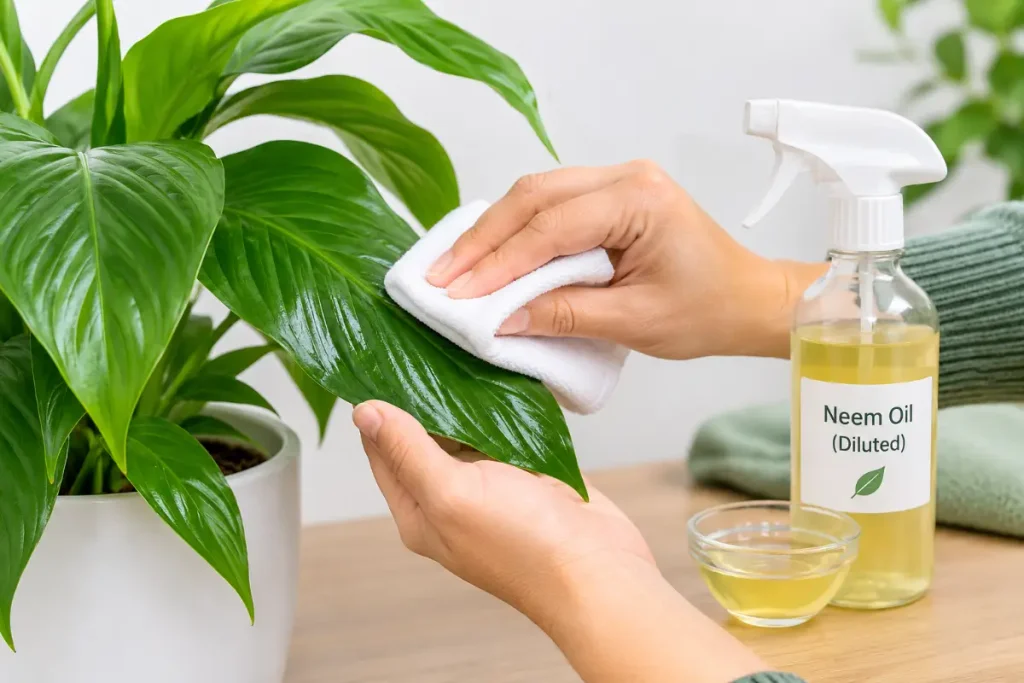
Method 6: Diluted Neem Oil Wipe (Cleaning Plus Pest Prevention)
Neem oil — a natural oil derived from the seeds of the neem tree — is both a mild leaf cleaner and an effective deterrent against common houseplant pests including spider mites, fungus gnats, aphids, and scale insects. A diluted neem oil solution used for monthly leaf cleaning provides both cosmetic and pest-prevention benefits.
How to make a diluted neem oil solution:
- 1 teaspoon neem oil
- ½ teaspoon mild liquid dish soap (acts as an emulsifier to help the oil mix with water)
- 1 quart warm water
- Shake well before each use — the oil and water will separate on standing
How to apply:
- Dampen a soft cloth with the neem solution
- Wipe each leaf on both the top and underside — pest eggs and mites often congregate on the underside of leaves
- Allow to dry naturally — no rinsing needed at this dilution
Important: Do not apply neem oil to plants in direct sun or under intense grow lights — the oil can concentrate heat and cause leaf scorch. Apply in the morning and keep plants in indirect light for the rest of the day.
Neem has a distinctive odor (sometimes described as earthy or slightly garlicky) that dissipates within a few hours. Not suitable for hairy-leafed plants — use the brush method instead.
Method 7: Compressed Air for Cacti and Succulents
Cacti and most succulents accumulate dust in their ridges, spines, and rosette centers where a cloth or brush can’t reach without risk of injury to the plant — or the grower. Compressed air is the safest and most effective cleaning method for spiny plants.
What you need: A can of compressed air (sold at office supply stores, Target, Best Buy) or a small hand-pump bulb blower.
How to do it:
- Hold the can or blower 4–6 inches from the plant
- Use short bursts rather than a sustained blast — sustained cold compressed air can frost-damage cactus tissue
- Rotate the plant to clean all sides and angles
- Work outdoors or near a window to avoid redistributing the dust cloud indoors
For echeveria and other fuzzy succulents (Echeveria ‘Doris Taylor’, Pachyphytum oviferum), use the paintbrush method rather than compressed air — the fine hairs on these plants can be disturbed and permanently altered by compressed air.
What to Avoid When Cleaning Plant Leaves
Several popular leaf cleaning methods circulating online cause more harm than good:
Commercial leaf shine products: Most leaf shine sprays and wipes contain petroleum-based or silicone-based coatings that create a high-gloss finish but physically block stomata — the same pores that help the plant breathe and transpire. The plastic-y shine looks impressive initially but degrades plant function over time. Avoid them entirely; a damp cloth wipe or banana peel achieves a natural shine without blocking stomata.
Cold water on tropical plants: Cold tap water (below 60°F) can cause cold shock in tropical species, manifesting as brown spots or yellowing in the area where cold water contacted the leaf. Always use room-temperature water.
Wiping hairy leaves: Pressing a damp cloth against fuzzy leaves traps moisture in the hairs, promoting fungal rot. Use a dry brush for any plant with velvety, hairy, or textured leaf surfaces.
Vigorous scrubbing: Leaves are more fragile than they look. Scrubbing rather than wiping can remove the waxy cuticle coating that protects the leaf surface, leaving it vulnerable to moisture loss and damage.
Leaving wet leaves in direct sun: Water droplets on leaves in direct sun act as a lens and can cause localized leaf scorch. Always dry plants in indirect light after wet cleaning methods.
How Often Should You Clean Indoor Plant Leaves?
The right frequency depends on your home environment and plant location:
Every 2–4 weeks: Plants near air vents, in kitchens (where cooking adds airborne grease), or in homes with pets or carpets that generate significant dust. Most large-leafed tropical foliage plants benefit from this frequency.
Monthly: Most houseplants in average home conditions. A visible dust layer is the clearest signal it’s time — if you can see dust on the leaf surface or run a finger across it and see a line, clean the leaves.
Every 2–3 months: Plants in low-traffic, low-dust rooms with good air circulation. Cacti and succulents in bright windows tend to accumulate dust more slowly.
After any HVAC maintenance, construction, or renovation work: These activities release significant dust into the air and typically coat plant leaves in a single event. Clean as soon as possible after the dust settles.
Cleaning Leaves on Specific Popular Houseplants
Monstera Deliciosa
Monstera leaves are large, dramatic, and collect dust visibly. Their waxy, fenestrated surface cleans easily with the damp cloth method. Pay attention to the area around the fenestrations (the natural holes and slits in the leaves) — dust accumulates in the recessed edges. Use a damp cotton swab to clean around fenestration edges on mature leaves.
Support larger monstera leaves from below when wiping — the leaf-stem junction on a mature monstera can be stressed by the weight of a large leaf plus wiping pressure without support.
Fiddle-Leaf Fig
Fiddle-leaf figs are notorious for dropping leaves when stressed, and surprisingly rough handling during cleaning is a real trigger. Wipe gently, support each leaf fully from underneath, and never wipe in cold temperatures (below 65°F). Wipe both sides — the underside of fiddle-leaf fig leaves is a common landing spot for spider mites, an early detection point for one of the most common fiddle-leaf fig problems.
Snake Plant (Sansevieria)
Snake plant leaves are tall, rigid, and have a slightly waxy texture that wipes well. Because of their upright growth pattern, dust tends to settle on the flat top surface of each leaf rather than the edges. A single wipe down the flat face of each leaf is sufficient. Snake plants are drought-tolerant, and any water that runs into the central growing crown should be wiped dry — pooled water in the crown causes rot.
Calathea and Prayer Plants
Calathea and maranta (prayer plant) leaves have intricate coloring that looks dramatically better when clean — the purples, pinks, and greens of varieties like Calathea ornata and Maranta leuconeura are significantly more vibrant on clean leaves. These plants are sensitive to minerals in tap water, which leaves white deposits on the leaf surface. Use distilled or filtered water for cleaning, or collect and use rainwater.
Wipe gently — calathea leaves can show creasing if pressed hard. Support fully from below.
Succulents and Cacti
Echeveria, aloe, and other smooth-leafed succulents wipe easily with a barely-damp cloth — use very little water, as excess moisture sitting on the rosette base can cause rot. Cacti clean best with compressed air or a dry natural-bristle brush around the areoles (the spots from which spines grow). Never get water into a cactus areole — it’s a direct rot risk.
Orchids
Orchid leaves (phalaenopsis, dendrobium) have a firm, somewhat waxy surface that cleans well with a damp cloth. Be careful not to get water into the crown of a phalaenopsis (the central area where new leaves emerge) — crown rot is a leading cause of death in indoor phalaenopsis orchids. Wipe leaves only, and dry any water that contacts the crown immediately.
Seasonal Cleaning Tips
Spring: The best time to practice how to clean indoor plant leaves thoroughly across your whole collection. Winter heating cycles dry indoor air and increase static electricity on surfaces, causing dust to adhere more aggressively to plant leaves. A thorough spring clean — damp cloth for smooth-leafed plants, brush for fuzzy, shower for multi-stemmed — resets your plants for the growing season.
Summer: HVAC systems running constantly circulate significant dust. Increase cleaning frequency for plants near vents to every 2–3 weeks.
Fall: Before bringing any plants in from summer outdoor placement, clean leaves thoroughly and inspect carefully for pests — outdoor plants frequently harbor spider mites, aphids, scale, and fungus gnats that will spread to indoor plants if introduced unchecked.
Winter: Reduced light during winter months makes clean leaves especially important — every photon counts for a plant already struggling with low light. Knowing how to clean indoor plant leaves in winter — monthly, using the damp cloth or brush method depending on leaf type — keeps photosynthesis efficient during the darkest months. Consider a mild neem oil wipe to discourage spider mites, which thrive in the dry winter indoor air that many heating systems produce.
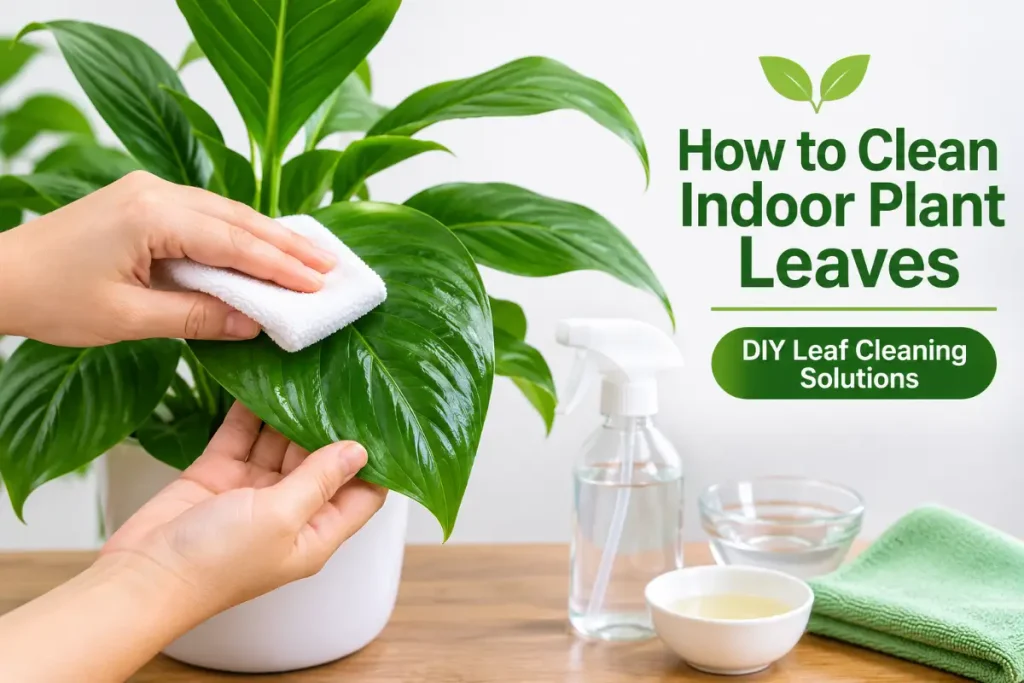
DIY Leaf Cleaning Solutions
Beyond plain water, several simple solutions enhance cleaning effectiveness for specific situations:
For mineral deposits (white water spots): Mix equal parts distilled white vinegar and water. Apply with a soft cloth, wipe gently, then follow with a plain water wipe to remove vinegar residue. The mild acid dissolves calcium and magnesium deposits from hard water. Use only on smooth-leafed plants — not hairy or textured leaves.
For sticky residue (honeydew from pest insects, cooking oils): One drop of mild dish soap per quart of warm water. Wipe, then rinse with plain water. Dish soap at this dilution removes grease and the sticky honeydew secreted by aphids and scale insects without harming plant tissue.
For pest prevention (monthly maintenance): Neem oil solution as described in Method 6 — 1 teaspoon neem oil, ½ teaspoon dish soap, 1 quart warm water. Both cleans and deters common pests.
For sensitive plants: Distilled water alone. For calatheas, orchids, and other plants sensitive to tap water minerals, distilled or reverse-osmosis water prevents the white spotting that tap water leaves on cleaned leaves.
Conclusion
Regular leaf cleaning is one of the simplest and most rewarding houseplant maintenance tasks. Learning how to clean indoor plant leaves correctly — matching the method to the plant’s leaf type — takes about five minutes per plant and visibly improves both appearance and health. The damp cloth wipe handles the majority of common houseplants; the dry brush protects fuzzy-leafed species; the shower rinse makes quick work of large multi-stemmed plants. Skip the commercial leaf shine products, use room-temperature water, and clean monthly as a default. Your plants will show the difference within a week as leaves resume their natural color and gloss.
For detailed guidance on overall houseplant maintenance and cultural care, the University of Florida IFAS Extension guide to interior houseplant care covers light, water, fertilization, and pest management for common indoor plants.
FAQs
How do you clean indoor plant leaves without damaging them?
Use a damp soft cloth for smooth-leafed plants, wiping from base to tip and supporting the leaf from underneath. For hairy or textured leaves, use a dry soft paintbrush instead of a damp cloth. Always use room-temperature water — never cold tap water directly on tropical plants.
Can I use milk to shine plant leaves?
Milk is sometimes recommended as a DIY leaf shine. It works short-term but leaves a protein residue that can clog stomata and attract fungal growth. A damp cloth wipe or banana peel delivers a natural-looking clean without the drawbacks.
How often should I clean my houseplant leaves?
Monthly is a good default for most houseplants. Plants near air vents, in kitchens, or in homes with pets may need cleaning every 2–3 weeks. The clearest signal is visible dust — if you can see it or feel it on the leaf surface, it’s time to clean.
Should I clean the underside of plant leaves too?
Yes — especially when using neem oil or checking for pests. Spider mites, aphids, and scale insects congregate preferentially on the underside of leaves. Regular underside cleaning with a damp cloth or neem solution is one of the best ways to catch pest infestations early.
What is the best way to clean large plant leaves?
A damp microfiber cloth is the most effective tool for large smooth leaves (monstera, rubber plant, fiddle-leaf fig). Support the leaf from below with one hand, wipe from base to tip in a single smooth stroke, and rinse the cloth between leaves.
Can I use olive oil to shine plant leaves?
No — oils applied to leaf surfaces coat the stomata and trap dust rather than repelling it. The initial shine fades quickly and leaves a sticky residue that collects more dust over time. A damp cloth is more effective and leaves no residue.
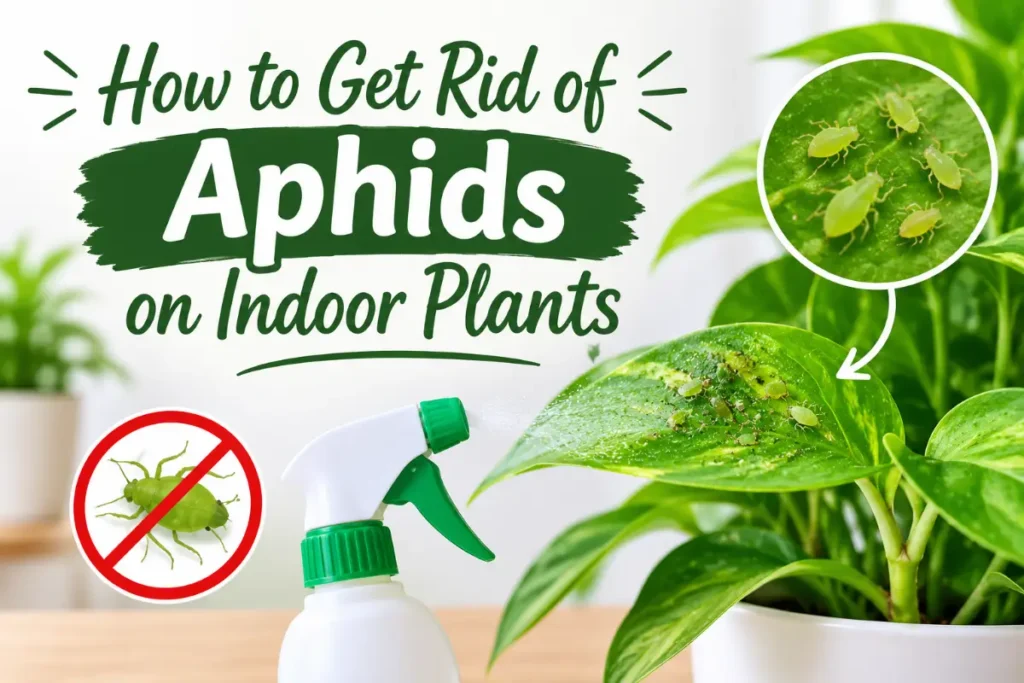
Pingback: Aphids on Indoor Plants: How to Kill Them Before They Spread (2026) - Plant Quill