
Every experienced houseplant grower has a version of the same story: a beautiful new plant brought home from a nursery, placed directly among the collection, and within a few weeks — spider mites, mealybugs, or scale spreading to plants that were healthy for years.
The fix is simple and takes under 30 minutes: quarantine every new plant, every time, without exception. These houseplant quarantine tips cover how long to quarantine, what to inspect and treat during the isolation period, which pests to prioritize, and the habits that prevent new introductions from becoming collection-wide infestations.
Why Quarantine Matters: How Pests Enter Your Collection
Understanding the introduction routes for houseplant pests makes quarantine feel less like paranoia and more like basic risk management.
New plant purchases are the primary introduction route. Commercial nurseries and garden centers grow plants at high density — hundreds of pots in close proximity — which allows pests to spread rapidly between plants. Even reputable suppliers occasionally sell plants with early-stage infestations that are not yet visible to the naked eye. Scale crawlers on a stem, mealybug eggs tucked in a leaf axil, spider mite eggs on a leaf underside — none of these are visible without a loupe, and all can establish a full infestation within 2–3 weeks of introduction to your home.
The common introduction pests:
- Mealybugs — the most frequently introduced pest; white cottony colonies are easy to miss at early stages in tight leaf axils and stem joints
- Scale insects — small brown bumps on stems that look like natural bark features; frequently overlooked by both nursery staff and buyers
- Spider mites — eggs are microscopic; a plant can appear clean and carry hundreds of eggs that hatch within days at home
- Fungus gnats — larvae already in the nursery potting mix; adults emerge at home and spread to neighboring pots
- Thrips — often introduced on flowering plants; eggs are inserted inside plant tissue and are completely invisible
Other introduction routes (less common but real):
- Cut flowers and outdoor plants brought inside seasonally
- Plants received as gifts or from other growers
- Reused pots and tools from an infested plant
- Open windows during summer (thrips and aphids are common outdoors and can fly inside)
How Long to Quarantine a New Houseplant
The quarantine duration needs to be long enough to allow any eggs present at introduction to hatch into visible nymphs or larvae — so you can detect and treat them before they reproduce and spread.
Minimum quarantine period: 2 weeks Two weeks allows one full generation of most common houseplant pests to progress from egg to detectable nymph. This is the minimum for low-risk plants purchased from reputable sources when you have thoroughly inspected and pre-treated the plant on arrival.
Recommended quarantine period: 4 weeks Four weeks provides a substantial safety margin that covers the egg-to-first-reproduction cycle of mealybugs (the slowest reproducing of the common pests at typical home temperatures). Two complete inspection cycles at the 2-week and 4-week marks provide high confidence that any pest present has been detected.
Extended quarantine: 6+ weeks Warranted for plants purchased from unknown or less reputable sources, plants that showed any signs of infestation at purchase (even treated), tropical plants with dense growth that provides many hiding sites, and any plant joining a large or particularly valuable collection.
The key principle: The quarantine period is not just waiting — it is an active inspection and treatment period. A plant sitting unexamined in another room for 4 weeks is not a quarantine; it is just a delay. The value of quarantine comes from the inspection and pre-treatment performed during that period.
Setting Up a Quarantine Space
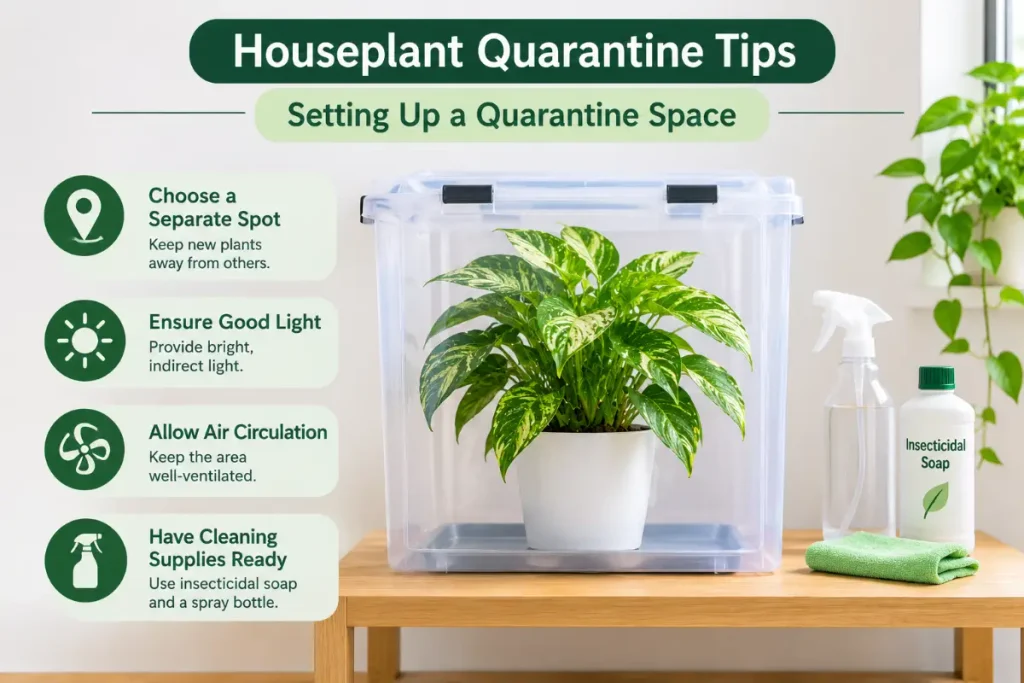
Effective quarantine requires physical separation from your existing collection — not just a different shelf in the same room.
What counts as adequate separation:
- A separate room with the door closed — a bathroom, spare bedroom, home office, or laundry room
- A garage or basement space with adequate temperature (above 55°F for most tropical plants)
- An enclosed porch or sunroom if the temperature range is appropriate
What does NOT count as adequate separation:
- A different shelf in the same room as your collection — spider mites, mealybug crawlers, and thrips can travel this distance on their own or on air currents
- A windowsill on the other side of the room — same problem
- “Near” the collection rather than “with” it
Quarantine space requirements:
- Adequate light — the quarantine space needs enough light to keep the plant healthy during the isolation period; a grow light on a timer works well for a bathroom or interior room without natural light
- Appropriate temperature — most tropical houseplants need temperatures above 60°F; avoid cold basements or unheated garages in winter
- Easy cleaning access — you will be doing inspections and treatments here; having a surface you can wipe down easily is helpful
The Arrival Inspection: What to Do When a New Plant Comes Home
The arrival inspection is the most important step in the quarantine process. Done thoroughly, it catches most established infestations before they ever enter your home.
Before the plant comes inside:
- Inspect in good natural light outdoors or in a garage before bringing the plant inside — this is the last moment to catch visible pests without risk to your collection
- Check the potting mix surface for fungus gnat adults (small dark flies) and white fuzz (mealybugs or saprophytic fungus suggesting overwatering)
- Run your fingers along the main stems — feel for scale bumps (small, raised, rough)
- Check all leaf axils and stem joints for white cottony material (mealybugs) or fine webbing (spider mites)
- Flip several leaves and check undersides along the midrib and veins for scale bumps, mealybug colonies, and stippling (spider mite feeding damage)
Using a loupe: A 10× magnifying loupe ($10–$15 on Amazon) transforms plant inspection. Under a loupe, spider mite eggs, scale crawlers, and early mealybug nymphs are clearly visible. Investing in a loupe and using it at every quarantine inspection is one of the best single upgrades a serious plant grower can make to their pest management routine.
After inspection, before placing in quarantine:
- Remove any visible pests with 70% isopropyl alcohol on a cotton swab
- Wipe all stems and leaf axils with an alcohol-dampened swab regardless of visible pests (preventive)
- Apply a neem oil spray to all leaf surfaces (top and undersides) and stems
- Apply a Bti soil drench (Mosquito Bits: 1 tablespoon per gallon of water) to address fungus gnat larvae in the nursery potting mix
- Place yellow sticky traps in the quarantine space near the new plant
The Quarantine Inspection Schedule
Week 1–2 (arrival through day 14):
- Day 1: Full arrival inspection and pre-treatment as above
- Day 7: Check yellow sticky traps for fungus gnats; inspect leaf axils and stem joints with loupe; apply second neem oil spray if first inspection was clean; re-apply Bti drench
- Day 14: Full inspection with loupe — this is the most important inspection of the quarantine period; mealybug eggs hatch within 10–14 days, so any that were present at purchase are now visible nymphs
Week 3–4 (day 15–28):
- Day 21: Inspect again; treat any pest found; apply third neem oil spray
- Day 28: Final full inspection with loupe — if two consecutive full inspections (day 14 and day 28) are completely clean with no live pests detected, the plant is safe to introduce to the collection
If pests are found during quarantine: Treat immediately with the appropriate method (isopropyl alcohol for mealybugs, neem oil for spider mites, Bti drench for fungus gnats) and restart the 2-week clock from the date treatment was completed. The plant is not ready for introduction until two consecutive clean inspections have passed after the last visible pest was eliminated.
Pre-Treatment During Quarantine: What to Apply
Applying preventive treatments during quarantine reduces the risk of introducing pests even when the initial inspection is clean.
Neem oil spray (apply weeks 1 and 3): 1 teaspoon cold-pressed neem oil + ¼ teaspoon dish soap + 1 quart water. Spray all surfaces including leaf undersides and stems. Neem’s azadirachtin disrupts the development of any insect life stages present, including those too small to see at inspection.
Bti soil drench (apply at arrival and week 2): Mosquito Bits (available at Home Depot and Lowe’s for $8–$15): 1 tablespoon per gallon of water, soaked 30 minutes, then applied as normal watering. Kills any fungus gnat larvae in the nursery potting mix — extremely common in plants purchased from large garden centers.
Isopropyl alcohol wipe (apply at arrival): 70% isopropyl alcohol on a cotton swab, wiped along all stem joints and leaf axils. Kills any mealybugs, scale crawlers, or aphids present on accessible surfaces regardless of visibility.
Repotting (optional but strongly recommended): Repotting a new plant into fresh potting mix during quarantine removes the nursery growing medium — which may carry fungus gnat larvae, root mealybugs, shore flies, and other soil-dwelling pests. Inspect the roots during repotting: white cottony material on roots confirms root mealybugs; treat before repotting as described in the mealybug management guide.
Tools and Supplies for an Effective Quarantine
Having the right tools assembled before a new plant arrives removes the friction that causes growers to skip quarantine steps.
Essential tools:
10× magnifying loupe — The single most important investment for plant pest management. Available on Amazon for $10–$15. Under a loupe, spider mite eggs (tiny white specks on leaf undersides), scale crawlers (amber dots moving along stems), and early mealybug nymphs (crawlers smaller than a pinhead) are clearly visible. Without a loupe, early-stage infestations are virtually undetectable and quarantine inspections are significantly less reliable.
70% isopropyl alcohol and cotton swabs — The standard arrival treatment tool. Keep a bottle and a box of swabs near your quarantine space at all times. 70% isopropyl is available at every drugstore in the US for $1–$2 per bottle.
Small spray bottle — For mixing and applying neem oil solution. A 32-oz spray bottle ($3–$5 at any hardware or garden center) is the right size for a standard neem oil batch.
Cold-pressed neem oil — Available at Home Depot, Lowe’s, Amazon, and The Sill. Dyna-Gro Pure Neem Oil is a widely available and effective US brand. Buy a small bottle (8 oz, $10–$12) — a little goes a long way, and neem oil degrades over time once opened.
Mosquito Bits (Bti) — Available at Home Depot and Lowe’s for $8–$15 per bag. One bag lasts many months of treatment.
Yellow sticky traps — Place one in the quarantine space near new plants to monitor for fungus gnats during the isolation period.
A dedicated quarantine pot and saucer — If you plan to repot during quarantine (recommended), have a clean pot and fresh potting mix on hand so repotting can happen immediately on arrival. Using a quarantine-dedicated pot means you do not risk contaminating other pots in your collection.
Optional but useful:
- A small grow light on a timer for quarantine spaces without adequate natural light ($20–$40 for a basic LED clip-on grow light at Amazon or Walmart)
- A plant journal or simple notes app for recording arrival date, inspection dates, and treatments applied
Maintaining these houseplant quarantine tips supplies as a ready kit — rather than scrambling to find alcohol or neem oil when a new plant arrives — means the 10-minute arrival routine actually takes 10 minutes rather than 45.
Common Mistakes in Houseplant Quarantine
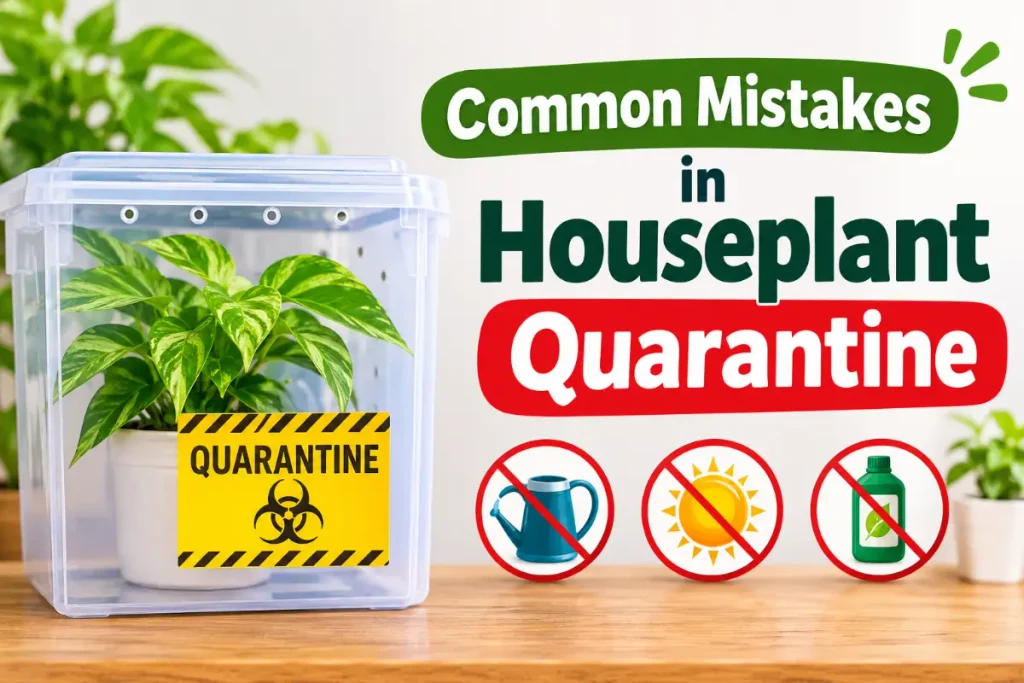
The most common reasons quarantine fails to prevent pest introduction:
Skipping quarantine for plants from “good” sources. No source is completely reliable. Reputable nurseries, local plant swaps, online plant sellers, and even plant enthusiasts with clean collections occasionally send plants with early pest stages that neither they nor you detected. The quarantine rule is not about distrust — it is about the statistical reality that visual inspection at purchase misses a significant percentage of early infestations.
Quarantine in the same room as the collection. Physical separation means a different room with a closed door. Many growers put the new plant “off to the side” in the same room, which provides no meaningful barrier against pest migration.
Skipping the arrival inspection. The 10–15 minutes spent on a thorough arrival inspection catches the majority of detectable infestations before they ever enter the quarantine space. Many growers rush this step — the result is treating an established infestation 3 weeks later instead of an early-stage one at arrival.
Ending quarantine based on appearance rather than inspection schedule. A healthy-looking, pest-free-appearing plant at day 10 may have mealybug eggs that hatch at day 12 and become clearly visible colonies by day 18. Complete the full 4-week schedule and do the loupe inspection at day 14 and day 28 before introducing the plant.
Not treating during quarantine — just waiting. Waiting 4 weeks without inspection or treatment provides much weaker protection than an active quarantine with pre-treatment. A light mealybug infestation at arrival, untreated, is a heavy infestation at day 28.
Good Houseplant Quarantine Tips to Build Into Your Routine
The most effective quarantine is one that becomes automatic — not a special procedure for suspicious plants but the standard first step for every new plant.
The 10-minute arrival routine: Inspect outdoors → alcohol wipe all stems and leaf axils → neem oil spray → Bti drench → place in quarantine room with sticky trap. Done in 10 minutes, every time.
Keep quarantine supplies ready: A bottle of 70% isopropyl alcohol, cotton swabs, a small spray bottle with premixed neem solution (or the ingredients to mix it), and Mosquito Bits are all the supplies needed. Keep them together near the quarantine space.
Use the quarantine period to research the plant: Four weeks of quarantine is a good time to research the specific care requirements, common pests, and growth habits of a new species — so when it joins the collection, you already know what to watch for and which pests are most likely to arrive on that particular plant family. A new citrus plant warrants extra mealybug vigilance; a new orchid warrants extra attention to Boisduval scale on pseudobulbs; a new fern warrants close inspection of the rhizome base where both mealybugs and scale tend to settle first.
Photograph the plant at arrival: A dated photograph at arrival gives you a visual baseline — useful for comparing growth progress and also for identifying when new damage appears versus pre-existing marks from nursery growing conditions. Close-up photos of stem joints and known mealybug-prone sites are especially useful for comparison at the week-2 inspection.
Conclusion
These houseplant quarantine tips — consistent 4-week isolation in a separate room, thorough loupe inspection at arrival and at the 2-week mark, and preventive alcohol, neem, and Bti treatment during the quarantine period — are the most effective single system a houseplant grower can adopt to protect an existing collection from new pest introductions. Quarantine does not guarantee zero pests, but it converts pest introduction from an invisible, collection-threatening event into a detectable, manageable situation caught before it spreads.
For evidence-based pest management guidance for houseplants and interiorscape plants, the Ohio State University Extension guide to common houseplant insects covers identification, biology, and IPM strategies for the full range of pests likely to arrive on newly purchased plants in US collections.
FAQs
How long should I quarantine a new houseplant?
Quarantine new houseplants for a minimum of 2 weeks, ideally 4 weeks. Two weeks allows most common pest eggs to hatch into visible nymphs; 4 weeks provides a full safety margin that covers the reproductive cycle of slower pests like mealybugs. During quarantine, inspect with a loupe at day 14 and day 28 and treat any pests found before introducing the plant to your collection.
Where should I put a plant in quarantine?
Put quarantined plants in a completely separate room from your existing collection — a bathroom, spare bedroom, or home office with the door closed. A different shelf or corner of the same room does not provide adequate separation; crawling pests like mealybug crawlers and spider mites can travel shelf-to-shelf distances on their own.
Do I need to quarantine plants from reputable nurseries?
Yes. No source — including reputable local nurseries, well-regarded online sellers, or plant enthusiasts with clean collections — is completely free of risk. Visual inspection at the point of sale misses a significant percentage of early-stage infestations. The quarantine habit protects your collection from the statistical certainty that some proportion of purchased plants will carry pests below the threshold of visual detection.
What should I treat a new plant with during quarantine?
Apply a 70% isopropyl alcohol wipe to all stems and leaf axils on arrival, a neem oil spray on week 1 and week 3, and a Bti soil drench (Mosquito Bits) on arrival and week 2. These three treatments together address mealybugs and scale (alcohol), flying and foliar insects at all life stages (neem), and fungus gnat larvae in the nursery potting mix (Bti) — covering the most common introduction pests comprehensively.
Should I repot a new plant during quarantine?
Repotting during quarantine is optional but strongly recommended. It removes the nursery potting mix, which commonly carries fungus gnat larvae, root mealybugs, and shore flies that are impossible to detect without unpotting. Inspect the roots during repotting — white cottony material on roots confirms root mealybugs and should be treated before repotting in fresh mix. Use quarantine as the natural time for repotting since you are handling the plant anyway.