
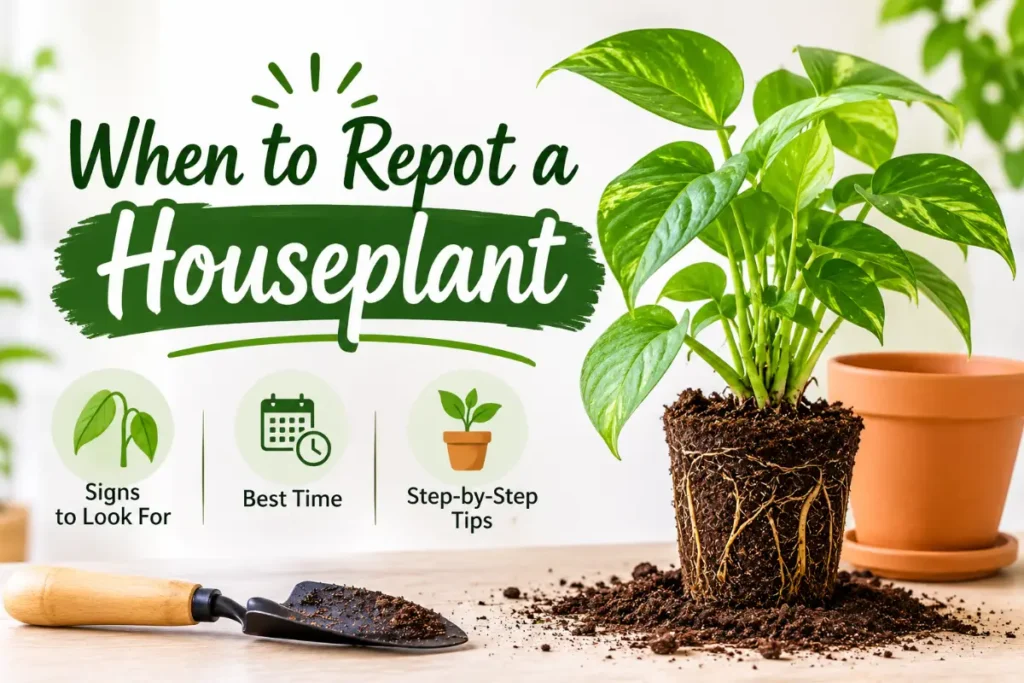
Repotting is one of the most misunderstood tasks in houseplant care. Some growers repot on a fixed schedule regardless of whether the plant actually needs it; others wait so long that the plant is visibly suffering before they act. Knowing when to repot a houseplant comes down to reading the plant itself — the signs it gives you through its roots, its growth rate, its watering behavior, and sometimes its appearance — rather than following a calendar. Most houseplants need repotting every 1–2 years, but that varies significantly by species, pot size, growing conditions, and how vigorously the plant is growing.
The goal of repotting is not simply to give the plant more room — it is to refresh the growing medium, improve drainage, support continued root development, and in some cases correct problems caused by poor potting mix or previous pest activity. A plant that has been in the same potting mix for three or more years is growing in a medium that has broken down, lost its structure, compacted around the roots, and lost most of its original nutrient content. Even if the plant has not outgrown its pot in terms of root mass, the degraded potting mix is reason enough to repot.
This guide covers every sign that tells you a repot is due, the best time of year to do it, the step-by-step process, and the mistakes that cause post-repotting problems. If you have recently dealt with pests in the soil — fungus gnats are a common reason to refresh potting mix — repotting gives you the opportunity to start fresh with clean, dry medium and address any root damage at the same time.
Signs Your Plant Needs Repotting
Roots Coming Out of Drainage Holes
The most obvious sign: roots visibly emerging from the drainage holes at the bottom of the pot. This tells you the root system has completely filled the available space in the pot and is seeking more room below. It does not necessarily mean the plant is in crisis — plants can survive in this state for some time — but it is a clear signal that repotting is overdue.
One note: some plants produce roots that naturally seek water and trail toward drainage holes even when the pot is not fully root-bound. Check by gently unpotting the plant — if the root ball holds the shape of the pot and the roots are circling or matted at the bottom, it is root-bound. If the potting mix falls away easily and roots are sparse, the drainage roots are exploratory rather than a sign of overcrowding.
Roots Circling the Surface or Pushing Out the Top
Roots visible at the soil surface — circling the base of the stem or pushing up through the top of the potting mix — indicate the root system has nowhere left to grow downward and is turning back on itself. Surface roots are a reliable signal that the root ball has filled the pot.
Water Running Straight Through
When you water and the water drains through the pot within seconds of application — with little absorption — the potting mix has either compacted into a hydrophobic state or the root mass has become so dense that there is virtually no potting mix left to hold water. Both scenarios call for repotting. This symptom is easy to miss because the pot drains freely and seems to be working, but the plant is actually getting very little water from each watering session.
The Plant Drying Out Much Faster Than Before
A plant that previously needed watering once a week but now needs watering every 2–3 days has likely become root-bound. A large root mass relative to the volume of potting mix means less moisture-retaining medium and faster drying. If watering frequency has increased significantly without a change in season, light level, or temperature, check the roots.
Stunted Growth Despite Good Care
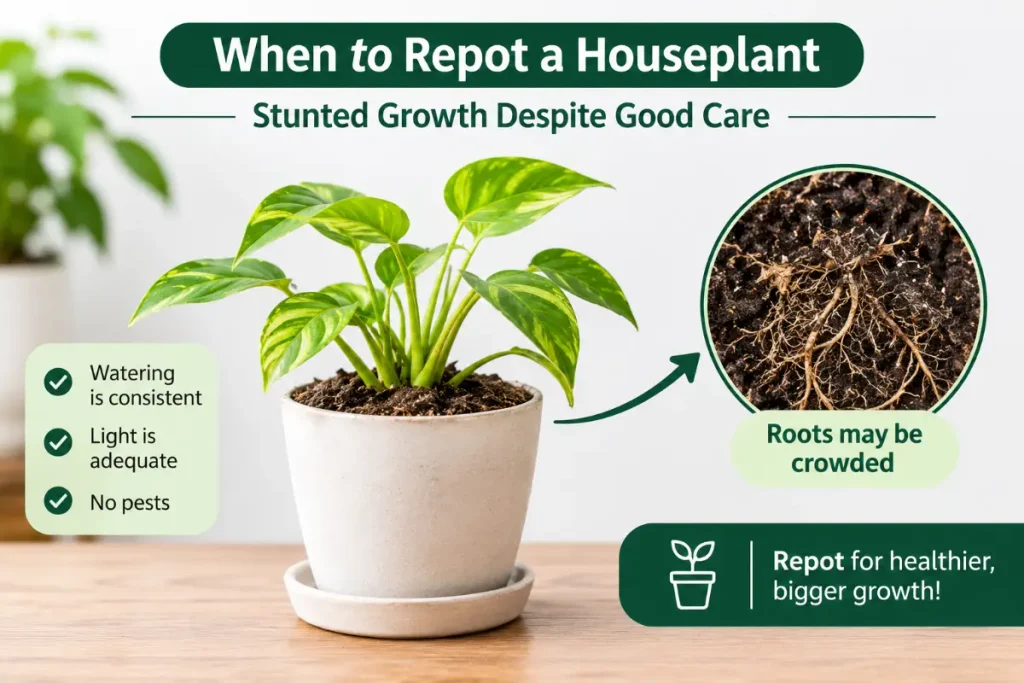
A plant that has stopped growing — no new leaves, no extension of existing stems — during the growing season (spring and summer in the US) despite adequate light, watering, and fertilizing may be root-bound. When roots have no room to expand, top growth slows or stops. Stunted growth is one of the less specific signs (it can also indicate insufficient light, pests, or root rot), so check the roots to confirm.
Visible Salt and Mineral Buildup
A white crust on the potting mix surface or on the outer rim of terracotta pots is mineral salt accumulation from tap water and fertilizer. Heavy salt buildup over time creates osmotic stress that inhibits root function. While you can flush salts by running water through the pot, severe buildup after several years in the same mix is a signal that a full mix refresh is needed.
The Pot Has Cracked
A pot that has cracked or deformed — particularly a plastic or thin ceramic pot — has likely been cracked by root pressure from a severely root-bound plant. This is a clear sign that repotting is urgently needed; the structural integrity of the pot is compromised and the plant’s roots have outgrown it beyond the point of normal management.
When NOT to Repot
Understanding when to hold off is as important as knowing when to repot.
During winter dormancy: Most houseplants (even tropical species) slow their growth significantly in winter due to reduced light intensity. Repotting during low-light winter months means the plant cannot recover from root disturbance quickly — new root growth, which requires energy from photosynthesis, is minimal. Wait until late February or March when day length is increasing.
When the plant is stressed: A plant that is wilting from drought, recovering from a pest infestation, or showing signs of root rot is already stressed. Adding the additional stress of repotting — which disrupts roots and temporarily reduces water and nutrient uptake — risks pushing the plant past its recovery threshold. Stabilize the plant first; repot once it is showing signs of recovery.
When blooming: Repotting a plant while it is actively flowering causes premature flower drop in most species. Wait until flowering is complete. The exception: an orchid showing clear signs of severe root damage where delay risks the plant’s survival — in that case, repot despite the flowers.
When the pot is barely full: Some plants perform best when slightly root-bound — peace lilies, spider plants, and Boston ferns flower most reliably when pot-bound. And many tropical plants simply do not need frequent repotting. If the plant is healthy, growing well, and watering behavior is normal, there is no reason to repot just because a year has passed.
The Best Time of Year to Repot
Spring is ideal for the vast majority of houseplants. Repotting in late February through April (in US climates) aligns with:
- Increasing day length that provides more light for photosynthetic recovery
- Rising temperatures that support root growth
- The beginning of the active growing season, when new root growth is fastest
A plant repotted in spring has the entire growing season ahead of it to establish in its new potting mix before the lower-light conditions of winter arrive.
Early summer is acceptable for plants that were not ready to repot in spring, or for fast-growing tropicals that have outgrown their pots quickly.
Fall repotting is suboptimal but sometimes necessary — if a plant is severely root-bound in September, waiting until spring risks further decline. Fall repots work but require more careful watering management through winter, since the new potting mix retains moisture longer than a fully rooted mix.
Summer repotting in high heat (above 85°F) stresses plants because transpiration demand is highest when root function is temporarily disrupted. If summer repotting is necessary, do it on a cool day or in the cooler part of the morning.
How to Repot: Step by Step
What you need:
- New pot (1–2 inches larger in diameter than the current pot — see the guide on choosing the right pot size for repotting for more detail)
- Fresh potting mix appropriate for the plant (do not reuse old mix)
- Water
- Clean scissors or pruning shears
Steps:
- Water the plant 1–2 days before repotting — a lightly hydrated root ball slides out of the pot more easily than a bone-dry one and is less prone to breakage during handling. Do not water immediately before repotting — a waterlogged root ball is heavy and the potting mix clings to roots.
- Remove the plant from its pot — tip the pot sideways and gently slide the plant out. For a stubborn root-bound plant, run a butter knife around the inside edge of the pot to break the seal between root ball and pot wall. For plastic pots, squeeze the sides to loosen.
- Inspect the roots — look for brown, mushy roots (root rot — trim these back to healthy white tissue with sterilized scissors); circling roots that are girdling the base (untangle or cut these to prevent long-term structural issues); and root mealybugs (white cottony material on roots — treat before repotting as described in the guide on treating mealybugs in soil).
- Loosen the root ball — gently break apart the outer root mass with your fingers to free circling roots and shake away some of the old potting mix. You do not need to remove all the old mix — just enough to allow new mix to fill in around the edges.
- Add fresh mix to the new pot — place enough potting mix in the bottom of the new pot so that when the plant is set inside, the top of the root ball sits 1 inch below the rim of the pot (to allow watering without overflow).
- Position the plant and fill in — set the plant in the center and fill in around the root ball with fresh potting mix, pressing gently to eliminate large air pockets. Do not pack the mix hard — it needs some structure but should not be compacted.
- Water thoroughly — water until it drains freely from the drainage holes to settle the potting mix and restore root-to-mix contact.
- Place in indirect light for 1–2 weeks — newly repotted plants benefit from slightly lower light than their normal position while roots re-establish. Avoid direct sun immediately after repotting.
Common Repotting Mistakes
Going too large with the new pot. The most common repotting mistake. A pot that is much larger than the root ball holds excess potting mix that stays wet between waterings — creating the conditions for root rot. Go up only 1–2 inches in pot diameter.
Using old or reused potting mix. Old potting mix is compacted, depleted of nutrients, and may harbor pest eggs and pathogens. Always use fresh mix for repotting. If the previous plant had scale insects or other pests, also sterilize the pot before reuse.
Not watering before repotting. Dry root balls break apart during handling, damaging fine feeder roots. Water 1–2 days before to make the root ball manageable.
Repotting into a pot without drainage. Every pot used for repotting must have drainage holes. Pots without drainage accumulate anaerobic conditions at the bottom that cause root rot. If you want to use a decorative pot without drainage, use it as a cachepot — place the plant in a correctly sized nursery pot with drainage inside the decorative one.
Fertilizing immediately after repotting. Fresh potting mix contains starter nutrients; the disturbed root system is not in a state to process additional fertilizer. Wait 4–6 weeks before resuming fertilizing after a repot.
Repotting by Plant Type: What to Expect
Not all houseplants follow the same repotting timeline. Knowing when to repot a houseplant correctly depends heavily on the species — fast-growing tropicals and slow-growing succulents have very different needs.
Fast-growing tropicals (pothos, philodendron, monstera, tradescantia): These plants actively colonize their root space and may need repotting annually during peak growing years. Watch for the watering frequency signal — if a pothos that used to need weekly watering now needs it every 3–4 days, it has outgrown its pot. These species tolerate repotting well and recover quickly; spring repotting is ideal but early summer works too for most.
Mid-rate growers (peace lilies, ZZ plants, rubber plants, bird of paradise): Repot every 18–24 months on average, but always let the plant’s behavior guide you rather than the calendar. ZZ plants are notably tolerant of being pot-bound and can go 2–3 years without repotting while remaining healthy. Bird of paradise actually performs better slightly root-bound — it blooms more reliably and grows more upright when the root system is moderately constrained.
Slow growers (snake plants, succulents, haworthia, agave): These plants grow slowly and need repotting infrequently — often every 3–5 years for established plants. For succulents, the main reason to repot is usually degraded potting mix (which becomes compacted and poorly draining over time) rather than root space. When a succulent shows the classic root-bound signs, the new pot needs to be appropriately sized — going too large with a succulent in poorly draining mix is a reliable way to cause root rot.
Orchids (phalaenopsis, dendrobium): Repotting timing for orchids differs from other houseplants. The standard guidance for phalaenopsis is to repot every 1–2 years, ideally immediately after the blooming cycle ends — before new root growth begins. The trigger is usually degraded bark medium (which breaks down into a water-retaining, low-aeration state) rather than root mass. Orchid roots growing outside the pot are normal and do not indicate overcrowding.
Cacti: Cacti are slow-growing and can tolerate being pot-bound for extended periods. Repot when roots are emerging from the drainage holes or when the cactus has become visibly top-heavy and unstable in its pot. Use cactus-specific potting mix (or a 50/50 potting mix and coarse perlite blend) and always wear thick gloves or use folded newspaper to handle spiny species.
Houseplants That Rarely Need Repotting
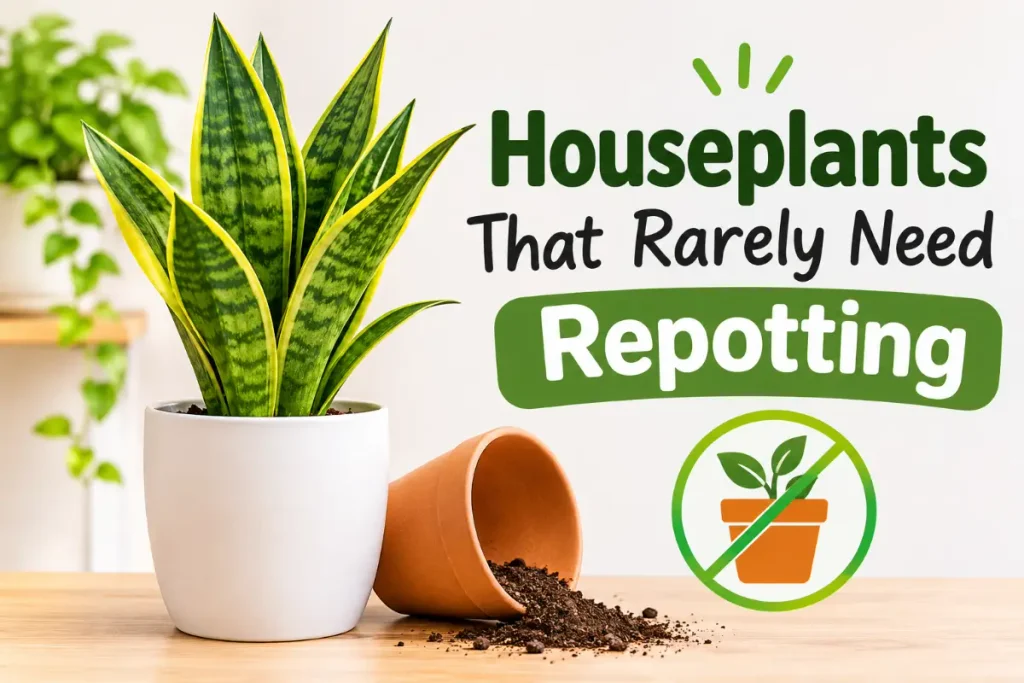
Some species are genuinely low-maintenance when it comes to repotting — either because they grow slowly, perform well when root-bound, or tolerate degraded potting mix better than other species.
Snake plants (Sansevieria/Dracaena trifasciata): One of the most pot-tolerant houseplants. Snake plants can remain in the same container for years without declining. They do eventually need repotting — a cracked plastic pot from root pressure is a common sign — but the timeline is long. When you do repot, go up only one pot size and use a well-draining potting mix.
ZZ plants (Zamioculcas zamiifolia): Their fleshy rhizomes store water and nutrients, making them highly tolerant of both drought and root crowding. ZZ plants are frequently repotted unnecessarily by growers who misread their slow growth as a problem. If the plant is healthy and not showing root-bound signs, leave it alone.
Peace lily (Spathiphyllum): Peace lilies bloom most reliably when slightly root-bound. Unless the plant is severely overcrowded, watering daily, or roots are splitting the pot, leave it in its current container. The focus for peace lily care is usually watering consistency and humidity rather than pot size.
Cast iron plant (Aspidistra elatior): True to its name — extremely tolerant of neglect, including being pot-bound. These plants grow slowly and can remain in the same pot for many years without issue.
Understanding which plants rarely need repotting helps clarify when to repot a houseplant and when to leave it alone — focusing your repotting efforts where they make the most difference — on fast-growing species that actually benefit from more frequent root space — rather than disturbing slow growers unnecessarily.
Conclusion
Knowing when to repot a houseplant is about observation — watching how the plant drinks, how quickly it dries out, whether growth has stalled, and what the roots look like when you check. The signs are clear once you know what to look for. Spring is the ideal window for most plants, fresh potting mix makes a significant difference, and going up only one pot size keeps the root-to-mix ratio appropriate. Done at the right time and in the right way, repotting is one of the most beneficial things you can do for a plant’s long-term health.
For science-based guidance on potting media, container selection, and plant repotting for indoor growing, the University of Illinois Extension guide to growing houseplants covers container selection, potting media, and repotting timing with practical guidance for US home growers.
FAQs
How do I know if my plant needs repotting?
The clearest signs are roots growing out of the drainage holes, roots circling visibly at the soil surface, water running straight through the pot without absorbing, and the plant drying out much faster than it used to. Any one of these is a strong signal; two or more together means repotting is overdue.
How often should you repot houseplants?
Most houseplants benefit from repotting every 1–2 years. Fast-growing plants (pothos, philodendron, monstera) may need it annually; slow-growing plants (snake plants, ZZ plants, some succulents) can go 3 years or more. The plant’s behavior tells you more reliably than a calendar — when it shows signs of being root-bound, repot regardless of how long it has been.
What is the best potting mix for repotting?
Use a fresh, high-quality potting mix appropriate for the plant type — a standard tropical mix for most foliage plants, with 20–30% added perlite for improved drainage. For succulents and cacti, use a dedicated succulent mix or a 50/50 blend of potting mix and coarse perlite. Never use garden soil in pots — it compacts severely and does not drain adequately for container growing.
Can you repot a plant in fall or winter?
Repotting in fall or winter is not ideal but is sometimes necessary for a severely root-bound or ailing plant. If you must repot in winter, water less frequently after repotting (the new mix retains moisture longer without an established root mass to absorb it), keep the plant in a warm spot, and avoid fertilizing until spring.
Should you water a plant right after repotting?
Yes — water thoroughly after repotting to settle the potting mix and restore contact between roots and new mix. After that initial watering, let the mix dry to the appropriate level for the plant before watering again. The main mistake after repotting is overwatering — the new mix retains moisture longer than a fully rooted one.
Pingback: Best Pot Size for Repotting Houseplants: 2026 Guide - Plant Quill