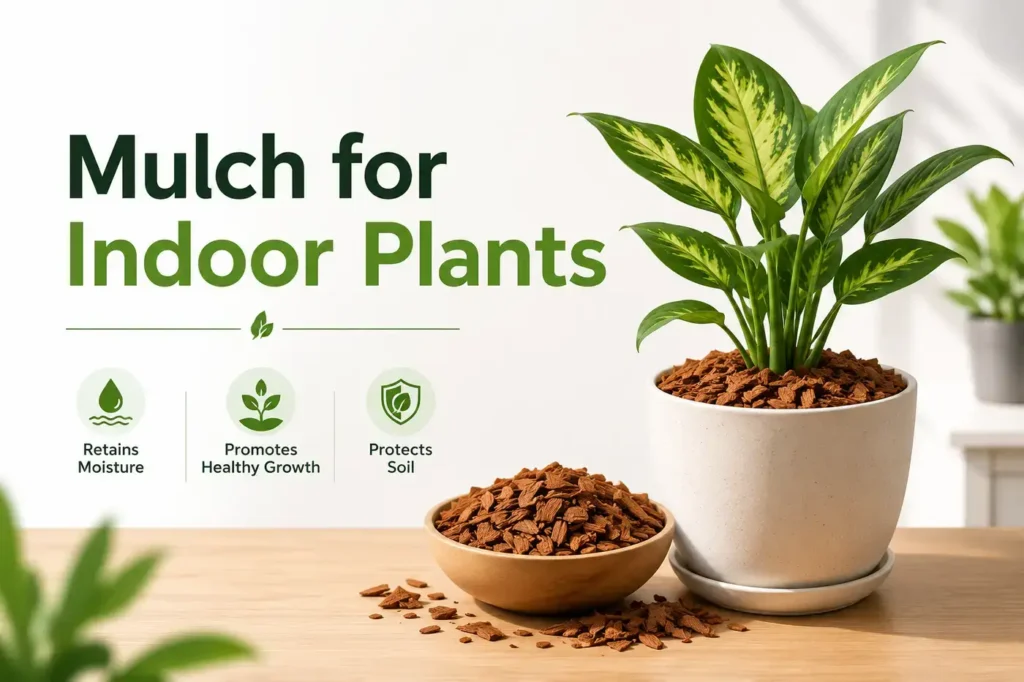
Mulch for indoor plants is one of those simple additions that makes a noticeable practical difference once you start using it. A thin layer of the right material on your potting soil surface slows moisture evaporation, reduces how often you need to water, suppresses the algae growth that shore flies feed on, and makes your pots look more finished and intentional. Most indoor plant owners skip this step entirely because mulching feels like an outdoor gardening practice, but the same principles apply inside and the benefits are just as real in a pot as they are in a garden bed.
The difference is that outdoor mulches like wood chips and bark nuggets are too large and too nutrient-heavy for most indoor pots. Indoor mulching requires lighter, finer materials applied in thinner layers than outdoor mulching. Get the material and depth right and the benefits follow automatically.
Quick Answer
The best mulches for indoor plants are coco coir, pebbles or gravel, sand, moss, worm castings, shredded bark, and decorative stones. Apply most materials at half an inch to one inch depth across the entire soil surface. Coco coir is the most broadly useful organic mulch for moisture retention. Pebbles and decorative stones work best for succulents and plants requiring excellent drainage. Avoid thick layers of any mulch since these create the waterlogged, oxygen-poor conditions that damage roots and attract fungus gnats.
Why Mulching Indoor Plants Is Worth Doing
The soil surface of an indoor plant pot is more active than it looks. Evaporation from the top inch of soil accounts for a significant portion of total water loss between waterings, particularly in homes with low humidity or heating systems running in winter. A thin mulch layer slows this evaporation dramatically and extends the time between waterings, which reduces the stress of drought and flood cycles that inconsistent watering creates.
Beyond moisture management, the soil surface is also where fungus gnats lay their eggs and where shore fly larvae feed on surface algae. A mulch layer that keeps the soil surface covered and dry disrupts both of these cycles without any chemical treatment. For the complete picture of soil surface pests that mulching helps control, bugs in indoor plant soil covers every species with specific guidance on surface management strategies.
The aesthetic benefit is real too. A pot with a clean, even mulch layer looks cared for in a way that bare potting mix does not, which matters for plants displayed prominently in living spaces.
7 Types of Mulch for Indoor Plants
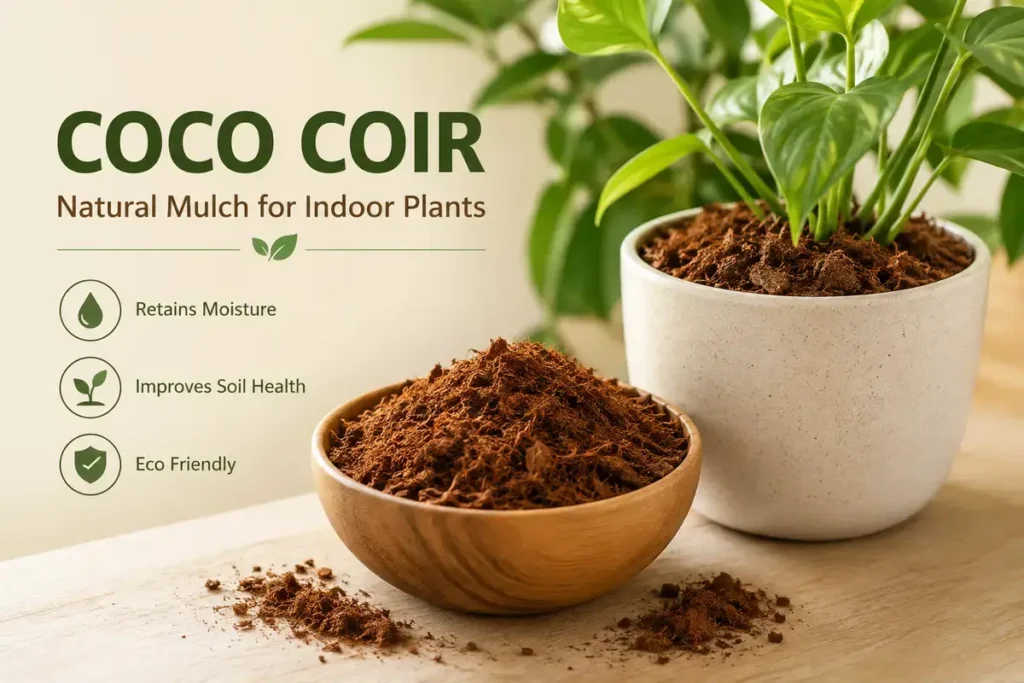
1. Coco Coir
Coco coir is the most practical organic mulch for indoor plants. It is lightweight, fine-textured, neutral in pH, and provides genuine moisture retention benefit while looking neat and natural on the soil surface. Unlike peat moss which repels water when it dries out, coco coir re-wets easily after drying and stays in place without compacting or blowing around when you water.
Benefits: Slows surface evaporation significantly. Discourages fungus gnat egg-laying by keeping the surface drier between waterings. Adds a small amount of organic matter to the potting mix over time as it breaks down.
How to apply: Spread a half-inch layer evenly across the soil surface and water normally through it. Replace every six to twelve months as it breaks down into the soil below.
Best for: Tropical foliage plants, ferns, and any plant that prefers consistent soil moisture. For a complete guide to using coco coir both as a mulch and as a soil amendment throughout the potting mix, coconut coir for indoor plants covers every application method with specific guidance.
2. Pebbles and Gravel
Small pebbles or horticultural gravel are the most popular decorative mulch for indoor plants and for good reason. They look polished and professional, they last indefinitely without breaking down, they allow excellent airflow at the soil surface, and they dry quickly after watering which actively discourages fungus gnat activity.
Benefits: Highly decorative. Dries quickly to reduce pest attraction at the soil surface. Lasts indefinitely without replacement. Works particularly well for succulents and cacti where surface drying after watering is important for plant health.
How to apply: Spread a half-inch to one-inch layer of small pebbles (approximately quarter-inch diameter or smaller for most indoor pots) evenly across the soil surface. Remove periodically to check soil moisture since the pebble layer makes it harder to assess moisture by touch.
Limitation: Does not improve moisture retention the way organic mulches do. For plants that need consistent moisture, pebbles slow surface evaporation less effectively than coco coir or moss.
Best for: Succulents, cacti, snake plants, ZZ plants, and any plant requiring excellent surface drainage. Also appropriate for decorative statement plants where the visual finish matters as much as the functional benefit.
3. Coarse Sand
A thin layer of coarse sand on the soil surface combines the quick-drying benefits of pebbles with a slightly finer appearance that suits smaller pots better than gravel. It is particularly effective for pest management since fungus gnats find it very difficult to push through dry coarse sand to lay eggs in moist soil beneath.
Benefits: Excellent pest deterrent. Dries quickly after watering. Inexpensive and widely available. Fine enough to look proportionate in smaller pots where gravel looks out of scale.
How to apply: Spread a quarter-inch to half-inch layer of coarse horticultural sand across the soil surface. Do not use fine beach or play sand since fine particles compact and can reduce drainage at the surface over time.
Best for: Any plant with fungus gnat problems. Succulents and cacti. Plants in small decorative pots where gravel would look too chunky.
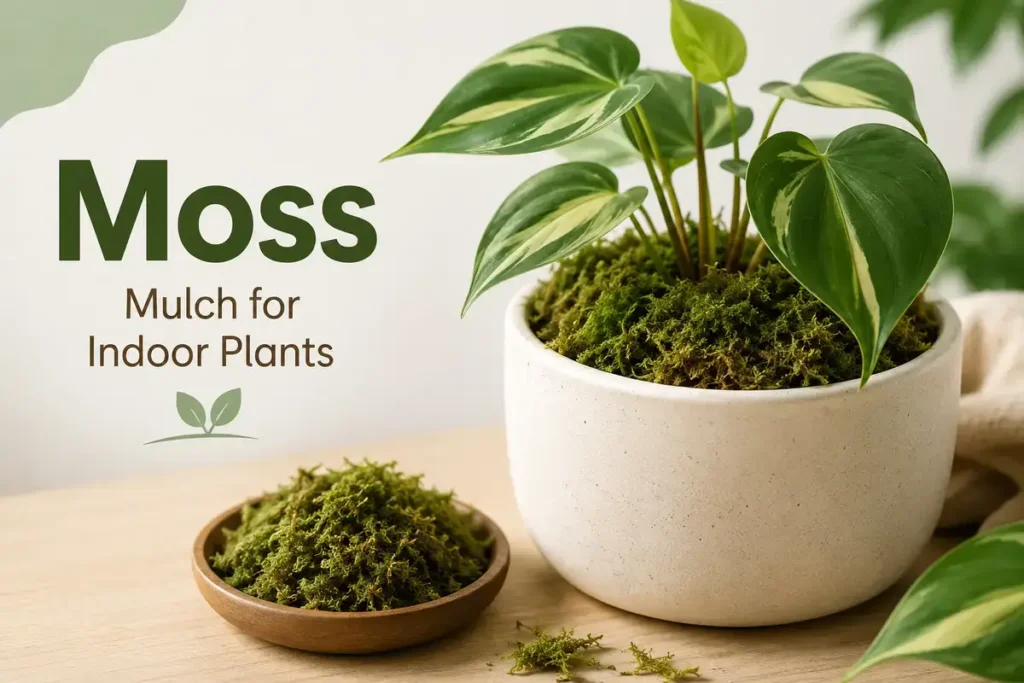
4. Moss (Sheet Moss or Preserved Moss)
Moss mulch is the most visually striking indoor plant mulch available and creates the lush, forest-floor aesthetic that makes tropical plant displays look genuinely professional. Both living sheet moss and preserved decorative moss work as surface coverings, though they serve slightly different purposes.
Living moss grows actively when kept moist and creates a genuinely living soil surface that improves the micro-environment for moisture-loving plant roots. It requires consistent moisture to stay green and alive.
Preserved moss (the dried, dyed moss sold at craft stores) is purely decorative. It does not grow or change but maintains its color and texture indefinitely with no watering requirements.
Benefits: Beautiful visual effect. Living moss indicates consistent moisture levels since it turns brown when the soil surface dries. Provides genuine moisture retention benefit for plants that prefer consistently moist conditions.
How to apply: Press moss gently onto the soil surface in small pieces, covering completely without packing tightly. Water normally through the moss layer. For living moss, maintain the higher moisture levels it needs without letting the overall pot become waterlogged.
Best for: Ferns, calatheas, peace lilies, and other moisture-loving tropical plants. Terrariums and enclosed plant displays where the visual effect is particularly important.
5. Worm Castings
Worm castings used as a top dressing function as a mulch that actively feeds the plant while covering the soil surface. Unlike decorative mulches that simply sit on the soil, worm castings release nutrition continuously as they are watered into the root zone below.
Benefits: Feeds the plant through every watering. Improves soil biology as the microbial community in the castings colonizes the potting mix below. No pest attraction since finished castings do not contain the fermenting organic matter that draws insects. Modest moisture retention benefit.
How to apply: Spread a half-inch layer evenly across the soil surface and water gently to begin moving nutrition downward. Replace every six to eight weeks through the growing season.
Best for: All houseplant types as a combined mulch and fertilizer layer. Particularly useful during the growing season when regular nutrition delivery alongside surface coverage provides double benefit from a single application. For everything worm castings do as both mulch and fertilizer, worm castings for indoor plants covers every benefit in full.
6. Shredded Bark or Orchid Bark Chips
Small bark chips or shredded bark provide a natural, woodland aesthetic that suits tropical plants well and breaks down gradually to add organic matter to the potting mix over time. The chip size matters significantly for indoor pot use: large outdoor bark chips are too bulky for most houseplant pots, but the small chips sold as orchid bark work well for medium to large pots.
Benefits: Natural appearance. Breaks down gradually to improve soil structure over time. Moderate moisture retention. Good airflow at the soil surface.
How to apply: Spread a half-inch layer of small bark chips evenly across the soil surface. Avoid piling bark against plant stems since consistent moisture contact at the stem base can encourage rot. Replace annually as chips break down.
Limitation: Larger chips can trap moisture unevenly and create wet pockets over some areas of the pot while leaving others dry. Check for even moisture distribution periodically.
Best for: Medium to large tropical foliage plants including monsteras, fiddle leaf figs, and bird of paradise where the natural aesthetic fits the plant’s visual character. Orchid pots as both surface mulch and potting medium.
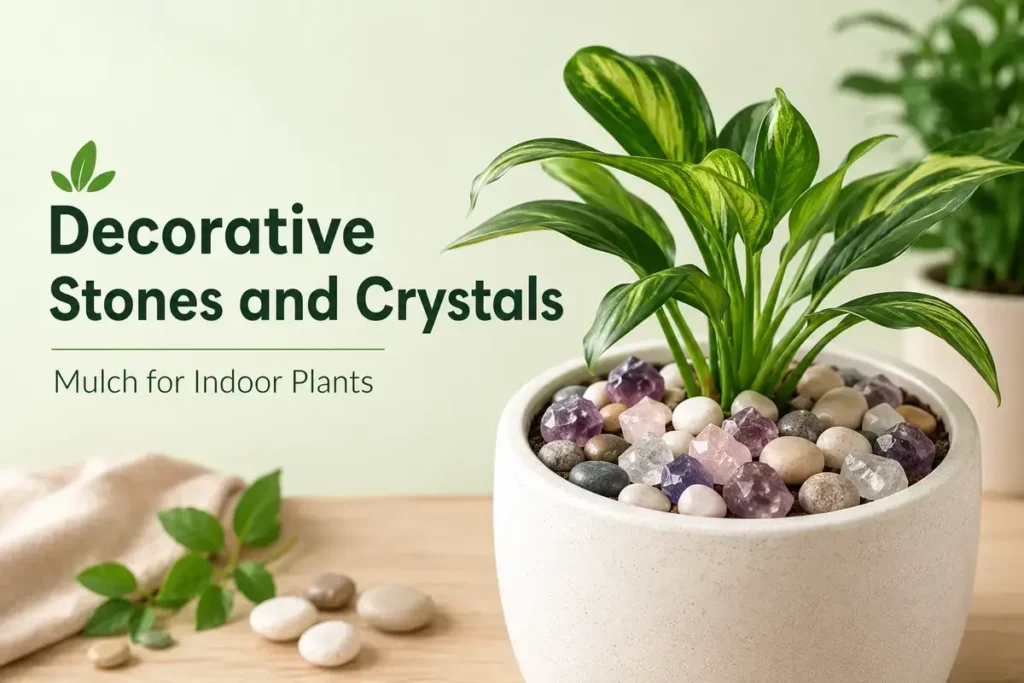
7. Decorative Stones and Crystals
Polished river stones, colored glass pebbles, and decorative crystals are the most design-forward mulch option for indoor plants. They function similarly to gravel in terms of plant benefit but with a significantly more intentional aesthetic impact that suits plants used as interior design elements.
Benefits: Indefinite lifespan. Highly decorative. Quick drying after watering discourages pest activity. Pairs well with minimalist and contemporary interior design styles.
How to apply: Place stones in a single layer across the soil surface. A single layer of polished stones looks more intentional than a deeper layer which can prevent adequate water delivery to the soil below. Water carefully at the pot edge rather than through the center of the stone arrangement to reach the soil evenly.
Limitation: Zero nutritional benefit. Does not improve moisture retention. Purely functional in terms of surface coverage and aesthetics. Heavier than other mulch options which makes repotting more cumbersome.
Best for: Statement plants in prominent locations where the pot as a whole is a design element. Succulents and cacti arrangements. Any plant where appearance in the living space matters as much as practical growing benefit.
How Deep Should Indoor Plant Mulch Be?
Depth is the variable that most determines whether mulch helps or harms your plant.
Half an inch to one inch is the correct depth for most organic and decorative mulches in indoor plant pots. At this depth, mulch slows surface evaporation, discourages pest egg-laying, and improves visual appearance without blocking water delivery or creating the waterlogged surface conditions that damage roots.
More than one inch creates problems. Thick mulch layers hold too much moisture against the soil surface, reduce oxygen reaching the top of the root zone, and can actually encourage the mold and fungus gnat problems you were trying to prevent. In small pots especially, more than one inch of mulch occupies soil volume that roots need.
Less than a quarter inch provides minimal functional benefit beyond aesthetics. A very thin layer of pebbles or sand might look nice but does not meaningfully affect moisture retention or pest deterrence.
When in doubt, apply less than you think you need and add more after seeing how the plant responds to the initial application.
Mulch and Watering: What Changes
Adding mulch to indoor plant pots changes how often watering is needed and how you assess moisture levels. Missing these adjustments leads to the overwatering that is the most common plant killer.
The moisture retention benefit of organic mulches like coco coir and moss means the soil stays moist longer than before mulching. Continuing to water on the same schedule you used before applying mulch will almost certainly overwater the plant.
After applying mulch, push the mulch aside before checking soil moisture rather than testing through it, since the mulch surface itself may feel dry while the soil below is still moist. Give it two to three weeks to find the new watering rhythm and expect to water noticeably less frequently than before.
For plants where you were already struggling with overwatering, mulching with pebbles or coarse sand (which reduce surface evaporation less than organic mulches) is a better choice than coco coir or moss which would extend drying time further in an already wet environment.
Mulch and Fertilizer: How They Work Together
One thing worth understanding is that mulch and fertilizer serve different purposes and work best when used together rather than treating one as a substitute for the other.
Mulch manages the physical environment at the soil surface. It controls moisture evaporation, surface temperature, pest access, and appearance. It does not provide meaningful nutrition to plant roots in most forms with the exception of worm castings.
Fertilizer delivers nutrition to plant roots. It does not control surface moisture, pest pressure, or pot appearance.
The two complement each other naturally. A plant with good mulch coverage needs less frequent watering, which means liquid fertilizer applied every two weeks stays in the active root zone longer rather than being flushed out by compensatory overwatering to re-wet dried soil. The more stable moisture environment that mulch creates also makes slow release fertilizer granules work more predictably since the gradual moisture-dependent release mechanism functions better with consistent watering patterns.
For the natural fertilizer options that pair best with an organic mulch layer to create a complete soil surface management approach, natural fertilizer for indoor plants covers every effective feeding approach including how worm castings as mulch compares to dedicated liquid fertilizer applications. For building the complete soil environment from potting mix components through surface mulch, soil mixture for indoor plants covers the foundation layer that any surface mulch sits on top of.
Seasonal Mulch Adjustments for Indoor Plants
The benefit mulch provides changes slightly through the year and adjusting your approach seasonally gets better results than treating it as a set-and-forget addition.
Spring and summer: The moisture retention benefit of organic mulches is most valuable during peak growing season when plants are actively photosynthesizing and transpiring water rapidly. A half-inch layer of coco coir or worm castings through these months reduces watering frequency while maintaining the consistent soil moisture that supports vigorous growth.
Fall: As plants slow their growth and indoor heating systems start running, low humidity accelerates soil surface drying. Maintaining mulch through fall prevents the rapid surface drying that triggers premature watering of plants that are actually slowing down and need less water than in summer.
Winter: Most houseplants need less water in winter as growth slows. Thick organic mulch that further slows drying can contribute to the overwatering risk that is highest during winter dormancy. Consider removing or thinning organic mulch in winter for plants prone to overwatering and replacing it with a thin pebble layer that maintains coverage without significant moisture retention.
Refreshing or replacing mulch in late winter before the growing season begins positions the plant with fresh surface coverage at exactly the point when the growing season benefits of mulch are about to matter most.
Conclusion
Mulch for indoor plants is a simple, low-effort addition that delivers real benefits: less frequent watering, fewer fungus gnats, better looking pots, and in the case of organic mulches like coco coir and worm castings, improved soil health over time.
The right choice depends on what you need most. Coco coir if moisture retention and organic matter are the priority. Pebbles or coarse sand if pest deterrence and quick drying matter most. Moss if aesthetics and moisture management for tropical plants are the goal. Worm castings if you want mulch that also feeds the plant through every watering.
Apply at half an inch to one inch depth, adjust your watering schedule to account for slower soil drying, and replace organic mulches annually as they break down. Those three simple practices are all that separates a mulched pot that thrives from one that just looks different from before.
Frequently Asked Questions
Can you use outdoor mulch on indoor plants?
Most outdoor mulches including large wood chips and bark nuggets are too coarse and too nutrient-heavy for indoor pot use. They decompose and release nutrients faster than potting mix can buffer, can introduce soil pests, and are physically too bulky for most houseplant pots. Use the smaller, finer materials described in this guide specifically chosen for indoor pot conditions.
Does mulch attract bugs to indoor plants?
Organic mulches applied at correct depth do not significantly increase pest attraction compared to bare potting soil. In fact, coarse sand and pebble mulches actively deter fungus gnats by keeping the soil surface drier and harder to penetrate for egg-laying adults. Thick layers of moist organic mulch can provide habitat for some soil insects, which is why keeping mulch depth to half an inch and allowing the surface to dry between waterings prevents this problem.
How often should I replace mulch on indoor plants?
Organic mulches including coco coir, worm castings, shredded bark, and moss break down over six to twelve months and should be replaced or refreshed annually. Decorative mulches including pebbles, gravel, coarse sand, and decorative stones last indefinitely and only need cleaning or replacing if they become visibly dirty or if repotting moves them anyway.
Can I use mulch on succulents and cacti?
Yes, with the right materials. Coarse sand, pebbles, and decorative gravel are ideal mulches for succulents and cacti since they keep the surface dry after watering and complement the desert aesthetic of these plants. Avoid organic mulches including coco coir, moss, and worm castings for succulents since these retain moisture in ways that increase root rot risk in drought-adapted species.
Does mulch help with overwatering problems?
This depends on the mulch type. Pebble and coarse sand mulches allow the soil surface to dry quickly after watering and can help manage overwatering tendencies by making the surface feel dry even when soil moisture is at appropriate levels, which prevents premature rewatering. Organic mulches like coco coir and moss retain moisture and would make an overwatering problem worse rather than better. Match the mulch to the watering pattern you are trying to create rather than the one you currently have.
Is mulch necessary for indoor plants?
No, indoor plants grow perfectly well without surface mulch. It is a beneficial addition that makes care easier and improves certain growing conditions, but it is not a requirement for healthy houseplants. If you are managing many plants and want to reduce watering frequency, deter fungus gnats, or improve the appearance of displayed pots, mulch is worth adding. If your plants are healthy and thriving without it, there is no urgent need to change what is working.