
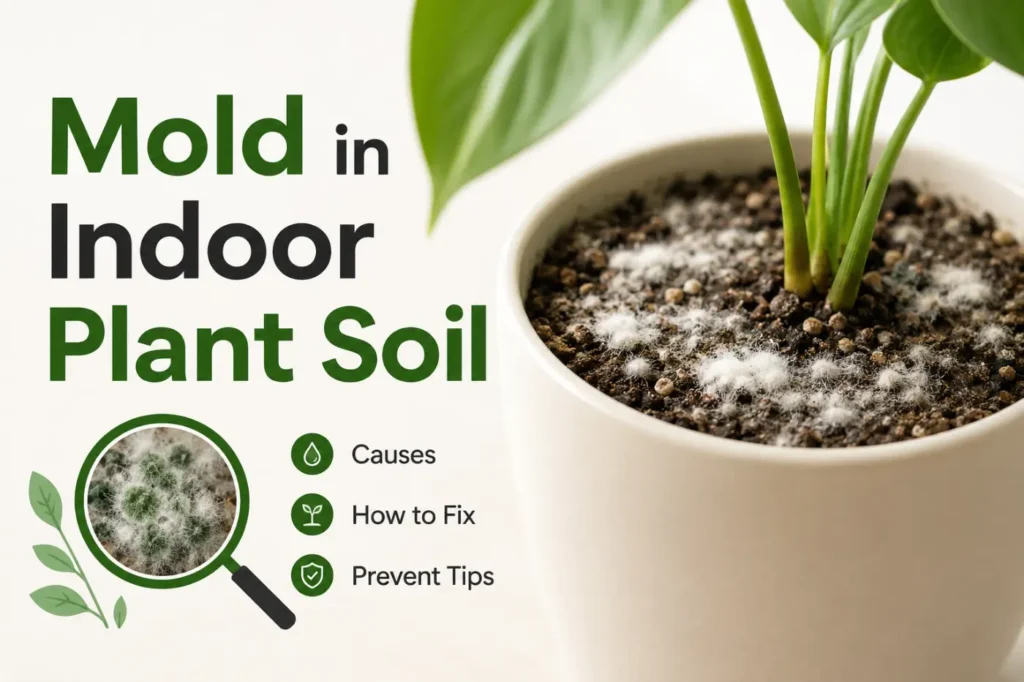
Mold in indoor plant soil is one of those discoveries that makes plant owners immediately worried they have done something seriously wrong. You water your plant, look down, and find a fuzzy white or grey coating across the soil surface that was not there a few days ago. The good news is that most mold in indoor plant soil is completely harmless to the plant itself and disappears quickly once the underlying conditions that caused it are corrected.
The bad news is that mold growing on your soil surface is a reliable signal that something in your plant care routine needs adjusting, most often around watering, light, or airflow. Ignoring it and hoping it goes away on its own rarely works because the conditions driving it continue unchanged.
This guide covers the 7 most common causes of mold in indoor plant soil, whether it actually harms your plant, and the fastest, most effective ways to eliminate it and stop it from coming back.
Quick Answer
White or grey fuzzy mold on indoor plant soil is almost always saprophytic fungus feeding on decomposing organic matter in the potting mix. It does not harm healthy established plants but signals overwatering, poor airflow, or insufficient light. Remove it by scraping off the top inch of affected soil, applying a light dusting of cinnamon or fine-grade perlite, improving ventilation, and reducing watering frequency. The mold disappears within one to two weeks once the growing conditions that supported it are corrected.
Is Mold in Indoor Plant Soil Dangerous to Your Plant
Before reaching for any treatment, it helps to understand what the mold actually is and whether it poses a real threat.
The white or light grey fuzzy growth most commonly found on the surface of indoor plant soil is saprophytic fungus. Saprophytic fungi feed on dead and decomposing organic matter, which in potting mix means the partially composted plant material that commercial potting mixes contain. These fungi are not parasitic. They do not attack living plant roots or tissue. They are simply decomposers doing what decomposers do, in conditions that have become unusually favorable for their growth.
For healthy, established plants with strong root systems, this surface mold causes no direct harm. The plant continues growing normally while the mold works on the organic matter at the soil surface.
The indirect risk is what the mold signals: consistently wet, poorly aerated soil conditions that are genuinely harmful to roots over time even when the mold itself is not. Overwatered soil that supports mold growth is also overwatered soil that creates conditions for root rot, fungal root disease, and the pest infestations that moist soil attracts. The mold is the visible indicator of an invisible problem.
For seedlings and very young plants, the risk is slightly higher. Damping off, a fungal disease caused by Pythium and Rhizoctonia species, kills seedlings at the soil surface and can be confused with harmless saprophytic mold. The distinction: harmless saprophytic mold is fuzzy and white or light grey. Damping off causes seedling stems to collapse and turn dark at the soil surface. If you see seedling collapse alongside surface mold, damping off rather than harmless saprophytic fungus is the more likely diagnosis.
7 Causes of Mold in Indoor Plant Soil
Cause 1: Overwatering
Overwatering is the most common cause of mold in indoor plant soil by a significant margin. Consistently wet soil provides the moisture that saprophytic fungi require for active growth and spore germination. A soil surface that stays moist for more than two to three days after watering creates ideal mold conditions.
The fix starts with adjusting how and when you water. Push your finger two inches into the soil before every watering. If you feel any moisture at that depth, wait. For most tropical houseplants, the top two inches of soil should dry out completely between waterings before the next irrigation. This drying cycle creates conditions too dry for mold growth while still providing adequate moisture for plant roots deeper in the pot.
Cause 2: Poor Air Circulation
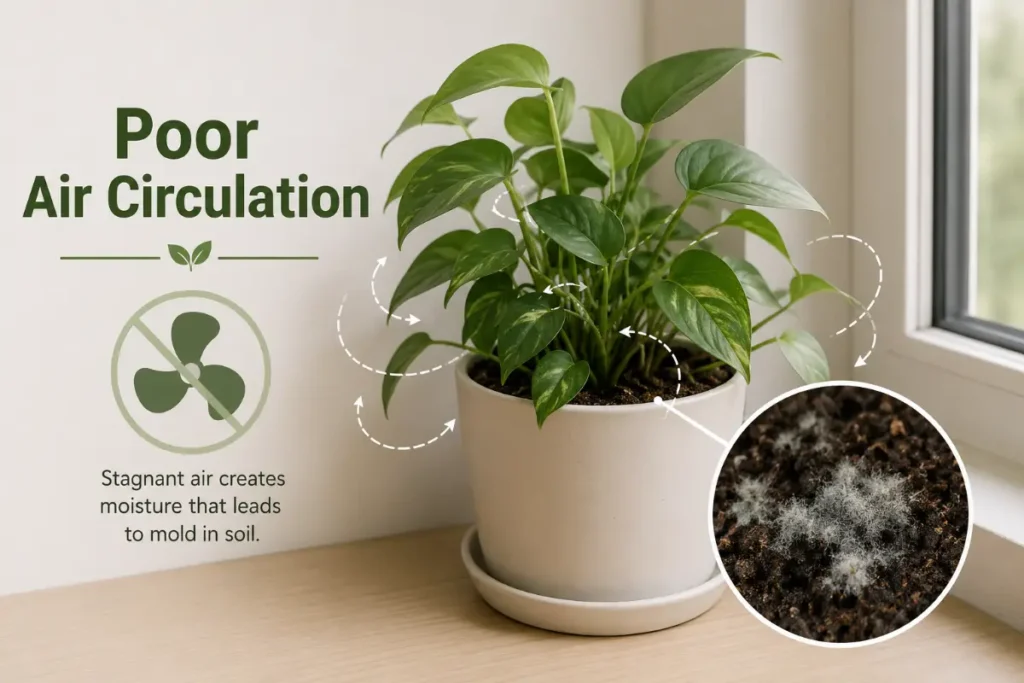
Stagnant air around indoor plants is the second most common driver of soil surface mold. Good airflow across the soil surface allows it to dry more quickly after watering, which shortens the window during which mold can establish and grow.
Plants crowded together on shelves or in corners with no air movement create the warm, humid, stagnant microclimate that mold thrives in. Spacing plants further apart, running a small fan nearby on low setting, or moving plants to better-ventilated locations reduces mold incidence dramatically without changing anything about watering.
Cause 3: Low Light Conditions
Plants in insufficient light need less water than those in good light because they photosynthesize and transpire less actively. Plant owners who maintain the same watering schedule regardless of seasonal light changes often find themselves overwatering in fall and winter when shorter days reduce their plants’ water demand significantly.
Overwatering in low light creates the chronically wet soil that mold loves. Moving plants to brighter light or reducing watering frequency in low light conditions addresses both the cause and the effect simultaneously.
Cause 4: Contaminated Potting Mix
Some bags of commercial potting mix arrive with mold spores already present, particularly bags that have been stored in outdoor garden center conditions where moisture and temperature fluctuations can activate dormant fungal spores. A plant showing mold within days of being potted in fresh mix almost always has a contaminated bag rather than a watering problem.
If mold appears immediately after using a new bag of potting mix, discard any remaining mix from that bag and repot into fresh mix from a different sealed bag. Store opened potting mix bags sealed tightly in a cool, dry location to prevent moisture from activating dormant spores between uses.
Cause 5: Decaying Organic Matter on the Soil Surface
Fallen leaves, flower petals, and other plant debris sitting on the soil surface provide a concentrated food source for saprophytic fungi that accelerates mold growth on the soil surface. Regular removal of dead plant material from the soil surface is one of the simplest preventive measures for indoor plant mold.
This is particularly relevant in the fall when many houseplants drop older leaves as they adjust to reduced light and temperature. Leaving those dropped leaves on the soil surface rather than removing them promptly creates conditions where mold establishes more easily.
Cause 6: Using Contaminated Water
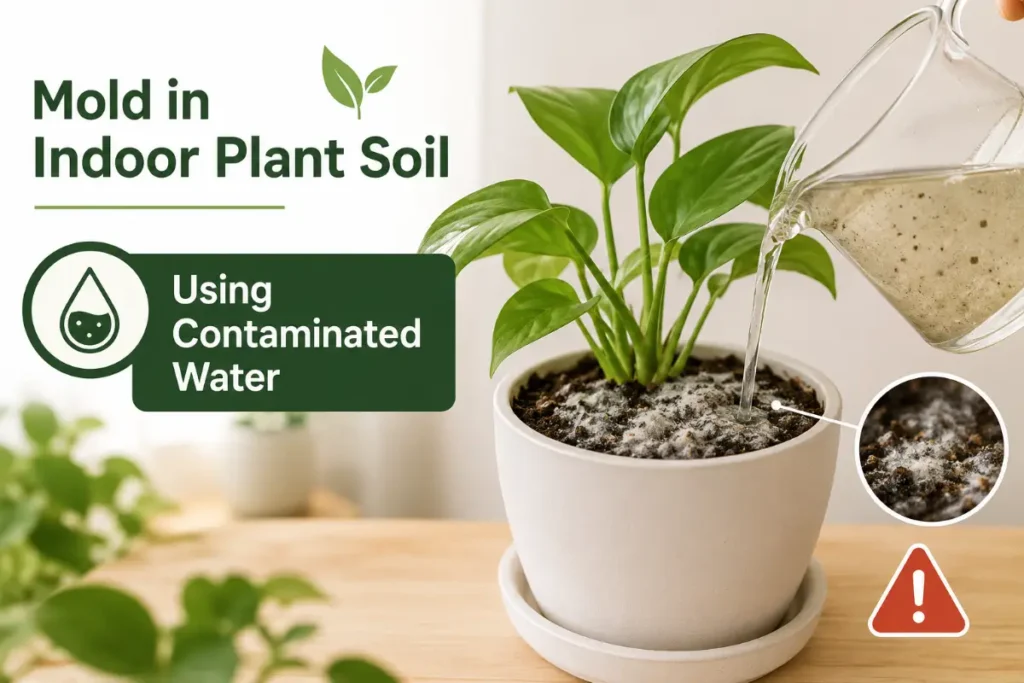
Tap water in some areas contains organic compounds and minerals that can contribute to mold growth when concentrated on the soil surface through repeated evaporation. Water left standing in saucers beneath plant pots is a particular contributor since it provides a consistently moist surface environment directly beneath the pot.
Empty saucers completely after watering rather than allowing water to sit beneath pots. If your tap water is heavily chlorinated or has a strong mineral content, using filtered or distilled water for plants that are consistently showing mold reduces the organic mineral load that supports surface fungal growth.
Cause 7: High Ambient Humidity Combined With Low Airflow
Homes in humid climates or rooms with consistently high humidity create background conditions that slow surface soil drying even with appropriate watering practices. A plant watered correctly in a normally ventilated room may not develop mold. The same plant with the same watering schedule in a bathroom or basement with high ambient humidity and poor ventilation may develop mold regularly.
For plants in high-humidity environments, increasing airflow is more effective than reducing watering since the plants may genuinely need the water but the ambient humidity prevents the soil surface from drying adequately between waterings.
How to Get Rid of Mold in Soil
Step 1: Remove Visible Mold Immediately
Using a spoon or small trowel, scrape off the top half-inch to inch of soil showing visible mold growth. Place the scraped material in a plastic bag and seal before disposing in household trash rather than compost where the fungal spores survive and spread.
This mechanical removal reduces the active mold population immediately and removes the layer of potting mix where spore concentration is highest. Do not breathe in the scraped material directly since fungal spores can irritate airways. Work near an open window if possible.
Step 2: Apply a Natural Antifungal Top Dressing
After removing visible mold, apply one of these natural antifungal materials across the freshly exposed soil surface.
Cinnamon is the most widely recommended natural antifungal for indoor plant soil. It contains cinnamaldehyde, a compound with documented antifungal properties that disrupts fungal cell membranes. A light dusting across the soil surface after mold removal inhibits regrowth without harming plant roots or the soil ecosystem.
Coarse sand or perlite applied as a thin top layer keeps the soil surface drier between waterings since these materials do not hold moisture the way organic potting mix does. A drier surface is a less hospitable surface for mold growth.
Activated charcoal scattered lightly on the soil surface has mild antifungal and antibacterial properties alongside its ability to absorb the organic compounds that feed saprophytic fungi. It is particularly useful in terrariums where the closed environment makes ventilation improvement difficult.
For broader soil health and the role soil biology plays in suppressing harmful fungal growth naturally, worm castings for indoor plants covers how beneficial microorganisms in finished organic amendments compete with and suppress pathogenic and nuisance fungi in potting mix.
Step 3: Correct the Underlying Conditions
Removing visible mold without fixing the conditions that caused it means the mold returns within one to two weeks. After mechanical removal and antifungal top dressing, address whichever of the 7 causes applies to your situation.
Reduce watering frequency. Improve airflow with better plant spacing or a small fan. Move the plant to brighter light. Remove dead plant material from the soil surface promptly. Empty saucers after watering. These adjustments cost nothing and prevent regrowth more effectively than any product.
Step 4: Consider a Hydrogen Peroxide Drench for Persistent Cases
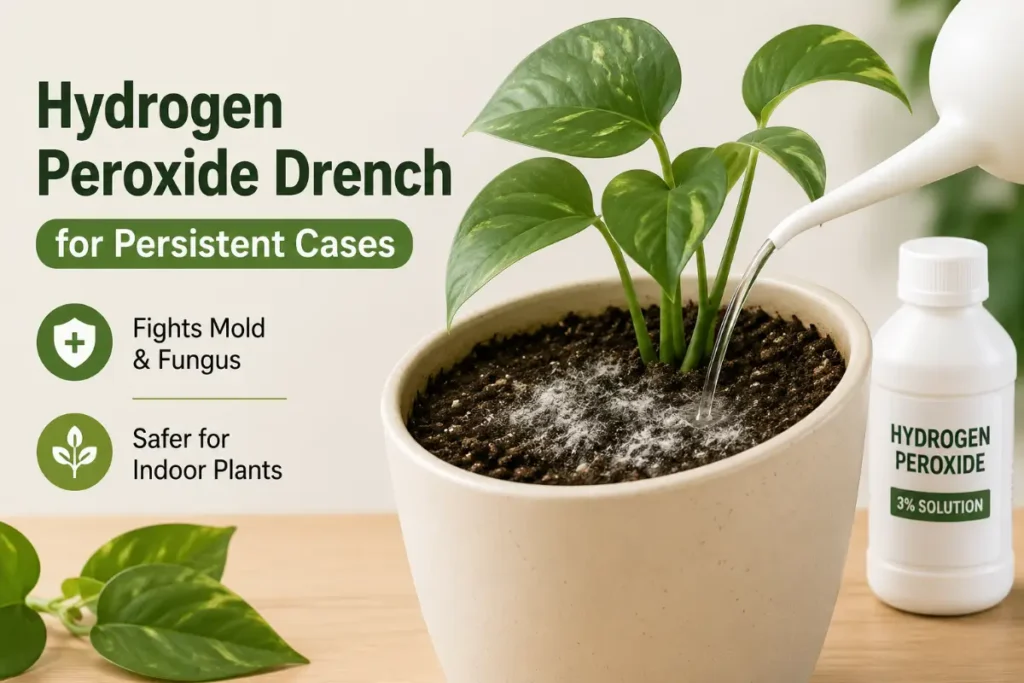
For mold that keeps returning despite correcting watering and airflow, a hydrogen peroxide soil drench addresses fungal growth both at the surface and in the top layer of soil where spores survive surface scraping.
Mix 1 part 3% hydrogen peroxide with 4 parts water and apply as a regular watering. The oxidation reaction kills fungal spores on contact. Allow the soil to drain completely and dry more thoroughly than usual before the next watering. Apply once and reassess before repeating since the hydrogen peroxide also affects beneficial soil organisms if used too frequently.
For context on how hydrogen peroxide drenching fits into broader soil pest and pathogen management, bugs in indoor plant soil covers every soil surface and root zone problem including the pest species that often accompany the same moist conditions that support mold growth.
When to Repot vs When to Treat in Place
Most surface mold in indoor plant soil does not require repotting. The removal and correction steps above resolve it in the existing pot within one to two weeks.
Repotting into fresh soil is the better choice when the mold is deep rather than just surface-level, the current potting mix is old (more than eighteen months in use) and breaking down into a dense moisture-retaining medium that makes watering correction difficult, the plant is showing root decline alongside surface mold suggesting the conditions have affected the root zone, or previous treatment attempts have not resolved persistent regrowth.
When repotting for mold-related reasons, choose a potting mix with better drainage characteristics than the current one. Adding 20% perlite to standard potting mix improves drainage significantly. For the complete guide to building soil mixes with the drainage properties that prevent mold-friendly conditions from developing, soil mixture for indoor plants covers every recipe with exact ratios.
Preventing Mold Long Term
Water correctly every time. The finger test before every watering is the single most effective mold prevention practice. Two inches into the soil, if you feel moisture, wait. This one habit eliminates the primary condition for mold growth.
Improve drainage in your potting mix. Soil that drains freely after watering dries out faster between sessions. Adding perlite at 20% significantly improves drainage over standard commercial potting mix alone.
Keep the soil surface clean. Remove fallen leaves, spent flowers, and any organic debris from pot surfaces promptly. This removes the primary food source that accelerates saprophytic mold establishment.
Maintain good airflow. Space plants apart, run a fan on low nearby during the warmer months, and avoid placing plants in consistently stagnant-air locations.
Use a soil surface covering. Coarse sand, fine perlite, or small pebbles applied as a thin top layer keep the soil surface drier between waterings and create a physical barrier that discourages mold establishment. For a complete guide to indoor plant mulch options that also help with mold prevention alongside other benefits, mulch for indoor plants covers every material with specific guidance on which ones best address surface moisture and mold concerns.
How Fertilizing Affects Mold Growth in Indoor Plant Soil
One connection that many plant owners do not consider is how fertilizer choice affects soil mold development. Organic fertilizers including compost, worm castings, and fish emulsion add organic matter to potting mix that saprophytic fungi can feed on. This does not mean organic fertilizers cause mold problems, but it does mean that organic feeding in already-moist conditions can accelerate mold growth compared to synthetic alternatives applied to the same wet soil.
The solution is not to avoid organic fertilizers. Worm castings and compost tea applied to appropriately watered soil that dries adequately between sessions rarely contribute to mold problems. The issue arises specifically when organic amendments are added to soil that is already staying too wet. Correct the moisture first, then continue organic feeding without concern.
Synthetic fertilizers including Osmocote Plus granules and liquid synthetic options do not provide the organic food source that saprophytic fungi feed on, which means they are slightly less likely to contribute to mold development in borderline-moist conditions. This is one practical advantage of synthetic options in environments where mold is a consistent problem despite careful watering. For a comparison of organic versus synthetic fertilizer approaches and how each affects the soil ecosystem, natural fertilizer for indoor plants covers every option including how soil biology interacts with both approaches.
Conclusion
Mold in indoor plant soil is alarming at first glance but rarely dangerous to established plants. The white fuzzy growth is almost always harmless saprophytic fungus responding to favorable conditions in the soil environment. The mold itself is not the problem. The consistently wet, poorly aerated conditions that produced it are.
Scrape off visible mold, apply cinnamon or coarse sand as a natural antifungal surface layer, and correct the underlying cause through better watering practices, improved airflow, and brighter light. Do those three things consistently and mold disappears within two weeks and stays gone rather than cycling back every few days.
The plants that never develop soil mold are not the ones with magic soil or expensive products. They are the ones whose owners let the soil dry adequately between waterings, keep air moving around them, and remove dead plant material from the pot surface before it has a chance to become mold food.
Frequently Asked Questions
Is white mold on indoor plant soil harmful to my plant?
White fuzzy mold on the soil surface of indoor plants is almost always harmless saprophytic fungus that feeds on decomposing organic matter rather than living plant tissue. It does not attack roots or cause plant disease in healthy established plants. The indirect risk is what the mold indicates: chronically wet soil conditions that over time create genuine root health problems even when the mold itself is benign. Treat the mold as a warning indicator and correct the watering and airflow conditions that caused it.
Why does mold keep coming back on my indoor plant soil?
Recurring mold after removal means the underlying conditions have not been corrected. The most common reasons for persistent return are continuing to water on a fixed schedule regardless of soil moisture, insufficient airflow allowing the soil surface to stay moist for too long after watering, and old potting mix that has broken down into a dense moisture-retaining medium that dries slowly regardless of watering frequency. Address all three simultaneously rather than just removing visible mold repeatedly without changing the environment that keeps producing it.
Can I use baking soda to get rid of mold on indoor plant soil?
Baking soda raises soil pH significantly when applied to potting mix, which can stress plants over time despite its antifungal properties. Cinnamon is a safer and more effective natural antifungal for indoor plant soil since it disrupts fungal cell membranes without affecting soil pH or plant root health. A light dusting of ground cinnamon after removing visible mold inhibits regrowth more reliably than baking soda without the pH side effects.
Should I repot my plant if it has mold on the soil?
Repotting is not necessary for most cases of surface soil mold. Removing visible mold mechanically, applying a natural antifungal top dressing, and correcting watering and airflow resolves surface mold in most situations without repotting. Repot when the mold is persistent despite treatment, the potting mix is old and breaking down, or the plant is showing signs of root decline alongside the surface mold that suggests the conditions have affected the root zone rather than just the surface.
Does mold in plant soil attract bugs?
Yes, indirectly. The consistently moist soil conditions that produce surface mold also attract fungus gnats whose larvae feed on fungi and decaying organic matter in potting mix. If you have soil mold you may also develop a fungus gnat problem from the same conditions. Correcting the moisture conditions addresses both simultaneously. For the complete guide to fungus gnats and other soil-dwelling insects that accompany mold-favorable conditions, bugs in indoor plant soil covers every species with specific treatment guidance.
Is mold in indoor plant soil harmful to humans?
For most healthy adults, the saprophytic fungi that grow on indoor plant soil surfaces do not pose a significant health risk in normal household conditions. People with compromised immune systems, severe asthma, or known mold allergies should avoid handling moldy soil directly and should address soil mold promptly to minimize airborne spore levels. Working near an open window when scraping and removing mold, wearing gloves, and washing hands thoroughly afterward are sensible precautions for anyone handling visibly moldy soil regardless of their health status.
Pingback: Peace Lily Indoor Plant Benefits: 9 Reasons to Keep One in Room - Plant Quill