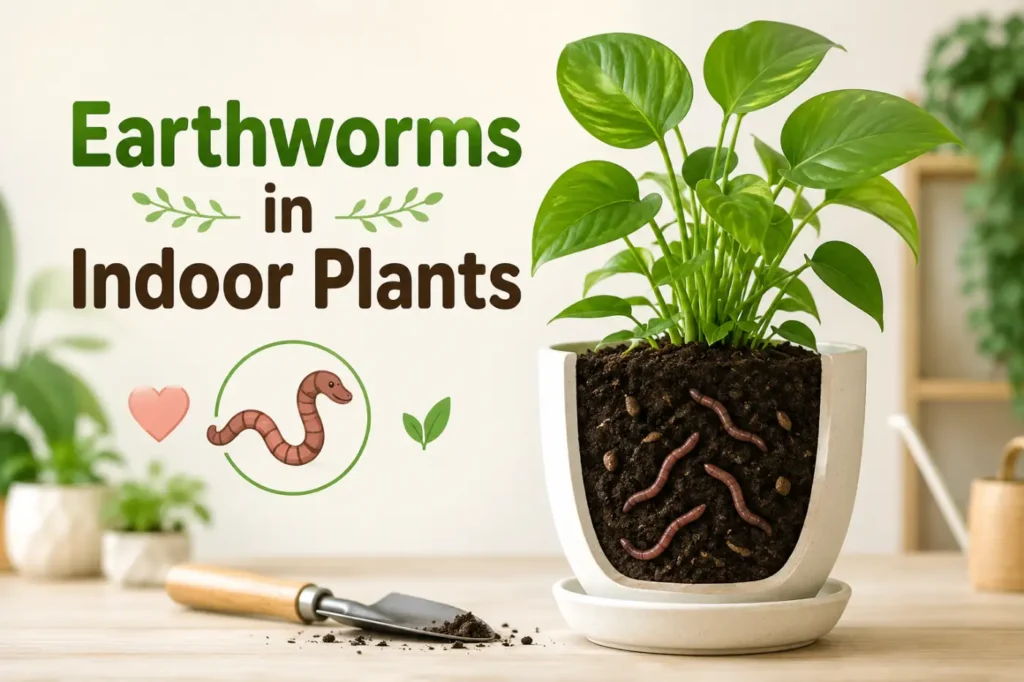
Finding earthworms in indoor plants is one of those genuinely surprising discoveries that plant owners are never quite sure how to react to. Earthworms are universally recognized as beneficial in gardens. But a garden pot sitting in a living room is a very different environment from an outdoor raised bed, and the same creatures that improve outdoor soil health can actually create problems in the confined, controlled conditions of an indoor plant pot.
The honest answer to whether earthworms in indoor plants are beneficial or harmful is: it depends on the pot size, the plant type, and the conditions you are maintaining. This guide gives you the complete picture so you can make an informed decision about what to do when you find them.
Quick Answer
Earthworms in indoor plant pots are not immediately harmful to plants but they are generally better removed from small and medium pots. In small containers they run out of food quickly, die, and decompose in ways that can harm roots. They also create tunnels that disrupt root contact with soil and can escape the pot and appear on floors and furniture. In large outdoor container gardens or raised indoor beds they can be beneficial. Remove them by soaking the pot in water to drive them to the surface, then relocate to an outdoor garden.
How Earthworms Get Into Indoor Plant Pots
Most plant owners who find earthworms in their indoor pots wonder how they got there since earthworms do not fly or crawl up walls to reach elevated plant pots.
Through potting mix. This is the most common entry point. Commercial potting mixes occasionally contain earthworm eggs or juvenile worms, particularly bags that have been stored in conditions allowing contact with outdoor soil or open compost. Opening a fresh bag of potting mix and finding earthworms a few weeks later almost always traces back to the bag rather than any other source.
On plants moved indoors from outside. Plants that spend summer outdoors and are brought inside in fall frequently carry hitchhiking earthworms in their root balls and surrounding soil. Earthworms living in the outdoor soil follow roots and moisture into the pot during summer, then come inside with the plant without you realizing it.
Through drainage holes of pots placed on outdoor soil. If you place indoor pots directly on garden soil outdoors during warm months, earthworms from the surrounding soil enter through drainage holes and establish in the potting mix. When the pot moves back inside, they come with it.
Through contaminated compost or amendments. Garden compost, homemade worm castings, and other organic amendments added to potting mix can introduce earthworm eggs or small juvenile worms that are not visible at the time of application.
Are Earthworms Beneficial in Indoor Plant Pots
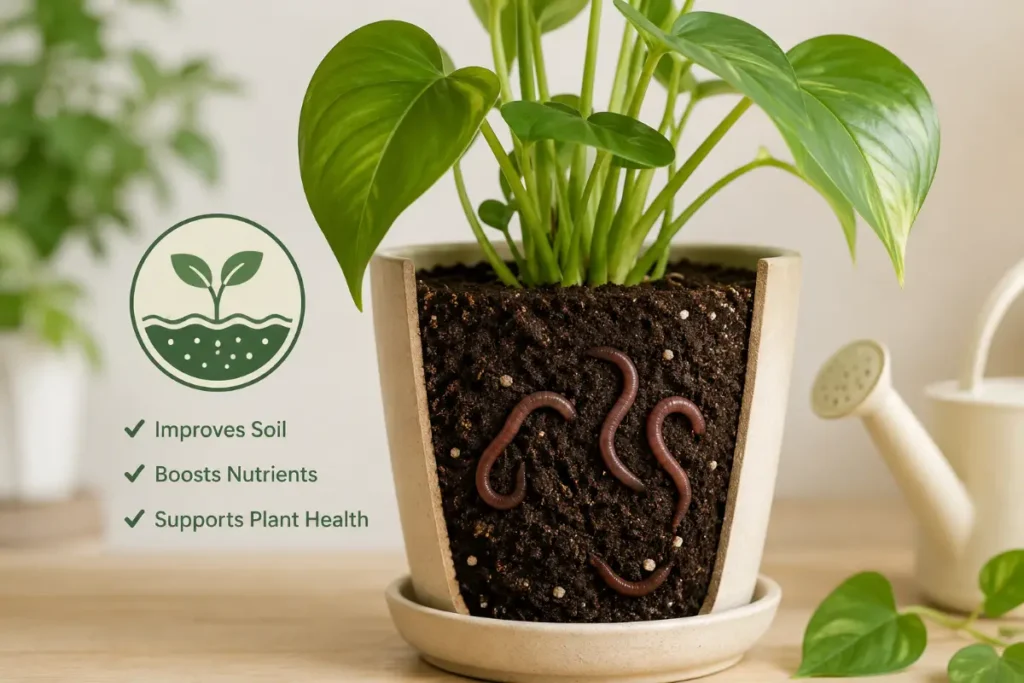
In outdoor gardens and raised beds, earthworms are unambiguously beneficial. They aerate soil through their tunneling, improve drainage, break down organic matter into plant-available nutrients through digestion, and their castings are among the most nutritionally complete natural soil amendments available.
The situation is different in an indoor pot for several specific reasons.
Limited food source. Earthworms in outdoor gardens have access to an essentially unlimited supply of decomposing organic matter to feed on. In a small indoor pot with a finite amount of potting mix, the available food is exhausted quickly. Once the accessible organic matter is consumed, earthworms starve, die, and decompose in the root zone. Decomposing earthworms in confined potting mix release compounds that can harm roots and create the unpleasant smell some plant owners notice from pots they did not realize contained worms.
Disruption of root contact. Earthworm tunneling in outdoor soil creates beneficial aeration channels that roots grow into. In the confined volume of a pot, particularly a small pot, the same tunneling disrupts the established contact between existing roots and surrounding potting mix. Roots that have grown into specific areas of the soil lose their moisture and nutrient contact when tunnels are created through those areas.
Too-wet soil requirements conflict with most houseplant needs. Earthworms require consistently moist soil to survive and move through. Maintaining the soil moisture level that keeps earthworms alive and active often means keeping the soil wetter than most common houseplants prefer. This creates a conflict where you are either keeping the soil appropriately dry for the plant and the earthworms die, or keeping it moist enough for the earthworms and gradually overwatering the plant.
Escape behavior. Earthworms sense when environmental conditions become unfavorable and attempt to escape. In indoor pots, this means worms crawling out through drainage holes and appearing on floors, furniture, and shelves, which is understandably alarming and unpleasant for most households.
When Earthworms in Indoor Pots Are Actually Beneficial
There are specific situations where earthworms in indoor plant containers provide net benefit rather than net harm.
Very large containers. In container gardens with more than 15 to 20 gallons of soil volume, the food source available to earthworms is sufficient to support a small population without rapid depletion. The tunneling in large containers provides genuine aeration benefit similar to outdoor garden conditions. Large indoor raised beds, outdoor planter boxes brought temporarily inside, and large conservatory container gardens can support earthworm populations beneficially.
Plants that prefer consistently moist soil. For plants that genuinely need consistent soil moisture including ferns, peace lilies, and calatheas, the soil moisture levels required to keep earthworms alive and healthy align more closely with what the plant needs. The conflict between worm moisture requirements and plant moisture requirements is less pronounced for these species.
Temporary indoor storage of outdoor container plants. If you bring outdoor container plants inside only for winter frost protection and they will return outside in spring, earthworms that were present in the outdoor container can stay without concern. The outdoor root ball with its existing earthworm population benefits from the worms continuing their outdoor-appropriate activity in the temporary indoor storage period.
How to Remove Earthworms From Indoor Plant Pots
If you decide earthworms need to come out of your indoor plant pot, several methods make removal straightforward without damaging the plant.
The water soak method. This is the gentlest and most effective approach for most pot sizes. Place the pot in a basin or bucket of water deep enough to cover the soil surface. The waterlogged conditions drive earthworms upward to the soil surface within 15 to 30 minutes where they can be picked up and relocated. Remove the pot from the water immediately once worms appear and allow it to drain completely before returning to its normal location. For the complete guide to soil-dwelling organisms including removal and management of various soil inhabitants, bugs in indoor plant soil covers every species with specific handling guidance.
Manual soil inspection during repotting. If the plant needs repotting anyway, use the opportunity to inspect the root ball and surrounding soil manually for earthworms. Remove any found by hand and repot into fresh potting mix without returning the earthworms to the new soil.
Repotting into fresh soil. For pots with confirmed earthworm populations that are causing problems, repotting into fresh sterile potting mix removes the earthworms and their food source simultaneously. Use fresh mix from a sealed bag stored away from outdoor soil contact to reduce the likelihood of introducing new worms.
Where to relocate them. Earthworms removed from indoor pots are best relocated to an outdoor garden bed, compost bin, or home vermicomposting setup where their biology and food requirements are well-matched to the environment. Releasing them outdoors in garden soil is the most natural solution for most households.
Earthworms vs Worm Castings: The Important Distinction
Many of the benefits people associate with having earthworms in their indoor plant pots are actually provided more effectively and safely by worm castings applied as a soil amendment.
Worm castings are the processed output of earthworms that have already digested organic matter. They contain all the nutritional and biological benefits of earthworm activity without the living earthworms that create the food depletion, escape, and overwatering problems described above. Applying worm castings as a top dress or mixing them into potting soil at repotting delivers everything a plant needs from earthworm activity without the complications of managing living worms in a confined pot.
If the reason you want earthworms in your indoor plants is for their soil improvement benefits, worm castings provide those benefits more reliably and without the downsides of actual worm presence. For the complete guide to worm casting applications and how they improve indoor plant soil health, worm castings for indoor plants covers every benefit and method in full detail.
Preventing Earthworms From Getting Into Indoor Plant Pots
Once you have removed earthworms from indoor pots, a few simple practices prevent them from returning through the most common entry routes.
Inspect potting mix before use. Open bags of potting mix in good light and look through the top layer before pouring it into pots. Small pinkish worms or egg cases visible in the mix indicate contamination. Use a different bag or purchase from a different supplier.
Inspect outdoor plants before bringing them inside. Before moving an outdoor plant indoors in fall, check the drainage holes and bottom of the pot for earthworms visible from outside. Consider repotting into fresh soil before bringing the plant inside if you know the outdoor location had active earthworm activity.
Cover drainage holes. A small piece of mesh or fine screen placed over drainage holes when placing pots on outdoor soil prevents earthworms from entering from below. Remove or replace mesh when repotting.
Store potting mix sealed and elevated. Bags of potting mix stored on outdoor ground or in unsealed conditions can have earthworms enter through bag openings or thin areas of the bag. Store opened bags sealed with tape or clips, elevated off the ground on a shelf where earthworm contact is not possible.
Maintaining appropriate soil moisture levels in indoor pots also creates conditions that earthworms find less hospitable than consistently moist outdoor garden soil. A pot that dries adequately between waterings is a less attractive destination for earthworms entering from outside or emerging from dormant eggs in the potting mix.
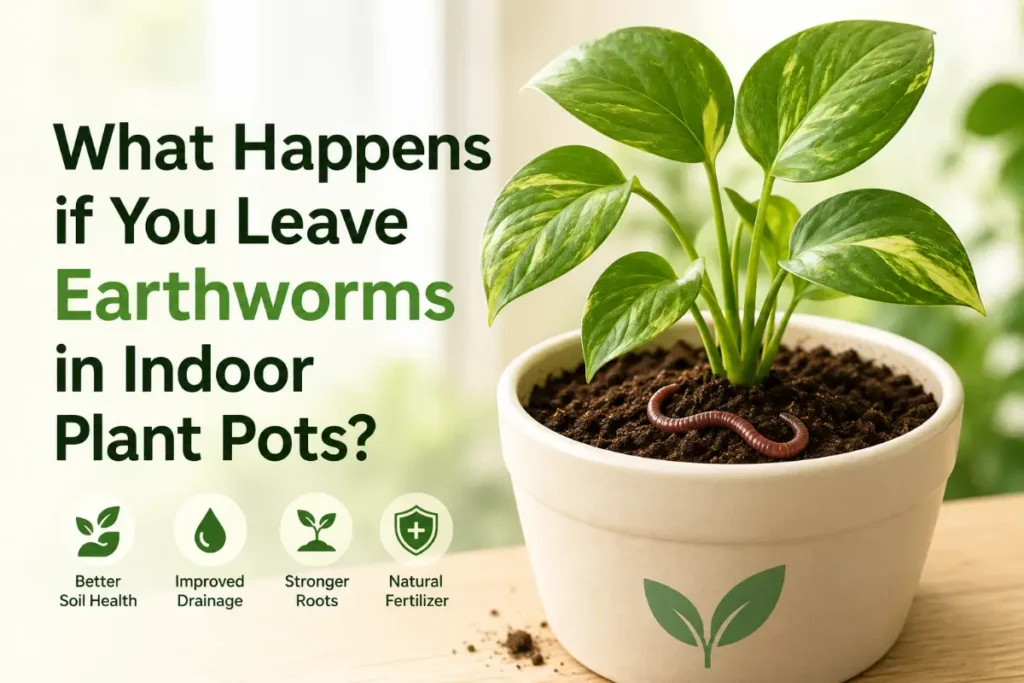
What Happens if You Leave Earthworms in Indoor Plant Pots
Understanding the trajectory of an earthworm population left in a small indoor pot helps you decide how urgently removal is necessary.
In the first few weeks, you may notice no problems. The earthworms are actively processing available organic matter in the potting mix, improving soil structure through tunneling, and potentially producing a small amount of beneficial castings as they feed.
Over one to two months, the available organic food source in a small pot is largely exhausted. Earthworm activity slows as food becomes scarce. The worms become smaller and less active.
At three to four months in a small pot without supplemental organic matter, earthworms typically begin to die from food scarcity. Dead earthworms decomposing in root zone soil release ammonia compounds and create oxygen-depleted pockets that can cause root tip burn and localized root decline.
You may notice the soil developing an unpleasant smell, the plant showing unexpected leaf yellowing or wilting despite appropriate watering, and potentially earthworms emerging from drainage holes or soil surface in search of better conditions.
This trajectory makes early removal the better outcome for both the plant and the earthworms, which are relocated to an environment where they can thrive rather than slowly depleting and dying in an undersized container.
The Difference Between Earthworms and Red Wigglers for Indoor Use
One distinction worth understanding before deciding how to handle worms in your indoor plant collection is the difference between common earthworms and red wigglers, which are the species used in vermicomposting bins.
Common earthworms (Lumbricus terrestris and related species) are the large pink worms most people find in garden soil. They are deep burrowers that need significant soil depth and volume to thrive. They process soil rather than surface organic matter primarily. In a standard indoor plant pot they run out of appropriate food and living space within weeks to months.
Red wigglers (Eisenia fetida) are smaller, redder, and faster-moving than common earthworms. They are surface feeders that process decomposing organic matter rather than mineral soil. They thrive in the concentrated organic matter of a compost bin rather than in mineral potting mix. They are the species that produce the worm castings sold commercially for plant fertilization.
If you find large pink earthworms in your indoor plant pots, these are common garden earthworms that entered through one of the routes described above and will do better relocated to outdoor garden soil. If you find small, reddish, fast-moving worms, these may be red wigglers that entered through organic amendment additions and will similarly do better in a dedicated compost environment than in a standard plant pot.
Neither species is appropriate for permanent residence in a standard indoor plant pot regardless of its benefits in other contexts. Both are best removed and relocated to environments suited to their biology.
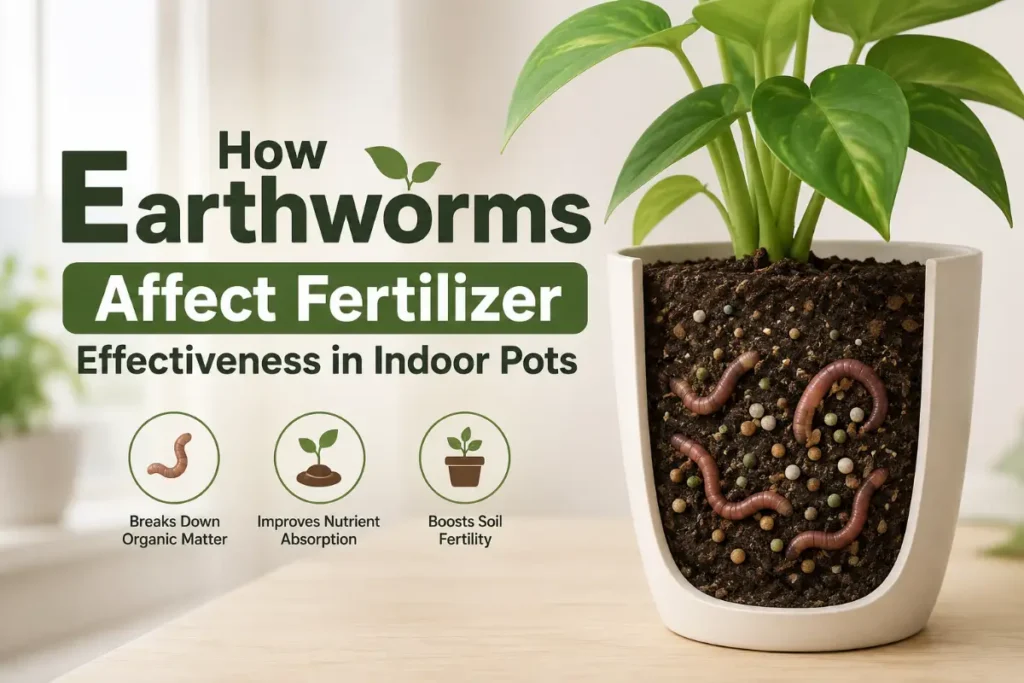
How Earthworms Affect Fertilizer Effectiveness in Indoor Pots
One practical consideration when earthworms are present in indoor plant pots is how their activity interacts with fertilizer applications.
Earthworms consume organic fertilizer materials including worm castings, compost, and fish emulsion added to soil surfaces more quickly than the slow-release schedule those products are designed for. An earthworm population in a pot that receives organic top dressings processes those amendments faster than plant roots can benefit from them, effectively reducing the duration and effectiveness of organic fertilizer applications.
For synthetic fertilizers including slow release granules, earthworm tunneling can physically displace granules from where they were pressed into the soil surface, concentrating them unevenly through the root zone in ways that create hot spots of high nutrient concentration near some roots and nutrient gaps near others.
This interaction between earthworm activity and fertilizer application is another practical reason why removing earthworms from indoor pots where you are maintaining an active fertilization program produces more predictable and reliable results than attempting to manage both simultaneously.
For the complete guide to natural fertilizer options that work most effectively in earthworm-free indoor plant soil, natural fertilizer for indoor plants covers every approach with application guidance. And for DIY fertilizer options that deliver organic nutrition without introducing the living organisms that complicate small pot management, diy fertilizer for indoor plants covers every kitchen-based recipe that provides organic nutrition in plant-available form without live worm involvement.
Signs Your Indoor Plant Is Thriving After Earthworm Removal
After removing earthworms and correcting any moisture issues that developed during their presence, these signs indicate your plant is recovering well and the soil environment is returning to the stable conditions that support healthy root growth.
New leaves emerging at normal size and with good color. If the earthworm activity disrupted root-to-soil contact or if overwatering developed during their stay, new growth may initially be smaller or paler than normal. Returning to full-size healthy growth within four to six weeks of removal confirms the root system has re-established good soil contact.
Soil moisture levels stabilizing. With earthworm tunnels no longer disrupting soil structure, watering behavior becomes more predictable. The soil holds moisture more evenly through the root zone rather than draining unpredictably through large channels.
No more unexpected escapes or soil surface disturbance. The absence of ongoing worm activity means the soil surface stays undisturbed between waterings, which also makes assessing moisture levels by feel more reliable again.
For any plant showing root health concerns following an earthworm infestation, applying worm castings as a top dress after removal provides the nutritional and microbial support that speeds root recovery without reintroducing the living organisms that caused the problem. For the complete application guidance, worm castings for indoor plants covers every method with specific timing for post-stress plant recovery situations.
Conclusion
Earthworms in indoor plant pots are neither the pest threat nor the garden blessing that people in both camps assume them to be. They are outdoor organisms that find themselves in an indoor environment through various accidental routes and that create specific problems in small pots while providing genuine benefit in larger containers.
For most standard indoor plant pots, removing earthworms and relocating them to an outdoor garden or compost bin is the practical right answer. The water soak method makes this easy and gentle on both the worms and the plant. Preventing re-entry through inspecting potting mix, covering drainage holes during outdoor placement, and inspecting plants before bringing them inside addresses the most common entry routes.
If you want the soil improvement benefits that earthworms provide without managing living worms in your indoor plant pots, worm castings deliver every relevant benefit in a stable, mess-free, and reliably effective form that suits indoor pot conditions far better than the earthworms themselves.
Frequently Asked Questions
Are earthworms good or bad for indoor plants?
Earthworms are beneficial in large containers and outdoor gardens but create specific problems in small and medium indoor plant pots. In small pots they deplete the limited food source quickly, die, and decompose in ways that harm roots. They also tunnel in ways that disrupt established root-to-soil contact, require soil moisture levels wetter than most houseplants prefer, and escape through drainage holes when conditions become unfavorable. In large containers with significant soil volume they can provide the same aeration and nutrient cycling benefits they provide in outdoor gardens.
How do I know if my indoor plant has earthworms?
Signs of earthworm presence in indoor plant soil include small castings visible on the soil surface that look like tiny pellets of dark soil, tunneling marks on the soil surface, unexplained soil surface disturbance between waterings, worms visible at drainage holes or emerging onto the surface after heavy watering, and a slightly musty or earthy smell from the pot that is more pronounced than normal healthy potting mix.
How do I get rid of earthworms in my indoor plant pot without harming the plant?
The water soak method is the gentlest approach. Place the pot in a basin of water covering the soil surface. Earthworms move upward to escape the waterlogged conditions within 15 to 30 minutes. Remove and relocate the worms as they appear on the surface. Drain the pot completely immediately after the worms have been removed and allow it to dry more thoroughly than usual before the next watering.
Can earthworms damage indoor plant roots?
In small pots over time, yes. Earthworm tunneling disrupts established root-to-soil contact. When earthworms die from food depletion in small pots, the decomposing bodies release ammonia compounds that cause localized root damage. The chronically moist conditions required to keep earthworms alive often lead to root rot in plants that prefer drier conditions. In large containers with adequate soil volume these problems are much less likely to develop.
Should I add earthworms to my indoor plant pots on purpose?
No, for standard indoor plant pots. The problems earthworms create in small containers outweigh their benefits in that environment. If you want the soil improvement benefits of earthworm activity, use worm castings as a soil amendment instead. They provide every relevant nutritional and biological benefit of earthworm activity without the living worm complications. A vermicomposting bin using red wigglers rather than earthworms produces continuous worm castings from kitchen scraps if you want to produce your own supply.
Why is my plant declining after I found earthworms in the soil?
If a plant is declining after earthworm presence is confirmed, the most likely causes are the soil staying too moist to accommodate the earthworms which has led to root rot, earthworm tunneling disrupting root-to-soil contact in critical areas of the root zone, or in older infestations, dead earthworms decomposing in the root zone and releasing harmful ammonia compounds. Remove the earthworms using the water soak method, allow the soil to dry appropriately, and assess root health at the next repotting to determine whether root rot has developed alongside the earthworm activity.