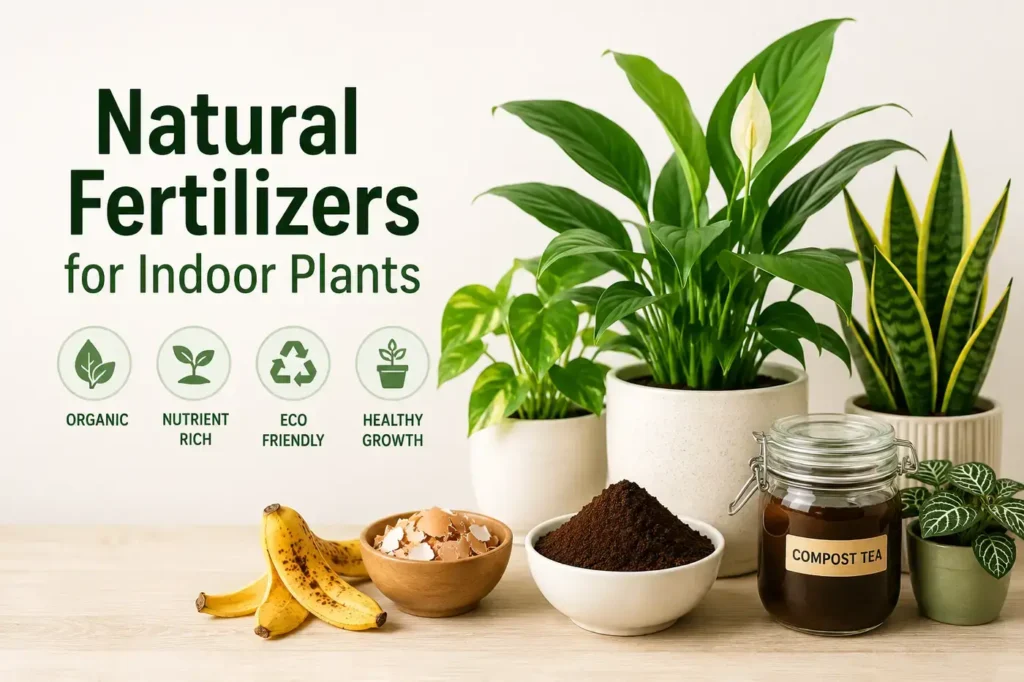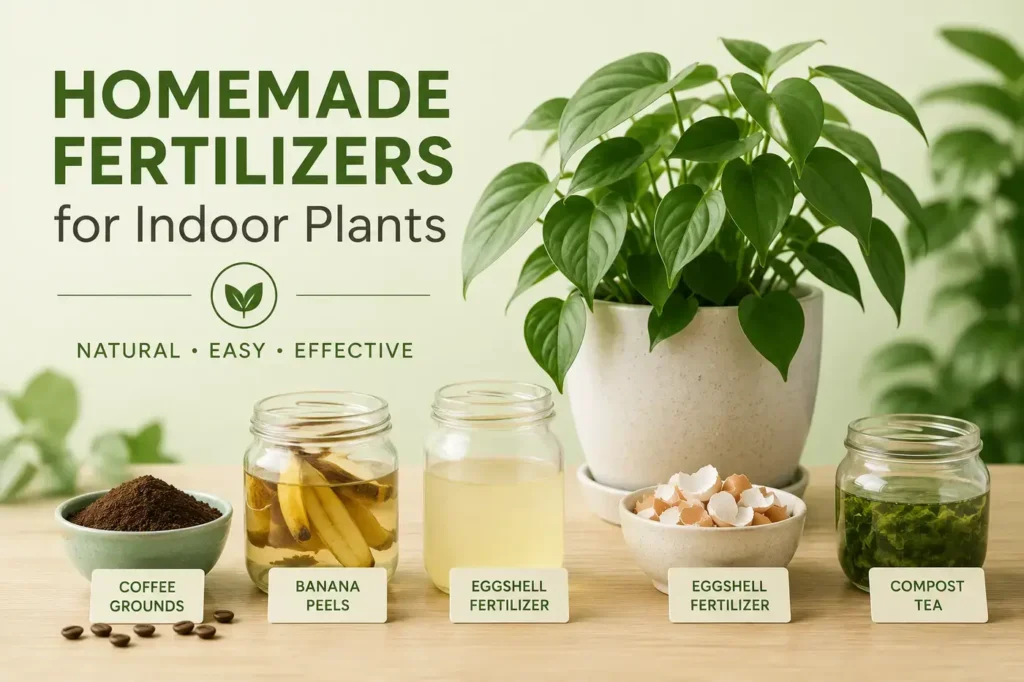
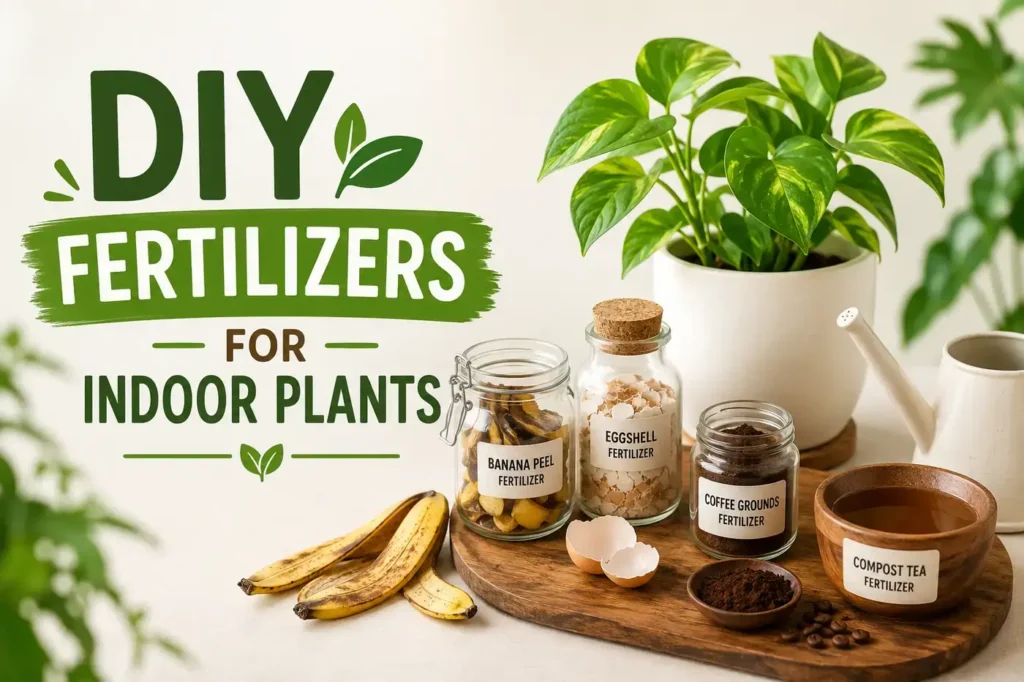
DIY fertilizers for indoor plants is one of those topics where the gap between what works and what just sounds good is surprisingly wide. Plenty of homemade fertilizer advice circulates online that produces minimal results or actively harms plants through incorrect application. The recipes that genuinely work share one characteristic: they extract nutrients in a form plant roots in potting mix can actually access, rather than placing solid organic matter on the soil surface and hoping it breaks down fast enough to matter.
This guide covers 9 DIY fertilizer recipes for indoor plants that deliver real results, exactly how to prepare each one correctly, which plants benefit most, and a simple rotation schedule that covers most houseplant nutritional needs through the growing season without spending anything on commercial products.
Quick Answer
The best DIY fertilizers for indoor plants are worm casting tea, banana peel water, diluted fish emulsion, eggshell water, rice water, vegetable cooking water, aquarium water, Epsom salt solution for magnesium deficiency, and green tea water. Apply most liquid options every two to four weeks through spring and summer. Always water the plant the day before fertilizing and stop feeding entirely during fall and winter when most houseplants slow their growth significantly.
Why Liquid Extraction Works Better Than Solid Application
Plants absorb nutrients as dissolved mineral ions through their root systems. The challenge with DIY fertilizers in potted plants is that potting mix has limited microbial activity compared to outdoor garden soil, so solid organic matter added to the surface breaks down slowly and releases nutrients over months rather than weeks.
Water-extraction methods solve this. Soaking banana peels or eggshells in water pre-dissolves their soluble minerals into a form roots can absorb within days of application. This is why every recipe below uses water as the delivery medium rather than placing solid ingredients on the soil surface directly.
9 DIY Fertilizer Recipes for Indoor Plants
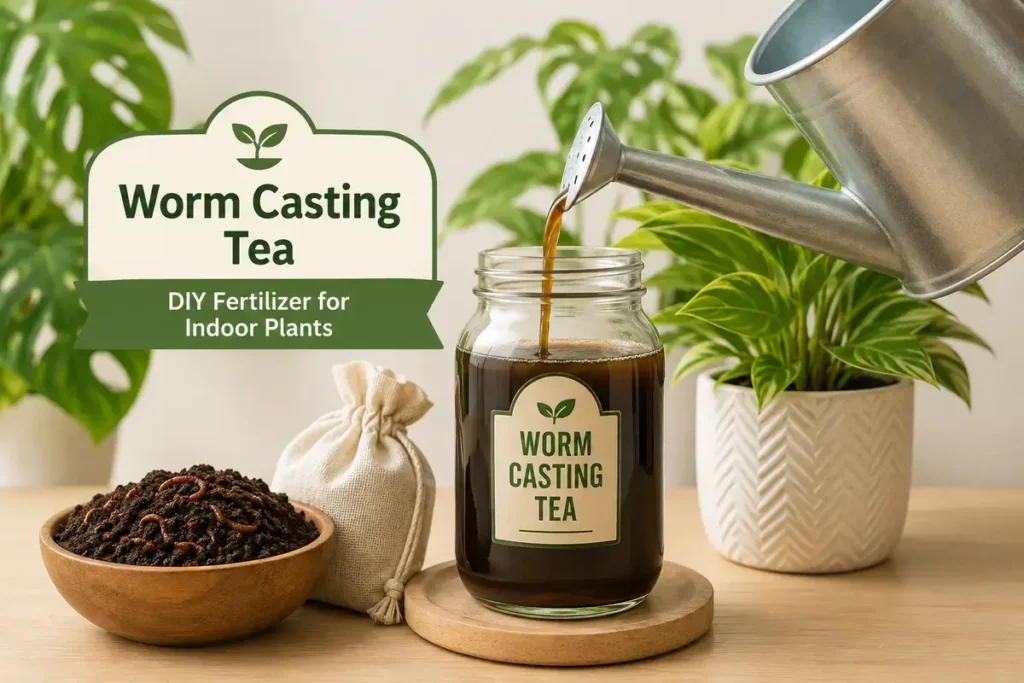
Recipe 1: Worm Casting Tea
The most nutritionally complete DIY fertilizer available. It provides balanced primary nutrients, trace minerals, beneficial microorganisms, and natural plant growth hormones in a single application safe for every common houseplant type.
How to make it: Place one cup of worm castings in a mesh bag and steep in one gallon of dechlorinated water for 24 hours. Aerate with an aquarium air pump throughout. Use immediately after steeping.
How often: Every two weeks through spring and summer.
Best for: All houseplant types without exception. For the complete guide to worm castings beyond tea applications, worm castings for indoor plants covers every method in full detail.
Recipe 2: Banana Peel Water
Banana peels contain potassium, phosphorus, calcium, and magnesium. Potassium is the nutrient most critical for flower and fruit production, making this particularly useful for flowering houseplants approaching their blooming period.
How to make it: Soak two to three banana peels in one quart of water for 24 to 48 hours. Remove peels. Apply the resulting water directly to plants without further dilution.
How often: Every two to three weeks for flowering plants. Every three to four weeks for foliage plants.
Best for: African violets, orchids, peace lilies, indoor roses, indoor tomatoes, and peppers.
Recipe 3: Diluted Fish Emulsion
Fish emulsion provides faster nitrogen response than most other DIY options, with visible growth response typically appearing within two to three weeks of the first application. The practical indoor limitation is the smell, which dissipates within a few hours of application.
How to make it: Dilute store-bought fish emulsion concentrate at one tablespoon per gallon of water. Apply near an open window.
How often: Every two to four weeks through the growing season.
Best for: Foliage plants needing a nitrogen boost and fast-growing tropicals during peak spring and summer growth.
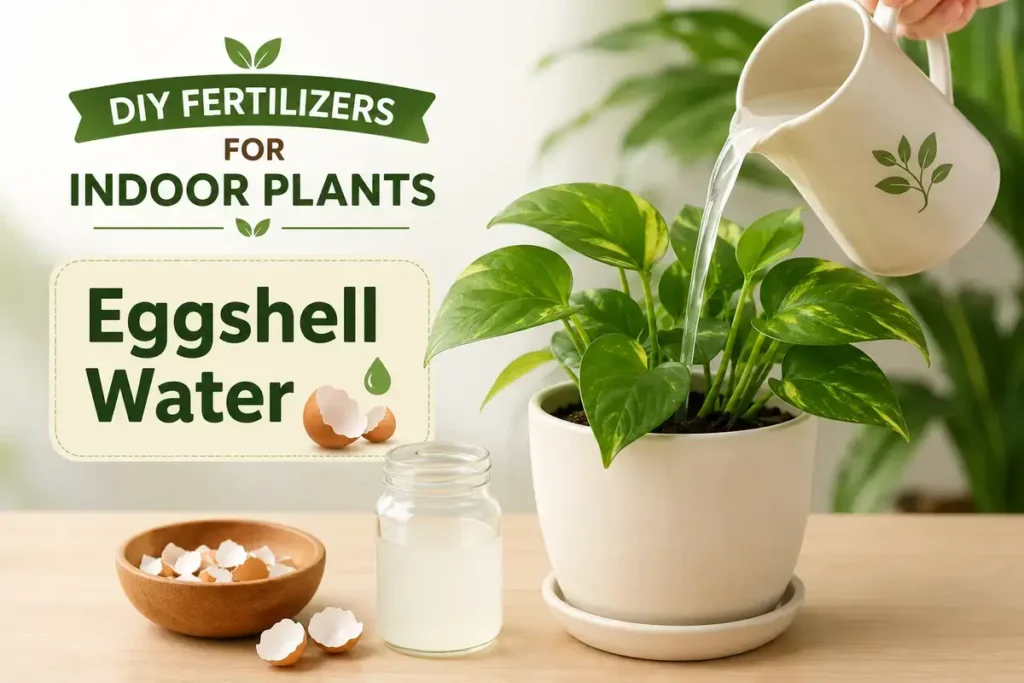
Recipe 4: Eggshell Water
Eggshells provide calcium, which strengthens plant cell walls and supports flower and fruit production during the plant’s reproductive period.
How to make it: Crush clean dry eggshells from six to eight eggs and soak in one quart of water for 24 to 48 hours. Strain completely before use.
How often: Every three to four weeks as a supplemental feed alongside a more complete fertilizer.
Best for: Flowering and fruiting indoor plants. Indoor tomatoes and peppers where calcium deficiency causes blossom end rot.
Recipe 5: Rice Water
Starchy rice rinse water contains nitrogen, phosphorus, potassium, and beneficial bacteria that improve soil microbial populations in potting mix.
How to make it: Rinse one cup of uncooked rice in two cups of water until cloudy and starchy. Use this rinse water immediately while starch is suspended. Use unsalted cooking water only.
How often: Every two to three weeks through the growing season.
Best for: General application across most tropical houseplant types. Particularly beneficial for plants in older potting mix that has lost biological activity.
Recipe 6: Vegetable Cooking Water
Water used to boil vegetables leaches minerals from the vegetables including nitrogen, potassium, and phosphorus. Cooling it and applying it to plants is the most effortless DIY fertilizer available.
How to use it: Cool completely to room temperature. Use plain unsalted water only. Salt accumulates in potting mix and damages roots over time.
How often: As often as you cook vegetables. The nutrient content is gentle enough for several applications per week during the growing season.
Best for: All houseplant types as a gentle general nutritional supplement.
Recipe 7: Aquarium Water
Freshwater aquarium water contains dissolved fish waste and nitrogen compounds partially processed into plant-available forms. It requires zero preparation and is generated automatically during routine tank maintenance.
How to use it: Use water removed during partial water changes directly on houseplants without dilution. Use freshwater only since saltwater damages plant roots.
How often: As often as you perform water changes, typically every one to two weeks year-round.
Best for: All houseplant types. Particularly beneficial for tropical foliage plants that respond well to consistent nitrogen.
Recipe 8: Epsom Salt Solution
Epsom salt provides magnesium and sulfur specifically, making it a targeted supplement for magnesium deficiency rather than a general fertilizer. Use it only for plants showing interveinal chlorosis (yellowing between leaf veins while veins stay green), which indicates magnesium deficiency directly.
How to make it: Dissolve one tablespoon of Epsom salt in one gallon of water. Apply immediately.
How often: Every four to six weeks only for plants showing confirmed magnesium deficiency. Not a general-purpose fertilizer.
Best for: Indoor roses, tomatoes, peppers, and any plant showing interveinal chlorosis.
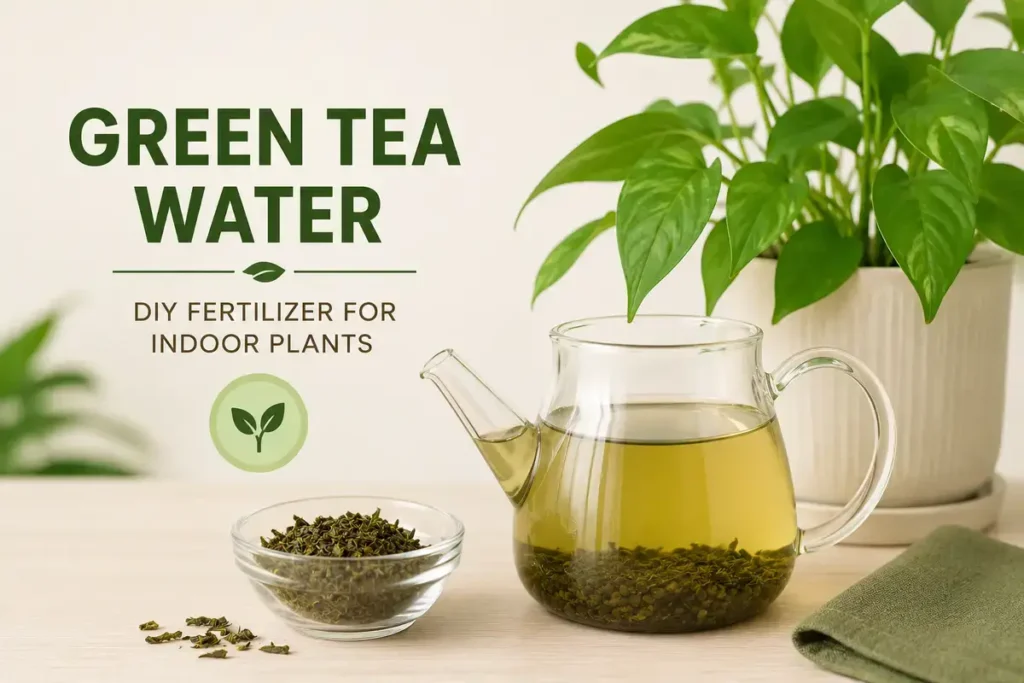
Recipe 9: Green Tea Water
Used green tea provides tannic acid, nitrogen, and trace minerals with a mild pH-lowering effect suitable for slightly acid-loving plants.
How to make it: Steep two to three used green tea bags in one quart of room temperature water for 24 hours. Strain and apply directly.
How often: Every three to four weeks through the growing season.
Best for: Ferns, peace lilies, pothos, and other tropical foliage plants preferring slightly acidic soil. Gentler than coffee ground water, making it safer for plants with moderate rather than strong acid preferences.
A Simple DIY Fertilizer Rotation Schedule
Using two to three options in rotation covers a broader nutritional range than any single ingredient. A practical four-week rotation for most houseplants:
Weeks 1 and 5: Worm casting tea or aquarium water for broad-spectrum nutrition and soil biology. Weeks 3 and 7: Banana peel water for potassium and phosphorus supplementation.
Repeat through spring and summer. For foliage plants swap banana peel water with rice water to shift emphasis toward nitrogen. For flowering plants add eggshell water every four weeks for calcium during bloom periods.
For a complete comparison of DIY fertilizers alongside commercial natural options, natural fertilizer for indoor plants covers every approach with effectiveness comparisons. For the full homemade fertilizer guide with additional recipes, homemade fertilizer for indoor plants covers every option in detail.
Common DIY Fertilizer Mistakes to Avoid
Fertilizing dry soil. Water the plant the day before applying any fertilizer. Dry roots absorb fertilizer in concentrated bursts that cause burn even with gentle natural options.
Fertilizing in fall and winter. Most houseplants slow growth from October through February. Unused nutrients accumulate in pot soil and reach concentrations that affect root health. Feed spring through late summer only.
Adding solid scraps directly to pot surfaces. Banana peels, eggshells, and coffee grounds on the soil surface decompose slowly indoors and encourage mold and fungus gnats. Always use the water-extraction method.
Expecting immediate results. Natural fertilizers release nutrients gradually. Allow four to six weeks of consistent biweekly feeding before assessing results.
Signs Your Indoor Plant Needs Fertilizer
Pale or yellowing older leaves while new growth appears normal suggests nitrogen deficiency moving from older to newer tissue.
Slow or stalled growth during active growing season despite adequate light and water suggests general nutritional depletion in older potting mix.
Small new leaves noticeably smaller than previous growth suggests phosphorus or overall deficiency.
A plant in the same potting mix for more than a year without fertilization has almost certainly depleted available nutrients. Starting a consistent routine prevents deficiency rather than correcting it after visible symptoms appear.
How DIY Fertilizers Connect to Pest Resistance
Well-nourished plants resist pests more effectively than stressed ones. Aphids, spider mites, and other sap-feeding insects target plants under nutritional stress because stressed plants produce higher concentrations of the amino acids these insects feed on. Strong cell walls from adequate nutrition also provide a mechanical barrier against pest feeding.
Consistent DIY fertilizing through the growing season is therefore a pest management practice as much as a nutritional one. For context on how plant nutrition connects to pest resistance across the most common indoor pest species, bugs in indoor plant soil covers this relationship alongside full treatment guidance.
How DIY Fertilizers Interact With Soil Amendments
DIY liquid fertilizers work most effectively when the potting mix itself is in good condition. Compacted old mix limits how evenly fertilizers distribute through the root zone and how efficiently roots absorb nutrients.
If your plant has been in the same mix for more than 18 months, repotting into fresh mix before starting a fertilizer routine produces better results than fertilizing exhausted old soil. Combining DIY liquid fertilizers with soil amendments like worm castings and coco coir creates the most complete growing environment: castings provide slow-release solid nutrition and microbial life while liquid fertilizers provide fast-available nutrition on a biweekly schedule. For the complete guide to building soil mixes that work best alongside DIY fertilizer routines, soil mixture for indoor plants covers every recipe with exact ratios and ingredient explanations.
Tracking Your DIY Fertilizer Routine
One practical challenge with DIY fertilizers is remembering when you last applied each one, particularly when rotating between two or three options. A simple tracking approach that works for most collections is a small notebook or phone notes entry recording the date and which fertilizer was applied to each plant.
For collections larger than five or six plants, grouping plants by schedule based on type works better than tracking individually. Tropical foliage plants as a group receive worm casting tea every two weeks. Flowering plants receive banana peel water every two weeks alternating with eggshell water every four weeks. Succulents and cacti receive a much-diluted version of any option once every four to six weeks through summer since their nutritional demand is significantly lower than tropical plants.
Keeping group schedules consistent eliminates guesswork and ensures every plant receives appropriate nutrition without over-applying to low-demand species or under-applying to heavy feeders.
Seasonal Adjustments to Your DIY Fertilizer Routine
Most indoor plant owners treat fertilizing as a year-round practice, which is one of the more common reasons plants show salt accumulation symptoms in winter despite attentive care.
Most tropical houseplants reduce their growth rate significantly from October through February as day length shortens and indoor light intensity drops. During this period plants absorb and use nutrients at a fraction of the rate they do in spring and summer. Nutrients applied during slow-growth periods accumulate in the limited soil volume of pots since roots are not drawing them down at the same rate.
Spring (March through May): Restart fertilizing with half the normal frequency for the first four weeks as plants ramp up their growth rate. Increase to the full biweekly schedule once new growth is actively appearing.
Summer (June through August): Full biweekly schedule at normal rates. This is the peak nutritional demand period for most tropical houseplants and the time when consistent feeding shows the most visible results.
Early Fall (September through October): Reduce to once monthly as day length shortens and growth begins slowing. This transition period benefits from lighter feeding rather than an abrupt stop.
Winter (November through February): Stop fertilizing most houseplants entirely. The exception is plants actively flowering in winter (some orchids, winter-blooming succulents) which can receive a half-strength application once monthly through their bloom period.
Adjusting the schedule seasonally prevents the salt accumulation that builds up with year-round feeding at growing-season rates and matches the plant’s actual nutritional demand through each phase of its annual growth cycle.
What to Do When DIY Fertilizing Is Not Showing Results
If four to six weeks of consistent biweekly DIY fertilizer application has not produced visible improvement in plant growth or leaf color, the cause is almost always one of four things unrelated to the fertilizer itself.
Insufficient light: No amount of fertilizer compensates for inadequate light. Plants in insufficient light cannot photosynthesize effectively and therefore cannot use the nutrients provided regardless of how well-formulated the fertilizer is. If improvement is not appearing after consistent feeding, assess whether the plant is receiving the light its species requires before increasing fertilizer frequency or concentration.
Overwatering: A plant with root rot from overwatering cannot absorb nutrients efficiently since damaged roots lose their ability to take up water and dissolved minerals through normal absorption mechanisms. If the plant shows consistent yellowing, wilting despite moist soil, and soft or mushy soil smell, overwatering rather than nutritional deficiency is the more likely cause.
Old compacted potting mix: Potting mix that has been in use for more than 18 months often loses the drainage and aeration structure that allows liquid fertilizer to distribute evenly through the root zone. In severely compacted old mix, liquid fertilizer runs along the edges of the pot and out the drainage holes without penetrating the root zone where plants need it. Repotting into fresh amended mix produces more immediate results than any change to fertilizer type or frequency.
pH imbalance: Soil pH outside the optimal range for a specific plant locks nutrients into chemically unavailable forms even when those nutrients are present in adequate quantities. Iron, manganese, and several trace minerals become unavailable above pH 7.0, producing deficiency symptoms in plants growing in overly alkaline potting mix regardless of fertilizer applications. An inexpensive pH test kit from any garden center confirms whether pH imbalance is preventing nutrient uptake.
Addressing these four underlying factors before changing the fertilizer type or increasing application frequency saves weeks of troubleshooting and usually produces faster visible improvement than any adjustment to the DIY fertilizer routine itself. Fertilizer works best as a complement to correct light, watering, and soil conditions rather than as a fix for problems those foundational factors are causing.
Conclusion
DIY fertilizer for indoor plants works best when nutrients are presented in soluble form through water-extraction methods rather than as solid organic matter on pot surfaces. Worm casting tea provides the most complete nutrition. Banana peel water and eggshell water target potassium and calcium needs for flowering and fruiting plants. Rice water, vegetable cooking water, and aquarium water provide gentle general nutrition at zero cost.
Build a simple two-product rotation applied every two weeks through spring and summer. Water before fertilizing. Stop in fall and winter. Give four to six weeks for visible results. That consistent approach delivers the natural nutrition that keeps most common houseplant collections visibly healthier through the entire growing season.
Frequently Asked Questions
What is the easiest DIY fertilizer for indoor plants?
Aquarium water from a freshwater fish tank requires zero preparation and is available free every time you perform a routine water change. For anyone without fish, vegetable cooking water cooled to room temperature is equally zero-effort and available whenever you cook vegetables without salt.
How do I know if my DIY fertilizer is working?
Signs include noticeably larger new leaves, darker green color in foliage plants, increased flower production, and more vigorous overall growth. Allow four to six weeks of consistent biweekly feeding before expecting visible results since natural fertilizers release nutrients gradually.
Can I mix different DIY fertilizers together?
Most combinations are safe. Banana peel water and eggshell water combine well, providing both potassium and calcium. Avoid mixing coffee ground water with eggshell water since their opposite pH effects partially neutralize each other, reducing the benefit of both.
Are DIY fertilizers safe for all indoor plants?
Most options on this list are safe for the majority of houseplant types. Coffee ground water and green tea water should be reserved for acid-loving plants and used only occasionally on neutral-soil species. Worm casting tea, aquarium water, banana peel water, rice water, and vegetable cooking water are safe for virtually all common houseplant species.
How long do DIY fertilizers last after preparation?
Use most within 24 to 48 hours since they degrade quickly. Rice water and vegetable cooking water within 24 hours. Banana peel water within 48 hours refrigerated. Worm casting tea immediately after aeration stops. Make fresh small batches for each application.
Do DIY fertilizers work as well as commercial ones?
For most common houseplant applications with consistent biweekly applications, DIY natural fertilizers produce comparable results to commercial organic fertilizers and better long-term soil health than synthetic fertilizer use. Commercial synthetics produce faster initial visible results. Most indoor plant owners find DIY fertilizers fully meet plant needs when applied consistently every two to three weeks through the growing season.