Coconut coir for indoor plants has moved from specialty gardening stores into mainstream garden centers over the past decade for a straightforward reason: it performs as well as peat moss in most indoor plant applications while being genuinely sustainable, pH neutral, and easier to re-wet after drying. Coco coir is a byproduct of coconut husk processing, which makes it a renewable material rather than a finite one, and its neutral pH of approximately 6.0 makes it safe for a wider range of plant types than peat without the acidity concerns that limit where peat can be used.
Understanding exactly what coconut coir does in soil mixes and how to use it practically separates the gardeners who get real results from those who add it without knowing why and see little difference from standard potting mix alone.
Quick Answer
Coconut coir for indoor plants improves moisture retention, soil structure, aeration, and drainage when added to standard potting mixes. Use it at 20 to 30% of total mix volume for most tropical houseplants, as a seed starting medium, in hydroponic systems, as a top dressing to slow surface moisture loss, or as a peat moss substitute in most soil recipes. It does not provide significant nutrition on its own and needs to be combined with fertilizer or nutrient-rich amendments like worm castings for complete plant care.
What Coconut Coir Actually Is and Its Three Forms
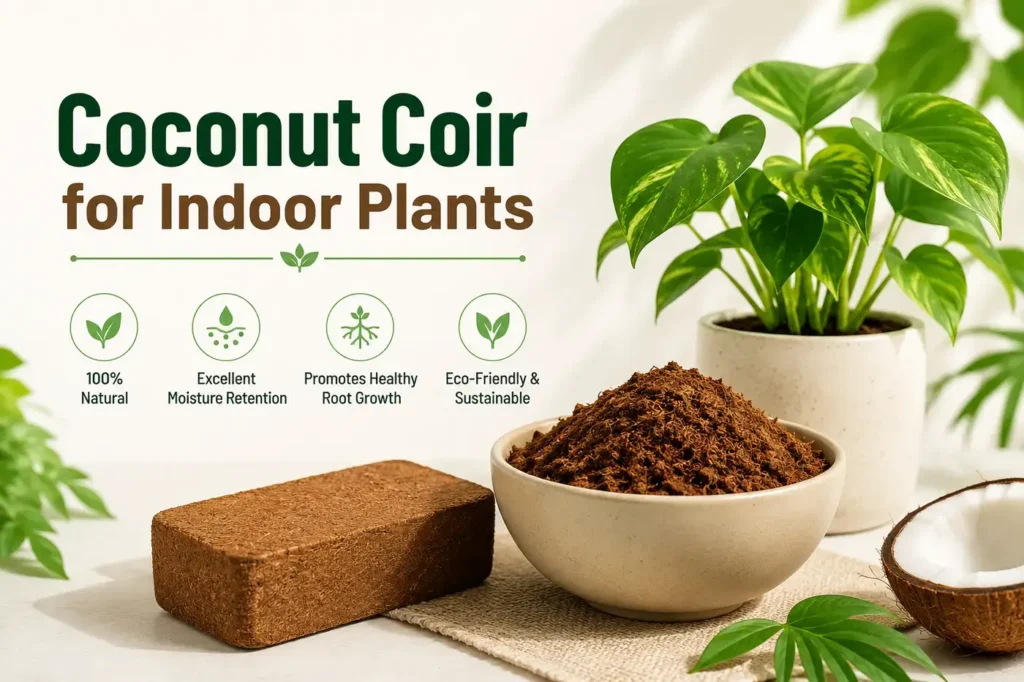
Coconut coir is the fibrous material found between the outer shell and the inner white flesh of coconuts. Coconut processing separates this fiber, which is then washed, dried, and processed into three distinct forms used in indoor gardening.
Coir fiber consists of the longest, coarsest strands of the husk material. It creates air channels in soil mixes and improves drainage. It holds less moisture than the other two forms but provides the most structural benefit for root aeration.
Coir pith (also called coco peat) is the fine, spongy material that surrounds the longer fibers. It resembles dark crumbly soil and has the highest water-holding capacity of the three forms. Most bagged coco coir products sold as potting amendments are primarily coir pith.
Coir chips are medium-sized pieces that behave similarly to orchid bark, providing drainage and aeration with moderate moisture retention. They work particularly well in orchid mixes and for plants with large root systems that need both moisture and excellent drainage.
Most commercially available coco coir for indoor plant use is either pith alone or a blend of pith and fiber. Check the product description before buying if you need a specific form for a particular application.
8 Uses of Coconut Coir for Indoor Plants
Use 1: Moisture Retention Amendment in Potting Mixes
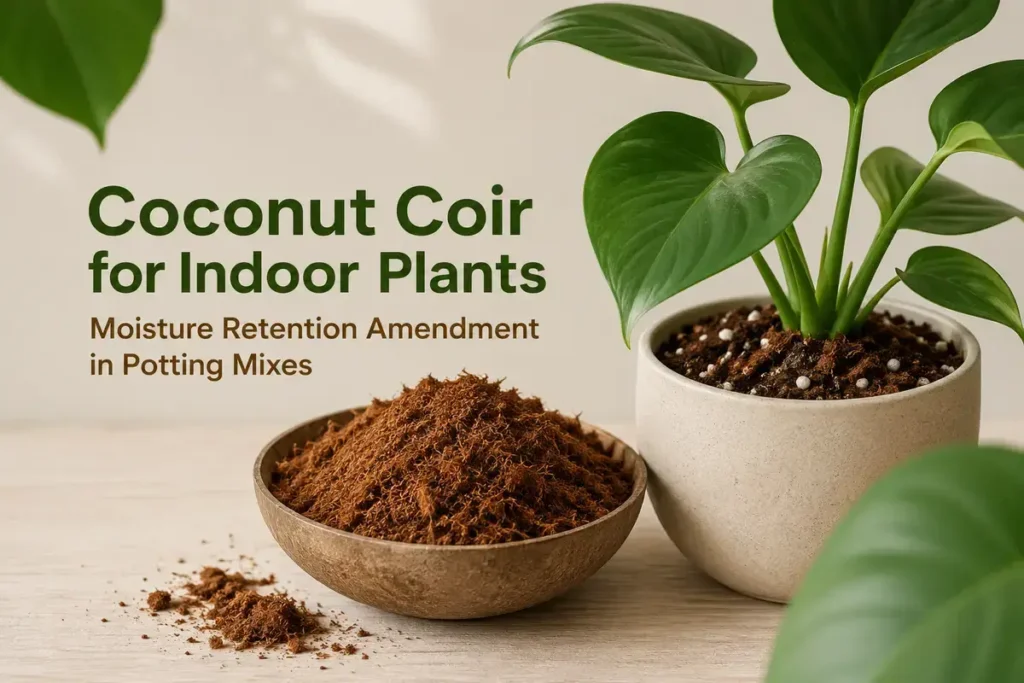
This is the most common and most broadly applicable use of coco coir for indoor plants. Adding 20 to 30% coco coir to standard potting mix significantly increases the water-holding capacity of the growing medium, which benefits moisture-loving plants that dry out too quickly in standard mix alone.
Tropical foliage plants including peace lilies, calatheas, ferns, and marantas experience noticeable improvement in growth and leaf health when grown in coir-amended soil compared to standard potting mix. The more consistent moisture level reduces the stress of drought-and-flood watering cycles that standard mixes in smaller pots often create.
The advantage over peat moss in this role is pH. Coir at neutral pH does not gradually acidify the potting mix the way peat does with repeated watering, making it safe for plants across a wider pH preference range without monitoring for gradual soil acidification over time.
Use 2: Drainage Improvement Alongside Perlite
Counterintuitively, coco coir improves both moisture retention AND drainage simultaneously because of how its fiber structure creates pore spaces of two different sizes. Fine pores in the coir pith retain water through surface tension and capillary action. Larger pores between coir particles drain freely and remain air-filled after watering.
This dual-pore structure means a mix containing coco coir drains more freely than one with peat moss alone while retaining more moisture than one with perlite alone. For most common tropical houseplants, a mix of 50% standard potting mix, 25% coco coir, and 25% perlite delivers the balance of drainage and moisture retention that produces the healthiest root systems.
Use 3: Seed Starting Medium
Coco coir is one of the most effective seed starting mediums available because its fine texture creates good seed-to-medium contact, its moisture retention keeps seeds consistently moist during germination, and its neutral pH does not create the acidic environment that inhibits germination in sensitive species the way peat-based seed starting mixes can.
Use pure coco coir or a 50/50 blend of coco coir and vermiculite for seed starting. The vermiculite adds slight nutrient retention that supports seedlings through their first weeks. Switch to a nutrient-containing potting mix once seedlings develop their first true leaves since coir alone does not provide significant nutrition for sustained seedling growth.
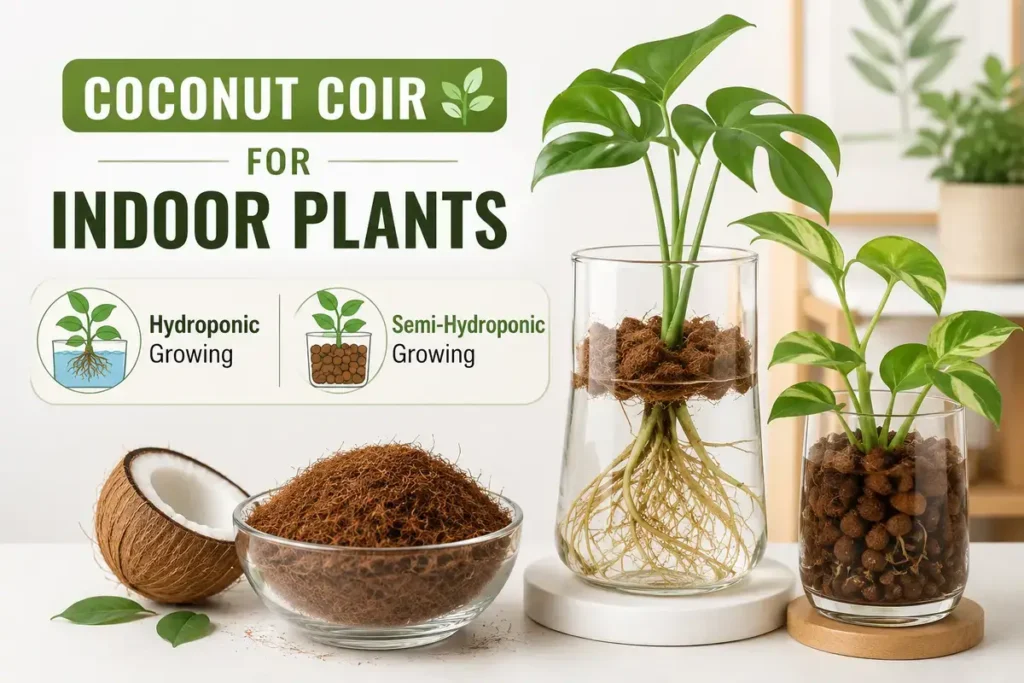
Use 4: Hydroponic and Semi-Hydroponic Growing
Coco coir is one of the most widely used substrates in commercial hydroponic growing and adapts well to the semi-hydroponic houseplant methods that have gained popularity with indoor gardening enthusiasts. In semi-hydroponic setups, plants grow in coir rather than potting soil with their roots in contact with a reservoir of nutrient solution through capillary wicking.
The advantages of coir for this application are its excellent aeration, its consistent moisture delivery through capillary action, and its neutral pH that does not interfere with the nutrient solution chemistry the way acidic peat would.
For indoor gardeners interested in semi-hydroponic growing, rinsing coco coir thoroughly before use removes the natural salts present from coastal processing locations, which would otherwise interfere with nutrient solution uptake and plant root health.
Use 5: Peat Moss Substitute in Existing Recipes
For any soil mix recipe that calls for peat moss as a moisture-retaining component, coco coir substitutes directly at a one-to-one ratio with one significant consideration: the pH difference.
Peat at pH 3.5 to 4.5 acidifies the mix it is part of. Coir at pH 6.0 does not. For moisture-loving tropical plants that prefer neutral to slightly acidic conditions, this pH difference is an advantage and coir is the better choice. Coir alone cannot replicate the full benefit of peat without adding separate pH-lowering amendments for strongly acid-loving plants like gardenias, blueberries, and carnivorous plants where the low pH of peat is essential rather than incidental
For the complete comparison of when to use peat versus coir and the pH implications for different plant types, peat moss for indoor plants covers the acidity differences and specific plant recommendations in full detail.
Use 6: Top Dressing to Slow Surface Moisture Loss
Applying a thin layer of coco coir across the soil surface of indoor plant pots works as a living mulch that slows surface evaporation between waterings. This is particularly useful in heated indoor environments during winter where low humidity and warm air dry the soil surface quickly, or for plants on high, well-lit shelves where air circulation accelerates drying.
Apply a quarter-inch to half-inch layer of coco coir pith across the entire soil surface. Water normally through the coir layer since it allows water to pass through freely while slowing evaporation from the soil below. The coir top dressing also reduces the algae growth on soil surfaces that provides a food source for shore flies and, to a lesser degree, fungus gnats.
Use 7: Propagation and Cutting Medium
Coco coir works well as a rooting medium for plant cuttings because its moisture retention keeps the cut base consistently moist during the rooting period while its fiber structure allows the fine oxygen access that developing root tips require. The absence of significant nutrients in coir means rooting cuttings are not overwhelmed with fertilizer at their most sensitive development stage.
For most common houseplant cuttings, a 50/50 mix of coco coir and perlite provides the right balance of moisture and aeration for healthy root development within two to four weeks depending on the species. Combine with worm casting tea applications every two weeks to provide the growth hormones and beneficial microorganisms that accelerate root development without the burn risk of concentrated fertilizer. For guidance on using worm castings alongside coco coir for both propagation and established plant feeding, worm castings for indoor plants covers every application method with specific timing guidance.
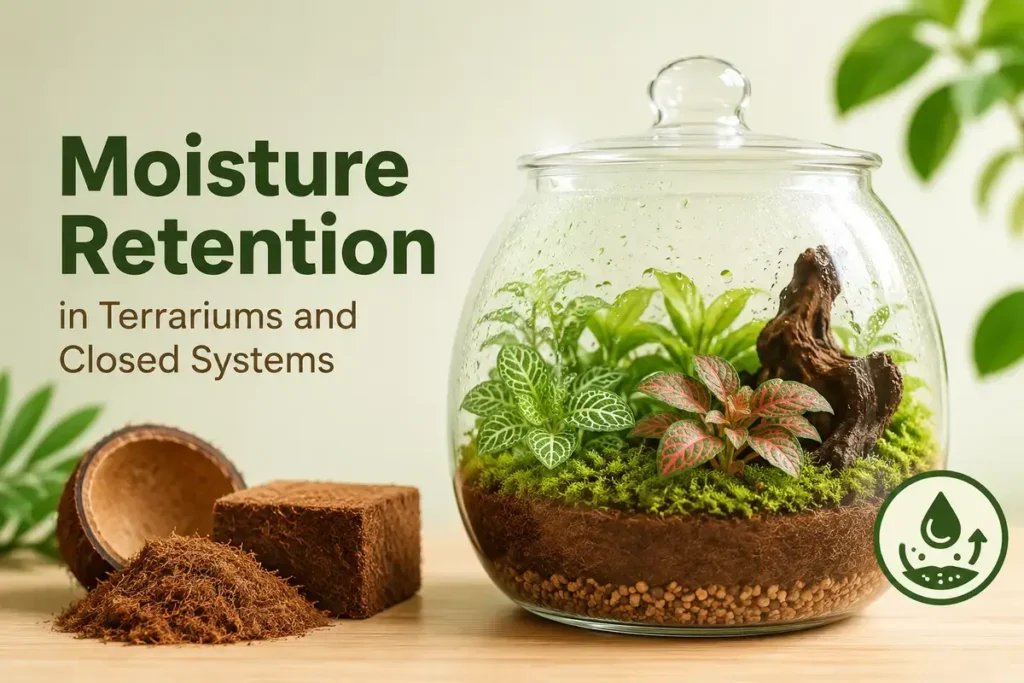
Use 8: Moisture Retention in Terrariums and Closed Systems
Closed terrariums and bottle gardens rely on the water cycle within the sealed container to maintain consistent moisture for the plants inside. Coco coir as a base layer beneath the planting substrate provides the moisture reservoir that sustains this water cycle between the rare occasions when the terrarium is opened for intervention.
In open terrariums for tropical plants, coco coir in the planting mix reduces how frequently watering is needed by extending the moisture retention of the system. Its neutral pH suits the range of tropical miniature plants typically used in terrarium settings better than acidic peat would for most species.
Layer 1 to 2 inches of coco coir at the bottom of a terrarium before adding the main planting substrate, or incorporate it at 25% of the total substrate volume for even moisture distribution throughout the planting layer.
How to Prepare Coco Coir Before Use
Most coco coir sold for gardening comes compressed into dense bricks or blocks that expand dramatically when water is added. A standard 650-gram compressed brick expands to approximately 8 to 10 liters of usable coir, which represents significant volume for a compact product.
To hydrate a compressed coir brick: Place the brick in a large bucket or container. Pour warm water over the brick slowly, starting with approximately 4 liters per standard brick. Allow the brick to absorb the water and expand for 10 to 15 minutes. Break apart any remaining compressed sections with your hands and add more water as needed until the coir is evenly moist throughout and fluffy in texture rather than dense and compact.
Squeeze a handful of the hydrated coir. Water should not drip out freely. If it does, the coir is too wet and needs to sit uncovered for 30 minutes before use to allow excess moisture to evaporate. The correct moisture level for mixing with potting soil is damp but not dripping.
Rinsing for hydroponic or semi-hydroponic use: Coir processed near coastal locations sometimes contains natural salts from seawater exposure during husk collection and drying. For standard potted plant use, these salt levels are low enough that rinsing is optional. For hydroponic or semi-hydroponic use where the root system is in direct continuous contact with the coir and where nutrient solution chemistry matters precisely, rinse the hydrated coir with fresh water twice before use to reduce salt content.
Coconut Coir vs Peat Moss: When to Choose Each
| Factor | Coconut Coir | Peat Moss |
|---|---|---|
| pH | Neutral (6.0) | Acidic (3.5-4.5) |
| Moisture retention | High | Very high |
| Re-wetting after dry | Easy | Difficult (hydrophobic) |
| Sustainability | Renewable byproduct | Non-renewable |
| Best for | Most tropical houseplants | Acid-loving plants |
| Nutrient content | Minimal | Minimal |
| Structural longevity | 18-24 months | 12-18 months |
For most indoor plant collections with diverse plant types, coco coir is the more versatile and forgiving choice because its neutral pH works across a broader range of species without monitoring for gradual acidification. Reserve peat moss specifically for the acid-loving species where its low pH is genuinely needed rather than as a default moisture amendment for every plant type.
Frequently Asked Questions
Is coconut coir better than potting soil for indoor plants?
Coco coir is not a replacement for potting soil but rather an amendment added to it. Potting soil provides the base structure, initial nutrients, and mineral content plants need. Coco coir improves the moisture retention and aeration of that base. The most effective indoor plant growing medium for most tropical species combines both: 50 to 70% quality potting mix with 20 to 30% coco coir and 15 to 20% perlite for drainage.
Does coconut coir provide nutrients to indoor plants?
Coco coir provides minimal nutrition on its own. It contains small amounts of potassium and sodium that can actually compete with other nutrient uptake in some circumstances, particularly in hydroponic growing where nutrient solution balance is precise. For potted plant use, the nutritional contribution is negligible and plants grown in coir-amended mixes need regular fertilization through the growing season just as they would in standard potting mix.
How long does coco coir last in indoor plant soil?
Coco coir breaks down more slowly than peat moss due to its higher lignin content, typically maintaining its structural benefits for 18 to 24 months before needing replacement through repotting into fresh mix. This slower breakdown rate is one of the practical advantages of coir over peat for indoor use, as it extends the interval between repottings while maintaining the drainage and aeration properties that make it effective.
Can I use coco coir for succulents and cacti?
Yes, in moderation. Coco coir at 15 to 20% of the total mix combined with 50% or more perlite or coarse sand is appropriate for succulents and cacti where you want some moisture retention alongside excellent drainage. Avoid using coir at higher ratios in succulent mixes since the moisture retention begins to exceed what desert plants need and increases root rot risk. The neutral pH of coir, unlike acidic peat, does not create pH concerns for succulents.
How do I stop coco coir from repelling water?
Unlike peat moss, properly hydrated coco coir does not become hydrophobic when dry. If coir-amended soil is repelling water after drying out, the problem is likely the standard potting mix components in the blend rather than the coir itself. Soak the entire pot in a basin of water for 20 to 30 minutes to re-hydrate the full root zone, allow it to drain completely, and then resume normal watering before the mix dries as severely in future.
Is coco coir safe for all indoor plants?
Coco coir is safe for virtually all common indoor plants at appropriate ratios. Its neutral pH of approximately 6.0 suits the widest range of houseplant types without concern for gradual acidification over time. The only consideration for some hydroponic growers is the natural salt content in some coir products, which can be managed by rinsing before use. For standard potted plant use, commercially available coco coir products are safe and appropriate for use without rinsing.
Where to Buy Coco Coir and What to Look For
Coco coir is widely available at garden centers, home improvement stores, and online retailers in several formats suited to different uses and purchase quantities.
Compressed bricks are the most economical format and the most common in retail settings. A single compressed brick costing two to four dollars expands to 8 to 10 liters of usable coir. They store compactly without losing quality for years when kept dry.
Loose bagged coir is more convenient for immediate use since no hydration preparation is needed. More expensive per volume than compressed bricks but saves preparation time for smaller quantities.
Coco coir chips for orchid and aroid mixes are sold separately from standard pith-based products. Look for chip sizes of approximately half-inch to one-inch diameter for most orchid applications.
Widely available brands:
Canna Coco, Burpee Natural and Organic Coconut Coir Blend, and Prococo are three of the most consistently available and reviewed coir products at major US retailers. All three maintain good fiber structure and expand reliably when hydrated.
What to look for:
A consistent medium to dark brown color without white salt deposits on the surface, which would indicate inadequate washing during processing. Good expansion when water is added, reaching the expected 8 to 10x volume increase. Minimal fine dust content since excessive dust indicates over-processing that reduces the structural benefit of the fiber.
Coir quality and growing outcomes:
Lower-quality coir products sometimes contain higher salt content from inadequate washing or uneven fiber-to-pith ratios that affect performance. For standard indoor plant use these differences are rarely critical. For hydroponic or precision gardening applications where root chemistry matters precisely, investing in a higher-quality product with documented EC (electrical conductivity) and pH testing from the manufacturer produces more consistent results.
Coco coir is widely available year-round and stores well, making it one of the most practical amendments to keep on hand for routine repotting. For the complete guide to building soil mixes using coco coir, peat moss, perlite, and worm castings in ratios suited to every common indoor plant type, soil mixture for indoor plants covers every recipe with exact measurements and ingredient substitution guidance. And for the natural fertilizer options that work alongside coco coir to provide the nutrition it cannot supply on its own, natural fertilizer for indoor plants covers every effective feeding approach for coir-amended indoor plant soil.
Conclusion
Coconut coir for indoor plants is one of the most practical and broadly applicable soil amendments available today. Its moisture retention benefits moisture-loving tropicals. Neutral pH of its makes it safe across the widest range of plant types. Its ease of re-wetting solves the hydrophobic problem that dry peat creates. Its fiber structure improves both drainage and aeration simultaneously. And its sustainability credentials make it the clear environmental choice over peat for the majority of indoor plant applications where the specific acidity of peat is not required.
Add it at 20 to 30% of your total soil mix for tropical houseplants, use it as a seed starting and propagation medium, apply it as a surface dressing to slow moisture loss, and substitute it directly for peat moss in any recipe where the pH difference works in your favor. Combined with perlite for drainage and worm castings for nutrition, coco coir forms the foundation of one of the most effective and sustainable indoor plant growing media available without a single synthetic component.