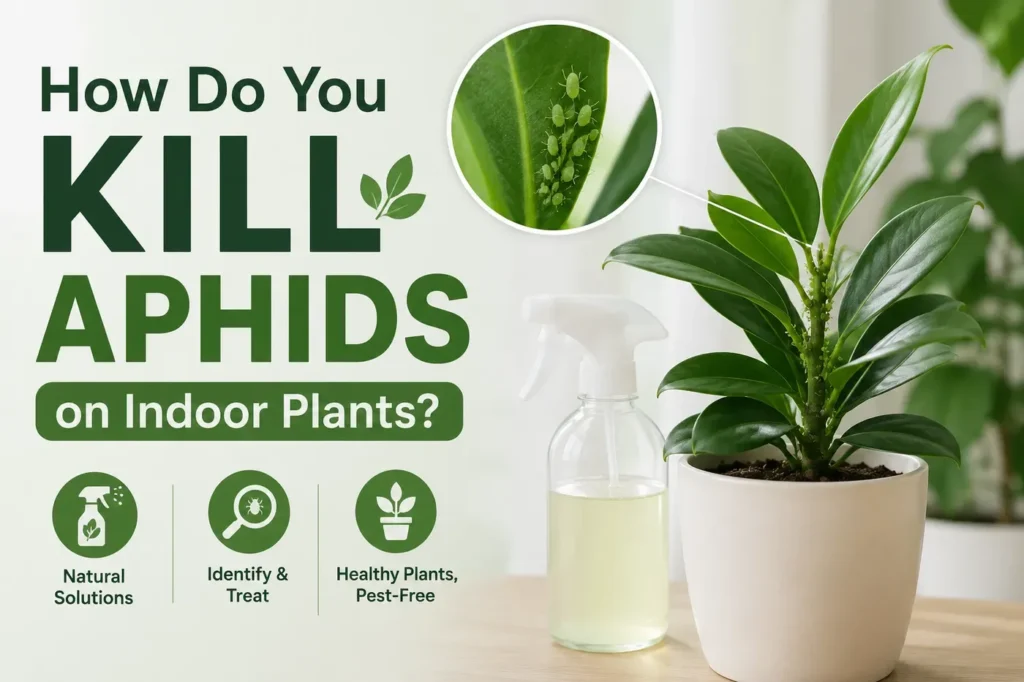
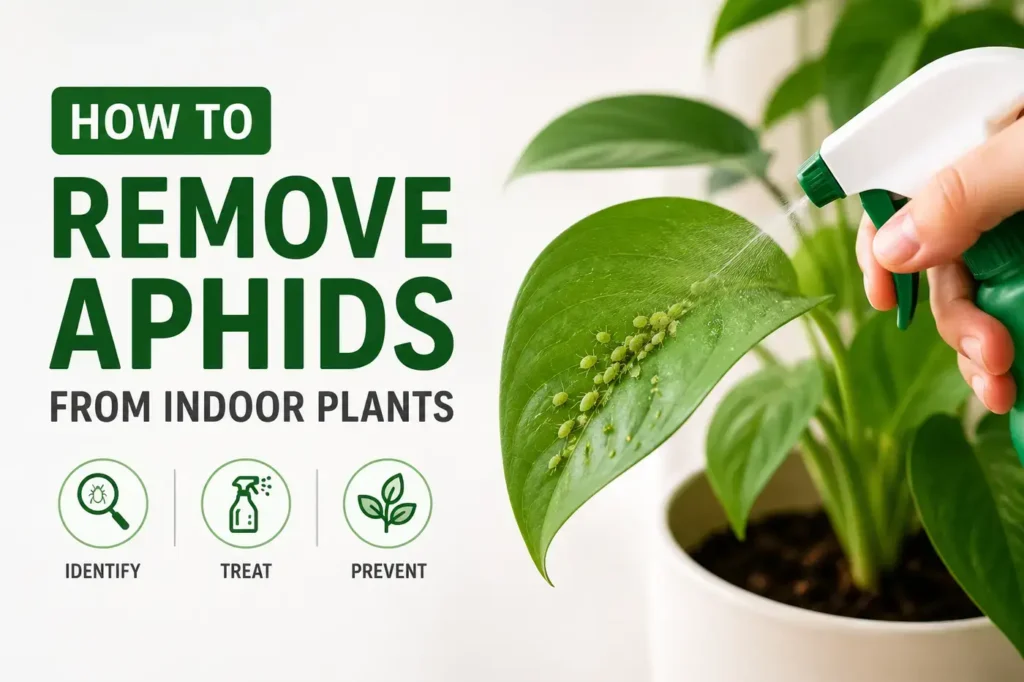
Knowing how to remove aphids from indoor plants is one of those skills that every houseplant owner eventually needs, and the difference between a quick resolution and a weeks-long battle almost always comes down to which method you choose first and how consistently you apply it. Removing aphids from indoor plants is not complicated but it does require understanding that these insects have a two-stage problem: the adults you can see and the eggs you cannot. Every method on this list addresses the visible population with varying degrees of effectiveness. The ones that work long-term are the ones that also account for what hatches after the visible insects are gone.
This guide ranks 7 aphid removal methods from easiest and most immediate to most intensive, so you can match the approach to the severity of what you are dealing with rather than starting with the most aggressive treatment when a simpler one would resolve the problem faster.
Quick Answer
To remove aphids from indoor plants, start by wiping visible clusters off with a damp cloth, then spray the entire plant with a dish soap solution covering all leaf undersides completely. Repeat every 3 to 4 days for two full weeks. For established infestations, switch to neem oil spray or combine both. Manual removal followed by consistent spray treatment resolves most indoor aphid infestations within two to three weeks when applied to every plant in the area simultaneously.
Before You Start: Check Every Plant in the Area
Before applying any removal method to the plant you noticed first, inspect every plant within 3 feet of it. Aphids spread between plants faster than most people realize, and treating one plant while leaving early-stage colonies on neighboring plants means the problem returns within days of finishing treatment on the primary one.
Check leaf undersides along the central vein, stem tips, and new growth at the top of each plant. Look for sticky residue on leaves or surrounding surfaces even if you cannot see insects since honeydew appears before heavy colonies become obviously visible.
Treat every plant in the area with your chosen method on the same schedule as the primary infested plant. This parallel treatment is the single most important factor in whether the infestation stays resolved or cycles back.
7 Methods to Remove Aphids From Indoor Plants
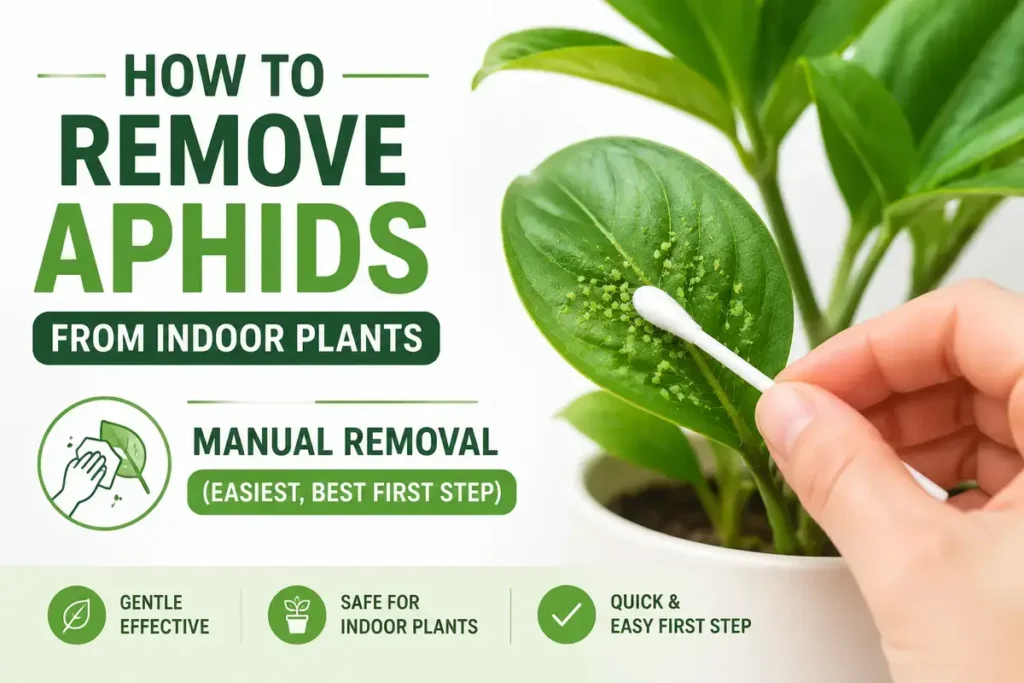
Method 1: Manual Removal (Easiest, Best First Step)
Manual removal is the fastest way to achieve immediate control of an aphid population and the right first step before applying any other method. Removing visible insects before spraying gives every subsequent spray treatment a smaller population to deal with, which improves results from the first application.
How to do it: Put on disposable gloves and wipe aphid clusters off stems and leaf undersides using a damp cloth, paper towel, or soft brush. Work from the top of the plant downward, checking every stem junction and leaf underside where clusters concentrate. For leaves with heavy infestations that cannot be cleaned effectively, remove them completely and seal in a plastic bag before disposing in household trash rather than compost.
What it handles: Visible adult aphids and nymphs on accessible plant surfaces
What it misses: Eggs, aphids hidden in tightly curled leaves, and the aphid population on neighboring plants
Best for: All infestation levels as an immediate first response before any spray application. Even for severe infestations, starting with manual removal makes every spray treatment that follows more effective.
Follow with: Any of the spray methods below, applied immediately while the remaining population is at its lowest point.
Method 2: Water Spray Knockdown
A strong spray of water dislodges aphids physically and kills a significant portion through the force of impact, with zero chemical input and zero cost.
How to do it: Take the plant to a sink or shower and spray every leaf surface with a firm stream of water, working methodically across all surfaces and paying particular attention to leaf undersides where aphids concentrate. Hold the stream close enough to dislodge insects through physical force rather than just wetting the surface.
What it handles: Adult aphids and nymphs on accessible surfaces, particularly effective for small to medium plants where every surface can be reached systematically
What it misses: Eggs, aphids hidden inside tightly furled leaves, and any aphids that climb back up the pot or surface after being knocked off
Best for: Mild infestations caught early, or as a daily knockdown treatment between spray applications to keep populations reduced while chemical treatments work through the reproductive cycle
Limitations: Aphids can and do climb back up plant surfaces after being knocked down. Water spray works best as part of a regular routine rather than as a standalone solution for anything beyond the earliest-stage infestation.
Method 3: Dish Soap Spray
Dish soap spray is the most widely used and consistently effective first chemical treatment for indoor aphid removal. The fatty acids in dish soap break down the aphid’s waxy protective cuticle on contact, causing dehydration and death. It is inexpensive, uses materials already in most homes, safe for indoor use around people and pets once dry, and effective against every mobile aphid life stage.
How to make it: Mix 1 teaspoon of plain Dawn Original dish soap with 1 quart of room temperature water in a spray bottle. Shake gently to combine without creating excessive foam that blocks the nozzle.
How to apply it: Spray every plant surface slowly and deliberately from top to bottom, spending most of your time on leaf undersides where aphids feed and lay eggs. Spray until the solution drips freely from leaves. Leave on for 2 to 3 hours then rinse with plain water.
Schedule: Every 3 to 4 days for a minimum of two full weeks.
What it handles: All mobile aphid stages including adults and nymphs across every accessible plant surface it contacts directly
What it misses: Aphid eggs, which have a waxy surface that resists fatty acid penetration, and any insects the spray does not physically reach
Test first: Apply to one leaf and wait 24 hours before treating the whole plant. Ferns, succulents, orchids, and African violets can show sensitivity even at correct dilutions. For a complete breakdown of soap spray effectiveness across different plant types and a comparison with commercial insecticidal soap products, insecticide soap for indoor plants covers every option with specific guidance.
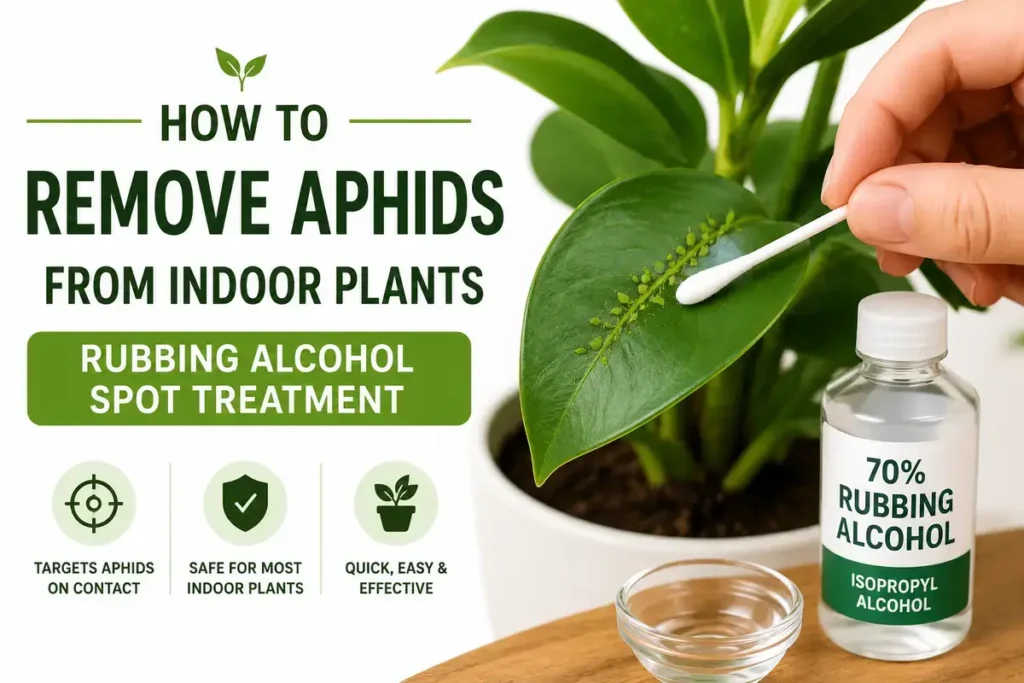
Method 4: Rubbing Alcohol Spot Treatment
Rubbing alcohol kills aphids on contact faster than soap spray and is particularly effective for dense clusters on stems and in tight leaf joints that a spray nozzle cannot reach effectively. It is the best targeted spot treatment for localized infestations while soap or neem oil handles the broader plant surface.
How to use it: Mix 1 part 70% isopropyl rubbing alcohol with 1 part water. Dip a cotton swab in the solution and apply directly to each visible aphid cluster. For broader application, put the diluted solution in a spray bottle and treat the whole plant. Rinse with plain water after 30 minutes.
What it handles: Adult aphids and nymphs on direct contact, particularly effective for dense stem clusters and mealybug-like aphid concentrations in leaf joints
What it misses: Eggs and any aphids the alcohol solution does not contact directly
Best for: Spot treatment of individual clusters between broader spray applications, or for plants that show sensitivity to soap spray since alcohol at correct dilution is tolerated by more plant species than soap
Test first: Apply to a single leaf and wait 24 hours. Most common houseplants tolerate diluted rubbing alcohol without damage but some thin-leaved tropical species show sensitivity.
Method 5: Neem Oil Spray
Neem oil is the most effective organic aphid treatment available for indoor plants because it works through two mechanisms simultaneously. The physical oil properties kill aphids on contact similar to soap spray. The active compound azadirachtin adds hormonal disruption that prevents surviving aphids from feeding, molting, and reproducing normally even if they escape direct spray contact. This double mechanism is why neem oil produces more complete and lasting results than soap spray alone for moderate to severe infestations.
How to make it: Mix 2 tablespoons of pure cold-pressed neem oil with 1 teaspoon of dish soap and 1 quart of warm water. Add soap to water first, stir, then add neem oil. Shake before each use since the mixture separates on standing.
How to apply it: Spray every plant surface in the evening to avoid potential leaf burn from oil concentrating in bright light. Cover leaf undersides, all stem surfaces, and the top layer of soil since soil application provides systemic protection through root uptake.
Schedule: Every 5 to 7 days for two to three weeks. Alternate with soap spray every other application for moderate infestations to benefit from both mechanisms.
What it handles: Adult aphids and nymphs on contact, plus disruption of surviving insects’ reproductive capacity through azadirachtin. More broadly effective than soap alone.
Best for: Moderate to severe infestations where soap spray alone has not produced clear improvement after the first week, or as the primary treatment for large established colonies from the start. For the complete comparison of neem oil against every other spray option for every common indoor plant pest, how do you get rid of aphids on indoor plants walks through the full escalation sequence in order of infestation severity.
Method 6: Introduce Beneficial Predatory Insects
For infestations that have not responded to two or more weeks of consistent soap and neem oil treatment, or for plant owners who want a completely spray-free approach, introducing natural aphid predators is the most effective biological removal method available.
Green lacewing larvae are the most practical choice for indoor use. They stay close to where they are released rather than flying toward light sources like ladybugs do, consume hundreds of aphids each during their larval development, and are available from Arbico Organics and Planet Natural in egg form that hatches within days of placement.
Aphid midges (Aphidoletes aphidimyza) are even more targeted, with each larva killing far more aphids than it eats through a paralyzing compound they inject before feeding. They are the highest-performance biological control for indoor aphid infestations and available from the same suppliers.
How to use them: Stop all spray treatments at least one week before releasing beneficial insects. Place lacewing eggs or aphid midge pupae directly on the most heavily infested plant surfaces. Do not resume spray treatment while beneficial populations are active.
Best for: Severe infestations that have not responded to spray treatment, plant owners committed to a completely chemical-free approach, and large plant collections where spray treatment of every plant is logistically difficult. The complete guide to every beneficial insect that works in an indoor environment is covered in beneficial bugs for indoor plants with sourcing information and introduction guidance for each species.
Method 7: Systemic Insecticide (Last Resort)
When every organic method has been applied consistently for three or more weeks without meaningful improvement, a systemic insecticide applied to the soil provides the most complete remaining option. Systemic products are absorbed through roots and distributed throughout plant tissue, which means aphids ingest the active ingredient when they feed and die regardless of where they are feeding on the plant, including in furled leaves and tight stem junctions that no spray reaches.
Products available: Bonide Systemic Houseplant Insect Control granules are one of the most widely available options at garden centers across the country. Applied to soil as granules and absorbed through roots over several weeks.
Critical limitation: Systemic insecticides are not appropriate for any food-producing plants including herbs, indoor tomatoes, strawberries, or any other edible species. Use only on ornamental houseplants.
Why it is a last resort: The overwhelming majority of indoor aphid infestations, including severe ones, respond fully to consistent soap spray and neem oil treatment within two to three weeks when applied correctly. Systemic insecticides are genuinely needed only in a small fraction of situations and their use represents a significant escalation from the organic methods that handle most cases.
The Removal Schedule That Breaks the Aphid Cycle
Using the right methods on the right schedule is more important than which specific products you choose. This schedule works for most indoor aphid infestations:
Day 1: Manual removal of all visible clusters. Water spray knockdown. First soap spray application covering every leaf surface.
Day 4: Second soap spray application. Check for new visible clusters and manually remove any found.
Day 7: Third soap spray application or first neem oil application if soap alone is not showing clear improvement.
Day 10: Fourth application (soap or neem oil alternating). Check sticky trap catch rates to assess progress.
Day 14: Fifth application. Plant should appear clean at this point but treatment must continue.
Day 17: Sixth application to catch any nymphs hatching from late eggs.
Day 21: Final application. If the plant has shown no new aphid activity for 7 days at this point, the infestation is eliminated.
This 21-day schedule covers the complete aphid reproductive cycle and ensures that every generation emerging from eggs encounters treatment before it can mature and reproduce.
Conclusion
Removing aphids from indoor plants works when you match the method to the severity of the infestation, apply it to every plant in the area simultaneously, and maintain treatment for the full reproductive cycle rather than stopping when visible insects disappear. Manual removal and water spray handle the mildest early-stage infestations. Soap spray resolves most moderate cases within two weeks when applied on a strict every 3 to 4 day schedule with thorough leaf underside coverage. Neem oil handles the cases where soap alone is not sufficient. Beneficial insects address the severe cases where organic sprays have been exhausted.
The method matters less than the consistency. Any of the spray methods on this list, applied thoroughly to every leaf surface on schedule for two full weeks, outperforms the most powerful product applied inconsistently or only to the top surfaces of leaves.
Catch aphids early through weekly inspection of your most vulnerable plants. Treat every plant in the area on day one. Complete the full treatment schedule. Those three habits turn aphid removal from a weeks-long struggle into a routine two-week process that resolves predictably every time.
Frequently Asked Questions
What is the fastest way to remove aphids from indoor plants?
Manual removal followed immediately by direct rubbing alcohol application to remaining clusters is the fastest combination for immediate population reduction. This approach kills visible adults within seconds and physically removes a large portion of the colony in a single session. The fastest complete resolution of the infestation, including eggs and newly hatched nymphs, still requires consistent follow-up spray treatment over two weeks since no single method eliminates the full reproductive cycle in one application.
Can I remove aphids from indoor plants without using any chemicals?
Yes. Manual removal with a damp cloth, water spray knockdown applied every two to three days, and introducing green lacewing larvae or aphid midges provide effective aphid control without any chemical application. These methods work best when the infestation is caught early, before the population becomes too large for physical removal methods to keep pace with the aphid reproductive rate. For severe established infestations, chemical-free approaches require more time and consistency to achieve the same results as soap or neem oil spray.
Should I cut off heavily infested leaves when removing aphids?
Yes for severely infested leaves that cannot be cleaned effectively with manual removal or that are already distorted and unlikely to recover. Removing these leaves eliminates a significant portion of the active colony and prevents the spread of aphids from heavily infested sections to cleaner parts of the plant. Seal removed leaves in a plastic bag before disposing in household trash rather than compost to prevent eggs on the removed material from hatching and establishing a new population.
How do I remove aphids from indoor plants that are too delicate to spray?
For fragile plants that cannot tolerate spray treatments, targeted manual removal with a cotton swab dipped in diluted rubbing alcohol is the most plant-safe option. The precision of cotton swab application allows direct contact with individual aphid clusters without exposing delicate leaves to broad spray coverage. For very sensitive plants, introducing aphid midge larvae provides biological control without any chemical exposure to plant tissue.
Why do aphids come back after I remove them from my indoor plants?
Recurring aphid problems after removal almost always mean that eggs were left behind after the visible population was removed, treatment stopped before the eggs had time to hatch and be treated, a neighboring plant with an early-stage infestation was left untreated and is continuously reinfesting the treated plant, or the plant is under stress that makes it consistently attractive to aphid reinfestation. Completing the full 21-day treatment schedule and treating every plant in the area simultaneously addresses the first three causes. Improving plant health through appropriate light, watering, and nutrition addresses the fourth.
Is it safe to remove aphids from indoor edible herbs?
Yes, manual removal and water spray are completely safe for edible herbs at any point. Dish soap spray at the standard dilution is generally considered safe for edible plants when rinsed thoroughly with plain water before harvest, though many gardeners prefer to use OMRI-listed commercial insecticidal soap products on edibles for additional certainty. Rubbing alcohol and neem oil should be applied with caution to edible plants and plant surfaces should be rinsed thoroughly before harvest following any application.
After Removal: Keeping Aphids Off Your Indoor Plants Long Term
Successfully removing an aphid infestation is satisfying but the work is not fully done until you address the conditions that made your plant attractive to aphids in the first place. A plant that gets treated for aphids and then returned to the same stressful conditions it was growing in before will attract another infestation within weeks regardless of how thoroughly the first one was cleared.
Inspect new plants before bringing them home. Every new plant entering your collection should spend at least one week in a separate room before joining your existing plants. Aphids and aphid eggs on garden center plants are the most common source of first-time infestations in homes that previously had none.
Address plant stress. Aphids preferentially target plants under stress because stressed plants produce higher concentrations of the free amino acids in their sap that aphids feed on. Overwatering, insufficient light, and poor nutrition all create the stress signals that attract aphids. Reviewing and correcting these conditions after treatment reduces the probability of the same plant being targeted again.
Apply monthly preventive neem oil. A diluted neem oil spray applied across your entire plant collection once a month through spring and summer disrupts aphid hormones before any colony establishes, providing a consistent preventive layer that catches problems before they become visible.
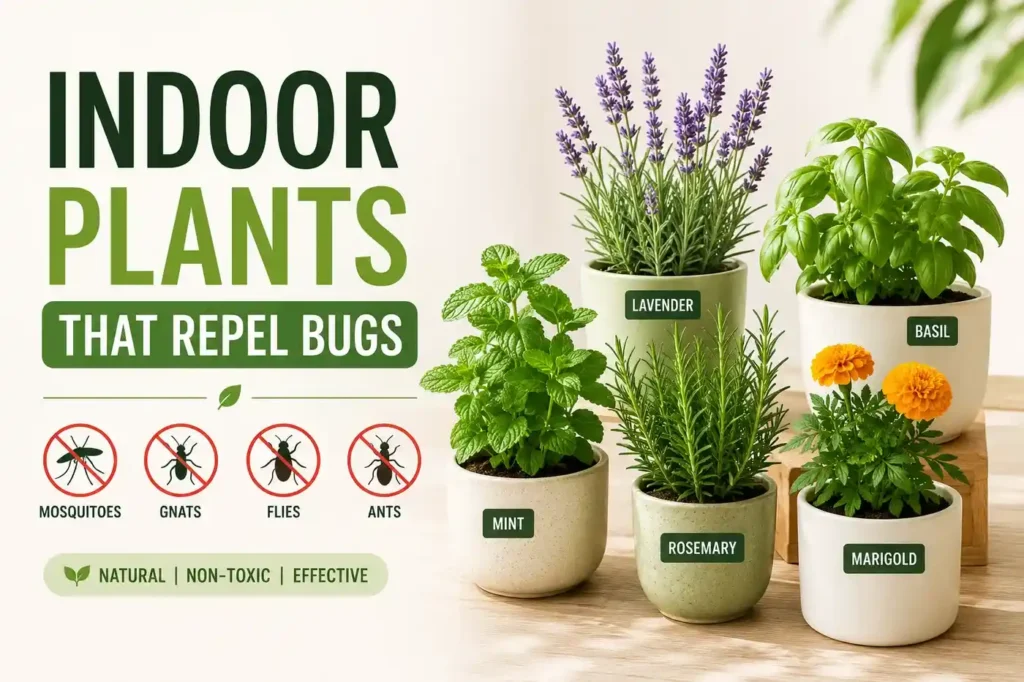
Position companion deterrent plants strategically. Several common houseplants produce compounds that aphids actively avoid. Positioning these near your most vulnerable plants provides ongoing passive deterrence that reduces how frequently aphids establish on the plants you most want to protect. The complete guide to which plants work best as natural aphid deterrents and where to position them for maximum effect is covered in indoor plants that repel bugs.