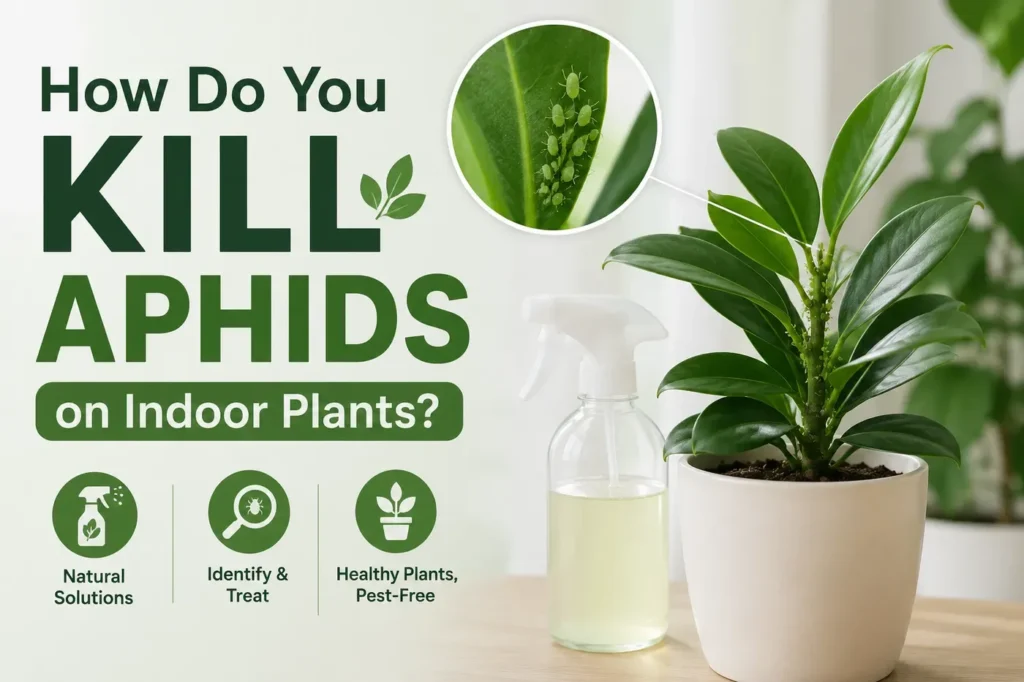
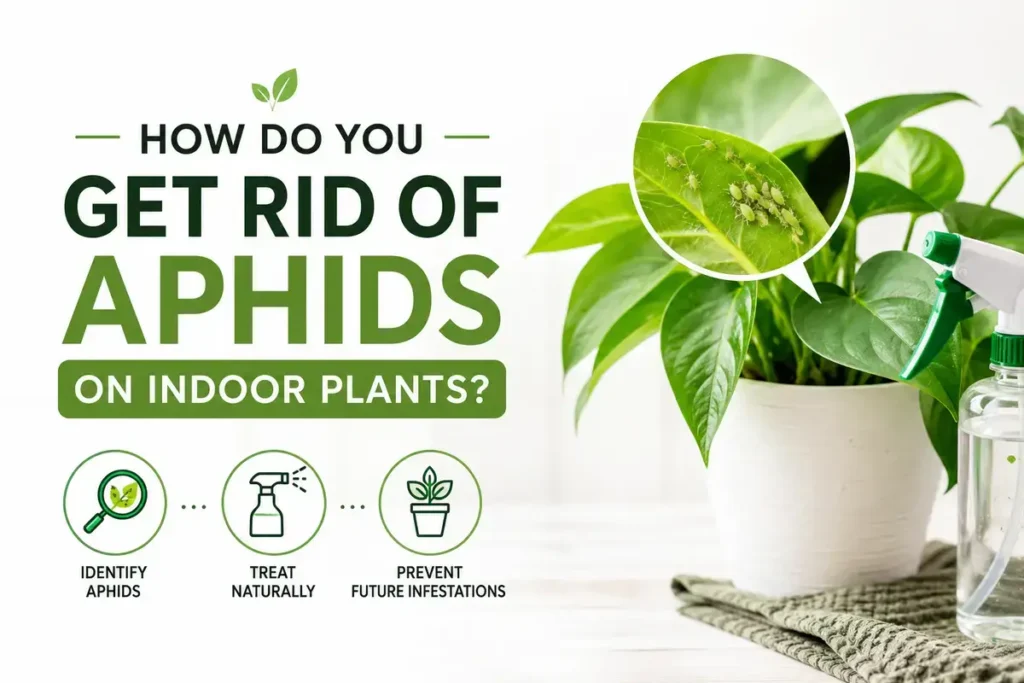
How do you get rid of aphids on indoor plants without spending weeks fighting a problem that keeps coming back? That is the question most plant owners are asking when they find the distinctive clusters of tiny soft-bodied insects on their houseplants for the first time, or the third time after two previous treatment attempts that seemed to work but did not hold. The answer is almost always the same: the treatment addressed the visible adult aphids without addressing the eggs and nymphs that replaced them within days. Getting rid of aphids on indoor plants permanently requires working through every stage of the life cycle in a specific order, not just spraying visible insects and hoping for the best.
This guide walks through 8 steps that actually work, in the order they should be applied, covering everything from the moment you first spot aphids through to the prevention practices that keep them from coming back once you have cleared them completely.
Quick Answer
To get rid of aphids on indoor plants, isolate the affected plant immediately, manually remove visible clusters with a damp cloth, spray the whole plant with a dish soap solution (1 teaspoon per quart of water) covering all leaf undersides thoroughly, and repeat every 3 to 4 days for two full weeks. For larger infestations, switch to or add neem oil spray every 5 to 7 days. Treat every nearby plant simultaneously and do not stop treatment when visible aphids disappear since eggs hatch within days of the last spray.
Why Aphids Are Such a Persistent Problem on Indoor Plants
Aphids reproduce faster than almost any other common houseplant pest. A single female aphid produces up to 80 live offspring per week through parthenogenesis, a process where females give birth to live young without mating. Those offspring are already pregnant at birth and can begin producing their own young within a week of being born.
Outdoors, this explosive reproductive rate is kept in check by ladybugs, lacewings, parasitic wasps, and weather events that kill off populations seasonally. Indoors, none of these controls exist. A small aphid colony that would be contained naturally in a garden becomes a full infestation within two weeks inside your home with no natural checks on population growth.
This is why speed of response matters so much with indoor aphids. Catching five aphids on a plant stem requires one soap spray application. Catching five hundred requires two weeks of consistent treatment. The difference between those two situations is usually a week of not noticing the problem.
8 Steps to Get Rid of Aphids on Indoor Plants
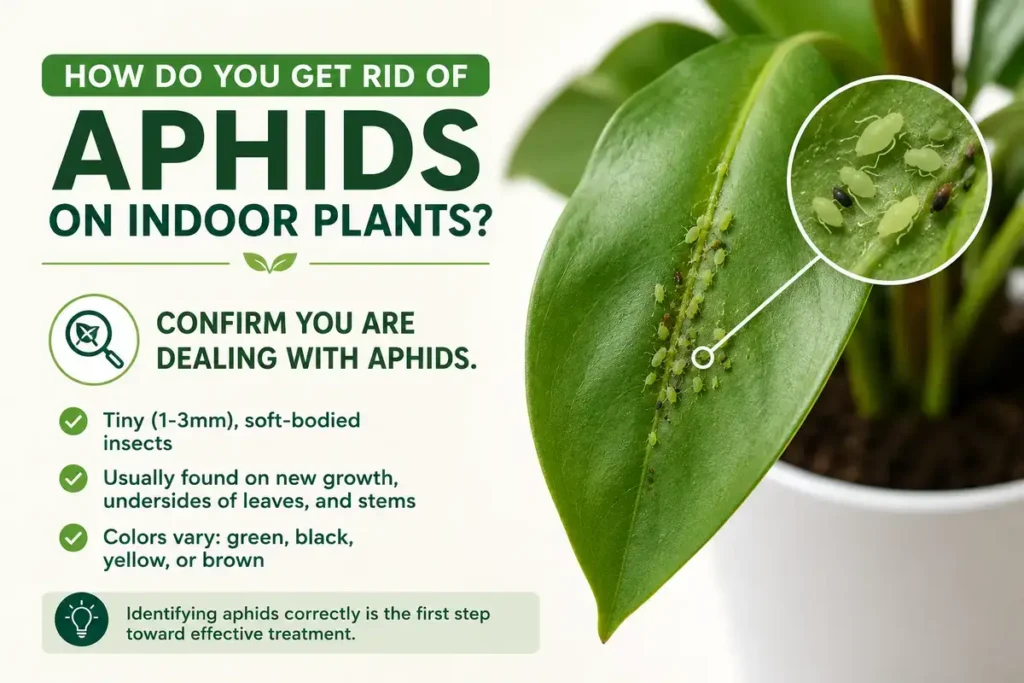
Step 1: Confirm You Are Dealing With Aphids
Before treating anything, confirm the identification. Treating for aphids when you actually have spider mites or thrips means applying the wrong treatment and losing valuable time.
Aphids are soft-bodied, pear-shaped insects between 1 and 3 millimeters long that appear in dense clusters rather than as isolated individuals. Check the undersides of leaves along the central vein, stem tips, and new growth at the top of the plant since these areas have the highest sap concentration that aphids seek out.
Look for these confirming signs alongside the insects themselves:
Sticky honeydew residue on leaves or surrounding surfaces, which aphids excrete as a feeding byproduct. Black sooty mold growing on top of that residue. Leaves curling, puckering, or distorting at the edges. New growth that looks stunted or fails to develop normally. Ants moving up and down plant stems, since ants farm aphids for their honeydew and actively protect them from threats.
If you see clustered soft-bodied insects with any of these secondary signs, you have confirmed an aphid infestation and can proceed with treatment.
Step 2: Isolate the Affected Plant Immediately
The moment you confirm aphids, move the affected plant at least 3 feet away from every other plant in your home. Aphids spread through direct plant-to-plant contact and through winged adults that fly between pots when the colony becomes overcrowded.
Move the plant to a separate room if possible while treatment is ongoing. Check every plant that was previously near the affected one and treat them simultaneously even if they appear clean, since aphid populations on neighboring plants are often not yet visible at the point when you first notice them on the primary plant.
Step 3: Check and Treat Every Neighboring Plant
Before spending any time on the primary infested plant, inspect every plant within 3 feet of it thoroughly. Check leaf undersides, stem tips, and new growth on each one using the same identification criteria from Step 1.
Treat all neighboring plants with the same soap spray you apply to the primary infested plant, even if visible aphids are not found. By the time a colony on the primary plant is large enough to notice, winged aphids have almost certainly already seeded populations on nearby plants that are still too small to see without very close inspection.
Treating the primary plant while leaving early-stage infestations on neighbors untouched is the most common reason aphid treatments appear to work and then fail within a week of finishing. Reinfection from the untreated neighbor restarts the cycle immediately.
Step 4: Manual Removal of Visible Clusters
Physical removal of visible aphid clusters before applying any spray treatment reduces the population immediately and makes every subsequent spray application more effective by giving it a smaller number of insects to deal with.
Put on disposable gloves and wipe aphid clusters off stems and leaf undersides using a damp cloth or paper towel. Work systematically across every stem and leaf from the growing tips downward, paying particular attention to the areas identified in Step 1 where aphids concentrate most densely.
For leaves that are too heavily infested or too damaged to clean effectively, remove them completely and seal them in a plastic bag before disposing in household trash rather than compost where eggs could survive and hatch.
Follow manual removal immediately with the spray treatment in Step 5 while the remaining aphid population is at its lowest point.
Step 5: Apply Dish Soap Spray
Dish soap spray is the most immediate and effective first spray treatment for most indoor aphid infestations caught at a mild to moderate stage. The fatty acids in dish soap break down the waxy protective coating on aphid bodies, causing rapid dehydration and death on contact.
How to make it: Mix 1 teaspoon of plain Dawn Original dish soap with 1 quart of room temperature water in a clean spray bottle. Use plain dish soap without moisturizers, antibacterial agents, or bleach. Shake gently to combine without creating excessive foam.
How to apply it: Spray the entire plant slowly and thoroughly from top to bottom. The most critical area is leaf undersides where aphids feed. Spray until the solution drips freely from leaf surfaces. Work under each leaf deliberately, making sure the spray contacts every surface rather than just the visible top of the plant.
Leave the solution on for 2 to 3 hours then rinse with plain water to prevent leaf spotting on sensitive species.
Schedule: Every 3 to 4 days for a minimum of two full weeks. This schedule is not optional. Soap kills on contact with zero residual effect, meaning eggs that survive the first application will hatch within days and need to be caught by the next application before the nymphs mature.
Test on one leaf and wait 24 hours before treating the whole plant if you are working with ferns, succulents, orchids, or African violets since these species can show sensitivity to soap spray even at correct dilutions.
For a full comparison of homemade soap spray versus commercial insecticidal soap products and which situations each suits best, insecticidal soap for indoor plants covers every option with specific product recommendations.
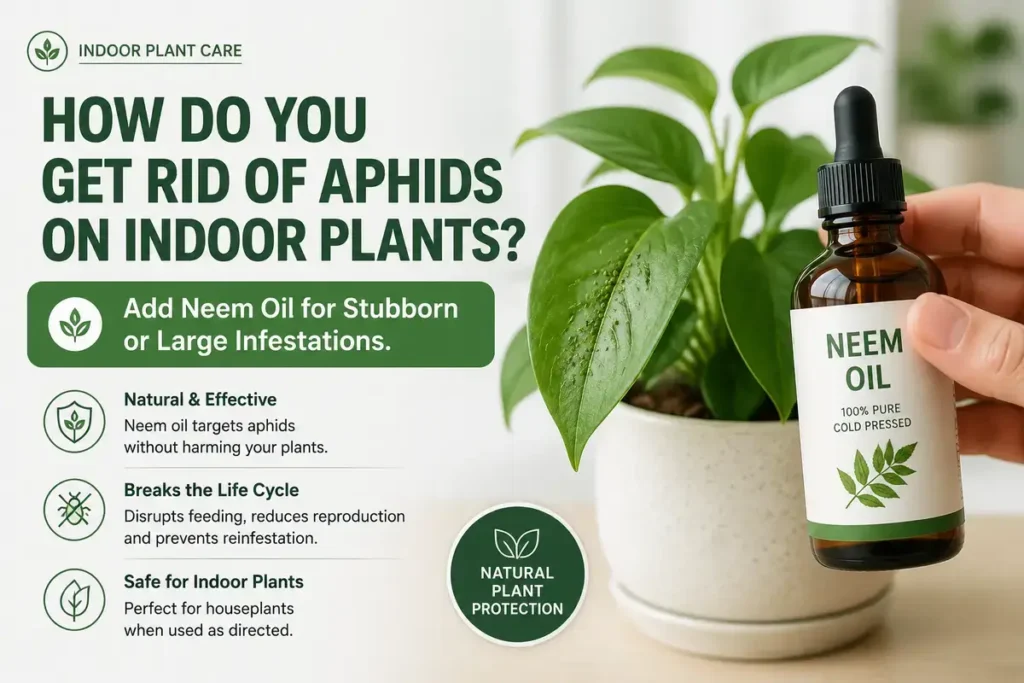
Step 6: Add Neem Oil for Stubborn or Large Infestations
If the dish soap treatment is not producing clear improvement after the first week, or if you are dealing with a large, established infestation from the start, neem oil is the most effective organic upgrade available.
Neem oil works differently from soap spray. Its active compound azadirachtin disrupts the hormonal system of insects, preventing surviving insects from feeding, molting, and reproducing normally. It also has residual effectiveness lasting several days after application, giving it a second layer of action that contact-only soap spray lacks. Even aphids that survive initial spray contact cannot reproduce after neem oil exposure, which collapses the population more completely than soap alone.
How to make it: Mix 2 tablespoons of pure cold-pressed neem oil with 1 teaspoon of plain dish soap and 1 quart of warm water. Add the soap to the water first, stir briefly, then add the neem oil. Shake the bottle thoroughly before each use since the mixture separates quickly on standing.
How to apply it: Spray every plant surface in the evening rather than during bright daylight to avoid potential leaf burn from oil concentrating under intense light. Cover all leaf surfaces including undersides, every stem, and the top layer of soil since soil application provides a degree of systemic protection.
Schedule: Every 5 to 7 days for two to three weeks. Use neem oil as the primary treatment for severe infestations or alternate it with soap spray every other application for moderate ones to benefit from both mechanisms simultaneously. For the complete picture of how neem oil fits into a broader pest management approach covering multiple pest types, bug spray for indoor plants covers every spray option matched to specific pests and infestation levels.
Step 7: Use Yellow Sticky Traps for Monitoring
Yellow sticky traps do not eliminate aphids already on your plants but serve two important functions throughout the treatment period that make them worth using alongside your spray program.
First, they catch winged adult aphids mid-flight before those adults land on neighboring plants and establish new colonies. In a home with multiple houseplants, this containment function prevents the spread of winged aphids between treatment sessions when spray protection has dried and become inert.
Second, sticky trap catch rates tell you whether your treatment is working. A declining catch rate over two weeks tells you the population is collapsing. A catch rate that stays high after two weeks of consistent spraying tells you the infestation is still active and you need to examine your application technique or escalate to a more intensive treatment.
Place traps directly near affected plants and replace them weekly as they fill and lose stickiness.
Step 8: Consider Beneficial Insects for Severe Cases
For infestations that have not responded fully to two or more weeks of consistent soap and neem oil treatment, introducing natural aphid predators is the most effective escalation available before moving to systemic insecticides.
Green lacewing larvae are the most practical choice for indoor use since they stay close to their release point rather than flying toward light sources like ladybugs tend to do. A single lacewing larva consumes hundreds of aphids during its development. Aphid midges are even more targeted, with each larva killing far more aphids than it actually eats.
Both are available from Arbico Organics and Planet Natural and can be released directly onto affected plants. Stop all spray treatments at least one week before introducing beneficial insects and do not resume spraying while they are active since soap and neem oil kill beneficial insects just as effectively as pest ones.
For the complete guide to every beneficial insect species that works in an indoor plant environment including sourcing, introduction techniques, and which pest each one targets most effectively, beneficial bugs for indoor plants covers every option in full detail.
Why Aphids Keep Coming Back After Treatment
If aphids return within days or weeks of a treatment that appeared to work, one of four things is almost certainly the cause.
Treatment stopped too early. Soap and neem oil kill adult aphids and mobile nymphs but cannot penetrate aphid eggs. Stopping treatment the moment visible insects disappear leaves a fresh generation of eggs about to hatch with nothing waiting for them. Always complete the full two-week treatment schedule even when the plant looks completely clean.
A neighboring plant was not treated. Every plant within 3 feet of the originally infested plant needs treatment simultaneously. Leaving early-stage populations on neighbors means continuous reinfection from those plants as you finish treatment on the primary one.
Ants are protecting and relocating aphids. Ants actively farm aphids for their honeydew secretion and move surviving aphids to new plants when their current location is threatened by treatment. If ants are present near your indoor plants, placing a ring of diatomaceous earth around pot bases prevents them from reaching the plants and disrupts their aphid-farming activity.
The plant is under stress. Stressed plants produce higher concentrations of the free amino acids that aphids specifically target. A plant that is overwatered, underlit, or malnourished will attract aphid infestations more reliably and repeatedly than a healthy one regardless of how well each individual treatment is applied. Fixing the underlying stress factor is as important as the spray treatment for long-term resolution. For the complete breakdown of why indoor plants attract bugs and which plant health factors drive repeated infestations, do indoor plants attract bugs covers every contributing condition in detail.
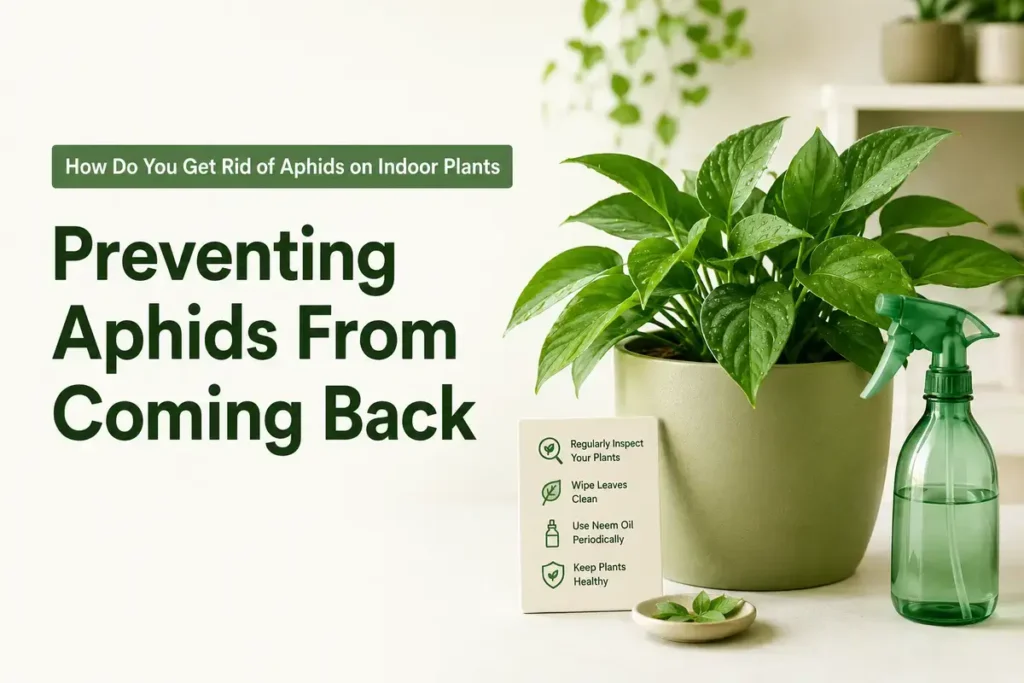
Preventing Aphids From Coming Back
Inspect new plants before introducing them. Every new plant entering your home should spend at least one week in a separate room. Garden center plants frequently carry aphid eggs or early-stage populations that were not visible at purchase.
Check vulnerable plants weekly. A two-minute inspection of leaf undersides on your highest-risk plants every week catches infestations at the single-cluster stage when one soap spray application resolves them completely. Hibiscus, roses, basil, and citrus trees are the most consistently aphid-prone plants in most indoor collections and warrant the closest regular attention.
Apply preventive neem oil monthly. Many experienced indoor gardeners apply a diluted neem oil spray across their entire plant collection once a month through spring and summer as standard maintenance. This disrupts aphid hormones before a colony establishes rather than waiting for a visible problem to develop.
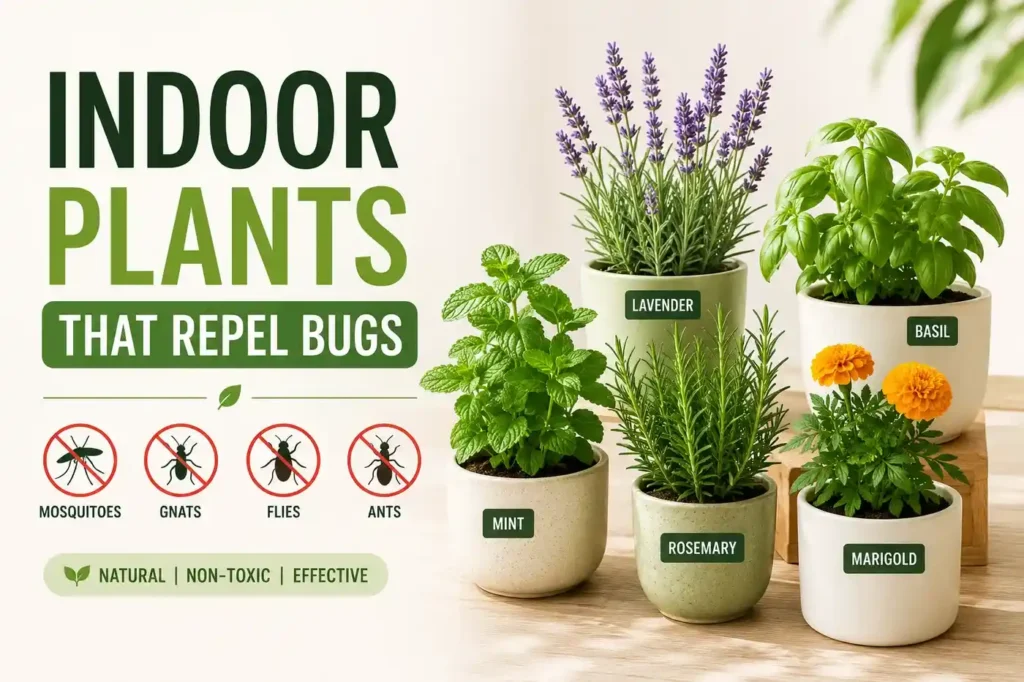
Grow companion plants that repel aphids. Several common houseplants produce compounds that aphids actively avoid. Mint, lavender, and catnip near your most vulnerable plants reduce infestation frequency noticeably over time. The complete list of plants that deter aphids and other pest species is covered in indoor plants that repel bugs with specific placement guidance for maximum deterrent effect.
Conclusion
Getting rid of aphids on indoor plants comes down to speed, consistency, and treating every stage of the life cycle rather than just the adults you can see. Isolate the affected plant immediately. Remove visible clusters manually. Apply soap spray to every leaf surface including undersides every 3 to 4 days for two full weeks without stopping early. Add neem oil if soap alone is not producing clear improvement after the first week. Treat every neighboring plant simultaneously from day one.
The infestations that keep coming back are almost always the ones where treatment stopped too soon, neighboring plants were left untreated, or the underlying plant stress that makes your houseplants attractive to aphids was never addressed. Fix all three of those things alongside the active treatment and aphid problems go from recurring frustrations to rare, easily managed occasional occurrences in your indoor plant collection.
Frequently Asked Questions
How long does it take to completely get rid of aphids on indoor plants?
Most indoor aphid infestations are fully resolved within two to three weeks of consistent treatment applied every 3 to 4 days. Mild infestations caught at the first few insects sometimes clear within one week. Severe established infestations with large populations may take three to four weeks, particularly when neem oil or biological controls are needed to supplement soap spray. The key variable in every case is consistency of treatment rather than the specific product used.
What kills aphids on indoor plants instantly?
Rubbing alcohol applied directly to aphid clusters with a cotton swab kills on contact within seconds by dissolving their protective coating. A directly applied dish soap spray kills adult aphids and nymphs within minutes of contact. Nothing kills aphid eggs instantly since the waxy egg surface resists penetration by contact treatments, which is why consistent follow-up treatment over two weeks is always necessary regardless of how fast the initial application works on visible insects.
Can I use vinegar to get rid of aphids on indoor plants?
Diluted vinegar does kill aphids on contact but also damages plant tissue at the concentrations needed for effective pest control. The acetic acid in vinegar causes cell death in plant leaves faster than it kills insects through the same mechanism. Dish soap spray is safer and more effective for the same contact-killing purpose without the plant damage risk that vinegar carries at pest-control concentrations.
Do aphids live in the soil of indoor plants?
Most common aphid species live and feed on the above-ground parts of plants, particularly leaf undersides and new growth. Root aphids do exist and live in the soil feeding on plant roots, causing wilting and decline without visible above-ground insects. If your plant shows aphid damage symptoms but you cannot find insects on the foliage, remove the plant from its pot and examine the root system for small white or cream-colored aphid clusters on root surfaces.
How do I get rid of aphids on indoor plants without chemicals?
Manual removal with a damp cloth addresses visible clusters immediately and without any chemicals. A strong blast of water from a showerhead dislodges aphids effectively as a follow-up. Introducing green lacewing larvae or ladybugs provides biological control without any chemical application. Growing peppermint, lavender, or catnip near affected plants deters new aphid colonization through natural plant chemistry. These methods work best in combination for mild to moderate infestations caught early rather than for severe established ones.
Is neem oil or dish soap better for killing aphids indoors?
Both are effective but suit different situations and work through different mechanisms. Dish soap kills on contact immediately and works well for mild to moderate infestations as a first treatment. Neem oil works more slowly but disrupts the reproductive cycle of surviving insects and provides residual effectiveness lasting several days after application. For the fastest results on an established infestation, combining both in a single spray solution outperforms either used alone since you get the immediate contact killing of soap alongside the hormonal disruption of neem oil simultaneously.