
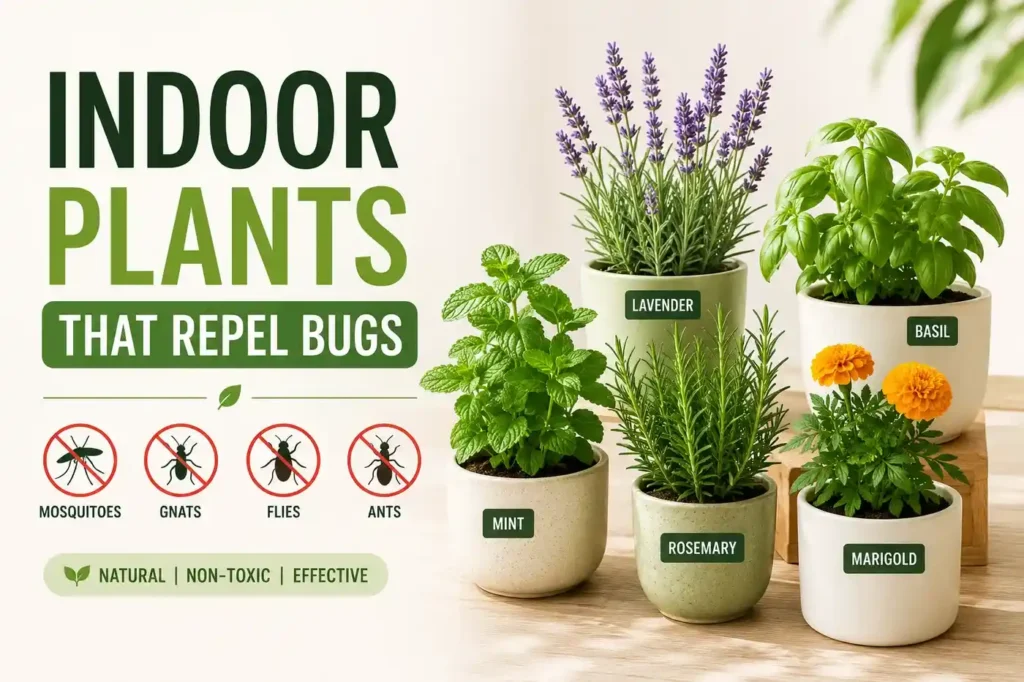
Last summer, a friend of mine in a Chicago apartment spent three weeks fighting a gnat infestation. She bought sprays, tried apple cider vinegar traps, even changed her potting soil twice. Nothing fully worked. Then she put a small pot of basil on her kitchen windowsill and a lavender plant near her entry door. Within ten days, the problem was basically gone.
She did not discover some secret. She just put the right plants in the right places.
Certain indoor plants that repel bugs have been doing this job for centuries. They work through natural compounds in their leaves and stems that insects find toxic, disorienting, or unbearable to be near. No fumes, no residue, no recurring cost after the initial purchase. A healthy lavender plant on a sunny windowsill works 24 hours a day, every single day, for years.
This guide covers 12 of the most effective bug-repelling indoor plants available in the US right now. For each one, you will learn exactly which pests it targets, where to place it in your home for maximum effect, and how to keep it alive and potent long-term. By the end, you will know precisely which plants to pick up at Home Depot, Lowe’s, or your local nursery this weekend and where to put them the moment you get home.
Quick Answer
The best indoor plants that repel bugs include lavender, basil, mint, rosemary, citronella, lemongrass, chrysanthemums, catnip, eucalyptus, marigolds, pennyroyal, and pitcher plants. These plants contain natural compounds like linalool, pyrethrin, menthol, and nepetalactone that bugs find toxic or overwhelming. Place them near windows, entry points, and kitchen counters for best results.
Why Some Plants Naturally Repel Bugs
Plants cannot run from insects, so over millions of years they developed chemical defenses instead. These defenses come in the form of volatile organic compounds, which are natural oils and scents that bugs either find toxic, overwhelming, or simply unbearable to be near.
When you bring these plants indoors, those same compounds go to work on the pests already in your home. The key compounds to understand:
- Linalool found in lavender, repels mosquitoes and flies
- Limonene found in lemongrass and citrus plants, disrupts insect nervous systems
- Pyrethrin found in chrysanthemums, the same compound used commercially in insecticides
- Nepetalactone found in catnip, shown in research to outperform DEET against mosquitoes
- Menthol found in mint and pennyroyal, overwhelms insect sensory receptors
None of these harm humans at normal plant concentrations. A couple of entries on this list need a closer look if you have cats, which we will flag clearly as we go.
Understanding this chemistry also explains why placement matters so much. A plant releasing these compounds in a dark corner of your living room does far less than the same plant positioned directly beside an open window or entry door where bugs are actively trying to get in.
1. Lavender Best All-Around Bug Repeller
Walk into almost any US garden center in spring and you will find lavender near the front. It is popular for good reason, and pest control is a big part of that reason even if the plant tags never mention it.
Lavender repels mosquitoes, flies, fleas, moths, and silverfish through a compound called linalool, which is potent enough to be used as a base ingredient in commercial insect repellents. In the living plant, linalool releases continuously and intensifies when the leaves are brushed or disturbed. Placing a pot near your entry door means every time the door opens and air moves through, it pushes a fresh wave of linalool outward.
In practice, lavender near an entry point makes a noticeable difference within the first week. It will not eliminate a severe existing infestation on its own, but for prevention and light pest pressure it is one of the most reliable plants available.
Bugs it repels: Mosquitoes, flies, fleas, moths, silverfish
Where to place it: A south or west-facing windowsill that gets at least 6 hours of direct light daily. Near an entry door or frequently opened window is ideal so the scent barrier forms right where bugs are entering.
Care: Water deeply but infrequently. Lavender hates sitting in wet soil and root rot is the most common way to lose one indoors. A terracotta pot with drainage holes and a well-draining gritty soil mix keeps it healthy for years. Terracotta breathes in a way plastic pots do not, which lavender roots genuinely appreciate.
Pro tip: Rub a few leaves between your fingers and wipe them on your wrists before sitting near an open window in summer. You have just made a natural mosquito repellent that costs nothing.
2. Basil The Kitchen Counter Bug Fighter
Basil is remarkable in how aggressively it repels bugs relative to how unassuming it looks sitting on a counter. Commercial vegetable farmers have used it as a companion plant for decades specifically because it keeps whiteflies and aphids off nearby crops. Indoors, it brings that same chemistry to your kitchen, which is where flies and gnats tend to concentrate.
The compounds responsible are linalool and estragole. The same chemical profile that makes fresh basil smell incredible in a caprese salad is what sends house flies in the opposite direction.
Bugs it repels: House flies, mosquitoes, aphids, whiteflies
Where to place it: Kitchen windowsill, positioned as close as possible to where you keep fruit or trash since those are the two main attractors for flies and gnats indoors. Basil needs 6 to 8 hours of direct sun, so a south-facing kitchen window works best. If your kitchen does not get strong natural light, a small grow light placed 6 inches above the plant is a straightforward fix available at any hardware store.
Care: Keep the soil consistently moist but never waterlogged. The single most important maintenance task with basil is pinching off flower buds the moment they appear. Once basil flowers, the leaves lose both their flavor and their pest-repelling potency rapidly. Two minutes of attention every few days keeps it producing at full strength.
If you enjoy growing herbs alongside your pest-control plants, how to plant cilantro seeds indoors is a natural next step that pairs well with a kitchen basil setup.
3. Mint Fast-Growing and Nearly Impossible to Kill
Mint is the entry point for anyone who has never grown an indoor herb before. It roots from a cutting in a glass of water within two weeks, tolerates lower light than most herbs on this list, and starts releasing its bug-repelling menthol almost immediately. For a beginner who wants results without a steep learning curve, mint is the one to start with.
Menthol acts like a sensory overload on insects. It overwhelms their receptors so completely that they avoid the area rather than push through it. Mosquitoes, ants, flies, and aphids all respond this way. There are also documented cases of mint deterring rodents, which is a bonus most people do not expect.
Bugs it repels: Mosquitoes, ants, flies, aphids, flea beetles
Where to place it: Near windowsills, beside entry points, and in any room where you have noticed consistent ant trails or fly activity. One important rule with mint: always grow it in its own pot. It spreads through the soil aggressively and will crowd out any plant sharing its container within a few weeks.
If you are noticing insects already living in your soil rather than just flying around, understanding bugs in indoor plant soil will tell you what you are dealing with and whether mint alone will handle it.
Care: Mint likes consistently moist soil and handles indirect to partial direct sunlight well. It is genuinely forgiving for a bug-repelling plant, which is part of why it works so well as a starting point for people new to indoor gardening.
Pro tip: A small pot of mint placed near your kitchen drain disrupts the egg-laying cycle of drain flies and fruit flies in nearby soil. It takes about a week to notice the difference but it is consistent.
4. Rosemary Pest Control That Also Cooks Dinner
Rosemary is one of the most underrated bug-repelling plants available because most people think of it purely as a cooking herb. Its woody, resinous scent comes from camphor and borneol, two compounds that mosquitoes, flies, and beetles find deeply unpleasant. The stronger the plant grows and the more aromatic it becomes, the more effective it is as a pest deterrent.
What makes rosemary particularly practical is that it earns its counter space twice over. It handles pest control passively while you use the leaves for cooking throughout the year. For anyone who wants a plant that justifies itself beyond pest control, rosemary makes the clearest argument.
Bugs it repels: Mosquitoes, flies, cabbage moths, bean beetles
Where to place it: A bright sunny window with at least 6 hours of direct light. Near patio doors or windows you open frequently is the most strategic placement since those are the primary mosquito entry points in most US homes during summer. Beyond its pest-repelling properties, the full range of benefits of rosemary plant indoors covers air quality, aromatherapy, and culinary uses that make it one of the most well-rounded indoor plants available.
Care: Like lavender, rosemary is a Mediterranean plant that despises wet roots. Let the top inch of soil dry completely before watering again. Terracotta pot, gritty well-draining soil, and a sunny window are the three things rosemary needs to thrive indoors. Give it those and it will last for years.
5. Citronella The Classic Mosquito Plant
Most people know citronella from candles sold at hardware stores every summer. What they often do not know is that those candles use oil extracted from a specific lemongrass variety, Cymbopogon nardus, which is sold in US nurseries as the citronella or mosquito plant. The living plant releases citronellal and geraniol continuously into the surrounding air, which makes it more effective as a passive repellent than any candle that only works when burning.
Bugs it repels: Mosquitoes, some flies and gnats
Where to place it: Near windows you open regularly, beside your bed if mosquitoes are reaching you at night, or close to a patio or balcony door. Citronella grows large indoors, often reaching 2 feet tall, so give it a sturdy, roomy pot from the start rather than potting up repeatedly.
Care: Full sun, well-draining soil, and regular watering once the top inch of soil dries out. It handles standard US indoor temperatures comfortably throughout the year and only struggles near cold drafts or air conditioning vents in winter.
6. Lemongrass Citronella’s Stronger Everyday Alternative
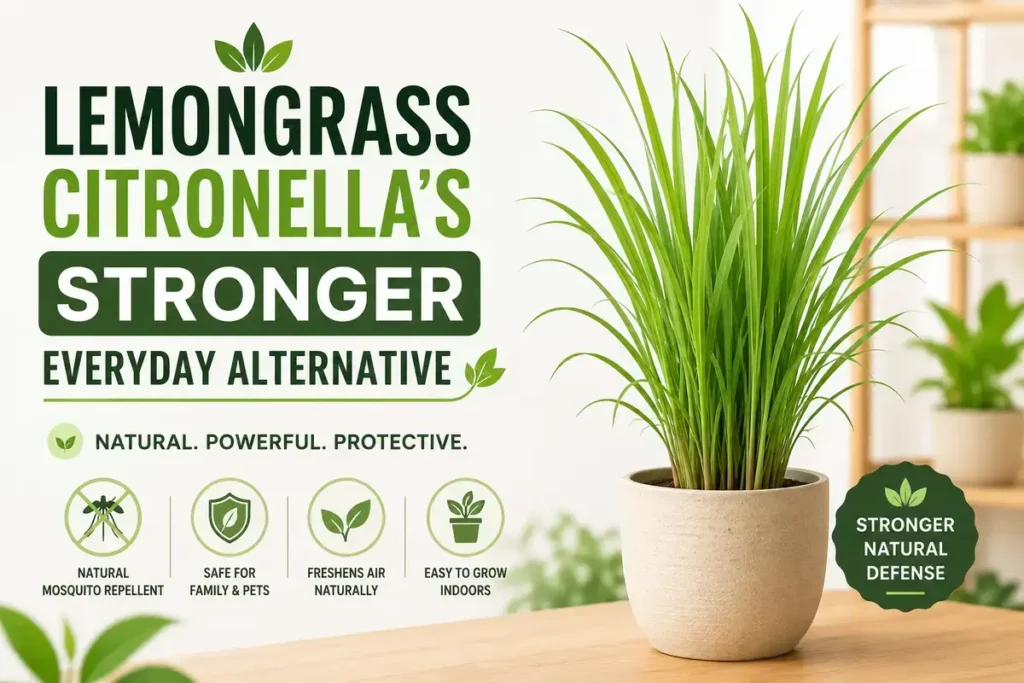
Lemongrass contains the same citronellal compound as the citronella plant, often at higher concentrations. It is also significantly easier to find at US grocery stores and garden centers, costs less, and doubles as a culinary herb used in Thai and Vietnamese cooking. If your local nursery does not carry citronella plants, lemongrass is the better practical choice in almost every situation.
Bugs it repels: Mosquitoes, flies, gnats, ticks
Where to place it: A large bright window. Lemongrass grows fast and tall, reaching 3 to 4 feet indoors in good light, which makes it better suited as a floor plant in a sunny corner than a windowsill herb.
Care: Lemongrass is a heavy feeder and needs consistent watering, a large pot with good drainage, and a monthly dose of balanced liquid fertilizer during the growing season. Skipping fertilizer is the most common reason lemongrass loses its scent intensity and pest-repelling effectiveness indoors. For guidance on which products actually work, best liquid fertilizer for indoor plants covers the options worth buying and what to avoid.
7. Chrysanthemums The Most Scientifically Proven Bug Killer
Chrysanthemums are in a different category from every other plant on this list because their active compound, pyrethrin, is the same ingredient used to manufacture commercial insecticides including many flea treatments, household sprays, and agricultural pesticides. This is not a folk remedy. It is an active pharmaceutical-grade insecticide produced naturally in the flower heads of the plant.
In the living plant, pyrethrin concentrations are effective against insects while remaining safe for humans in normal indoor conditions. The flowers are the most potent part, which is why a chrysanthemum in full bloom provides stronger pest control than one that has finished flowering.
Bugs it repels and kills: Roaches, ants, ticks, fleas, spider mites, silverfish, lice, bedbugs
Where to place it: Any room where you have seen roach or ant activity. Near doorways and entry points. They bloom in cycles and look genuinely beautiful, which means they serve double duty as a decorative plant and a serious pest deterrent.
Care: Bright indirect to direct light, consistent moisture, and cooler indoor temperatures around 60 to 65 degrees Fahrenheit. Cut them back after each blooming cycle to encourage new growth and repeated flowering.
Important: Pyrethrin is toxic to cats even in plant form. If you have cats at home, choose lavender or mint instead and avoid chrysanthemums entirely.
8. Catnip More Effective Than DEET
This one surprises people every time. Research from Iowa State University found that nepetalactone, the active compound in catnip, repels mosquitoes more effectively than DEET in controlled laboratory comparisons. The stuff sold in pet stores as cat toys is a more powerful mosquito repellent than the chemical found in OFF spray.
The practical catch is obvious: if you have cats, this plant will be destroyed within hours. In a cat-free home, catnip is one of the two or three most effective mosquito-repelling plants you can grow indoors, full stop.
Bugs it repels: Mosquitoes, flies, flea beetles, cockroaches, termites
Where to place it: Near windows and doors where mosquitoes are entering. Catnip grows vigorously in bright indirect light and does not demand much attention, which makes it one of the lower-maintenance options on this list.
Care: Well-draining soil, moderate watering, and at least 4 to 6 hours of light daily. Harvest leaves regularly to encourage bushier, denser growth and maintain higher nepetalactone concentration in the remaining foliage.
9. Eucalyptus The Plant That Works Without Being Touched
Every other plant on this list becomes more effective when touched or disturbed. Eucalyptus is different. It releases its camphor-like scent continuously into the surrounding air even when left completely undisturbed, which makes it one of the most passive and hands-off bug-repelling plants available.
The active compound is cineole, which repels mosquitoes, flies, and several cockroach species. Place a eucalyptus plant in a room and it starts working immediately without requiring any interaction from you.
Bugs it repels: Mosquitoes, flies, cockroaches, dust mites
Where to place it: A bright sunny room with as much natural light as possible. A large south-facing window or sunroom is ideal. Eucalyptus grows fast indoors and will likely need repotting every 12 months.
Care: Water deeply, then allow the top 2 inches of soil to dry completely before watering again. Eucalyptus is significantly more likely to die from overwatering than from drought once it is established. When in doubt, wait another day before watering.
10. Marigolds The Cheerful Flower That Bugs Cannot Stand
Marigolds contain pyrethrum, a compound closely related to the chrysanthemum pyrethrin, alongside alpha-terthienyl which targets whiteflies and soil nematodes specifically. They are bright, long-blooming, widely available at every US garden center from spring through fall, and genuinely disliked by a wide range of pest insects.
What makes marigolds particularly practical for a new indoor gardener is how easy they are to grow from seed. You do not need to buy a mature plant to get started.
Bugs it repels: Whiteflies, aphids, gnats, mosquitoes, thrips
Where to place it: Bright sunny windowsills with at least 6 hours of direct sun. South-facing windows are best. Kitchen windowsills work especially well since that is where gnats tend to be most active. A 6-inch pot keeps them compact enough for a windowsill without taking over the space.
Care: Let the soil dry slightly between waterings and deadhead spent blooms regularly to keep new flowers coming. A plant that stops blooming also loses much of its pest-repelling potency, so deadheading is not optional.
11. Pennyroyal The Flea and Ant Specialist
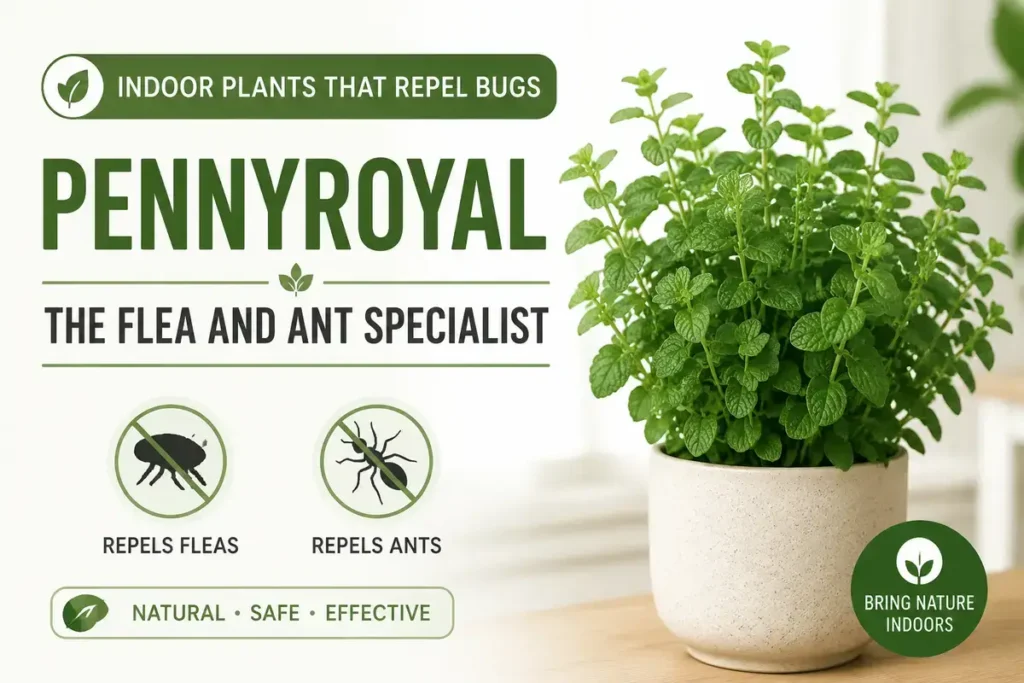
Pennyroyal is a mint family member that has been used as a natural flea repellent in American households for generations, particularly in the South where flea pressure is heaviest. Its concentrated menthol formula is specifically effective against ants and fleas in a way that regular mint is not, which makes it worth growing separately if those are your primary pest concerns.
Bugs it repels: Fleas, ants, mosquitoes, gnats
Where to place it: Near floor-level entry points, beside pet resting areas with the plant kept out of reach, and along baseboards where ant trails typically run. Floor-level placement maximizes its effectiveness against the ground-level bugs it targets best.
Important: Pennyroyal essential oil is toxic if ingested by humans or pets. The living plant in a ventilated indoor space is safe at normal concentrations, but do not allow children or pets to chew the leaves directly.
Care: Moist soil, partial to full sun, and its own dedicated pot since it spreads aggressively through any shared container within weeks.
12. Pitcher Plants The Bug Trap That Runs Itself
Every plant on this list repels bugs. Pitcher plants eliminate them. If you are dealing with a genuine fungus gnat or fruit fly infestation rather than just trying to prevent one, a pitcher plant is the most direct solution available because it actively removes bugs from your home rather than just discouraging them.
The pitcher-shaped leaves fill with digestive fluid that attracts, traps, and breaks down insects. A single medium-sized pitcher plant can consume dozens of gnats and small flies per week with zero effort from you.
Bugs it catches: Fungus gnats, fruit flies, small flies, ants
Where to place it: Wherever your infestation is most concentrated. Pitcher plants tolerate lower light than most plants on this list, which makes them genuinely useful for rooms that do not get strong natural light.
Care: Pitcher plants get their nutrients from insects, not soil, so never fertilize them. Use only distilled water or collected rainwater since tap water minerals damage the digestive fluid in the pitchers over time. Plant in a peat moss and perlite mix and leave the soil management to the plant itself.
Where to Place Bug-Repelling Plants for Maximum Effect
Plant selection and placement are equally important. A lavender plant in a dark corner does a fraction of what the same plant does positioned beside an open entry door. Here is how to think about placement strategically:
Entry points first. Bugs enter through doors, windows, and gaps around pipes. A lavender or citronella plant positioned directly beside your most-used entry point creates a scent barrier before insects make it past the threshold.
Kitchen windowsill. Flies, gnats, and fruit flies concentrate in kitchens because of food, moisture, and drains. Basil, mint, and marigolds on a kitchen windowsill address the majority of kitchen pest problems without any active effort from you.
Bedroom window. If mosquitoes are reaching you at night, a lavender or catnip plant on the windowsill is the most restful solution available. Lavender also promotes better sleep as a side effect, which is something a chemical spray will never offer.
Near other houseplants. Fungus gnats breed in the moist soil of your other houseplants. Placing a pitcher plant or mint near your plant collection disrupts their lifecycle at the source rather than just catching adult flies after they have already laid eggs.
Where to Buy These Plants in the US
Most of the plants on this list are available at Home Depot, Lowe’s, and Walmart garden centers from early spring through summer. Lavender, basil, mint, rosemary, marigolds, and citronella plants are almost always in stock during the growing season.
For less common options like pitcher plants, pennyroyal, and specific eucalyptus varieties, Etsy sellers who specialize in carnivorous and unusual plants are often the most reliable source with the widest variety. Local independent nurseries frequently carry things the big box stores do not, and the plants tend to be healthier.
Year-round, Amazon carries most of these as live plants shipped to your door, though live plant shipping quality varies by seller.
Start Here If You Are a Complete Beginner
If you currently have zero bug-repelling plants and want to know exactly what to buy first, here is the straightforward answer:
Buy lavender and basil. Put lavender near your front door or main entry window. Put basil on your kitchen windowsill. Those two plants, costing a combined total of under fifteen dollars at any garden center, will handle the most common indoor bug problems most US homeowners face. Once you have those two established and thriving, add mint and a chrysanthemum based on where your remaining pest pressure is.
That is it. Start simple, place them correctly, keep them healthy, and let the chemistry do the work.
Do These Plants Work as Well as Chemical Sprays?
The honest answer: it depends entirely on severity.
For prevention and light pest pressure, these plants are genuinely effective and often sufficient on their own. For a severe established infestation, they work best as part of a broader approach alongside insecticidal soap, neem oil, or sticky traps for acute treatment.
The real advantage plants hold over sprays is continuity. A can of bug spray works once and is gone. A healthy lavender plant works around the clock for years, costs nothing to run after purchase, and improves your air quality while doing it. Most homeowners who try both approaches end up using plants for prevention and reserving sprays for the rare acute situation.
Conclusion
Bug-repelling indoor plants are not a trend or a Pinterest aesthetic. They are a practical, chemistry-backed approach to pest management that works with your home environment rather than against it. Lavender, basil, chrysanthemums, and catnip each bring specific compounds to the table that insects genuinely cannot tolerate long-term.
The strategy is straightforward: put lavender or citronella near your entry points to stop bugs from coming in, basil or mint in the kitchen to handle flies and gnats at the source, and a chrysanthemum or pitcher plant wherever your problem is most persistent. Keep the plants healthy and in good light, and they handle the rest without you doing anything.
Spend fifteen dollars at your nearest garden center this weekend on lavender and basil, put them in the right spots, and check back in ten days. The difference will be noticeable enough that adding more plants to the rotation becomes an easy decision.
Frequently Asked Questions
What is the most effective indoor plant for repelling mosquitoes?
Catnip is the single most effective option, with research showing its active compound nepetalactone outperforms DEET in controlled comparisons. Lavender and citronella are strong alternatives and better choices for homes with cats since catnip and cats are an obvious problem.
Do indoor plants actually keep bugs away or is it a myth?
It is not a myth. Plants like lavender, chrysanthemums, and mint contain volatile organic compounds that directly interfere with insect nervous systems and sensory receptors. The key is placing them near entry points and pest hotspots rather than randomly around the home.
Which bug-repelling plants are safe for homes with cats?
Lavender, basil, lemongrass, and marigolds are generally safe around cats. Avoid chrysanthemums and pennyroyal, which are toxic to cats even in plant form. Always check the ASPCA toxic plant database before adding any new plant to a home with pets.
How many plants do I need to make a real difference?
Three to five strategically placed plants make a noticeable difference in a standard US apartment or home. One near the main entry, one in the kitchen, and one near the bedroom window covers the three primary pest entry and activity zones for most households.
Can I replace pesticides entirely with these plants?
For prevention and mild infestations, yes. Many homeowners rely on plants alone successfully. For established infestations, combine plants with mechanical controls like sticky traps and targeted treatments for acute flare-ups. Think of plants as the long-term prevention layer and other methods as the emergency response.
Which plant repels the most types of bugs?
Chrysanthemums have the broadest action of any plant on this list due to their pyrethrin content, effective against roaches, ants, ticks, fleas, mites, lice, spider mites, silverfish, and more. Mint comes second, targeting mosquitoes, ants, flies, aphids, and even rodents.
Do I need to do anything to activate the repelling effect?
Most plants release their compounds passively without any action needed. You can boost intensity by gently brushing a few leaves, which releases a stronger burst of volatile oils. This works especially well with lavender, mint, and rosemary and is worth doing near bedroom windows before sleeping in summer.
Pingback: Do Indoor Plants Attract Bugs? 7 Facts Every Plant Owner Should Know - Plant Quill
Pingback: 10 Indoor Plants That Repel Spiders and Keep Them Out Naturally - Plant Quill
Pingback: 14 Plants That Keep Bugs Away Indoors Naturally and Effectively - Plant Quill
Pingback: How to Care for a Rosemary Plant Indoors: 8 Steps to Keep It Alive - Plant Quill
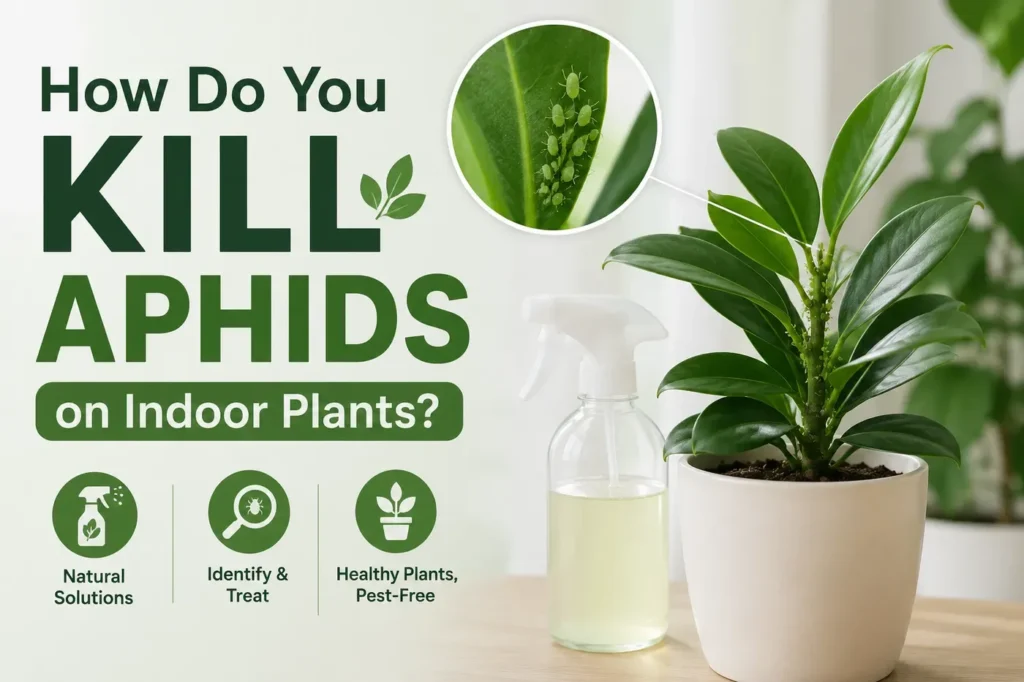
Pingback: How Do You Kill Aphids on Indoor Plants: 10 Methods That Work - Plant Quill