Indoor plants for dark spaces are one of the most searched topics in indoor gardening because so many homes have exactly this problem: a hallway with no windows, a bathroom with frosted glass, a north-facing living room, a basement with overhead fluorescents. Most houseplant guides avoid these positions entirely because most plants genuinely cannot survive them. This guide takes the opposite approach.
The 11 plants here are specifically chosen because they do more than survive dim conditions. They maintain their appearance, continue producing new growth, and stay attractive for months and years in positions that would kill most other commonly sold houseplants within weeks. Some need minimal supplemental lighting to hold their own. Others genuinely thrive on almost nothing.
Quick Answer
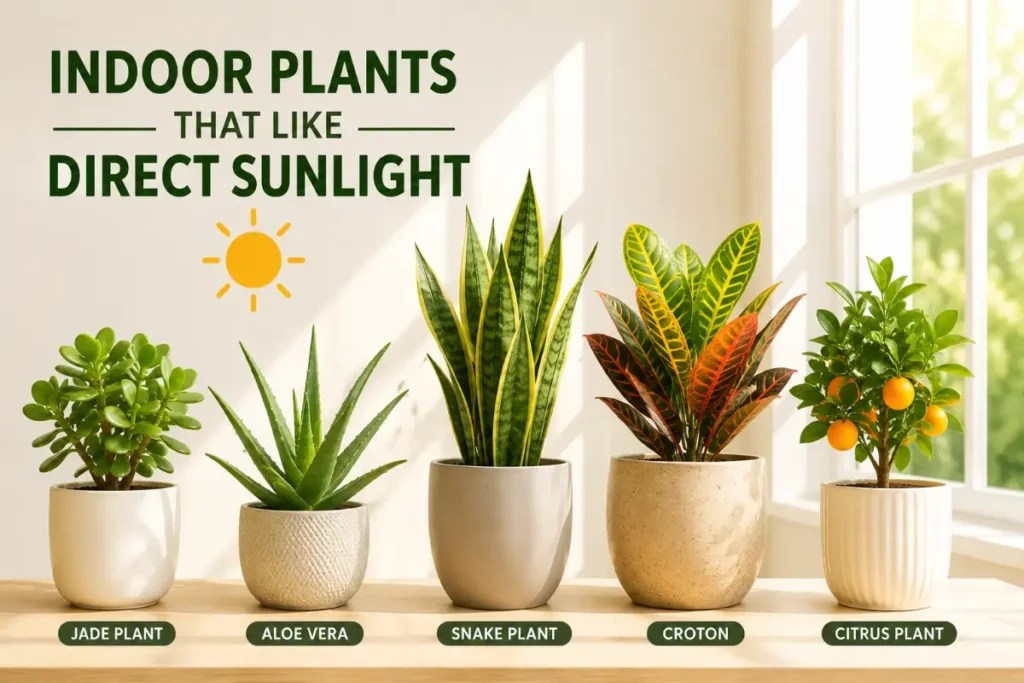
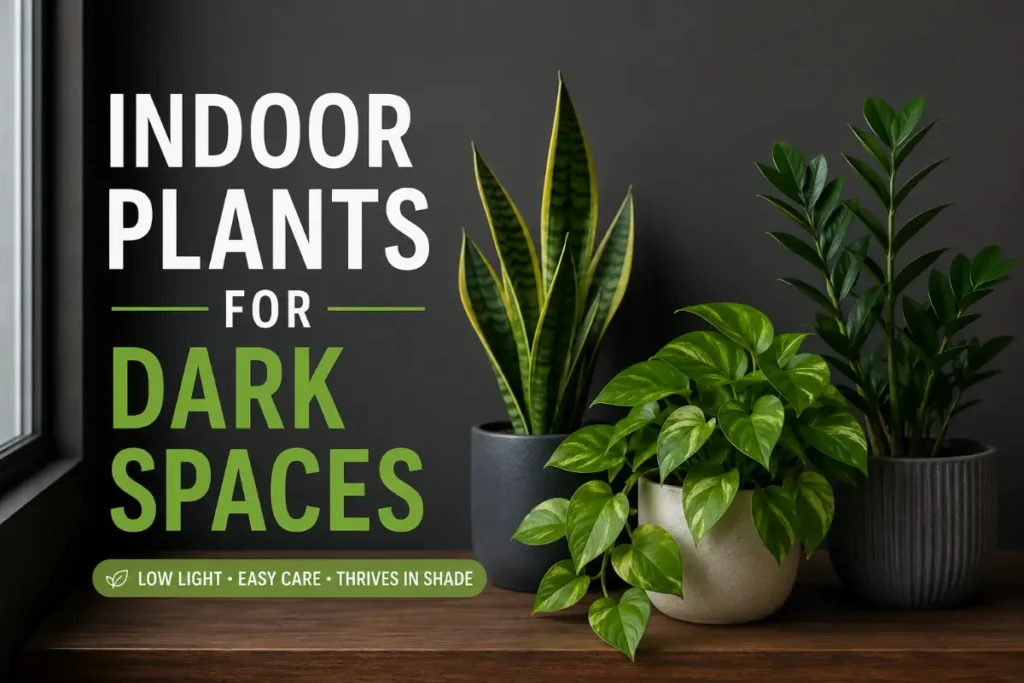
The best indoor plants for dark spaces include cast iron plant, ZZ plant, snake plant, pothos, Chinese evergreen (green varieties), parlor palm, peace lily, dracaena, philodendron heartleaf, spider plant, and lucky bamboo. These plants tolerate medium to low indirect light and some handle near-dark conditions with artificial light supplementation for several hours daily.
What “Dark Space” Actually Means for Plants
Before choosing plants, it helps to be precise about what kind of dark you are dealing with since plants respond very differently to different light levels.
Medium indirect light: You can comfortably read a book by the natural light in this position without straining. A plant is across the room from a window or near a window that receives no direct sun. Most shade-tolerant plants grow well here.
Low indirect light: Reading is possible but slightly uncomfortable without a lamp. This describes many north-facing rooms, interior rooms with small windows, and positions far from any window. The plants in this guide handle this level.
Very low or near-dark: Natural light is essentially absent. A dim hallway with a small window at the far end, a windowless bathroom, a basement corridor. No plant survives permanently without any light, but some survive weeks to months before needing rotation to a brighter position. Supplemental grow lighting becomes necessary for permanent placement here.
Understanding which category your space falls into helps you choose correctly and set realistic expectations for how long each plant will maintain itself without supplemental lighting.
1. Cast Iron Plant (Aspidistra elatior)
Cast iron plant earned its name honestly. It tolerates lower light, wider temperature swings, irregular watering, and poorer air quality than virtually any other commonly available houseplant. For a truly dark space where everything else has failed, cast iron plant is the practical starting point.
Growth is slow in low light, reaching three to four feet over several years, with dark green strap-like leaves emerging directly from soil level. There are no stems to go leggy. The plant simply maintains its upright, architectural form year after year with minimal intervention.
In dark spaces: Tolerates genuine low indirect light better than any other plant on this list. Survives near-dark conditions for extended periods before showing significant decline.
Care: Water when the top two inches of soil dry out. Tolerates irregular watering without dramatic distress signals. Minimal fertilizing. No significant pest pressure in most indoor environments. The closest thing to a set-it-and-forget-it plant available.
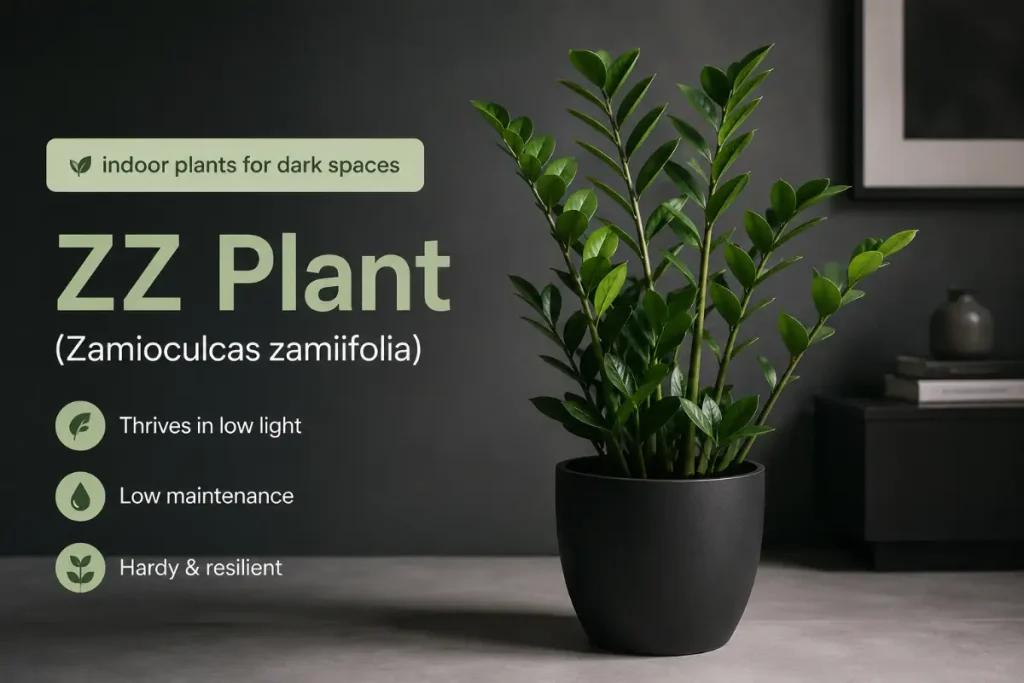
2. ZZ Plant (Zamioculcas zamiifolia)
ZZ plant is one of the few plants where the low-light marketing claim is genuinely accurate. Its rhizomatous root system stores significant water and nutrients, which allows it to sustain itself through extended periods of low photosynthesis by drawing on stored reserves.
The glossy, dark green pinnate leaves on arching stems reach two to four feet and maintain a polished, clean appearance that suits contemporary interior design. In low light, growth slows to nearly zero but the plant holds its appearance for months.
In dark spaces: One of the most genuinely low-light capable plants commonly available. Survives in conditions where most other plants would decline within weeks.
Care: Water only when the top two to three inches of soil feel completely dry. Root rot from overwatering is the most common cause of ZZ plant death in dim positions where reduced light slows water uptake significantly. Minimal fertilizing every four to six weeks through spring and summer. For complete care details, low light tall indoor plants covers ZZ plant alongside the other best low-light performers for dim spaces.
3. Snake Plant (Sansevieria / Dracaena trifasciata)
Snake plant combines low-light tolerance with drought tolerance in a way that makes it genuinely suitable for dark spaces where the combination of dim light and occasional missed waterings would kill most other plants.
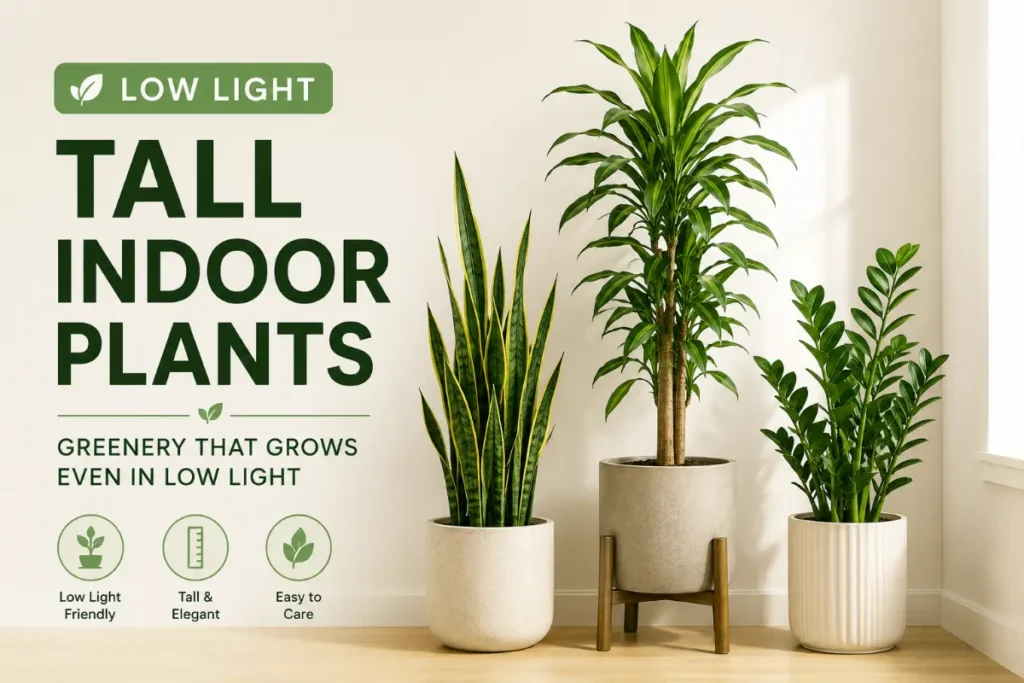
Varieties range from compact six-inch forms to dramatic six-foot architectural specimens. The upright, sword-shaped leaves in green, grey-green, and yellow-edged varieties create a strong vertical presence in dim spaces where most plants become sparse and leggy.
In dark spaces: Survives low indirect light for extended periods, growing very slowly but maintaining its form and appearance. In truly near-dark conditions it survives weeks before showing decline.
Care: Water only when the top two to three inches of soil are completely dry. In low-light positions, this interval extends significantly compared to bright-light placement. Monthly watering in winter is often sufficient. Overwatering in dim conditions is the primary killer of snake plant.
4. Pothos (Epipremnum aureum)
Pothos is the most light-flexible trailing plant commonly available and one of the most reliably forgiving plants for genuinely dark spaces. Its vigorous trailing growth in brighter light transitions to slower but persistent growth in dim conditions without the rapid decline that affects more demanding trailing plants.
In low light, pothos leaves trend toward solid green as the plant reduces its variegation to maximize chlorophyll production. Golden pothos becomes increasingly green. Marble queen fades toward pale green. Neon pothos maintains its color best in low light of all the common varieties.
In dark spaces: Maintains growth in medium to low indirect light. Survives dim ambient lighting conditions that would stop most other trailing plants. Leaves become smaller and more widely spaced in very low light.
Care: Water when the top inch of soil dries out. Trail from elevated positions or train upward on a moss pole. Wipe leaves periodically to remove dust that accumulates on the large surfaces and reduces the already-limited photosynthetic capacity in dim positions.
5. Chinese Evergreen (Aglaonema) — Green Varieties
Chinese evergreen varieties span a wide range of light requirements based on their leaf color. This is one of the clearest color-to-light rules in indoor plants: the greener the leaf, the lower the light it tolerates. Dark green varieties tolerate genuinely low indoor light. Red, pink, and orange varieties need significantly more light to maintain their colors and cannot be used as true low-light plants.
For dark spaces, choose varieties like Aglaonema modestum, Aglaonema ‘Silver Bay’, or other predominantly green and silver varieties. These grow to two to four feet with a dense, bushy form that fills corners effectively.
In dark spaces: Green and silver varieties are among the most attractive plants genuinely suited to low-light conditions. They maintain good leaf color and continue growing slowly even in ambient-light-only positions.
Care: Water when the top inch of soil feels dry. Keep temperatures above 60 degrees since Chinese evergreen is cold-sensitive. Avoid cold drafts from windows in winter even in otherwise appropriate low-light positions.
6. Parlor Palm (Chamaedorea elegans)
Parlor palm is the most shade-tolerant palm commonly available and the only palm in the low-light category with a genuinely earned reputation for tolerating dim indoor conditions. Its use as a Victorian-era indoor plant, before electric lighting and before plant light requirements were understood, demonstrates its real shade adaptation.
Fine-textured, arching fronds on bamboo-like stems reach four to six feet over many years, creating the lush tropical presence most people associate with palms in a size and light requirement that makes it practical for dim indoor spaces.
In dark spaces: Handles medium to low indirect light better than any other palm species. In north-facing rooms and interior positions without direct window access, it maintains acceptable growth that other palms cannot.
Care: Water when the top inch dries out. Maintain humidity above 40% to prevent the spider mites that specifically target parlor palm in dry conditions. Monthly fertilizing every four to six weeks through spring and summer. For a comparison of parlor palm with areca palm in terms of light requirements, areca palm indoor plant care covers why areca needs significantly more light than parlor palm and what happens when it does not get it.
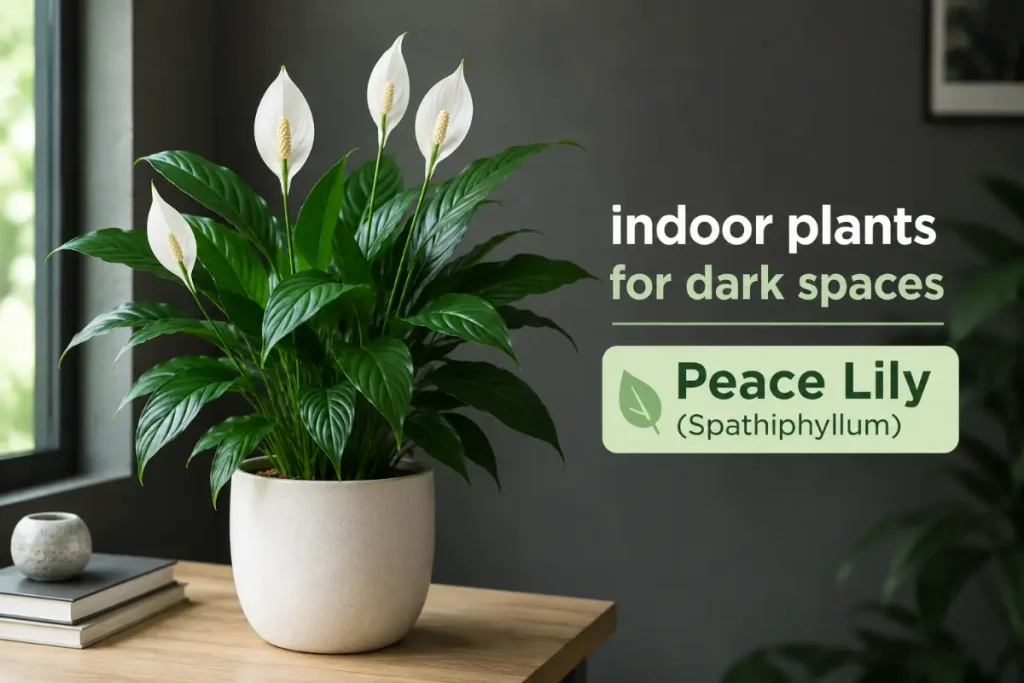
7. Peace Lily (Spathiphyllum)
Peace lily is the only flowering plant on this list and the only commonly sold flowering houseplant that genuinely blooms in low-light conditions. The white spathe flowers appear reliably in medium to low indirect light without the direct sun that most flowering houseplants require.
Large varieties reach three to four feet with a full, spreading form. The glossy, dark green leaves droop dramatically when thirsty and recover completely after watering, providing one of the clearest early warning systems of any plant on this list.
In dark spaces: Genuinely tolerant of low indirect light including north-facing rooms and interior positions. Will bloom in these conditions, which no other commonly available plant on this list can claim.
Care: Water when leaves begin to show the slightest softening before the full droop occurs. Peace lily in low light uses significantly less water than the same plant in bright indirect light. For the complete guide to peace lily including its documented air purification benefits that make it particularly valuable in the enclosed spaces where dark-position plants often sit, peace lily indoor plant benefits covers every consideration.
8. Dracaena Varieties
Multiple dracaena species tolerate low to medium indirect light with the characteristic durability of the genus. Mass cane (Dracaena fragrans ‘Massangeana’), Janet Craig (Dracaena fragrans ‘Compacta’), and marginata (Dracaena marginata) all maintain acceptable growth in fluorescent-lit and low-natural-light positions that challenge most other large plants.
Janet Craig specifically, with its solid dark green strap-like leaves, is one of the most low-light tolerant of the dracaena varieties and the best choice for genuinely dim spaces where mass cane’s yellow stripe would fade.
In dark spaces: Janet Craig is the standout low-light dracaena. Mass cane and marginata prefer medium indirect light but tolerate low light for extended periods without rapid decline.
Care: Water when the top two inches of soil dry out. Use filtered or distilled water to prevent fluoride accumulation that causes brown tips particularly problematic in already-stressed low-light specimens. Monthly fertilizing through spring and summer.
9. Heartleaf Philodendron (Philodendron hederaceum)
Heartleaf philodendron is one of the most light-flexible trailing plants available and significantly more shade-tolerant than many other popular trailing houseplants. Its heart-shaped, glossy green leaves trail or climb and maintain good appearance in medium to low indirect light without the rapid etiolation that affects more demanding trailing plants.
In low light, growth slows and leaves remain the same dark green rather than fading. The plant trails or climbs persistently even in dim conditions, making it one of the most useful plants for adding a trailing element to a dark corner.
Care: Water when the top inch of soil feels dry. Train upward on a moss pole or allow to trail from elevated positions. Wipe leaves every two to four weeks to remove dust that reduces photosynthetic efficiency in already-limited light conditions.
10. Spider Plant (Chlorophytum comosum)
Spider plant is more light-flexible than its ubiquitous presence in bright offices and sunny kitchens might suggest. It handles medium to low indirect light while maintaining the characteristic arching leaves and producing the baby plantlets on runners that make it one of the most propagation-friendly houseplants available.
In low light, the white central stripe or edge marking fades toward solid green as the plant maximizes chlorophyll production, but the plant itself remains healthy and continues producing new growth and occasional runners.
In dark spaces: Handles low indirect light better than most variegated plants. The green forms without variegation are the most appropriate choice for genuinely dim positions.
Care: Water when the top inch of soil dries out. Remove brown tips with clean scissors cutting at a slight angle to maintain a natural appearance. Pot-bound spider plants produce more runners, which suits spaces where the trailing plantlets on long arching runners are part of the display design.
11. Lucky Bamboo (Dracaena sanderiana)
Lucky bamboo is not bamboo but a Dracaena relative that grows in water or moist soil and handles significantly lower light than most other plants commonly sold as decorative houseplants. Its architectural cane form, often twisted or braided for decorative effect, maintains its appearance in dim conditions that would cause most other plants to decline.
In dark spaces: Handles low indirect light and even ambient fluorescent lighting better than most plants. Growth slows in dim conditions but the existing cane structure maintains its appearance without the leaf drop or etiolation that affects other plants.
Care: If grown in water, change the water every two weeks and keep the water level consistent. Use filtered or distilled water since lucky bamboo is sensitive to fluoride in tap water. If grown in soil, water when the top inch dries out. Keep in temperatures above 60 degrees.
Supplemental Lighting for Dark Spaces
No plant survives indefinitely without any light. For positions where natural light is genuinely absent or insufficient for even the most shade-tolerant plants, supplemental LED grow lighting is the reliable solution.
What you need: A standard LED grow light does not need to be large or expensive for the plants in this guide. A small, clip-on or desk grow light running eight to ten hours daily provides enough supplemental photosynthetically active radiation to maintain the most shade-tolerant plants in positions with no natural light.
Rotation strategy: An alternative to permanent grow lighting is rotating plants between a dark display position and a brighter recovery position. Two to three weeks in a dim display position followed by two to three weeks in a brighter position allows plants to recover before returning to the display. This suits situations where the aesthetic of a particular position matters but the light is genuinely insufficient for any plant long-term.
Which plants benefit most from supplemental lighting: ZZ plant, cast iron plant, and snake plant in genuinely dark spaces benefit dramatically from even a few hours of low-intensity LED grow light daily. Peace lily produces significantly more flowers with supplemental lighting in dim positions. Pothos and heartleaf philodendron maintain better variegation and more compact growth under grow lights than in ambient artificial light alone.
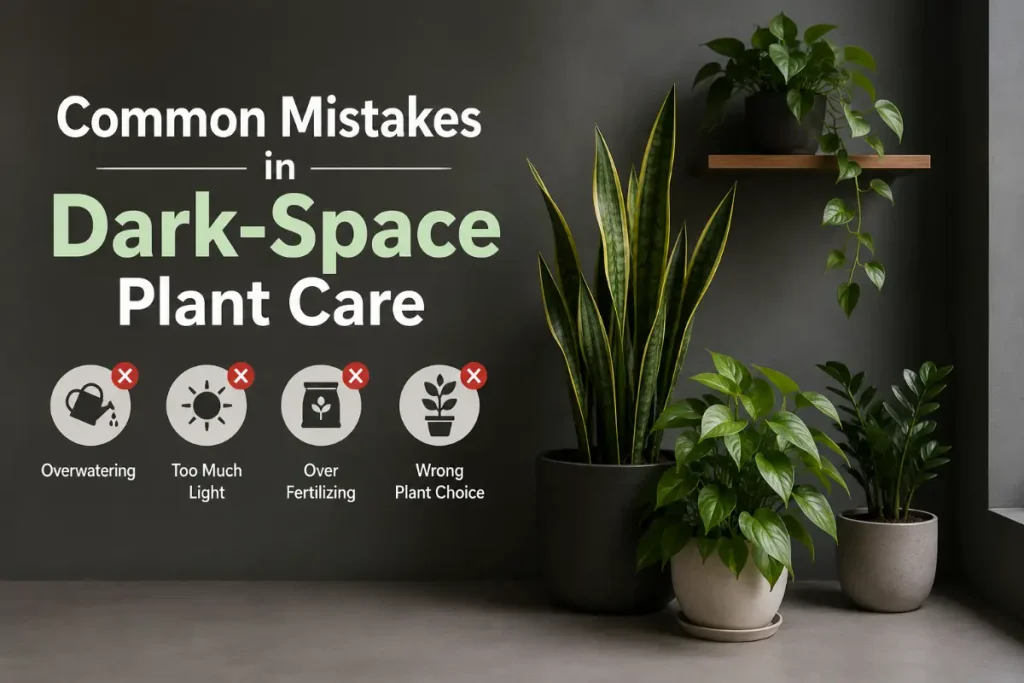
Common Mistakes in Dark-Space Plant Care
Overwatering in dim conditions: Plants in low light use significantly less water than the same plants in bright light. Maintaining the same watering schedule in a dark position as in a bright one is the most common cause of root rot in dark-space plants. Always check soil moisture before every watering regardless of schedule.
Choosing colorful varieties: Brightly colored cultivars of otherwise shade-tolerant plants, including red and pink Chinese evergreen, golden pothos, and variegated snake plant, need more light than their green counterparts to maintain their colors. For genuinely dark spaces, choose the greenest available variety of any plant you select.
Not cleaning leaves: Dust accumulation on leaves in enclosed, still-air dark spaces significantly reduces the already-limited photosynthetic capacity. Wiping leaves every two to four weeks with a damp cloth makes a measurable difference in how well plants maintain themselves in dim conditions.
Expecting flowering: Most flowering plants need significantly more light than low-light foliage plants. Peace lily is the exception. All other flowering houseplants including orchids, anthuriums, and African violets need medium to bright indirect light minimum and should not be placed in genuinely dark spaces.
Conclusion
Indoor plants for dark spaces require choosing specifically from the small group of plants genuinely adapted to low-light conditions rather than attempting to make unsuitable plants survive through optimistic placement. Cast iron plant for the most demanding positions. ZZ plant and snake plant for contemporary aesthetics with real low-light performance. Pothos and heartleaf philodendron for trailing elements. Peace lily for the only flowering option that genuinely works. Chinese evergreen in green varieties for dense, bushy form. Parlor palm for tropical presence without sun requirements.
Supplement with a small LED grow light for any position where natural light is entirely absent and rotation is not practical. Clean leaves regularly to maximize photosynthetic efficiency in limited light. And choose the darkest, most deeply green variety of any plant you select since variegation consistently reduces low-light performance across every species.
Frequently Asked Questions
What is the best plant for a room with no windows?
No plant survives permanently in a room with absolutely no light. For a windowless room, the most practical solution is a small LED grow light running eight to ten hours daily, paired with cast iron plant, ZZ plant, or snake plant which need the least supplemental lighting of any commonly available houseplants. Without any lighting, artificial or natural, plants should be rotated to a brighter position every two to three weeks before returning to the windowless display position.
Can any plants survive in a very dark bathroom?
Bathrooms with frosted glass or small windows providing minimal natural light are suitable for cast iron plant, ZZ plant, and pothos in their most green varieties. The humidity of a bathroom benefits these plants compared to drier indoor positions. A bathroom with no windows at all requires a grow light for any plant to survive long-term. Peace lily also performs well in bathroom conditions given its preference for consistent humidity.
How long can low-light plants survive in complete darkness?
The most shade-tolerant plants including cast iron plant and ZZ plant can survive two to four weeks in near-complete darkness by drawing on stored reserves in their leaves and root systems. After this period, decline begins visibly. A rotation strategy, two to three weeks in a display position followed by two to three weeks in a brighter recovery position, allows these plants to maintain themselves in positions that would otherwise be too dark for permanent placement.
Do low-light plants need fertilizing?
Yes, but less frequently than plants in bright light. Low-light plants grow more slowly and use nutrients at a reduced rate. Monthly fertilizing at half the standard rate through spring and summer is appropriate. Fertilizing more frequently than the plant’s slow growth rate can use accumulates unused salts in the limited pot volume which damages roots over time in already-stressed dim-position plants.
Why are my low-light plants losing their variegation?
Variegated leaves lose their non-green markings in low light as the plant increases chlorophyll production to maximize photosynthesis in limited light. This is a normal adaptive response rather than a disease or deficiency. Moving to brighter indirect light restores variegation in new growth over weeks to months. For dark-space placement, choosing solid green varieties avoids this issue entirely.
Should I rotate low-light plants toward the light?
Yes. Plants in dim positions lean toward any available light source over time, creating an uneven, lopsided form. Rotating one-quarter turn every two to four weeks ensures even light exposure across all sides of the plant and maintains a more symmetrical, upright form. This is particularly important for plants with multiple stems like Chinese evergreen and peace lily where individual stems lean more dramatically than single-stemmed plants.