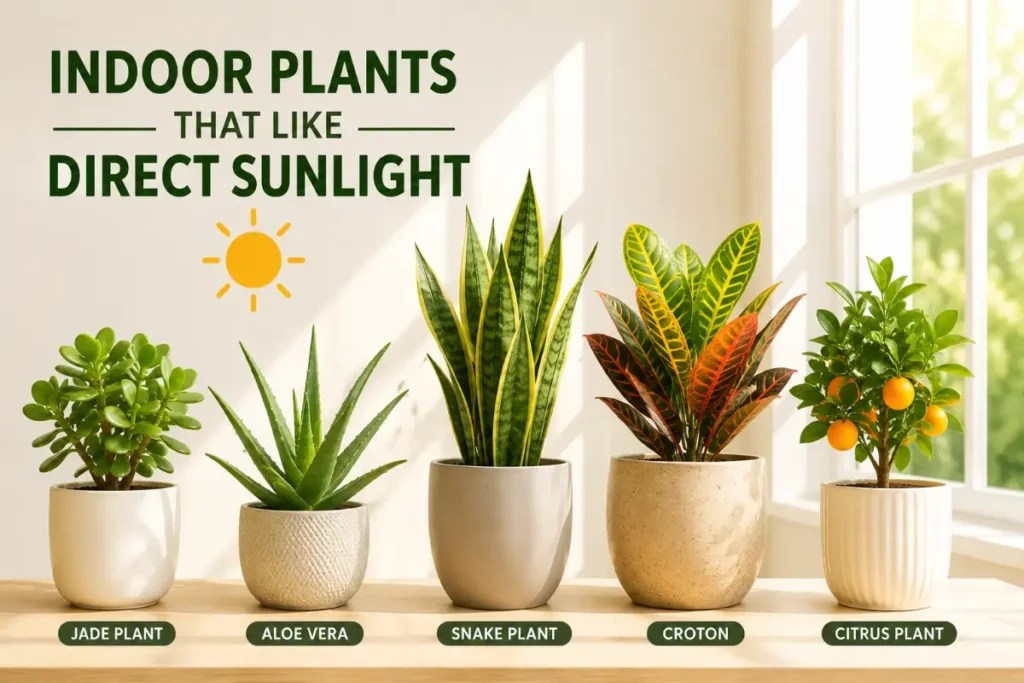
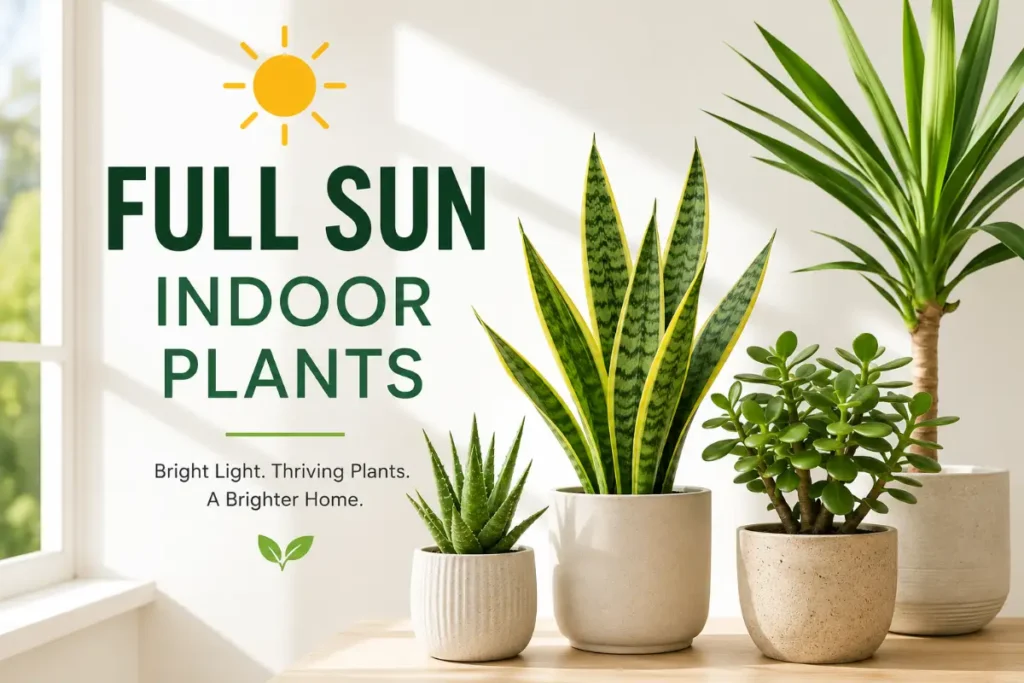
Full sun indoor plants fill a specific need that most houseplant guides underserve: the bright south-facing window or sunroom that gets direct sunlight for five or more hours daily and needs plants that can genuinely handle it. Most popular houseplants, from pothos to peace lily to ferns, cannot tolerate direct indoor sun and bleach or scorch within days in these positions. The plants in this guide are specifically suited to the sunniest spots in your home.
These are not just plants that tolerate sun. They are plants that actively need and perform better with significant direct light, producing more compact growth, more intense coloration, and more abundant bloom in sunny positions than they would in the bright indirect light that suits most of the houseplant world.
Quick Answer
The best full sun indoor plants include cacti and succulents, aloe vera, jade plant, croton, hibiscus, geraniums, dwarf citrus trees, rosemary and Mediterranean herbs, and bird of paradise (orange variety). These plants need four to six or more hours of direct sunlight through a south or west-facing window daily and perform their best in the sunniest available indoor positions.
What Full Sun Means Indoors
Full sun outdoors means direct unfiltered sunlight for six or more hours daily. Indoors, full sun means direct sunlight through glass for the maximum available duration in your sunniest window, typically a south or west-facing window.
Standard window glass reduces overall light intensity by approximately 20 to 30% and filters significant UV radiation compared to outdoor direct sun. This means even the sunniest indoor position is somewhat less intense than full outdoor sun, which benefits the plants in this guide since many are adapted to high-intensity outdoor sun that would be more than glass-filtered indoor light provides.
The practical implication is that plants described as needing full sun outdoors often handle indoor direct sun very well without the bleaching or scorching they might experience in unfiltered outdoor summer sun. A cactus in a sunny south-facing window typically performs at its best rather than showing sun stress, because the glass filtering brings the intensity into the optimal range for many high-light plants.
1. Cacti
No plant category is better matched to a full-sun indoor position than cacti. Having evolved in desert environments where direct intense sun is simply the baseline condition, cacti in a south-facing window with five or more hours of direct sunlight are in something close to their natural element.
The range of forms available makes cacti one of the most visually diverse groups in this guide. Columnar cacti like cereus and notocactus create strong vertical architecture. Globe cacti like echinopsis and mammillaria provide compact, sculptural forms. Opuntia species produce the distinctive paddle-jointed form most associated with desert landscapes. All share the same basic indoor care approach.
In full sun: Cacti maintain their characteristic compact, sculptural form in full sun. In insufficient light they etiolate rapidly, producing pale, thin growth from the growing point that permanently distorts the plant’s shape. Full sun is not just preferred for cacti indoors — it is necessary for maintaining their characteristic appearance.
Care: Water only when soil is completely dry two to three inches down. In summer this might mean every two to three weeks. In winter every four to six weeks or less. Fast-draining cactus mix with at least 50% coarse perlite or grit. Terracotta pots that dry quickly. No fertilizing in winter. Light balanced fertilizer every four to six weeks in the active growing season.
2. Succulents
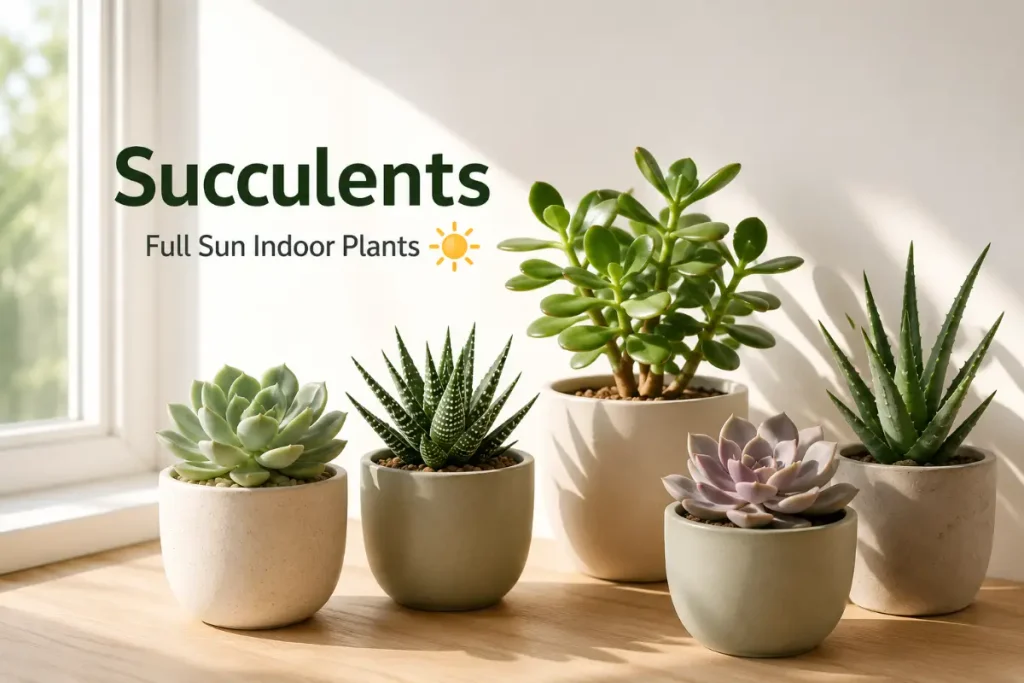
The succulent category covers hundreds of genera with varying light needs, but the most popular and widely available, including echeveria, sedum, graptoveria, and haworthia, perform their best in bright direct indoor light.
The vivid sun-stress coloration that makes succulents visually spectacular, the pink, red, purple, and orange tones at leaf margins and tips, appears specifically in response to high light and mild stress. In insufficient light succulents fade toward plain green and etiolate, stretching toward any available light with increasing space between leaves. The rosette tightens and the colors intensify as direct light access improves.
Sun-stress coloring: This is one of the most striking light-dependent effects in indoor plants. An echeveria that looks like a plain green rosette in medium indirect light transforms into a vivid pink, orange, or purple specimen in a full-sun south-facing window, using the same plant with no other changes. The color is a protective anthocyanin response to UV and high light intensity.
The exception: Haworthia and gasteria are the most shade-tolerant succulent genera and perform well in bright indirect light without direct sun. For a genuinely sunny window, the echeveria and sedum types provide the most spectacular sun-stress coloration.
Care: Same approach as cacti. Fast-draining soil. Infrequent thorough watering. Rotate regularly since succulents lean and tilt toward light sources more dramatically than most other plants. For the complete guide to soil mixes for succulents in full-sun positions, soil mixture for indoor plants covers the exact perlite ratios that provide the drainage these plants require.
3. Aloe Vera
Aloe vera is one of the most commonly purchased houseplants in the US and one of the most commonly grown in conditions too dim for its genuine preferences. As a native of the Arabian Peninsula and North Africa, aloe vera evolved in full desert sun and performs its best in the sunniest available indoor position.
In a south-facing window with direct afternoon sun, aloe vera produces the firm, upright, thick-leaved form with rich grey-green color that indicates a genuinely healthy plant. In insufficient light the leaves become thin, floppy, and pale, losing the firm succulent texture and compact rosette form that makes aloe useful both medicinally and aesthetically.
The color indicator: Aloe vera in good direct sun takes on a slightly warm, golden-green or pinkish tinge at leaf edges. This is sun-stress coloring similar to succulents and indicates the plant is in appropriate light conditions. An aloe that is uniformly bright green with floppy, outstretched leaves is likely in insufficient light regardless of how healthy it otherwise appears.
Care: Water when the top two to three inches of soil feel completely dry. Root rot from overwatering is far more common than drought damage in indoor aloe. Fast-draining soil. Terracotta pot preferred. No water in the rosette center which causes rot.
4. Jade Plant (Crassula ovata)
Jade plant is a South African succulent shrub that grows into one of the most impressive large succulents available for indoor display over many years in a full-sun position. The thick, tree-like trunk and dense, rounded, coin-shaped leaves in a good window develop into something genuinely architectural over five to ten years of growth.
In full sun, jade plant develops the reddish leaf margin tinting that indicates optimal growing conditions and produces compact, dense branching. In insufficient light leaves become larger, thinner, and more widely spaced on weak stems that cannot support their own weight.
Longevity: Jade plant in appropriate conditions is one of the longest-lived indoor plants available, commonly maintained for twenty or more years and passed between generations. The investment of correct positioning from the start pays dividends in a plant that grows into an increasingly impressive specimen over decades rather than years.
Care: Water when the top two inches of soil are dry. Far more drought-tolerant than most people realize. Fertilize every four to six weeks through spring and summer with a balanced formula at half rate. Repot every two to three years as the root system fills the container.
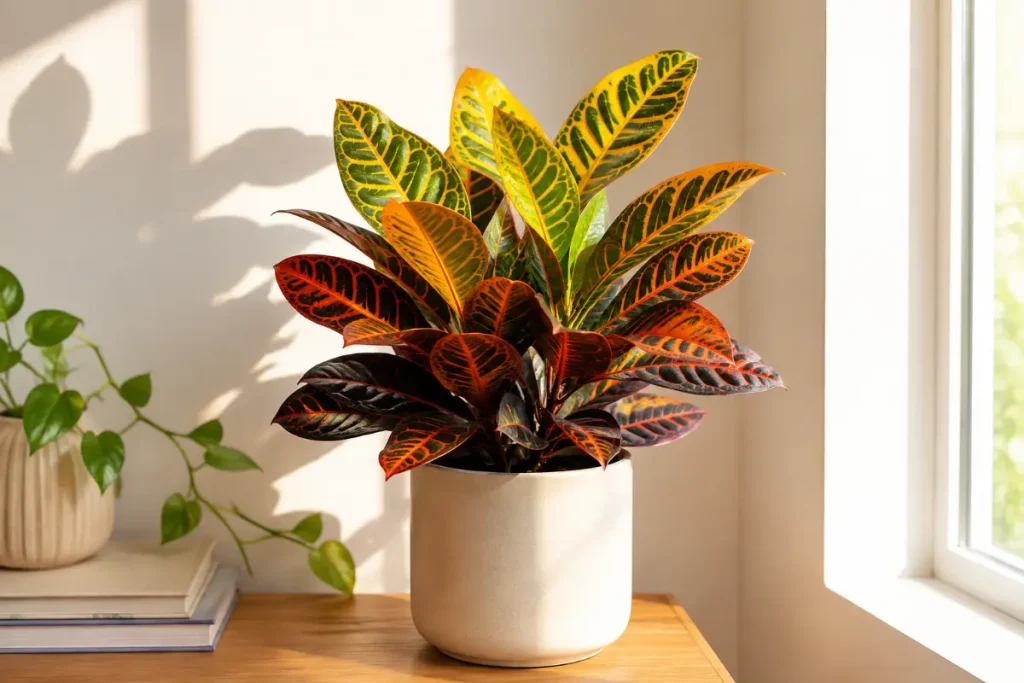
5. Croton (Codiaeum variegatum)
Croton is unique among the full-sun indoor plants in this guide because it is a foliage plant, not a succulent or herb, with tropical origins in Southeast Asia. It earns its place in the full-sun category through one of the most dramatic light-dependent color effects of any commonly grown houseplant.
Croton leaves combine red, orange, yellow, green, and pink in patterns that become dramatically more vivid and more intensely colored in direct sun. In medium indirect light, croton color is attractive but muted. In a full-sun south or west-facing window, the same plant transforms into something genuinely spectacular with colors saturated to their maximum intensity.
The position commitment: Croton is one of the few plants that drops leaves dramatically from any significant position change. Once you find the right full-sun spot, keep the plant there. Moving it to a dimmer position even temporarily triggers leaf drop that takes weeks to recover from. This plant rewards commitment to the right position.
Care: Consistent moisture without waterlogging. Temperatures consistently above 60 degrees. High humidity above 50% to prevent spider mites which specifically target croton in dry conditions. The combination of full sun and high humidity that croton thrives in is unusual but achievable in a humid south-facing sunroom or bathroom with good natural light.
6. Hibiscus (Hibiscus rosa-sinensis)
Indoor hibiscus is the most spectacular flowering plant in this full-sun guide and one of the few flowering houseplants where moving to a sunnier position directly increases rather than decreases bloom production. The large, tropical flowers in red, orange, yellow, pink, and white appear continuously through spring and fall in good direct sun conditions.
The relationship between light and bloom in hibiscus is direct and dramatic. A hibiscus in medium indirect light produces a handful of flowers sporadically. The same plant in four to six hours of direct south-facing window sun produces continuous bloom that can number in the dozens of flowers per week during peak growing season.
Care: Consistent moisture, never allowing drought during the bloom period since bud drop follows drought stress quickly. Biweekly fertilizing with a high-phosphorus formula through the bloom period. Watch for spider mites, whiteflies, and aphids which are attracted to hibiscus in warm indoor conditions. For the complete aphid treatment approach that applies to hibiscus and other flowering plants, how to get rid of aphids on indoor plants covers every method in escalation order.
7. Geraniums (Pelargonium)
Geraniums are among the most reliably sun-tolerant flowering plants available for indoor windowsill growing and one of the few flowering plants that blooms continuously in direct south-facing window conditions without the intensive management that hibiscus and other tropical bloomers require.
The bloom clusters in red, pink, salmon, white, and bicolor combinations appear reliably through spring and summer with consistent direct sun. The plant stays compact in good light, unlike the leggy growth that develops in insufficient light. Scented geranium varieties add aromatic interest alongside their flowers, with varieties producing rose, lemon, mint, and nutmeg fragrances from their foliage.
Care: Water when the top inch of soil feels dry. More drought-tolerant than most flowering plants. Deadhead spent flower clusters by cutting back to just above the nearest leaf to encourage continuous reblooming. Fertilize every two weeks through the bloom period with a balanced formula. Bring indoors before frost in areas with cold winters.
8. Mediterranean Herbs: Rosemary, Lavender, and Thyme
The Mediterranean herb group, including rosemary, lavender, thyme, oregano, and sage, shares both the high direct-sun requirement and the fast-draining, lean-soil preference that characterizes plants adapted to rocky Mediterranean coastal conditions. A south-facing kitchen windowsill with direct afternoon sun is the ideal indoor position for all of these simultaneously.
What distinguishes Mediterranean herbs from most other full-sun plants in this guide is that inadequate light does not just reduce their appearance. It directly reduces the essential oil concentration in their leaves that gives them their culinary value and fragrance. Rosemary grown in insufficient light smells and tastes noticeably less intense than the same plant in direct sun, making the light requirement as much about utility as aesthetics.
Care: Fast-draining soil with 30 to 40% perlite. Water only when the top two inches feel completely dry. Excellent air circulation to prevent the powdery mildew that stagnant indoor air creates. Light fertilizing only twice per year. Regular pruning to prevent the woody legginess that develops without consistent tip pinching. For the complete rosemary care guide with the specific Mediterranean herb approach, how to care for a rosemary plant indoors covers every detail.
9. Dwarf Citrus Trees
Dwarf citrus trees including Meyer lemon, calamondin orange, and kumquat are among the most rewarding full-sun indoor plants because they combine fragrant flowers, ornamental fruit, and attractive evergreen foliage in a single specimen that earns its space through multiple simultaneous appeals.
Citrus needs more direct sun than almost any other commonly grown indoor plant. Six or more hours of direct south-facing window sun is the minimum for fruit production. In less light the trees grow healthy foliage but produce little or no fruit. In a genuinely sunny position, a Meyer lemon can produce fragrant white flowers and ornamental lemons simultaneously, creating one of the most satisfying indoor plant displays available.
Care: Water when the top one to two inches of soil dry out. Fertilize every two weeks through spring and summer with a citrus-specific fertilizer. Maintain humidity above 50% to prevent the leaf drop that occurs in very dry heated indoor air. Inspect regularly for scale, spider mites, and mealybugs which specifically target citrus indoors.
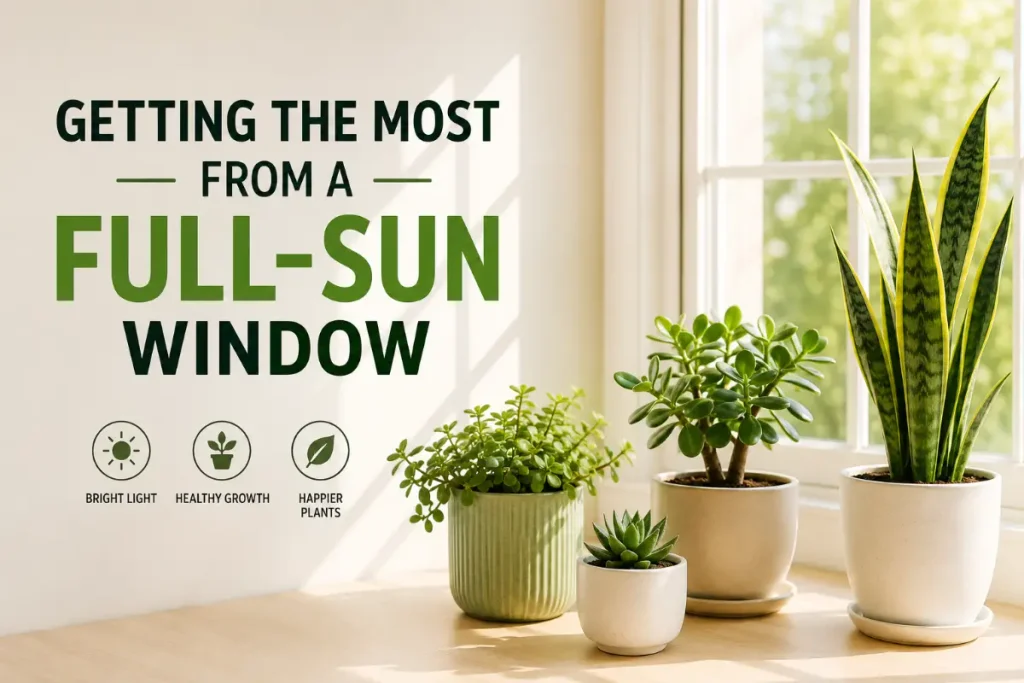
Getting the Most From a Full-Sun Window
A south-facing window with direct sun is one of the most valuable plant positions in any home. A few practices maximize how effectively this position supports the plants listed above.
Clean windows: Dirty glass reduces light transmission by 15 to 25% in some cases. Cleaning south-facing windows seasonally maintains maximum light access for the plants that depend on it most.
Seasonal adjustment: The sun angle changes significantly through the year. In winter the lower sun angle means direct light penetrates deeper into the room through south-facing windows than in summer when the high sun angle provides shorter direct exposure at any given position. Move plants closer to the window in summer and further back positions may receive direct sun in winter that they do not in summer.
Rotation: Sun-loving plants in a fixed window position receive uneven light on their window-facing versus room-facing sides. Rotating a quarter turn weekly or biweekly produces more even growth form. Cacti and succulents benefit particularly from regular rotation since their growth is most dramatically directional in a fixed light position.
Reflective surfaces: White walls, light-colored floors, and mirrors positioned to reflect light into the window area increase the effective light available to plants in a sunny position without requiring additional windows or grow lights.
Conclusion
Full sun indoor plants reward the grower with a genuine south or west-facing window with the best growth, most vivid color, and most abundant bloom they are capable of producing indoors. Cacti and succulents in their natural high-light element. Aloe vera with firm, upright succulent leaves rather than floppy, pale growth. Jade plant developing its tree-like form over years. Croton with saturated, spectacular leaf colors. Hibiscus and geraniums producing continuous bloom. Mediterranean herbs at their most fragrant and flavorful. Dwarf citrus with flowers and fruit simultaneously.
Each plant in this guide produces noticeably better results in full direct sun than in the bright indirect light that suits the majority of popular houseplants. If you have a south-facing window that most plants find too bright, these are the plants that make that position an asset rather than a challenge.
Frequently Asked Questions
How many hours of direct sun do full sun indoor plants need?
Most full sun indoor plants perform their best with four to six or more hours of direct sunlight daily through a south or west-facing window. Cacti and succulents handle six or more hours comfortably. Mediterranean herbs need at least four to six hours for best growth and flavor. Hibiscus and geraniums bloom most abundantly with four to six hours. Plants receiving fewer than three hours of direct sun daily benefit from supplemental grow lighting even within the full-sun category.
Can direct indoor sun scorch plants?
Standard window glass reduces light intensity and filters UV significantly compared to outdoor direct sun. Most plants described as needing full sun outdoors handle direct indoor window light well without scorching. The plants most at risk are those adapted to deep shade that are suddenly moved to a sunny position without acclimation. Shade-adapted plants should always be transitioned gradually to brighter positions over two to four weeks rather than moved directly to full-sun conditions.
What is the best window for full sun indoor plants?
South-facing windows receive the most direct sunlight across the longest daily period in the northern hemisphere and are the best positions for full sun indoor plants. West-facing windows receive direct afternoon sun which is somewhat more intense than morning sun and work well for most plants in this guide. East-facing windows receive morning sun which is gentler and may be insufficient for the highest-light plants including cacti, succulents, and dwarf citrus without supplemental grow lighting.
Can I use grow lights to supplement a window that gets some but not enough direct sun?
Yes. A quality full-spectrum LED grow light running six to eight hours daily supplements a window that receives two to three hours of direct sun, bringing the total effective light to the range that most full-sun plants need. Position the grow light close to the plant, six to twelve inches, for meaningful intensity supplementation rather than the decorative effect of a light positioned further away. For the complete guide to grow light UV content and spectrum selection, UV light for plants indoor covers what to look for in a grow light that genuinely supplements natural sun.
Do full sun indoor plants need special soil?
Most full sun indoor plants including cacti, succulents, aloe vera, and jade plant need fast-draining soil with significantly more drainage amendment than standard potting mix provides. A mix of 50 to 60% cactus mix with 40 to 50% coarse perlite or horticultural grit provides the drainage that prevents root rot in high-light conditions where these plants are watered infrequently. Mediterranean herbs also benefit from fast-draining soil with 30 to 40% perlite. Hibiscus, geraniums, and croton do well in standard potting mix with 20% perlite added.
How do I know if my full sun plant is getting too much light?
Bleached, washed-out color on the side of the plant facing the window indicates too much intense direct sun. Crispy brown patches on sun-exposed leaf surfaces indicate actual scorching. These symptoms are less common with glass-filtered indoor sun than with outdoor direct sun but can occur on sensitive plants suddenly moved to a very bright position without acclimation. Most of the plants in this guide are genuinely sun-adapted and do not show these symptoms in typical south-facing window conditions.