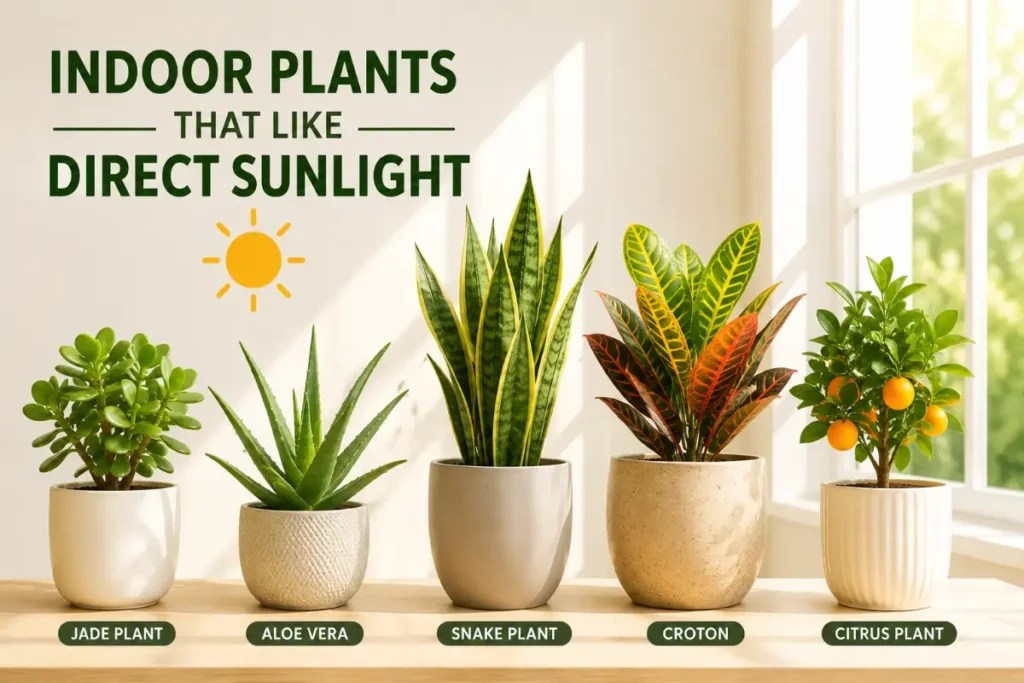
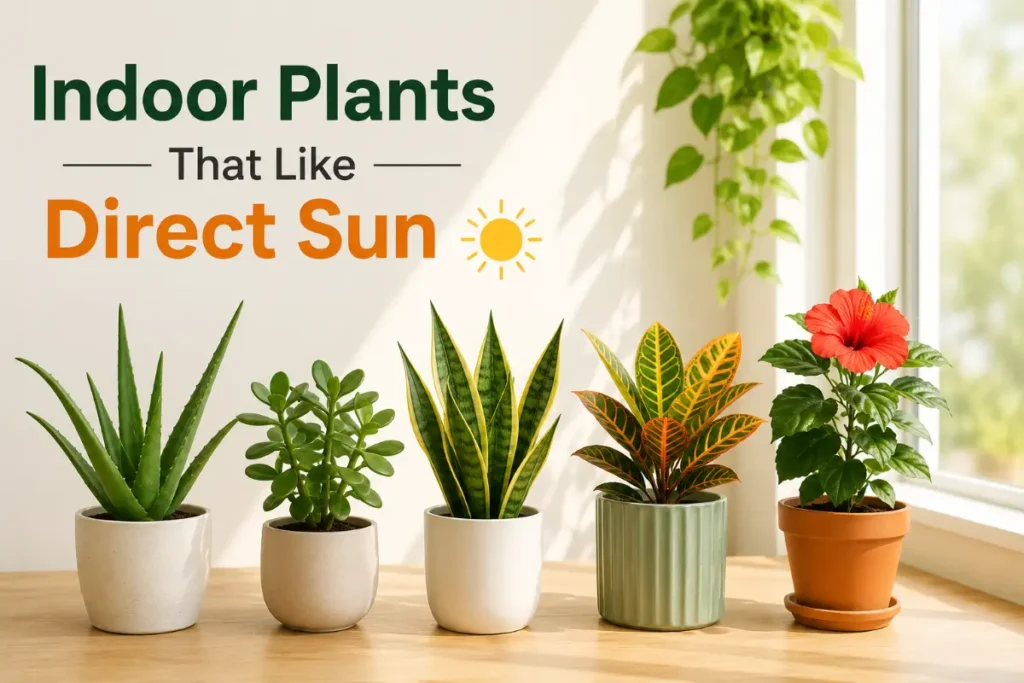
Indoor plants that like direct sun for hot, bright spaces represent a specific subset of the sun-loving plant category. Not all sun-tolerant plants handle the combination of intense light and elevated temperatures that south-facing sunrooms, conservatories, and unshaded south-facing windows produce in summer. The plants in this guide are specifically chosen because they handle both the light intensity and the heat that the hottest indoor direct-sun positions generate, rather than just tolerating one or the other.
This guide fills a gap left by broader direct-sun plant lists: the difference between plants that need direct sun and plants that genuinely thrive in the hottest, brightest indoor spaces most homes have.
Quick Answer
Indoor plants that like direct sun in hot, bright spaces include desert cacti, agave, aloe vera, jade plant, succulents from hot-climate genera including sedum and echeveria, Mediterranean herbs including rosemary and thyme, bougainvillea, oleander, and dwarf pomegranate. These plants handle both intense direct light and elevated indoor temperatures simultaneously, unlike some sun-tolerant plants that prefer direct sun with cooler temperatures.
The Hot Bright Space Problem
Most lists of direct-sun indoor plants do not distinguish between plants that like direct sun in cool or moderate temperatures versus plants that handle the heat accumulation that comes with south-facing direct sun in summer.
A south-facing window in July in most US locations can produce temperatures of 85 to 95 degrees Fahrenheit immediately in front of the glass as radiant heat from direct sun combines with the glass surface temperature. Closed sunrooms and conservatories can reach even higher temperatures without ventilation management. Some plants that perform beautifully in direct south-facing sun at comfortable spring temperatures show heat stress in these same positions through summer.
The plants in this guide specifically tolerate or actually prefer the combination of high light intensity and elevated temperatures that define the hottest indoor direct-sun environments.
1. Desert Cacti
Desert cacti are the most naturally suited plants for the combination of intense direct sun and high heat that hot indoor spaces produce. Having evolved in environments where surface temperatures exceed 130 degrees Fahrenheit and direct sun is unrelenting, they treat the conditions inside a hot south-facing sunroom as comfortable and familiar rather than extreme.
Why heat benefits cacti: Many cacti initiate blooming cycles in response to the high temperature differentials between hot summer days and cooler nights that a south-facing sunroom naturally produces. A columnar cereus or globe echinopsis that has never bloomed in a moderate indoor position may bloom prolifically when moved to a hot south-facing sunroom that produces the temperature signals it evolved to respond to.
Best for hot spaces: Opuntia (prickly pear) varieties are among the most heat tolerant cacti for indoor sunrooms. Cereus peruvianus (Peruvian apple cactus) handles combined heat and light with exceptional tolerance. Ferocactus (barrel cactus) species are both heat and drought tolerant with striking ribbed forms.
Care: Water only when soil is completely dry throughout the pot, not just the top layer. In a hot sunroom during summer this might mean every seven to ten days rather than the every-two-to-three-week schedule in more moderate indoor positions. Fast-draining gritty mix. Ensure good ventilation in the sunroom since high humidity combined with high heat and cacti creates conditions for the fungal problems these plants are otherwise resistant to.
2. Agave
Agave is one of the most heat and sun-tolerant large plants that can be grown in indoor direct-sun positions. The rosette-forming succulent leaves of smaller agave species like Agave americana ‘Marginata’, Agave victoriae-reginae, and Agave parryi make striking architectural statements in hot sunrooms and south-facing conservatories where few other plants maintain such clean, impressive form.
What makes agave exceptional for hot spaces: Agave uses a water-efficient photosynthetic pathway (CAM photosynthesis) that opens stomata at night rather than during the hot day, dramatically reducing water loss in high-heat conditions. This makes it more heat-drought tolerant than conventional photosynthesis plants of similar size.
Scale consideration: Agave grows slowly but ultimately reaches significant sizes. Smaller varieties including Agave victoriae-reginae stay under two feet in diameter and are suitable for pot culture in sunrooms indefinitely. Larger varieties become impressive specimens that eventually require more space than most indoor environments provide.
Care: Water sparingly even in hot conditions. The CAM photosynthesis pathway makes agave significantly more drought tolerant than its large size suggests. Fast-draining gritty soil. Full sun without any shading.
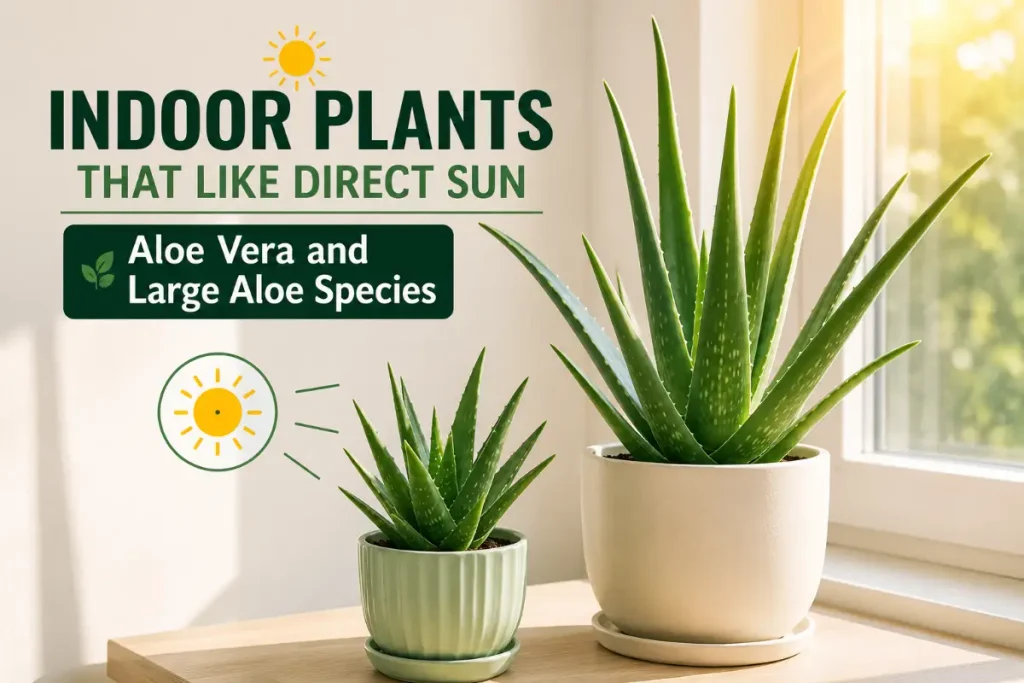
3. Aloe Vera and Large Aloe Species
Aloe vera is widely recommended for any sunny indoor position but specifically excels in the hot direct-sun conditions that challenge more moderate sun-lovers. Its native range on the Arabian Peninsula includes some of the hottest inhabited places on earth, giving it a heat tolerance that most succulent guides do not fully credit.
Beyond Aloe vera, larger aloe species including Aloe arborescens (torch aloe) and Aloe ferox (bitter aloe) create dramatic specimens in hot south-facing sunrooms where their striking rosette and tree-like forms develop impressively over years.
Heat response: Aloe in hot direct-sun positions often takes on a warm, reddish or orange tinge at leaf edges and tips as the high light and heat triggers anthocyanin production alongside the plant’s natural sun-stress response. This coloration is normal and indicates appropriate, healthy conditions rather than stress in the damaging sense.
Care: Water when the soil is completely dry, extending intervals longer in fall and winter than in the hot summer growing period. Excellent drainage essential. For the complete aloe care approach covering watering, soil, and the conditions that produce the best growth, indoor plants that like direct sunlight covers aloe alongside the broader range of direct-sun plants.
4. Jade Plant (Crassula ovata)
Jade plant handles heat better than many other succulents commonly placed in south-facing positions. Its native range in the Eastern Cape of South Africa includes areas with very hot summers and full direct sun, giving it the heat tolerance to handle the elevated temperatures of south-facing indoor positions in summer.
The hot-space advantage for jade plant: Jade plant in a hot south-facing position grows more rapidly through summer than in a cooler indirect light position, producing the woody trunk thickening that develops into the impressive tree-like form over years. The heat accelerates the cell wall thickening that creates the trunk structure.
Watch for: Jade plant in very hot enclosed spaces with poor ventilation can develop mealy bug infestations that thrive in the warm, still air. Good ventilation in any hot indoor space reduces mealybug pressure significantly.
Care: Water when the top two inches of soil are dry. More frequent in hot summer conditions than the once-every-two-to-three-weeks standard recommendation assumes. Fast-draining soil. Terracotta pots that breathe and dry faster than plastic or glazed ceramic.
5. Succulents from Hot-Climate Genera
Within the broad succulent category, specific genera from genuinely hot, arid climates handle the combination of intense light and elevated indoor temperatures better than succulents from higher-altitude or cooler coastal origins.
Sedum varieties from Mexican and South American desert environments (as opposed to cold-hardy European sedums like Sedum spectabile) are among the most heat-tolerant succulents for hot indoor spaces. Sedum rubrotinctum (jelly bean plant) and Sedum morganianum (burro’s tail) both originate in hot Mexican environments and thrive in hot south-facing positions.
Echeveria from Mexican high desert environments handles intense heat and sun with excellent tolerance. The characteristic sun-stress coloring develops most vividly in hot, bright conditions and makes echeveria in hot south-facing positions some of the most colorful succulents available indoors.
Graptopetalum and graptoveria hybrids are among the most heat and sun-tolerant of the rosette succulents and less prone to the center-rosette scorching that some echeveria varieties show in very hot enclosed spaces.
Care across all: Consistent with the broader succulent approach. Fast-draining mix. Water when completely dry throughout. Rotate for even growth. For the complete soil mix approach for hot-space succulents, soil mixture for indoor plants covers the coarse perlite ratios that provide appropriate drainage in the fast-drying conditions of hot indoor direct-sun positions.
6. Mediterranean Herbs in Hot Conditions
Rosemary, thyme, oregano, and sage from Mediterranean origins handle hot direct-sun conditions with the same tolerance that makes them thrive in outdoor Mediterranean summer heat. The combination of full direct sun and elevated temperatures in an indoor hot space actually replicates their native environment more closely than the more moderate conditions of a typical US home.
The essential oil dividend: In hot, bright conditions Mediterranean herbs produce the highest concentrations of essential oils in their leaves of any indoor growing condition. The result is the most intensely flavored and most fragrant herbs you can grow indoors. The difference between rosemary from a hot south-facing sunroom and rosemary from a north-facing window is immediately detectable in cooking.
What to watch in hot spaces: The combination of high heat and direct sun increases water demand significantly for Mediterranean herbs compared to cooler indoor positions. Check moisture at two inches depth more frequently in hot summer conditions. Still air in a hot enclosed space also increases powdery mildew risk, so ensure adequate ventilation around Mediterranean herbs in sunrooms.
Care: Fast-draining lean soil with 30 to 40% perlite. Water when two inches deep feel dry, more frequently than the extended intervals that cooler positions allow. Air circulation is critical in hot enclosed spaces. For the complete rosemary care guide covering the hot-space considerations, care for rosemary plant indoors covers seasonal care adjustments including summer management in hot bright positions.
7. Bougainvillea
Bougainvillea is one of the most spectacular flowering plants for hot indoor direct-sun spaces and one of the few plants where the hot, dry, intensely bright conditions of a south-facing sunroom are not a challenge to manage but a requirement to meet for consistent bloom production.
Native to the hot, dry coasts of South America, bougainvillea needs the combination of intense direct sun, heat, and a distinct dry period to initiate its prolific bloom cycles. In moderate conditions it produces only foliage. In the hot, bright conditions of a south-facing sunroom it responds with the masses of vivid magenta, orange, pink, red, or white flower bracts that make it one of the most dramatic flowering plants available for any indoor space.
The dry period for blooming: Bougainvillea blooms most abundantly after a deliberate dry period of three to four weeks where watering is reduced to bare minimum while direct sun continues. This controlled drought mimics the dry season that precedes bougainvillea’s natural bloom cycle and triggers the blooming response that the plant does not produce in consistently moist conditions.
Pruning for bloom: Bougainvillea blooms on new growth. Regular pruning after each bloom cycle encourages new growth that produces the next flowering round. In a hot sunroom this cycle can repeat three to four times per year.
Care: Water normally through the growing period between bloom cycles. Reduce to near-drought conditions for three to four weeks before each bloom cycle. Fast-draining soil. Strong direct south-facing sun required throughout.
8. Oleander (Nerium oleander)
Oleander is one of the most heat and sun-tolerant shrubs available for indoor container growing and handles the conditions inside a hot south-facing sunroom or conservatory with exceptional tolerance. Native to the Mediterranean region and southwestern Asia where it grows along hot, dry streambeds in full summer sun, it thrives in conditions that many plants find too extreme.
Indoor oleander considerations: Oleander grows vigorously and becomes large in good conditions. In a spacious sunroom this size is an asset, producing impressive specimens covered in fragrant flowers in pink, red, white, yellow, or salmon through summer. In smaller spaces, regular pruning maintains a more manageable size.
The toxicity caveat: Oleander is significantly toxic to humans, pets, and livestock. Every part of the plant including leaves, stems, flowers, and even smoke from burning oleander is toxic. It should not be grown in households with small children or pets that access the growing space. In adult households without these concerns it is an exceptional hot-space plant.
Care: Water when the top two inches of soil dry out. Fertilize every two weeks through spring and summer with a balanced formula. Prune after flowering to shape and encourage the next bloom cycle.
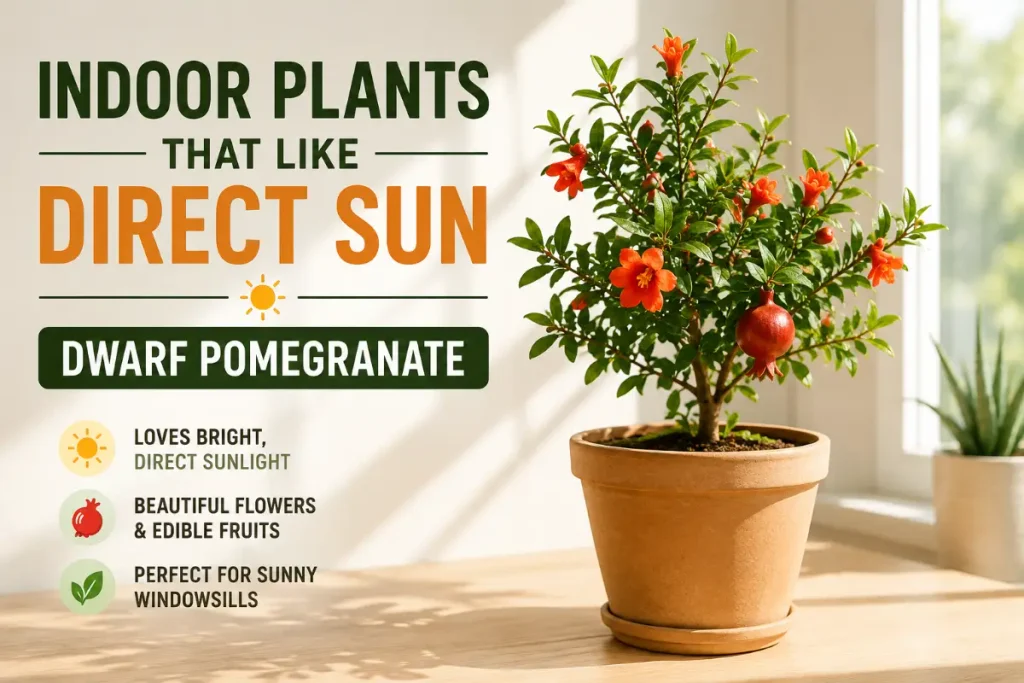
9. Dwarf Pomegranate (Punica granatum ‘Nana’)
Dwarf pomegranate is one of the most rewarding multi-season hot-space plants available for indoor growing. Through spring and summer it produces tubular orange-red flowers. In fall it develops small ornamental pomegranate fruits that persist on the plant for months. In winter in cool positions it drops its leaves briefly before resuming growth in spring.
Native to Iran and the Mediterranean region where summers are intensely hot and dry, dwarf pomegranate handles the hot sunroom environment with natural tolerance and actually requires the heat and direct sun to produce its characteristic flowers and fruit.
Container performance: In a six to ten inch pot with good drainage and direct south-facing sun, dwarf pomegranate grows to two to three feet over several years. In a larger pot it can reach four to five feet with a more impressive branching structure. Both sizes produce flowers and fruit when positioned in appropriate direct sun.
Care: Water when the top two inches of soil dry out. Reduce watering in winter if the plant enters semi-dormancy. Fertilize every two weeks through spring and summer with a balanced or slightly phosphorus-forward formula to support flower and fruit production. Prune in late winter to shape before spring growth begins.
For the complete guide to diagnosing whether any of these hot-space direct-sun plants are showing signs of insufficient light rather than heat stress, direct light indoor plants covers the eight specific warning signs that distinguish light deficiency from heat stress, two problems with overlapping symptoms that require opposite interventions.
Managing Heat in Indoor Direct-Sun Spaces
The same conditions that make hot south-facing spaces ideal for the plants in this guide can create management challenges around watering frequency, ventilation, and pest pressure.
Watering frequency adjustment: All plants in hot direct-sun spaces need more frequent watering than the same plants in cooler moderate conditions. Even drought-adapted succulents and cacti need shorter intervals between waterings in hot summer sunrooms than in cooler indoor positions. Check soil moisture directly rather than following fixed schedules, and expect to water more frequently from June through August than any care guide written for moderate indoor conditions suggests.
Ventilation: Hot enclosed spaces with still air create conditions for spider mites, mealybugs, and powdery mildew on even heat-tolerant plants. Opening windows and roof vents, running a small fan, and avoiding overcrowding plants in hot enclosed spaces reduces pest and disease pressure significantly.
Shading in extreme heat: Even genuinely heat-tolerant plants in this guide can show stress when enclosed sunroom temperatures exceed 100 degrees Fahrenheit for extended periods. Shade cloth rated at 30 to 40% over the glass during the hottest weeks of summer in the hottest US climates reduces peak temperatures without eliminating the direct sun that these plants need.
Conclusion
Indoor plants that like direct sun in hot, bright spaces represent some of the most robust and visually impressive plants available for indoor growing. Desert cacti and agave for ultimate heat and sun tolerance. Aloe and jade plant for heat-adapted succulents with ornamental appeal. Mediterranean herbs for the culinary dividend that hot conditions maximize. Bougainvillea for flowering spectacle that requires exactly the hot, bright, dry conditions most indoor spaces struggle to provide. Oleander for large-scale flowering presence. Dwarf pomegranate for flowers, fruit, and autumn color from a single container plant.
Each plant in this guide treats the hot, bright conditions that challenge most houseplants as its natural and preferred environment. Match these plants to your hottest south-facing positions and they reward that placement with the growth, color, and bloom production that the same positions would produce nothing but stress in shade-adapted tropical plants.
Frequently Asked Questions
Which indoor plants can tolerate a hot south-facing sunroom?
Desert cacti, agave, aloe vera, jade plant, echeveria and sedum succulents, Mediterranean herbs including rosemary and thyme, bougainvillea, oleander, and dwarf pomegranate all handle the combination of intense direct sun and elevated temperatures that south-facing sunrooms produce in summer. These plants evolved in naturally hot, sun-exposed environments and treat sunroom conditions as comfortable rather than extreme.
How hot is too hot for indoor plants in direct sun?
Most sun-tolerant plants begin showing heat stress at sustained temperatures above 95 to 100 degrees Fahrenheit, even heat-adapted species. In enclosed sunrooms without ventilation, these temperatures are achievable in summer in many US climates. Opening vents, running a fan, or applying 30 to 40% shade cloth during the peak summer weeks prevents damage in extreme conditions while maintaining the direct sun access that these plants need.
Do hot-space plants need more water than other indoor plants?
Yes significantly. High temperatures increase transpiration and soil evaporation, requiring more frequent watering for all plants including drought-adapted succulents and cacti in hot direct-sun positions. A cactus that needs water every three weeks in a moderate indoor position may need water every seven to ten days in a hot south-facing sunroom during summer. Always check actual soil moisture rather than following fixed schedules in hot-space conditions.
Can I grow vegetables in a hot south-facing sunroom?
Yes, with appropriate plant selection. Tomatoes, peppers, and herbs all benefit from the hot direct-sun conditions of a south-facing sunroom. Tomatoes need the most water management and vertical support but produce impressive yields in hot direct sun. For the complete guide to grow lights for indoor tomatoes which covers the light intensity requirements that complement hot sunroom conditions for food production, grow lights for indoor tomato plants covers every consideration including the supplemental lighting that extends the productive season beyond the natural light period.
Is oleander safe to grow indoors?
Oleander is highly toxic to humans, pets, and livestock. It should only be grown indoors in households without small children and without pets that access the growing space. The toxicity extends to all plant parts including smoke from burning material. For households where these conditions are met, oleander is an exceptional heat and sun-tolerant plant for hot south-facing spaces. Wash hands thoroughly after any contact with the plant.
What is the difference between plants that like direct sun and plants that tolerate direct sun?
Plants that like direct sun actively perform better in direct sun than in bright indirect light, showing more compact growth, more vivid color, more bloom production, or stronger form in direct sun compared to indirect light conditions. Plants that tolerate direct sun survive in direct sun without significant damage but do not necessarily perform better there than in bright indirect light. The plants in this guide specifically improve in direct sun rather than merely tolerating it without damage.