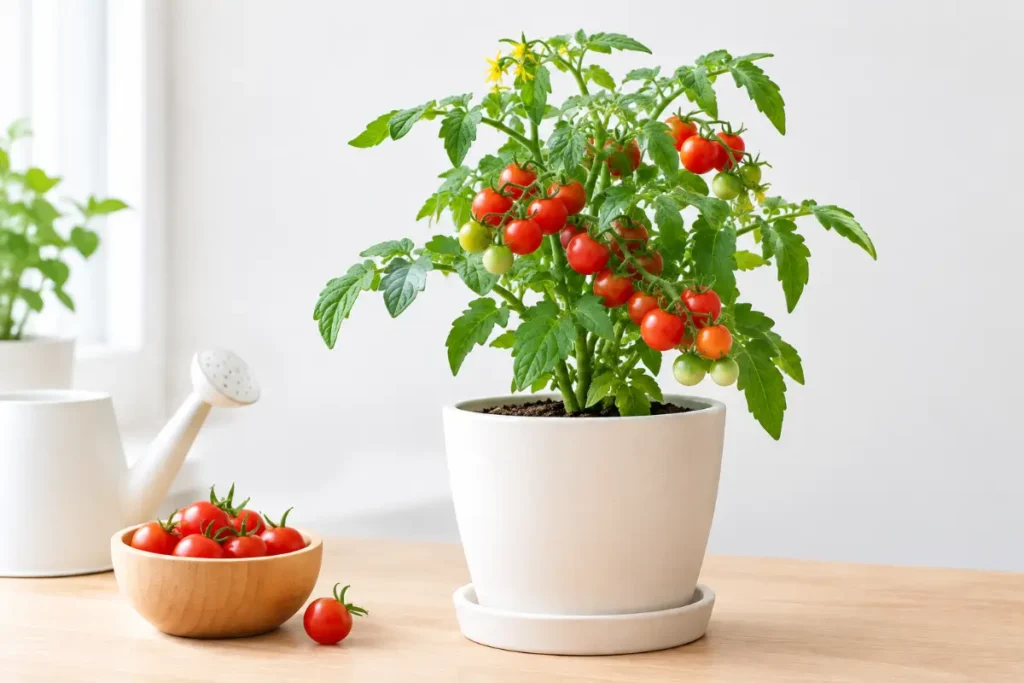
An indoor cherry tomato plant is the most rewarding entry point into indoor tomato growing for anyone who has not tried it before. Cherry tomatoes are faster to maturity than slicing varieties, produce more fruit per plant in container conditions, tolerate the light limitations of indoor growing better than larger varieties, and deliver the intensely sweet flavor that outdoor summer cherry tomatoes are famous for — available from your kitchen counter regardless of season.
This guide focuses specifically on cherry tomato varieties rather than the general indoor tomato approach covered elsewhere in this cluster, covering the variety differences that matter for container growing, the specific setup that produces the most fruit, and the management practices that keep an indoor cherry tomato plant productive for as long as possible.
Quick Answer
The best indoor cherry tomato plants are compact or dwarf varieties including Tumbling Tom, Tiny Tim, Micro Tom, Red Robin, and Sweet ‘N’ Neat. These need a full-spectrum LED grow light delivering 400 to 600 PPFD for 14 to 16 hours daily or a south-facing window with six or more hours of direct sun. Plant in a five-gallon container with well-draining mix. Hand pollinate every open flower daily with an electric toothbrush. Fertilize every seven to ten days with a tomato formula. First harvest in eight to ten weeks from transplant.
Why Cherry Tomatoes Outperform Larger Varieties Indoors
Cherry tomatoes have several characteristics that make them significantly more suited to indoor container growing than standard slicing or beefsteak varieties.
Fruit-to-plant-size ratio: Cherry tomato varieties produce more fruit per unit of plant size than any other tomato type. A compact cherry tomato plant in a five-gallon container can produce dozens of fruits per week at peak production. An equivalent-sized plant of a beefsteak variety might produce two to three fruits in the same period with substantially lower flavor satisfaction.
Faster maturity: Cherry tomatoes mature from flower to harvest in fifty to sixty-five days compared to seventy to ninety days for large slicing varieties. In indoor growing where light is more limiting than outdoors, faster maturity translates to more production cycles per year.
Lower light threshold for fruiting: Cherry tomato varieties set fruit with somewhat less light intensity than large-fruited varieties. While all tomatoes perform best with maximum light, compact cherry varieties will set fruit in conditions where large varieties would produce flowers but very little fruit.
Container compatibility: Compact cherry varieties stay within the two-to-three-foot height range that suits standard indoor ceiling heights and typical five-gallon container growing. Standard indeterminate varieties become unmanageable at four to eight feet and require structural support impractical for most indoor setups.
Choosing the Best Indoor Cherry Tomato Variety
Variety selection is more consequential for indoor cherry tomatoes than any other care decision. These five varieties have the most consistent track records for indoor container growing.
Tumbling Tom (red and yellow): The most consistently recommended indoor cherry tomato. Natural cascading growth habit suits hanging baskets and elevated shelves where the trailing form displays attractively. Produces one-to-two-inch round fruits continuously. Both the red and yellow forms perform equally well indoors.
Tiny Tim: Stays under twelve inches. One of the smallest true tomato varieties. Produces small cherry tomatoes on a plant that fits a four-to-six-inch pot for the smallest possible footprint. Ideal for apartment growers with very limited space.
Micro Tom: Six to eight inches tall. The smallest commercially available tomato variety, specifically developed for container and indoor growing. Produces tiny but genuine tomatoes reliably under grow lights.
Red Robin: A compact cherry variety bred specifically for indoor and container growing. Slightly larger than Tiny Tim but stays under eighteen inches. Consistent indoor performer with good flavor.
Sweet ‘N’ Neat series: A compact series available in red, yellow, and cherry sizes bred specifically for windowsill and container growing. Self-branching growth habit reduces the need for aggressive pinching to maintain compact form.
What to avoid: Any variety labeled indeterminate without also being labeled compact or dwarf. Standard cherry varieties like Sungold, Sweet Million, and Sun Gold are excellent outdoor varieties that grow vigorously to five or more feet and become unmanageable in indoor containers despite producing excellent flavor.
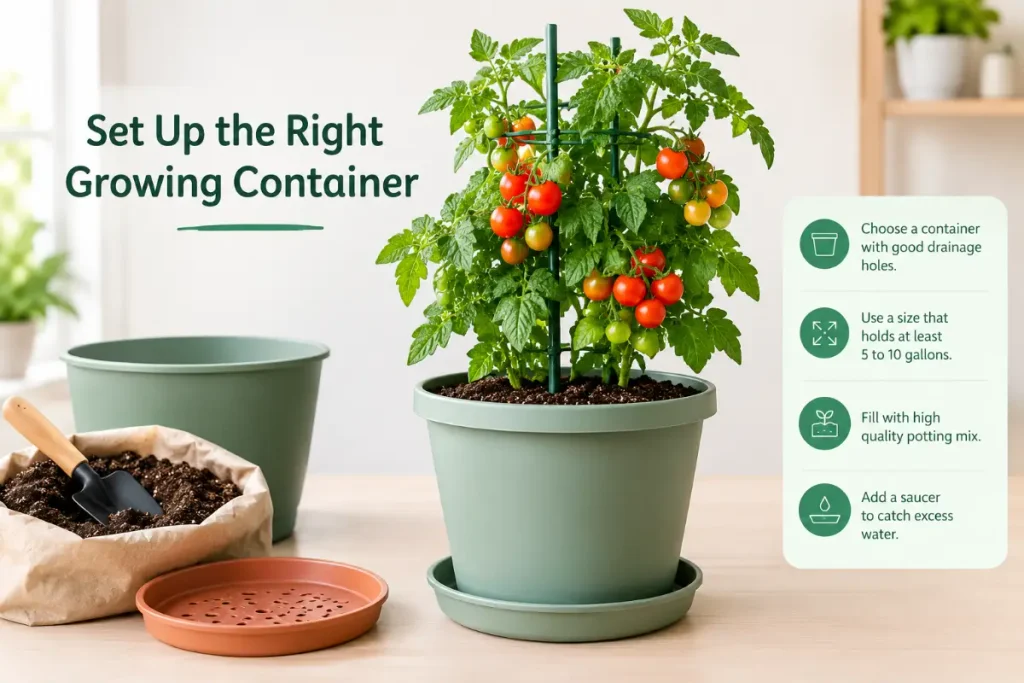
Step 1: Set Up the Right Growing Container
Container size: Five gallons minimum for most compact cherry tomato varieties. Tumbling Tom and Red Robin specifically benefit from five-gallon containers that provide adequate root space and moisture retention for the sustained fruiting production these varieties are capable of. Tiny Tim and Micro Tom grow well in four-to-five-inch pots but produce less than larger-containerized plants.
Fabric grow bags: Five-gallon fabric grow bags provide the best root environment for indoor cherry tomatoes. Air pruning of roots at the bag surface prevents the root circling that occurs in rigid plastic containers. Improved drainage through the permeable fabric surface reduces overwatering risk. The slightly better aeration of fabric compared to solid plastic reduces root rot incidence.
Hanging baskets: Tumbling Tom specifically is designed for hanging basket growing where its naturally cascading stems create an attractive living display. A twelve-inch hanging basket with drainage holes filled with quality potting mix suits Tumbling Tom’s growth habit perfectly. Position the hanging basket below the grow light for maximum light access.
Soil: Standard potting mix with 20% perlite. The perlite improves drainage while the standard mix retains adequate moisture for the cherry tomato’s consistent water demand during fruiting.
Step 2: Provide Maximum Available Light
The importance of light for indoor cherry tomato production cannot be overstated. Every other aspect of care operates in the context of how much light the plant receives. More light means more photosynthate, more photosynthate means more flowers, more flowers with hand pollination means more fruit.
Grow lights: A full-spectrum LED grow light delivering 400 to 600 PPFD at the plant canopy for 14 to 16 hours daily is the most reliable setup for productive indoor cherry tomato growing. Position the light six to eighteen inches above the plant canopy and raise it as the plant grows. Use an automatic timer for consistent daily scheduling.
South-facing window supplement: The best natural light setup positions the plant at maximum proximity to a south-facing window to receive whatever direct sun is available, supplemented by the grow light during hours when direct sun is not available. This combined approach produces more total light than either source alone.
The consequence of insufficient light: Cherry tomato plants in insufficient light grow vigorously vegetatively but produce sparse flowers that do not set well even with consistent pollination. The plant looks healthy but does not fruit. This is the most common indoor tomato disappointment and it has a single cause: inadequate light.
Step 3: Source and Establish Plants
From transplants: Purchasing small cherry tomato starts from a garden center in spring provides the fastest path to first harvest — typically six to eight weeks from transplanting rather than the eleven to fourteen weeks from seed starting. Choose the smallest available compact variety. Transplant immediately into a five-gallon container with fresh potting mix.
From seed: Sow seeds one-quarter inch deep in moist seed starting mix. Maintain soil temperature above 70 degrees Fahrenheit for reliable germination in five to ten days. A seedling heat mat ensures germination in cooler homes. Move seedlings immediately under grow lights after germination to prevent etiolation.
Transplanting seedlings: When seedlings have three to four true leaves and are four to six inches tall, transplant into five-gallon containers. Bury the stem deeply — tomatoes produce roots along buried stem sections, creating a stronger root system than surface-level planting. Bury up to two-thirds of the stem if the plant is tall and leggy from insufficient light during seedling stage.
Step 4: Maintain Optimal Temperature
Ideal range: 65 to 80 degrees Fahrenheit. Active growth, flower production, and reliable fruit set occur throughout this range. Most US homes maintain temperatures in this range without special management.
The night temperature benefit: Cherry tomatoes set fruit most reliably when nights are slightly cooler than days, ideally 58 to 65 degrees at night versus 70 to 75 degrees during the day. This temperature differential replicates the natural growing conditions of productive outdoor cherry tomato crops and specifically encourages the pollen release and stigma receptivity that successful fertilization requires.
Above 85 degrees: Pollen becomes sterile and fruit set drops significantly. Grow lights that raise temperatures near the plant canopy above room temperature can create this problem in enclosed spaces. Monitor canopy temperature with a thermometer and ensure adequate ventilation to prevent heat accumulation.
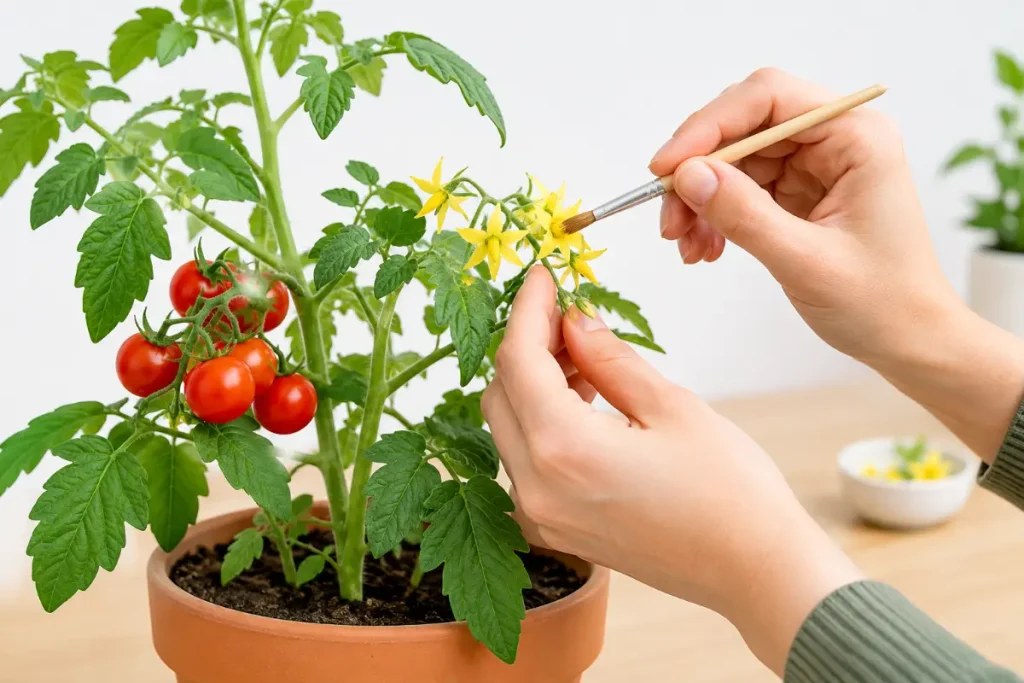
Step 5: Hand Pollinate Every Flower Every Day
Hand pollination is the most important and most commonly neglected practice for indoor cherry tomato success. Without it, flowers open and drop without setting fruit regardless of every other care factor.
The technique: Using a battery-powered electric toothbrush held against the back of the flower stem (not directly on the flower) for one to two seconds, the vibration releases pollen from the anthers and deposits it on the stigma. This mimics the sonication buzz of a bee’s flight muscles.
Daily without exception: Every open flower. Every day. Flowers have a receptive window of two to three days. Missing a single day leaves some percentage of that day’s flowers unpollinated and therefore unfruitful.
The success indicator: Five to seven days after successful pollination, the base of the flower swells as the tiny green cherry tomato begins developing. Flowers that were not successfully pollinated drop cleanly from the plant without this swelling.
The volume advantage of cherry tomatoes: Because cherry tomatoes produce many small flowers rather than a few large ones, daily pollination of a Tumbling Tom or Red Robin plant takes only two to three minutes since each electric toothbrush touch covers all the flowers in a cluster simultaneously.
Step 6: Water and Fertilize for Continuous Production
Watering: Check soil moisture daily. Water when the top inch of soil feels dry. During peak fruiting with multiple clusters developing simultaneously, water demand increases and the interval between waterings shortens. Consistent moisture prevents the blossom drop and calcium deficiency problems that irregular watering causes.
Fertilizing schedule: Begin with a balanced fertilizer every two weeks through the first four weeks after transplanting. Switch to a tomato-specific fertilizer with elevated phosphorus and potassium when first flower buds appear. Apply every seven to ten days through peak fruiting since container tomatoes under grow lights leach nutrients faster than garden-bed plants.
Calcium supplementation: Blossom end rot, the dark sunken patches that develop on the base of fruits before harvest, is caused by calcium deficiency triggered by inconsistent watering impairing calcium uptake. Apply a liquid calcium-magnesium supplement every two to three weeks through the fruiting period alongside consistent watering.
Organic additions: A worm casting top dress every six to eight weeks alongside the liquid fertilizer program improves soil biology and nutrient availability in the container environment. For the complete organic fertilizer guide for fruiting crops, worm castings for indoor plants covers every application method with timing guidance.
Step 7: Harvest Regularly and Manage Plant Health
When to harvest: Cherry tomatoes are ready when fully colored (red, yellow, or orange depending on variety) and give slightly under gentle pressure. Do not wait until soft since overripe fruits split on the plant and attract fungal problems.
Check daily at peak production: A cherry tomato cluster that is green today may have three to five ripe fruits tomorrow in warm growing conditions. Daily checking prevents the overripe fruit loss that reduces both flavor and future production.
Remove diseased or damaged fruits immediately: Any cherry tomato showing rot, splitting, or pest damage should be removed promptly. Leaving damaged fruit on the plant creates conditions for fungal spread to adjacent healthy fruit.
Pruning for air circulation: Remove the lower leaves of the plant as fruits on the lowest clusters are harvested. Improved air circulation through the plant interior reduces the powdery mildew and botrytis that can affect indoor tomatoes in warm, still indoor air.
Replanting timing: Cherry tomato plants remain productive for six to twelve months in good conditions before declining in vigor. Planning a succession plant started from seed two to three months before the existing plant’s expected decline maintains continuous production without gaps. For the complete guide to indoor tomato growing that covers the broader principles underlying this cherry tomato-specific post, can you grow a tomato plant indoors covers every foundational consideration with the honest assessment of what indoor tomatoes can and cannot deliver.
Pest Management for Indoor Cherry Tomatoes
Aphids: The most common indoor cherry tomato pest. Cluster on new growth and developing flower clusters. Remove by hand or with a firm water spray. Follow with neem oil spray every seven days for three weeks if colonies persist. For the complete aphid treatment guide, how to get rid of aphids on indoor plants covers every effective approach.
Spider mites: Establish in warm, dry conditions particularly near heating vents. The stippling pattern of feeding damage and fine webbing between leaves indicate active infestation. Neem oil spray every seven days for three weeks. Increase humidity above 50% to prevent reestablishment.
Whiteflies: Small white flying insects that cloud up when the plant is disturbed. Yellow sticky traps catch adults. Neem oil spray on leaf undersides addresses developing populations. Persistent whitefly infestations may require a soil drench with a systemic insecticide as a last resort.
Seasonal Considerations for Indoor Cherry Tomatoes
Even under grow lights in a temperature-controlled indoor environment, indoor cherry tomato plants respond to natural seasonal rhythms in ways that affect care management through the year.
Winter starting advantage: Starting indoor cherry tomato plants in late winter (January through February) positions them to enter peak production in spring when natural light supplements the grow light most effectively. Spring-started indoor tomatoes that began in winter are often the most productive indoor tomato plants of the year.
Summer performance: In air-conditioned homes where temperatures stay between 68 and 75 degrees through summer, indoor cherry tomatoes continue productive fruiting year-round. In homes where summer temperatures consistently exceed 80 degrees without air conditioning, temporary production reduction during the hottest weeks is normal as pollen sterility from heat reduces fruit set. Managing canopy temperature through ventilation and positioning away from heat-generating equipment is most important during summer.
Fall succession: Starting a new plant from seed in August or September as the summer plant enters its second half of production ensures a fresh, vigorous plant ready for the fall and winter growing period as the existing plant’s productivity declines. This succession timing prevents the gap that would occur if the new plant is started only after the old one visibly declines.
Winter light management: In winter when natural light intensity and duration decrease significantly, increasing grow light hours from 14 to 16 daily compensates for the reduced ambient light contribution. Positioning the grow light at the minimum effective distance from the canopy (twelve inches rather than eighteen) also increases effective PPFD during the darkest months.
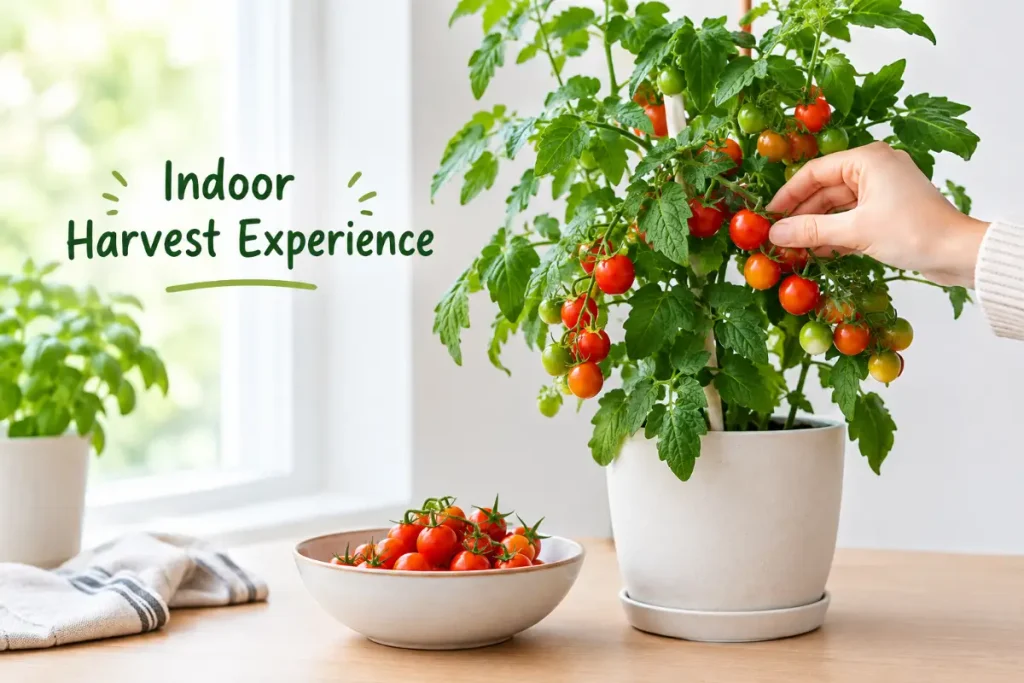
Cherry Tomato Nutrition and the Indoor Harvest Experience
The flavor difference between indoor-grown cherry tomatoes and store-bought cherry tomatoes is one of the primary reasons growers invest in the setup and ongoing care that indoor tomato production requires.
Brix and sugar content: Cherry tomatoes allowed to fully ripen on the plant before harvest develop significantly higher sugar concentration than commercially produced tomatoes harvested at the green or turning stage for transport durability. Home-grown indoor cherry tomatoes harvested at full ripe typically measure higher on the Brix scale (a measure of sugar content) than grocery store cherry tomatoes of the same variety.
Flavor compound development: The lycopene, beta-carotene, and other flavor compounds in cherry tomatoes develop fully only during the final ripening phase. Commercially harvested tomatoes that ripen after harvest in transit or at room temperature do not develop the same flavor compound concentration as vine-ripened fruit. This is the primary reason home-grown tomatoes taste better than commercial ones regardless of variety.
The harvest-to-table interval: Cherry tomatoes eaten within minutes of harvest from an indoor plant have flavors that deteriorate measurably within hours of picking as volatile aromatic compounds dissipate. The indoor plant’s proximity to the kitchen means zero transit time — a flavor advantage that no commercial product can replicate regardless of quality. For the complete companion guide to indoor tomato growing that provides the broader context for this cherry tomato-specific approach, growing peppers indoors covers the closely related indoor fruiting crop that pairs most naturally with indoor cherry tomatoes in a combined warm-season indoor food garden where both crops share grow light infrastructure, temperature requirements, and hand pollination management.
Conclusion
An indoor cherry tomato plant in the compact varieties suited to container growing delivers fresh cherry tomatoes from a kitchen setup that requires minimal space. The right variety, adequate grow light hours, daily hand pollination, consistent watering, and biweekly fertilizing with a tomato formula produce the continuous harvest that makes indoor cherry tomato growing genuinely worthwhile.
Tumbling Tom, Tiny Tim, Micro Tom, Red Robin, and Sweet ‘N’ Neat represent the varieties with the most consistent indoor track records. Choose one, set up the grow light correctly, pollinate every flower every day, and let everything else follow from there.
Frequently Asked Questions
What is the best cherry tomato variety to grow indoors?
Tumbling Tom is the most consistently recommended indoor cherry tomato for its compact naturally cascading growth habit, continuous fruit production, and reliability under artificial lighting. Tiny Tim and Micro Tom suit the most space-limited setups. Red Robin is the best choice for growers who want a slightly larger plant with strong production. All perform significantly better than standard outdoor cherry tomato varieties in indoor container conditions.
How long does an indoor cherry tomato plant take to produce fruit?
Eight to ten weeks from transplant to first ripe fruit under adequate grow lights. Fourteen to sixteen weeks from sowing seed. The growing season continues for six to twelve months with continuous production in good conditions before the plant’s vigor declines and replanting is beneficial.
Why is my indoor cherry tomato plant not producing fruit?
Insufficient light and failure to hand pollinate are the two most common causes. Check that the grow light provides 400 to 600 PPFD at the plant canopy and runs 14 to 16 hours daily. Begin or improve daily hand pollination using an electric toothbrush on every open flower. Temperature above 85 degrees causing pollen sterility is the third most common cause — check canopy temperature near the grow light and ensure adequate ventilation.
How often should I water an indoor cherry tomato plant?
Check soil moisture daily and water when the top inch feels dry. During peak fruiting this may mean watering every two to three days as multiple developing fruit clusters increase water demand. Consistent moisture prevents the blossom drop and calcium deficiency problems that irregular watering triggers. Always water thoroughly until drainage occurs from the container holes.
Can I grow cherry tomatoes indoors without a grow light?
A south-facing window with six or more hours of direct sun daily provides marginal conditions for modest cherry tomato production with compact varieties. Tumbling Tom and Tiny Tim are the most practical varieties for window-only growing. Production under window light alone is significantly less than under grow lights and declines further in winter when natural light hours and intensity decrease. For reliable year-round production, a grow light is the practical requirement.
How do I hand pollinate indoor cherry tomatoes?
Hold an electric toothbrush or battery-powered plant pollinator tool against the back of each open flower stem for one to two seconds daily. The vibration releases pollen from the anthers and deposits it on the stigma within the same flower. Alternatively, use a small soft paintbrush to gently touch the center of each open flower. Pollinate every open flower every day since flowers have a receptive window of only two to three days.