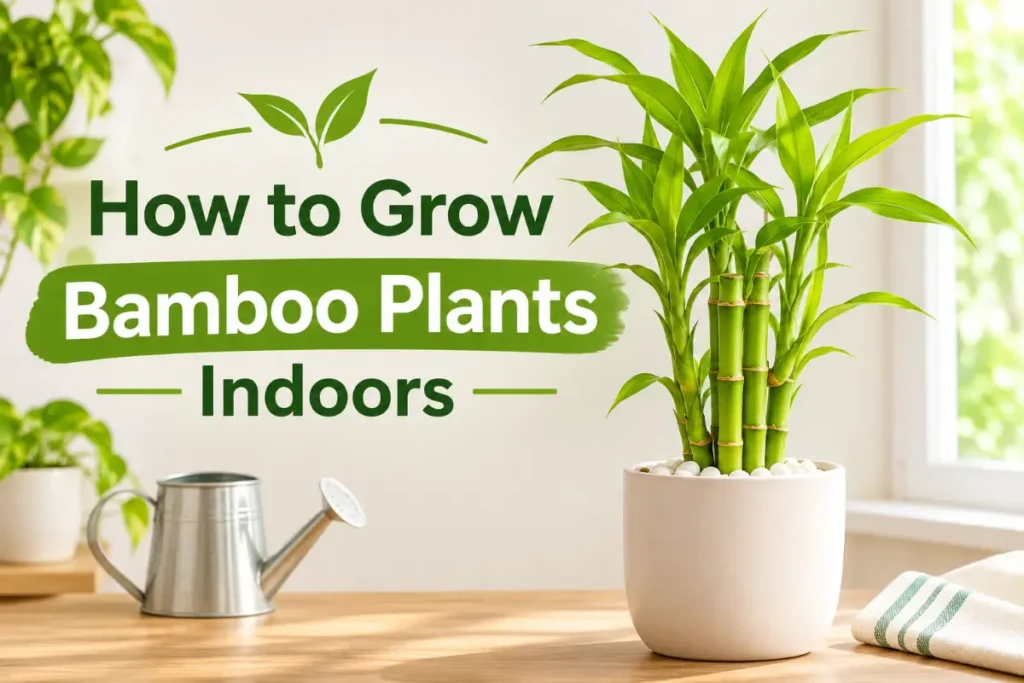
Learning how to grow bamboo plants indoors opens up one of the most dramatic and fast-growing options available to indoor gardeners. Bamboo brings immediate visual impact to any room — tall, architectural stems and dense, rustling foliage that no other houseplant quite replicates. With the right variety, the right container, and a consistent care routine, bamboo thrives indoors and grows with a speed that makes it deeply satisfying to watch develop.
Bamboo has a reputation for being difficult or invasive, but that reputation belongs almost entirely to running bamboo varieties planted outdoors without root barriers. Indoors, in containers, bamboo is manageable, contained, and relatively straightforward to grow. The key is choosing a clumping variety suited to indoor conditions and giving it the light, water, and root space it needs to establish and grow strongly.
This guide covers everything you need — from choosing the right bamboo variety and container to managing light, watering, feeding, and the occasional challenges that arise when growing bamboo as an indoor plant.
Choosing the Right Bamboo Variety for Indoors
Variety selection is the most important decision you will make for indoor bamboo growing. The wrong variety will either grow uncontrollably, demand more cold than your home provides, or simply fail to thrive in container conditions. The right variety settles in well, grows steadily, and remains manageable in a pot for years.
Clumping bamboos are always the better choice for indoor growing. Unlike running bamboos, which spread aggressively via underground rhizomes, clumping varieties expand slowly and predictably from a central base. In a container, this growth habit is entirely manageable. Key clumping varieties suitable for indoor growing include:
Bambusa ventricosa (Buddha Belly Bamboo) — one of the most popular indoor bamboo varieties, recognised by its distinctive swollen internodes when grown in restricted conditions. It tolerates indoor temperatures well, handles lower humidity than many tropical bamboos, and stays compact enough to manage in a large container. It grows best in warm conditions above 10 degrees Celsius.
Fargesia murielae (Umbrella Bamboo) and Fargesia nitida (Blue Fountain Bamboo) — two hardy clumping varieties that tolerate lower indoor temperatures and lower light levels better than many alternatives. They are among the most cold-tolerant bamboos available, which makes them forgiving in homes where temperatures fluctuate or rooms remain cool in winter.
Phyllostachys aurea (Golden Bamboo) — technically a running bamboo but manageable in large containers where root spread is physically limited. It is fast-growing and striking, with golden-yellow canes that develop with age. In a container, it stays controllable with annual root pruning.
Lucky Bamboo (Dracaena sanderiana) — not a true bamboo at all, but widely sold as such and commonly grown in water or light soil indoors. It is an excellent low-maintenance option for smaller spaces and lower light conditions. However, if you want genuine bamboo growth and the full visual impact of real bamboo stems and foliage, choose one of the varieties above.
Avoid large running varieties like Phyllostachys edulis (Moso Bamboo) for indoor growing. These grow too large, spread too aggressively, and are impractical to contain in any home setting.
Containers and Potting Mix
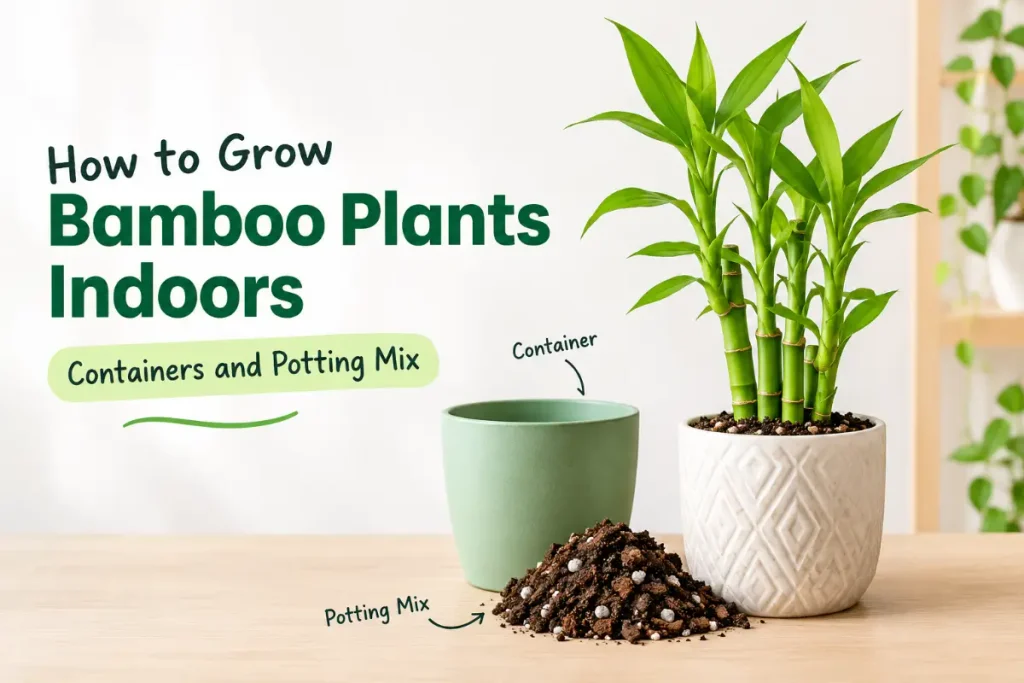
Bamboo develops an extensive root system, and an undersized container is one of the most common reasons indoor bamboo fails to thrive. Choose a large, sturdy container from the outset — a pot at least 45 to 60 centimetres in diameter and 40 to 50 centimetres deep gives a clumping bamboo adequate root space to establish and grow well for several years before repotting becomes necessary.
Material matters less than size and drainage. Terracotta pots are heavy, which helps stability for tall bamboo but makes them difficult to move. Large plastic containers or fibreglass pots offer the same root volume at considerably lower weight. Whatever material you choose, ensure the container has multiple large drainage holes in the base. Bamboo is very sensitive to waterlogged soil and will develop root problems quickly if drainage is inadequate.
For potting mix, use a quality loam-based compost such as John Innes No. 3, mixed with 20 to 30 percent perlite or coarse grit for improved drainage. Bamboo prefers a slightly acidic to neutral pH of 5.5 to 7.0. A heavy, moisture-retentive compost that packs down over time will cause root problems; the free-draining mix keeps roots healthy and oxygenated.
When potting, position the bamboo so the root crown sits 3 to 5 centimetres below the rim of the container to leave room for watering. Firm the compost around the roots without compacting it. Water thoroughly after potting to settle the mix and eliminate air pockets.
Light Requirements
Bamboo needs bright light to grow well indoors. Most varieties perform best in a position that receives several hours of direct or bright indirect light daily. A south or east-facing window is ideal. West-facing windows work well too. North-facing positions with limited direct light will sustain bamboo but growth will be slower and the plant will be less vigorous.
In lower light conditions, bamboo tends to produce longer internodes (the sections between stem joints), giving it a more spindly, open appearance. In bright light, internodes are shorter and the overall plant is denser and more attractive. If your available window positions are limited, supplementing with a full-spectrum LED grow light for several hours daily in the darker months makes a noticeable difference to growth rate and plant health.
During summer, moving bamboo to an outdoor position on a balcony or patio for a few weeks gives it a significant boost from full sunlight and natural airflow. Acclimatise it gradually over several days to prevent leaf scorch — start with a shaded outdoor position and move it into fuller sun over a week or two. Return it indoors before temperatures drop significantly in autumn.
Avoid placing bamboo directly beside radiators or other heat sources, which cause rapid dehydration of the foliage and browning leaf tips. A position with good air circulation and consistent temperature is preferable to one that is either too hot and dry or too cold and draughty.
Watering
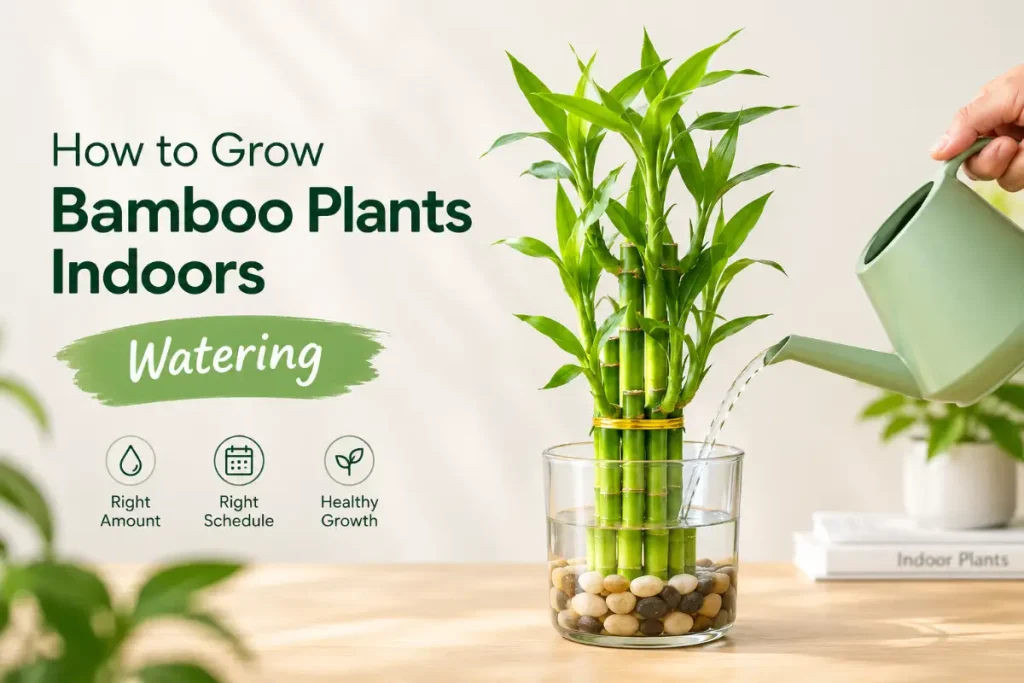
Watering is where most indoor bamboo growing goes wrong in one of two directions: either the plant is overwatered and root rot develops, or it is underwatered and the leaves roll inward, yellow, and drop. Finding the right balance requires paying attention to the plant rather than watering on a fixed schedule.
Check the compost by pushing your finger 3 to 4 centimetres into the soil. If it feels moist, wait another day or two. If it feels dry at that depth, water thoroughly — pour water slowly until it drains freely from the base of the container, then allow it to drain completely before returning the pot to its saucer. Never leave bamboo sitting in standing water.
During active growing periods in spring and summer, bamboo typically needs watering every two to four days depending on pot size, room temperature, and humidity. In winter, when growth slows, reduce watering frequency accordingly. The plant uses far less water during its slower-growth phase, and overwatering in winter is the most common cause of root rot in indoor bamboo.
Bamboo is sensitive to fluoride and chlorine in tap water, which can cause brown leaf tip discolouration over time. Where possible, use filtered water, collected rainwater, or tap water that has been left to stand overnight to allow chlorine to dissipate before watering.
Feeding
Bamboo is a vigorous grower during the growing season and benefits from regular feeding from early spring through late summer. Use a balanced liquid fertiliser every two to three weeks during this period. A fertiliser with a relatively high nitrogen content supports the rapid stem and foliage growth bamboo is known for.
In autumn, switch to a lower-nitrogen, higher-potassium fertiliser for four to six weeks to help harden the growth produced during summer and prepare the plant for its slower winter period. Stop feeding entirely through winter. Resume in early spring as new shoots begin to emerge.
Bamboo grown in containers exhausts the nutrients in its compost relatively quickly due to its vigorous growth. Annual top-dressing in spring — removing the top 5 to 8 centimetres of compost and replacing it with fresh, nutrient-rich mix — helps maintain soil fertility between repottings. A slow-release granular fertiliser worked into the fresh top-dressing provides sustained nutrition across the growing season without requiring weekly liquid feeding.
Humidity and Temperature
Most bamboo varieties suitable for indoor growing tolerate the humidity levels found in a typical home — generally 40 to 60 percent relative humidity. In centrally heated rooms where humidity drops significantly in winter, bamboo may show leaf tip browning as a response to dry air. Grouping plants together, placing a tray of damp pebbles near the plant, or running a small humidifier nearby all help maintain adequate humidity during the heating season.
Temperature requirements vary by variety. Fargesia varieties tolerate cold well and can handle temperatures down to minus 15 degrees Celsius outdoors, making them very comfortable in any typical home environment. Tropical varieties like Bambusa ventricosa prefer consistent warmth above 10 to 15 degrees Celsius and are less tolerant of cold draughts or sudden temperature drops.
Most indoor bamboos prefer consistent temperatures and dislike rapid fluctuations. Avoid placing bamboo near doors that open to cold outdoor air in winter, beside single-glazed windows where temperatures drop dramatically at night, or near air conditioning vents that produce strong cold airflow.
Repotting and Root Management
Bamboo in containers will eventually become root-bound — the roots fill the available space completely and begin to circle inside the pot. When this happens, growth slows, the compost dries out unusually fast, and roots may begin to emerge from the drainage holes. Repotting every two to three years into a container one size larger keeps the plant growing vigorously.
To repot, water the plant thoroughly the day before to hydrate the root ball and make removal easier. Carefully ease the root ball out of the container and examine the roots. Trim any dead or damaged roots with clean, sharp secateurs. If the plant has outgrown the space you can accommodate, this is also the moment to divide it — use a sharp spade or saw to cut through the root mass and create two or more smaller plants, each with several healthy stems and a portion of the root system. Pot each division into its own container with fresh compost.
For running varieties managed in containers, annual root pruning in spring keeps growth controlled. Remove the plant from its pot, trim the outer layer of rhizomes back with sharp secateurs, and repot into the same container with fresh compost added to fill the space created by the pruning.
Common Problems and Solutions
Yellow leaves are the most common concern with indoor bamboo. Yellow leaves with moist soil usually indicate overwatering or poor drainage. Yellow leaves with dry soil indicate underwatering or very low humidity. Older leaves at the base of the plant naturally yellow and drop throughout the year — this is entirely normal and not a sign of a problem. A sudden flush of yellowing across the whole plant, however, warrants investigation.
Brown leaf tips typically indicate dry air, fluoride sensitivity, or occasional dehydration. Improving humidity, switching to filtered water, and ensuring consistent watering usually resolves this.
Slow or stalled growth in a plant that appears otherwise healthy usually indicates insufficient light, a need for feeding, or a root-bound container. Assess each factor in turn before adjusting.
Pests are relatively uncommon on indoor bamboo but spider mites occasionally establish in warm, dry conditions. Look for fine webbing on the undersides of leaves and a stippled, dusty appearance to the foliage. Treat with a neem oil spray applied to all leaf surfaces, and improve humidity to make the environment less hospitable to mites.
Seasonal Care Through the Year
Understanding how bamboo’s needs shift through the seasons helps you adjust your care routine proactively rather than reacting to problems after they develop.
Spring is the most active period for indoor bamboo. New shoots — called culms — emerge rapidly from the base of the plant, often growing visibly from day to day at the peak of the season. Resume regular feeding as soon as new growth appears. This is also the best time for repotting, dividing, or root pruning if needed. Increase watering frequency as temperatures rise and the plant begins consuming water more rapidly.
Summer brings continued strong growth. Maintain regular feeding and consistent watering. This is the ideal period to move bamboo outdoors temporarily if you have a balcony or patio — a few weeks in a sheltered outdoor position with good light gives the plant a significant boost. Watch watering carefully outdoors as containers dry much faster in sun and wind than they do indoors.
Autumn is a transitional period. Growth slows noticeably from late summer onwards. Switch to a lower-nitrogen feed for a few weeks, then stop feeding entirely by mid-autumn. Reduce watering frequency gradually to match the plant’s reduced demands. If you moved bamboo outside for summer, bring it back indoors before overnight temperatures drop below the tolerance threshold of your variety.
Winter is the slow season. Most indoor bamboo continues to look attractive through winter but puts on minimal new growth. Water sparingly — the most common winter mistake is continuing to water at summer frequency when the plant barely needs it. Check the compost thoroughly before watering and err toward less rather than more. Provide as much light as possible through the shortest days, and consider running a grow light for a few hours daily to supplement natural light in particularly dark rooms.
Styling and Display Ideas
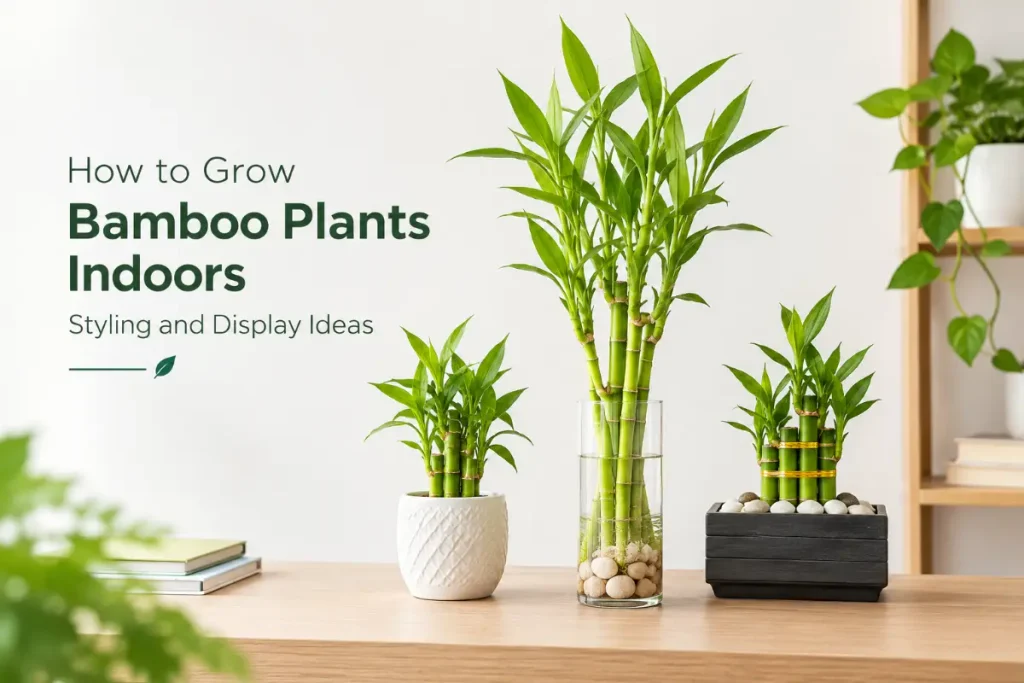
Bamboo’s architectural form makes it one of the most versatile plants for interior display, whether you want a bold standalone statement or a living screen that adds both privacy and greenery to a room.
A single large specimen in a generous, handsome container works beautifully as a focal point in a living room or hallway. Choose a container that complements the plant — a simple, matte-finished pot in charcoal, slate grey, or terracotta allows the bamboo itself to be the visual centrepiece without the container competing for attention.
For room dividers and privacy screens, group three or more bamboo plants of the same variety in matching containers and position them in a row. This creates a soft, natural screen far more attractive than a partition wall and far easier to change or move than a permanent structural divider. The effect works particularly well in open-plan spaces where you want to define zones without blocking light or sightlines completely.
In minimal or Japandi-inspired interiors, bamboo is an especially natural choice. A pair of tall Fargesia plants flanking a doorway or window, in simple unglazed pots, creates a calm, considered aesthetic that suits contemporary interiors very well.
For smaller spaces, a Buddha Belly Bamboo in a medium container on a wide windowsill or beside a reading chair brings the character of bamboo into a compact space without overwhelming it. The distinctive swollen nodes of this variety are particularly interesting at close range and reward the kind of casual inspection that a well-placed indoor plant invites.
Conclusion
Growing bamboo plants indoors is genuinely achievable with the right variety, an appropriately sized container, good drainage, and a consistent watering and feeding routine. The clumping varieties covered in this guide — particularly Fargesia and Bambusa types — are well suited to indoor conditions and reward attentive care with vigorous, impressive growth. For authoritative guidance on bamboo varieties and their cultural requirements, the Royal Horticultural Society’s bamboo growing guide is an excellent reference covering variety selection, pruning, and long-term management in detail.
Whether you want a bold architectural statement in your living room or a lush, fast-growing screen, how to grow bamboo plants indoors starts with choosing the right variety and providing proper light, water, and care.
FAQs
What is the best bamboo variety for growing indoors?
Clumping varieties are always the best choice for indoor growing. Fargesia murielae (Umbrella Bamboo) and Bambusa ventricosa (Buddha Belly Bamboo) are among the most popular and manageable for indoor containers. Both stay controllable, grow well in pots, and tolerate typical home temperatures and humidity levels.
How much light does indoor bamboo need?
Bamboo grows best in bright indirect light or several hours of direct sun daily. A south or east-facing windowsill is ideal. It will survive in lower light but will grow more slowly and produce a more open, less dense appearance. Supplementing with a grow light in winter helps maintain growth rate during darker months.
How often should I water bamboo indoors?
Check the compost by pushing a finger 3 to 4 centimetres into the soil. Water thoroughly when the compost feels dry at that depth, then allow it to drain completely. During active growth in spring and summer, this is typically every two to four days. In winter, reduce frequency as growth slows and the plant uses less water.
Why are my indoor bamboo leaves turning yellow?
Yellow leaves with moist soil indicate overwatering or poor drainage. Yellow leaves with dry soil indicate underwatering or low humidity. Occasional yellowing and dropping of older leaves at the base of the plant is entirely normal and not a cause for concern.
Can bamboo grow in a small apartment?
Yes, with the right variety. Fargesia varieties remain relatively compact and grow well in large containers in bright spots. Buddha Belly Bamboo also stays manageable in a container. Choose a clumping variety, give it the largest container your space allows, and position it in the brightest available spot.
How fast does bamboo grow indoors?
Growth rate depends on variety, light, and feeding. Under good conditions, indoor bamboo can produce 30 to 60 centimetres of new shoot growth in a season. Outdoor bamboo grows faster, but indoor plants in bright positions with regular feeding grow at a satisfying rate. New shoots emerge rapidly in spring and early summer.
Does indoor bamboo need feeding?
Yes. Bamboo is a vigorous grower and benefits from a balanced liquid fertiliser every two to three weeks during spring and summer. A high-nitrogen fertiliser supports strong stem and leaf growth. Stop feeding in winter and resume in early spring as new shoots emerge.
Why does my indoor bamboo have brown leaf tips?
Brown leaf tips are usually caused by dry air (low humidity), fluoride or chlorine in tap water, or occasional dehydration. Try improving humidity near the plant, switching to filtered or rainwater, and ensuring watering is consistent rather than allowing the compost to dry out completely between sessions.
How big does indoor bamboo get?
This depends entirely on the variety. Fargesia varieties in containers typically reach 1.5 to 2.5 metres indoors. Bambusa ventricosa can reach 2 to 3 metres in a large container. Container growth is naturally more restricted than outdoor growth, and root space limits the ultimate size.
When should I repot indoor bamboo?
Repot every two to three years, or when the plant becomes root-bound — showing as rapid compost drying, roots emerging from drainage holes, or noticeably slowed growth. Move into a container one size larger with fresh compost. If the plant has outgrown the space available, divide it at repotting time to create two smaller plants.