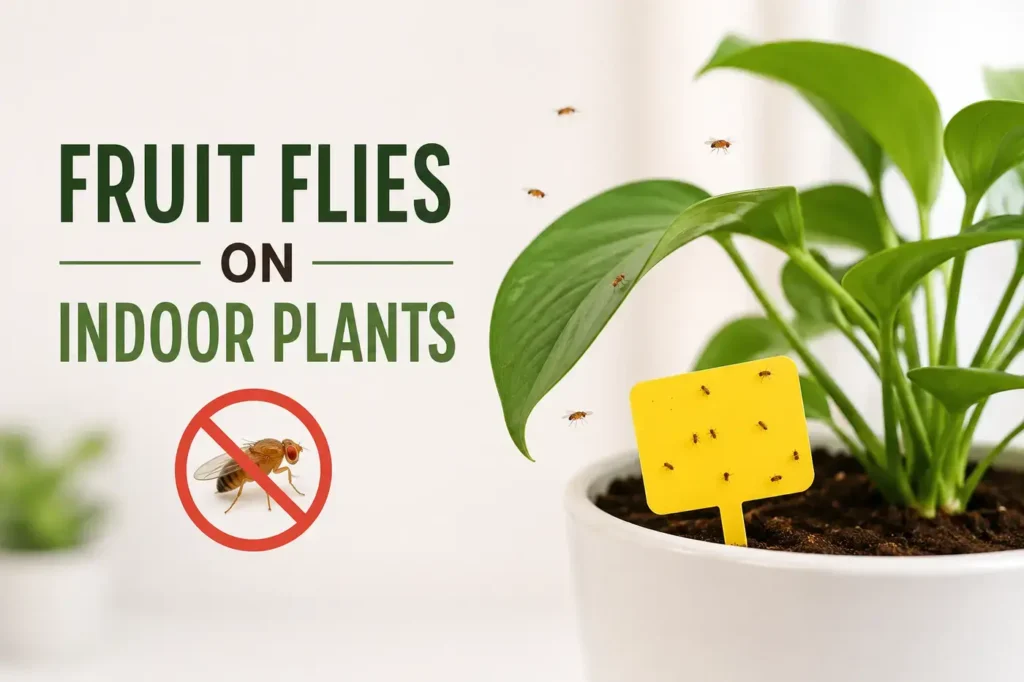
Fruit flies on indoor plants are one of the most frustrating pest problems a houseplant owner can face, not because they are difficult to eliminate but because they seem to come back no matter what you do. You see a few hovering near your plants, you deal with them, and two weeks later they are back in the same numbers. If this cycle sounds familiar, the reason is almost always that the treatment addressed the adult flies you could see without addressing the larvae and eggs you could not. Fruit flies on indoor plants are a two-stage problem that requires a two-stage solution, and once you understand that, getting rid of them permanently becomes significantly more straightforward.
This guide covers 8 proven methods for eliminating fruit flies from indoor plants, why they keep coming back, how to tell them apart from the very similar-looking fungus gnat, and what to do differently so the problem stays solved rather than cycling back every few weeks.
Quick Answer
To get rid of fruit flies on indoor plants, start by letting the soil dry out completely between waterings to eliminate the moist environment larvae need to survive. Place apple cider vinegar traps near affected plants to catch adults. Apply a hydrogen peroxide soil drench (1 part 3% hydrogen peroxide to 4 parts water) weekly for three weeks to kill larvae in the soil. Use yellow sticky traps to monitor adult populations. Remove any overripe fruit or decaying organic matter near your plants that may be the actual source of the flies.
Fruit Flies vs Fungus Gnats: Why This Distinction Matters
Before treating anything, confirm what you are actually dealing with. Fruit flies and fungus gnats look nearly identical to the casual observer but require different treatment approaches because they breed in different places.
Fruit flies (Drosophila species) are small, about 3 to 4 millimeters long, with distinctive red eyes and a tan or brownish body. They are primarily attracted to fermenting organic matter: overripe fruit, spilled juice, open wine bottles, vegetable scraps, and the surface of moist, fermenting organic matter in potting soil. Their primary breeding site in a typical home is fermenting food rather than plant roots.
Fungus gnats are slightly smaller, darker, and more slender than fruit flies with longer legs and a more mosquito-like appearance. They breed specifically in moist potting soil and their larvae feed on fungi and plant roots in the soil. They hover directly above soil surfaces and fly up when the plant is watered or disturbed.
Why it matters: If you are dealing with true fruit flies, the most important step is finding and eliminating the fermenting food source they are breeding in, which may be your kitchen rather than your plant soil at all. If you are dealing with fungus gnats, the soil is definitely the breeding site and soil treatment is the primary approach. Many people treat their plant soil for weeks without results because what they thought were fruit flies were actually fungus gnats breeding in their kitchen drain or trash, or vice versa.
If the flies are consistently hovering near your plants and soil rather than near your kitchen and fruit bowl, fungus gnats are the more likely culprit. If they appear throughout your kitchen and home and are strongly attracted to anything fermenting, true fruit flies are more likely. In practice, both can occur simultaneously, which is why the methods below address both.
Why Fruit Flies Keep Coming Back to Indoor Plants
The single most common reason fruit flies persist despite treatment is that the adult flies you can see represent only a fraction of the actual population. For every adult fruit fly you spot, there are potentially dozens of larvae and hundreds of eggs in the soil or in nearby fermenting organic matter that no surface treatment reaches.
Adult fruit flies live for approximately 40 to 50 days and a single female lays up to 500 eggs during her lifetime, placing them in batches near moist fermenting organic matter. At room temperature those eggs hatch within 24 to 30 hours and larvae develop through their stages within a week before pupating and emerging as new adults. This rapid life cycle means that stopping treatment the moment visible adults disappear leaves the next generation already developing in the soil and ready to emerge within days.
The other common reason for recurring infestations is an unaddressed source. Your plants may be a secondary breeding site while the primary source, a fermenting drain, an overripe fruit bowl, a forgotten vegetable in a cupboard, remains active and continuously replenishes the flying population that ends up near your plants.
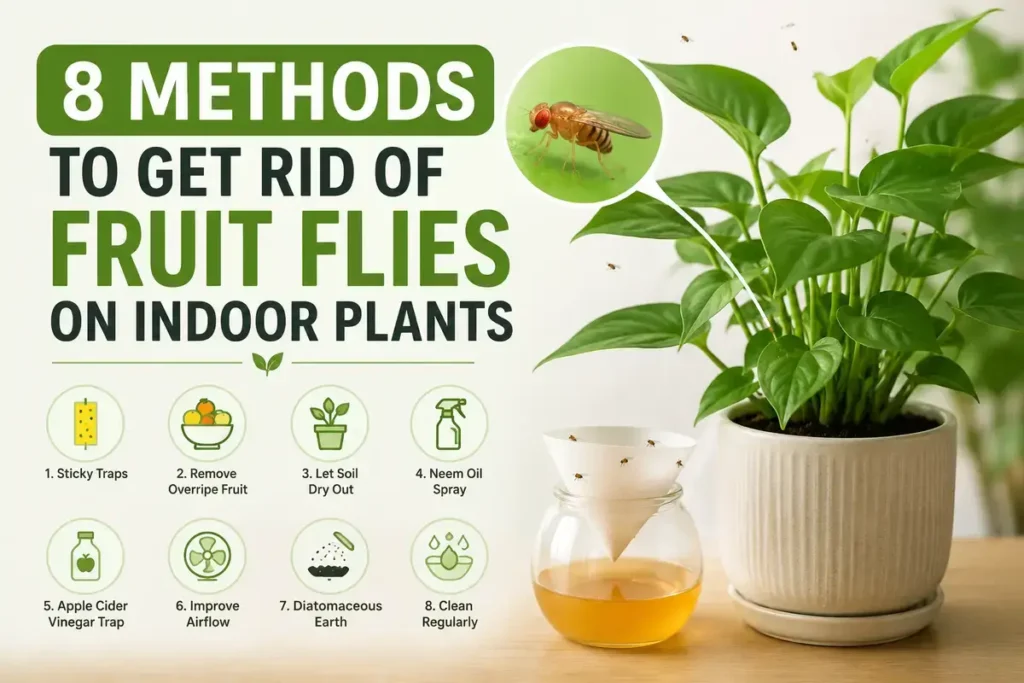
8 Methods to Get Rid of Fruit Flies on Indoor Plants
Method 1: Find and Eliminate the Primary Source
Before treating your plants at all, spend five minutes looking for fermenting organic matter in your home that may be the actual breeding source rather than your plant soil.
Check these locations systematically:
Your kitchen drain is one of the most common fruit fly breeding sites in any home. Organic matter accumulates in the drain pipe and provides ideal fermenting conditions for fruit fly eggs and larvae. Pour boiling water down the drain, follow with a cup of white vinegar, then a baking soda flush. For persistent drain fly problems, an enzyme drain cleaner used weekly breaks down the organic matter they breed in.
Your fruit bowl is the other most common source. Any overripe or damaged fruit should be removed immediately, stored in the refrigerator, or disposed of in a sealed bag. Even a single piece of fruit with a bruised spot provides enough fermenting material to sustain a fruit fly population for days.
Check recycling bins with residue in bottles and cans, open wine or vinegar containers, vegetable drawers with aging produce, and any area where liquid spills may have occurred and not been fully cleaned.
Eliminating the primary source before doing anything else to your plants sometimes resolves a fruit fly problem completely within a week without any further treatment.
Method 2: Let the Soil Dry Out Between Waterings
Whether you are dealing with true fruit flies or fungus gnats (which are even more soil-dependent), consistently moist soil is the primary condition that makes indoor plant soil attractive for egg laying. Fruit fly larvae cannot survive in dry soil. Letting the top 2 to 3 inches of soil dry out completely between waterings makes your plant soil inhospitable to both fruit fly and fungus gnat larvae simultaneously.
This single change, combined with eliminating any fermenting food sources, resolves the majority of mild fruit fly and fungus gnat infestations without any additional treatment within two to three weeks.
Push your finger 2 inches into the soil before every watering. If you feel any moisture, wait another day. This is the most important ongoing practice for keeping soil-breeding flies out of your indoor plant collection long term. For the full breakdown of which soil-dwelling insects this approach affects and how each species responds to moisture changes, bugs in indoor plant soil covers every common soil pest and the moisture management strategies that address each one.
Method 3: Apple Cider Vinegar Trap
Apple cider vinegar traps are the most effective DIY method for catching and killing adult fruit flies quickly. The fermenting smell of apple cider vinegar is irresistible to fruit flies. They enter the trap to reach the liquid and cannot escape.
How to make one: Pour a small amount of apple cider vinegar into a glass or jar, about an inch deep. Add one drop of dish soap and stir gently. The dish soap breaks the surface tension of the liquid so flies that land on it sink rather than escaping. Cover the top with plastic wrap secured with a rubber band and poke 8 to 10 small holes in the plastic with a toothpick. The holes let flies in but make it difficult for them to find their way back out.
Place traps directly near affected plants and replace them every two to three days as they fill with trapped flies and lose their attractiveness.
Apple cider vinegar traps address the adult population only and have no effect on larvae or eggs in the soil. Use them alongside soil treatment methods rather than as a standalone solution. They are most valuable for monitoring whether the infestation is declining since a reducing catch rate tells you your soil treatments are working.
Method 4: Hydrogen Peroxide Soil Drench
The hydrogen peroxide soil drench is the most effective direct treatment for fruit fly and fungus gnat larvae living in the soil. It kills larvae on contact through an oxidation reaction without harming plant roots at the correct dilution, leaving no harmful residue as it breaks down into water and oxygen.
How to apply it: Mix 1 part 3% hydrogen peroxide (the standard brown bottle from any drugstore) with 4 parts water. Water your plant with this solution as you would with normal watering, applying enough to thoroughly saturate the root zone. You will see bubbling in the soil as the oxidation reaction occurs and kills larvae on contact.
Apply once weekly for three consecutive weeks. The three-week schedule is important because it covers the full larval development period and ensures that eggs hatching between applications encounter the treatment before they can pupate and emerge as new adults.
Do not use hydrogen peroxide concentrations above 3% as higher concentrations can damage plant roots even at diluted ratios.
Method 5: Yellow Sticky Traps
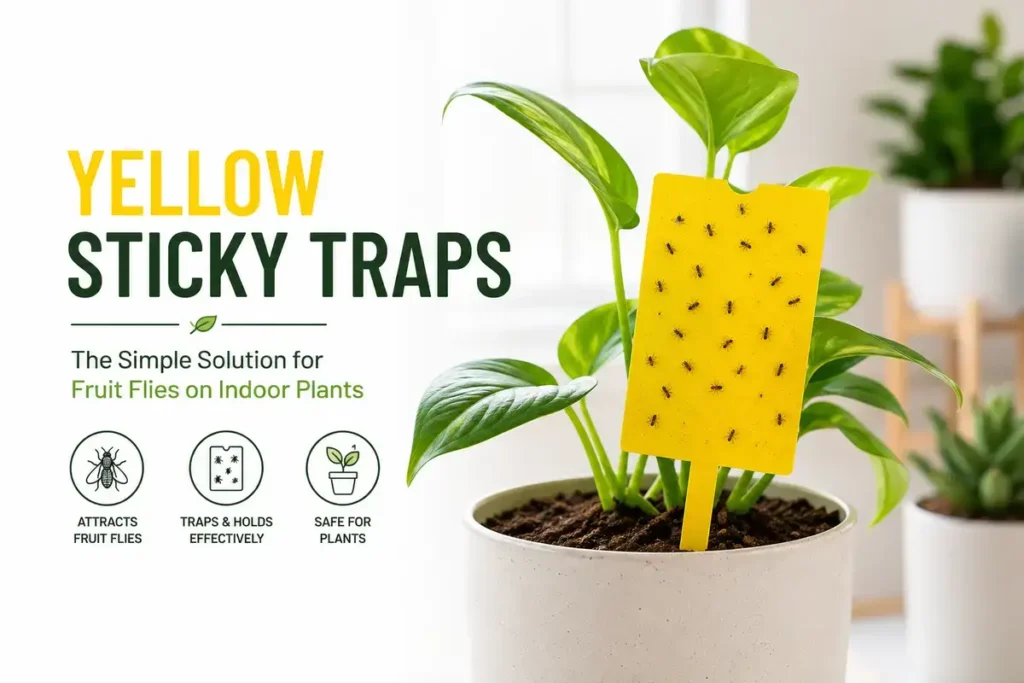
Yellow sticky traps are an essential monitoring and capture tool for any fruit fly or fungus gnat infestation. Both species are strongly attracted to the color yellow and will land on the sticky surface and become trapped.
Place traps horizontally at soil level directly inside or beside affected plant pots. This position targets flies at the point where they are most likely to be laying eggs in the soil rather than simply catching random fliers elsewhere in the room.
Sticky traps serve two functions: they catch adult flies and reduce the egg-laying population, and they provide a visual indicator of infestation levels. Check them every few days. A high catch rate after two weeks of soil treatment indicates the infestation is still active. A declining catch rate indicates the population is collapsing.
Replace traps every 7 to 10 days as they fill with trapped insects and dust. Yellow sticky traps are available at virtually every garden center and on Amazon in multipacks for under ten dollars.
Method 6: Cinnamon Powder on Soil Surface
Cinnamon has mild antifungal properties that disrupt the food source available to fruit fly and fungus gnat larvae in the soil. Larvae in moist potting mix feed partly on the fungi growing in that environment, and cinnamon suppresses that fungal growth, reducing the nutritional resources available to developing larvae.
Sprinkle a light layer of ground cinnamon across the surface of the potting soil, enough to form a thin visible layer without completely covering the soil. Reapply after watering since irrigation washes the cinnamon into the soil and reduces its surface effectiveness.
Cinnamon alone is not strong enough to eliminate an established infestation but works well as a preventive measure and as a complementary addition to hydrogen peroxide drenching and apple cider vinegar trapping. It also has a pleasant smell that many people find preferable to chemical treatments in a living space.
Method 7: Neem Oil Soil Drench
A neem oil solution applied as a soil drench addresses fruit fly and fungus gnat larvae through a different mechanism than the hydrogen peroxide approach, making it useful as an alternating treatment or for infestations that do not respond fully to hydrogen peroxide alone.
Neem oil’s active compound azadirachtin disrupts larval development and feeding when absorbed by plant roots and distributed through the plant tissue. Larvae that feed on roots treated with neem oil cannot complete their development normally and die before reaching the pupal stage.
How to make and apply it: Mix 2 tablespoons of pure cold-pressed neem oil with 1 teaspoon of dish soap and 1 quart of warm water. Apply as a normal watering, saturating the root zone thoroughly. Use every 7 to 10 days for three weeks, alternating with hydrogen peroxide drenching if both are being used.
For a detailed breakdown of how neem oil works across both soil application and above-ground spraying, indoor plant spray for bugs covers the full range of spray applications for every common indoor plant pest.
Method 8: Repotting Into Fresh Sterile Soil
For severe or persistent infestations that have not responded to three or more weeks of consistent treatment, repotting into fresh sterile potting mix removes the infested soil and all the larvae, eggs, and pupae it contains in one step.
Remove the plant from its pot and gently shake as much of the old soil away from the roots as possible without damaging them. Rinse the root ball under room temperature running water to remove remaining soil and any insects clinging to roots. Clean the pot thoroughly with a diluted bleach solution (1 tablespoon bleach per quart of water) and allow it to dry completely before reusing.
Repot into fresh, sterile potting mix from a sealed bag. Bags that have been sitting open or stored in outdoor conditions for extended periods can contain eggs or larvae already.
After repotting, apply a preventive hydrogen peroxide drench immediately and continue with correct watering practices going forward to prevent the new soil from developing the same conditions that encouraged the original infestation.
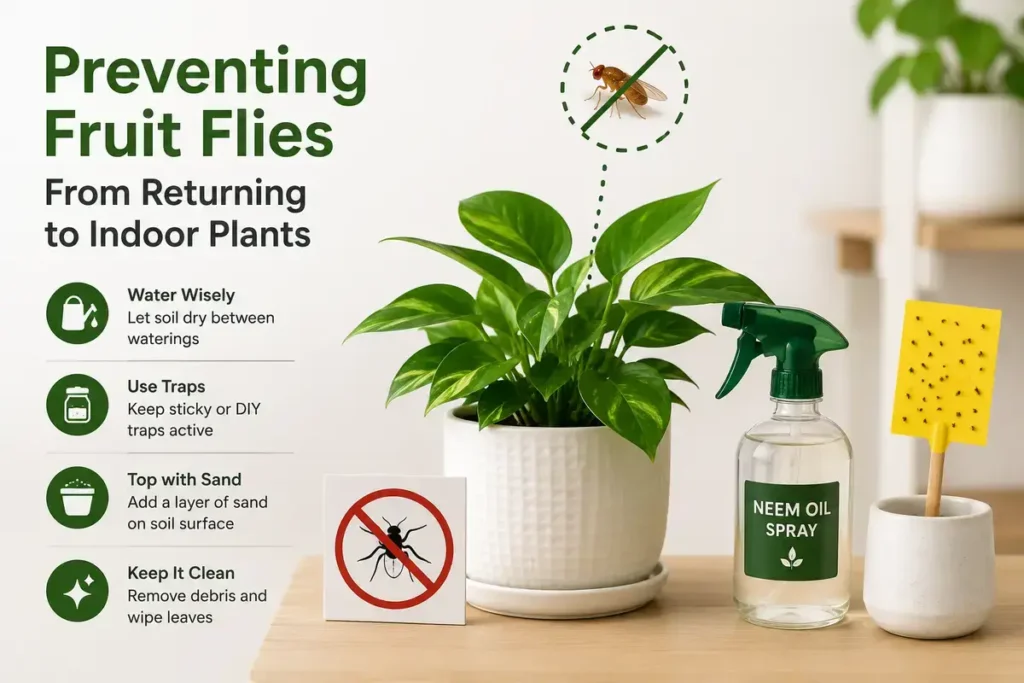
Preventing Fruit Flies From Returning to Indoor Plants
Getting rid of an active infestation is only half the solution. Keeping fruit flies away from your indoor plants long term requires addressing the conditions that attracted them in the first place.
Water correctly and consistently. Moist soil is the single biggest attractant for both fruit flies and fungus gnats. A plant that dries out adequately between waterings rarely becomes a breeding site regardless of what is happening elsewhere in the home.
Store fruit in the refrigerator during warm months. Fruit flies peak in activity during warm weather when fermenting organic matter ripens faster. Keeping fruit refrigerated during spring, summer, and early fall removes the primary food and breeding attractant from your home during the months when fly populations are highest.
Clean kitchen drains weekly. Pour boiling water down kitchen and bathroom drains once a week, followed by a white vinegar flush. This prevents the organic buildup that provides a breeding environment for flies that then spread to nearby plants.
Inspect new plants before introducing them. New plants from garden centers can carry fruit fly and fungus gnat eggs in their soil. A one-week quarantine period in a separate room catches any hatching larvae before they spread to your existing collection.
Use a soil cover. A thin layer of coarse sand, fine gravel, or decorative stone on the soil surface of your indoor plants creates a physical barrier that makes it harder for adult flies to reach the moist soil below for egg laying. The barrier also speeds surface drying which further reduces the attractiveness of the soil for breeding.
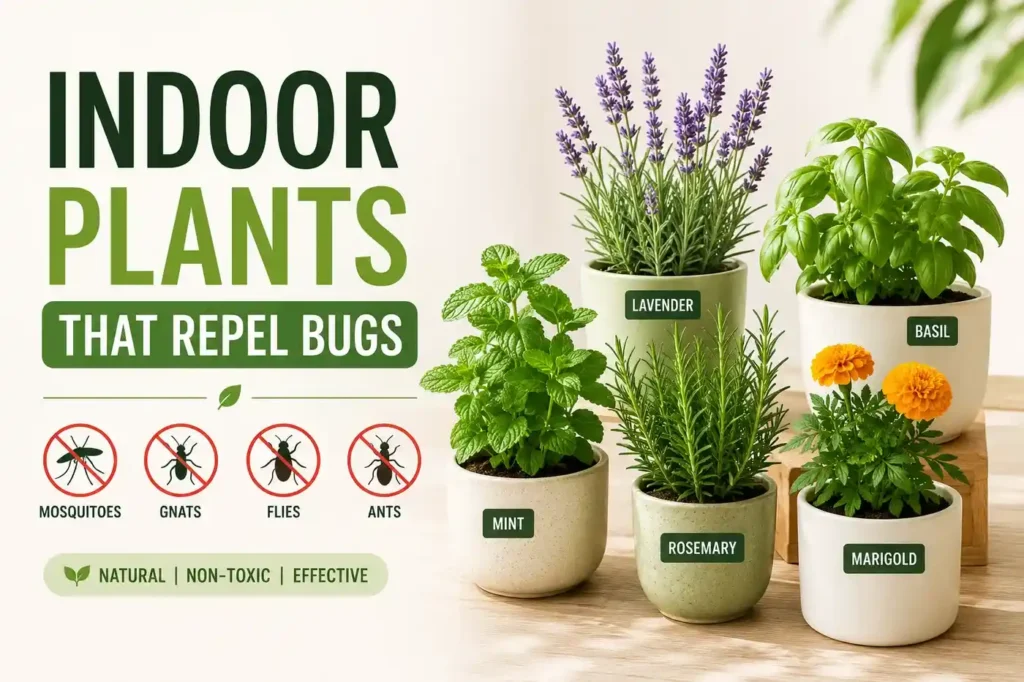
Growing bug-repelling plants alongside your collection adds a natural deterrent layer that reduces how many flies enter your home in the first place. The complete guide on which plants produce the most effective natural repellent compounds and where to position them is covered in indoor plants that repel bugs.
Conclusion
Fruit flies on indoor plants are a solvable problem once you address both stages of the life cycle simultaneously rather than just the adults you can see. Find and eliminate any fermenting food sources in your home first since your plants may be a secondary site rather than the primary one. Let the soil dry more thoroughly between waterings to remove the moist conditions larvae require. Apply a hydrogen peroxide drench weekly for three weeks to kill larvae already in the soil. Use apple cider vinegar traps and yellow sticky traps to catch and monitor the adult population. Repot if the infestation is severe enough that soil treatment alone is not producing results after three weeks.
The cycle of recurring fruit fly problems almost always comes down to one of two things: the primary breeding source was not identified and eliminated, or treatment stopped before the full reproductive cycle was broken. Address both and fruit flies in your indoor plant collection become a rare and easily managed occasional occurrence rather than a persistent recurring problem.
Frequently Asked Questions
What is the fastest way to get rid of fruit flies on indoor plants?
The fastest combination for immediate impact is placing apple cider vinegar traps near affected plants today to start catching adults, applying a hydrogen peroxide soil drench immediately to kill larvae, and letting the soil dry completely before the next watering. This three-part approach addresses adults, larvae, and breeding conditions simultaneously and produces noticeable reduction in adult fly numbers within 48 to 72 hours in most cases.
Are fruit flies harmful to indoor plants?
True fruit flies (Drosophila species) cause minimal direct damage to healthy established plants since their larvae primarily feed on fermenting organic matter rather than plant roots. Their main impact on indoor plants is indirect: their presence indicates the soil is staying too moist and fermenting, which is itself a sign of overwatering conditions that do harm plants long term. Fungus gnats, which are frequently confused with fruit flies, do cause direct root damage through larval feeding and are more immediately harmful to plant health.
Why do I keep getting fruit flies near my indoor plants even after treating them?
Recurring fruit fly problems after treatment almost always mean either the primary breeding source has not been found and eliminated, treatment stopped before the full three-week cycle needed to catch newly hatched larvae, or the soil is still staying too moist between waterings and continuing to provide ideal breeding conditions. Check kitchen drains, open bottles, and overripe produce as potential primary sources before concluding that your plants are the origin of the problem.
Can fruit flies damage plant roots?
True fruit flies do minimal damage to plant roots since they prefer fermenting organic matter over living plant tissue. Fungus gnat larvae, which are commonly confused with fruit fly larvae, do feed actively on plant roots and cause genuine damage particularly to seedlings and young plants. If your plants are showing signs of root damage alongside a flying insect infestation, fungus gnats are more likely the culprit than true fruit flies.
Does cinnamon actually work for fruit flies on indoor plants?
Cinnamon has mild antifungal properties that suppress the fungi in potting soil that fruit fly and fungus gnat larvae use as a food source. It is a useful preventive and complementary measure rather than a standalone solution for active infestations. Sprinkled on the soil surface it reduces larval food resources but does not kill larvae or eggs directly. Use it alongside hydrogen peroxide drenching and apple cider vinegar traps for best results rather than relying on it as the primary treatment.
How long does it take to completely eliminate fruit flies from indoor plants?
Most fruit fly infestations are completely eliminated within two to three weeks of consistent treatment addressing both adults and larvae simultaneously. The three-week timeline covers the full reproductive cycle from egg to adult, ensuring that each generation emerging from the soil encounters treatment before it can reproduce and restart the cycle. Mild infestations caught early sometimes clear within one week when the primary breeding source is identified and removed quickly.
Are fruit fly traps safe to use around plants?
Apple cider vinegar traps are completely safe around plants and are one of the most plant-friendly pest control methods available since they involve no chemicals whatsoever. Place them directly beside or inside plant pots without any risk of damage to plant tissue. Commercial fruit fly traps using pheromone attractants are equally safe around plants. The only traps to position carefully are yellow sticky traps, which should be placed at soil level rather than touching plant stems or leaves since the adhesive can damage tender plant tissue on contact.
Pingback: Small Flies in Indoor Plants: 7 Types and How to Get Rid of Them - Plant Quill