
If you have ever run your finger across the leaf of a purple passion plant and felt that dense, soft velvet, you will understand immediately why this plant commands attention. The indoor purple passion plant — Gynura aurantiaca — is covered in fine purple hairs that catch light differently depending on viewing angle, shifting from deep violet to bright electric purple as the light changes. It is one of very few truly purple-haired plants available as a common houseplant, and its colouring is unlike anything else.
This guide covers everything you need to grow a thriving indoor purple passion plant: the right conditions, watering and feeding, how to keep the purple colour vivid, pruning, propagation, and how to manage the plant’s natural tendency to become leggy over time.
What Is the Purple Passion Plant?
Gynura aurantiaca is a tropical plant native to Indonesia and Southeast Asia, belonging to the daisy family (Asteraceae). In the wild it grows as a semi-scrambling, semi-trailing plant in humid forest understorey — behaviour that translates directly to its indoor growing habits. It produces soft, slightly serrated leaves covered in dense purple or violet hairs (trichomes), and in mature plants, small orange-yellow daisy-like flowers.
The flowers are an important note: they are distinctive in appearance but notoriously unpleasant in smell — many indoor gardeners remove flower buds as they form to prevent the odour filling a room. This is purely a matter of preference; the flowers cause no harm to the plant, and some growers enjoy the novelty.
Two species are commonly grown as houseplants: Gynura aurantiaca (the standard purple passion) and Gynura sarmentosa (purple velvet plant), which has a more trailing habit and is often sold interchangeably with G. aurantiaca. Care requirements for both are essentially identical.
Light Requirements
The intensity of purple colouring in an indoor purple passion plant is directly linked to light levels — this is the single most important factor in keeping the plant looking its best. In bright indirect light, the purple trichomes are dense, vivid, and intensely coloured. In low light, the purple fades significantly and the plant becomes predominantly green with a slight purple cast.
Ideal position: A bright east or west-facing windowsill provides the ideal balance of strong light without the harsh midday sun of a south-facing position. The purple passion plant can tolerate some direct morning sun but should be protected from fierce afternoon sun through south or west-facing glass in summer, which can scorch the soft leaf surface.
Winter light: As daylight shortens in autumn and winter, move the plant closer to the window or supplement with a grow light on a 12-hour timer. Without adequate winter light, the purple fades and stems become leggy. The colour can recover in spring when natural light increases, but plants kept very dark through winter often struggle to bounce back fully.
Rotate regularly: Gynura tends to grow toward its light source, becoming one-sided over time. A quarter-turn every week or two keeps growth even and the plant symmetrical.
Watering
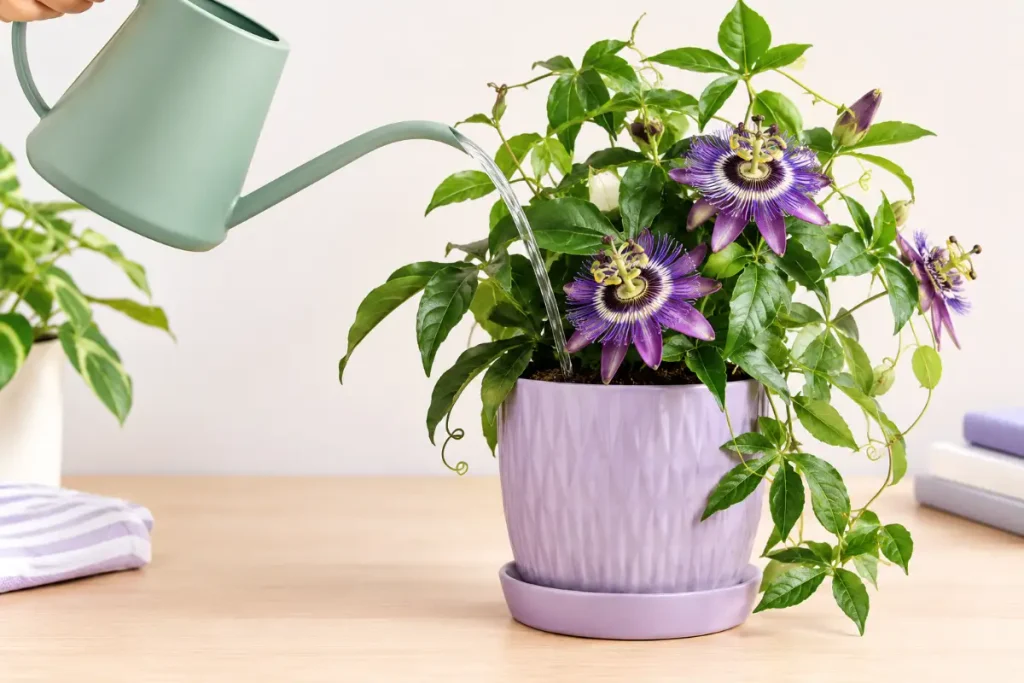
The indoor purple passion plant has moderate water needs — it is neither as drought-tolerant as a succulent nor as moisture-demanding as a Calathea, but it does have one important quirk: the leaves must not be wetted during watering.
Water that sits on the dense purple hairs creates conditions for rot and grey mould (Botrytis), which can spread quickly in a plant with such a soft, humidity-trapping leaf surface. Always water at the base — directly into the compost — and ensure the leaves stay dry.
Frequency: Water when the top 2–3 cm of compost dries. Gynura is moderately drought-tolerant in the short term — a missed watering is less catastrophic than overwatering. However, extended drought causes the lower leaves to yellow and drop, accelerating the leggy decline that the plant is prone to anyway.
Overwatering: The most common cause of failure with this plant. Roots in consistently wet compost rot quickly, and because the dense foliage can hide early signs of root stress, overwatering damage is often advanced before it is noticed. Use a free-draining compost, ensure the pot has drainage holes, and never allow the plant to sit in standing water.
Water temperature: Use room-temperature water — cold water on the roots can cause temporary wilting and stress in this tropical plant.
Humidity and Temperature
As a tropical plant, Gynura aurantiaca appreciates moderate to good humidity — ideally 50–60% or above. In very dry indoor air (common in winter with central heating running), the leaf tips can brown and the overall vigour of the plant declines.
However — and this is important — do not mist the leaves. The dense purple hairs trap water droplets and create ideal conditions for fungal problems. Instead, raise humidity by:
- Placing the pot on a tray of damp pebbles
- Running a cool-mist humidifier near the plant
- Grouping plants together to create a shared humidity microclimate
Temperature: The indoor purple passion plant prefers temperatures between 15–25°C. It tolerates occasional dips to 10°C but prolonged cold causes leaf damage and sluggish growth. Avoid positions near cold draughts — particularly in winter near windows and external doors. Do not allow temperatures to consistently exceed 27°C, as the plant shows signs of heat stress (accelerated wilting, increased water demand) at the high end.
Compost and Potting
A free-draining, moderately fertile compost suits Gynura well. Standard peat-free multipurpose compost amended with 20–25% perlite provides the drainage and aeration the roots need. Purpose-made houseplant compost works well, though avoid composts with very high moisture retention.
Pot choice: Terracotta pots are excellent for this plant — their porosity helps prevent the overwatering that is Gynura’s primary enemy. Use pots with generous drainage holes and do not allow water to pool in saucers.
Repotting: Repot in spring when roots emerge from drainage holes or circle visibly at the base of the pot. Move up one pot size only — 2–3 cm larger diameter. Purple passion plants do not need large pots; they flower and perform well when moderately root-bound.
Feeding
Feed the indoor purple passion plant fortnightly with a balanced liquid fertiliser (equal NPK, such as a general houseplant feed) at half strength during spring and summer. A fertiliser too high in nitrogen promotes lush green growth at the expense of the purple trichomes — the purple colouring is most vivid when the plant is growing steadily but not being pushed with excessive nitrogen.
Reduce feeding to monthly in autumn and stop entirely from November to February when growth slows. Resume in March as day length increases and new growth appears.
Pruning and Keeping the Plant Bushy
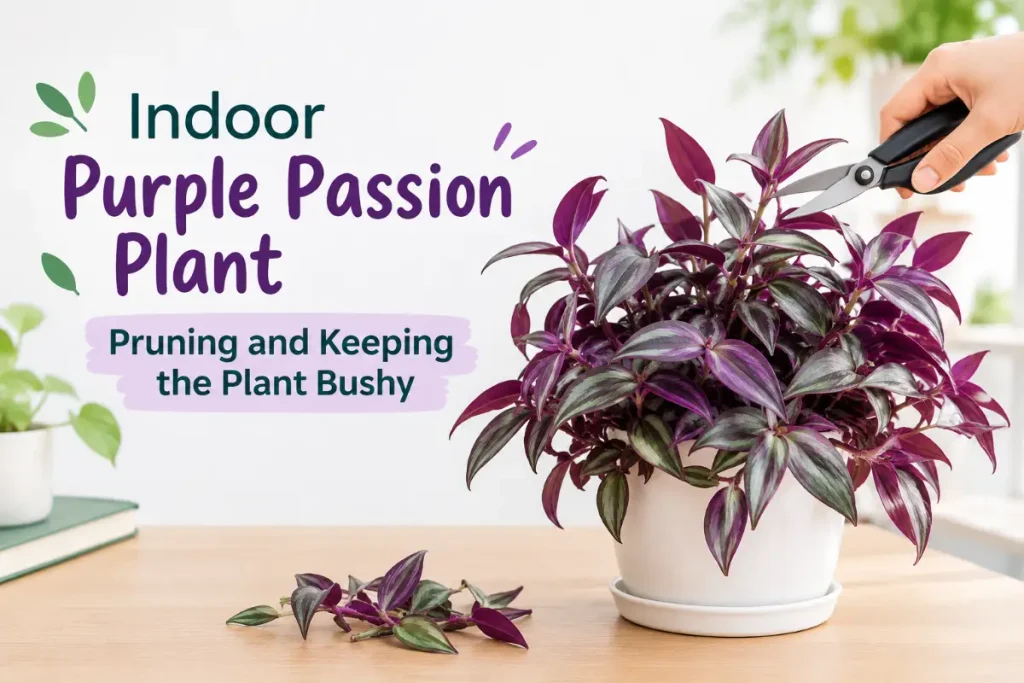
The indoor purple passion plant has an inherent tendency to become leggy — producing long, increasingly bare stems with foliage concentrated at the growing tips. This is its natural growth habit and is not a sign of poor care, but it does require active management to keep the plant looking attractive.
Regular pinching: Pinch out growing tips every 3–4 weeks during the growing season. This redirects the plant’s energy into side shoots, producing a bushier, more compact plant with denser foliage. Once you stop pinching and allow the plant to run, stems quickly extend and become bare at the base.
Hard rejuvenation: Plants that have become very leggy despite pinching can be cut back hard — reducing stems to 5–10 cm above compost level — in late spring. New growth emerges from these cut stems, producing a fresh, compact plant. The cut material can be used for propagation.
Annual replacement: Many indoor gardeners treat the purple passion plant as a semi-disposable annual — propagating new plants from cuttings each spring and replacing ageing, leggy specimens. Given how easily it propagates (see below), this is a practical and effective approach.
Propagation
The indoor purple passion plant is one of the easiest of all houseplants to propagate — stem tip cuttings root readily in water or compost with no rooting hormone needed.
Method:
- Take tip cuttings 8–10 cm long, cutting just below a node
- Remove the lower leaves, leaving 2–3 leaves at the tip
- Place in a glass of water, ensuring the node (not leaves) is submerged
- Roots develop in 10–14 days in a warm, bright position
- Once roots reach 2–3 cm, pot into moist compost and grow on normally
When to propagate: Spring and early summer produce the fastest rooting and the most vigorous new plants. Cuttings taken in autumn root more slowly and produce smaller plants through winter.
Propagating into soil directly: Cuttings can also be inserted directly into moist propagating compost and covered with a clear plastic bag to maintain humidity. This avoids the transition shock of moving from water to compost, though rooting time is similar.
Common Problems
Fading purple colour: The most common complaint. Almost always caused by insufficient light. Move closer to a bright window or add a grow light. New growth in better light will emerge with richer purple colour.
Leggy stems: Normal growth habit, managed by regular pinching. See the pruning section above.
Yellow lower leaves: Usually caused by overwatering, low light, or normal ageing of older leaves as the plant extends. Check compost moisture first — if soggy, reduce watering immediately. If dry, water thoroughly. If correctly watered, the yellowing is likely natural senescence accelerated by low light.
Grey mould on leaves (Botrytis): Caused by water sitting on the leaf surface or very high humidity with poor air circulation. Remove affected leaves, improve ventilation, and ensure you water only at the base. This is more likely in winter when ventilation is reduced and humidity near plants can be high.
Root rot: The consequence of consistent overwatering. If the plant wilts despite wet compost, unpot and inspect roots — healthy roots are white and firm; rotted roots are brown or black and mushy. Trim all affected roots, dust cuts with cinnamon, repot into fresh compost, and reduce watering. A badly root-rotted plant is best replaced with a new cutting.
Orange flowers with strong smell: Normal — the plant has matured and is flowering. Remove buds as they form if the smell is objectionable. Flowering does not harm the plant but can slightly redirect energy from foliage production.
Displaying the Indoor Purple Passion Plant
Gynura aurantiaca’s trailing growth habit makes it ideal for display positions where stems can cascade:
- Hanging planters: The most effective display — stems trail downward in long, velvet curtains of purple.
- High shelves: Placed at the edge of a shelf, stems trail over the front and sides for dramatic effect.
- Pedestal pots: A tall stand positions the plant at eye level where the purple trichomes catch ambient light most effectively.
The colour of the purple changes noticeably with light direction — in side lighting (from a window to one side), the hairs catch the light and appear brightest; in backlighting, they appear darker and more mysterious. Placing the plant where it receives varying light directions through the day creates the most dynamic visual effect.
The indoor purple passion plant pairs well with green-leaved trailing plants — a shelf or hanging display mixing Gynura with standard green Pothos or Tradescantia fluminensis creates a colour contrast that emphasises the purple of the Gynura. It also complements other purple-toned plants — a display including Tradescantia zebrina, purple Oxalis, and Gynura creates a rich, monochromatic purple palette with varied leaf form and texture.
For managing the moisture needs of a mixed trailing display effectively, a self watering system for indoor plants works well for the green companions — though Gynura itself should be watered manually to avoid water splashing onto its velvet leaves from any automated system.
The Purple Passion Plant as a Fast-Growing Feature
One of Gynura’s underappreciated qualities is the speed at which it establishes — given good light and regular pinching, a rooted cutting can fill a 15 cm pot within three months. For indoor gardeners who want quick results, this is a significant advantage over slow-growing, expensive showpiece plants.
It also responds visibly and quickly to improvements in care. Move a faded, leggy Gynura to a brighter position, begin regular pinching, and within 4–6 weeks the new growth emerges vivid purple and compact — an almost immediate reward for better care. This responsiveness makes it an excellent plant for learning how indoor plants respond to environmental conditions, making it particularly well-suited to new gardeners building their understanding of houseplant care alongside more forgiving and more visually striking species. Plants like indoor plants with variegated leaves often require months before the impact of care changes is visible in new growth; Gynura reveals results within weeks.
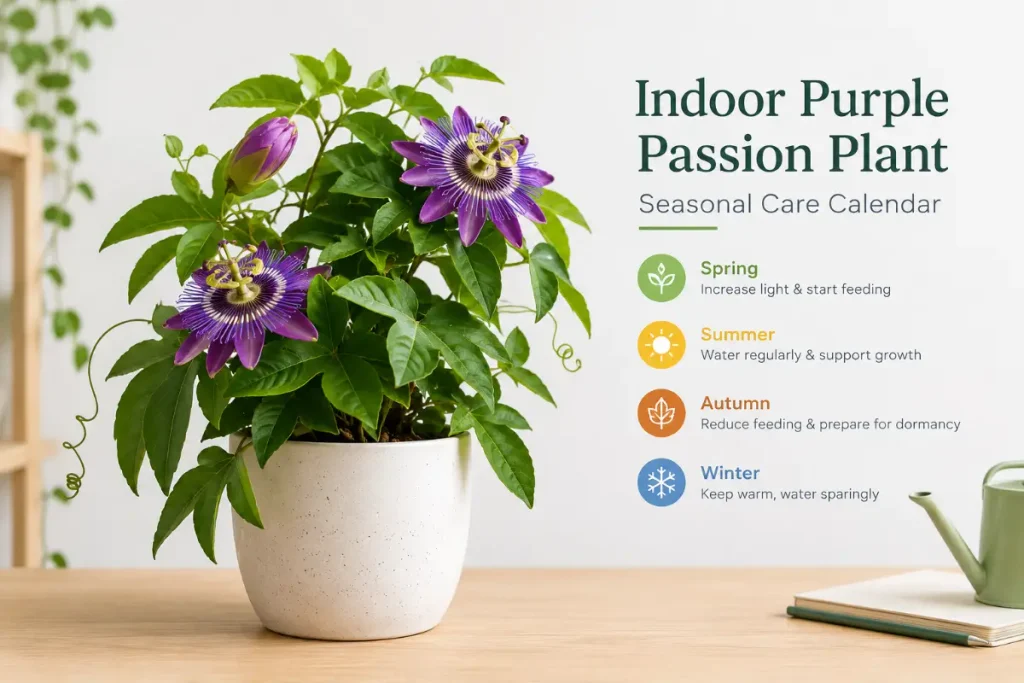
Seasonal Care Calendar
Adjusting care through the year keeps an indoor purple passion plant looking its best across all seasons — particularly important given how visibly this plant responds to changing light levels.
January–February: The darkest, driest months. Reduce watering to every 2 weeks or longer — growth is minimal and the compost dries slowly. Run a humidifier nearby if central heating is running continuously. If the plant is looking particularly faded and leggy, this is not the time for hard pruning — wait for March when day length and warmth increase. A grow light on a 12-hour timer at this time of year maintains colour vibrancy and prevents the worst of the winter decline.
March–April: Growth resumes as day length increases. Resume fortnightly feeding with a balanced liquid fertiliser at half strength. This is the best time to take hard rejuvenation cuttings from very leggy plants, and to propagate new specimens from tip cuttings. Increase watering frequency as growth picks up.
May–August: Peak growing season. Pinch tips every 3–4 weeks without fail. Water when the top 2–3 cm dries — this may be every 5–7 days in warm weather. Watch for spider mites in hot, dry conditions (check undersides of leaves monthly) and for grey mould if ventilation is poor in humid periods. Feed fortnightly.
September–October: Begin reducing feeding frequency — monthly from September, stop in October. Prepare the plant for reduced winter light by moving it as close to a window as possible before day length drops significantly. Bring any plants that spent summer on a sheltered outdoor balcony back inside before temperatures drop below 12°C.
November–December: Minimal watering, no feeding. The plant’s growth rate slows dramatically. Avoid the temptation to water because the plant looks dull — check the compost with your finger before watering. A leggy, colour-faded plant in December is best left until March before pruning or propagating.
Growing Purple Passion Plant in a Mixed Display
The indoor purple passion plant is effective both as a standalone specimen and as part of a mixed display. Its trailing growth habit, vivid colour, and soft texture complement a wide range of other houseplants.
Effective companions:
- Tradescantia zebrina — similar trailing habit, silver-striped green leaves with purple undersides; shares comparable care requirements and creates a harmonious purple-toned display.
- Pothos ‘Marble Queen’ — cream-and-green variegation contrasts beautifully with the solid purple of Gynura; both trail well and suit the same light levels.
- Peperomia obtusifolia — compact and upright, providing structural contrast to the trailing Gynura while sharing comparable watering and light needs.
- Fittonia with red or pink veins — if both are placed in a high-humidity area or terrarium (though Gynura is too large for most terrariums), the intricate leaf patterning of Fittonia contrasts with the velvet simplicity of Gynura.
Container combinations: For shelf or hanging displays, planting Gynura alongside a trailing green companion in the same container creates a naturally varied cascade — roots from both plants can usually coexist in a medium-sized pot with sufficient compost. Ensure both plants share similar watering needs (Gynura is moderately thirsty — do not combine with drought-tolerant succulents in the same pot).
Monitoring moisture levels across a mixed trailing display benefits from consistent tools — tracking soil dryness with a moisture meter for indoor plants is especially useful when multiple plants share a container or are arranged closely together on a shelf, ensuring each plant receives water at the right time without over- or under-watering.
Conclusion
The indoor purple passion plant rewards attentive care with one of the most distinctive and vivid displays available in houseplant growing — that dense purple velvet is genuinely unlike any other foliage. The keys are simple: bright indirect light for colour intensity, base watering to keep leaves dry, regular pinching for bushy growth, and propagating fresh plants annually to replace ageing specimens. Done right, Gynura aurantiaca is a low-cost, fast-growing, endlessly propagatable plant that earns its place in any indoor collection.
For additional growing guidance on Gynura and related tropical houseplants, the RHS plant finder and houseplant pages at rhs.org.uk/plants/types/houseplants are a reliable reference for care requirements across species.
FAQs
Why is my purple passion plant losing its purple colour?
Insufficient light is the almost universal cause. The purple trichomes (hairs) that give the plant its colour are produced in response to light — in low-light conditions, the plant reduces trichome density and the foliage appears greenish or only faintly purple. Move to a brighter position and new growth will emerge vivid purple within 2–4 weeks.
How often should I water my indoor purple passion plant?
Water when the top 2–3 cm of compost dries — roughly every 7–10 days in summer, every 14 days in winter. Always water at the base and keep water off the leaves. Gynura is more tolerant of a missed watering than of overwatering, so when in doubt, wait.
Can I mist my purple passion plant?
No — the dense purple hairs trap water droplets on the leaf surface, creating ideal conditions for grey mould (Botrytis). Raise humidity by other means: a pebble tray with water, a nearby humidifier, or grouping plants together.
How do I keep my purple passion plant bushy?
Pinch out growing tips every 3–4 weeks during the growing season. This is the single most important maintenance task — without it, the plant naturally extends into long, bare stems with foliage only at the tips. Consistent pinching throughout spring and summer produces a dense, compact, heavily foliaged plant.
Do purple passion plant flowers smell bad?
Yes — Gynura flowers produce a notably unpleasant smell that many people find disagreeable in an enclosed room. Removing the flower buds as they form (before opening) prevents the odour without affecting the plant’s health or foliage production.
How long does a purple passion plant live?
Gynura aurantiaca is not particularly long-lived as a specimen — individual plants typically peak at 2–3 years before becoming excessively leggy and less productive of fresh purple growth. However, because it propagates so easily from cuttings, the plant can effectively be renewed indefinitely. Many gardeners take cuttings annually and replace ageing plants with fresh young specimens.
What soil does a purple passion plant need?
Free-draining, moderately fertile compost. Standard peat-free houseplant compost amended with 20–25% perlite works well. Avoid heavy, moisture-retaining composts that stay wet for extended periods — Gynura’s roots are susceptible to rot in waterlogged conditions.
Is the purple passion plant toxic to cats or dogs?
Gynura aurantiaca is generally considered non-toxic to cats and dogs — it is not on the ASPCA’s list of toxic plants. However, as with any plant, ingestion may cause mild digestive irritation in some animals. Keep the plant at height if you have pets that chew foliage, both for the plant’s protection and to prevent any potential irritation.
Can I grow a purple passion plant from seed?
Seeds are rarely available and germination can be erratic. The standard propagation method — stem tip cuttings in water — is fast, reliable, and free, making seed growing unnecessary. A single cutting roots in 10–14 days and produces a flowering-sized plant within a few months.
Why are the leaves on my purple passion plant turning yellow?
Yellow leaves are most commonly caused by overwatering (check if compost is consistently wet), low light (accelerates normal leaf drop and prevents the plant from replacing lost leaves), or natural senescence of older leaves at the base of extending stems. Address the most likely cause first — reduce watering if the compost is wet, move closer to light if the position is dim.