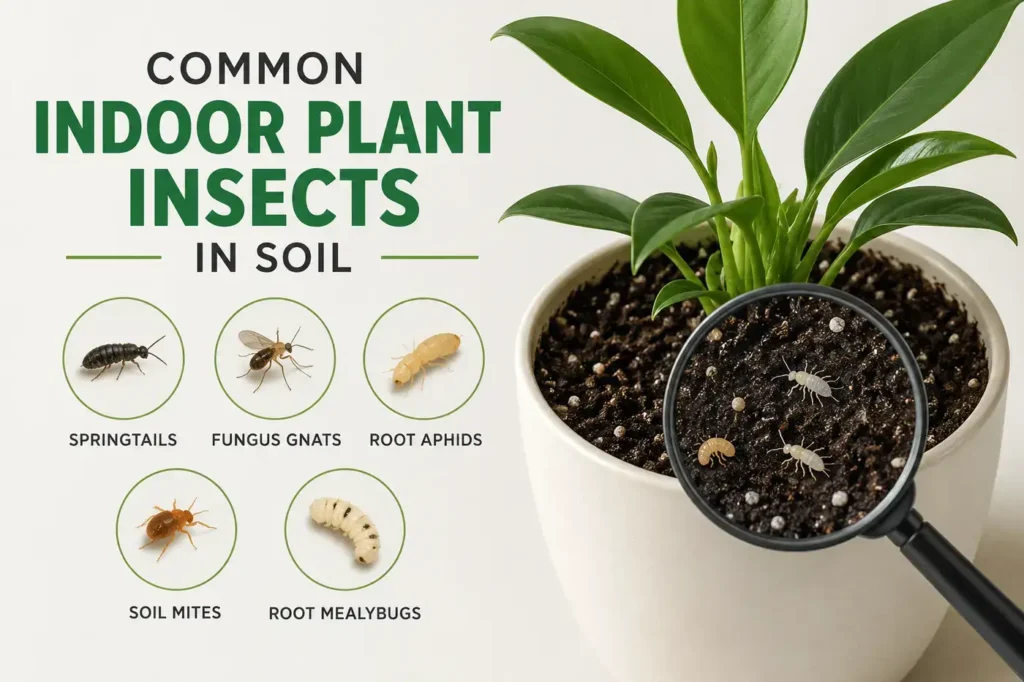
Finding indoor plants insects in soil is the kind of discovery that stops most plant owners cold. You water your plant, the soil moves, and suddenly there are tiny creatures crawling across the surface or flying upward in a small cloud. The instinct is to grab the nearest spray and treat everything immediately, but that instinct leads to wasted treatment time more often than it leads to results. Not every insect living in indoor plant soil is harmful. Several of the most commonly encountered soil insects are completely harmless decomposers doing useful work in your potting mix, and treating them the same way you treat destructive root-feeding species wastes time and risks unnecessary chemical exposure in your living space.
This guide covers 9 of the most common insects found in indoor plant soil, how to identify each one accurately, which ones actually damage your plants and which ones do not, and the most effective treatment for every harmful species.
Quick Answer
The most common insects found in indoor plant soil are fungus gnat larvae, springtails, soil mites, root aphids, shore fly larvae, rove beetles, millipedes, fungus beetle larvae, and beneficial nematodes. Of these, fungus gnat larvae and root aphids cause the most significant plant damage. Springtails, most soil mites, rove beetles, millipedes, and beneficial nematodes are harmless or actively beneficial. Correct identification before treatment prevents wasted effort and unnecessary chemical use.
Why Soil Insects Are So Common in Indoor Plants
The potting mix inside your houseplant pot is not an inert growing medium. It is a living ecosystem containing fungi, bacteria, organic matter at various stages of decomposition, and the insects that feed on all of these things. This is true of virtually every bag of potting mix you buy, every plant you purchase from a garden center, and every pot that has been in use for more than a few months.
The difference between a well-managed indoor plant and one with a serious soil insect problem almost always comes down to moisture. Consistently wet soil creates conditions where harmful soil insect populations can grow unchecked. Soil that dries adequately between waterings naturally suppresses the harmful species while supporting the beneficial ones that tolerate drier conditions better.
Three conditions drive the majority of harmful soil insect infestations in indoor plants:
Overwatering creates the consistently moist anaerobic conditions that fungus gnat larvae, shore flies, and various fungal feeding insects require to establish and reproduce rapidly. A plant that dries out adequately between waterings is dramatically less hospitable to every harmful soil insect on this list.
Old decomposed potting mix that has broken down into a dense, poorly draining medium holds moisture far longer than fresh structured mix. This creates persistent wet conditions even with careful watering because drainage is compromised.
New plants from garden centers frequently carry soil insect eggs or early-stage larvae that were not visible at purchase. A one-week quarantine period before introducing new plants to your existing collection catches most of these before they spread.
9 Indoor Plant Insects Found in Soil
1. Fungus Gnat Larvae
Fungus gnat larvae are the most damaging and most commonly encountered soil insect in indoor plant collections. The adult fungus gnat is a small dark fly that hovers above soil surfaces and flies upward when a plant is watered or disturbed. The adult is harmless but its larvae, living in the top 2 to 3 inches of soil, are the actual problem.
Larvae are tiny, white, and thread-like with a distinctive shiny black head capsule. They feed on fungi, decaying organic matter, and plant roots. Light root feeding on a healthy established plant causes minimal visible damage. Heavy larval populations in small pots, seedlings, or young plants cause wilting, yellowing, and growth stunting as root damage accumulates faster than the plant can compensate.
Confirming identification: Press a piece of raw potato cut-side down into the top inch of soil and leave it for 24 hours. Fungus gnat larvae are strongly attracted to potato starch. Pull it up and check the underside for tiny white worms with black head capsules.
What drives them: Consistently wet soil is the single biggest contributor. Larvae cannot survive in dry soil and adult gnats will not lay eggs in it.
Treatment: Let soil dry completely between waterings as a first step. Apply hydrogen peroxide drench (1 part 3% hydrogen peroxide to 4 parts water) weekly for three weeks to kill larvae on contact through oxidation. Place yellow sticky traps at soil level to catch adults and reduce egg laying. For severe infestations, beneficial nematodes (Steinernema feltiae) applied as a soil drench provide biological control that persists in the soil as long as larvae remain present. For a complete treatment guide covering every method from basic watering adjustment through biological controls, bugs in indoor plant soil covers the full treatment approach with specific product recommendations.
2. Springtails
Springtails are one of the most frequently misidentified soil insects in indoor plants because their jumping behavior when disturbed triggers an immediate alarm response in most plant owners. They are tiny, 1 to 2 millimeters long, white, grey, or dark in color, and launch themselves into the air by snapping a forked appendage under their body when threatened.
Despite their alarming jumping behavior, springtails are completely harmless to plants. They feed exclusively on fungi, algae, decaying organic matter, and bacteria in the soil. They do not feed on plant roots, stems, or leaves at any stage of their life cycle and their presence in large numbers indicates healthy organic soil activity rather than a pest problem.
Do they need treatment? No. Springtails cause zero plant damage.
If you want to reduce their numbers: Let soil dry out more thoroughly between waterings. Springtail populations collapse rapidly when soil moisture decreases since they require consistent moisture to survive and reproduce. No chemical treatment is needed or beneficial and applying unnecessary pesticide to a healthy soil ecosystem does more harm than the springtails ever would.
3. Soil Mites
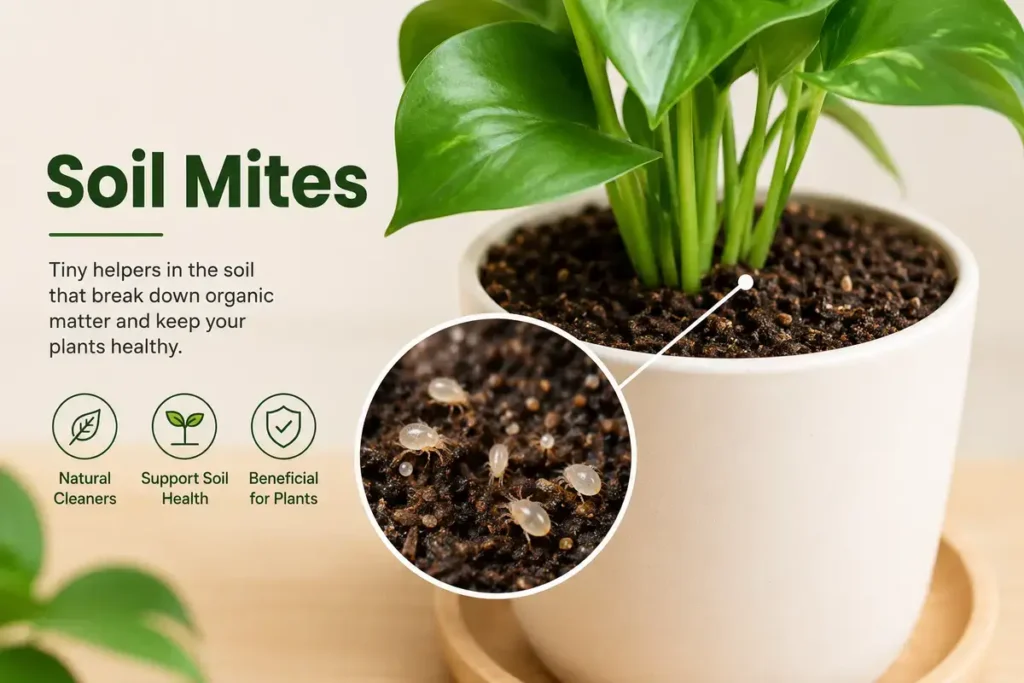
Soil mites appear as tiny white, tan, brown, or translucent specks moving slowly across the soil surface or around pot drainage holes. They are present in virtually every organic potting medium and represent dozens of different species with wildly different feeding habits and ecological roles.
The overwhelming majority of soil mite species found in indoor plant soil are beneficial decomposers feeding on fungi, bacteria, and decaying organic matter. They are a normal, healthy component of potting mix ecology and their presence is not a sign of a problem.
The exception is a small number of root-feeding mite species that do cause plant damage by feeding on roots and lower stem tissue. These species cause symptoms including progressive wilting, yellowing, and growth decline without obvious above-ground pest activity. They are significantly less common than the beneficial decomposer species in typical indoor plant situations.
Distinguishing harmful from harmless: If your plant is growing normally with no symptoms of stress, soil mites are almost certainly harmless. If the plant is declining despite appropriate care and you cannot identify above-ground pests, check the root ball by removing the plant from its pot. Root-feeding mites appear as clusters of tiny specks on root surfaces and at the soil-root interface.
Treatment for harmful root-feeding mites: Repot into fresh sterile potting mix after rinsing the root ball thoroughly under running water. Apply a neem oil soil drench (2 tablespoons neem oil, 1 teaspoon dish soap, 1 quart warm water) weekly for three weeks after repotting to eliminate any mites that survived the move.
4. Root Aphids
Root aphids are one of the most damaging soil insects found in indoor plants and one of the most difficult to identify because they live entirely underground where routine plant care never reveals them. They look similar to above-ground aphids but are typically white or cream-colored, more rounded, and lack the distinctive tail appendages visible on foliar aphid species.
Root aphids feed by piercing root tissue and extracting sap directly, causing progressive wilting, yellowing, and growth stalling that is indistinguishable from overwatering or underwatering symptoms without actually examining the root system. This diagnostic confusion is why root aphid infestations frequently go unidentified until they are severe enough to cause significant visible plant decline.
Confirming identification: Remove the plant from its pot and examine the root ball and surrounding soil closely. Root aphids appear as small white or cream-colored clusters on root surfaces, sometimes accompanied by a white waxy powder they secrete. The roots themselves may show discoloration and soft spots where feeding has occurred.
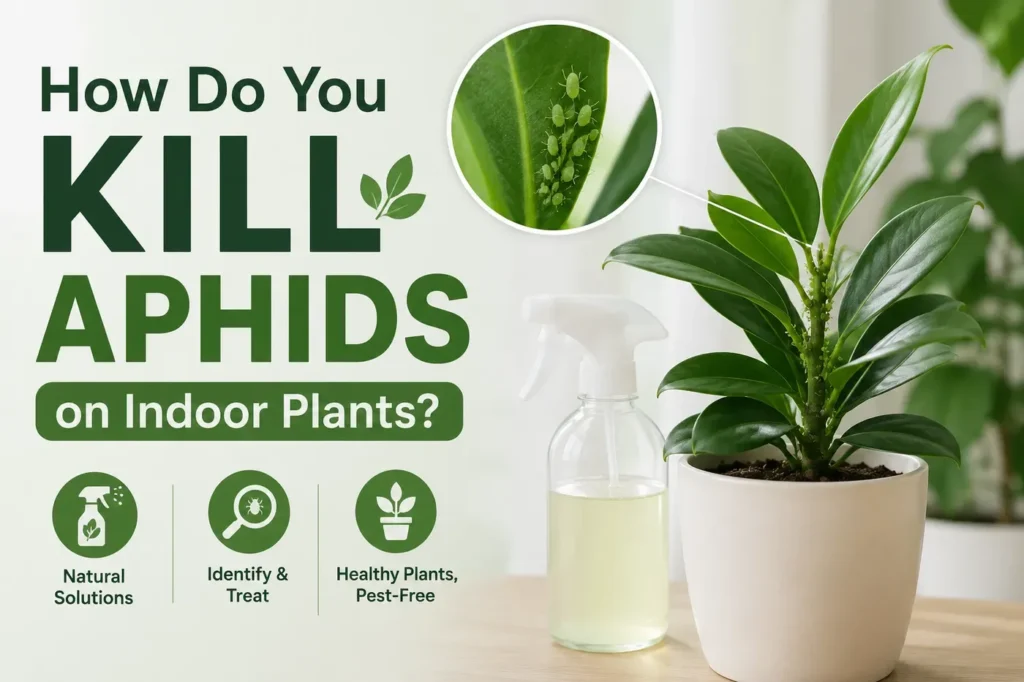
Treatment: Repot into completely fresh sterile potting mix after rinsing the root ball thoroughly under running water to remove as many aphids as possible. Apply a neem oil soil drench to the new potting mix before repotting and continue weekly drenching for one month after repotting to eliminate any surviving aphids. For context on how root aphids compare to above-ground aphid infestations and the full range of treatment options across both types, how to get rid of aphids on indoor plants covers every aphid species with specific treatment guidance for each.
5. Shore Fly Larvae
Shore fly larvae are small, pale, and worm-like, living at the soil surface and in the top layer of potting mix where they feed on the algae growing on moist soil and pot surfaces. Adult shore flies are small dark flies with five distinctive white spots on their wings that distinguish them from fungus gnats, which lack these spots. Shore flies run quickly across soil surfaces rather than hovering above them the way fungus gnats do.
Shore fly larvae cause less direct plant damage than fungus gnat larvae since they feed on algae rather than plant roots. However, adults moving between pots can spread plant pathogens through mechanical transmission, making them worth addressing in collections with multiple plants even without direct root damage.
What drives them: Moist soil with algae growth on the surface and around pot edges. Poor air circulation that allows algae to establish and persist on soil surfaces.
Treatment: Let soil dry more thoroughly between waterings. Improve air circulation around plants to reduce algae growth on soil surfaces. Yellow sticky traps catch adults. The hydrogen peroxide drench used for fungus gnats is effective against shore fly larvae in the top soil layer since they are concentrated near the surface where the oxidation reaction is strongest.
6. Rove Beetles
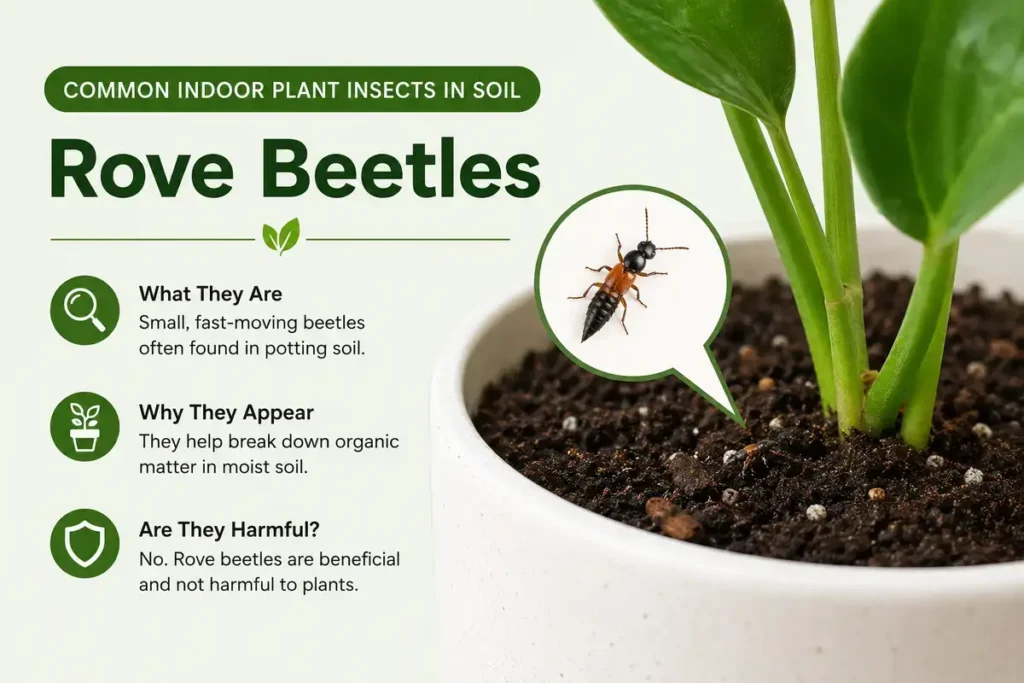
Rove beetles are fast-moving, dark brown beetles approximately 3 to 4 millimeters long that live in the top layer of potting soil. They are predatory insects that feed on fungus gnat larvae, shore fly larvae, and other small soil-dwelling insects, making them one of the most genuinely beneficial insects you can find in indoor plant soil.
Their fast, darting movement across the soil surface is what typically alarms plant owners who encounter them. Once identified correctly as predatory beetles rather than pests, no treatment is needed or appropriate. Killing rove beetles with pesticide removes a natural biocontrol agent that is actively suppressing the harmful soil insect populations in your plant collection.
Do they need treatment? No. Rove beetles are beneficial predators and should be left undisturbed.
If you want to intentionally introduce them: Dalotia coriaria, the rove beetle species most widely used for indoor plant biocontrol, is available from Arbico Organics and can be mixed into potting soil to establish a predatory population that controls fungus gnats and shore flies biologically. For the complete guide to beneficial insects and organisms that help rather than harm your indoor plants, beneficial bugs for indoor plants covers every useful species with sourcing information and introduction guidance.
7. Millipedes
Millipedes are slow-moving, cylindrical, dark-colored arthropods with two pairs of legs per body segment that curl into a tight spiral when threatened. They enter indoor plant soil through contaminated potting mix or by hitchhiking on plants moved indoors from outside positions at the end of summer.
Millipedes are decomposers that feed on decaying organic matter and are completely harmless to living plant tissue. Their presence in indoor plant soil indicates healthy organic decomposition activity rather than a pest problem. They cause no plant damage at any population level in typical indoor plant situations.
Do they need treatment? No. Millipedes in plant soil cause zero plant damage.
If their presence is unwanted: Repot into fresh sterile potting mix to remove them physically. Keeping soil drier between waterings reduces the moist decomposing matter environment they prefer and causes populations to decline naturally without any chemical intervention.
8. Fungus Beetle Larvae
Several small beetle species lay eggs in moist organic potting mix and their larvae develop in the soil feeding on fungi and decaying organic matter before pupating and emerging as adults. Larvae are typically small, pale, and worm-like in appearance, similar to fungus gnat larvae but slightly larger and without the distinctive black head capsule that identifies gnat larvae specifically.
Most fungus beetle species cause minimal plant damage in standard indoor situations. Very high populations in small, nutrient-depleted pots occasionally damage young roots when larvae exhaust their preferred fungal food source and turn to living plant tissue, but this is uncommon in healthy, regularly repotted plants.
Treatment: Improving drainage and allowing soil to dry more adequately between waterings disrupts the breeding cycle and causes populations to decline. Replacing old, heavily decomposed potting mix with fresh sterile mix removes both the larval food source and any eggs already present in the old medium. For infestations that persist despite watering correction, a hydrogen peroxide drench applied weekly for three weeks eliminates larvae through direct oxidative contact.
9. Beneficial Nematodes
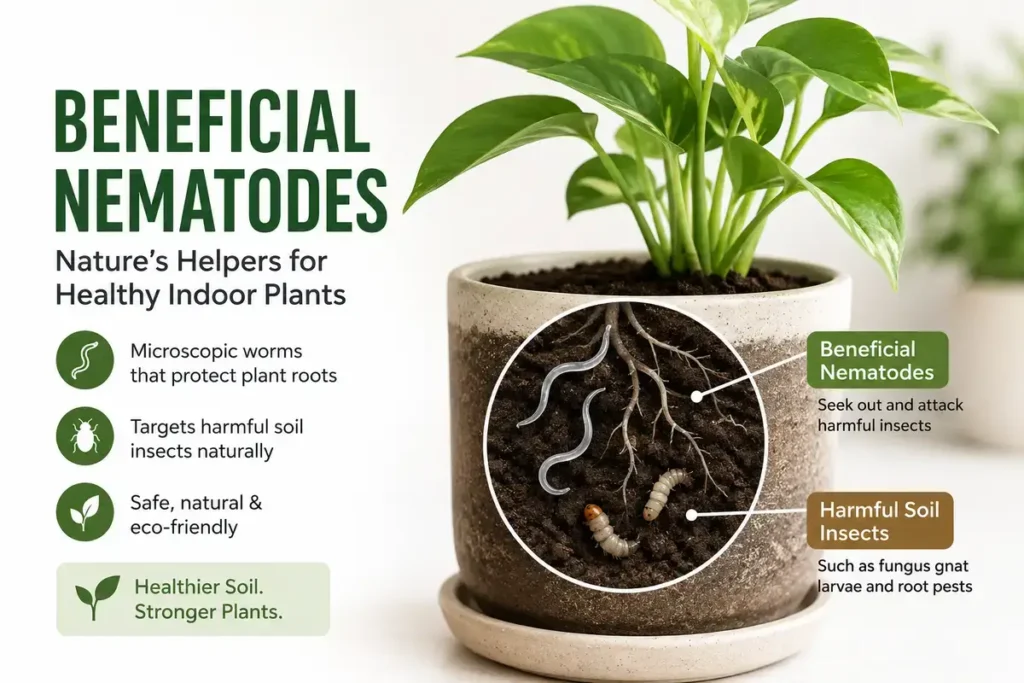
Beneficial nematodes are microscopic roundworms that most plant owners discover in their soil without realizing they are there, having arrived either in commercial potting mix or introduced deliberately as a biological pest control measure. At the scale relevant to indoor plant care, they are invisible to the naked eye and detectable only through their effects on the soil insect population.
Steinernema and Heterorhabditis species are the beneficial nematode types most commonly encountered in indoor plant situations. They parasitize and kill soil-dwelling insect larvae, specifically fungus gnat larvae, shore fly larvae, and thrips pupae, without any harm to plants, humans, or pets.
Do they need treatment? No. Beneficial nematodes are exactly what you want in your potting soil.
If you want to intentionally introduce them: Steinernema feltiae is the species most effective against fungus gnat larvae and is available from Arbico Organics and Planet Natural. Mix with water according to package instructions and apply as a soil drench in the evening since nematodes are sensitive to UV light. Apply to moist soil and keep the top layer slightly moist for 24 hours after application to help nematodes move actively through the soil in search of prey.
How to Treat Harmful Soil Insects Without Disrupting Beneficial Ones
The challenge of treating harmful soil insects in indoor plants is doing so without simultaneously killing the beneficial decomposers, predators, and nematodes that contribute to healthy soil ecology. Broad-spectrum soil pesticide application solves the immediate pest problem but creates a sterile medium that is actually less healthy for plants long term than one with an active beneficial insect community.
Target treatment rather than blanket application. Hydrogen peroxide drenching is effective against larvae throughout the soil but has minimal impact on beneficial nematodes that are not in direct contact with the oxidation reaction. Rove beetles and springtails in the upper soil layer avoid the treated zones temporarily and return as populations recover. Using targeted treatment for confirmed harmful species rather than preventive broad-spectrum pesticide preserves the beneficial ecosystem while addressing the problem.
Correct watering before reaching for any treatment. Allowing soil to dry adequately between waterings is the single intervention that most consistently reduces harmful soil insect populations while having no negative impact on beneficial ones. Fungus gnat larvae, shore flies, and fungus beetles all require consistent moisture to establish. Rove beetles, beneficial nematodes, and most soil mites tolerate drier conditions significantly better.
Repot when soil itself is the problem. Old potting mix that has fully decomposed into a dense, poorly draining medium supports harmful insect populations through its moisture retention and fungal content. Fresh sterile potting mix with proper structure removes the physical conditions that harmful soil insects require while providing a better growing environment for the plant itself. For the complete picture of which soil treatments work for each specific pest and how they combine most effectively, indoor plant spray for bugs covers the spray and drench options with specific guidance on preserving beneficial soil organisms during treatment.
Prevention: Keeping Harmful Insects Out of Indoor Plant Soil
Water correctly. Let the soil dry to at least 2 inches depth between waterings for most common houseplants. This single practice eliminates the primary condition that makes indoor plant soil attractive to every harmful soil insect on this list.
Inspect new plants before introducing them. Check the soil surface, root ball when practical, and drainage holes of any new plant before placing it near existing plants. A one-week quarantine period catches soil insect problems before they spread.
Use quality sealed potting mix. Fresh potting mix from a sealed bag starts essentially free of insect populations. Bags stored open outdoors or sitting in garden center conditions for extended periods accumulate insect eggs and early-stage larvae before you even open them.
Improve drainage in existing pots. Pots sitting in saucers of standing water keep the bottom of the root zone permanently saturated regardless of surface watering practices. Empty saucers after watering and ensure all pots have adequate drainage holes that are not blocked by compacted soil or root growth.
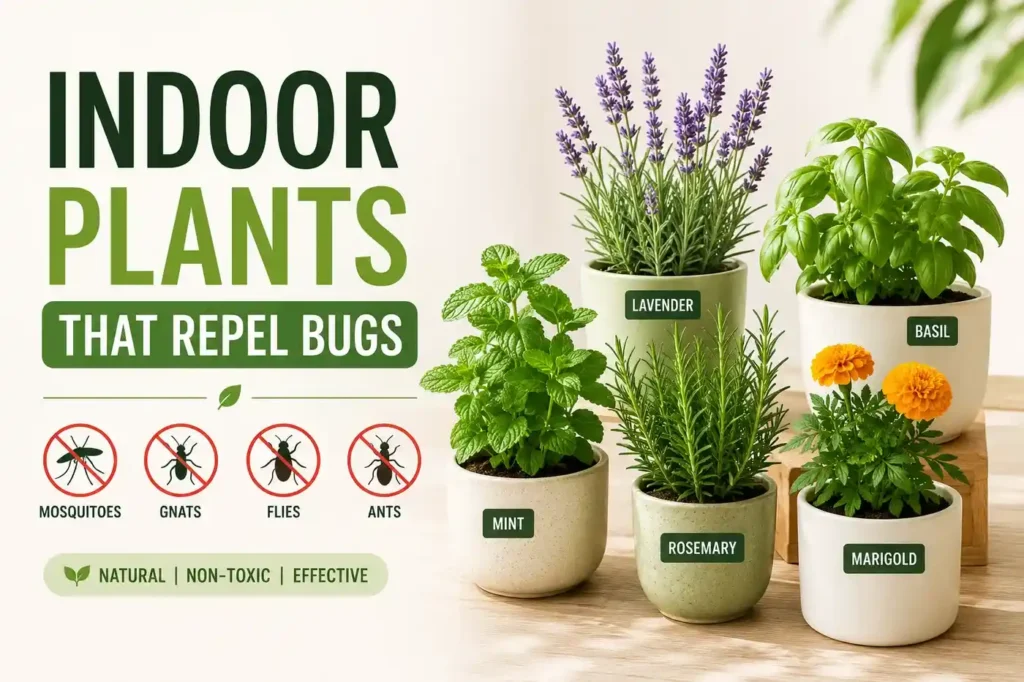
Maintain a soil topper. A half-inch layer of coarse sand or fine gravel on the soil surface creates a physical barrier that deters egg-laying adults from reaching the moist soil below and speeds surface drying after watering. Growing plants that naturally deter the flying insects that lay eggs in soil adds another deterrence layer. The full guide on indoor plants that repel bugs covers which companion plants work best alongside your existing collection for reducing the insect pressure that leads to soil infestations in the first place.
Conclusion
Indoor plant insects in soil range from the destructive to the actively beneficial, and the treatment response should reflect that distinction clearly. Fungus gnat larvae and root aphids cause real damage and require prompt, consistent treatment using hydrogen peroxide drenching, neem oil, repotting, or biological controls depending on severity. Shore fly larvae are worth addressing to prevent pathogen spread even without direct root damage. Springtails, most soil mites, rove beetles, millipedes, and beneficial nematodes are harmless or helpful and should be left completely undisturbed.
Identify what you are actually dealing with before applying any treatment. Check plant health to distinguish harmful from harmless species. Correct watering practices as the first intervention in almost every case. Apply targeted treatment only for confirmed harmful species rather than broad-spectrum pesticide that disrupts the beneficial soil ecosystem your plant depends on. That approach resolves harmful soil insect problems completely while preserving the living soil environment that keeps your houseplants genuinely healthy long term.
Frequently Asked Questions
How do I know if insects in my indoor plant soil are harmful or harmless?
The most reliable first indicator is plant health. A plant growing normally with no wilting, yellowing, or stunted growth almost certainly has harmless soil inhabitants rather than damaging pest species. Declining plant health combined with soil insects warrants closer examination of the root system. Remove the plant from its pot and inspect the roots for root aphid clusters, soft spots from root feeding damage, or heavy larval concentrations in the soil. Healthy white roots with no visible insect clusters suggest the soil insects are harmless regardless of their numbers.
What are the tiny white insects in my indoor plant soil?
Tiny white insects moving across indoor plant soil are most commonly springtails, soil mites, or root aphids depending on their behavior and location. Springtails jump when disturbed and move across the surface quickly. Soil mites move slowly and steadily across the surface or around drainage holes. Root aphids are found on root surfaces rather than the soil surface when you remove the plant from its pot. Springtails and most soil mites are harmless. Root aphids require treatment through repotting and neem oil drenching.
Can soil insects spread from one indoor plant to another?
Yes. Adult fungus gnats and shore flies fly between pots actively and lay eggs in any soil that provides suitable moist conditions. Root aphids spread more slowly through root contact between closely spaced pots or through contaminated tools and hands. Springtails and soil mites spread through soil contact when repotting or through water runoff connecting adjacent pots. Isolating infested plants and treating them before returning them to your collection prevents spread in most cases.
Is it normal to have insects in indoor plant soil?
Yes, to a degree. No potting mix remains completely free of all invertebrate life indefinitely in a moist indoor environment. A small population of springtails, harmless soil mites, or occasional millipedes is entirely normal and not a cause for concern. What is not normal is a visible population of fungus gnat larvae confirmed by the potato test, root decline associated with soil insect activity, or flying adults emerging in large numbers indicating a heavy larval population in the soil.
How do I prevent insects from getting into indoor plant soil?
The most effective prevention is correct watering that allows soil to dry adequately between waterings, removing the primary condition all harmful soil insects require. Using fresh sealed potting mix when repotting eliminates pre-existing egg populations. Quarantining new plants for one week before introducing them to existing collections catches insects that came with the plant from the garden center. Adding a sand or gravel topper to existing pots creates a physical barrier against egg-laying adults.
Will hydrogen peroxide kill beneficial insects in the soil?
At the recommended dilution of 1 part 3% hydrogen peroxide to 4 parts water, the oxidation reaction is most intense in the immediate soil zone it contacts and diminishes rapidly with soil depth. Beneficial nematodes that are not in direct contact with the treated zone are minimally affected. Rove beetles and springtails in the upper soil layer temporarily avoid the treated area and return as the peroxide breaks down. The trade-off of eliminating harmful larvae through hydrogen peroxide while minimally disrupting beneficial organisms is generally favorable compared to leaving a damaging larval infestation untreated, particularly when correct watering practices are applied simultaneously to improve conditions for beneficial organisms long term.