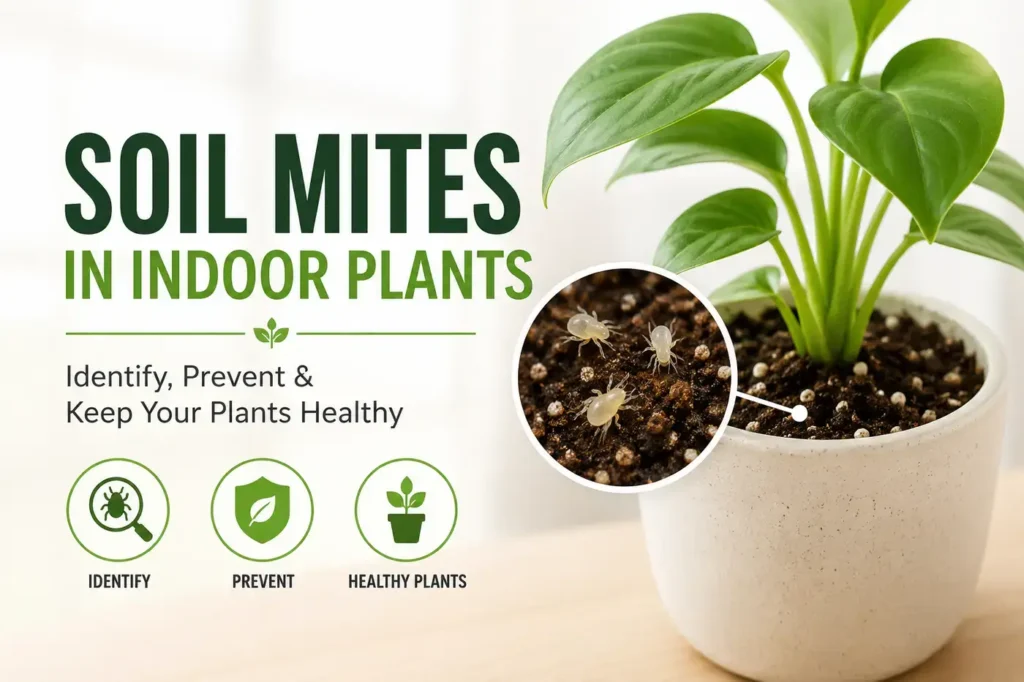
Soil mites in indoor plants are one of the most misunderstood discoveries a plant owner can make. You repot a houseplant, disturb the soil during watering, or simply look closely at the potting mix surface and notice tiny specks moving across it. The immediate assumption for most people is that these creatures are harmful and need to be eliminated immediately. In most cases that assumption is wrong, and acting on it without confirming identification first means applying unnecessary chemicals to a healthy soil ecosystem that is actually working in your plant’s favor.
Soil mites in indoor plants include dozens of different species with wildly different feeding habits and ecological roles. The overwhelming majority are beneficial decomposers that improve soil health. A small minority cause genuine plant damage. Knowing which you are dealing with before reaching for any spray or drench determines whether your response helps or harms your plant long term.
This guide covers 7 essential facts about soil mites in indoor plants, how to tell harmful species from beneficial ones, when treatment is actually necessary, and what to do when it is.
Quick Answer
Most soil mites found in indoor plant soil are harmless beneficial decomposers that feed on fungi, bacteria, and decaying organic matter. They do not damage plant roots or foliage and require no treatment. A small number of root-feeding mite species cause plant decline without obvious above-ground symptoms, identified by examining root surfaces directly. Treatment for harmful mites involves repotting into fresh sterile mix and applying neem oil soil drenches. For harmless decomposer mites, correct watering is all that is needed to manage their numbers naturally.
Fact 1: Most Soil Mites Are Completely Harmless
The single most important fact about soil mites in indoor plants is that the overwhelming majority of species encountered in typical household potting mix are beneficial decomposers that cause zero plant damage. Oribatid mites, which represent the most numerous and commonly encountered soil mite group in potting soil, feed exclusively on fungi, algae, bacteria, and decaying plant and organic matter. They are a normal and healthy component of soil ecology that has existed in garden and potting soils for millions of years.
Their presence in indoor plant soil indicates that healthy decomposition is occurring in the potting mix, which is a sign of a living, biologically active growing medium rather than a sterile inert one. Plants grown in soil with an active decomposer community, including beneficial mites, generally show better long-term health than those grown in fully sterile medium because the decomposition activity makes nutrients more available to plant roots over time.
If you see tiny white, tan, or translucent specks moving slowly across the soil surface of your indoor plants and the plants themselves are growing normally with no signs of stress, you are almost certainly looking at harmless decomposer mites. No treatment is needed, recommended, or beneficial.
Fact 2: There Are Several Distinct Types of Soil Mites in Indoor Plants
Not all soil mites behave the same way and understanding the main groups helps you categorize what you are seeing without needing to identify individual species.
Oribatid mites are the most numerous soil mite group in most potting mixes. They are slow-moving, rounded, and typically dark brown or black in color. They feed exclusively on decaying organic matter and fungi. Completely harmless to plants at every life stage.
Mesostigmata mites are predatory mites that feed on other small soil organisms including fungus gnat larvae, nematodes, and other mite species. Their presence in your potting soil is actively beneficial since they suppress harmful soil insect populations. Fast-moving relative to oribatid mites. Completely harmless to plants.
Prostigmata mites include both beneficial and harmful species. Most are decomposers or predators, but this group includes the root-feeding species that cause genuine plant damage. They are generally smaller and more mobile than oribatid mites and appear in a range of colors from white and translucent to red and orange depending on species.
Astigmata mites are primarily decomposers found in soils with high organic matter content. They are harmless to plants and indicate a biologically rich potting medium.
The practical takeaway is that identifying a mite as harmful requires confirming root-feeding behavior through plant health symptoms and direct root inspection rather than through mite appearance alone, since harmful and harmless species look similar to the naked eye.
Fact 3: Harmful Root-Feeding Mites Show Specific Symptoms
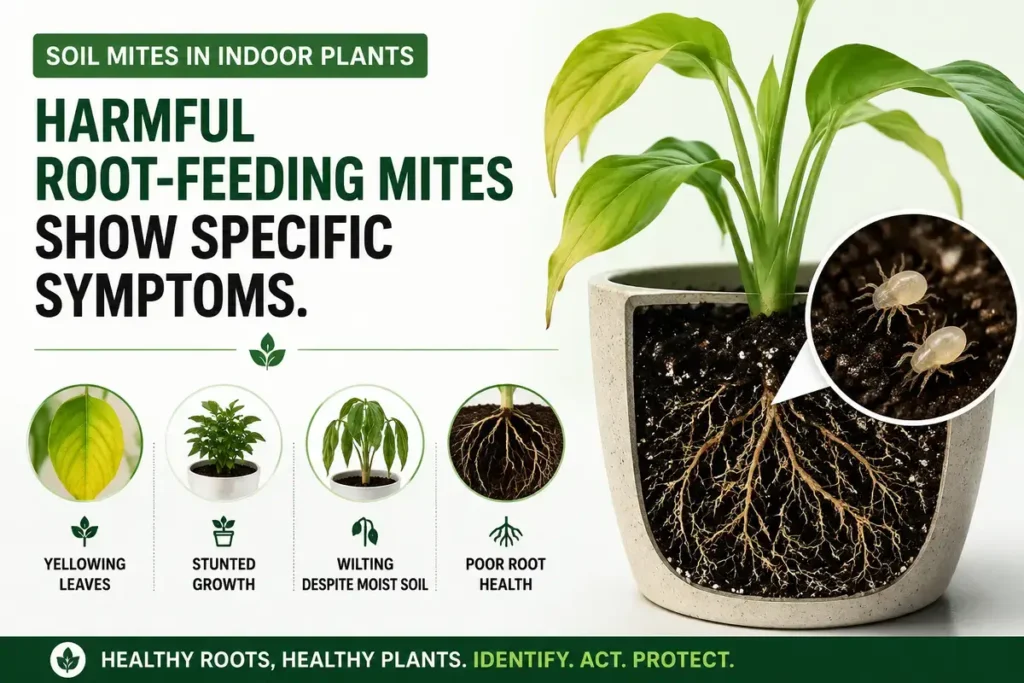
Root-feeding mite species cause a distinctive pattern of plant decline that differs from typical pest damage because it originates underground where it cannot be seen during normal plant care.
A plant affected by root-feeding mites shows:
Progressive wilting that does not respond to watering. The plant looks underwatered even when the soil moisture is correct because root damage is limiting the plant’s ability to absorb water regardless of how much is available.
Yellowing that starts at the lower leaves and progresses upward. This pattern of nutrient deficiency develops because damaged roots cannot absorb minerals effectively even when fertilizer is applied.
Growth that stalls completely or produces only small, pale, distorted new leaves. Root damage limits the energy and nutrients available for above-ground development.
No visible above-ground insects on leaves, stems, or at the soil surface that would explain the symptoms. This absence of obvious pests alongside plant decline is the clearest signal to investigate the root zone directly.
These symptoms can overlap with overwatering damage, root rot from fungal disease, and pot-bound root stress. Examining the roots directly when removing the plant from its pot is the only reliable way to confirm root-feeding mites as the cause rather than these other conditions.
Fact 4: Confirming Root-Feeding Mites Requires Direct Root Inspection
Diagnosing root-feeding mites through plant symptoms alone is not reliable enough to justify treatment since the symptoms overlap with several other common conditions. Direct root inspection is necessary to confirm the diagnosis before committing to a treatment approach.
Remove the plant gently from its pot and examine the root ball and the soil immediately surrounding the roots. Root-feeding mites appear as tiny specks, white to pale yellow in color, moving slowly on root surfaces. They may be accompanied by fine webbing in severe infestations and the roots themselves typically show soft, discolored spots where feeding has occurred. Healthy roots are white to tan and firm. Roots damaged by feeding mites show brown or grey discoloration and soft texture at the damage sites.
Compare what you find to the alternative explanations before concluding that mites are the cause. Root rot from overwatering produces soft, brown, foul-smelling roots without the presence of mites. Pot-bound roots are tightly compacted and circling without any soft or discolored areas. Root aphids appear as larger, more clearly insect-like white clusters on root surfaces rather than the tiny uniform specks of feeding mites.
If you find tiny moving specks on damaged root surfaces alongside the decline symptoms described above, root-feeding mites are confirmed and treatment is warranted.
Fact 5: Overwatering Drives Harmful Mite Populations
The same overwatering conditions that drive fungus gnat and shore fly infestations also create the persistently moist, fungal-rich soil environment that supports harmful soil mite populations. Soil that stays consistently wet develops high concentrations of the fungi and decaying matter that provide both food and protected living conditions for a range of soil invertebrates including the root-feeding mite species that cause plant damage.
This connection between overwatering and harmful soil mite populations means that correcting watering practices is as important as any direct mite treatment. A plant repotted into fresh sterile mix but returned to the same overwatering conditions will redevelop a soil mite problem within weeks because the moist environment continues to support the species that cause damage.
Allowing soil to dry to at least 2 inches depth between waterings eliminates the persistently wet conditions that harmful soil mite populations require while having no negative impact on the beneficial decomposer mites that tolerate drier conditions significantly better.
For the complete overview of every soil-dwelling organism affected by moisture management and how correct watering simultaneously improves plant health while suppressing harmful soil insects and mites, bugs in indoor plant soil covers every soil inhabitant with specific guidance on moisture-based management for each species.
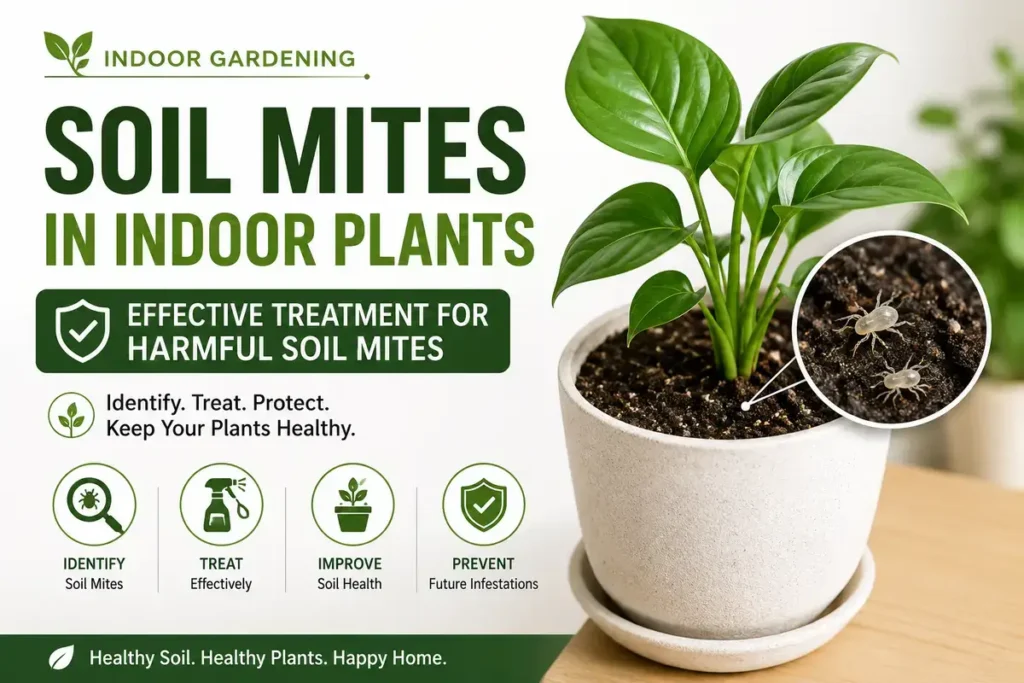
Fact 6: Effective Treatment for Harmful Soil Mites
When direct root inspection confirms root-feeding mites are causing plant decline, treatment involves addressing both the mites currently present and the conditions that allowed them to establish.
Step 1: Repot into fresh sterile potting mix. Remove the plant from its pot and shake as much of the infested soil away from the roots as possible. Rinse the root ball thoroughly under room temperature running water to remove remaining soil and as many mites as possible from root surfaces. Clean the pot with diluted bleach solution (1 tablespoon bleach per quart of water) and allow it to dry completely before reusing. Repot into fresh, sealed sterile potting mix that has not been stored open in outdoor conditions where mites could have already colonized it.
Step 2: Apply neem oil soil drench. Mix 2 tablespoons of pure cold-pressed neem oil with 1 teaspoon of dish soap and 1 quart of warm water. Apply as a soil drench immediately after repotting to address any mites that survived the rinse and repotting process. The azadirachtin in neem oil disrupts mite development and reproduction when absorbed through roots and distributed through plant tissue. Apply weekly for three weeks after repotting.
Step 3: Correct watering permanently. After repotting, allow the soil to dry adequately between waterings rather than returning to the watering schedule that created the conditions for mite establishment in the first place. Push your finger 2 inches into the soil before every watering and wait if any moisture is felt at that depth.
Step 4: Monitor recovery. A plant recovering from root-feeding mite damage shows new growth resuming within two to four weeks of repotting when the root system is given time to recover in fresh soil. If decline continues after three weeks in fresh soil with correct watering, examine the roots again to confirm the mites have been fully addressed and rule out other causes of decline.
For the full range of spray and drench options that complement the repotting approach for severe infestations, indoor plant spray for bugs covers neem oil and every other treatment option with specific application guidance for soil-targeted use.
Fact 7: Prevention Is More Effective Than Treatment
Preventing harmful soil mite establishment is significantly easier than treating an active infestation, particularly because root-feeding species cause damage that is already significant by the time symptoms become obvious enough to investigate.
Use quality sealed potting mix. Fresh potting mix from a sealed bag starts essentially free of harmful mite populations. Bags stored open outdoors or sitting in garden center conditions for extended periods can accumulate mite populations before you open them.
Quarantine new plants. New plants from garden centers frequently carry soil mite populations in their existing potting mix. A one-week isolation period before introducing new plants to your collection gives time to observe whether decline symptoms develop before exposing your established plants to potentially infested soil.
Repot regularly. Old, fully decomposed potting mix that has broken down into a dense, poorly draining medium supports harmful soil mite populations through its moisture retention and fungal content. Repotting into fresh mix every 12 to 18 months removes the conditions that support harmful species buildup before populations reach damaging levels.
Inspect roots during repotting. Regular repotting provides the opportunity to inspect root systems directly as a matter of routine rather than only when decline symptoms prompt investigation. Catching early-stage root mite populations during a routine repot allows treatment before damage becomes significant.
Growing plants that produce natural deterrent compounds near your most vulnerable houseplants adds a layer of protection against the insects that carry soil mites between plants. The complete guide to which plants work as natural pest deterrents is covered in indoor plants that repel bugs.
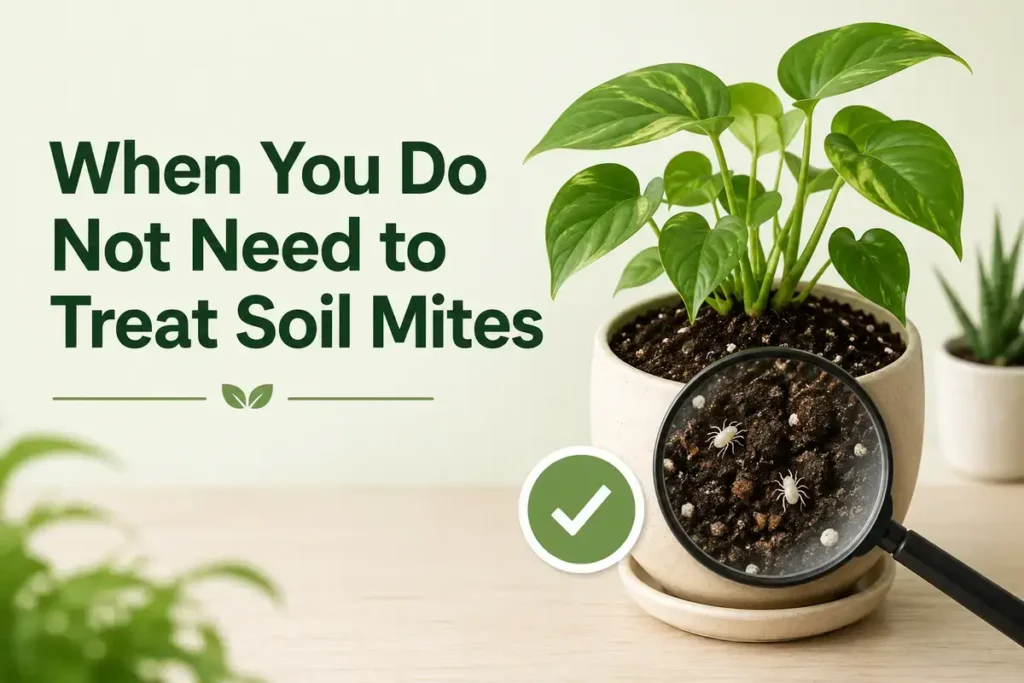
When You Do Not Need to Treat Soil Mites
Most soil mite discoveries in indoor plants require no treatment at all. If your plant is growing normally, producing healthy new growth, and showing no signs of stress or decline, any soil mites present are almost certainly harmless decomposers doing useful ecological work in your potting mix.
Applying pesticide to a healthy soil ecosystem with harmless mite populations kills beneficial decomposers, predatory mites that are suppressing other pest species, and potentially beneficial nematodes alongside the organisms you were targeting. The result is a more sterile soil environment that is actually less biologically supportive of healthy plant growth than the one you started with.
Save treatment for situations where direct root inspection confirms harmful mite species on damaged root tissue alongside plant decline symptoms. In all other situations, leave the soil ecosystem undisturbed and focus on correct watering as the most effective single practice for maintaining healthy indoor plant soil long term.
How Soil Mites Fit Into the Broader Indoor Plant Pest Picture
Understanding soil mites in context of your entire indoor plant pest management approach helps you make better decisions about when to act and when to leave the soil ecosystem undisturbed.
Soil mites coexist with every other organism in your potting mix including beneficial nematodes, bacteria, fungi, springtails, and in some cases rove beetles. This community of soil organisms works together in a functional ecosystem that supports plant health through decomposition, nutrient cycling, and suppression of harmful species. Disrupting this ecosystem with broad-spectrum pesticide application to address one suspected problem often creates larger problems by eliminating the biological controls that were keeping other pest species in check.
The most consistent pattern in healthy indoor plant collections is that plants maintained with correct watering, appropriate light, and regular repotting into fresh mix rarely develop serious soil pest problems of any kind, including harmful mite infestations. The plants that develop recurring soil pest problems are almost always the ones growing in persistently wet soil in old, decomposed potting mix that has lost its structural integrity and drainage capacity.
Viewing soil mites as an isolated pest problem to eliminate misses this bigger picture. They are a symptom of soil conditions rather than a primary cause of plant problems in most cases. Addressing those conditions through correct watering and regular repotting resolves the majority of soil mite concerns more effectively and more permanently than any spray or drench treatment applied to soil that continues to provide the conditions harmful species require.
For understanding how every type of soil-dwelling organism from fungus gnat larvae through to beneficial rove beetles fits into the complete picture of indoor plant soil health, indoor plants insects in soil covers every species with specific guidance on which ones to treat, which ones to leave alone, and how to manage soil conditions to favor beneficial organisms over harmful ones across your entire plant collection.
Conclusion
Soil mites in indoor plants are far less cause for alarm than most plant owners assume when they first encounter them. The vast majority of soil mite species in typical indoor potting mix are beneficial decomposers and predators that improve rather than damage the soil environment. Treating them as pests disrupts the healthy soil ecology your plant depends on and provides no benefit to plant health.
The small minority of harmful root-feeding mite species that do cause genuine plant damage are identifiable through specific decline symptoms combined with direct root inspection, not through the presence of mites on the soil surface alone. When harmful species are confirmed, repotting into fresh sterile mix combined with neem oil drenching and corrected watering resolves the problem effectively while the fresh soil environment gives the plant’s root system the best possible conditions for recovery.
Identify before treating, correct watering as the first intervention in almost every soil pest situation, and reserve chemical treatment for confirmed harmful species rather than as a precautionary response to seeing any life in your potting mix.
Frequently Asked Questions
Are soil mites in indoor plants harmful to my plant?
In the vast majority of cases, no. Most soil mites found in indoor potting mix are harmless decomposers or beneficial predators that cause no plant damage. Harmful root-feeding mite species exist but are significantly less common than beneficial ones in typical household indoor plant situations. The reliable way to determine whether the mites in your soil are harmful is to monitor plant health: a plant growing normally with no decline symptoms almost certainly has harmless soil mites regardless of how many are visible on the soil surface.
What do harmful soil mites look like compared to harmless ones?
Harmful root-feeding mites and harmless decomposer mites look nearly identical to the naked eye. Both appear as tiny white, tan, or translucent specks moving across the soil surface. The distinction cannot be reliably made through appearance alone without magnification equipment. Behavior and location provide more useful clues: harmful root-feeding mites are found specifically on root surfaces when the plant is removed from its pot. Harmless decomposer mites are found primarily on the soil surface and in the soil body rather than on roots specifically.
How do I get rid of soil mites in indoor plants?
For the harmless decomposer mites that represent the majority of soil mite populations in indoor plants, the most appropriate response is adjusting watering to allow soil to dry more between waterings, which naturally reduces mite populations without chemical intervention. For confirmed harmful root-feeding mites, repot into fresh sterile potting mix after rinsing roots thoroughly, apply neem oil soil drenches weekly for three weeks, and correct watering practices to prevent conditions that support harmful populations from reestablishing.
Can soil mites spread from one indoor plant to another?
Yes, through several mechanisms. Soil-to-soil contact during repotting when using shared tools or work surfaces transfers mites between plants. Water runoff connecting adjacent pots carries mites between closely spaced plants. New plants introduced from garden centers bring their existing soil mite populations into your collection. Repotting tools washed between uses and quarantining new plants for one week before introducing them to your collection prevents the majority of mite transfers between established plants.
Do soil mites bite humans?
The overwhelming majority of soil mite species found in indoor plant soil do not bite humans and are completely harmless to people. A small number of mite species in the broader mite family do bite humans, but these are not the decomposer and plant-associated species found in potting mix. If you are experiencing bites or skin irritation that you suspect may be mite-related, consult a dermatologist since the source is unlikely to be the soil mites in your houseplants.
Is it normal to have soil mites in new potting mix?
Yes. Commercial potting mix, even from sealed bags, is a biologically active medium that contains bacteria, fungi, and often microscopic invertebrates including early-stage mite populations. This biological activity is part of what makes commercial potting mix effective as a growing medium. A small initial mite population in new potting mix is not a sign of a contaminated product. Problems develop when those populations grow unchecked due to overwatering conditions rather than from their presence in new mix at the point of purchase.